KEO PAGODA - AN ARCHITECTURAL HERITAGE IN THE HEART OF NORTHERN VIETNAM
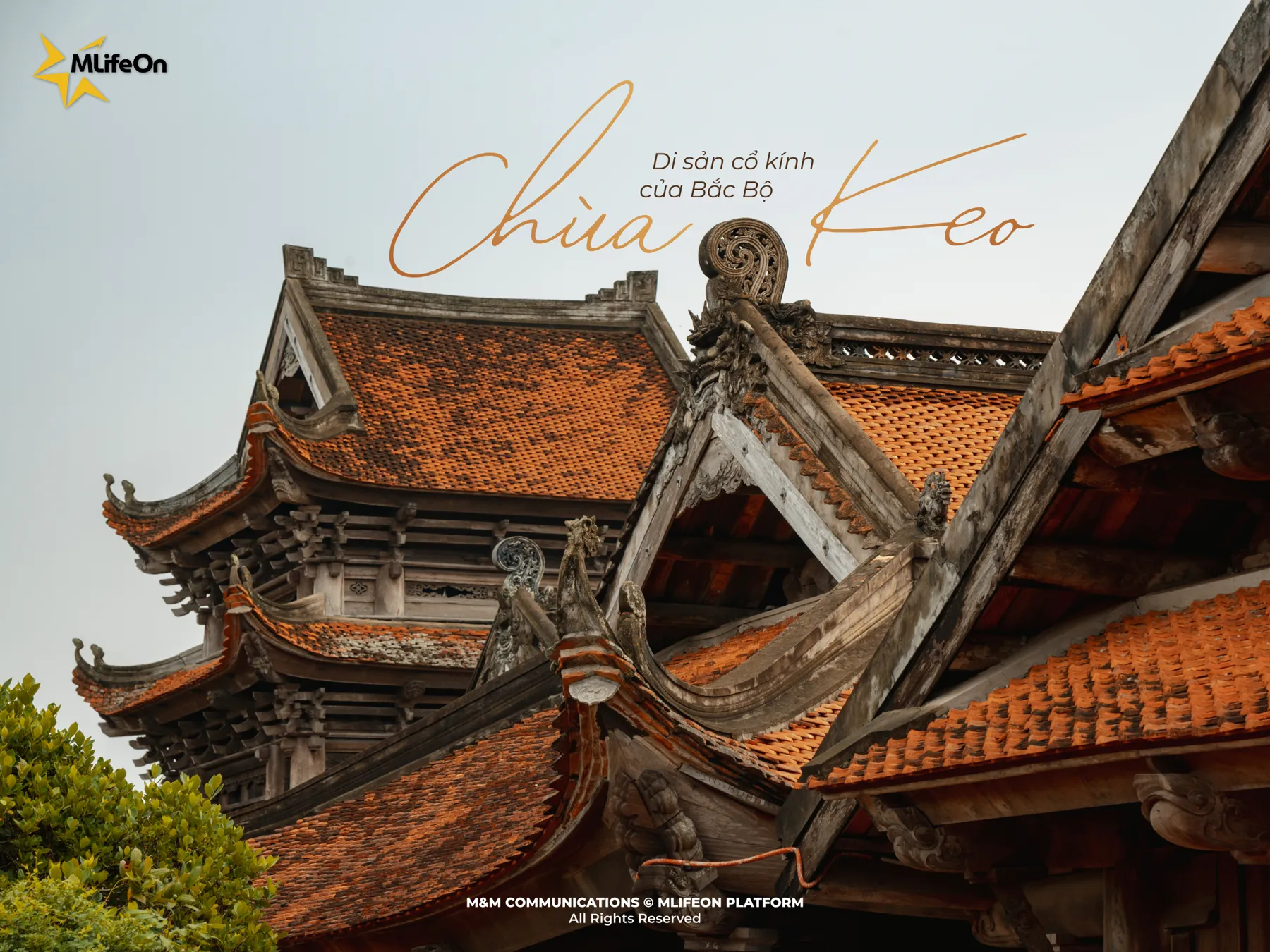
Discover Keo Pagoda in Hung Yen, one of the most ancient pagodas in Northern Vietnam.
Amidst the fertile Northern Delta, where the Red River surges and deposits its rich silt, Keo Pagoda stands with an ancient air, drawing a multitude of visitors.
A Journey to a Sacred Pagoda
Keo Pagoda, also known as "Than Quang Tu," is located in Vu Tien Commune, Hung Yen Province (formerly part of the Thai Binh region).
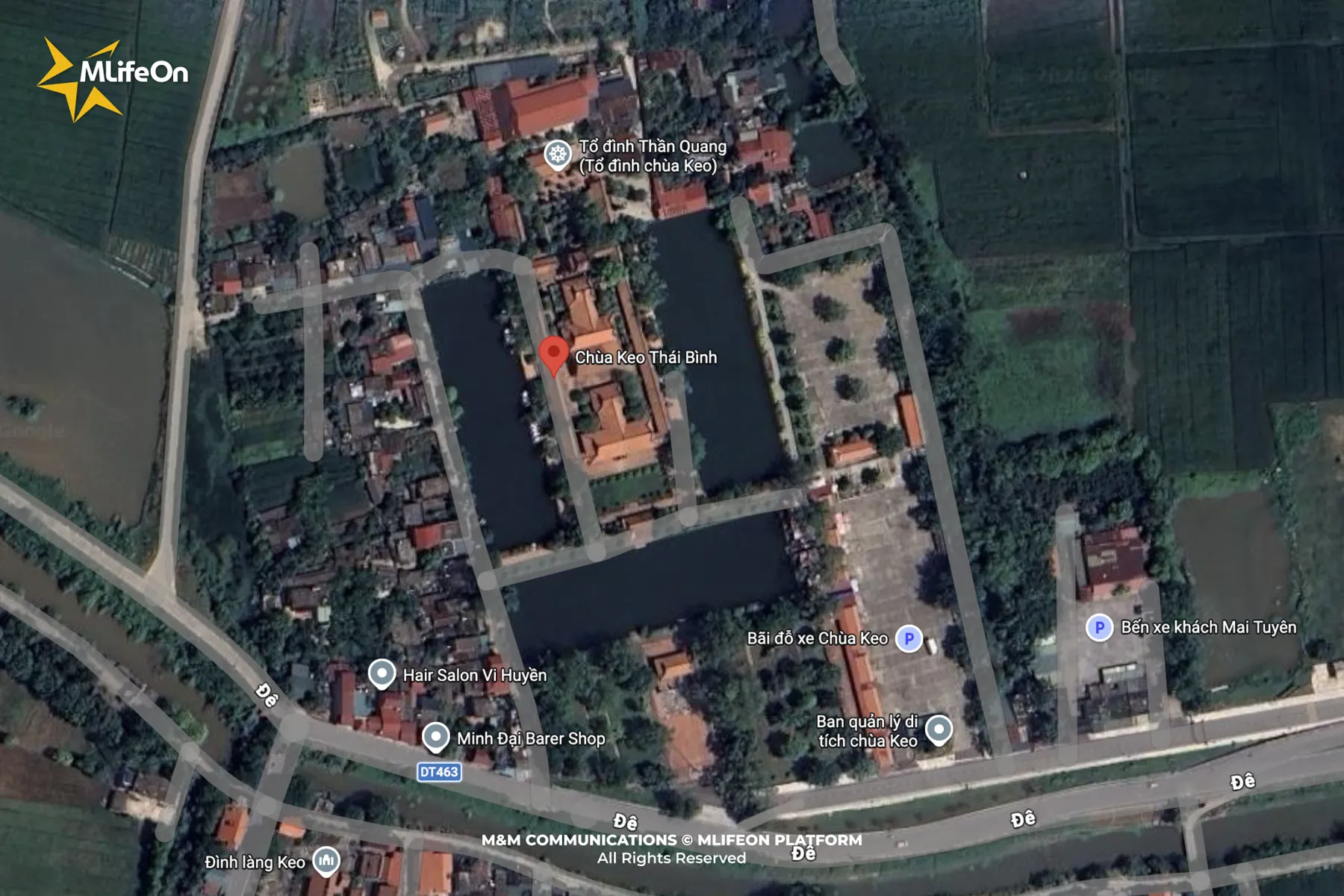
Keo Pagoda is situated on the left bank of the Red River, on a flat, spacious, and airy expanse of land.
Before occupying its current, uniquely situated location, Keo Pagoda was originally established in 1061 in Ninh Binh (within the former Nam Dinh region) under the reign of King Ly Thanh Tong, bearing the name Nghiem Quang Pagoda. In 1167, King Ly Anh Tong renamed it Than Quang Pagoda to honor the merits of Zen Master Duong Khong Lo, a prominent figure in Ly Dynasty Buddhism.
Following various upheavals, most notably a devastating flood in 1611, the pagoda was rebuilt in the early 17th century in Hung Yen (within the former Thai Binh region) through the efforts of Duke Hoang Quan Dung.
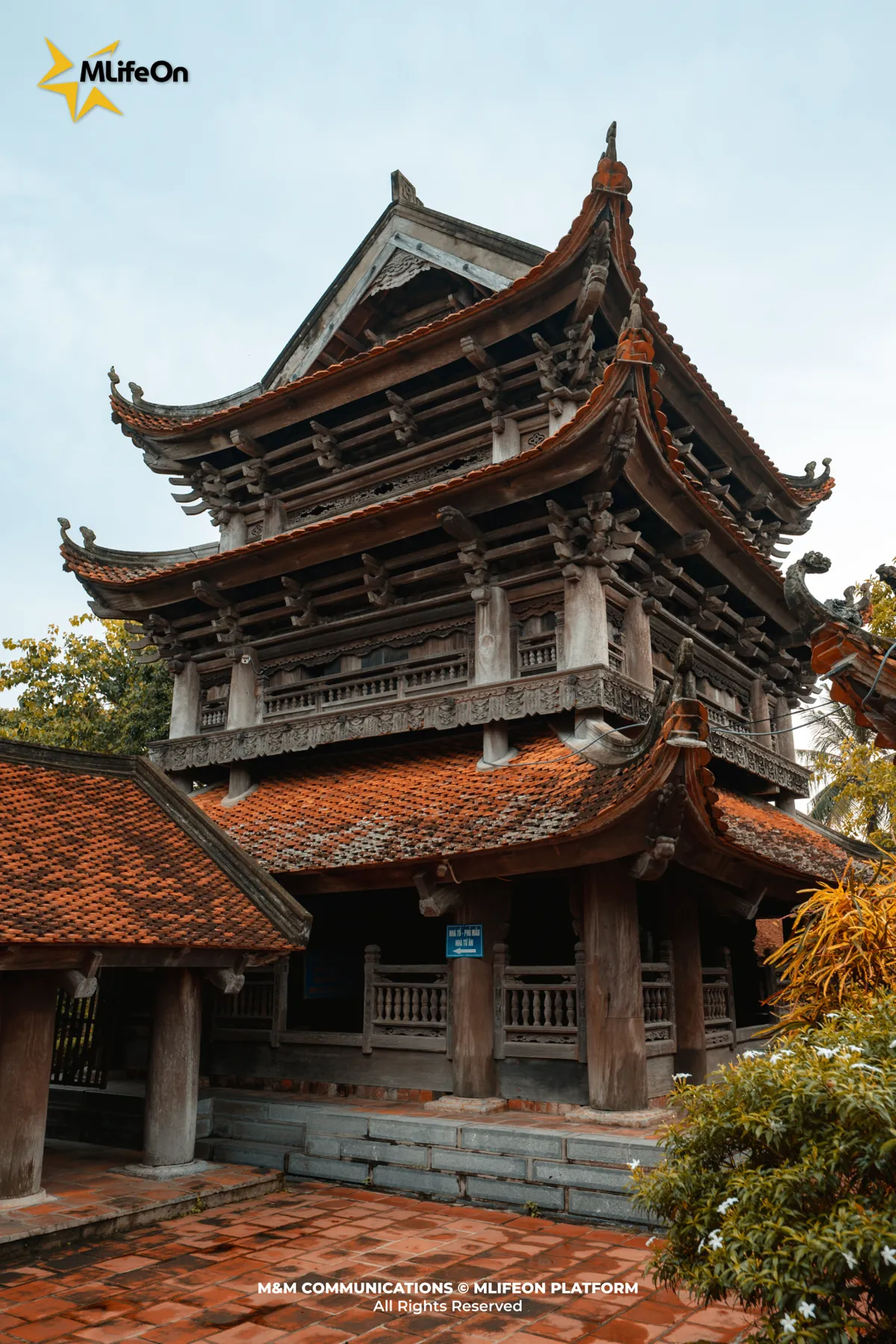
The pagoda was originally located in Ninh Binh but was later relocated to Hung Yen.
Keo Pagoda was officially recognized as a Special National Relic in 2012. Despite undergoing numerous restorations, the pagoda has retained its majestic appearance and unique original architecture.
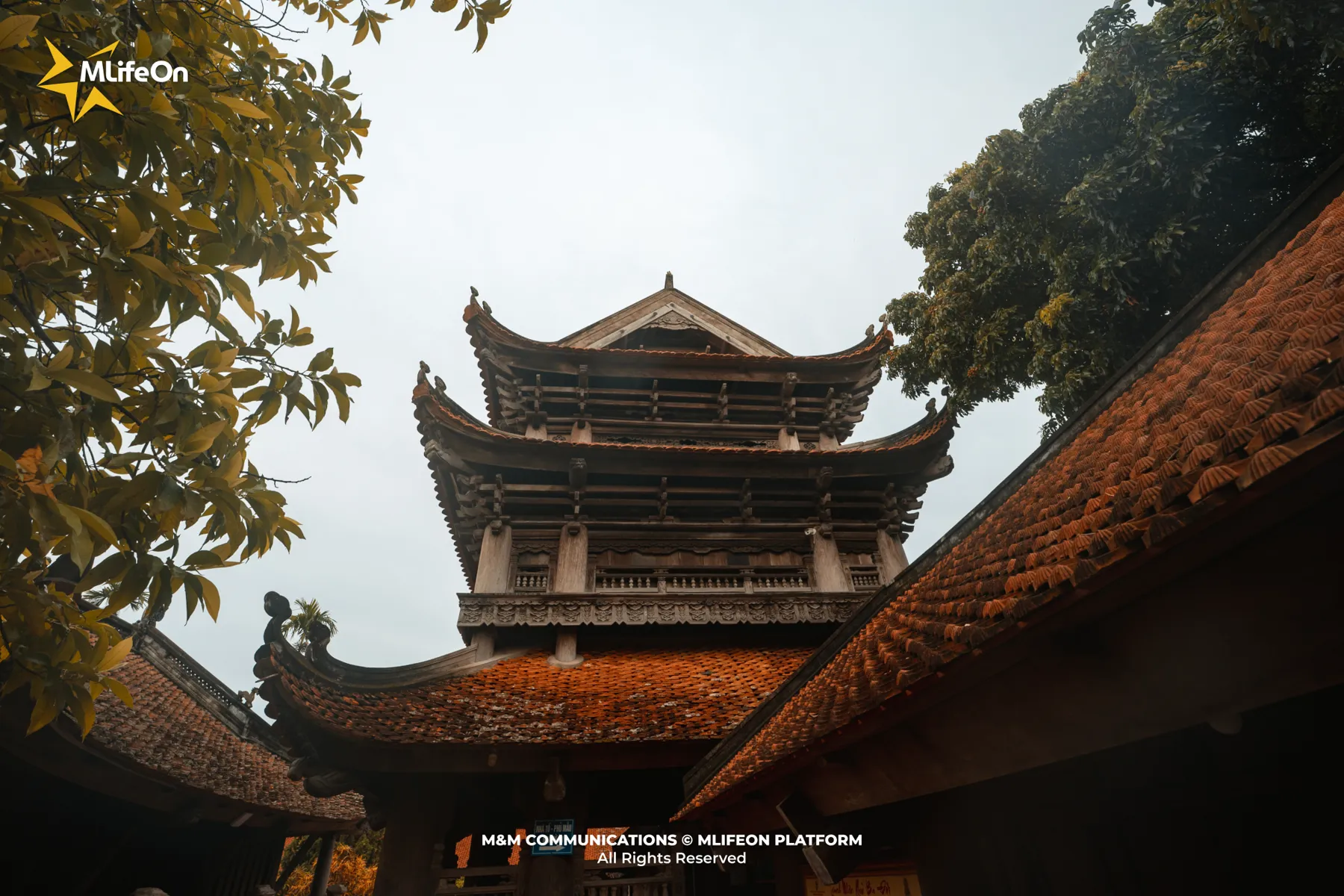
Keo Pagoda bears the ancient appearance of a structure that is hundreds of years old.
Distinctive features
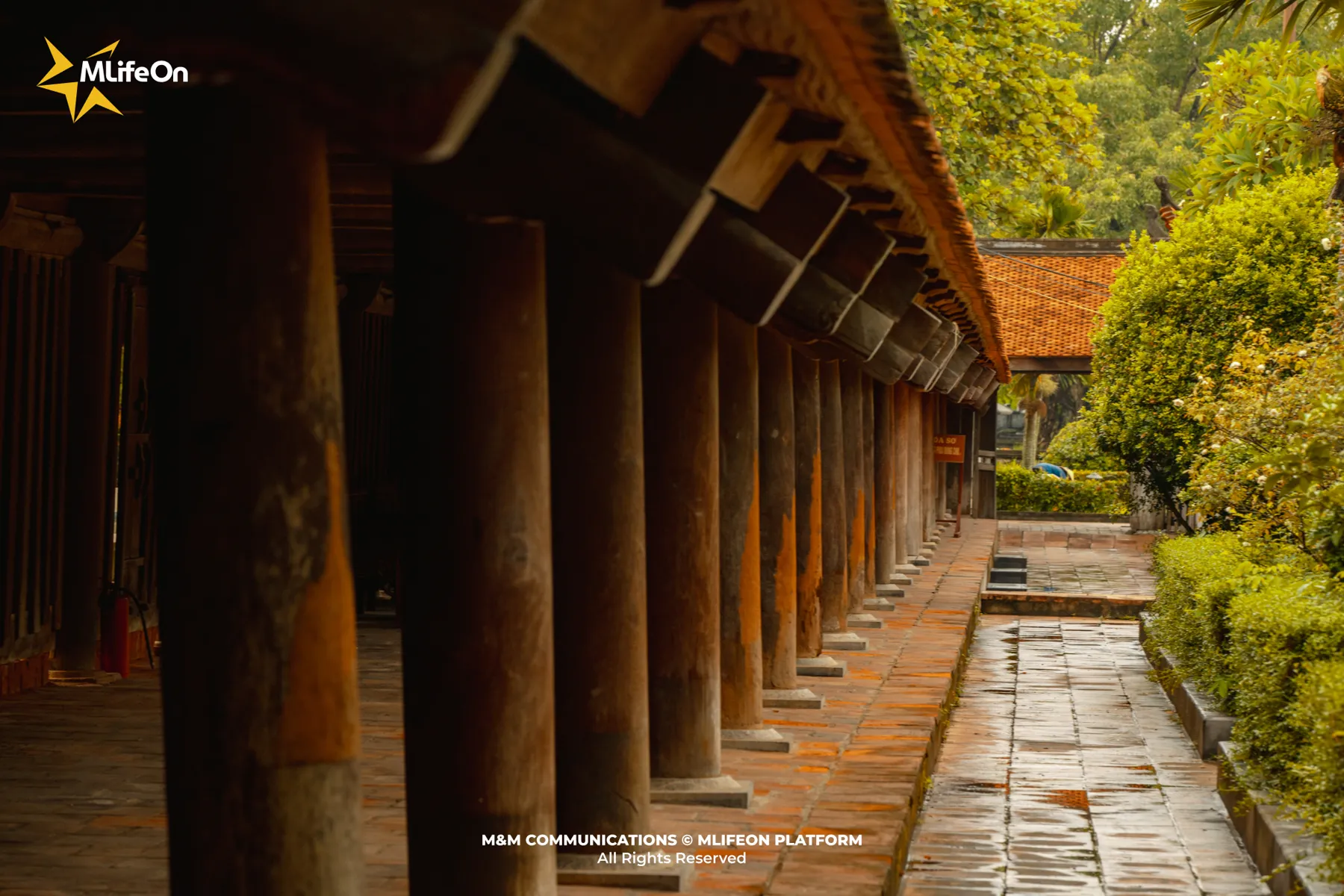
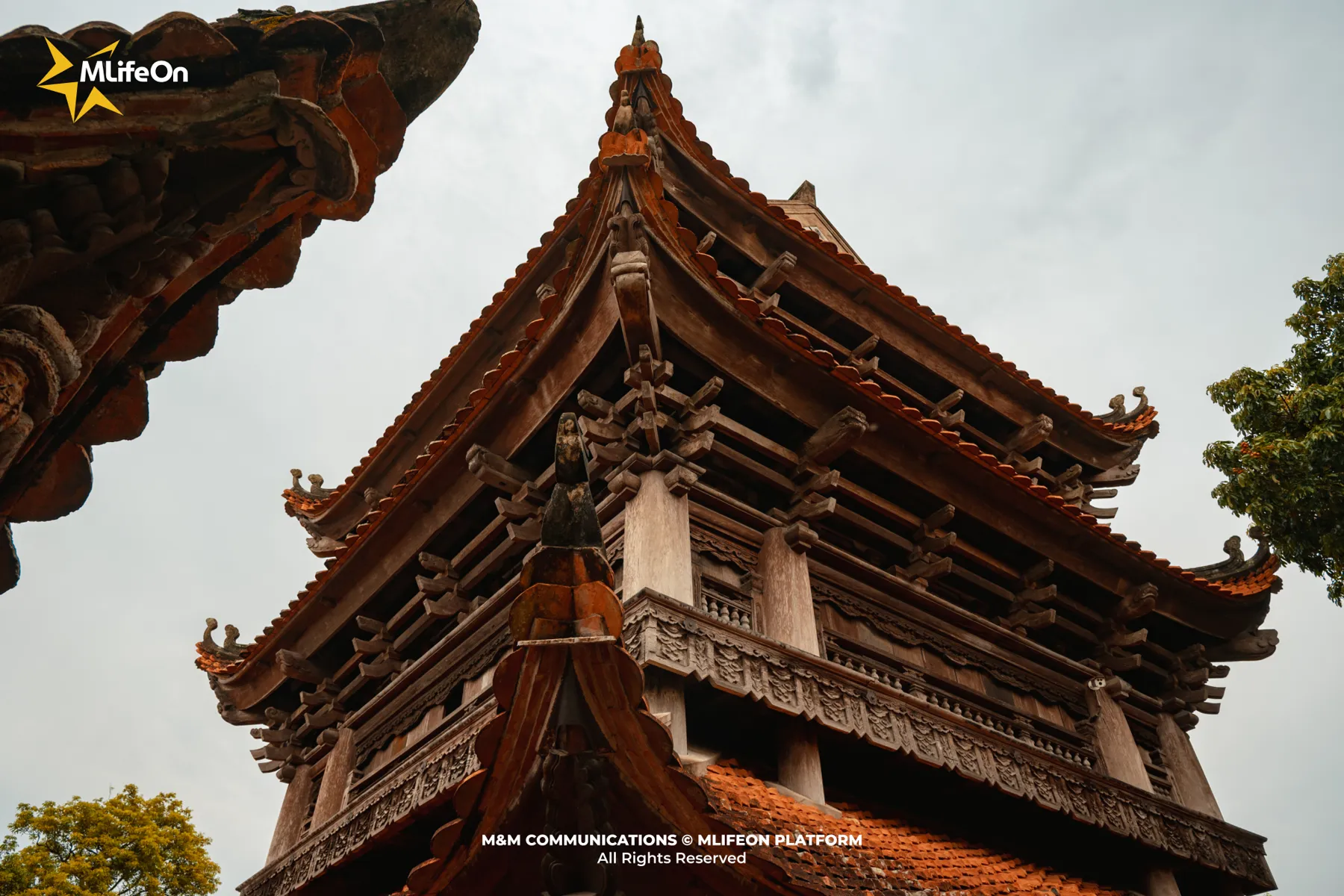
Keo Pagoda stands out with its 17 structures and 128 bays made of ironwood, arranged according to the architectural layouts of "inner temple, outer corridor" and "Buddha in front, Saint behind." All components are joined using traditional mortise-and-tenon techniques, without a single nail, demonstrating the masterful craftsmanship of past generations.
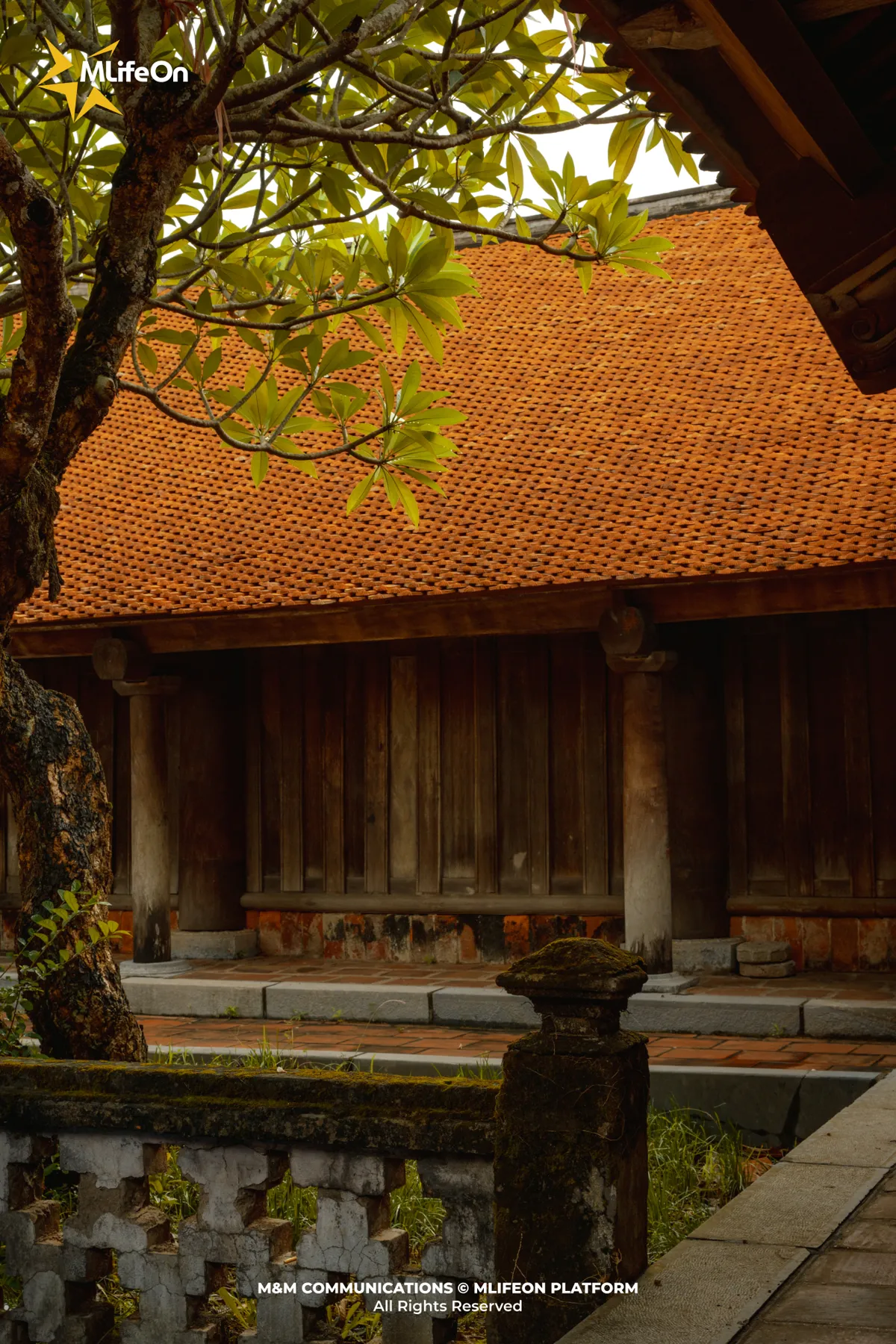
The entire pagoda is joined using mortise-and-tenon joints, without the use of nails.
A standout feature is the 11-meter-high bell tower, which boasts three stacked roofs resembling a giant lotus blossom and houses three ancient bells and a stone chime. Recognized by Guinness World Records, it is the tallest ancient wooden bell tower in Vietnam. Additionally, the pagoda preserves 197 ancient artifacts, including two national treasures: a set of dragon-carved doors and an incense altar (both considered masterpieces of art from the Later Le Dynasty).
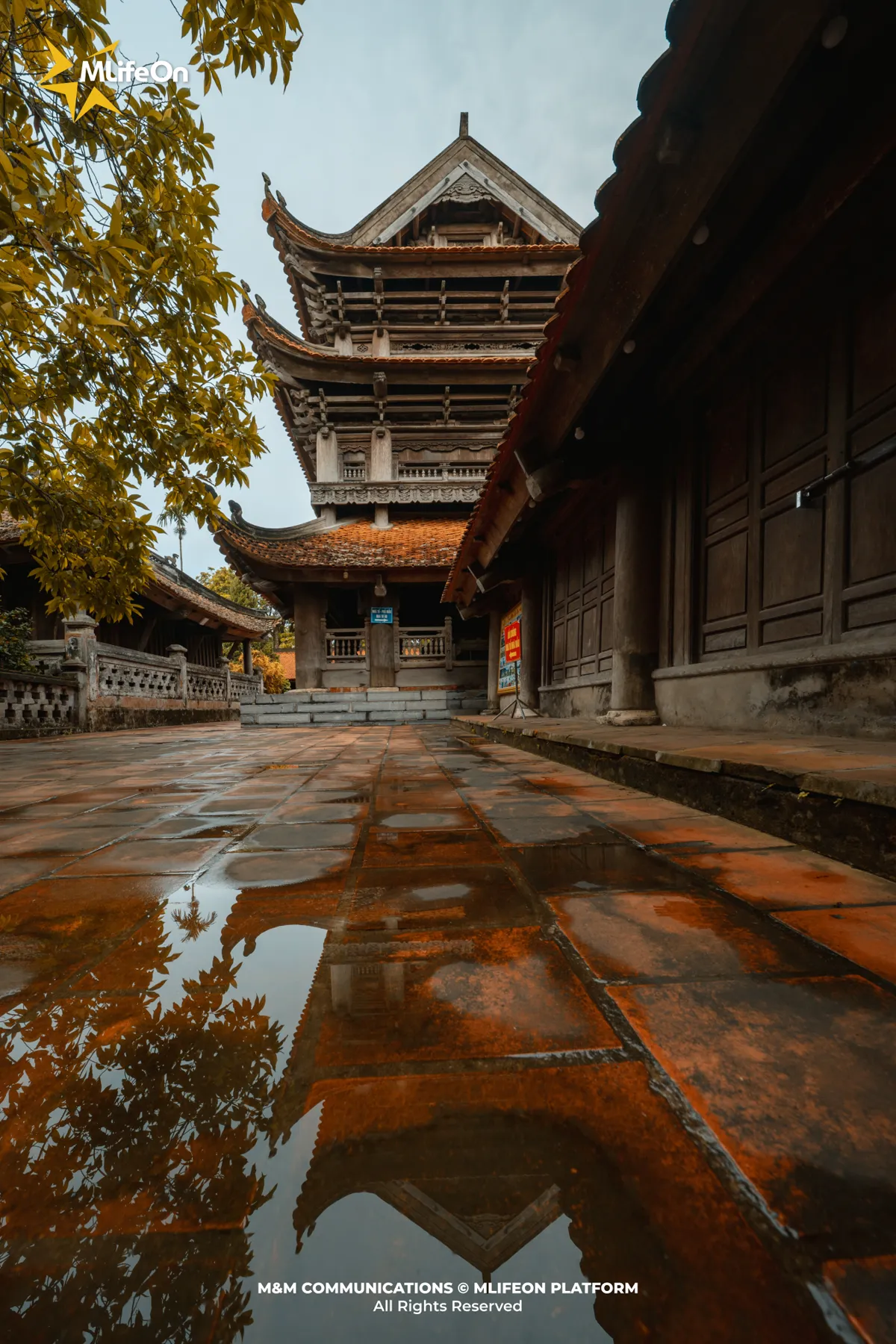
an 11-meter-high bell tower with three stacked tiers
The wood-carving craftsmanship at Keo Pagoda (Hung Yen) represents the pinnacle of the art form during the Later Le Dynasty (17th century), distinguished by its exquisite carvings. Artisans of the era employed techniques such as high-relief carving and openwork (pierced carving) to create remarkable depth, visual impact, and a sense of vivid liveliness.
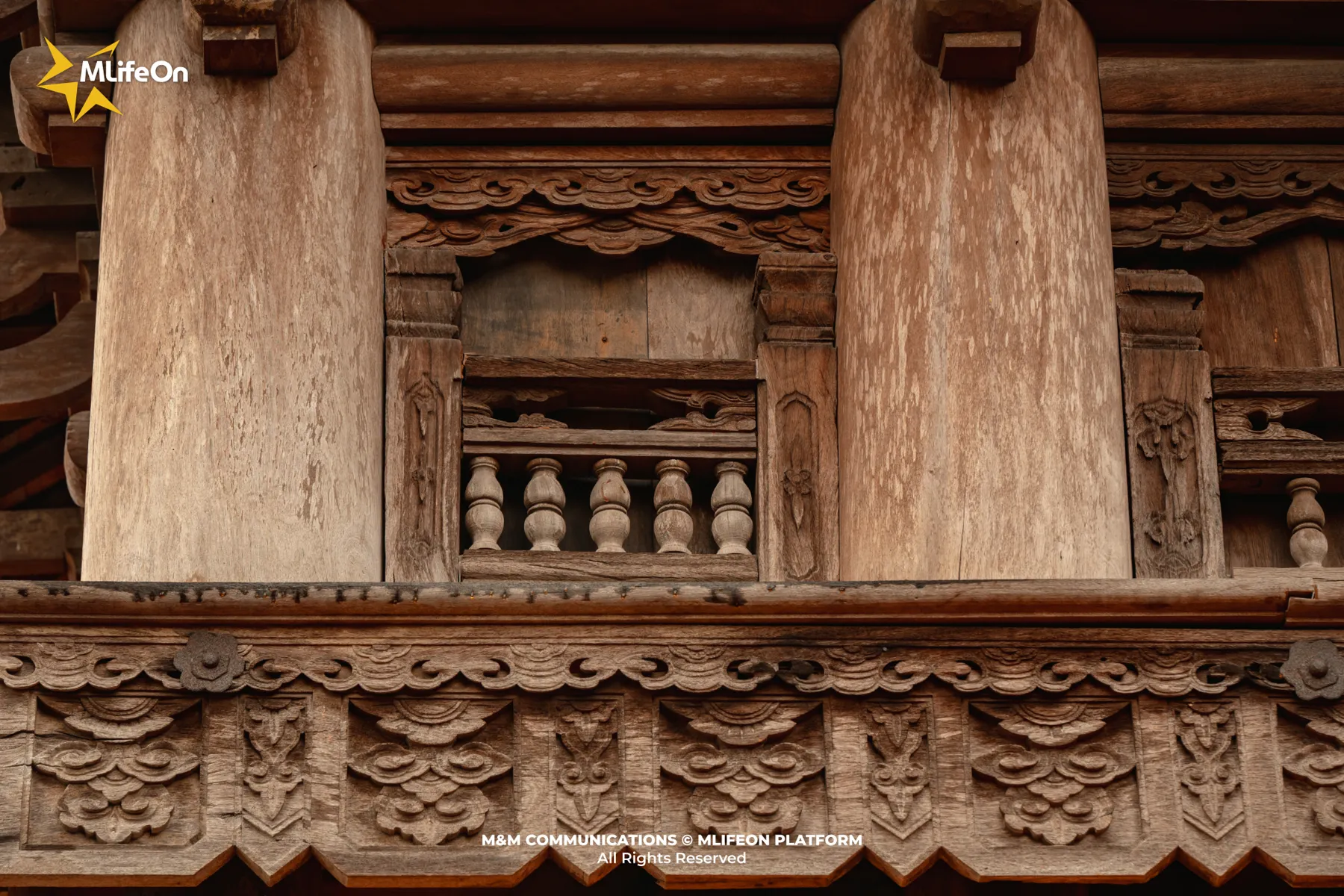
The techniques of undercut relief and openwork carving are clearly demonstrated at Keo Pagoda.
More than just a structure
Today, Keo Pagoda is not only a place of worship for the Buddha and Zen Master Duong Khong Lo but also a significant cultural and spiritual destination in Hung Yen.
Every year, the Keo Pagoda Festival draws tens of thousands of tourists and Buddhists to Hung Yen province. It is not only an occasion to honor the merits of Zen Master Duong Khong Lo but also an opportunity for locals and visitors alike to immerse themselves in the atmosphere of a traditional festival, featuring palanquin processions, rituals, *Cheo* singing, and folk games.
All create a vivid picture of Vietnamese culture, where the past and present coexist in the rhythm of community.
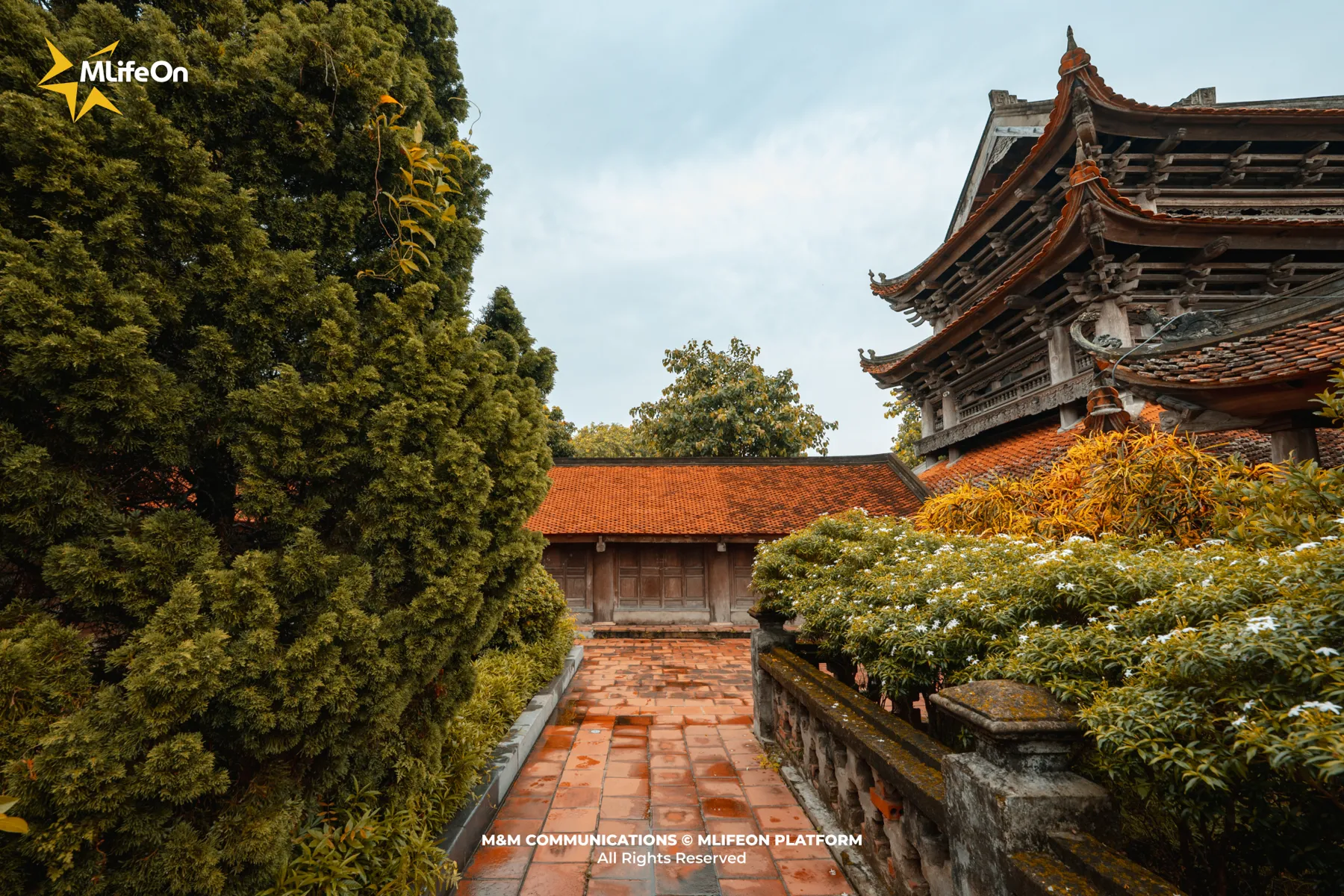
It can be said that Keo Pagoda stands as a testament to the enduring nature of national culture. Upon visiting, travelers not only admire a unique architectural marvel but also experience a harmonious blend of history, art, and spirituality, a living heritage in the heart of the Northern Delta.
Conclusion
Keo Pagoda in Hung Yen is a precious gem within Vietnam's cultural heritage. With its exquisite, unique architecture and profound historical significance, the pagoda serves not only as a place of pilgrimage but also as a testament to the wisdom and spirituality of our ancestors.
Visiting Keo Pagoda feels like a return to one's roots, listening to the resonance of bells echoing through the centuries, a reminder of an enduring heritage.
—------
CREDIT:
- Photography: Luan Nguyen
- Content: Giang Huynh
- Design: Phuong Nguyen