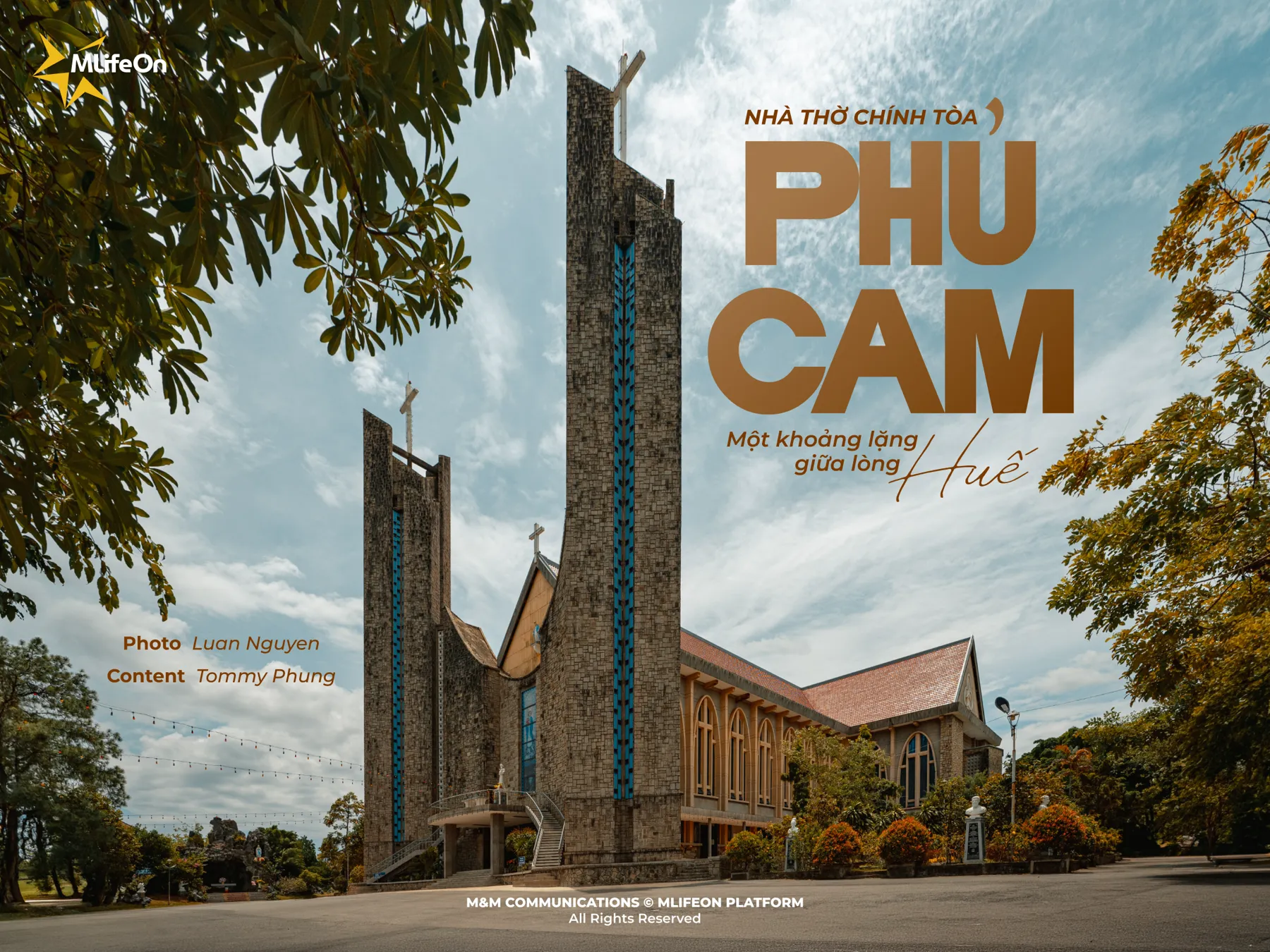
CON CHA FISHING PORT - WHEN THE NETS RETURN
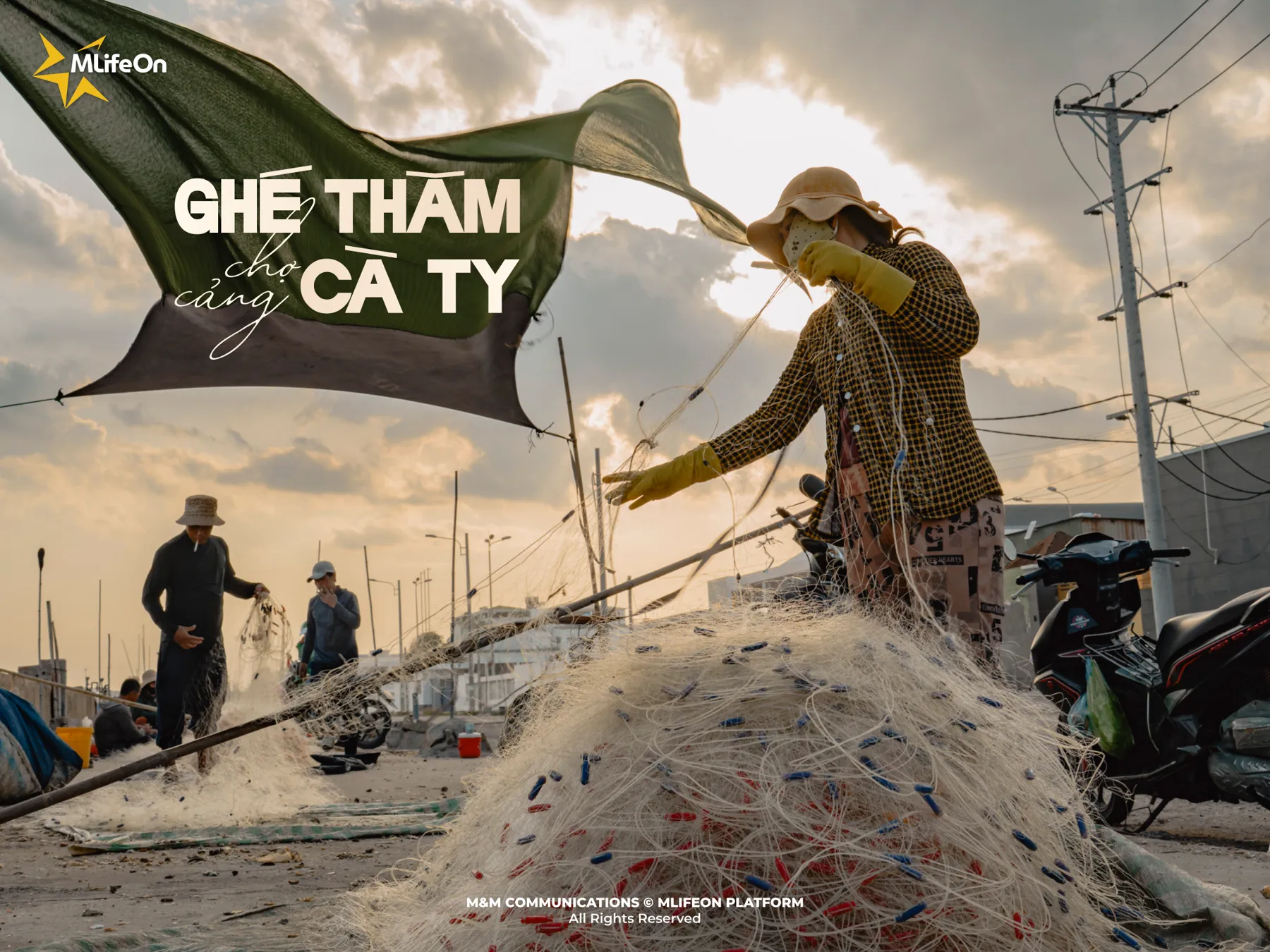
Discover Con Cha Fishing Port along the Ca Ty River, where the rhythm of life at sea unfolds through fishing nets and the striking presence of the local fishermen.
I arrived at the Con Cha fishing port on a windy morning, not at the moment when boats were docking or the overflowing holds of fish were being unloaded, but during a quieter interval, when fishing nets were being mended.
With nets spread out under the sun, and hands and faces weathered by the elements… The Con Cha fishing port market that morning was breathtakingly beautiful.
Returning to the Con Cha fishing port
It is often said that to understand a coastal city, one should visit its fishing port. In the case of Phan Thiet, that place is the Con Cha fishing port.
Located near the mouth of the Ca Ty River, in the heart of Phan Thiet City, lies the Con Cha fishing port, also known simply as Phan Thiet fishing port. It evolved from a riverside fish market into a structured facility designed for vessel mooring, commercial trade, and the provision of logistical support for fishing boats. Although Phan Thiet is now part of Binh Thuan Province (and distinct from Lam Dong Province), for many, Con Cha remains deeply intertwined with the coastal identity of Binh Thuan and the lives of generations of local fishermen.
Unlike beaches defined by their poetic beauty, Con Cha bears the distinct character of a genuine working environment. Here, one finds boats moored side by side along the waterfront, coils of rope, expansive fishing nets, and the ceaseless rhythm of a community that thrives on the sea.
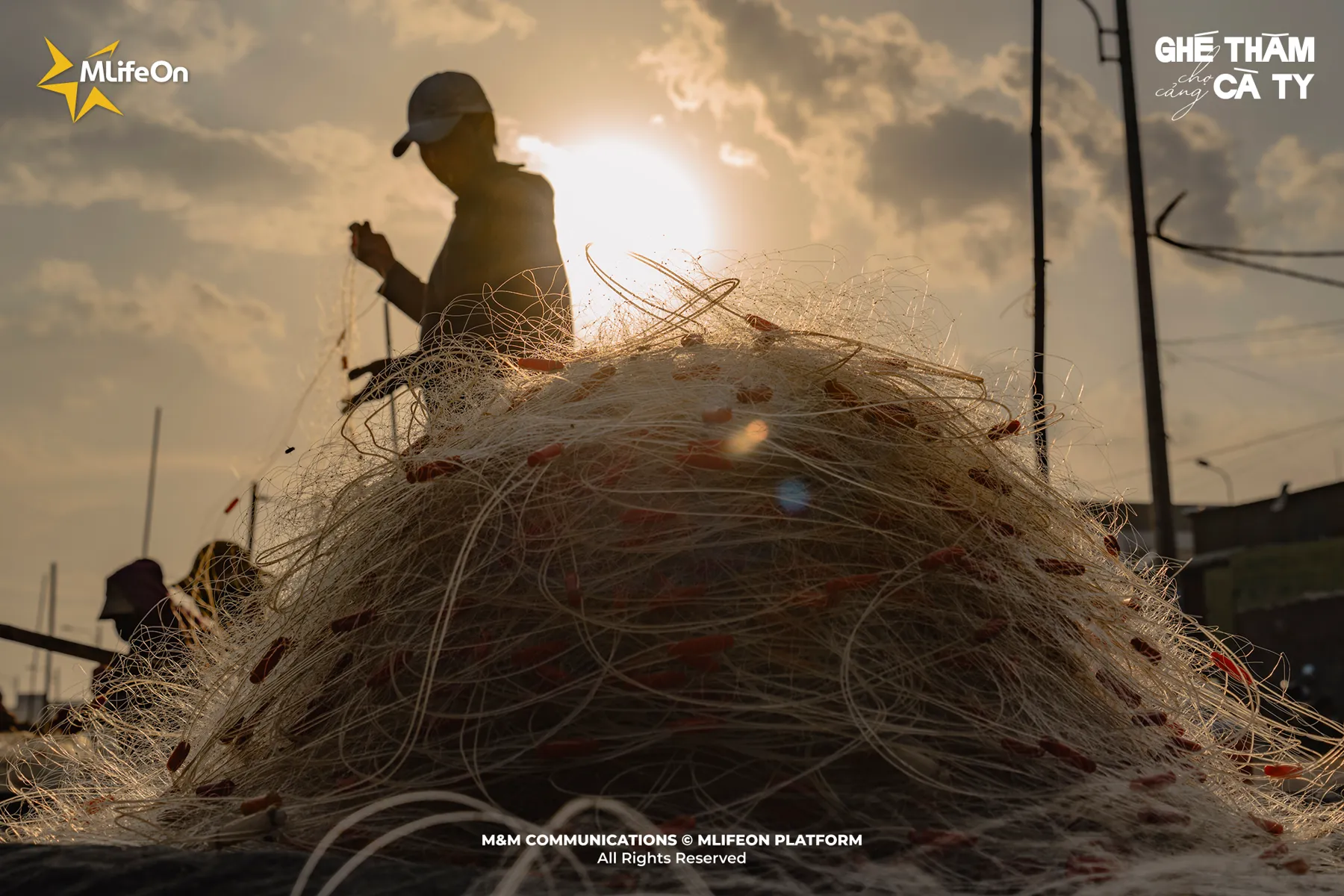
The People Behind the Net
While boats may steer people toward the open sea, fishing nets draw the story back to the familiar shore.
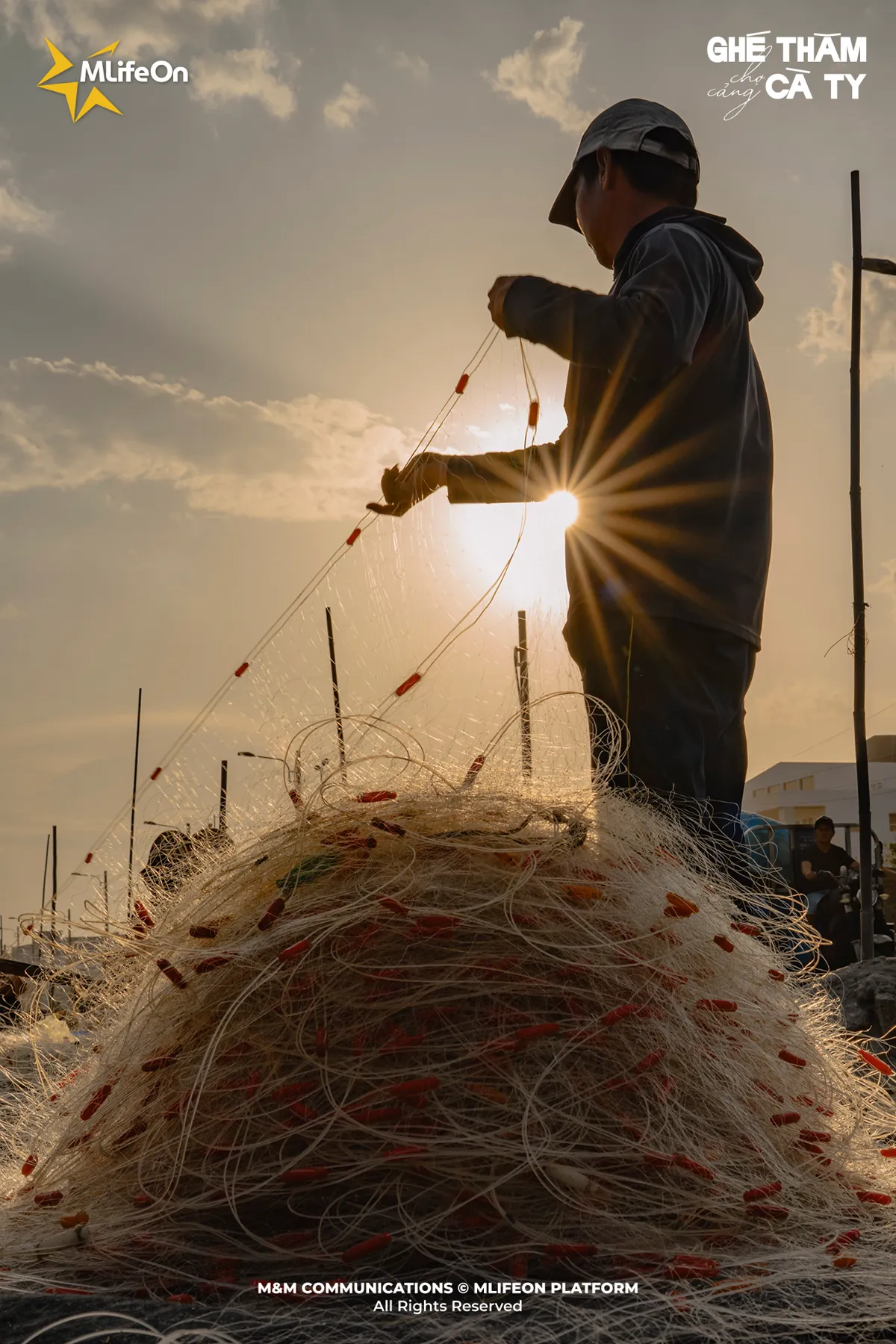
I came across a few men sitting around a large fishing net. Some were mending torn meshes, while others pulled sections of the net through their hands, searching for any damage. Still others were patiently untying knots that had pulled tight during days spent out at sea.
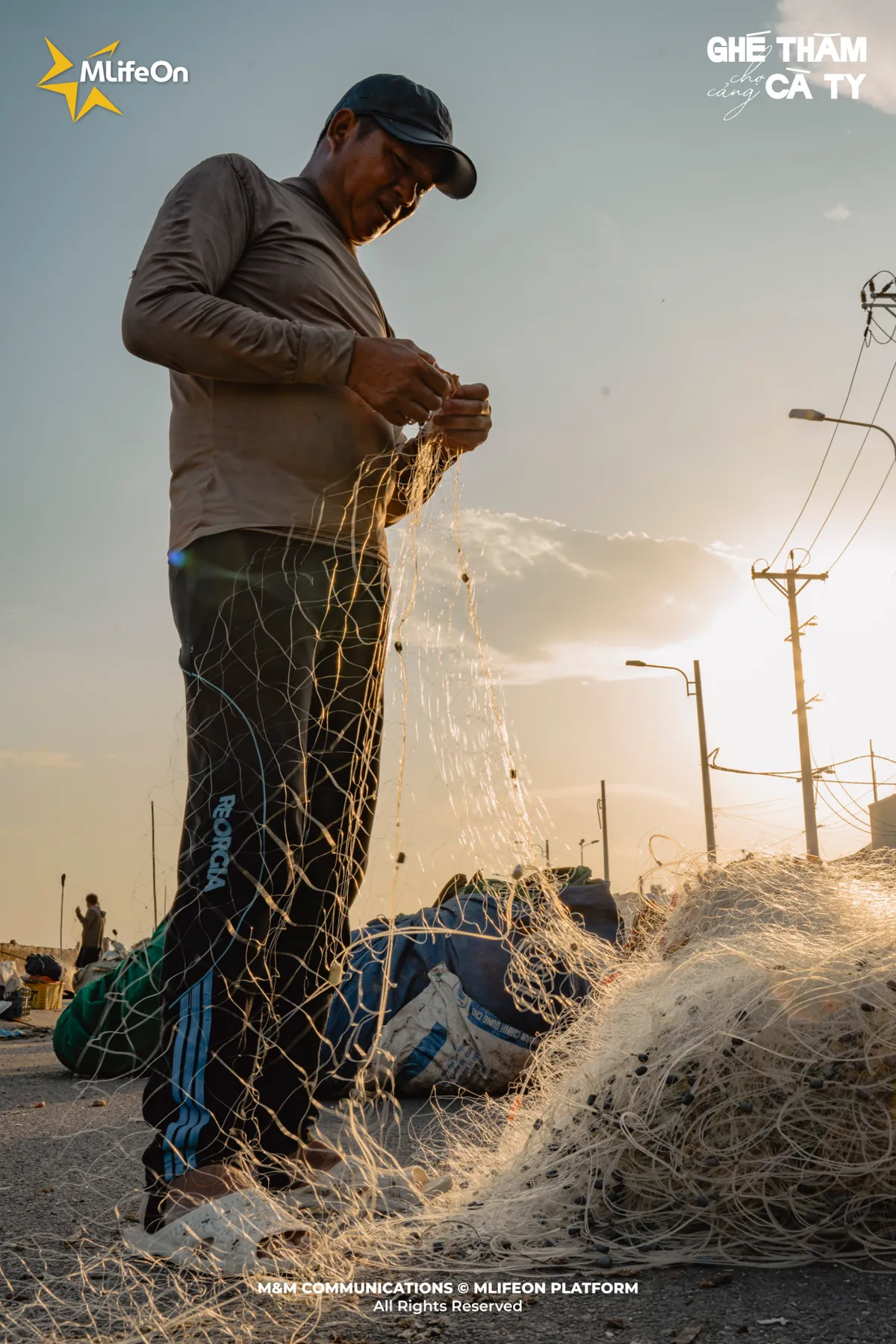
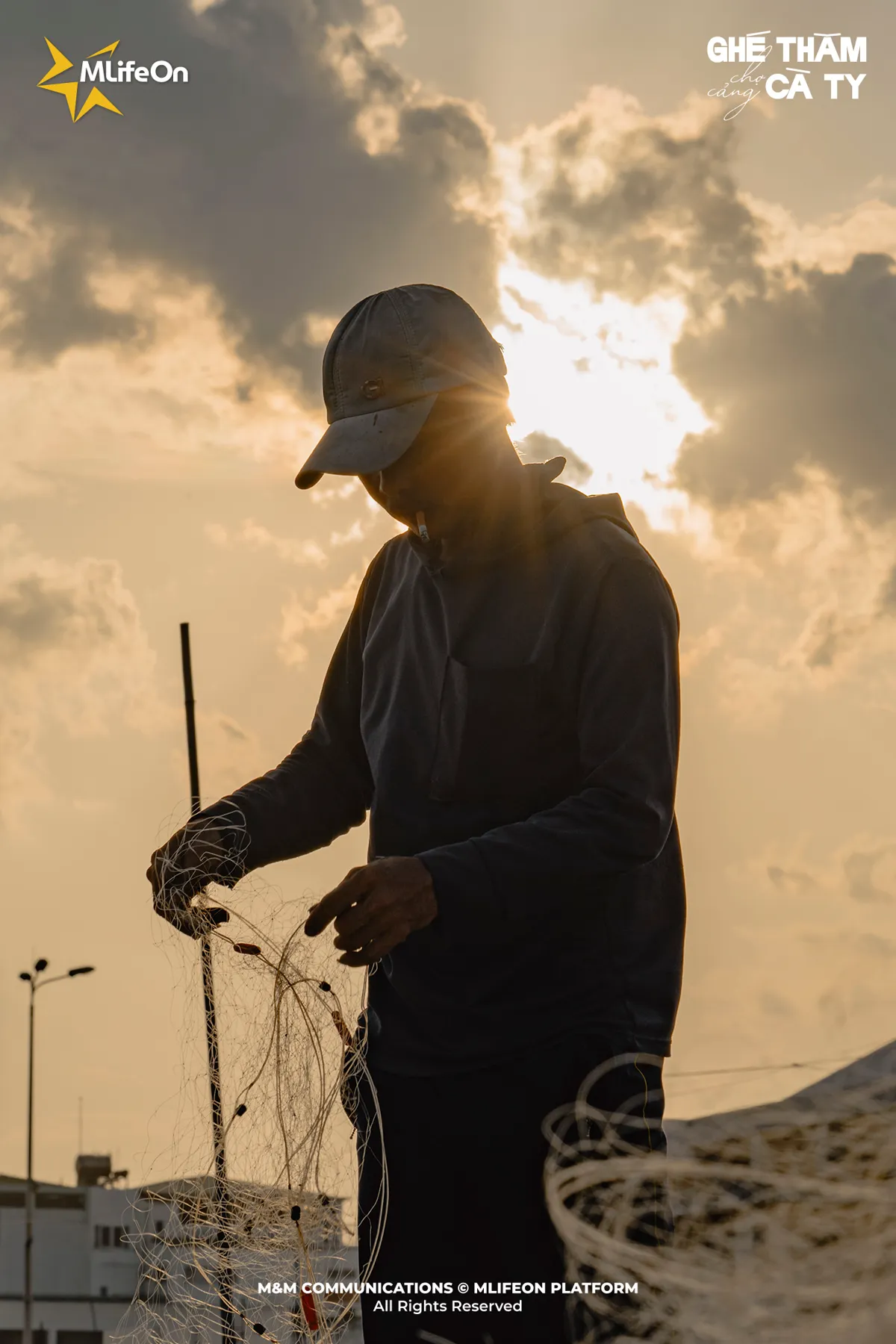
The work proceeded at a slow pace.
Beyond the sound of conversation and the rustling of fishing nets, the only other noises were the occasional breeze blowing in from the harbor entrance, mingled with the sound of waves lapping against the shore. In a fishing port typically known for its bustling activity, this moment offered a rare sense of tranquility.
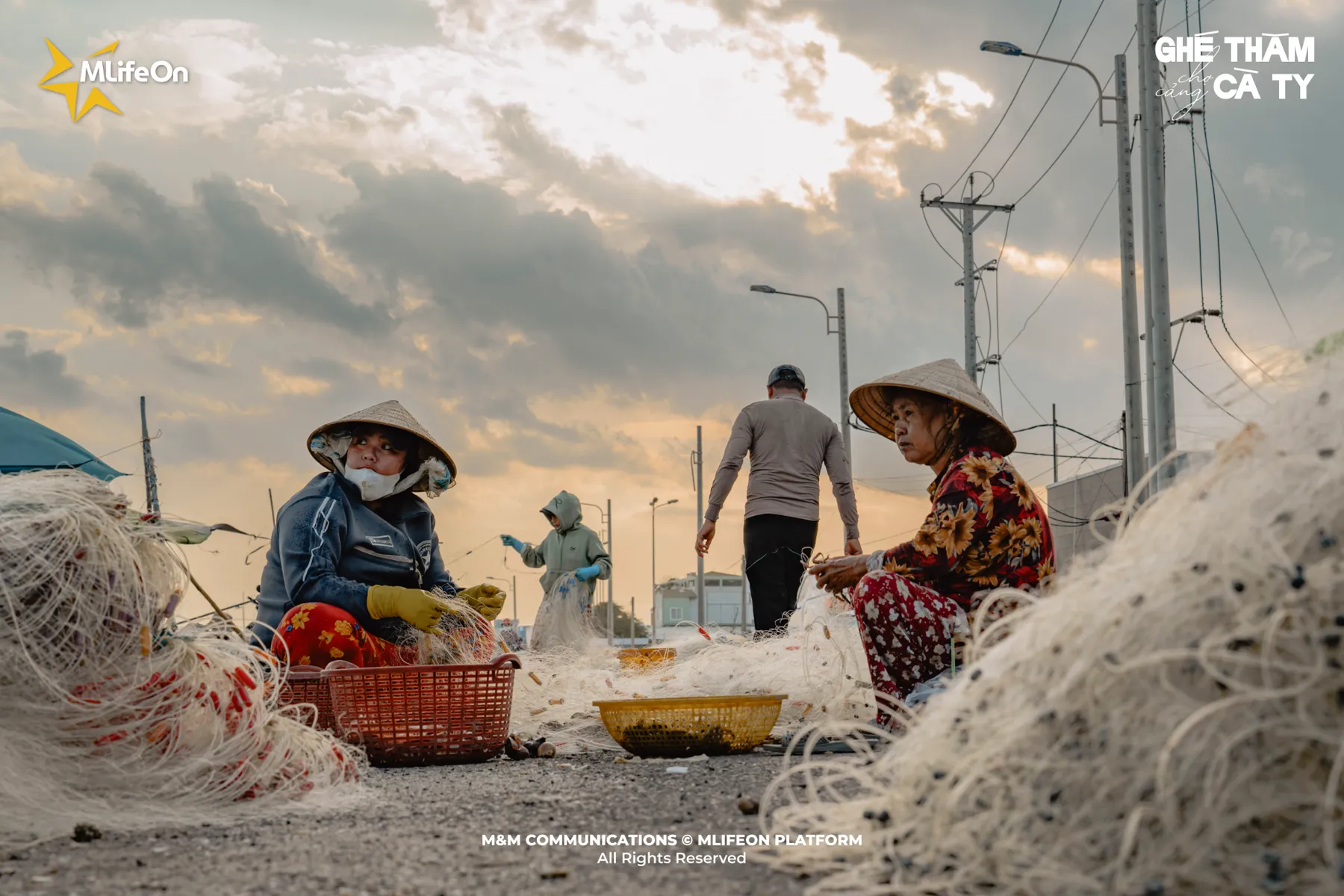
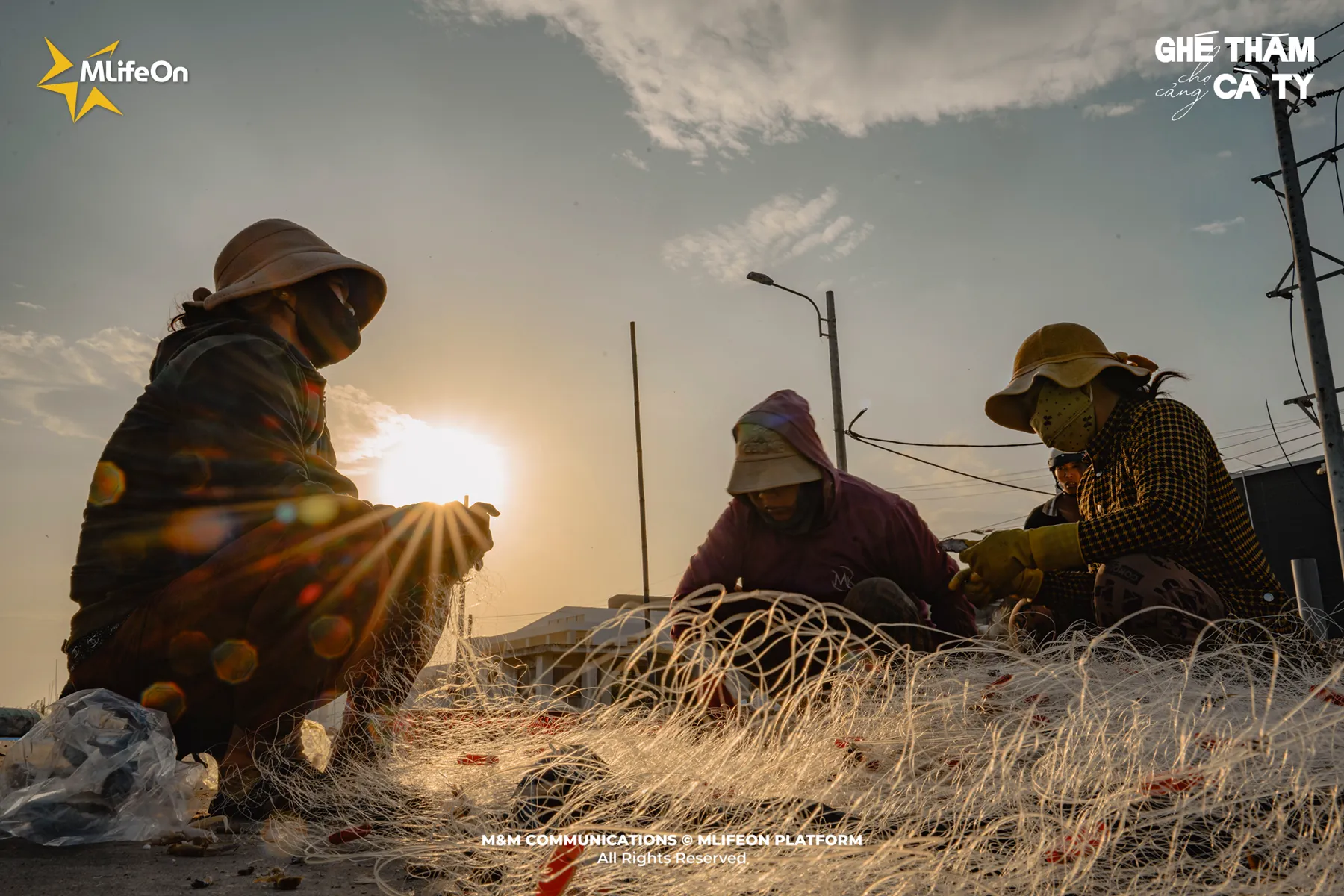
At first glance, mending a fishing net might seem like nothing more than reconnecting broken strands. In reality, however, the task requires the mender to locate specific tears amidst thousands of tiny, tightly interwoven knots. Tangled or damaged sections must be unraveled and reconnected, ensuring the net is strong enough to withstand the weight of the catch, the pressure of the water, and the strain exerted by the fishermen during their next voyage. This is a job that requires patience, a keen eye for detail, and hands well-accustomed to every knot.
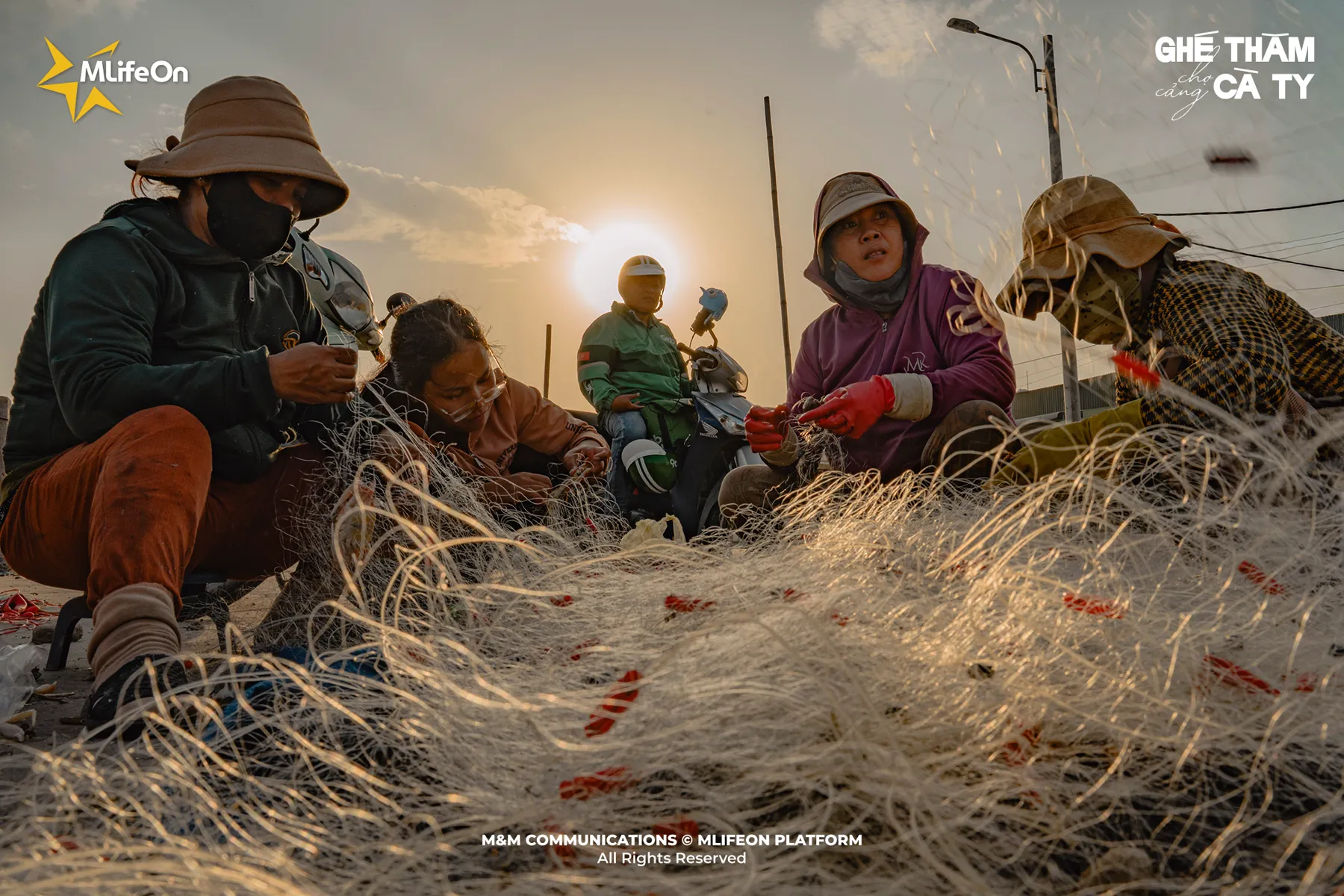
And so, the hands repeat their familiar motions, pulling, connecting, then pulling again, with such practiced ease that it has become a rhythmic part of the work at the Con Cha fishing port.
Conclusion
Leaving the Con Cha fishing port, what lingers longest in my memory is not the line of boats moored along the river mouth, nor the trays of fish just unloaded from their holds. Instead, it is the patches of sunlight resting upon the fishing nets, and the people sitting beside them.
These nets have spent days adrift at sea, worn and frayed by the rigors of labor and the heavy burden of making a living. Now, back on shore, they are being mended, their “wounds” inflicted by the sea stitched up, as they find a moment of rest and healing.
In places like the Con Cha fishing port, the open sea is a destination, while the docks and wharves are the place to return to.
Thus, to truly understand a coastal city, one does not necessarily need to venture far out to sea; sometimes, it is enough simply to sit by the harbor after a voyage.
—--------
CREDIT:
- Photography: Quan Tran
- Content: Giang Huynh
- Design: Phuong Nguyen