PHU CAM CATHEDRAL - A QUIET MOMENT IN THE HEART OF HUE
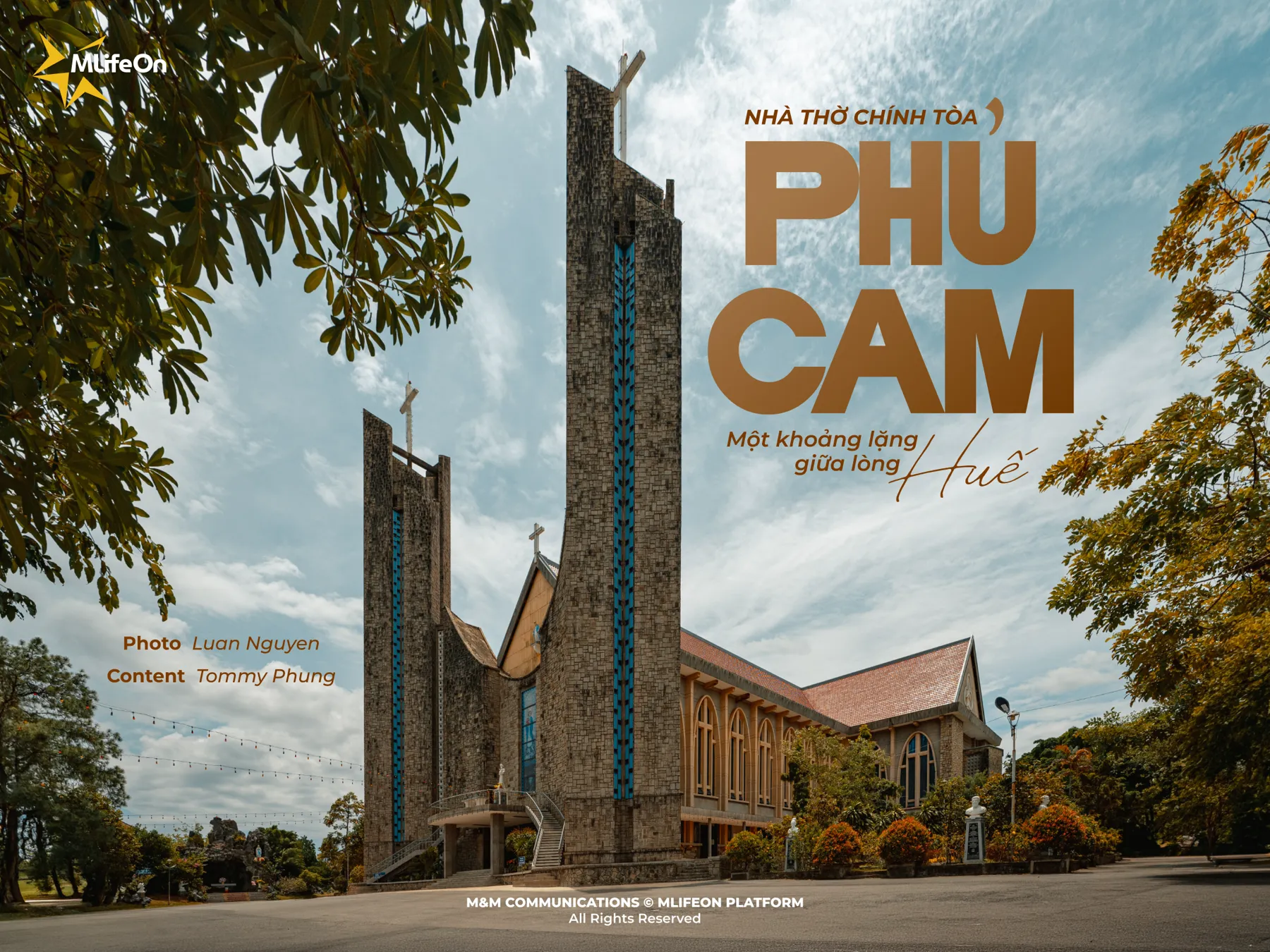
Explore Phu Cam Cathedral through Nguyen Dinh Luan’s award-winning photographs, marking the centenary of architect Ngo Viet Thu’s birth.
Tall towers against a blue sky, sunlight warming stone walls, light softened by coloured glass. Through Nguyen Dinh Luan’s photographs, Phu Cam Cathedral feels both imposing and welcoming. As 2026 marks the centenary of architect Ngo Viet Thu’s birth, join MLifeOn for a closer look at one of the buildings he left to Hue.
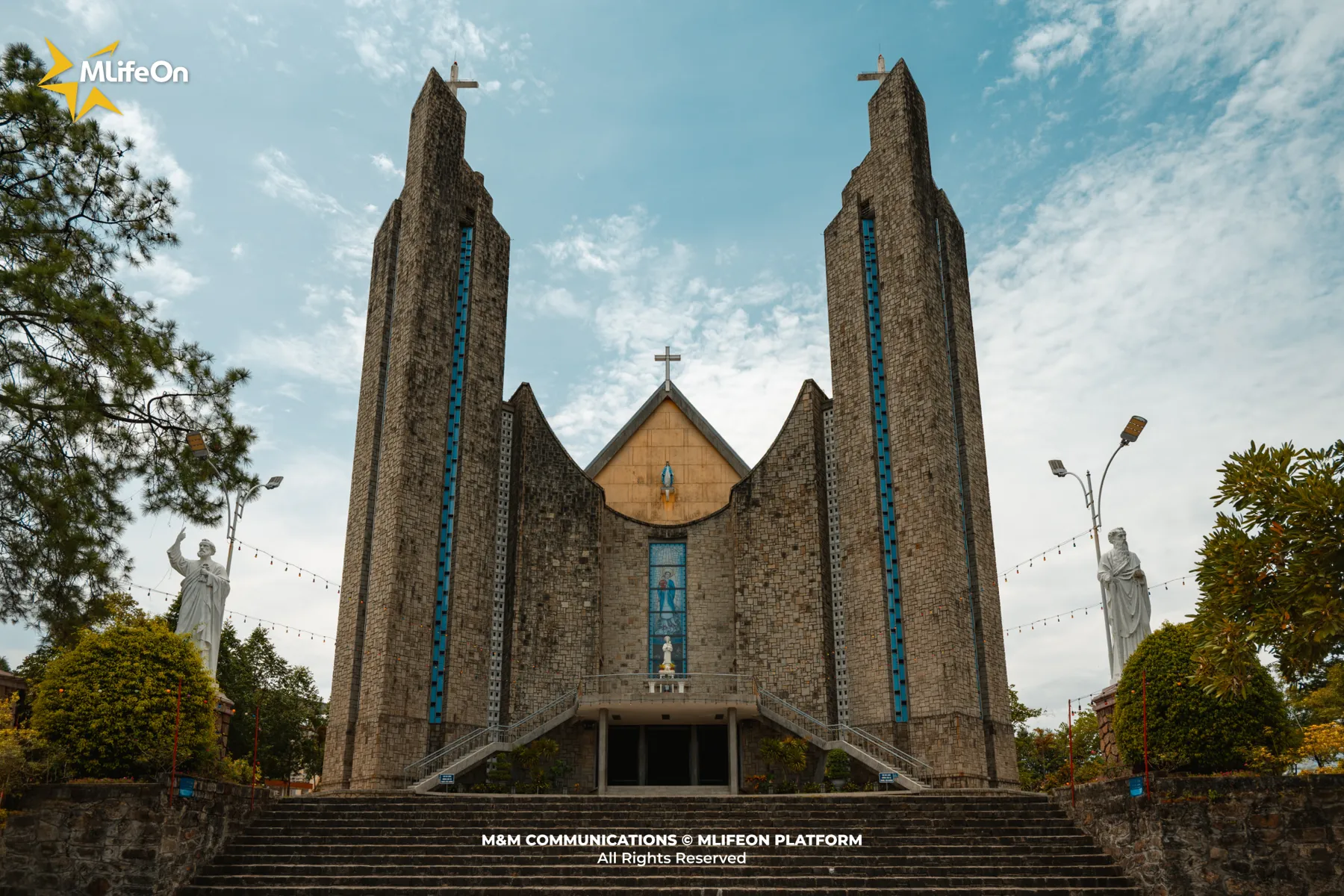
The twin towers of Phu Cam Cathedral rise into the sky above Hue.
Some places make us want to linger, even before we know much about their history or architecture. Phu Cam has that effect from the first photographs. Above a broad flight of steps, its two towers reach into the sky. Sunlight falls across the brown and grey stone, interrupted by slender strips of blue glass.
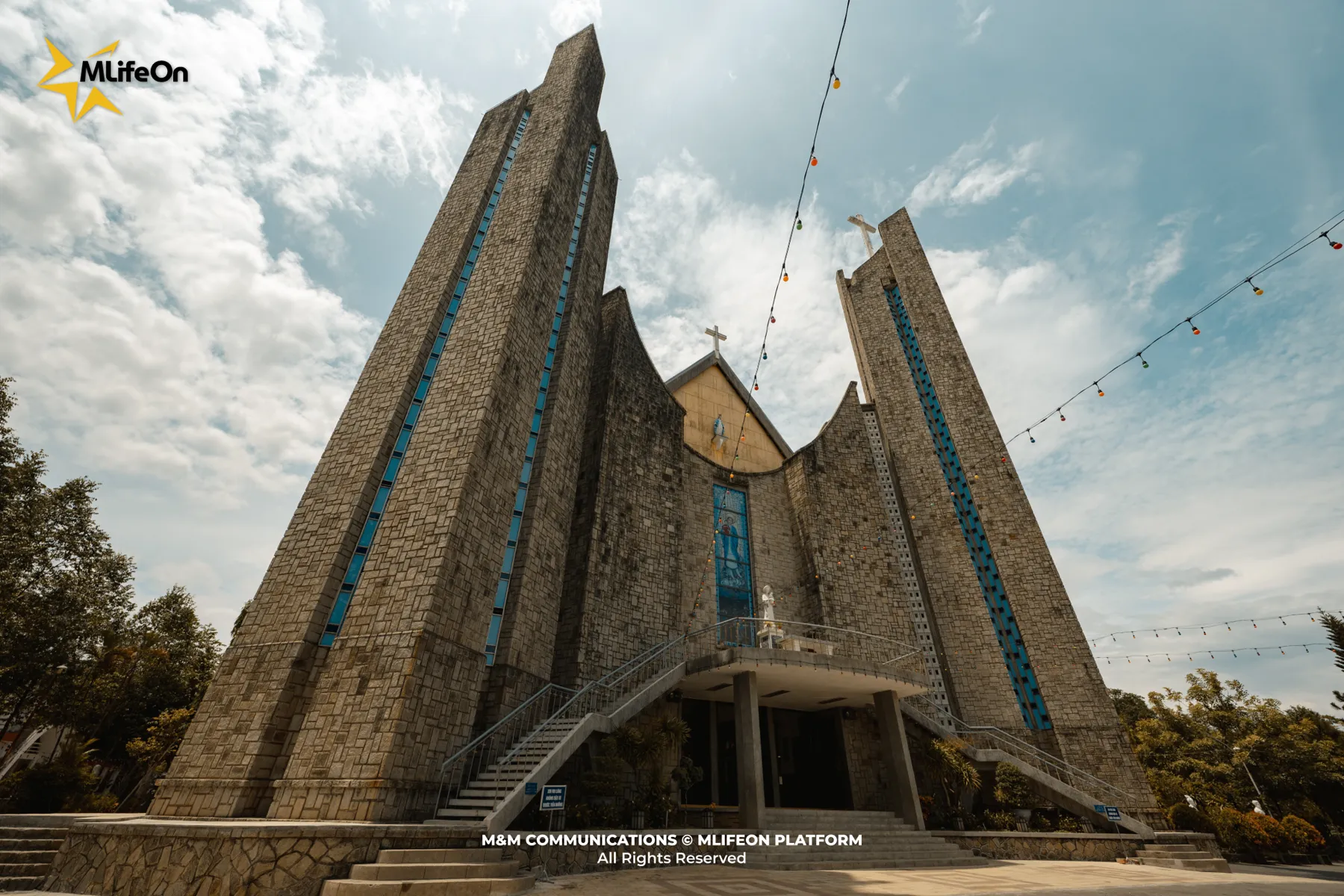
The building’s scale catches the eye from a distance. As we look through the photographs, smaller things begin to hold our attention: a sunlit corridor, a pattern on a wooden door, an aisle glowing between dark rows of pews. With each view, the cathedral feels a little more familiar.
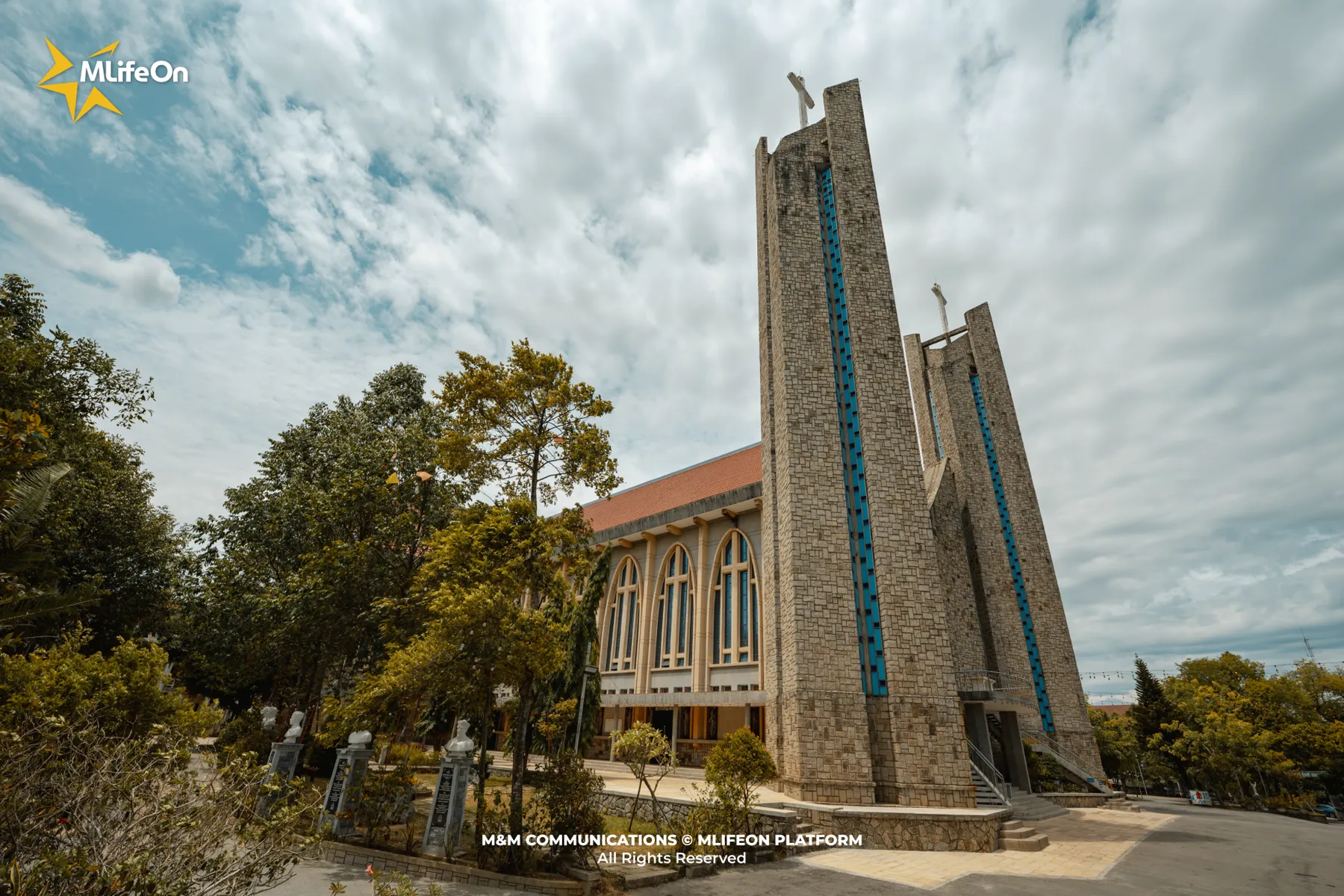
Nguyen Dinh Luan, a member of the photography team at M&M Communications and MLifeOn, takes us from the courtyard into the cathedral itself. The story of this building, designed by Ngo Viet Thu, begins with a simple wish to look a little longer and learn a little more.
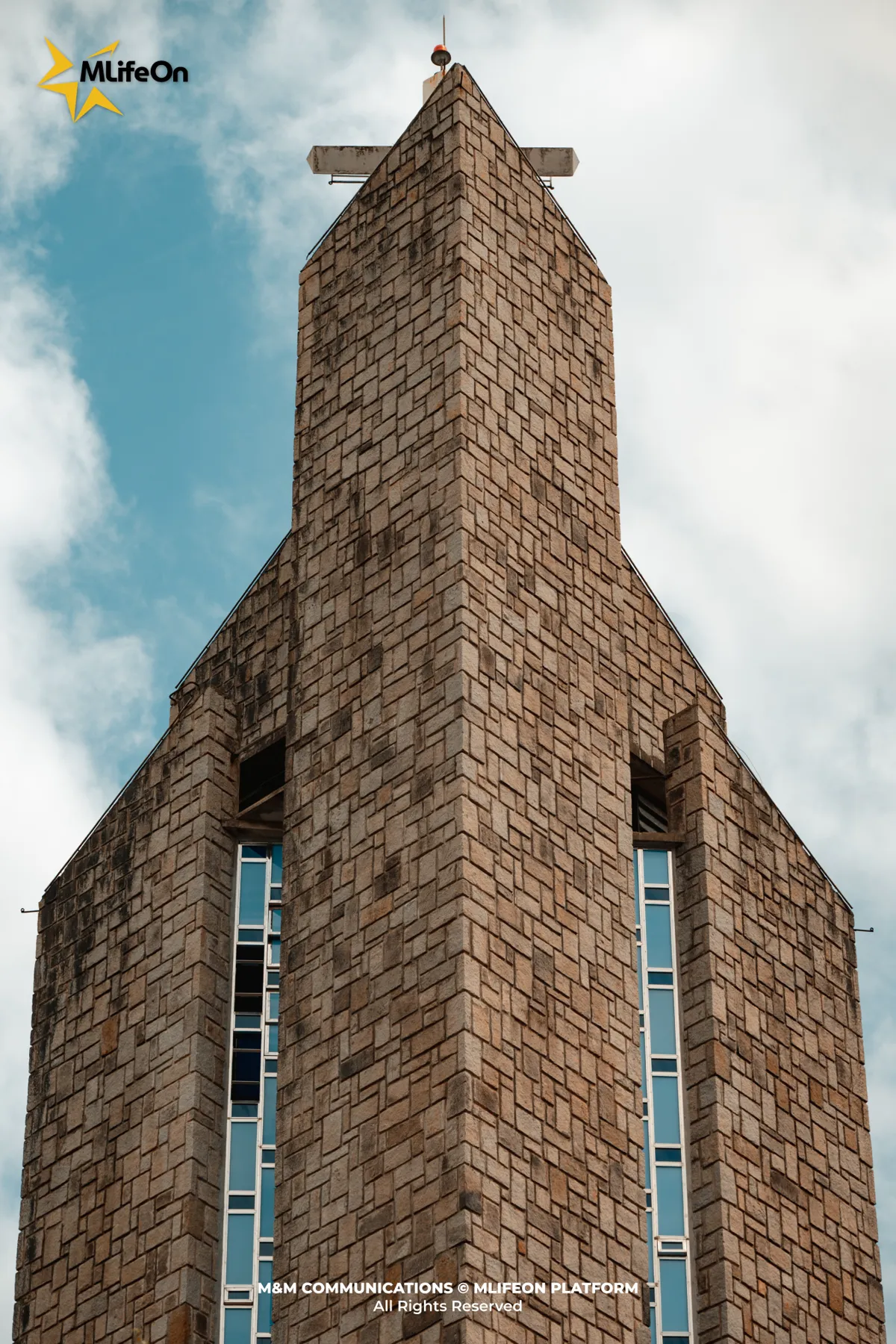
Looking up at a cathedral tower beneath passing clouds.
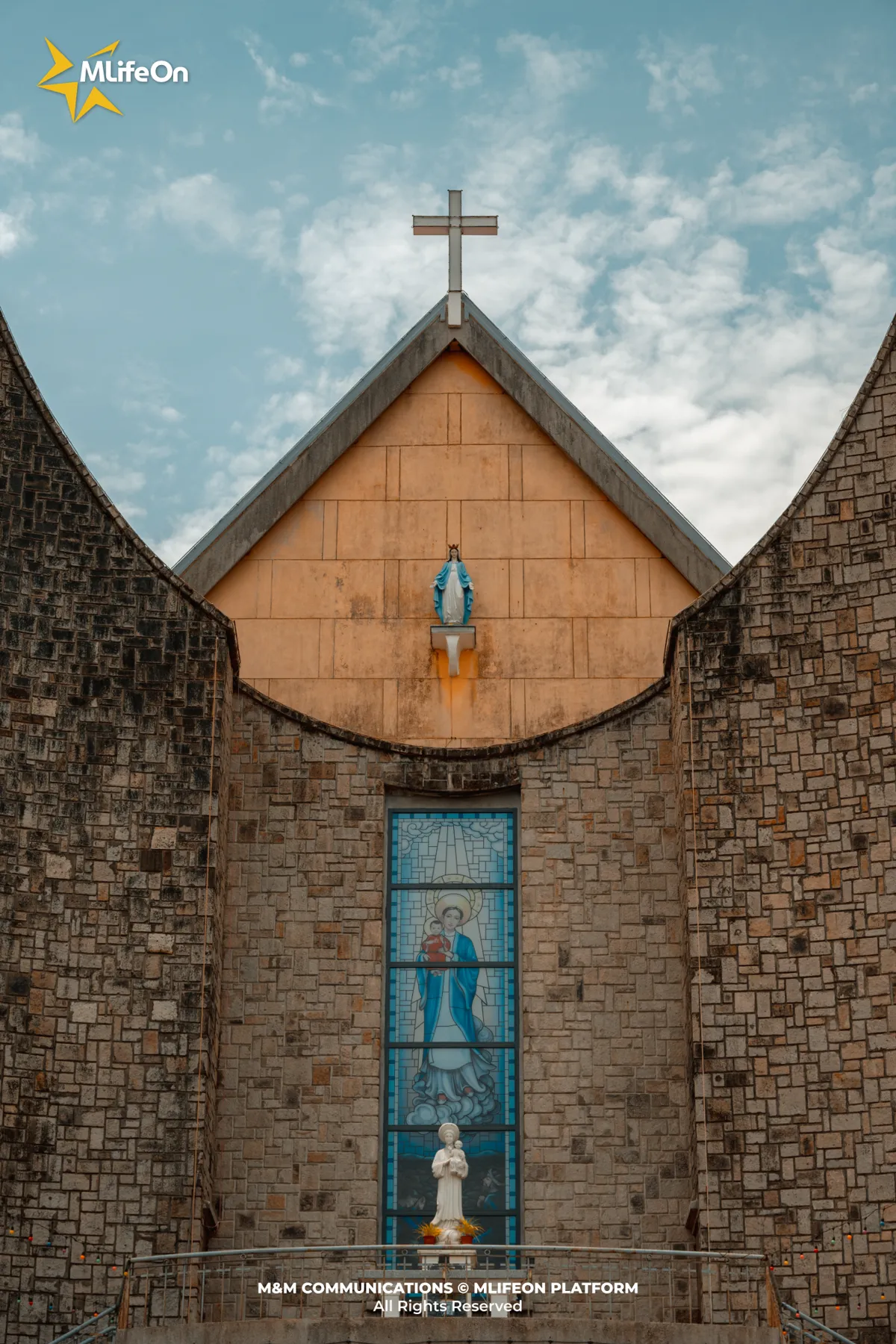
The central facade between the towers, with its cross and blue glass window.
Another Side of Hue
For many visitors, Hue brings to mind old tiled roofs, citadel walls, imperial tombs and the Perfume River. Alongside those familiar sights, Phu Cam adds a distinctive work of modern architecture to the city.
The present Phu Cam Cathedral was designed by architect Ngo Viet Thu. Construction began in 1963 and continued through several phases before the cathedral was consecrated on 29 June 2000. Nearly four decades passed between its beginnings and completion, long enough for successive generations to watch it gradually take shape.
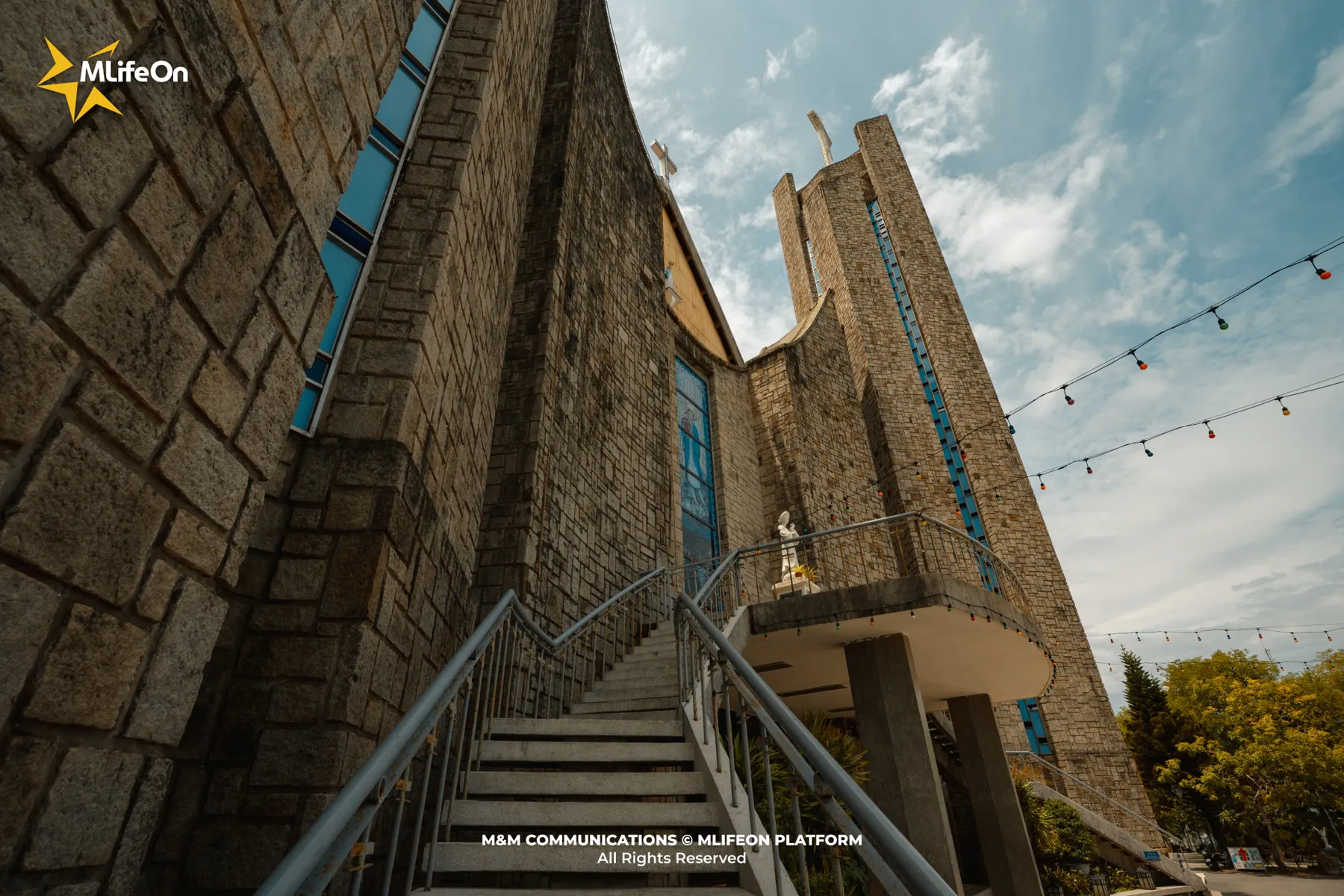
Phu Cam seen from the foot of the steps leading to the cathedral.
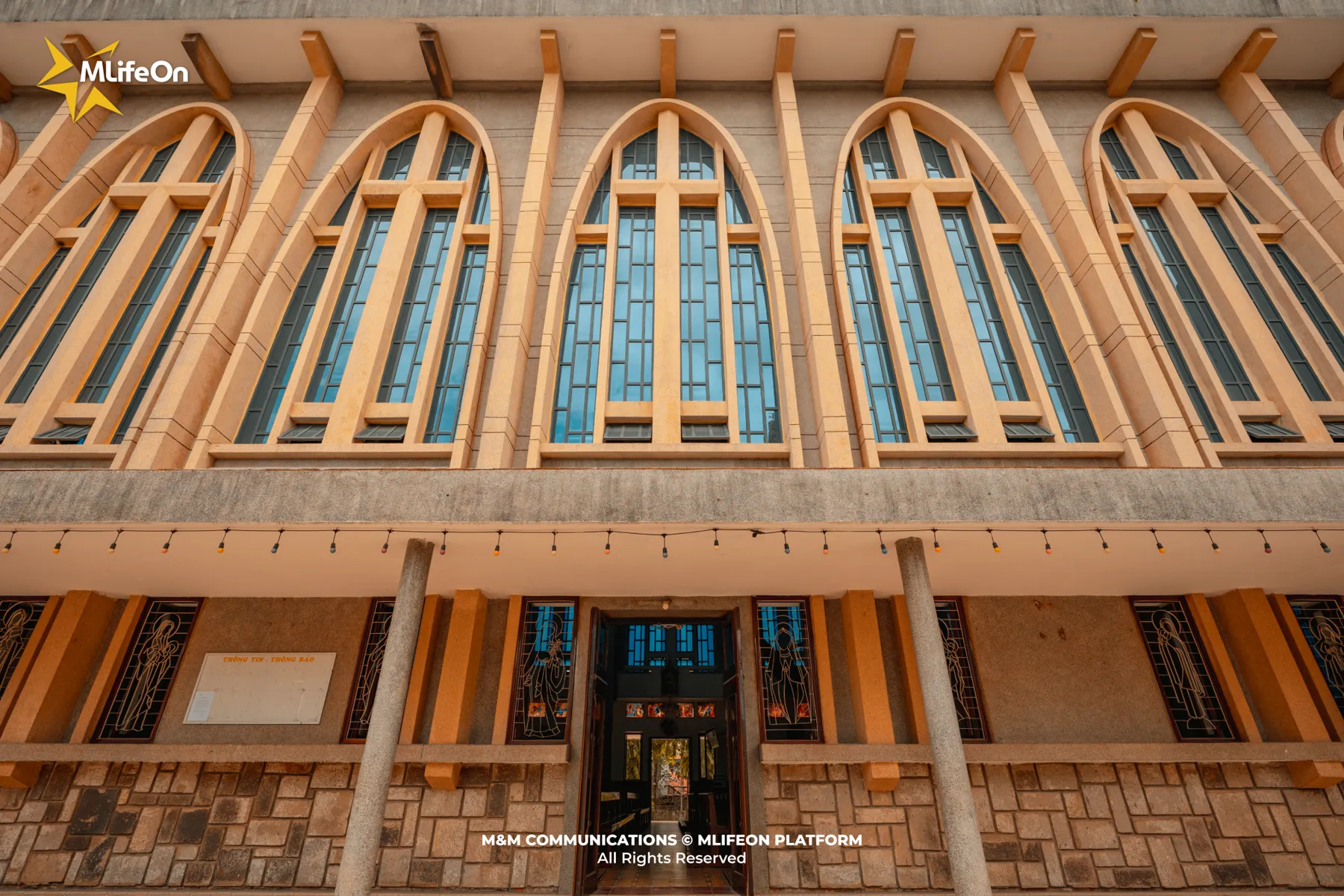
A row of tall windows along the side of the cathedral.
In the frontal view, the broad steps beneath the towers give the cathedral a solemn presence. From the side, the stairways, walls and windows become easier to distinguish. Warm sunlight softens the stone, while the surrounding trees offer a gentle contrast to the building’s strong lines.
Perhaps this is why Phu Cam feels so approachable in these photographs, despite its size. Beyond the striking silhouette are courtyards, corridors and open doors. It is easy to imagine walking slowly around the cathedral, stopping whenever a detail catches your eye.
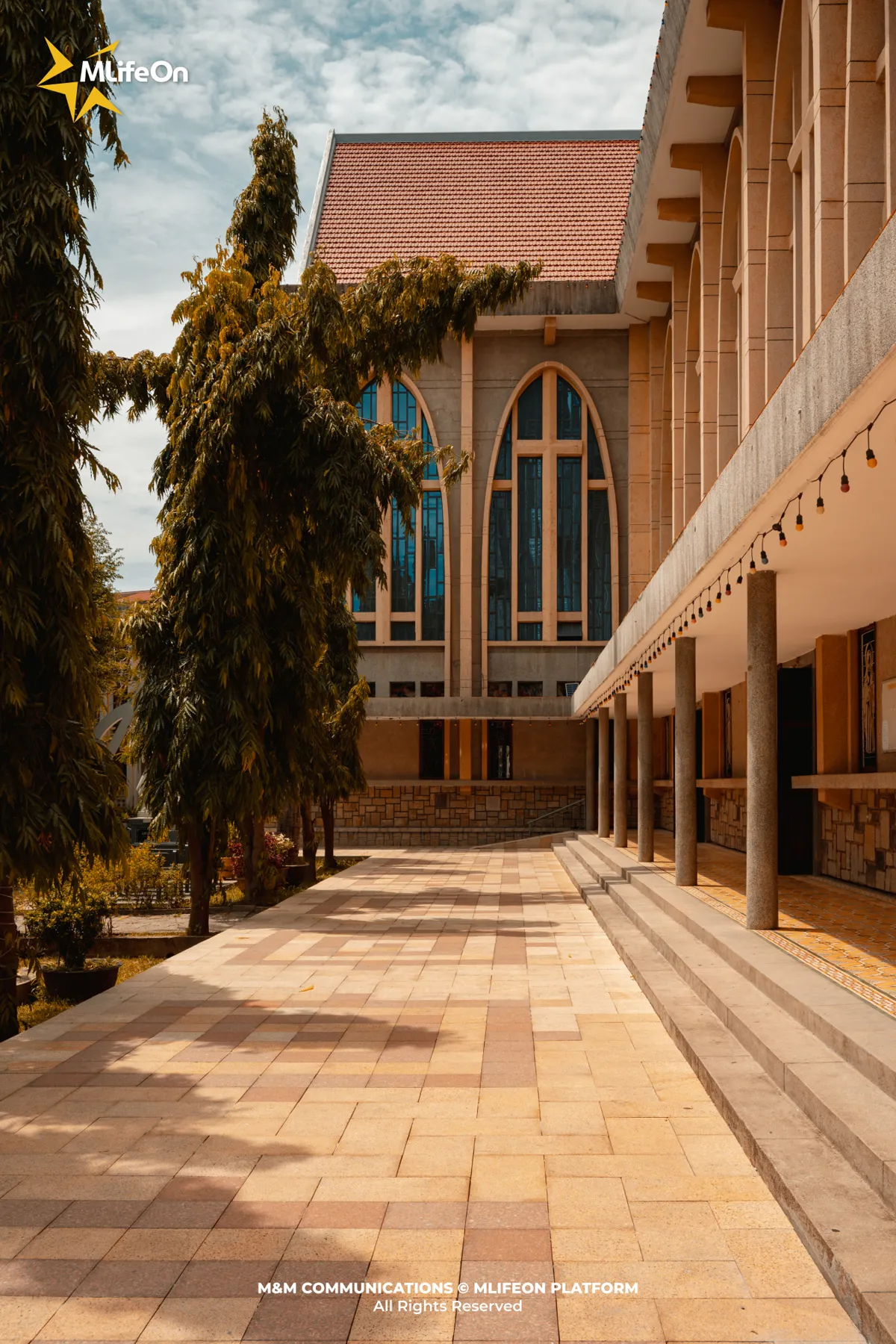
Sunlight spreads across the courtyard beside the cathedral.
Ngo Viet Thu’s Legacy at Phu Cam
17 September 2026 marked the centenary of the birth of architect Ngo Viet Thu. His work includes Independence Palace, Hue University of Education and Phu Cam Cathedral.
The anniversary is an occasion to remember a gifted architect and spend more time with the buildings he left behind. At Phu Cam, that can begin quite simply: by looking up at the two towers, or stepping inside to experience the space for yourself.
The photographs reveal how closely the cathedral’s details relate to one another. The rising lines of the facade find an echo in the high arches within. The blue glass on the towers appears again in the interior windows. Moving through the images from outside to inside, we can recognise these connections without needing specialist knowledge.
Knowing who designed the cathedral adds something to the experience. Behind a building that has become part of Hue’s familiar landscape are one person’s talent and work. Years later, people discovering Phu Cam continue to encounter Ngo Viet Thu’s name. For some, that discovery may be the beginning of a lasting interest in architecture.
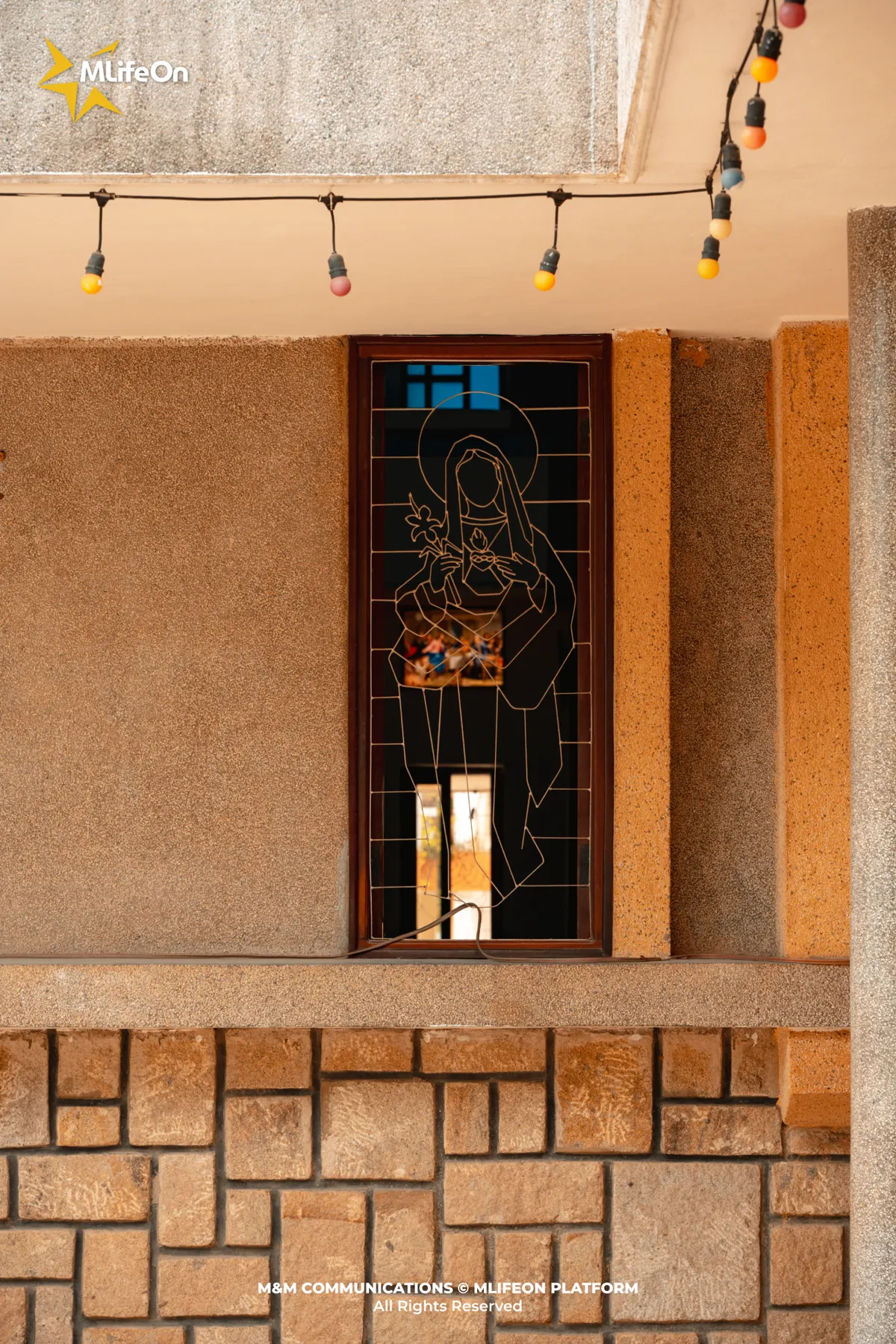
A small window set into walls warmed by sunlight.
Sunlight Outside and Stillness Within
The interior photographs feel quite different from the bright courtyard. Inside, dark wooden pews sit beneath a high ceiling. Light passing through the windows brings out shades of blue amid the warmer, quieter tones.
In the photograph facing the sanctuary, our eyes follow the central aisle before lifting towards the curves overhead. The repeating structural forms emphasise the depth and height of the cathedral. Even in a photograph, there is a sense of how small a person might feel beneath them.
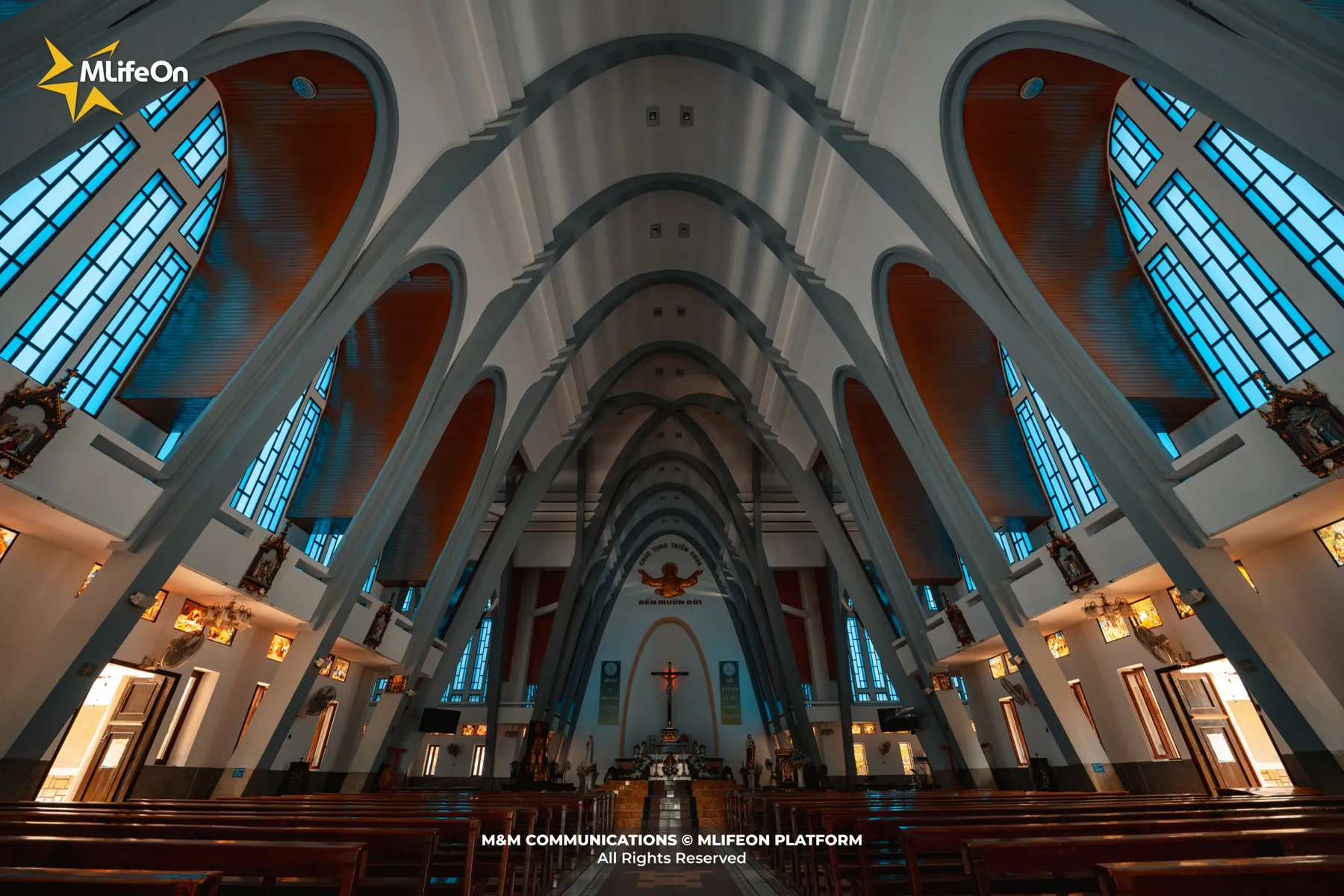
Orderly rows of pews beneath the cathedral’s soaring arches.
Another view looks back towards the entrance. Daylight stretches across the floor in a long strip between the pews. The open doorway in the distance offers a feeling of release, a bright opening in the stillness of the interior.
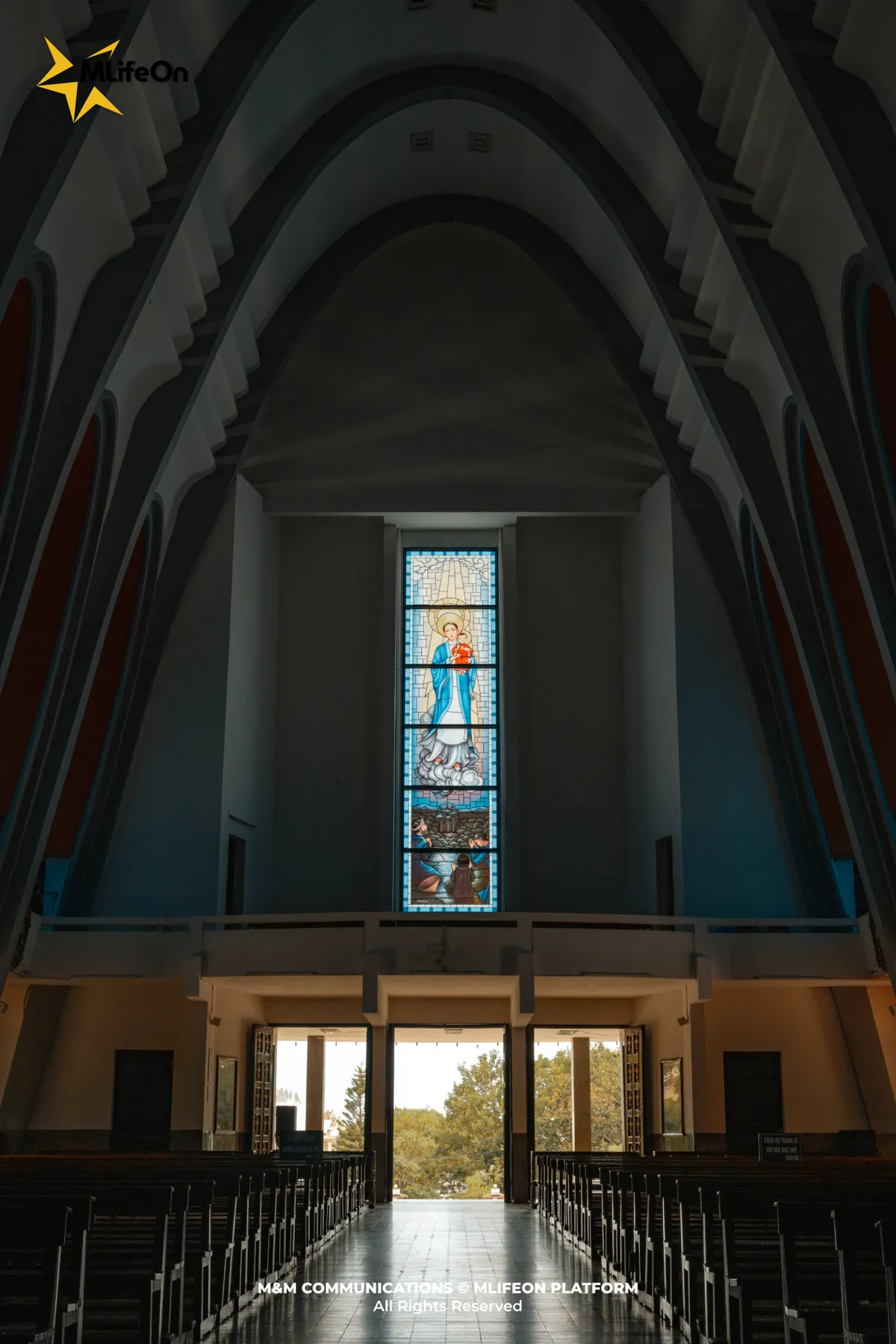
Light from the open entrance falls along the cathedral’s central aisle.
The photographs leave room for shadow as well as light. The coloured glass, wooden pews and walls gain depth from that balance. Rather than revealing everything at once, each image gives us a reason to look more closely.
The calm in these photographs feels unforced. An empty aisle, a few orderly rows of seats and daylight through a doorway are enough to make us pause. In the middle of a busy day, that quiet can be surprisingly memorable.
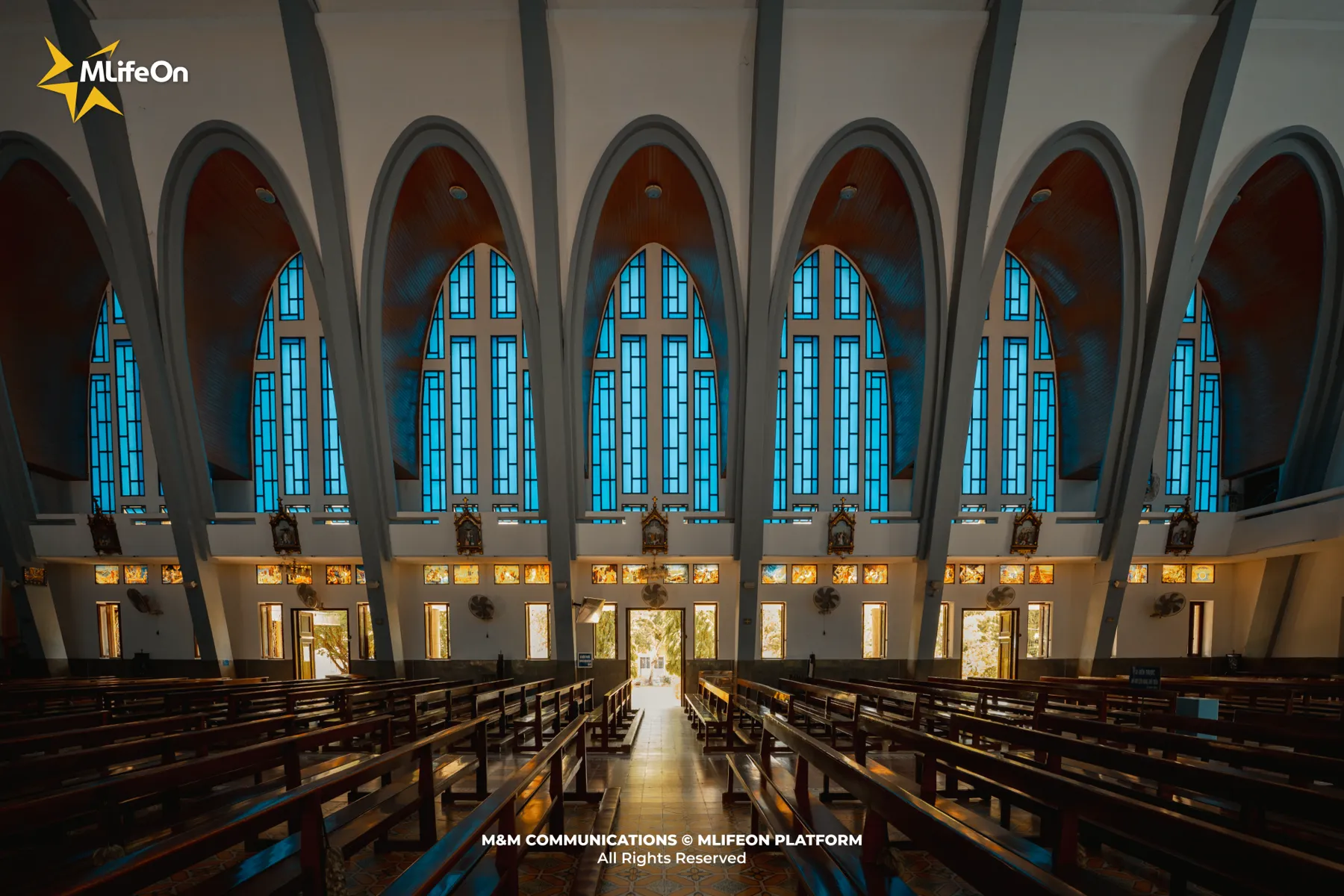
Blue glass stands out against the warm, subdued interior.
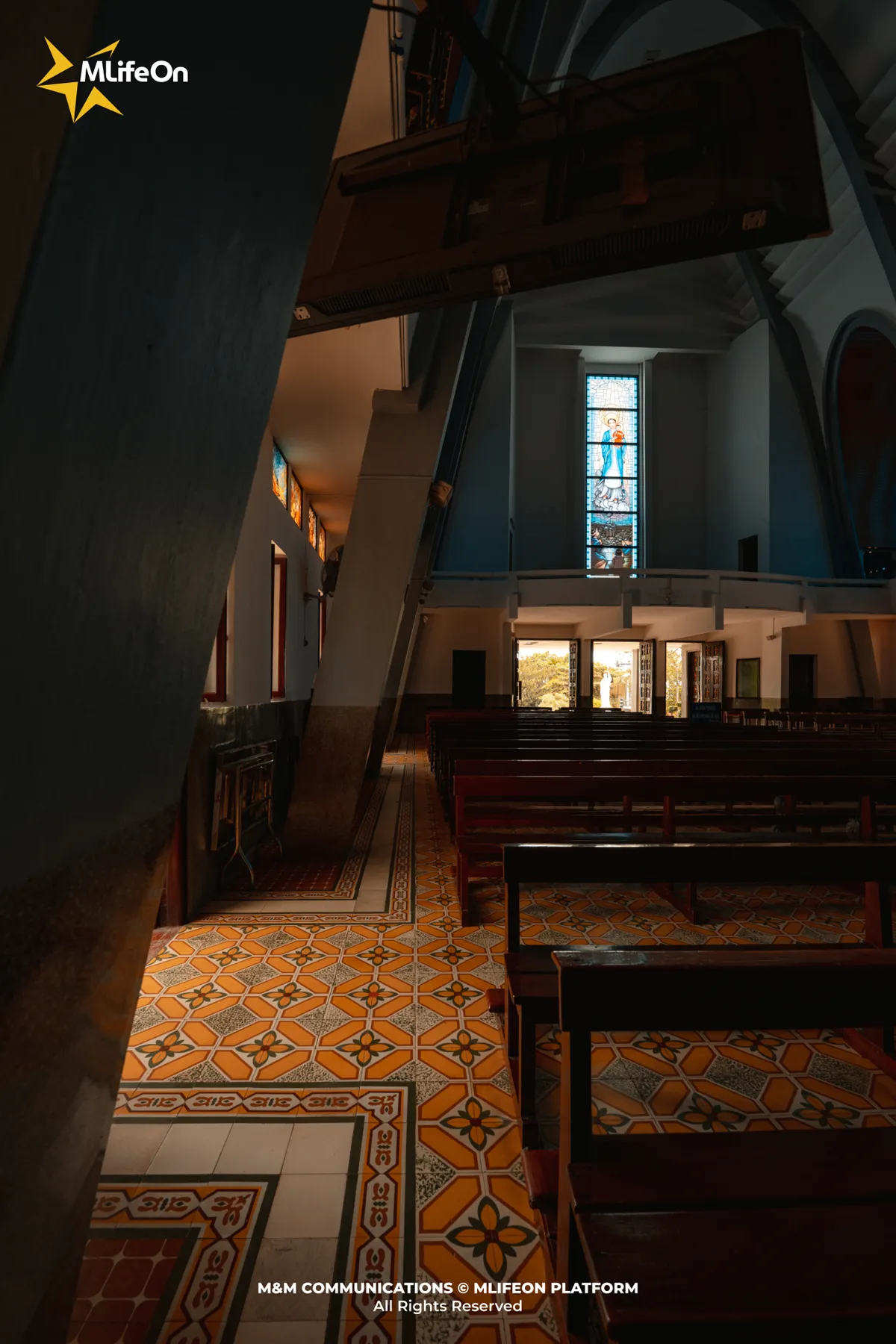
Light reveals the patterned floor tiles beside the pews.
Small Details Worth Stopping For
After the wider views, the photographs bring us closer to a stone wall, a corridor and a wooden door. Details that are easy to miss when standing before such a large building become worth a look in their own right.
In the corridor, sunlight falls on the tiled floor beside a column. A succession of doorways creates patches of light and shade along the passage. The warm walls and patterns underfoot lend the scene a familiar feeling, as though we might remember walking here ourselves.
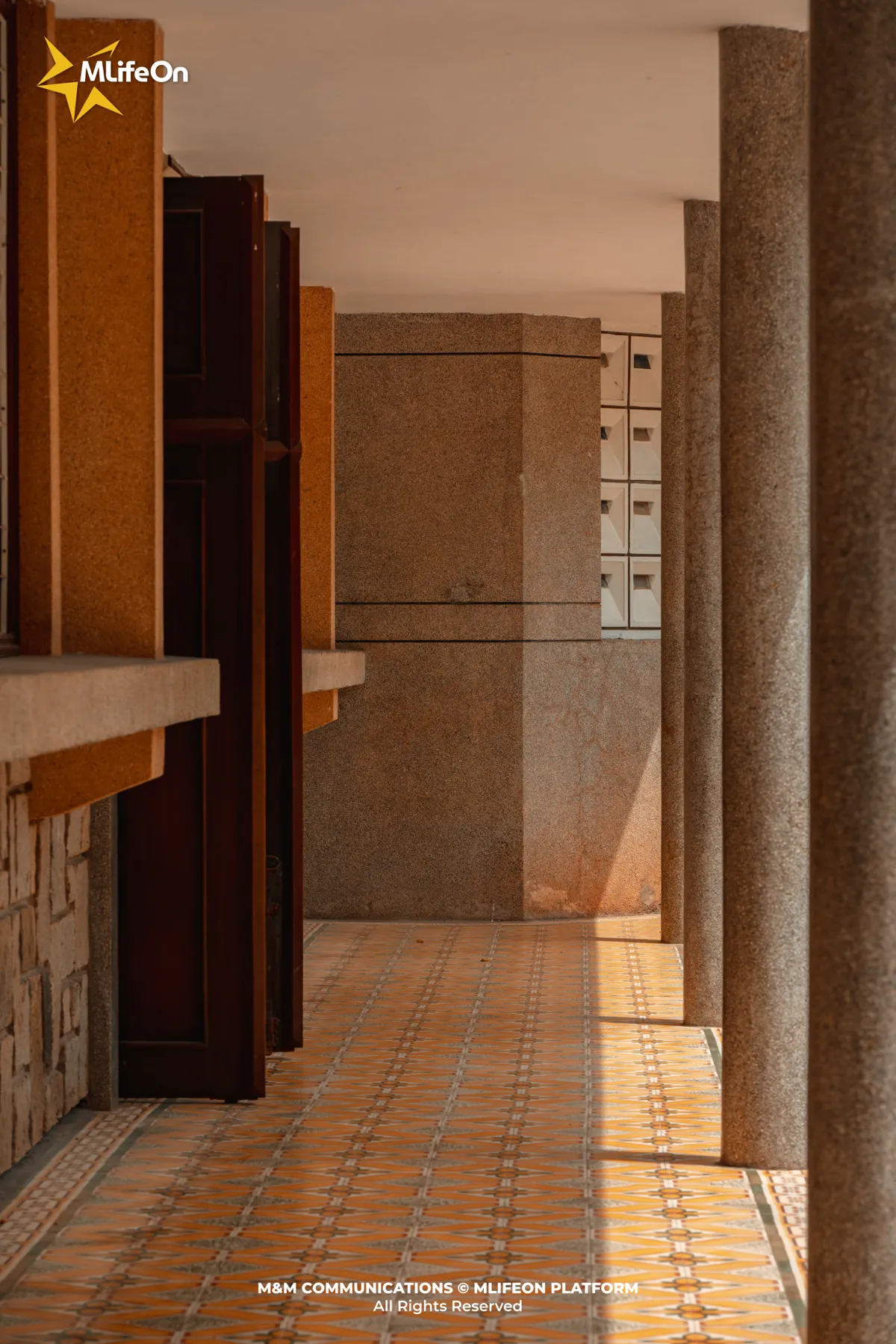
A patch of sunlight in a corridor at Phu Cam.
The photograph of the wooden door draws attention to the small decorative motifs against its dark surface. The close view of the stone wall reveals variations in colour and the joints between individual pieces. Alongside the tall towers, these images bring the cathedral within reach, at a scale where individual details are easy to appreciate.
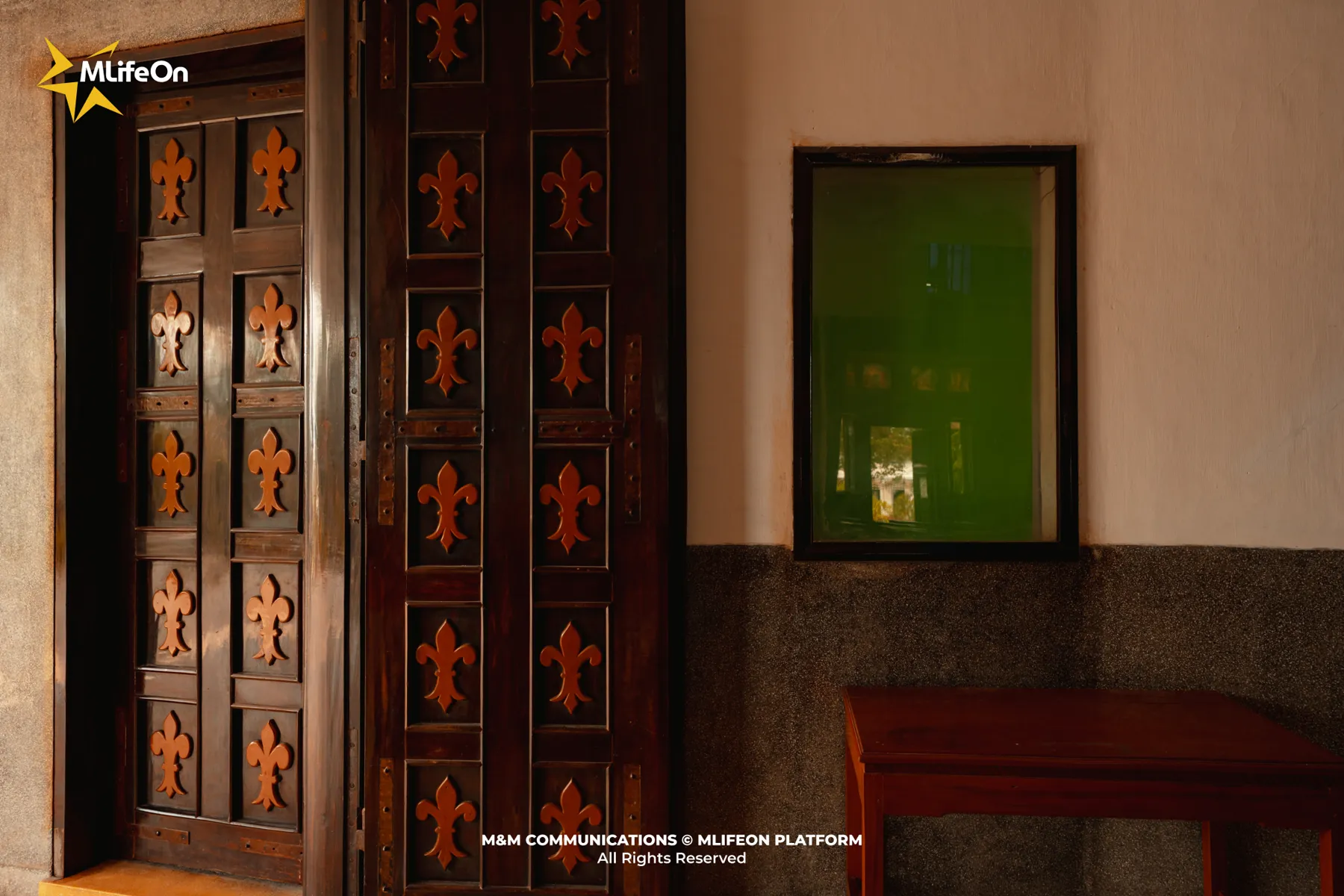
Decorative details on a wooden door.
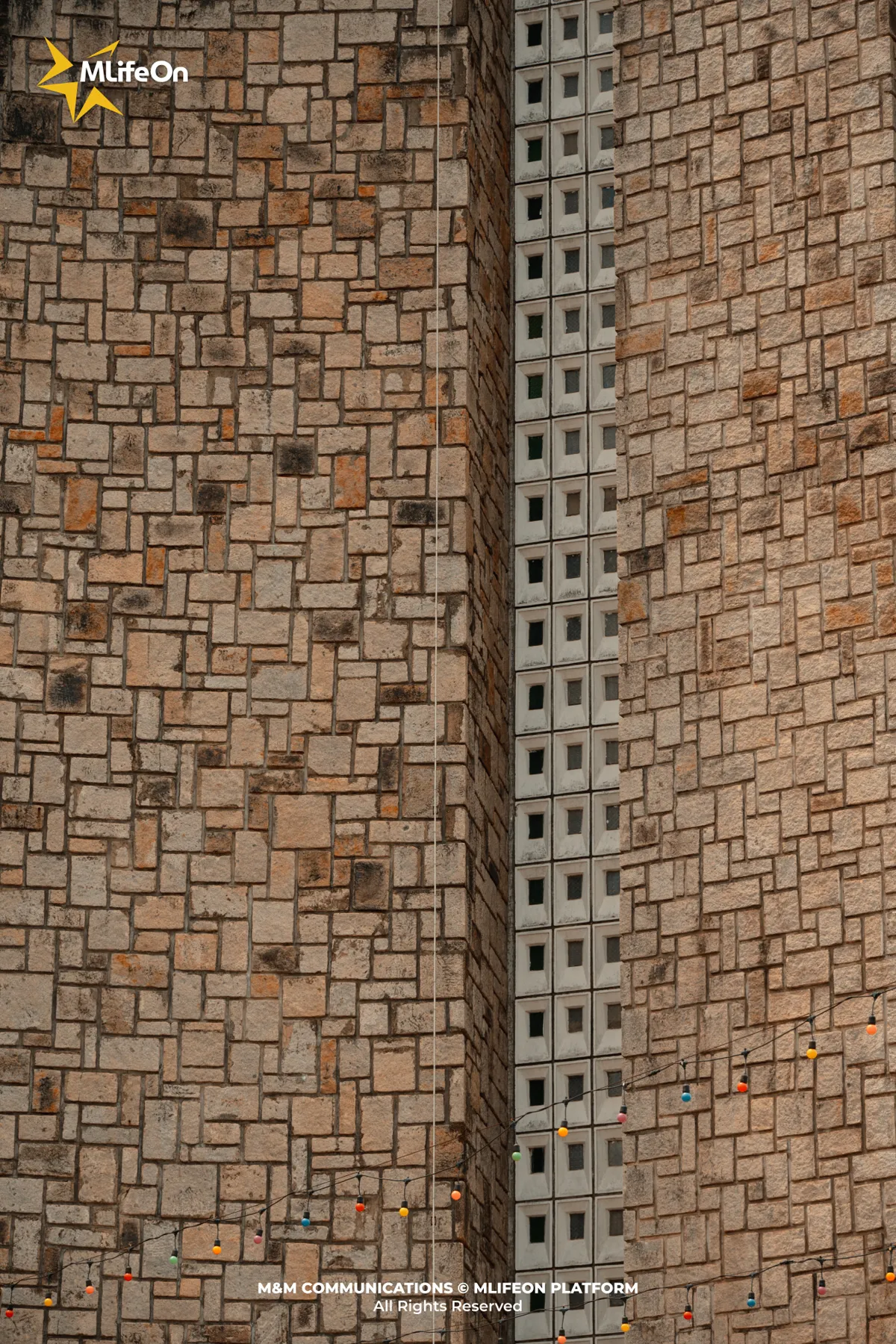
A closer look at the colours and joints of the stone facade.
This is one of the pleasures of travelling with a camera. Sometimes the thing that stays with us is very small. A patch of sunlight, the colour of a window or a corridor we have just passed through can remain in memory alongside the outline of the whole building.
Celebrating the Phu Cam Cathedral Photo Series
With his series “Phu Cam Cathedral”, Nguyen Dinh Luan won First Prize in the Photography category of the competition “Vietnam’s Modern Architectural Heritage of the 20th Century”, themed around the centenary of Ngo Viet Thu’s birth. The awards ceremony took place on 17 September 2026 at the University of Architecture Ho Chi Minh City, on the anniversary itself.
Luan’s achievement is a source of pride for everyone at M&M Communications and MLifeOn. A member of our team has received recognition in a competition celebrating Vietnam’s architectural heritage, on an occasion honouring the architect who designed the building he photographed.
In sharing the series, MLifeOn hopes to bring readers both that good news and the beauty of Phu Cam. Different photographs will stay with different people. Some may remember the two towers against the sky. Others may be drawn to the blue glass inside, or spend longer with the wooden door and sunlit corridor.
For someone who has never visited Hue, the series may spark a wish to learn more. Someone who has already been to Phu Cam might notice a corner they missed. That ability to awaken curiosity and affection is something to value in architectural photography.
Make Time for Phu Cam
In the view from the courtyard, Phu Cam appears between the trees beneath an open sky. After seeing the interiors and smaller details, we return to this wider view with a sense of familiarity. We now know that behind the facade are blue windows, wooden pews and an aisle filled with light.
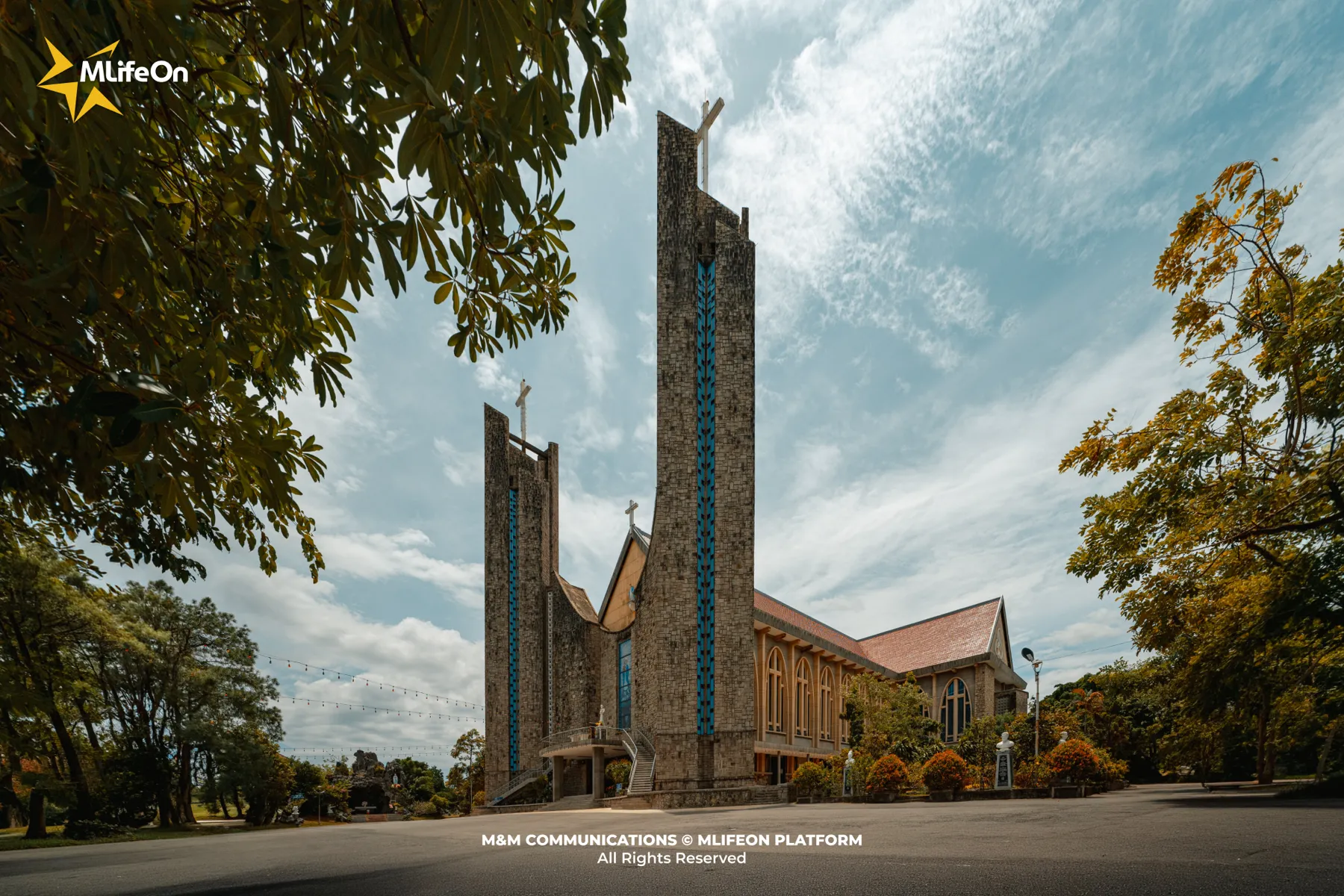
Phu Cam seen from the courtyard, framed by trees and sky.
If you visit Hue, allow yourself an unhurried stop at Phu Cam. Take in the view from the courtyard, walk around the building and, when access permits, step inside with the quiet respect a place of worship deserves. What you remember most may be different from anything these photographs reveal.
In the centenary year of Ngo Viet Thu’s birth, taking time to appreciate Phu Cam is also a way of remembering him. The architect is no longer here, but the cathedral he designed remains, welcoming new generations to discover it, photograph it and carry away memories of their own.
Perhaps, after a visit, your memories of Hue will also hold the warmth of sunlight on stone and a little of the peace beneath Phu Cam’s roof.
------
CREDITS:
- Photography: Luan Nguyen
- Content: Tommy Phung
- Design: Phuong Nguyen