THE TOBACCO PLANT – A VIETNAMESE HERBAL REMEDY: FROM A LIVELIHOOD CROP TO A FOLK CULTURAL SYMBOL
When people think of rice, they picture golden grains bending heavily in the field. When they think of areca, they remember village courtyards, betel vines, and traditional wedding trays. But when the tobacco plant is mentioned, most people immediately think of cigarettes, smoke, and health warnings. Yet if one ever had the chance to stand in the middle of a tobacco field when the plants are lush and green, they might begin to see this plant in a different light. For the tobacco plant has long been a very special part of Vietnamese traditional herbal knowledge.
The tobacco plant is more than just a cigarette
Many people know tobacco, but not everyone has seen the tobacco plant in real life. For that reason, this plant is often reduced to the image of its final product. Yet long before it becomes something people mention every day, the tobacco plant has a life of its own in the fields.
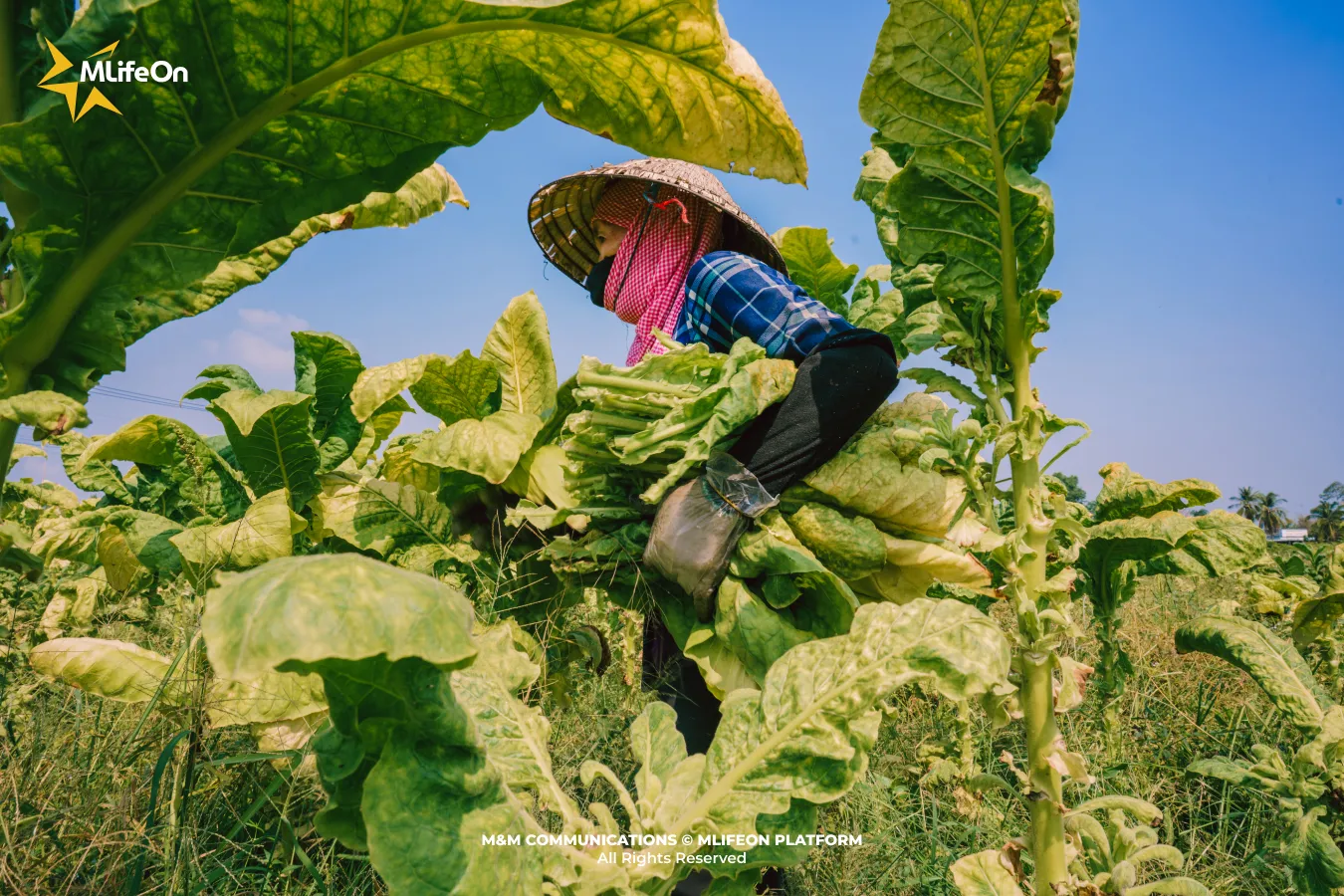
The tobacco plant is an herbaceous plant with large leaves growing around its stem. Its leaves are soft yet thick, ranging from light to deep green depending on the variety and growing conditions. Seen from a distance, a tobacco field has a distinctive shade of green. It is not as delicate as a vegetable field, nor as soft and sweeping as a rice paddy. Instead, the plants stand upright in clear rows and beds.
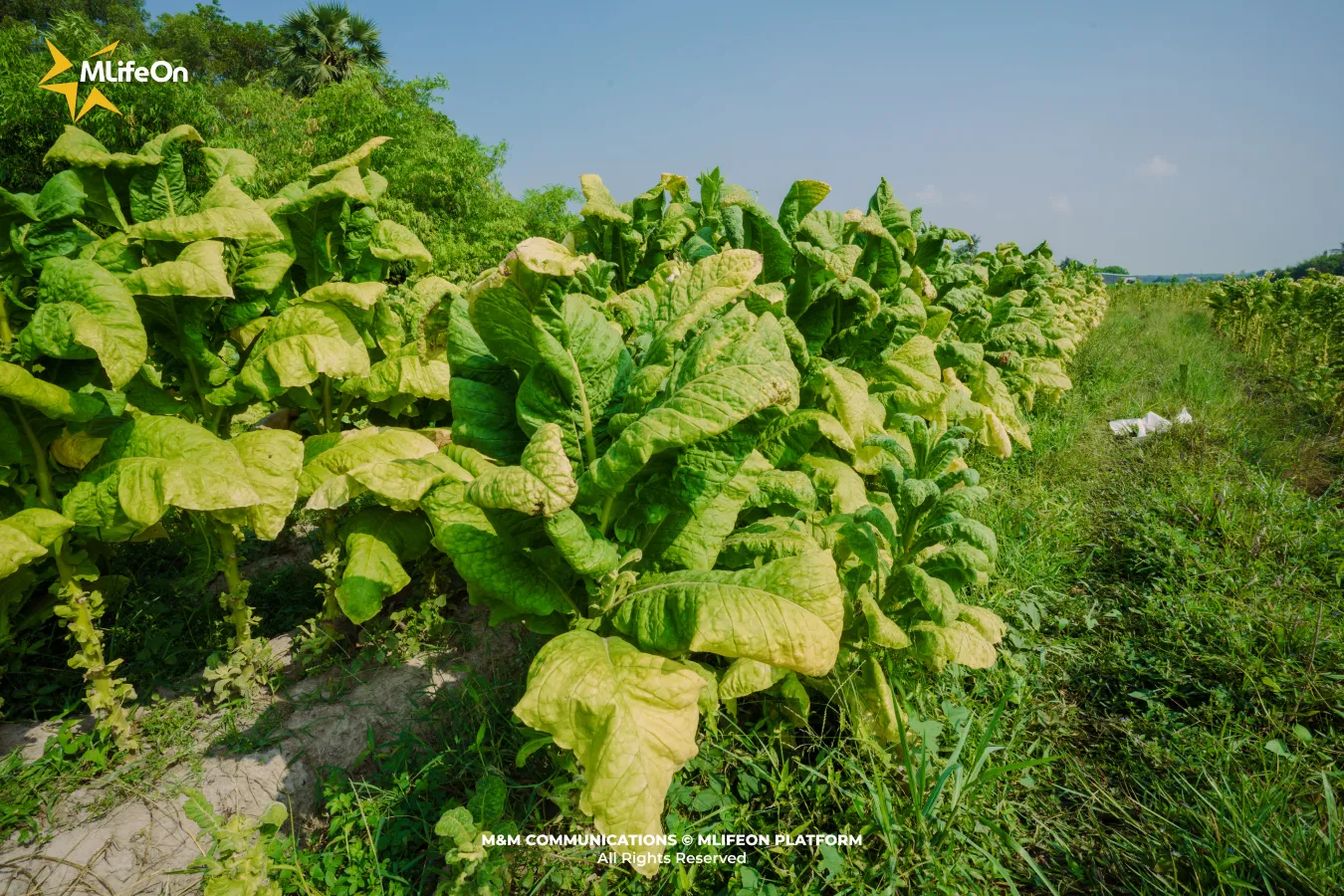
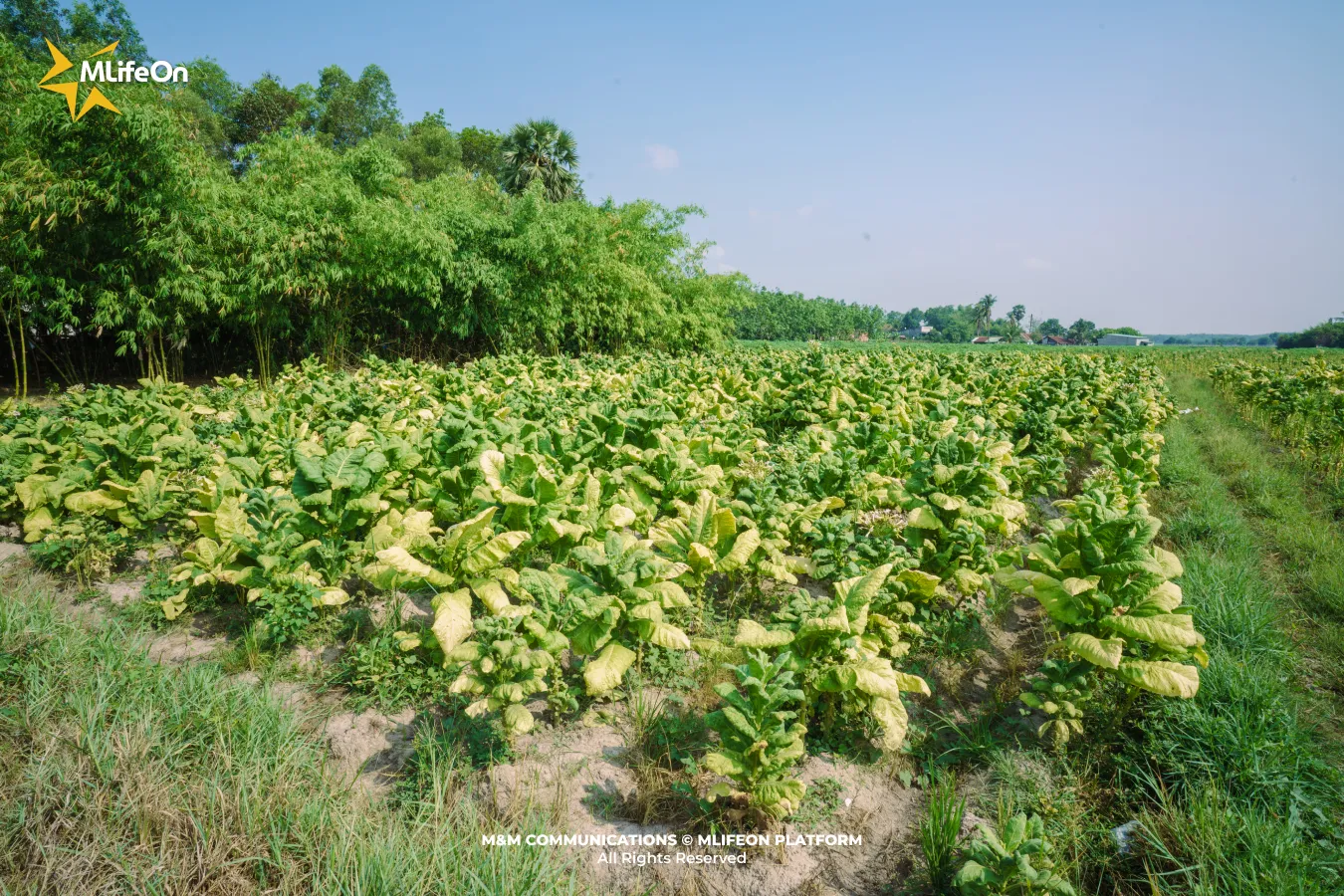
What is interesting is that the tobacco plant, while still growing in the field, looks far more rustic and familiar than many people might imagine. It does not appear strange or distant. It is still a plant, growing from the soil, needing sunlight, water, and human care. Perhaps because of this, when we look at the tobacco plant in its original form, we are reminded that before any human-made product exists, every plant has a natural life worth observing.
Some things become unfamiliar simply because their names are too familiar. The tobacco plant is one such example. Almost everyone has heard of it, but not everyone has truly seen it in its most natural form.
A plant closely tied to the hands of farmers
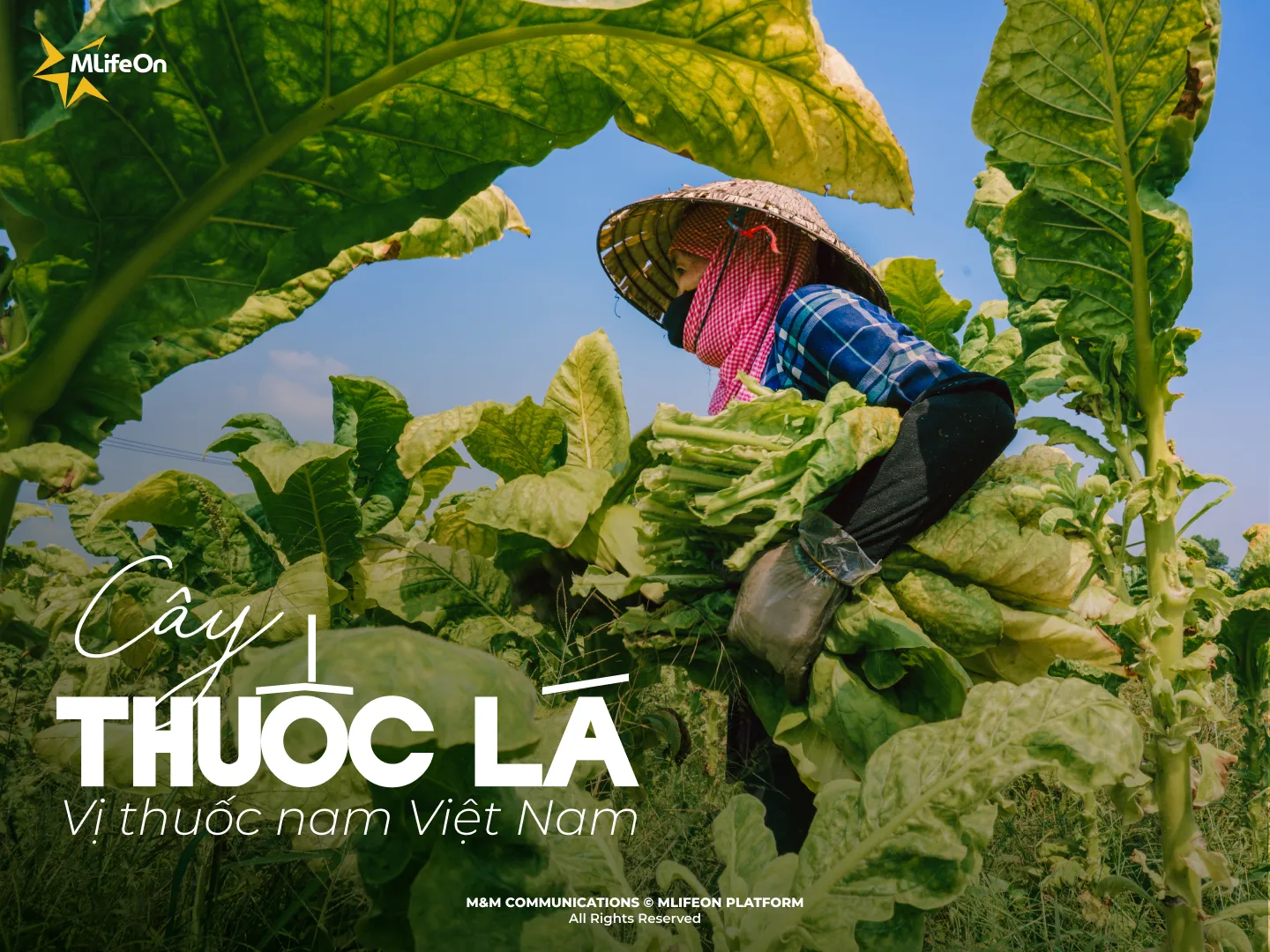
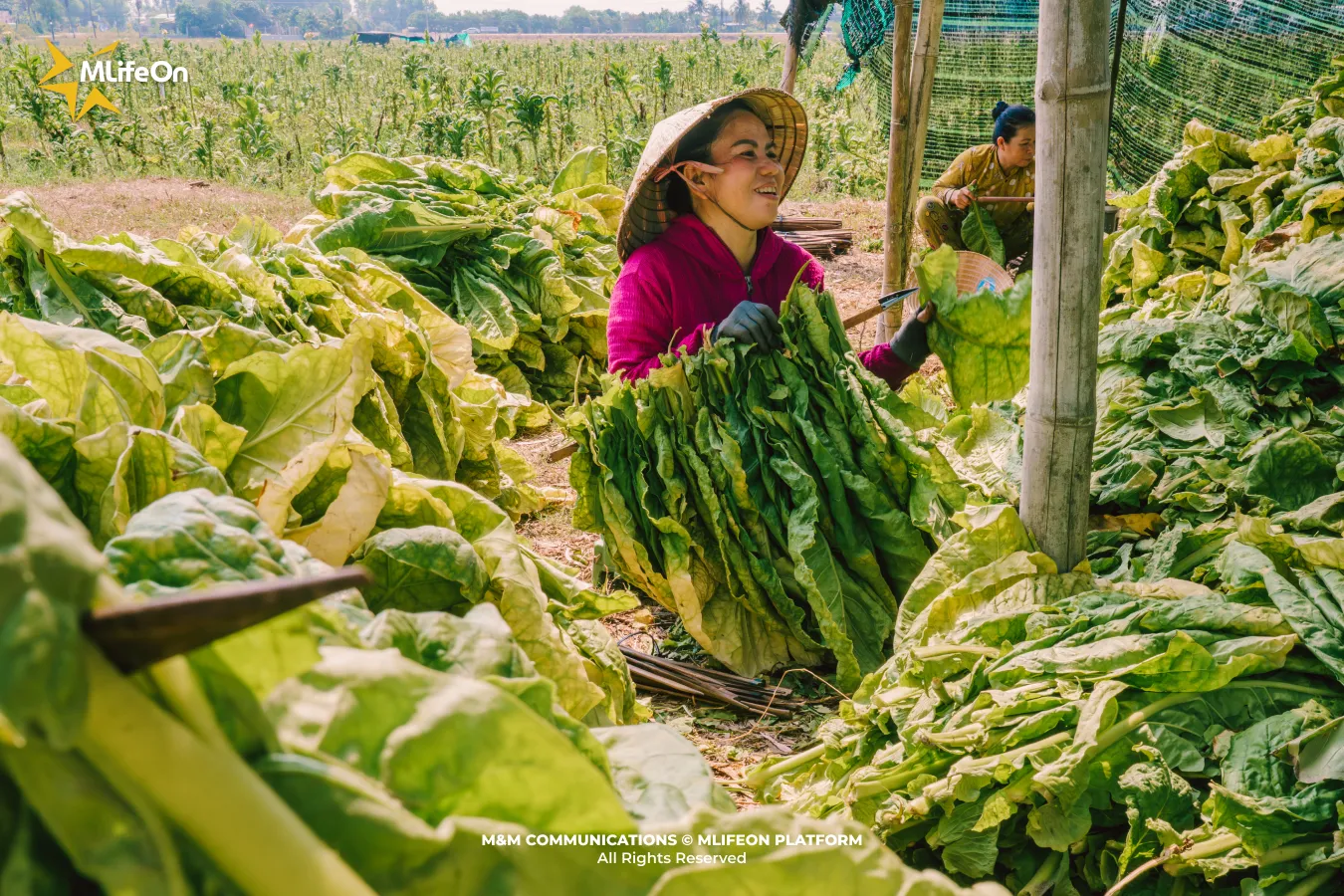
Behind every green tobacco field lies a great deal of quiet labor. Tobacco is not a crop that can simply be planted and left to grow on its own. Farmers must follow the plant from its earliest stage, tending each root, clearing weeds, building up the soil, observing the leaves, reading the color of the plant to know whether it is healthy or lacking nutrients, and watching the shape of the leaves to know when the time has come to harvest.
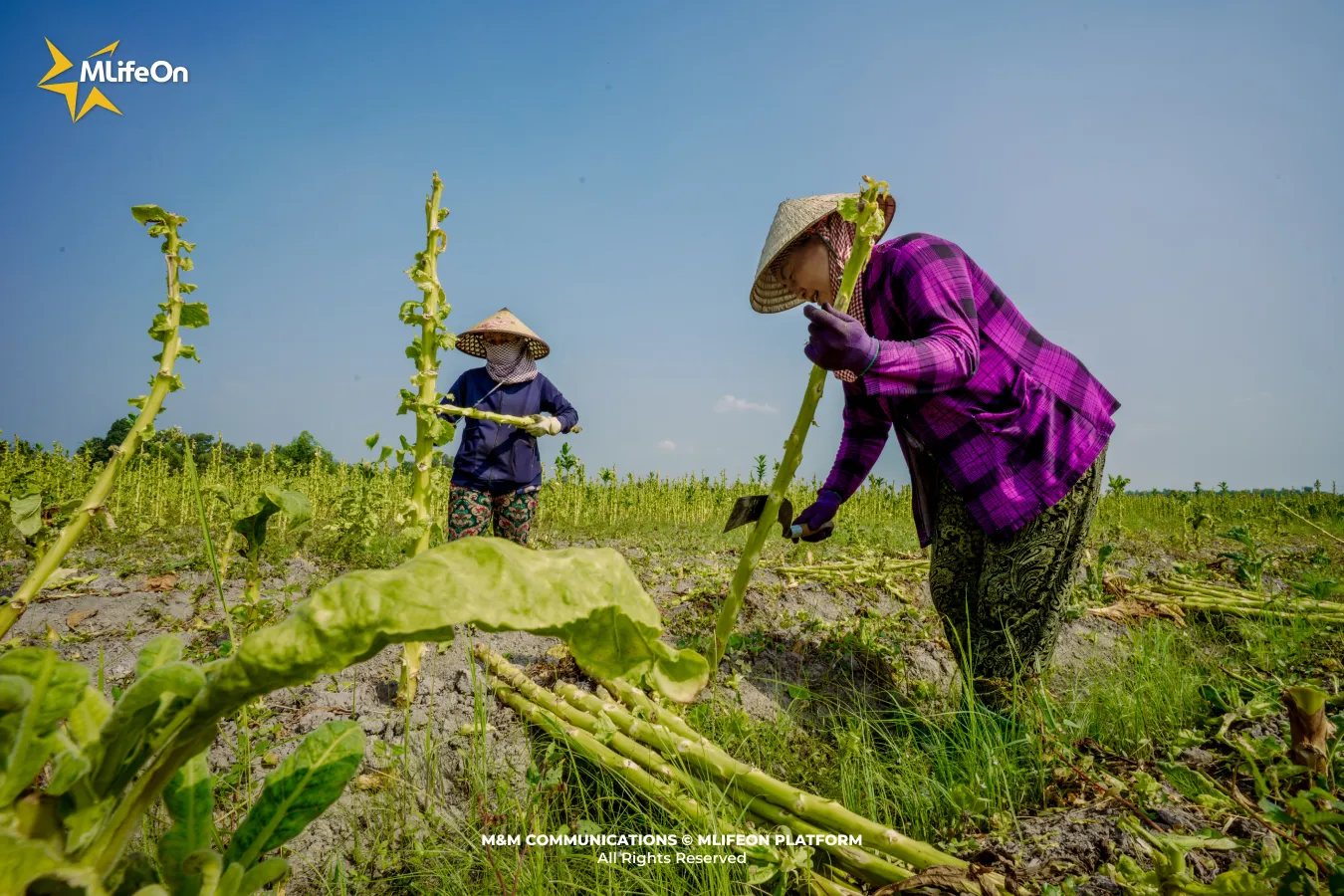
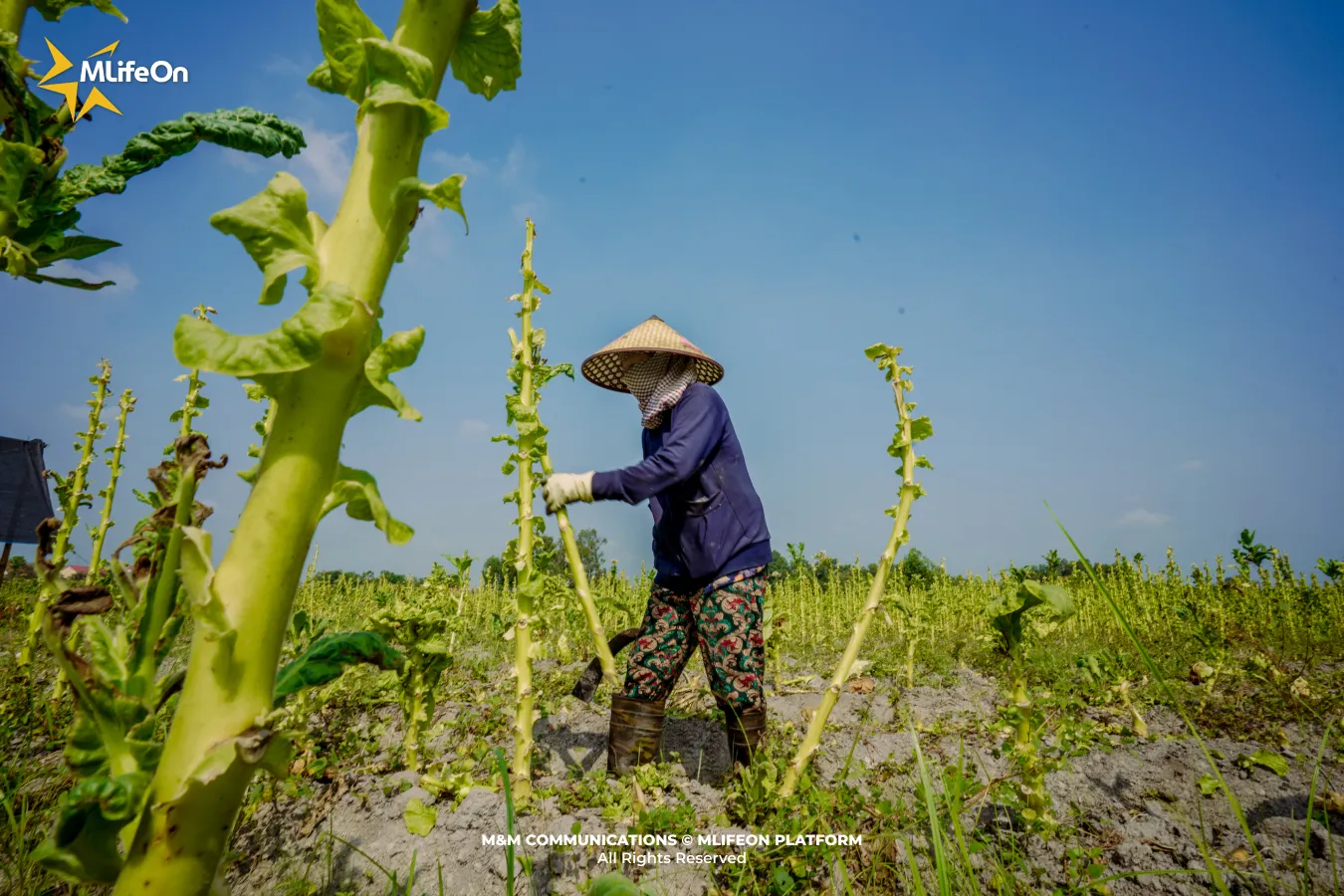
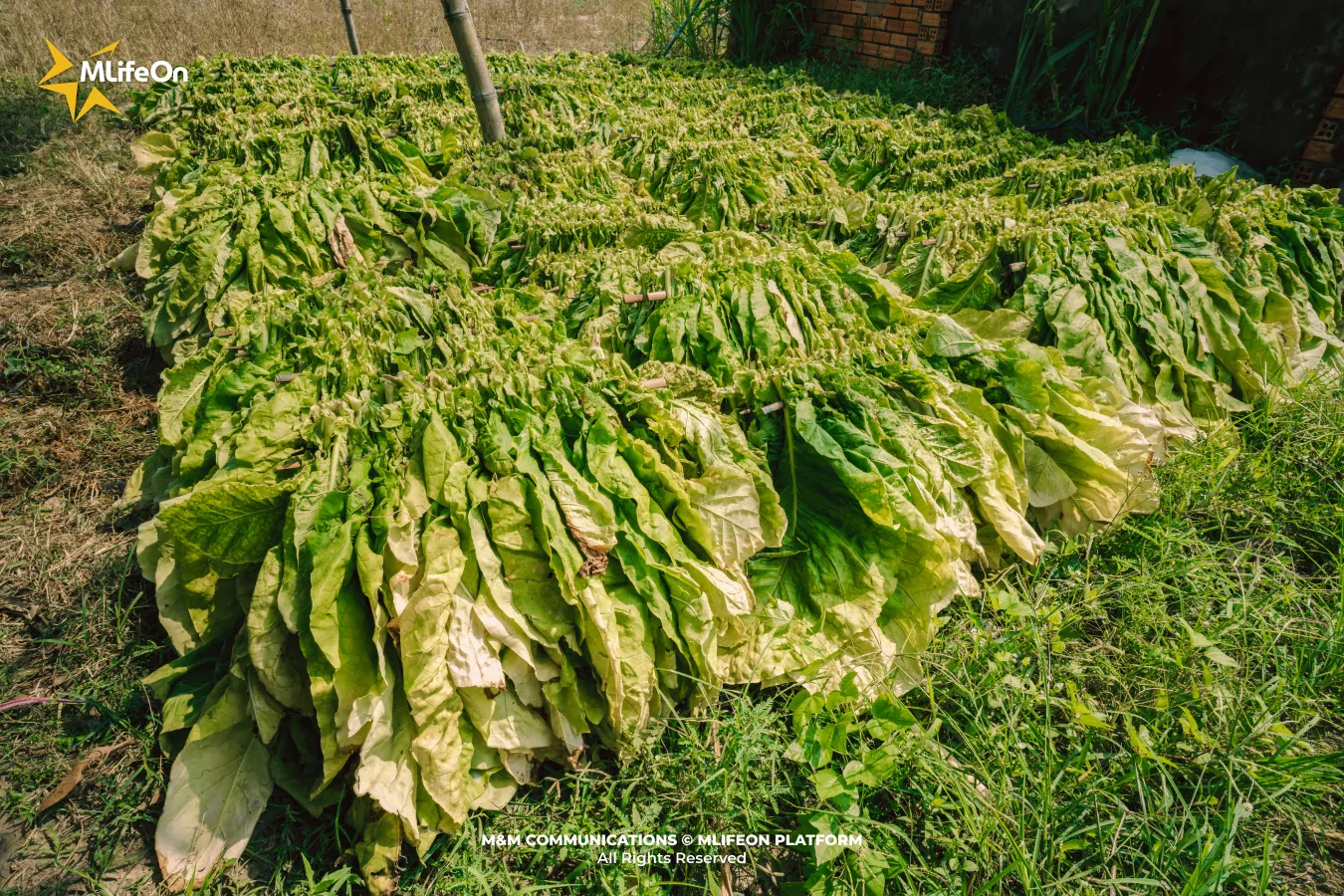
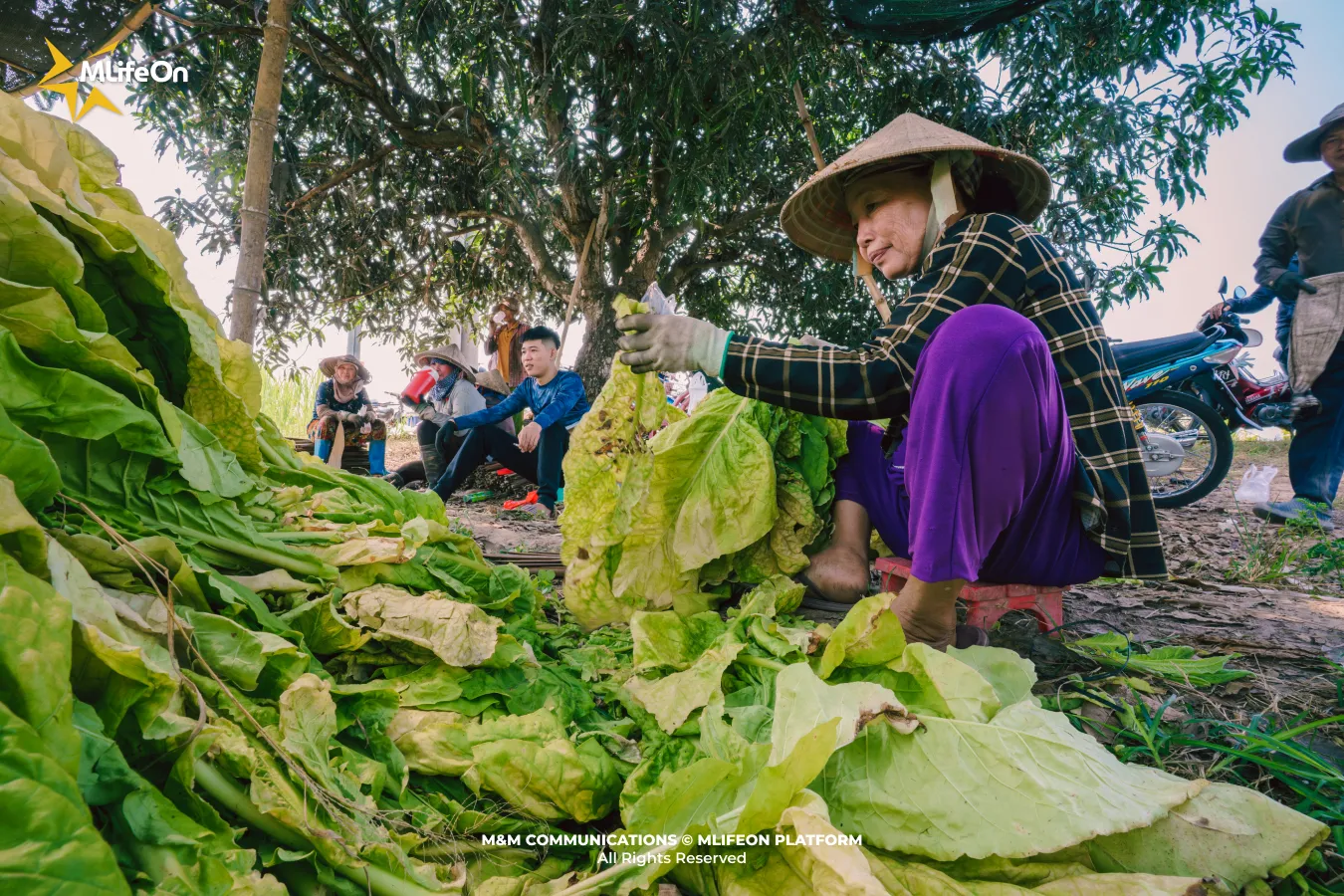
Those who once lived in rural areas where tobacco was grown may still remember the sight of farmers working busily in the fields from early morning. From sowing seeds, caring for the plants, fertilizing, and removing pests to harvesting, every step requires patience and attention to detail. When the leaves reach maturity, farmers pick them one by one, arrange them neatly in baskets or shoulder poles, and carry them home for curing. This work lasts for many months, and in return, it provides an income that helps families cover daily expenses, raise children, and build a better home.
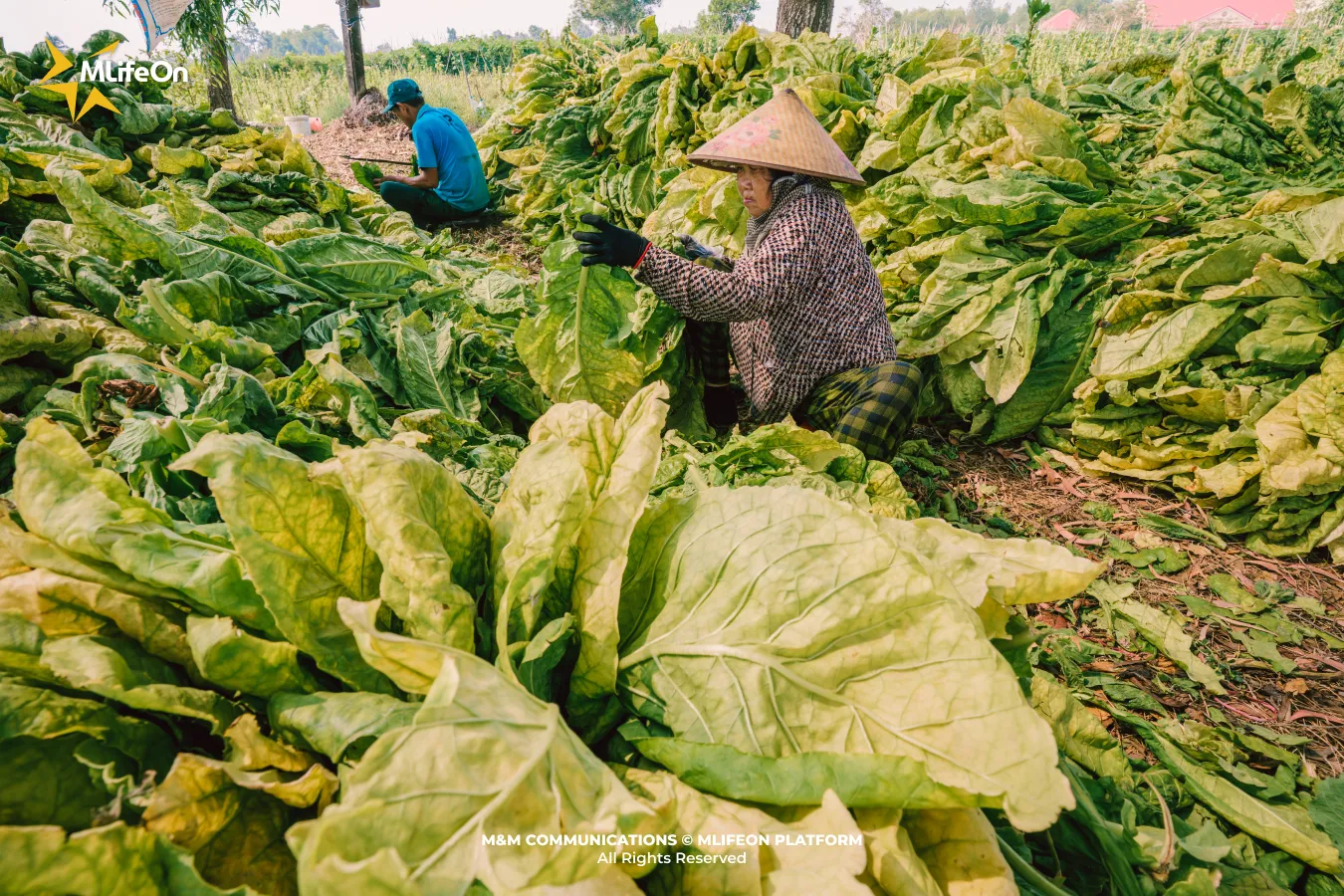
Many elderly people still recall a time when the tobacco plant was considered a “money-making crop” in many rural areas. After a successful harvest, farmers could repair their roofs, buy household items, or invest in the next growing season. For them, tobacco fields were not only places of labor, but also places where hopes for a more stable and abundant life were planted.
Tobacco flowers – A beauty few people notice
Most people probably never think about the fact that the tobacco plant has flowers. Even fewer would imagine that tobacco flowers can be so attractive. They are not showy or overly bright. They are small, growing in clusters at the top of the plant, with gentle colors that may be pale pink, pinkish white, or lightly tinged with purple.
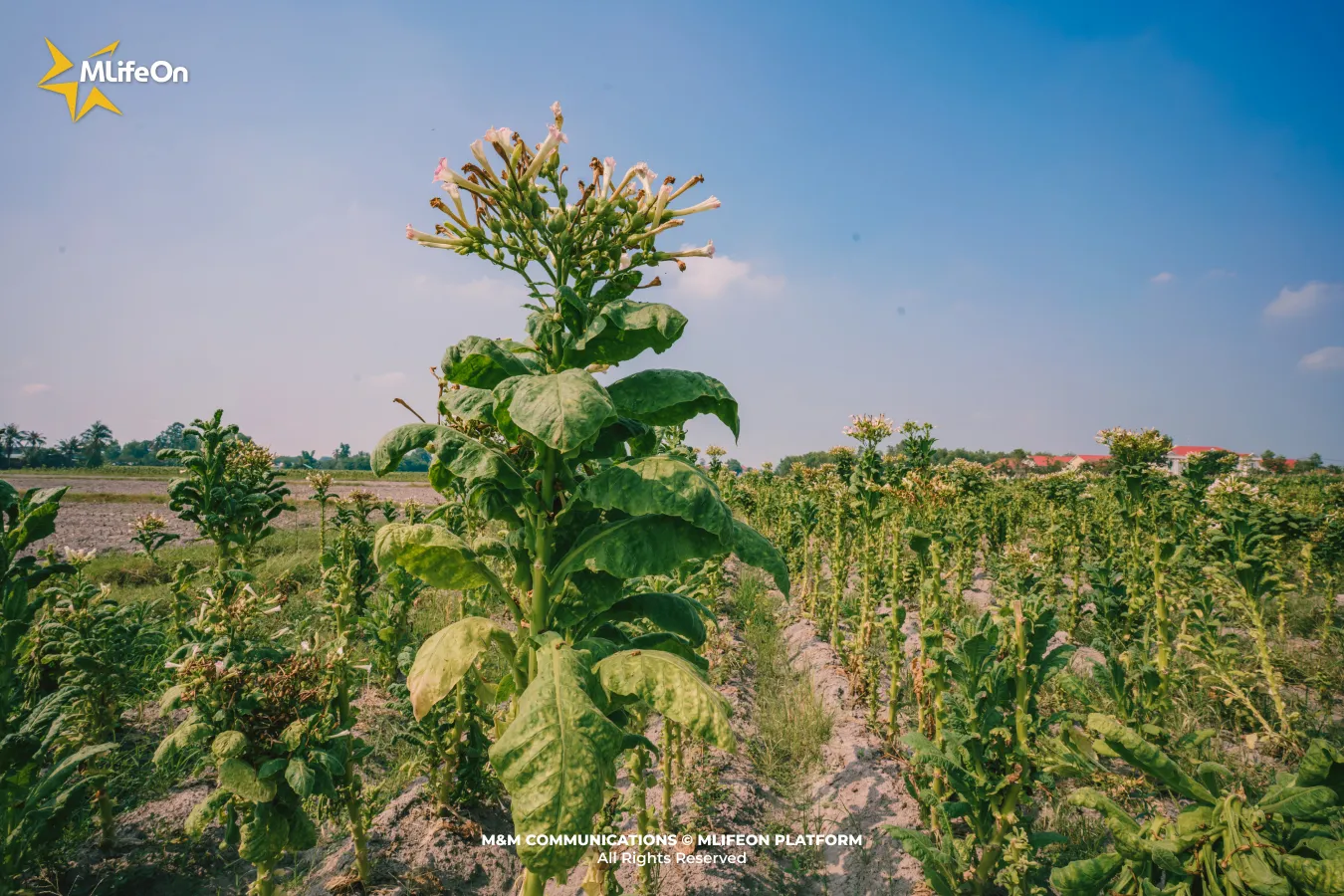
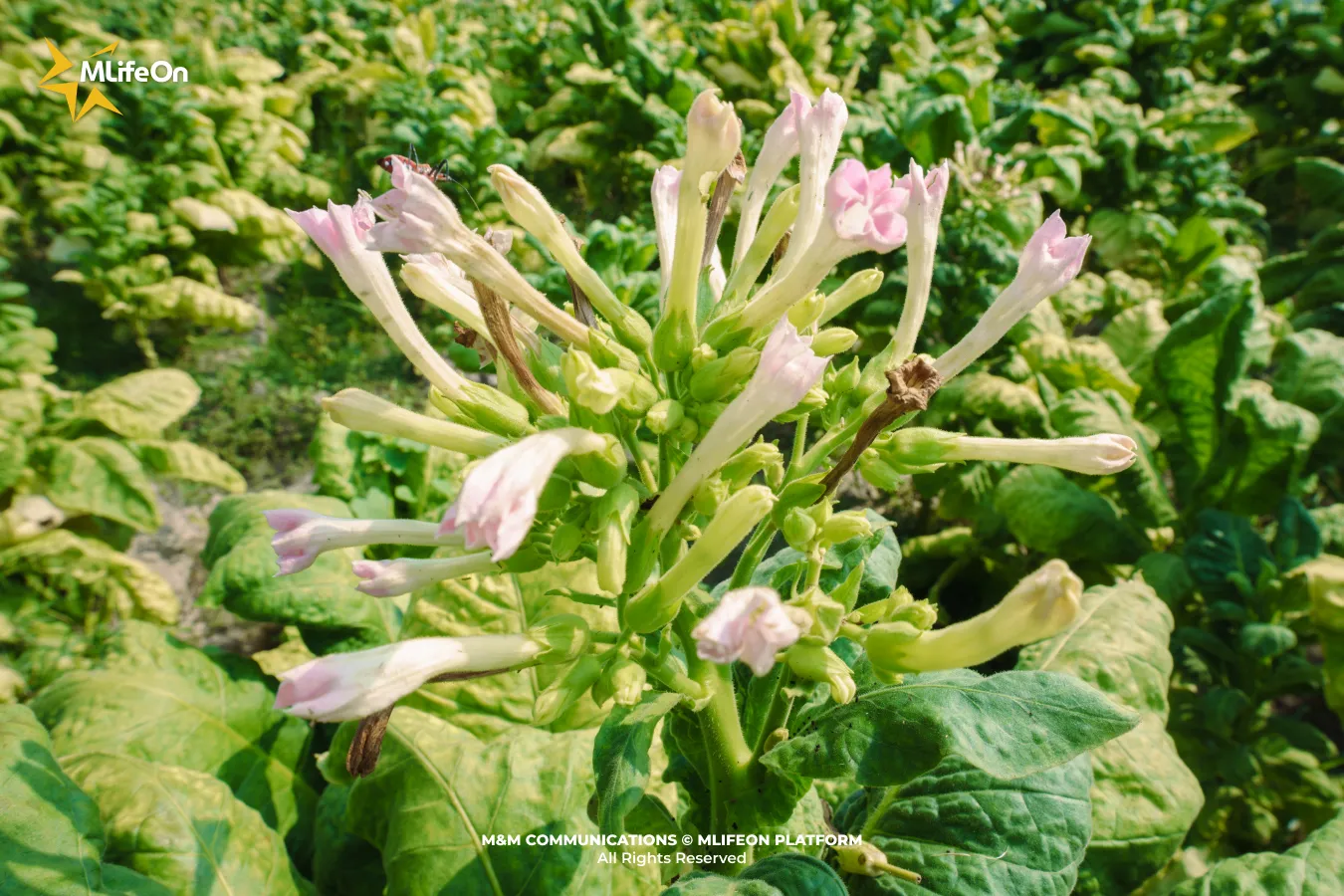
In the middle of a field filled with large, broad leaves, tobacco flowers appear modest and quiet. Perhaps it is this very beauty that makes the plant feel different in the eyes of those who see it. A plant often associated with heavy and serious discussions turns out to have a flowering season that is soft, graceful, and unexpectedly beautiful.
The tobacco plant - A special Vietnamese herbal remedy
In addition to its economic value, the tobacco plant also appears in various forms of Vietnamese folk knowledge. In the past, people lived close to plants and nature, so many species growing around homes and gardens were carefully observed, remembered, and passed down through experience. The tobacco plant was also part of that traditional knowledge.
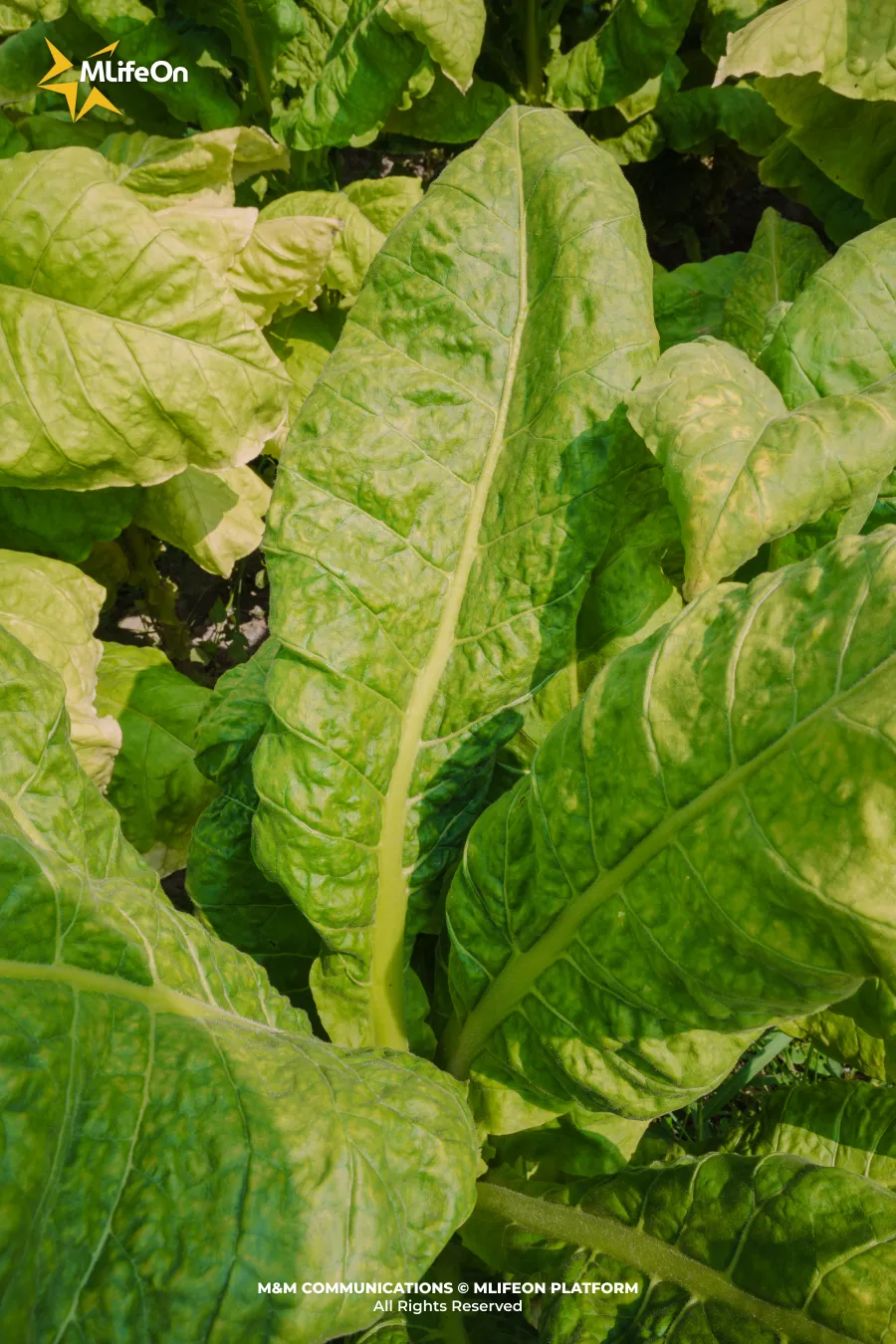
In some localities, tobacco leaves were used externally for purposes such as repelling insects or in orally transmitted folk remedies. However, the tobacco plant is a special plant that must be understood and used properly. Not every medicinal plant can be used casually, especially plants with strong active properties like tobacco.
Therefore, when referring to the tobacco plant as a Vietnamese herbal remedy, it is important to maintain a balanced and cautious view. We may respect folk experience and appreciate the way our ancestors observed plants and nature, but we should not use the tobacco plant to treat illnesses on our own without guidance from someone with proper knowledge.
In other words, the value of the tobacco plant does not lie in either praising or dismissing it. Rather, it lies in seeing it correctly: as a plant that once had a place in folk life, while always requiring caution when discussing its uses.
The tobacco plant in Vietnamese folk life
What is worth noting is that the value of the tobacco plant is not limited to its uses or economic benefits. It also lies in the cultural traces it has left behind. In the memory of many people, the image of a traditional pipe beside a pot of hot tea was once a familiar part of village life. After long hours of hard work, villagers would gather together, sip green tea, and talk about the harvest, their children, and everyday life. The thin smoke drifting through that peaceful space became a familiar scene for many generations.
In many rural areas of northern Vietnam, the bamboo water pipe was once considered an indispensable household item. It appeared on the porch, in the kitchen corner, or under the banyan tree at the village entrance. The sound of someone drawing from the pipe on a summer afternoon or after a long day in the fields became part of the memories of countless people. Although such images have gradually become less common today, they remain part of the cultural life of rural Vietnam.
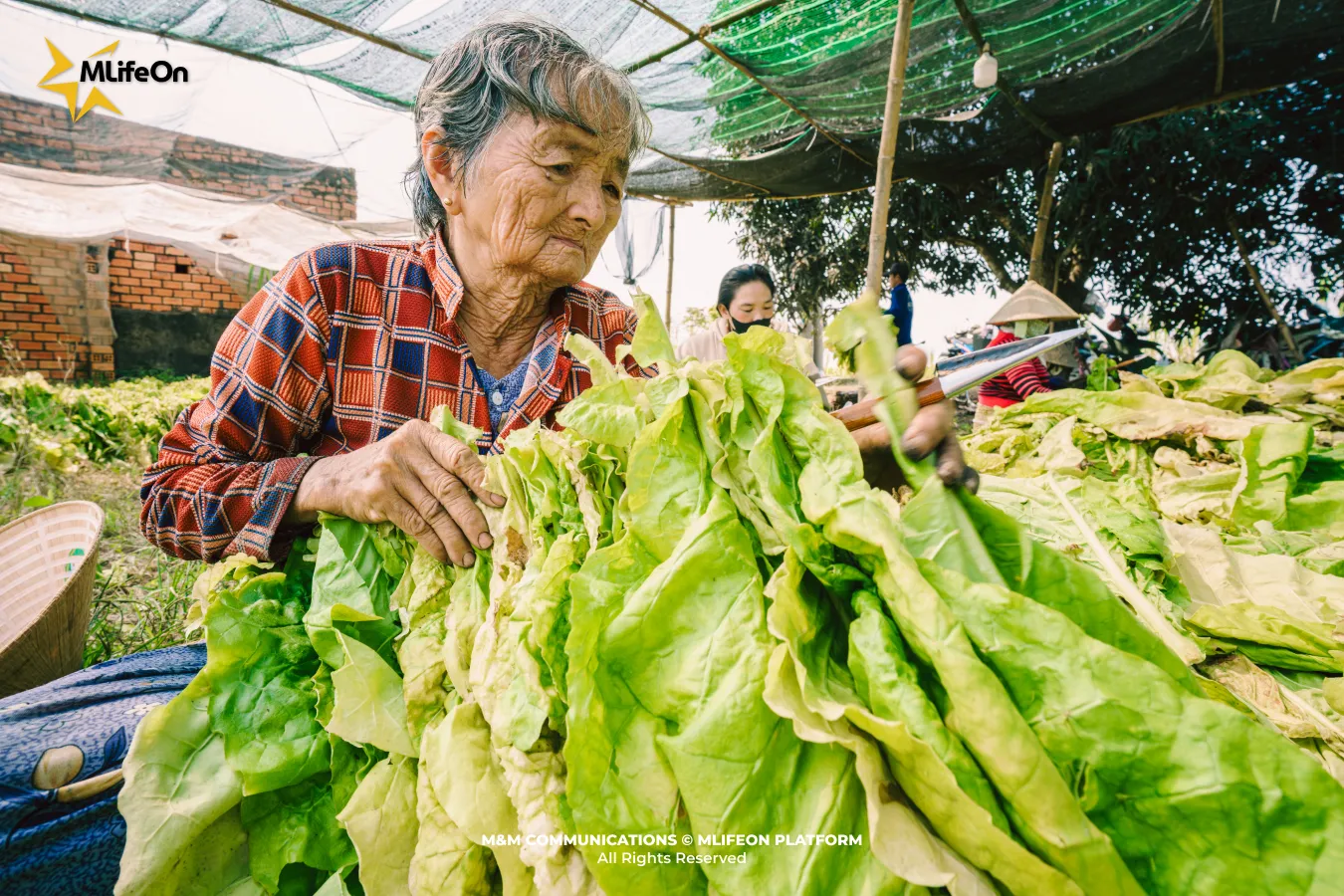
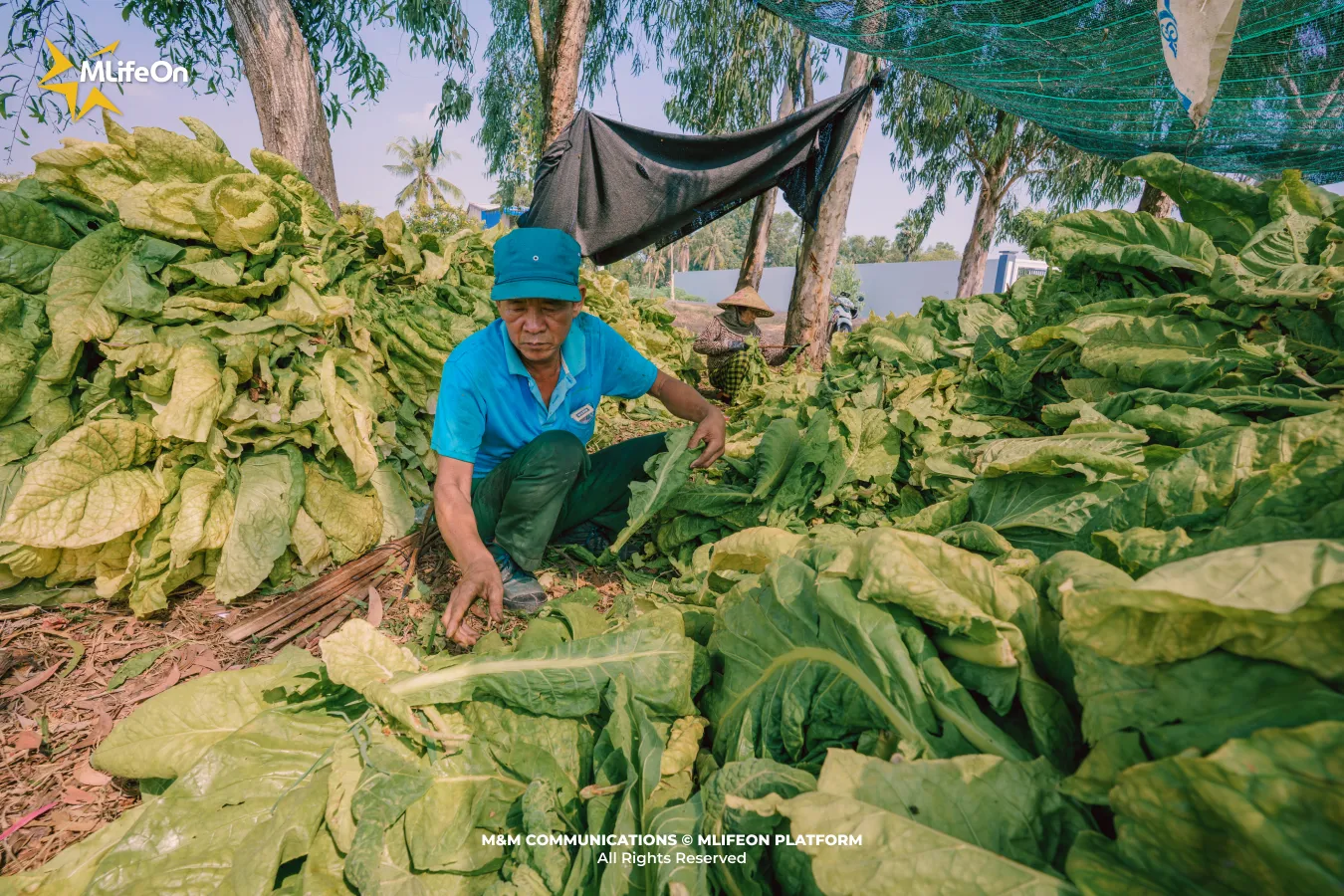
From a cultural perspective, the tobacco plant also reflects the diligence and adaptability of Vietnamese farmers. In dry hilly areas or regions where wet rice cultivation was difficult, people learned to choose crops suitable for local conditions in order to improve their livelihoods. The tobacco plant was one such choice. Over time, it became part of the agricultural landscape and found its place in stories about homeland, villages, and rural life.
Conclusion
Today, as society continues to change, the area devoted to tobacco cultivation in many places has gradually declined. Many regions have shifted to other crops with higher economic efficiency. However, the image of lush green tobacco fields, curing kilns glowing red through the night, and farmers carrying bundles of tobacco leaves on their backs still reminds us of a simple chapter in rural life, where labor, nature, and culture came together to create values that are difficult to fade with time.
CREDIT:
- Photography: Kien Trang
- Content: Hoài Hà
- Design: Phuong Nguyen