HOI YEN DIEU TRI CUNG - THE COLORS OF TAY NINH’S GRAND FESTIVAL ON THE FULL MOON OF THE EIGHTH LUNAR MONTH
Every year on the full moon of the eighth lunar month, Tay Ninh Holy See welcomes large numbers of Cao Dai followers and visitors from across the country for Hoi Yen Dieu Tri Cung. By afternoon, white robes begin to fill the ceremonial grounds while busy kitchens prepare vegetarian meals. Lion heads, lanterns, and performance props are readied for the evening ahead. Then, as night falls, everything comes together in a spectacular celebration at the heart of the Holy See.
Hoi Yen Dieu Tri Cung - Cao Dai’s grand festival on the full moon of the eighth lunar month
Hoi Yen Dieu Tri Cung is one of the two major annual festivals of the Cao Dai religion at Tay Ninh Holy See, alongside the Grand Festival honoring Duc Chi Ton, held in the first lunar month. Hoi Yen Dieu Tri Cung takes place every year on the full moon of the eighth lunar month and is closely associated with the worship of Duc Phat Mau, the Divine Mother, and the Nine Female Immortals.
According to documents published by Tay Ninh Newspaper, Hoi Yen Dieu Tri Cung was first formally celebrated on the full moon of the eighth lunar month in the year At Suu, 1925. More than a century later, the festival continues to be observed and remains an important occasion in the spiritual life of the Cao Dai community.
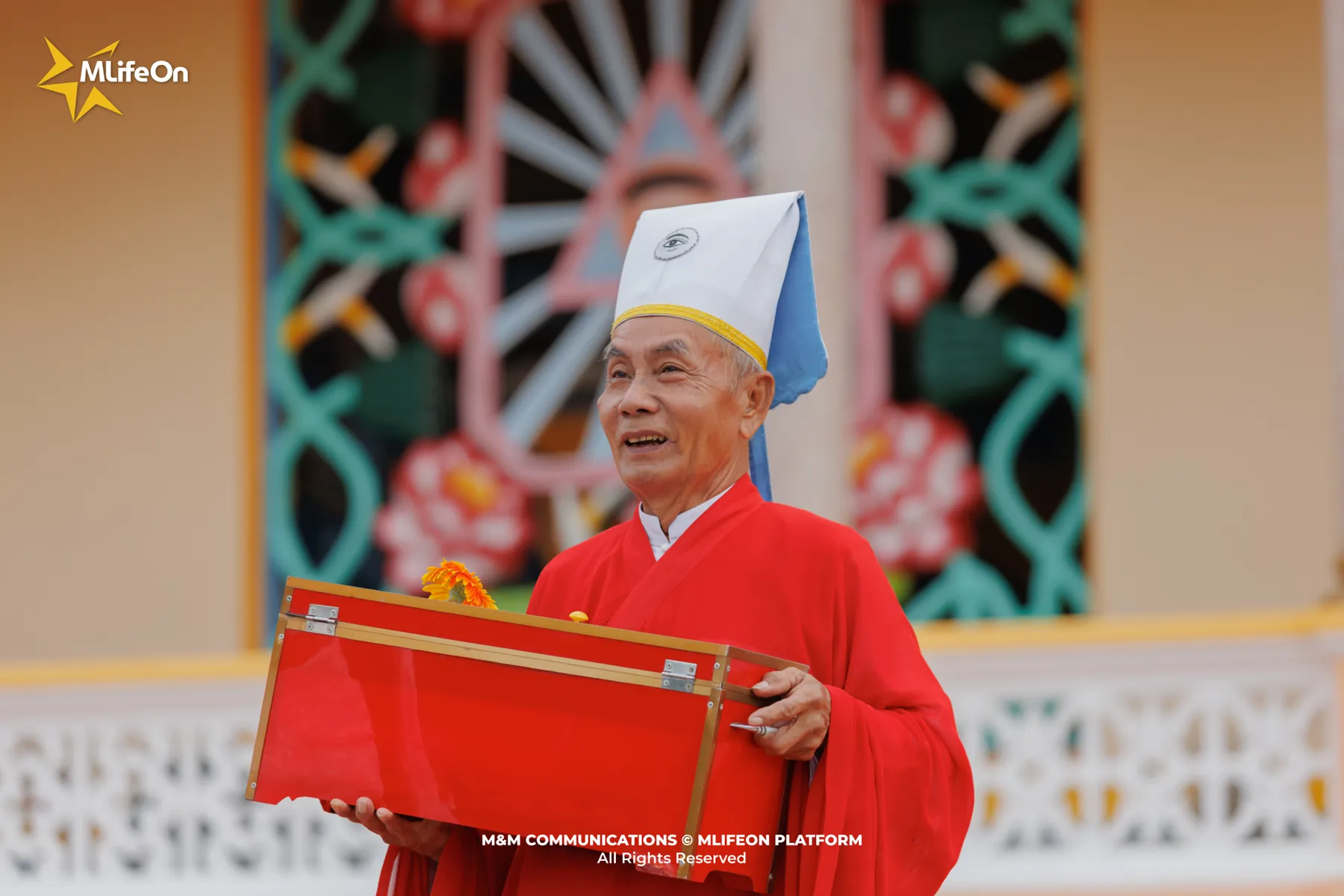
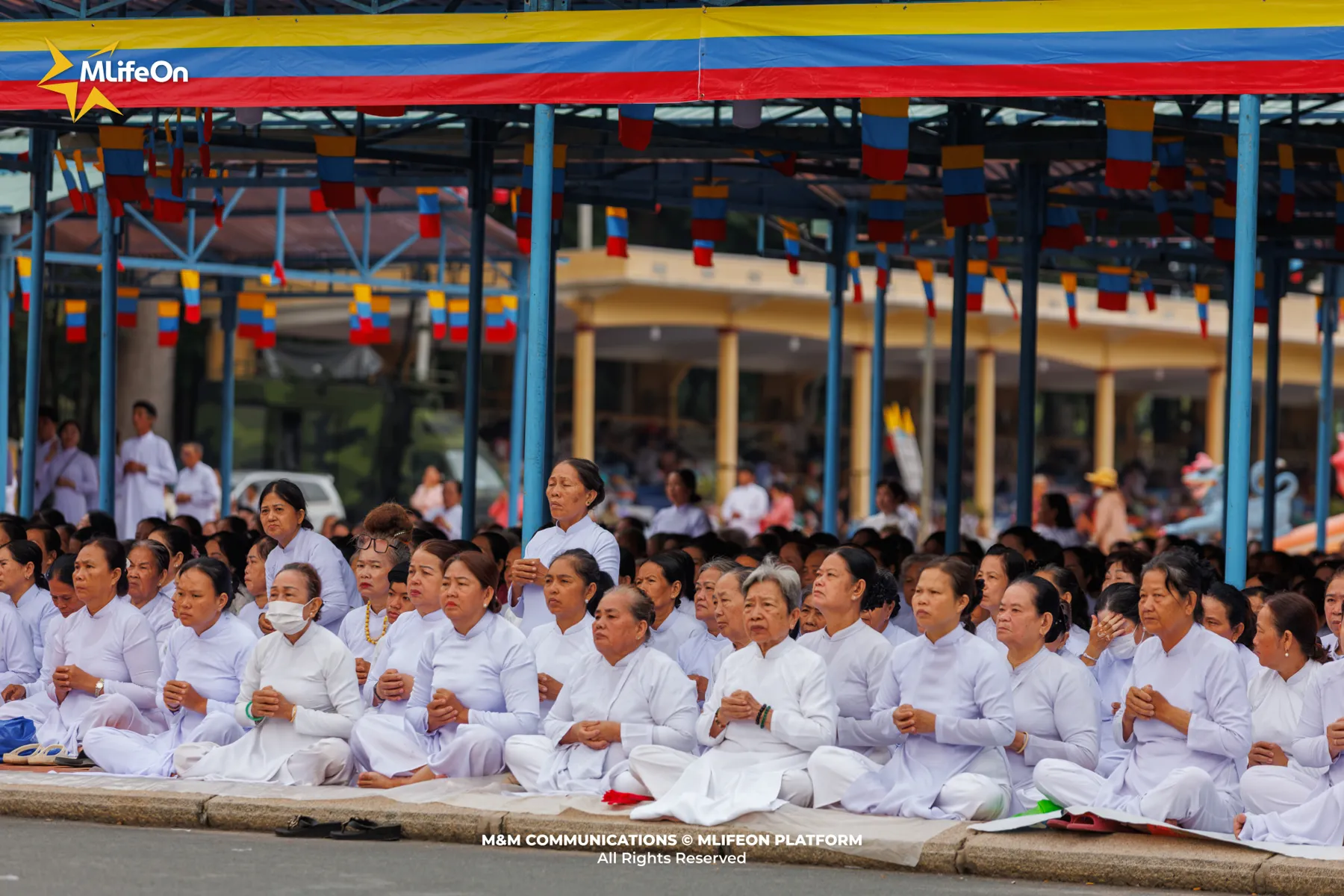
In 2026, the grand festival took place on September 25, attracting more than 200,000 Cao Dai followers and visitors to Tay Ninh Holy See. Yet long before the lion and dragon dance teams appeared and the grounds lit up after dark, Hoi Yen had already begun hours earlier with solemn ceremonies and countless preparations taking place behind the scenes.
A sea of white on the day of the grand festival
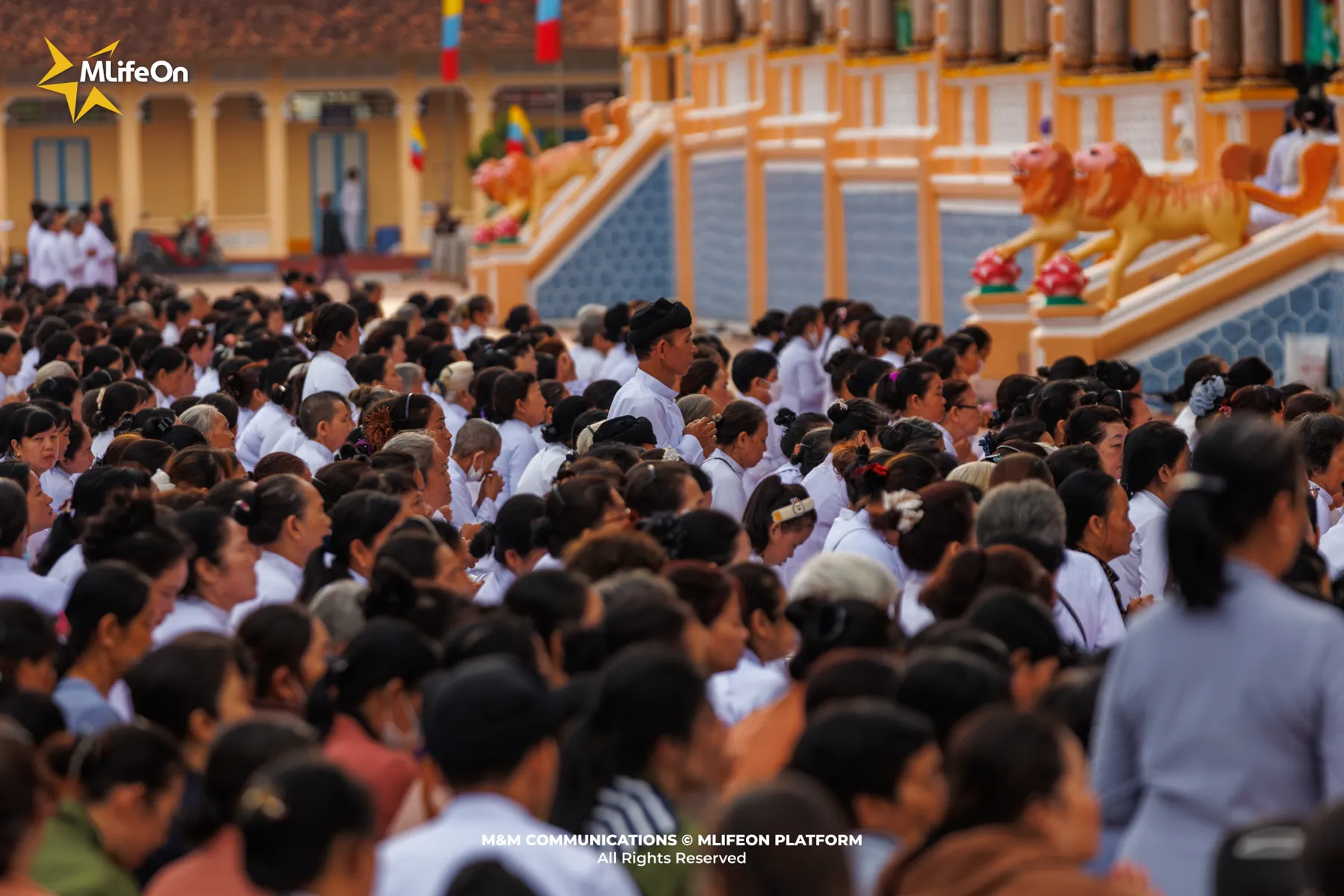
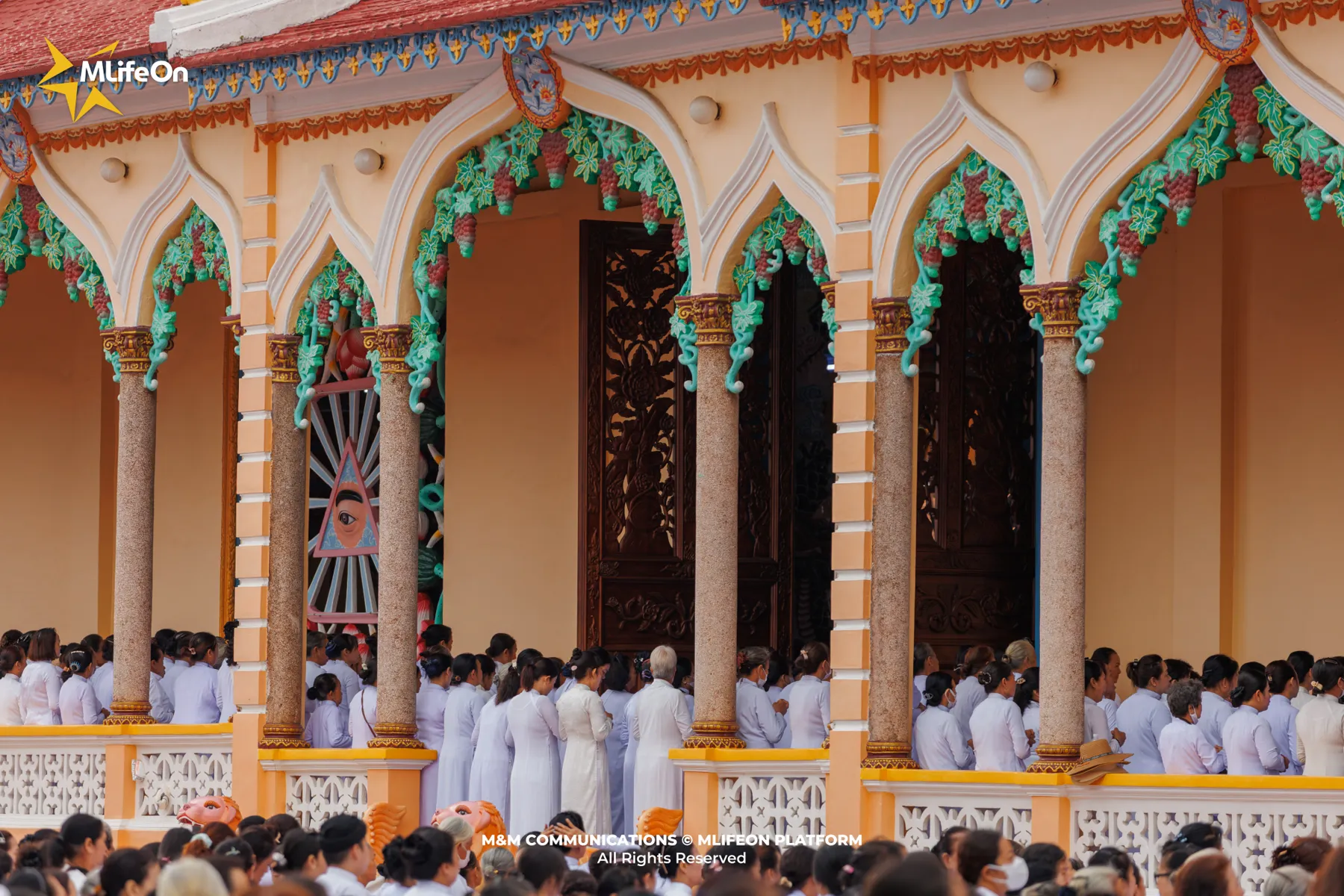
By afternoon, the grounds of the Holy See are already filled with people. Inside the ceremonial areas and across the spacious courtyards, rows of followers dressed in white sit neatly together. Against the colorful architecture of Tay Ninh Holy See, the white robes stand out while still creating a sense of serenity and solemnity.
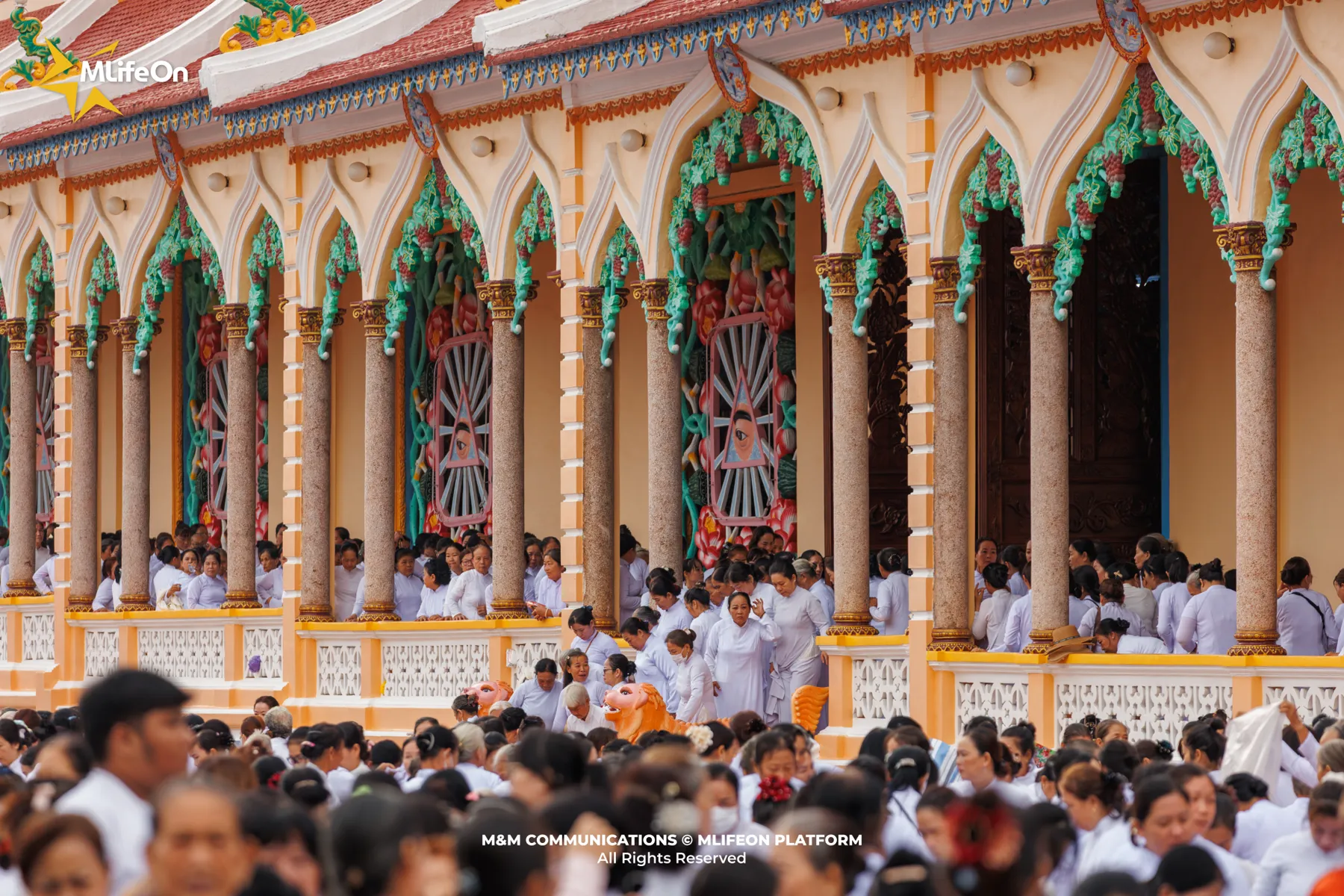
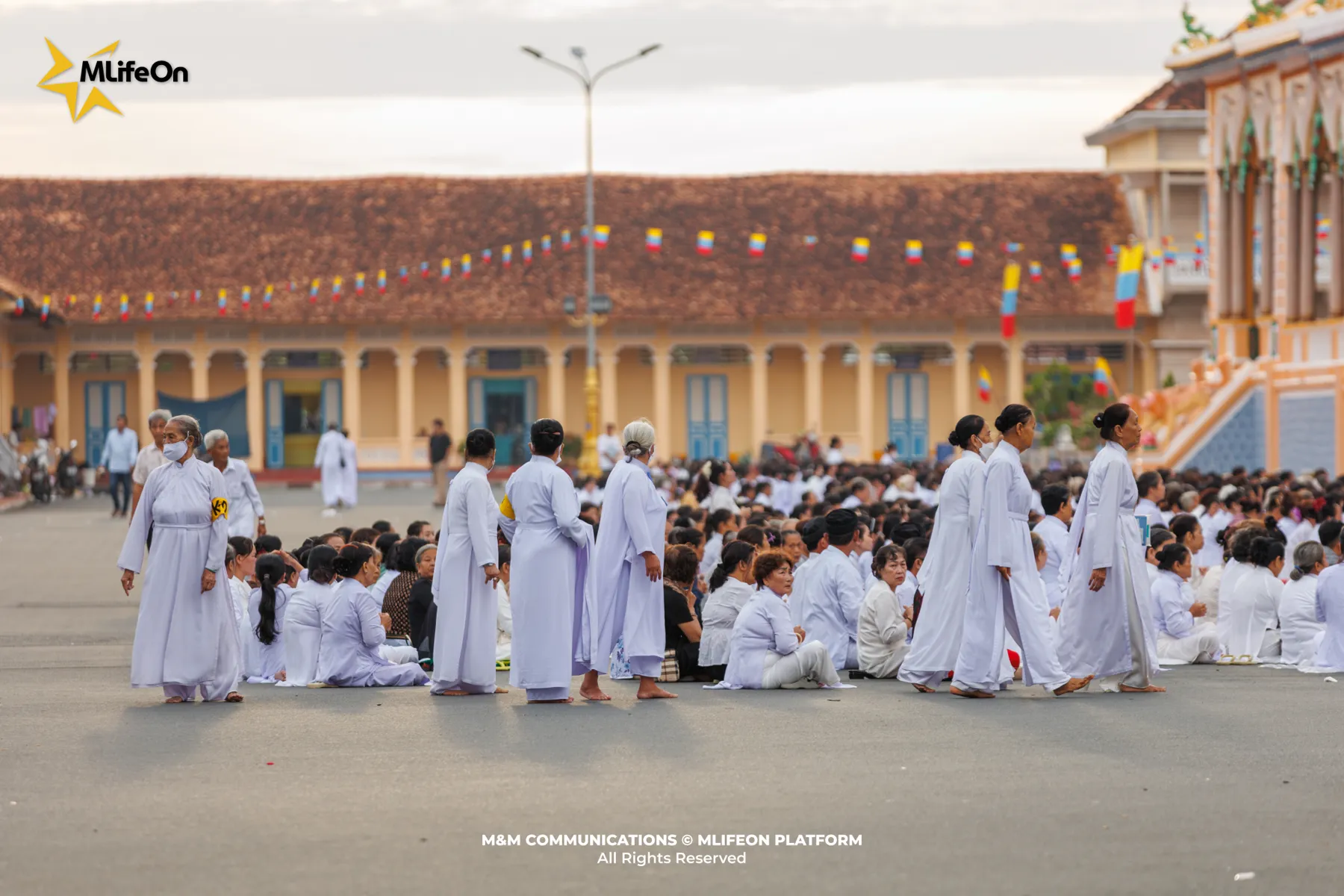
There is none of the excitement usually associated with a bustling festival, at least not yet. Many people sit quietly and wait, their attention directed toward the ceremonial area. Early arrivals find places to sit, others adjust their clothing, while families prepare together for the rituals of the full moon day.
These rows of white robes reveal another side of Hoi Yen. Before it becomes a vibrant nighttime celebration filled with lion and dragon dances, lights, and processions, it is first and foremost an important religious occasion in the spiritual life of Cao Dai followers.
And while the ceremonial areas remain quiet and solemn, another part of the Holy See moves to an entirely different rhythm. In the kitchens, the fires have already been burning since early morning.
Busy kitchens before the festival begins
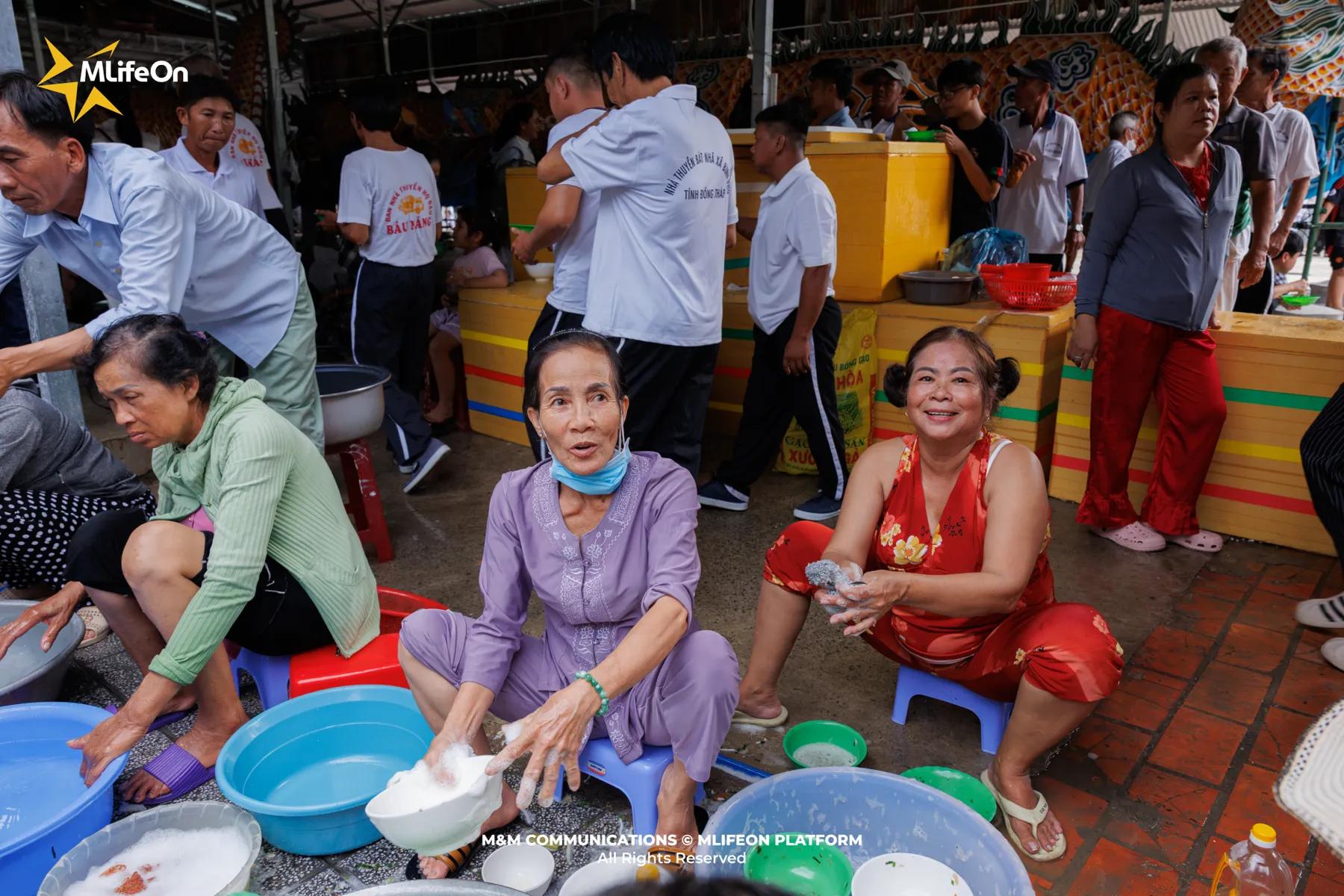
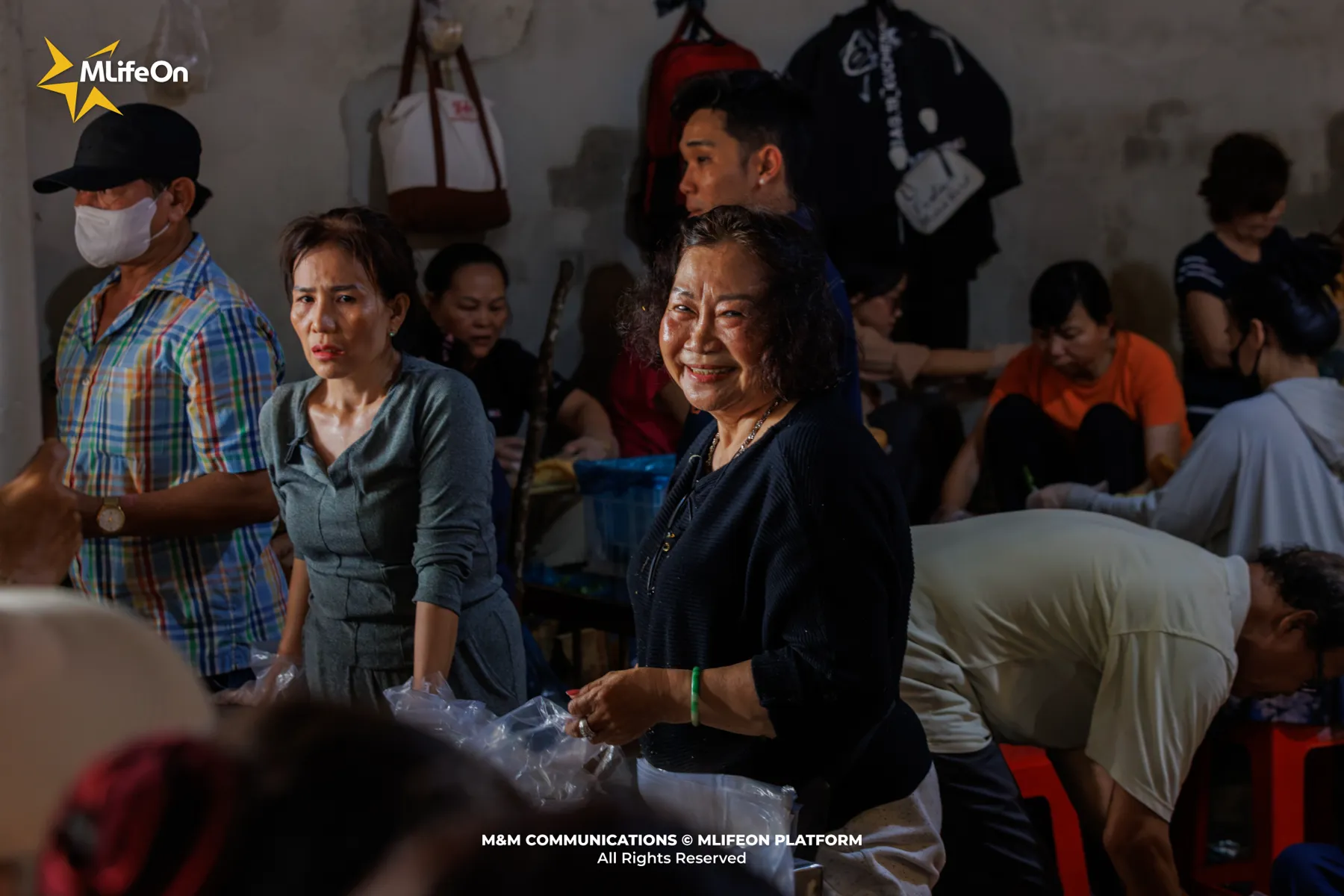
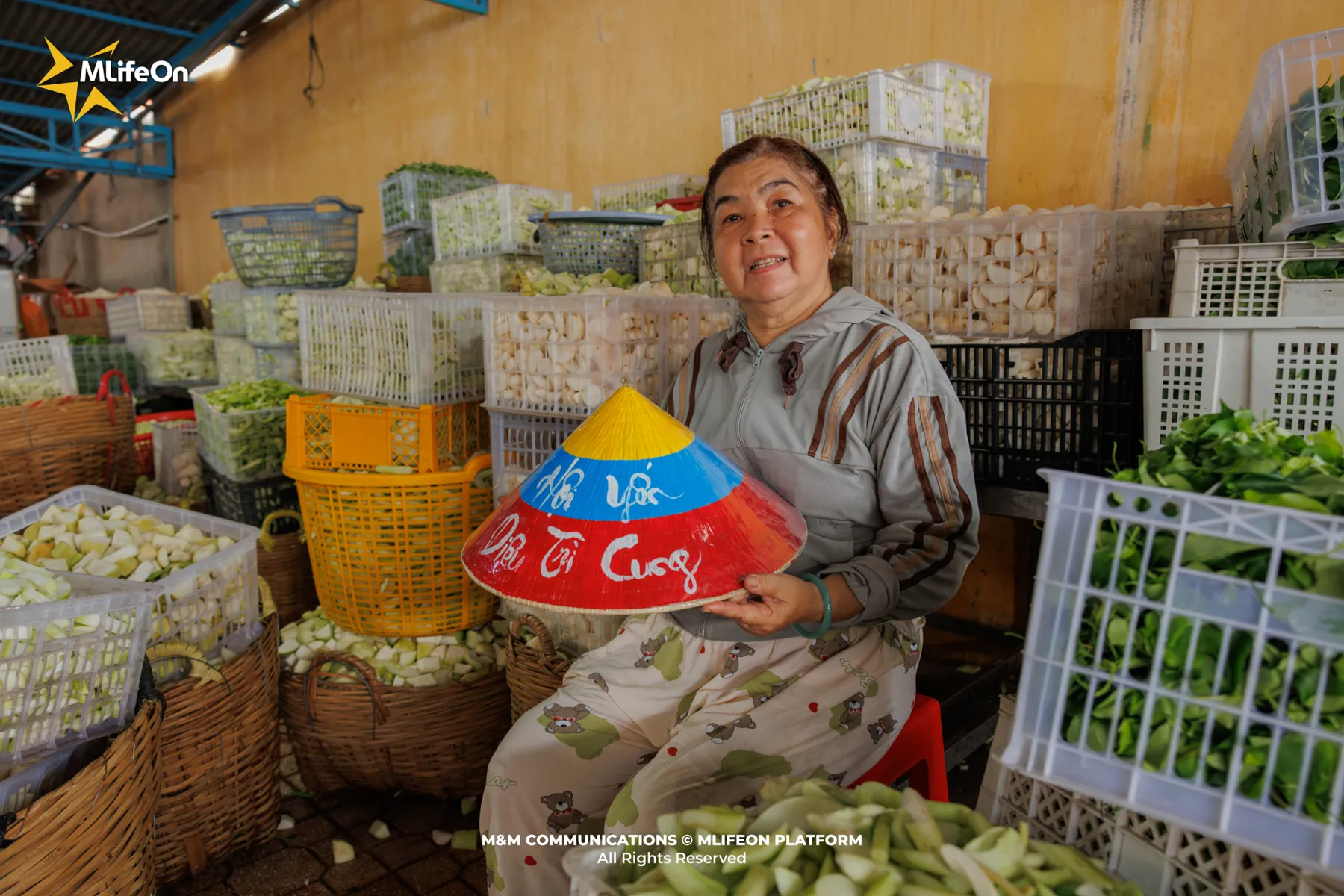
Inside the communal dining hall, the atmosphere is much busier. Some people prepare vegetables, others stand beside large cooking pots, while others portion dishes and arrange meals. The work continues steadily, yet conversations and smiles still fill the kitchen.
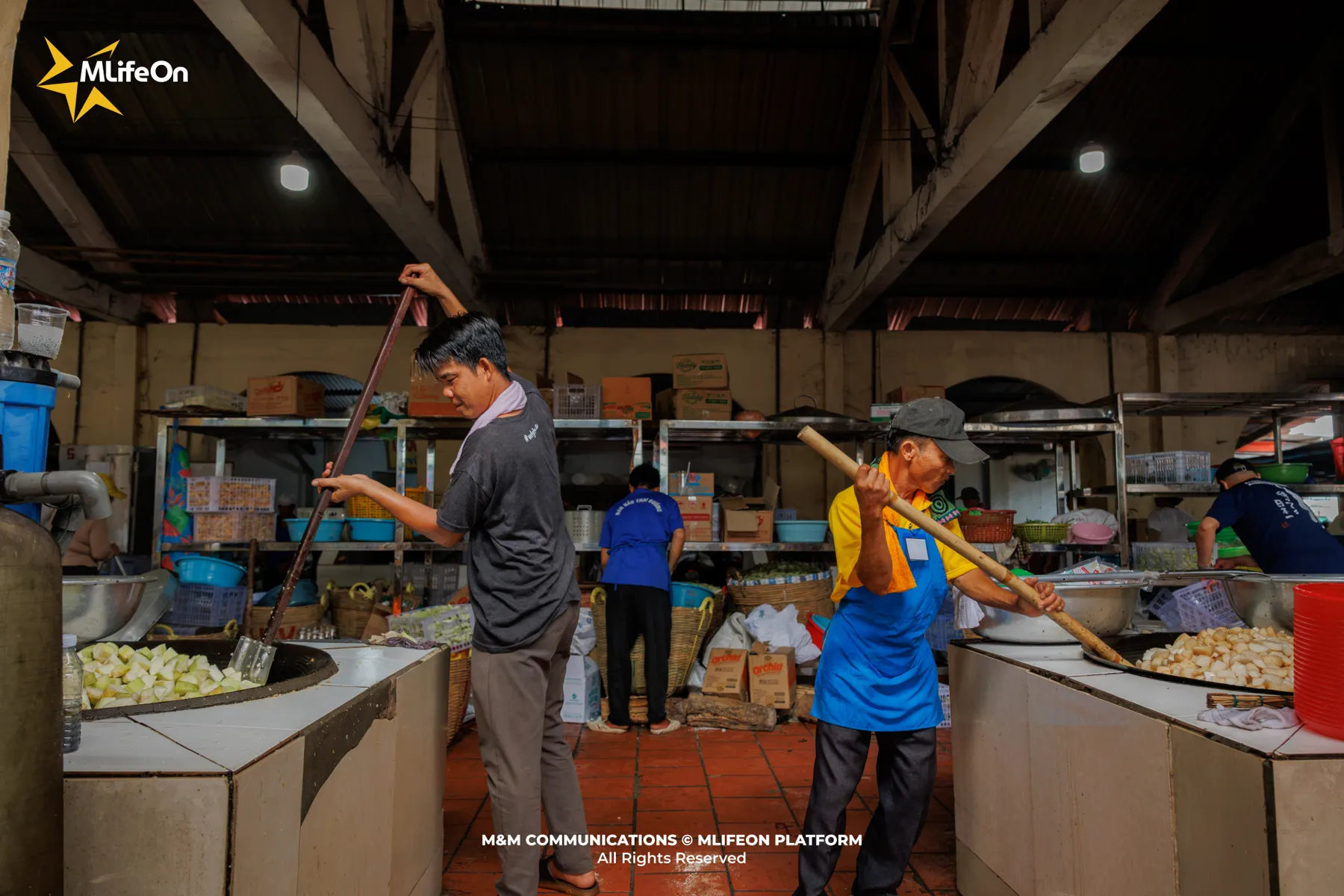
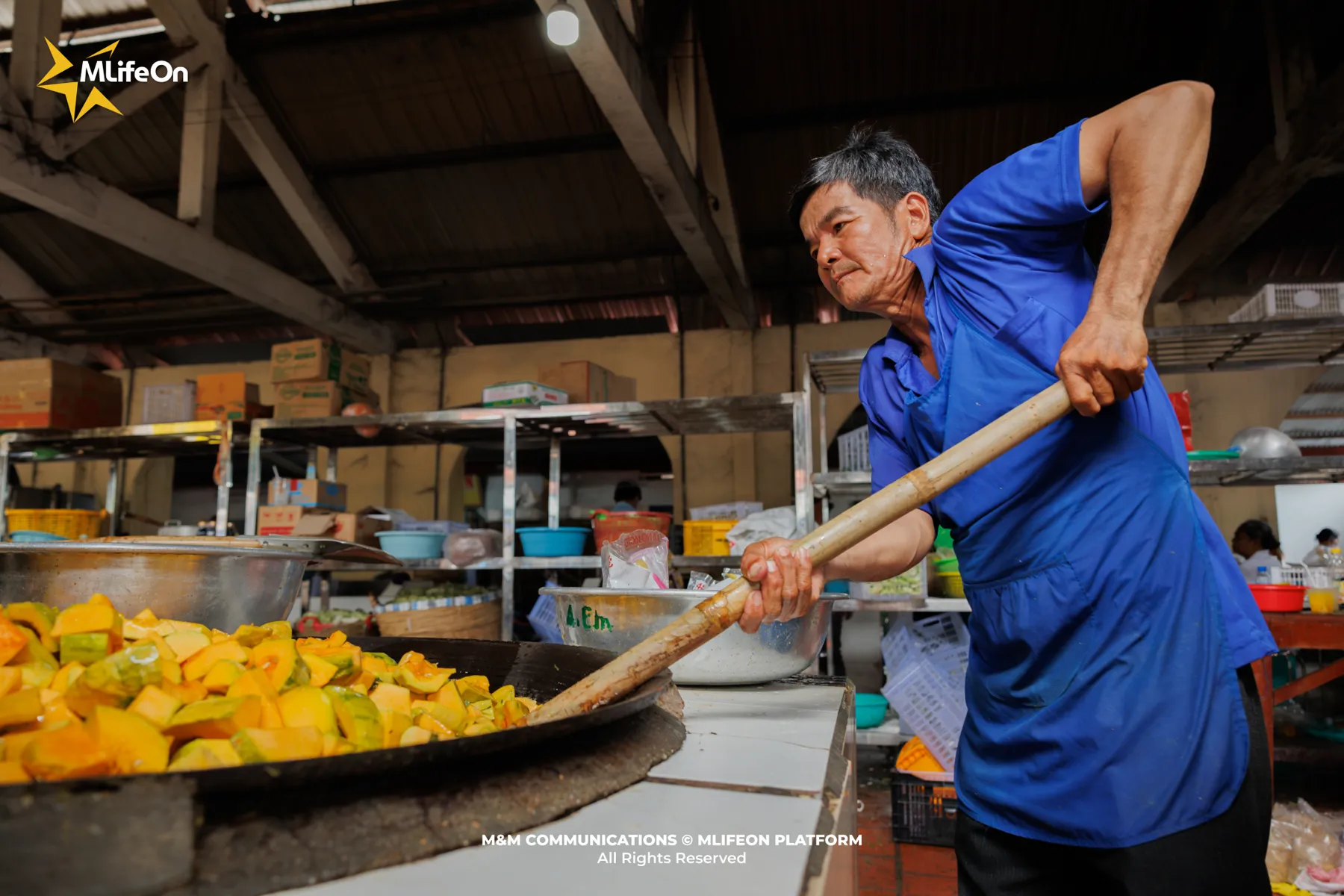
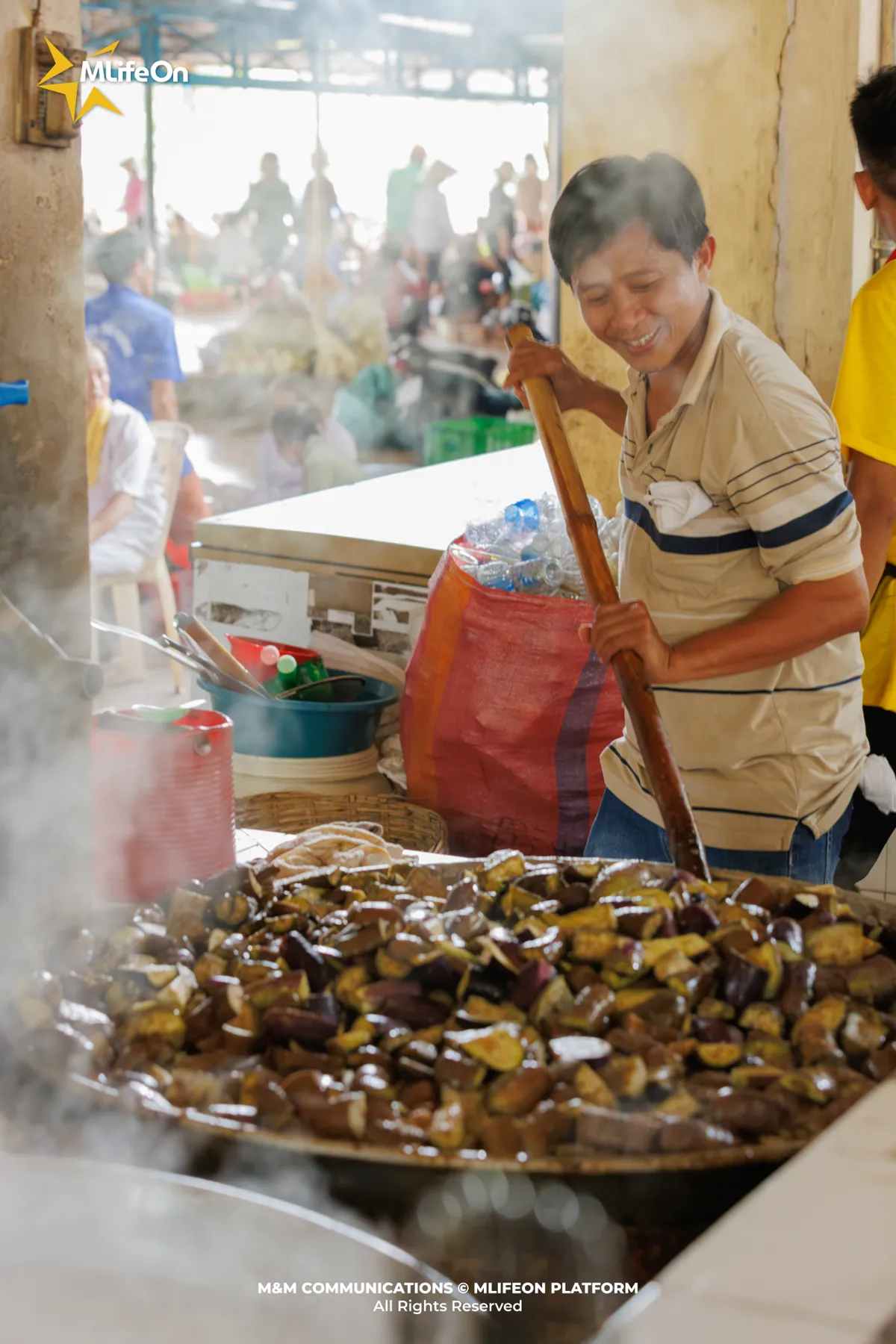
Vegetarian meals have long been a familiar part of Hoi Yen. According to Vietnam’s Department of Cultural Heritage, tens of thousands of free vegetarian meals are prepared for pilgrims during the three days from the 13th to the 15th day of the eighth lunar month. The menu is varied, featuring dishes made with tofu, mushrooms, jackfruit braised with lemongrass, sour hotpot, and many other vegetarian specialties.
At the communal dining hall in 2026, the kitchens were already busy before the main festival day. Volunteers worked together to prepare ingredients, cook, wash dishes, and serve the large number of people arriving for Hoi Yen.
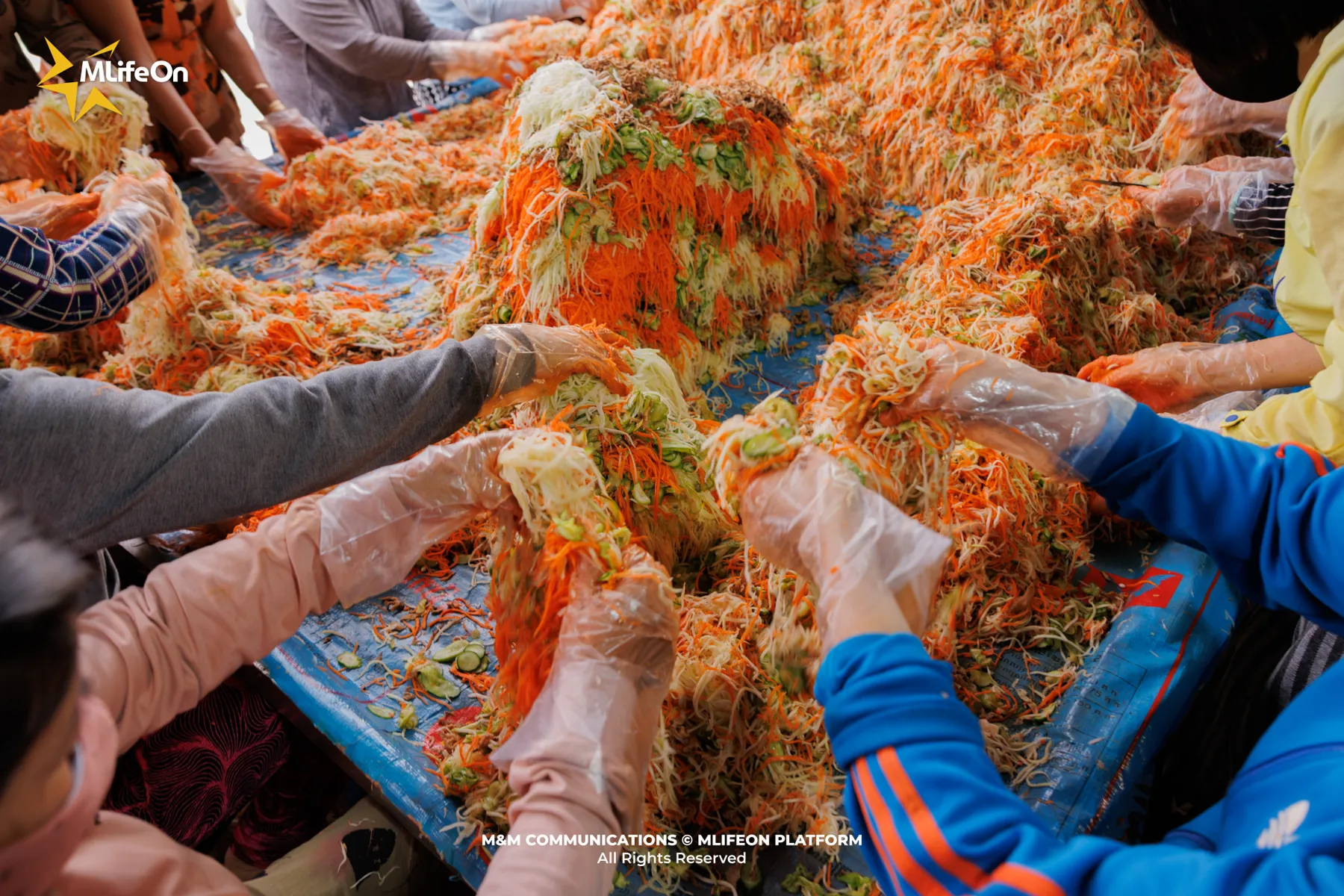
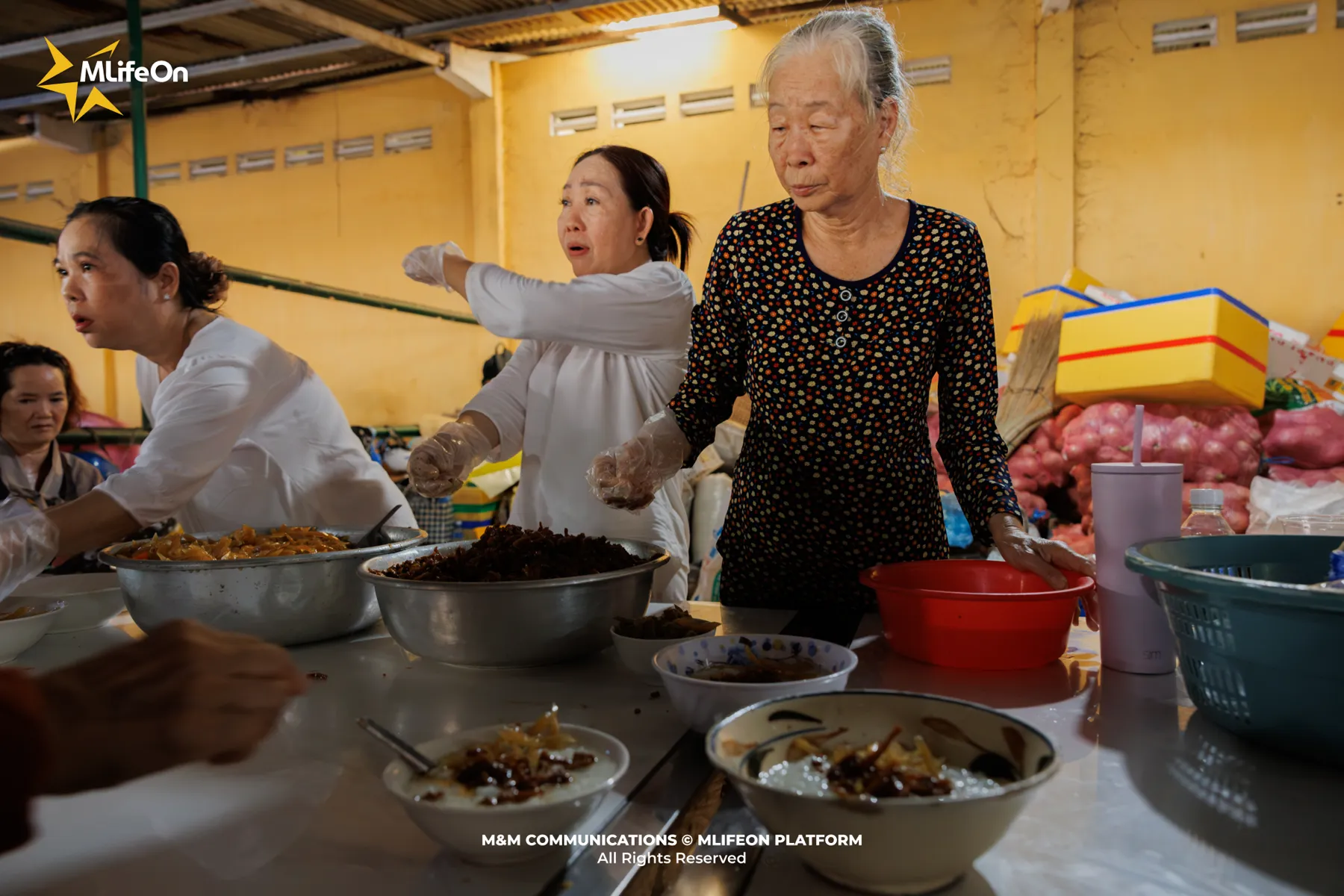
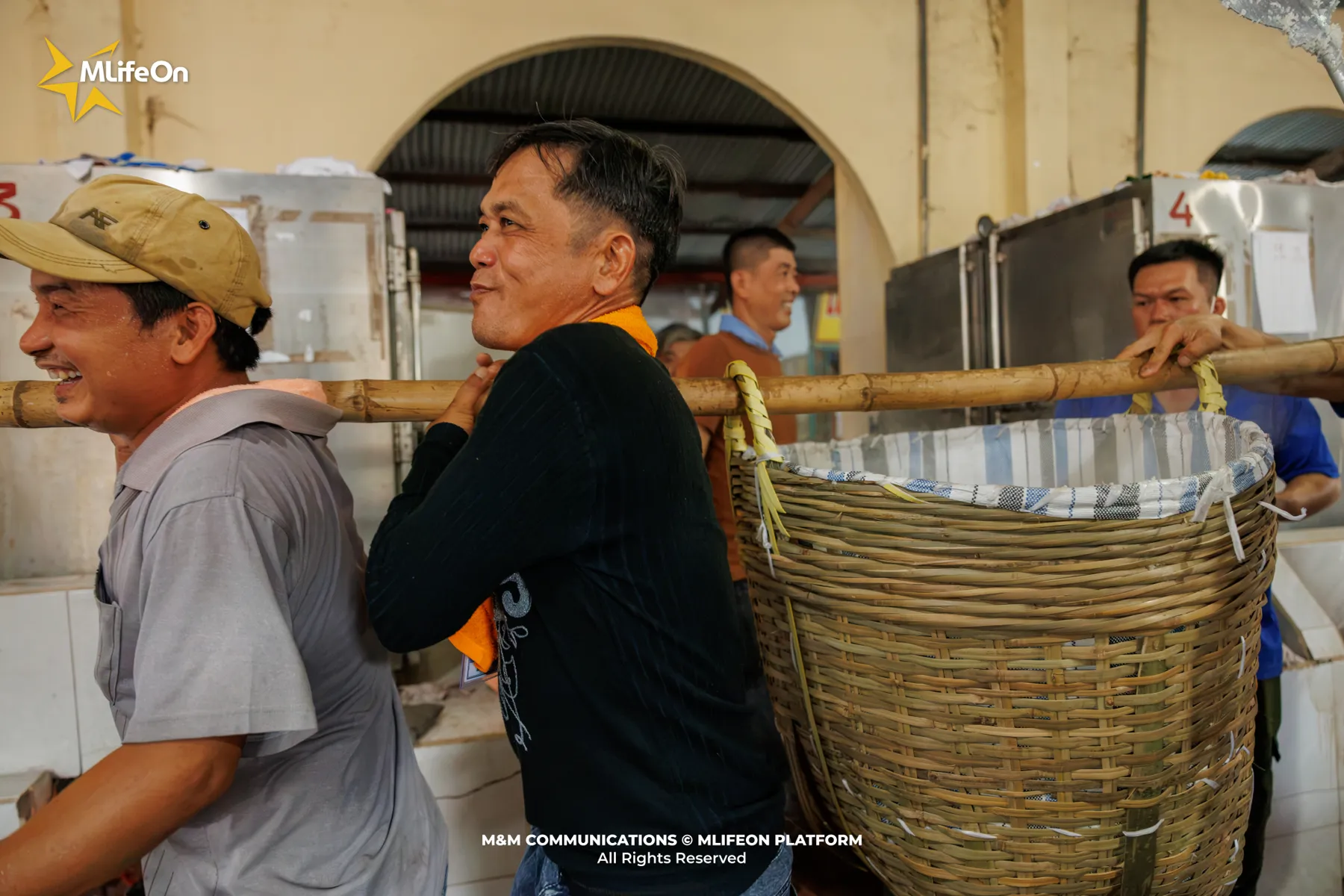
Seen from the kitchen, a grand religious festival suddenly feels much more intimate. Behind the ceremonies and processions are countless people quietly contributing through the most ordinary tasks. A pot of rice, a tray of food, or a vegetarian meal offered to a stranger all become part of the celebration.
Perhaps it is moments like these that allow Hoi Yen to be experienced not only through its solemn ceremonies, but also through the way people work together, share with one another, and welcome those who have traveled from afar.
As the colors of the festival spread across the Holy See
As the afternoon goes on, the atmosphere throughout Tay Ninh Holy See begins to change quickly.
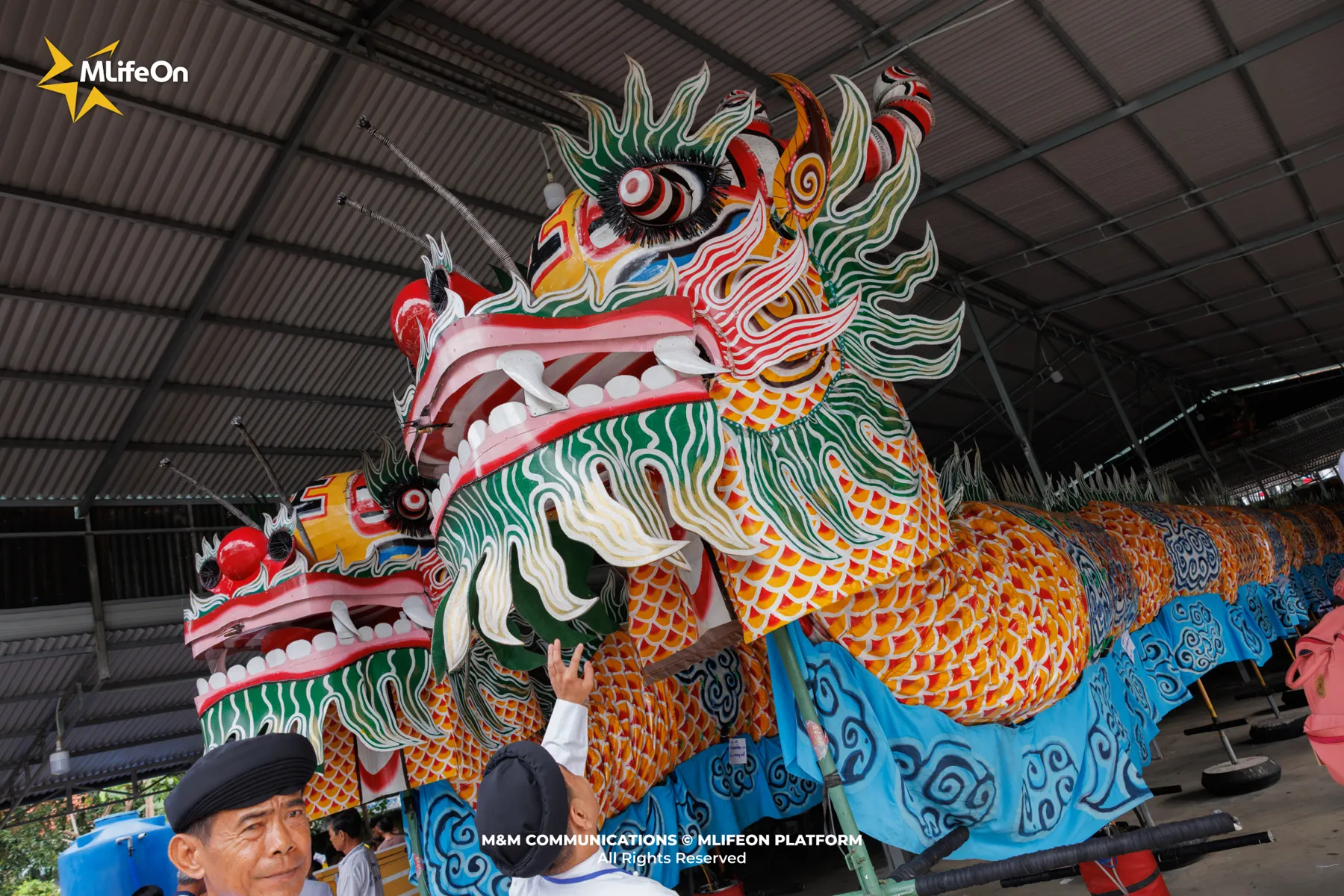
Alongside the white robes, other colors gradually emerge. Lion heads are brought out and prepared. Phoenix figures, musical instruments, and performance props are carefully checked. Members of the performance teams adjust their costumes before gathering together.
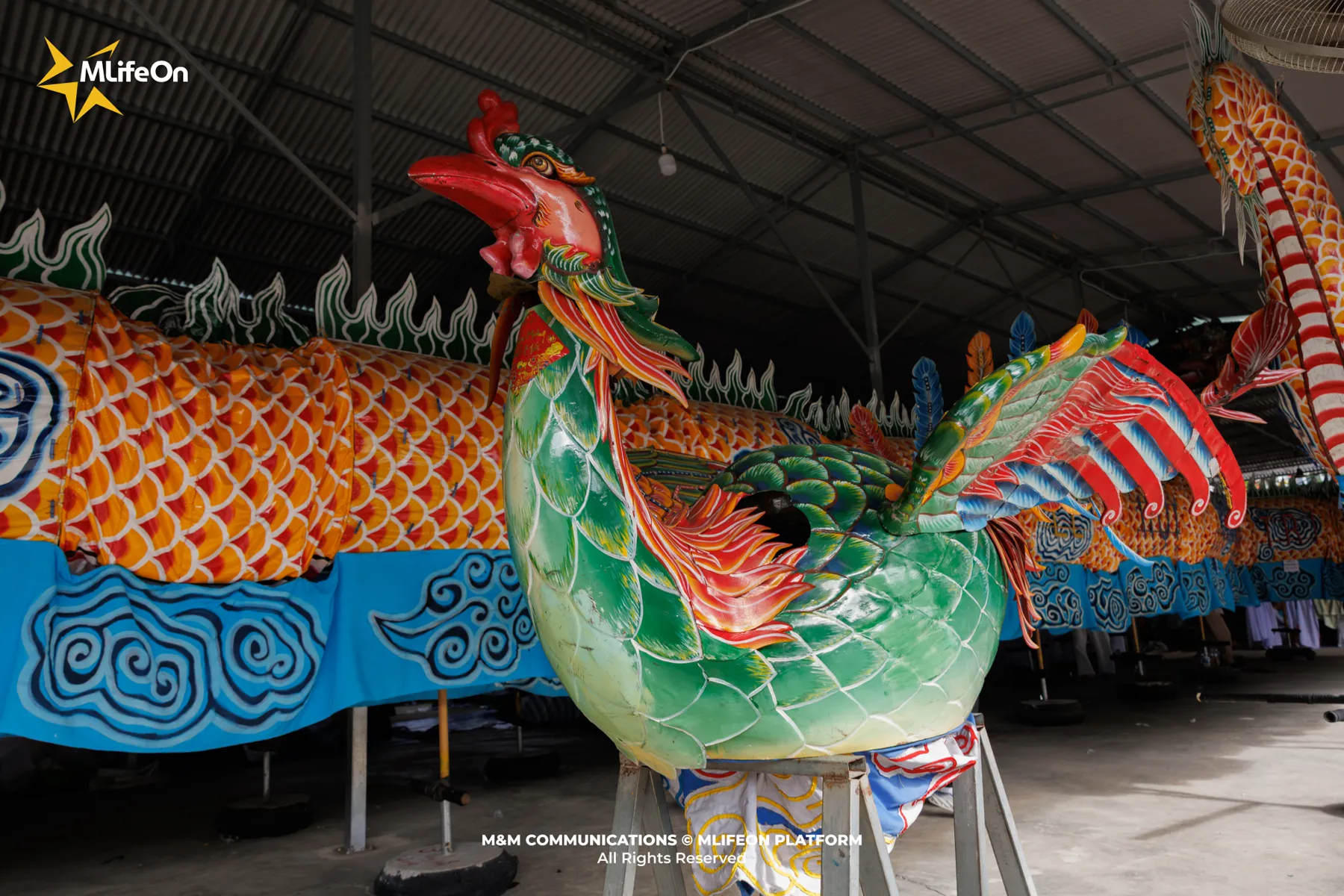
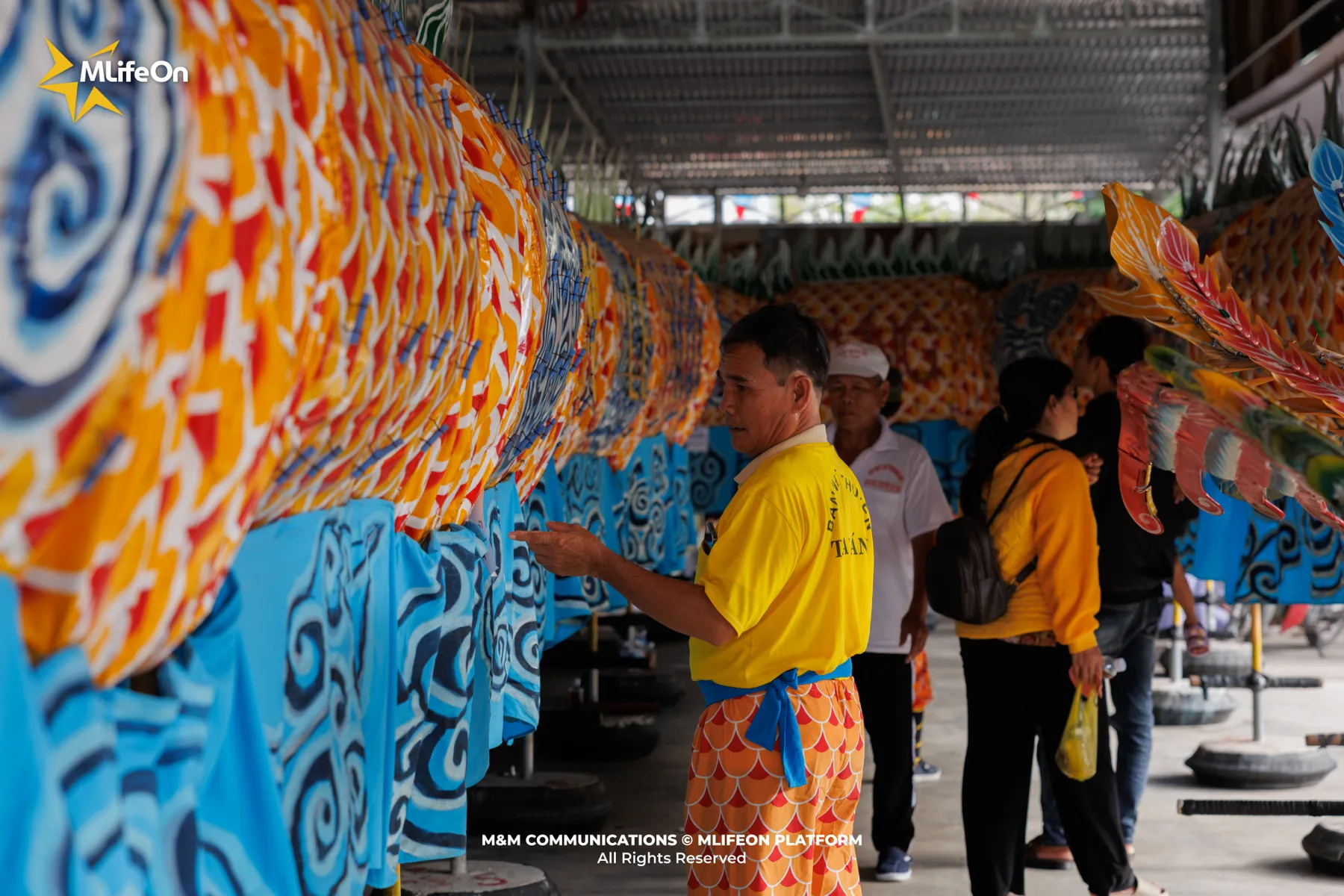
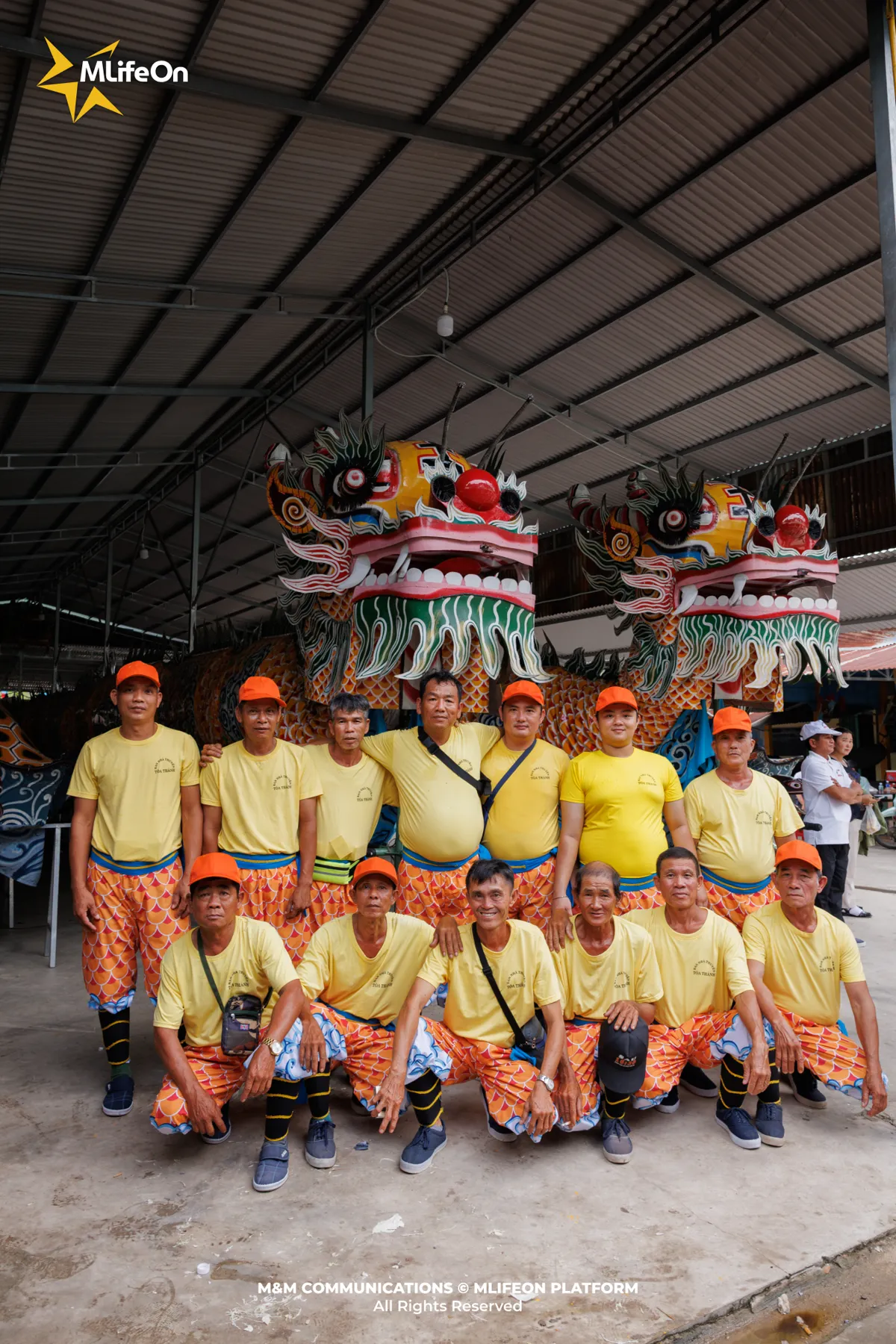
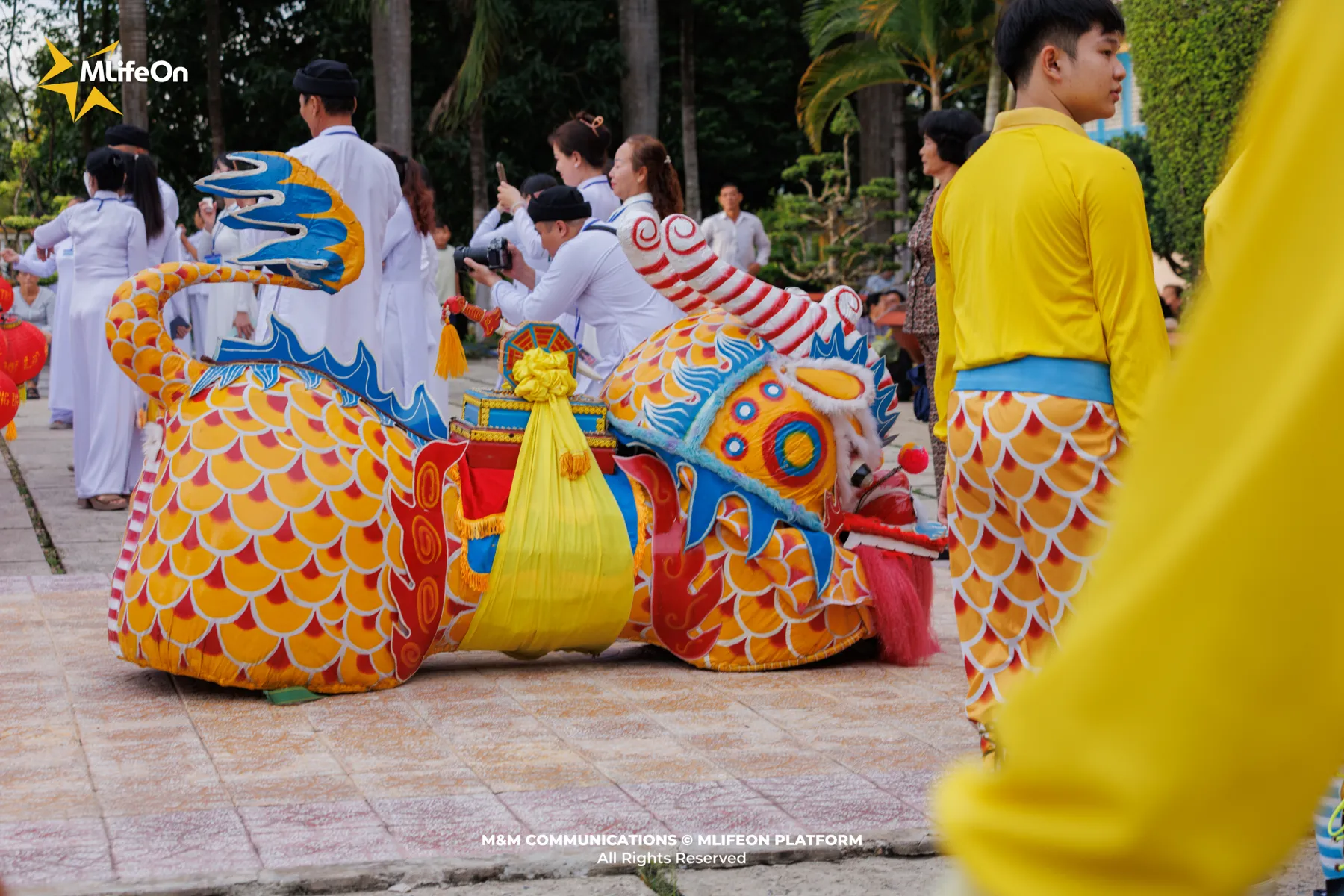
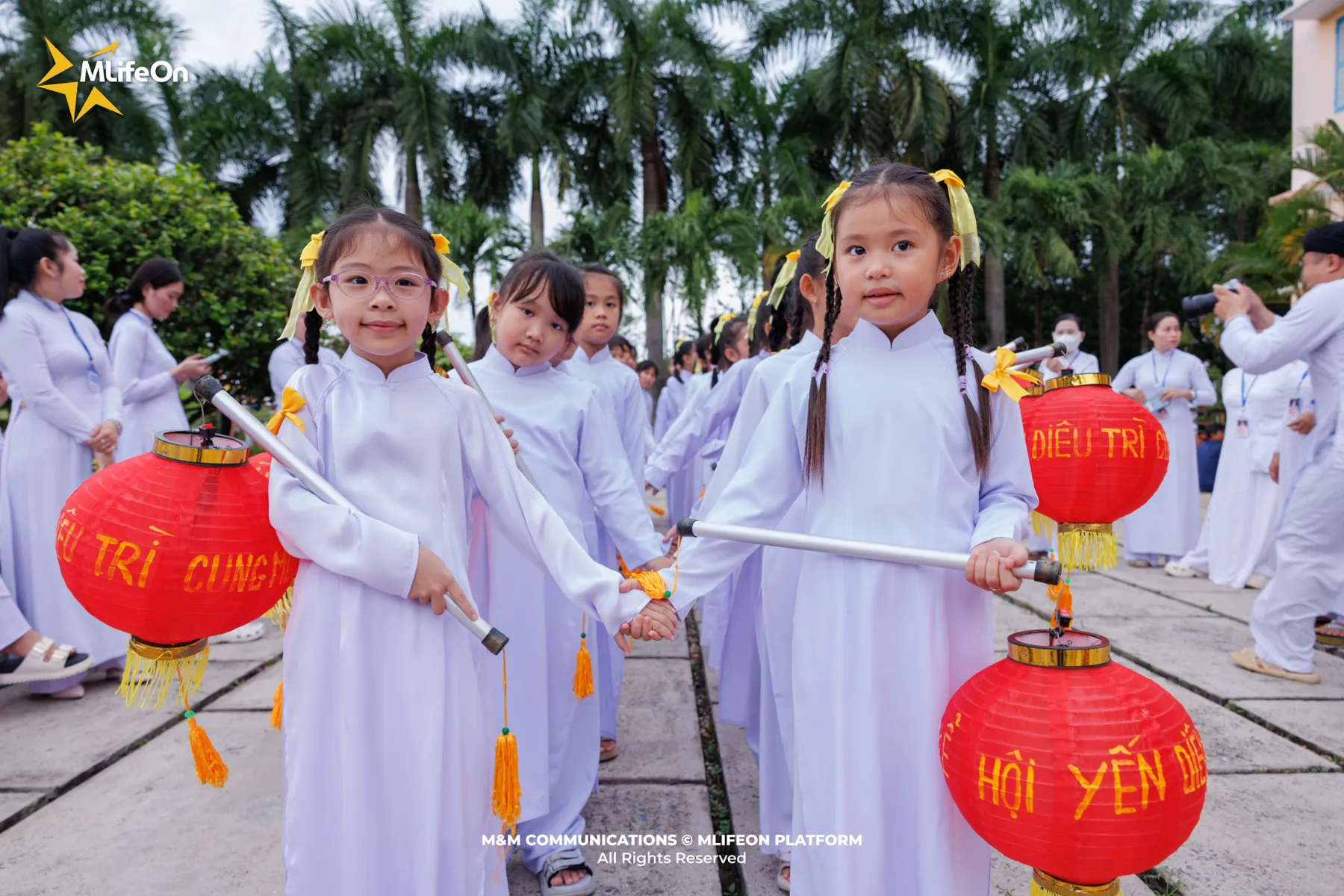
Among them are children dressed in ao dai, holding lanterns in their hands. Standing side by side as they wait for their turn to join the celebration, they create an image closely associated with the full moon of the eighth lunar month.
With each small detail, the festival atmosphere becomes more vivid. Props that are still motionless will soon come alive. Groups now gathering in formation will soon join the procession. The lanterns in the children’s hands will begin to glow as darkness falls.
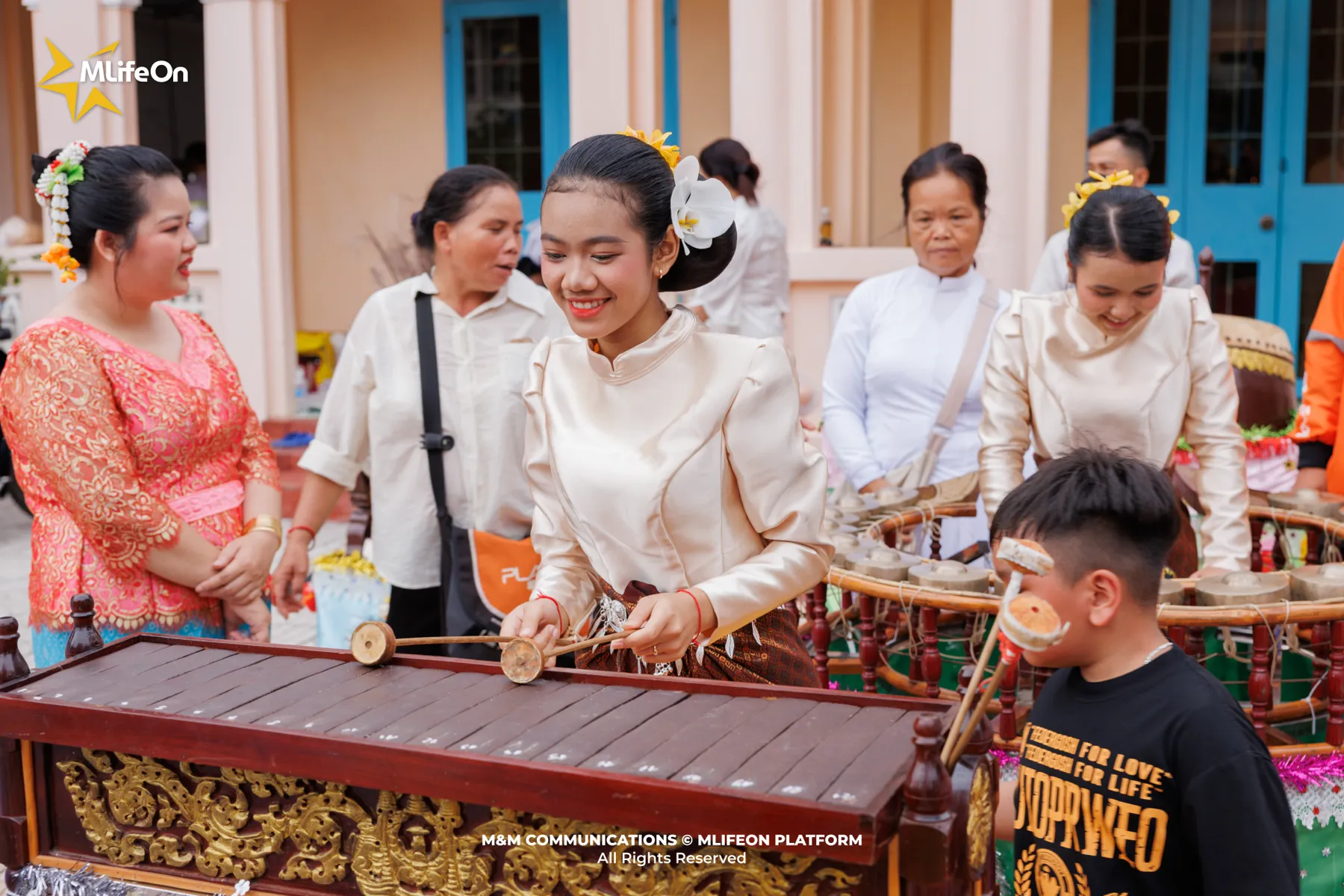
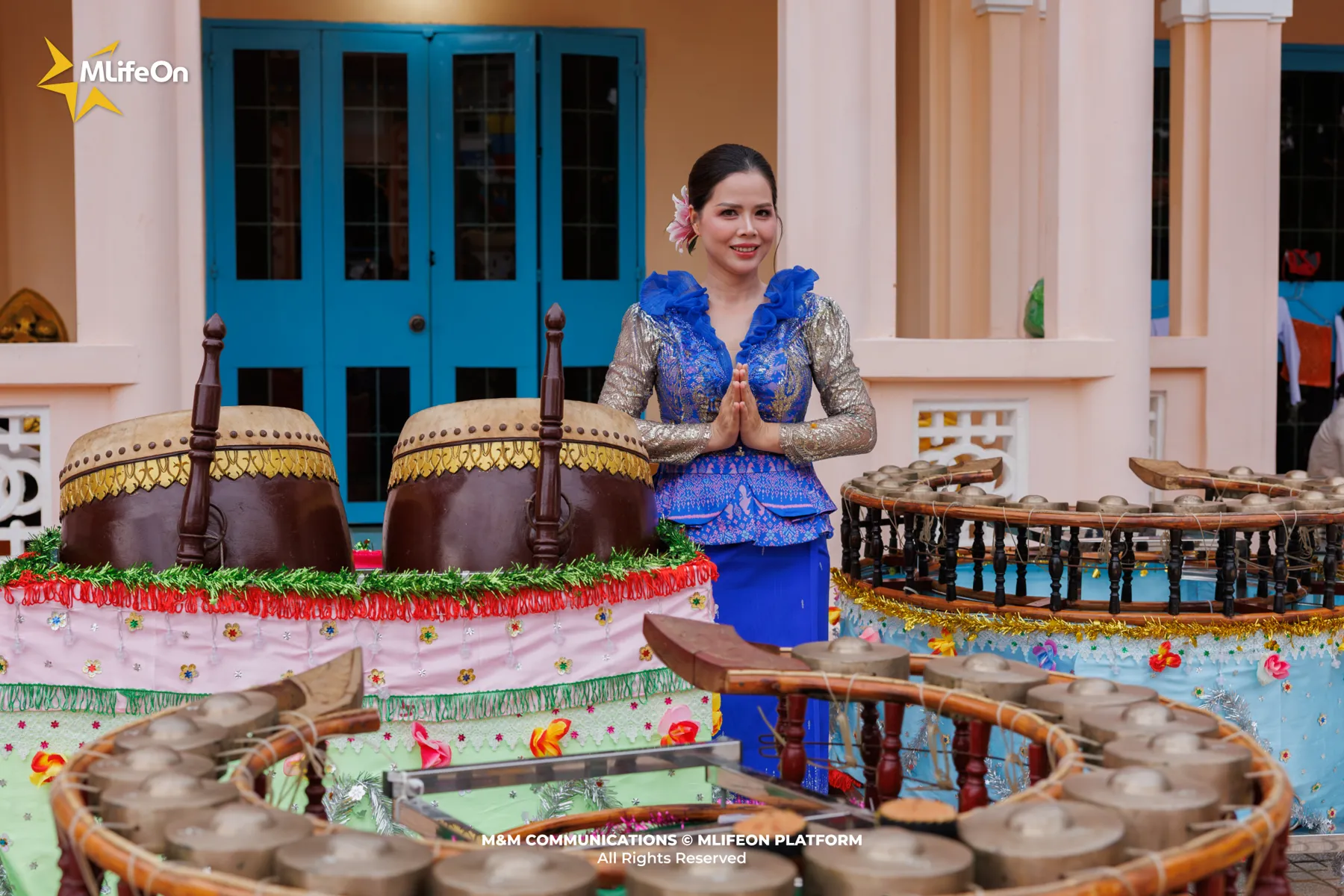
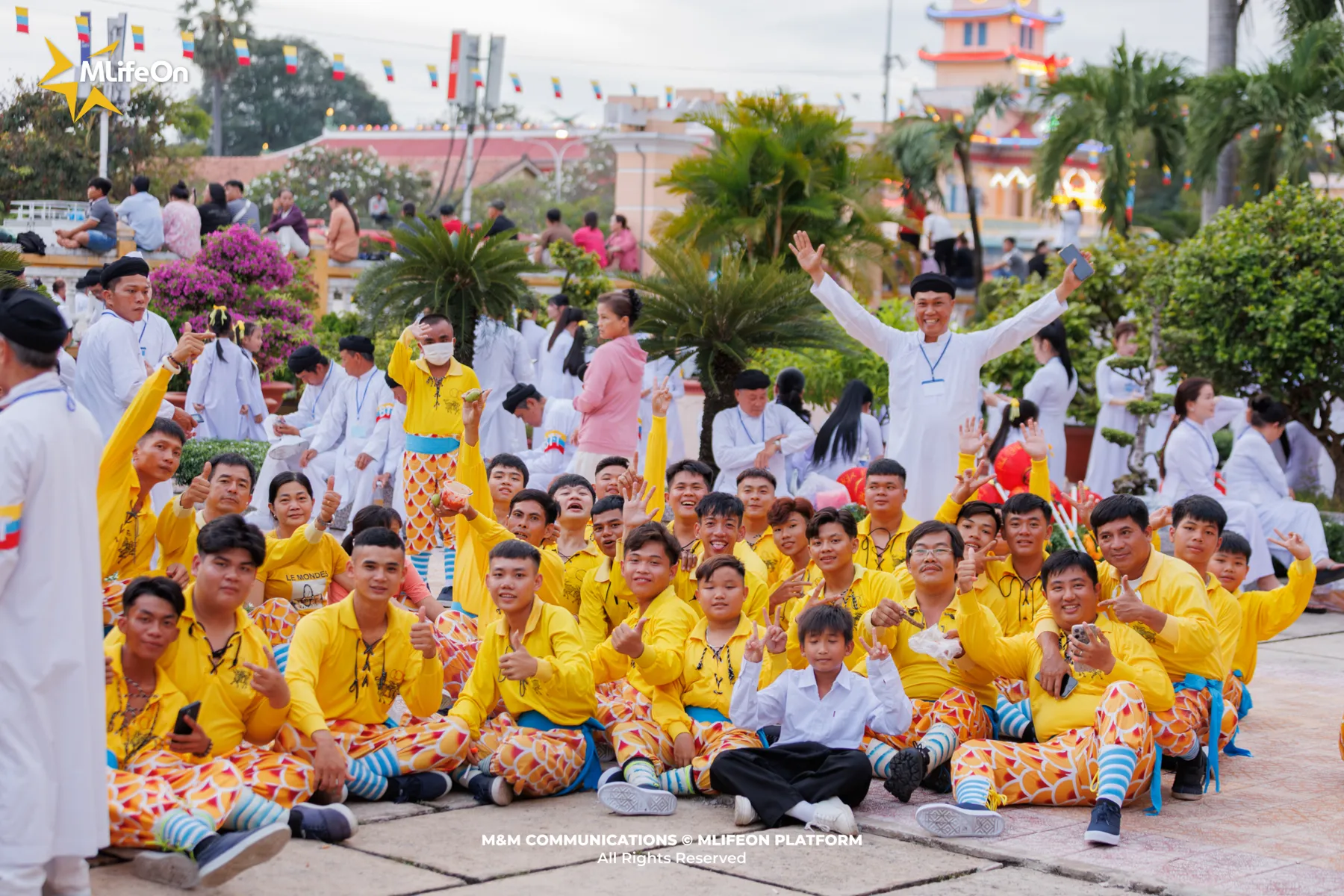
The Hoi Yen program features a procession with the flower float of Duc Phat Mau and the Nine Female Immortals, together with the Long Ma, Incense Dragon, Qilin, Turtle, Phoenix, and various performance teams. Together, they create the colorful festive dimension that follows the day’s religious ceremonies.
There is therefore a beauty of its own in these moments of preparation. The celebration has not yet reached its busiest point, but one can already sense that a very special full moon night is drawing near.
A full moon night illuminated at the heart of Tay Ninh Holy See
As darkness falls, Tay Ninh Holy See takes on an entirely different appearance. The courtyards gradually fill with people. Light from the buildings, lanterns, and performance groups blends across the grounds. Lion dance drums begin to echo, and the formations start moving through the vast ceremonial space.
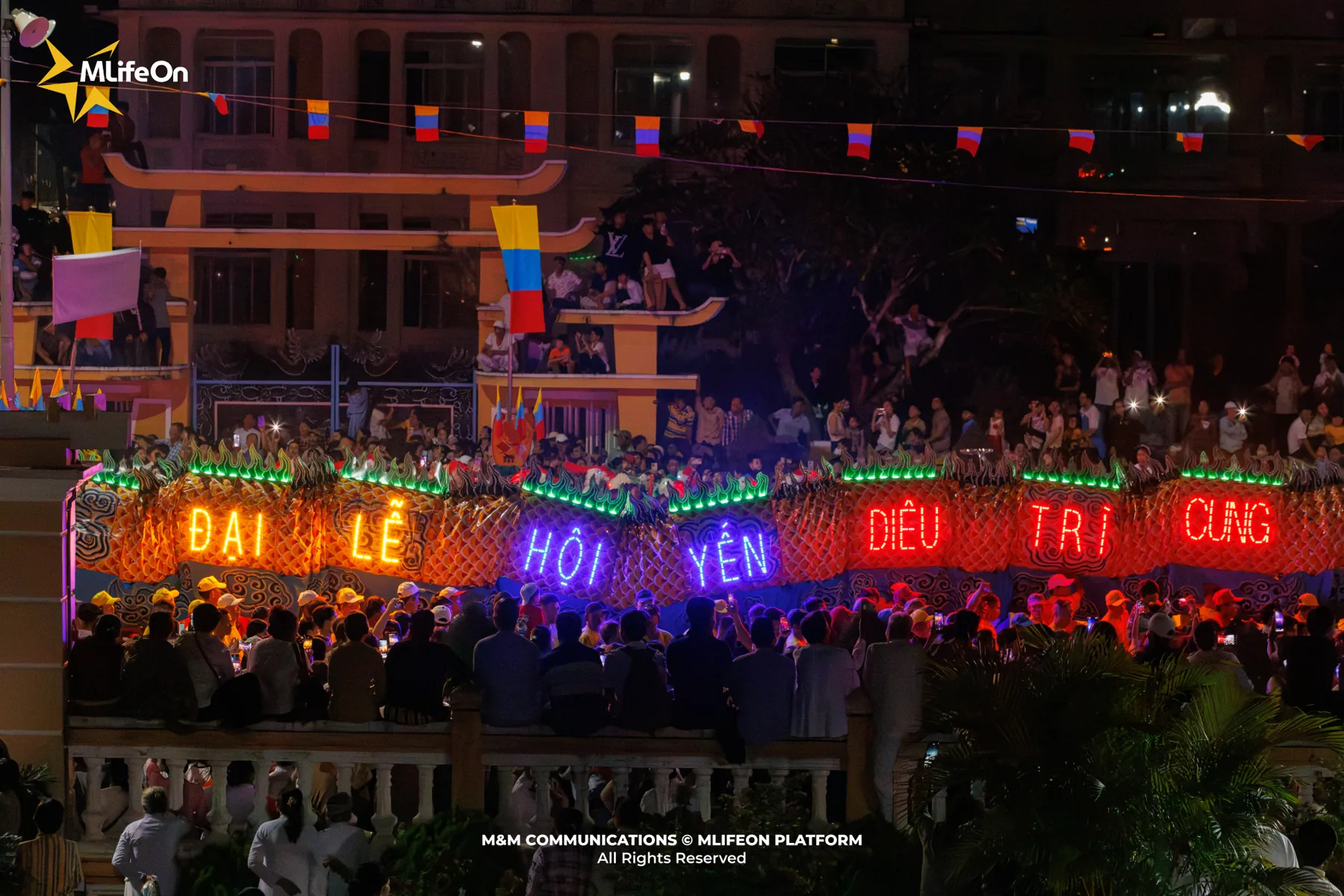
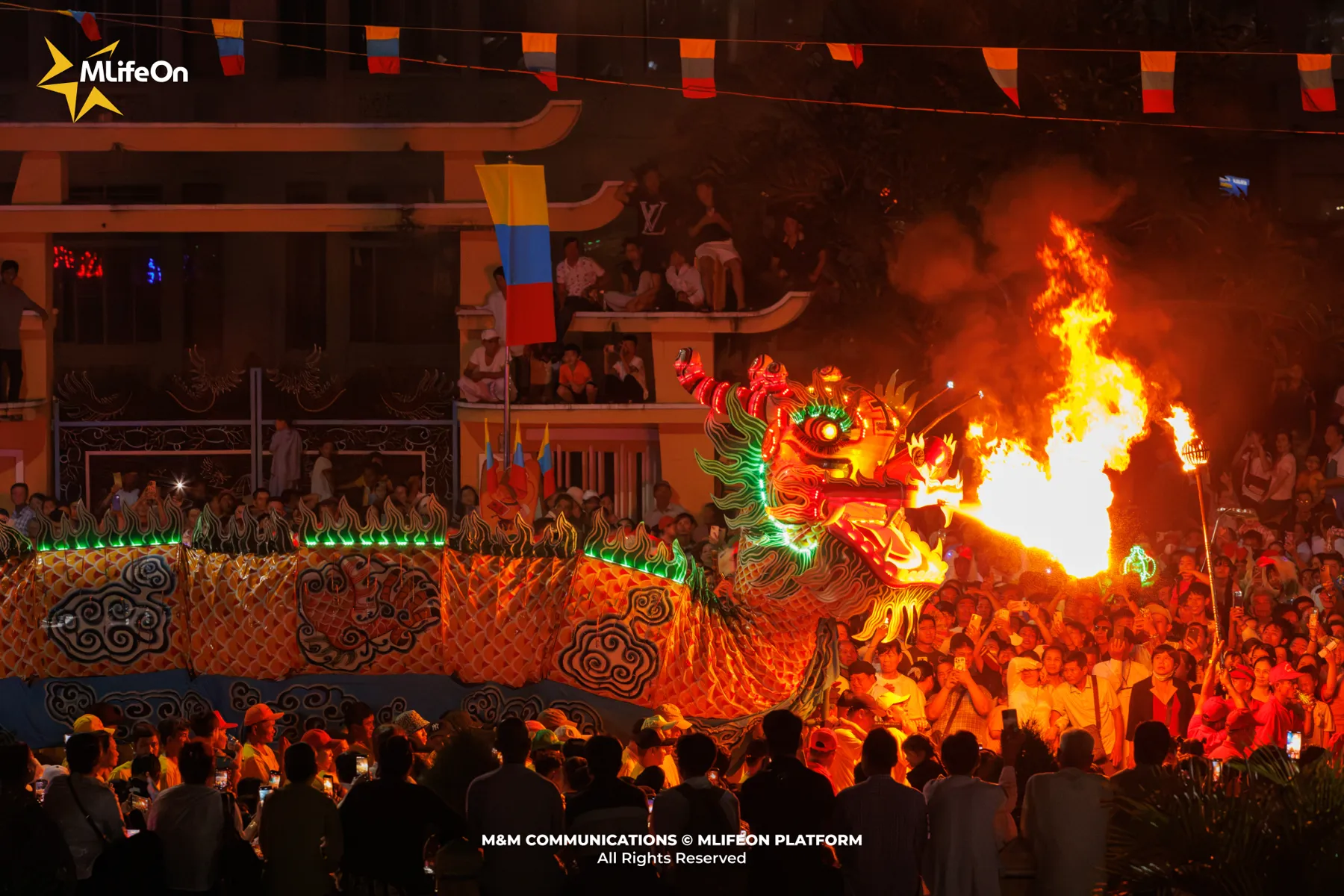
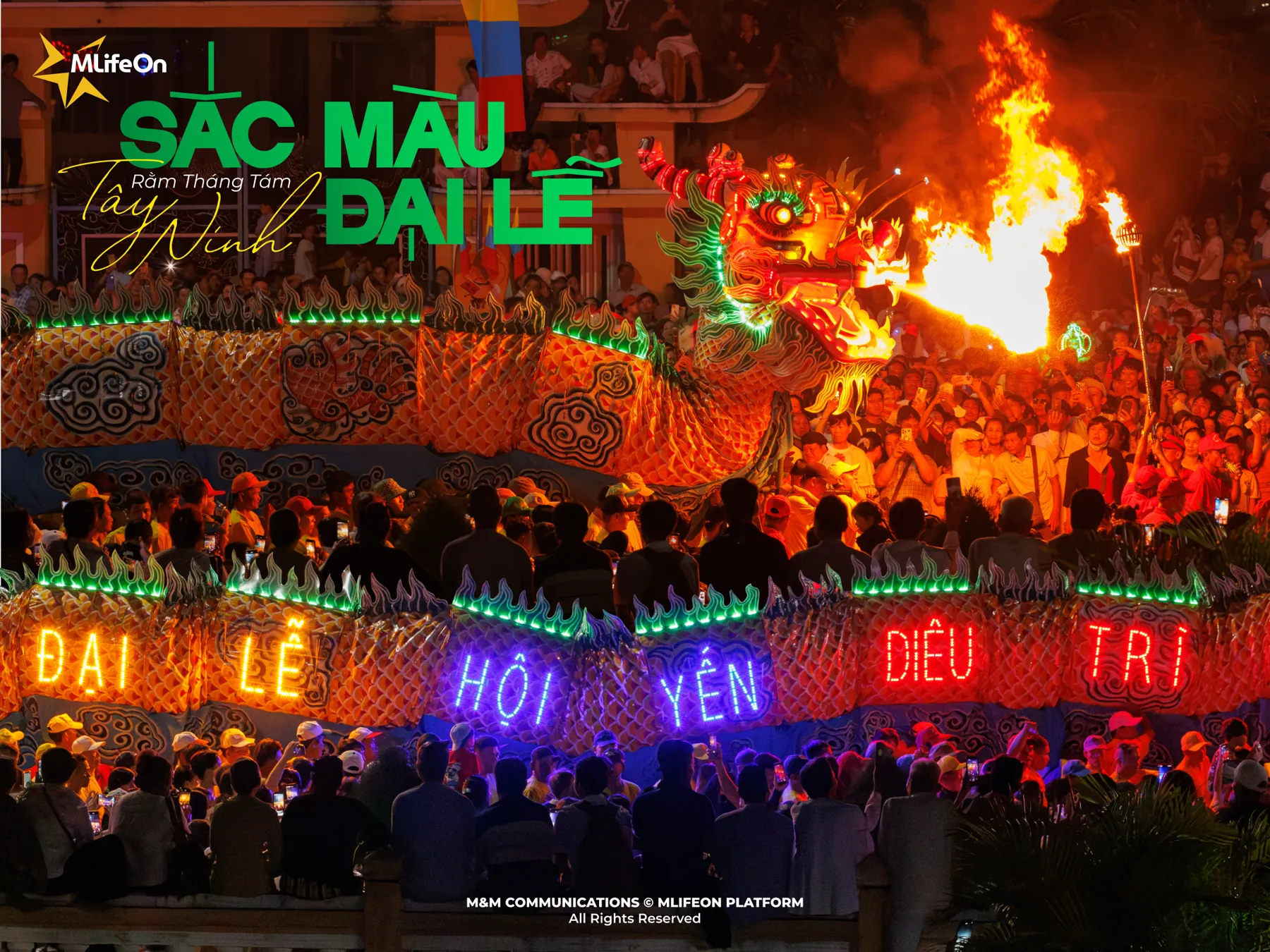
The procession featuring the flower float of Duc Phat Mau and the Nine Female Immortals, together with the Long Ma and the Four Sacred Creatures, makes its way through the grounds of the Holy See. Among the highlights, the Incense Dragon is one of the performances most eagerly anticipated by the crowd. As the glowing dragon comes alive and moves through the darkness, Hoi Yen reaches one of its most spectacular moments.
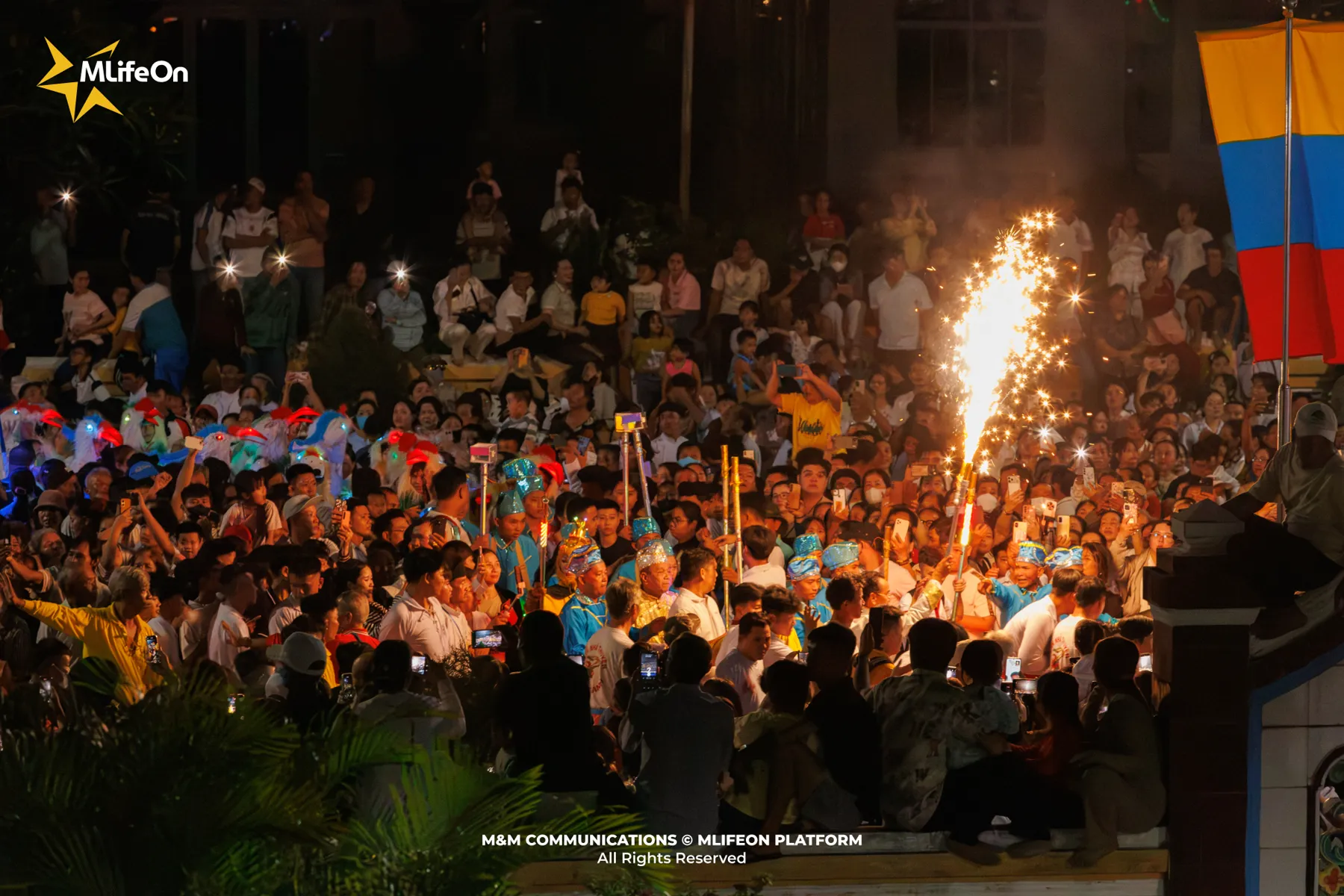
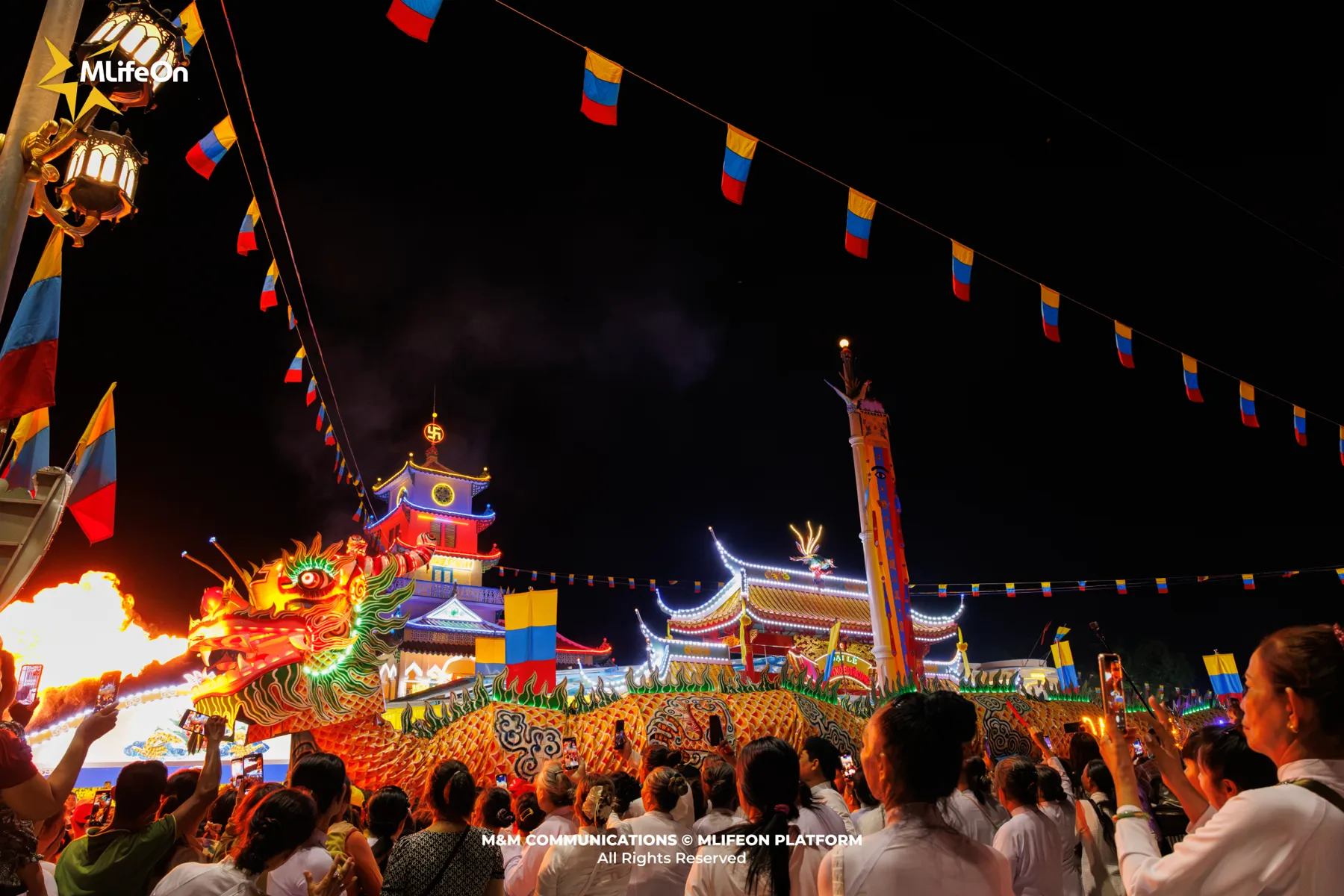
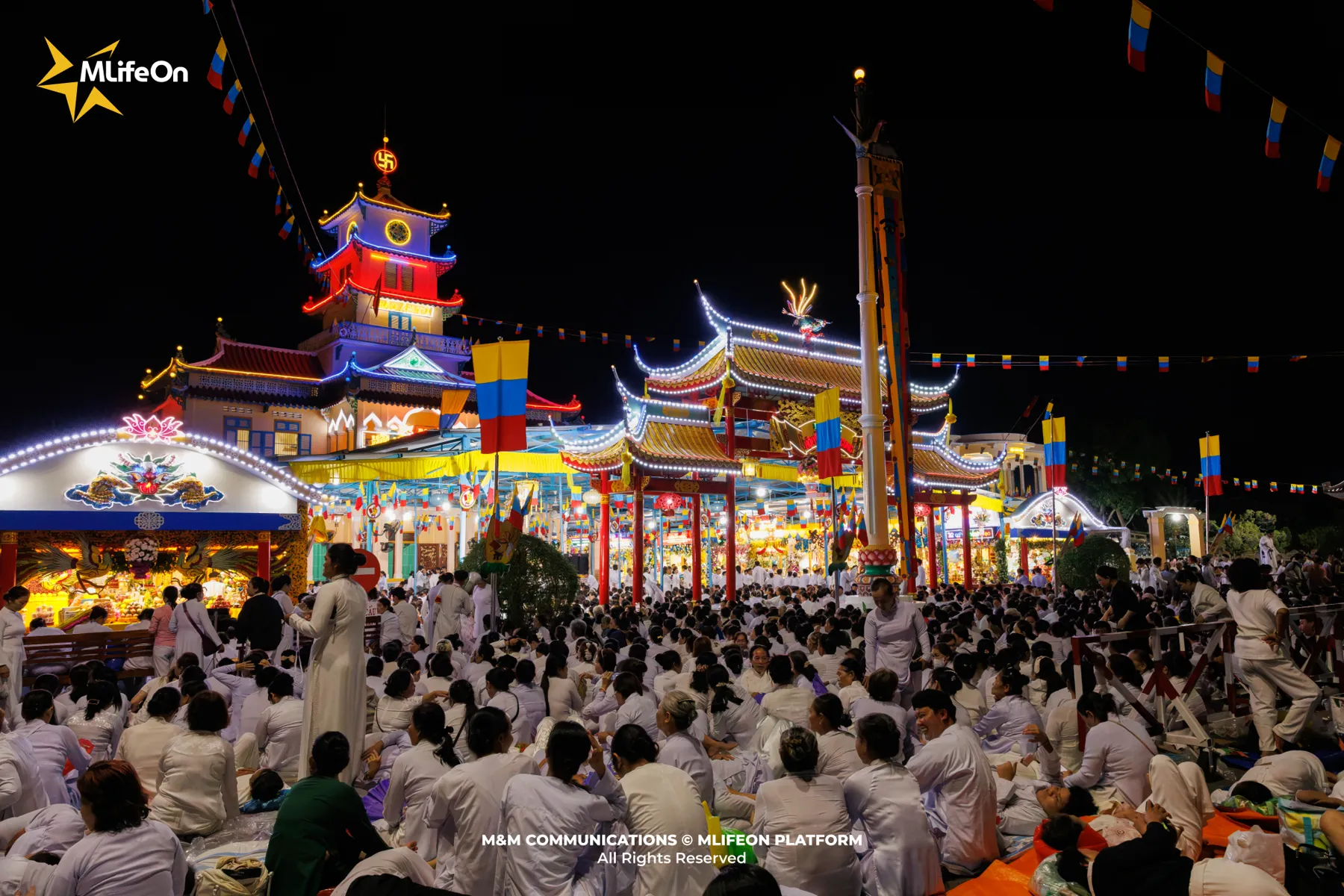
From a distance, it becomes difficult to distinguish individual people or props as clearly as in the late afternoon. Instead, the scene transforms into a sea of people, light, continuous movement, and glowing fire standing out against the full moon night.
Conclusion
More than a century later, the grand festival continues to return with every full moon of the eighth lunar month, living on not only through the rituals that have been carefully preserved, but also through the contributions of a community across generations.
Perhaps it is precisely this continuity, people gathering, preparing, serving, performing and participating together year after year. That has given this remarkable festival its enduring vitality in the heart of Tay Ninh.
CREDITS
- Photography: Kien Trang
- Content: Hoai Ha
- Design: Phuong Nguyen