VIETNAMESE BELIEFS: WORSHIPING THE WHALE IN COASTAL AREAS

Giang Huynh
VIETNAMESE BELIEFS: WORSHIPING THE WHALE IN COASTAL AREAS
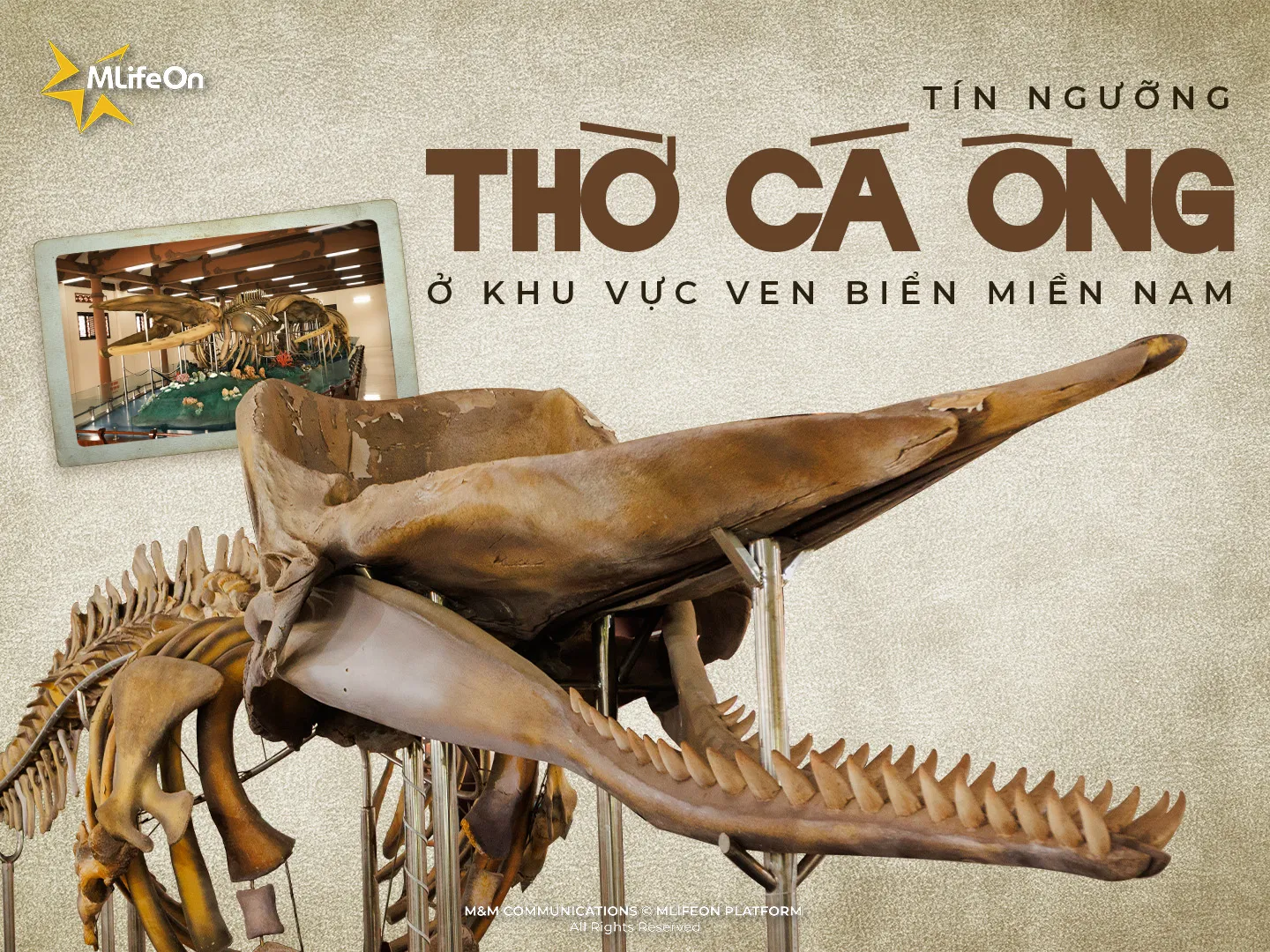
Discover the whale worship - a unique maritime culture in coastal areas of Vietnam, expressing the sacred belief of fishermen in the Central and Southern coastal regions towards whales.

In Vietnam, folk beliefs are always closely linked to community life and nature. If the mountainous areas worship the forest god, the plains are attached to the village guardian spirit, then the coastal fishing villages have a special connection with the sea - where they not only earn a living, but also place their faith and gratitude in symbolic mascots.

Among them, the worship of Ca Ong - the whale - is one of the most unique and long-standing traditions of coastal residents in Vietnam. Associated with that are the images of temples or mausoleums, palaces, and coastal villages, sacred places to worship and commemorate the "god of the South Sea" who has saved seafarers for generations.
Whale – the god of the sea in Vietnamese consciousness

In Vietnamese folklore, especially in the coastal provinces of the Central and Southern regions, whales – respectfully called “Ca Ong” – have long been a familiar mascot. According to legend, this giant fish is the god of the South Sea, granted by the king, capable of rescuing boats and protecting fishermen in the middle of the ocean.

Although it is a large fish that can make those who see it stunned, whales are not the embodiment of ferocity but are always associated with a gentle image and many stories of helping boats and people overcome storms at sea.

“Meeting a whale is a blessing.” The simple words of a fisherman at sea are enough to make me understand that whales or Ca Ong are not just animals, but also a belief, as well as a place to place faith, a salvation for people who drift all year round in the ocean.
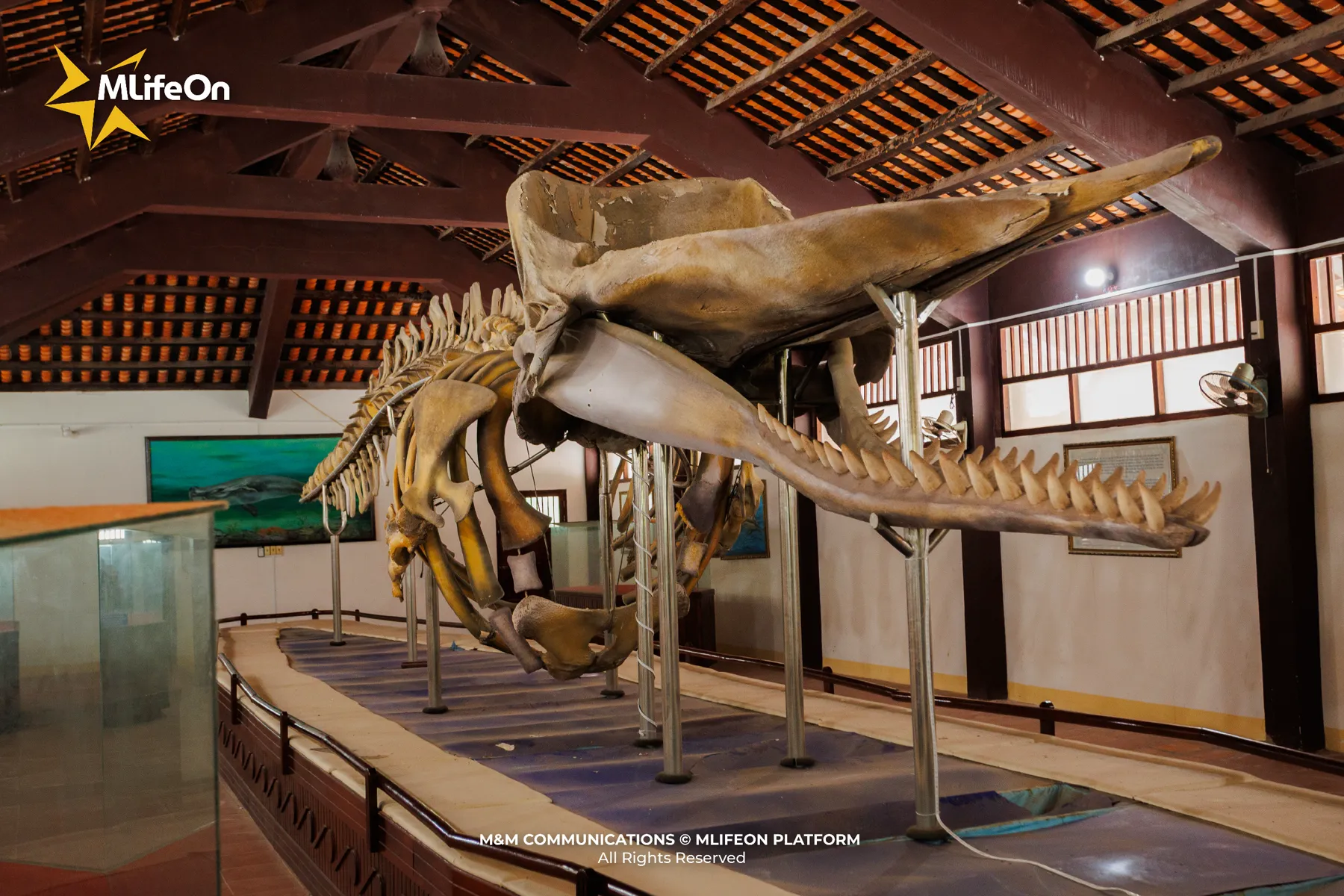
Whale skeleton on display at Van An Thanh, Phu Quy Island
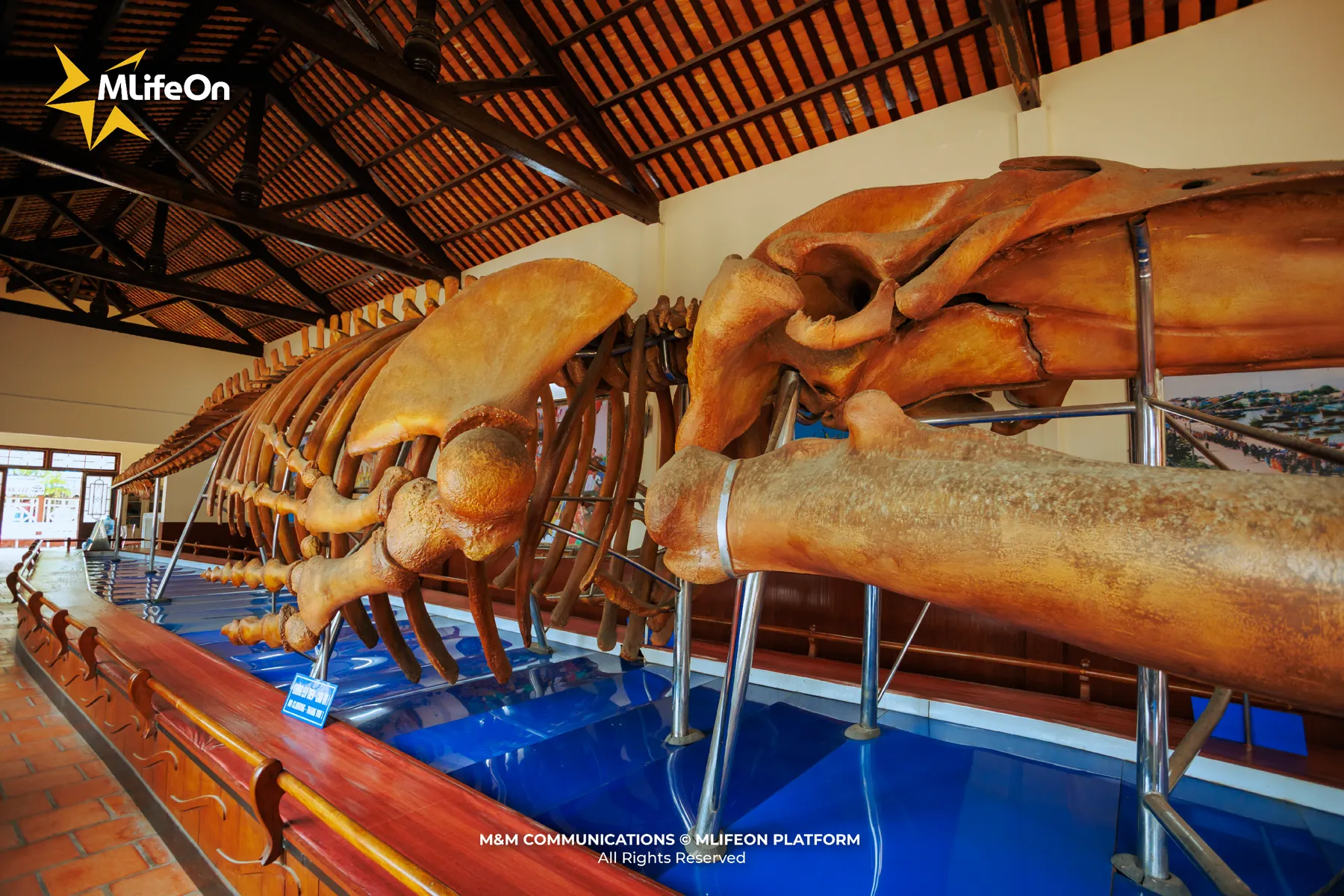
Whale skeleton on display at Dinh Van Thuy Tu, Lam Dong Province 
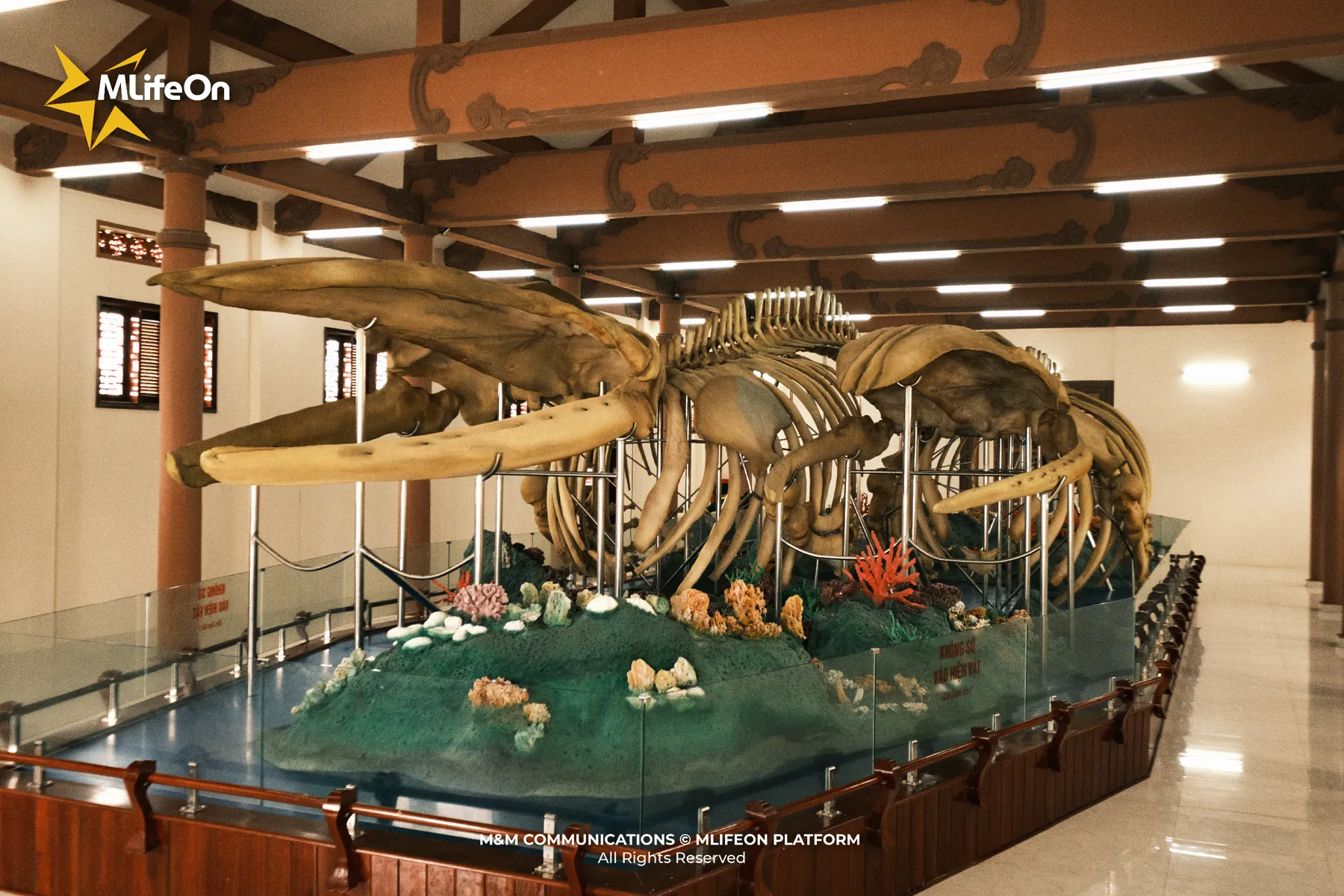
Whale skeleton at the exhibition room of Lang Ong, Ly Son island

A place to preserve the soul of the sea and preserve beliefs

When mentioning folk beliefs in the Northern Delta region, people mention communal houses - places to worship the God of the Land, the ancestors and descendants who have contributed to establishing and protecting the land of the village. In the coastal provinces of the Central and Southern regions, when mentioning worshiping beliefs, people mention temples, dinh, and van - places built to worship the guardian deity from the sea - Whale or the god of the South Sea.

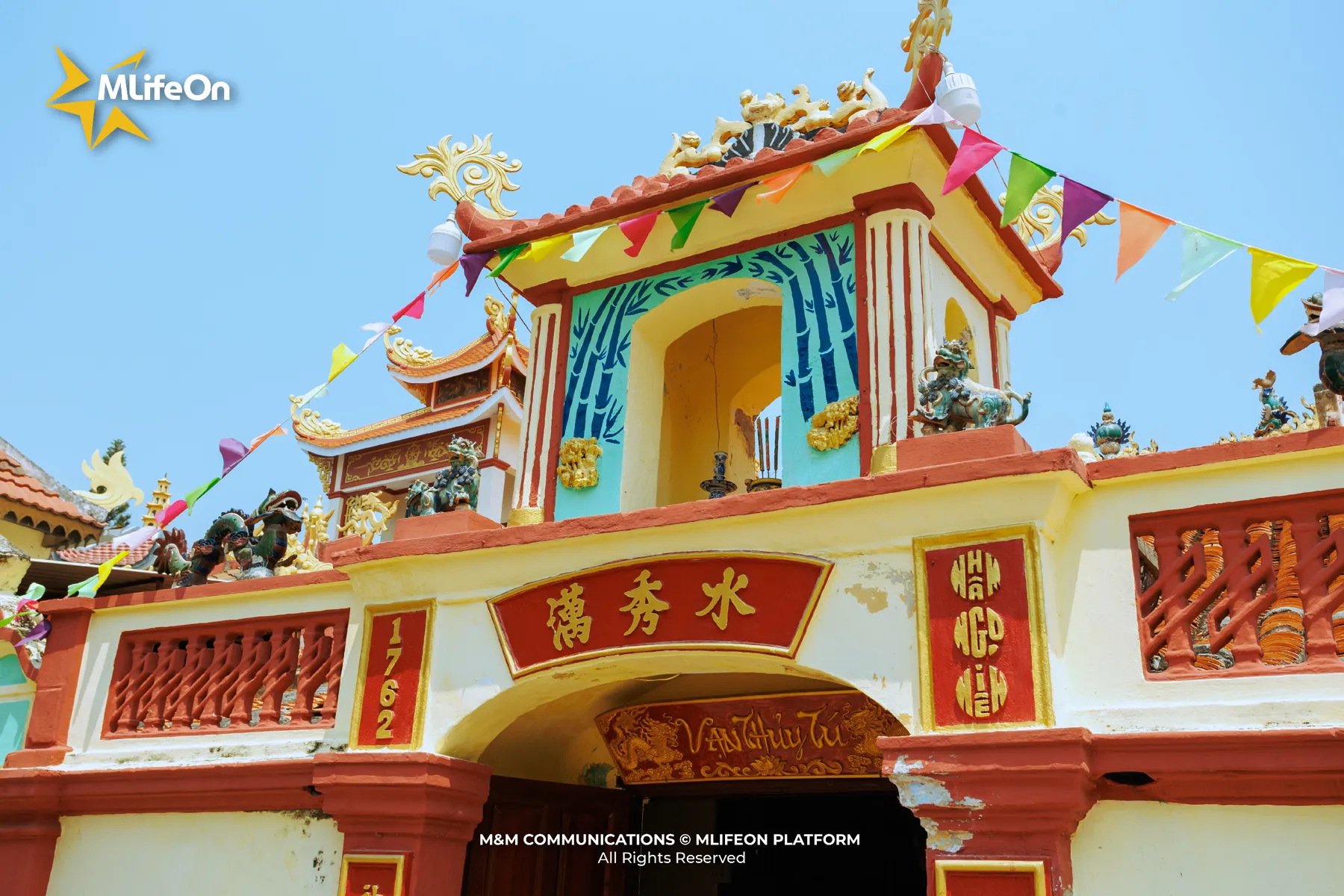
I once stood in front of Van An Thanh on Phu Quy Island - a place that preserves many whale skeletons, and is also a place to commemorate and worship this god, clearly feeling the solemn atmosphere, filled with sincere beliefs in every corner - from the smell of old wood, the faded lime color, and the faint scent of incense.

A prominent feature of Van An Thanh is that it is currently preserving a whale skeleton measuring up to 18m long. This special whale skeleton is considered by the locals as the incarnation of the God of the South Sea, a symbol of Whale worship. 

"Every time the sea is rough, the islanders often come here to burn incense, hoping that the Whale will bless them with peace," the caretaker of Van An Thanh shared as he led me on a tour. Perhaps in coastal provinces, what people need most is the peace of the ocean, so there is no greater belief than the belief in the guardian god of the sea - the God of the South Sea or the Whale.
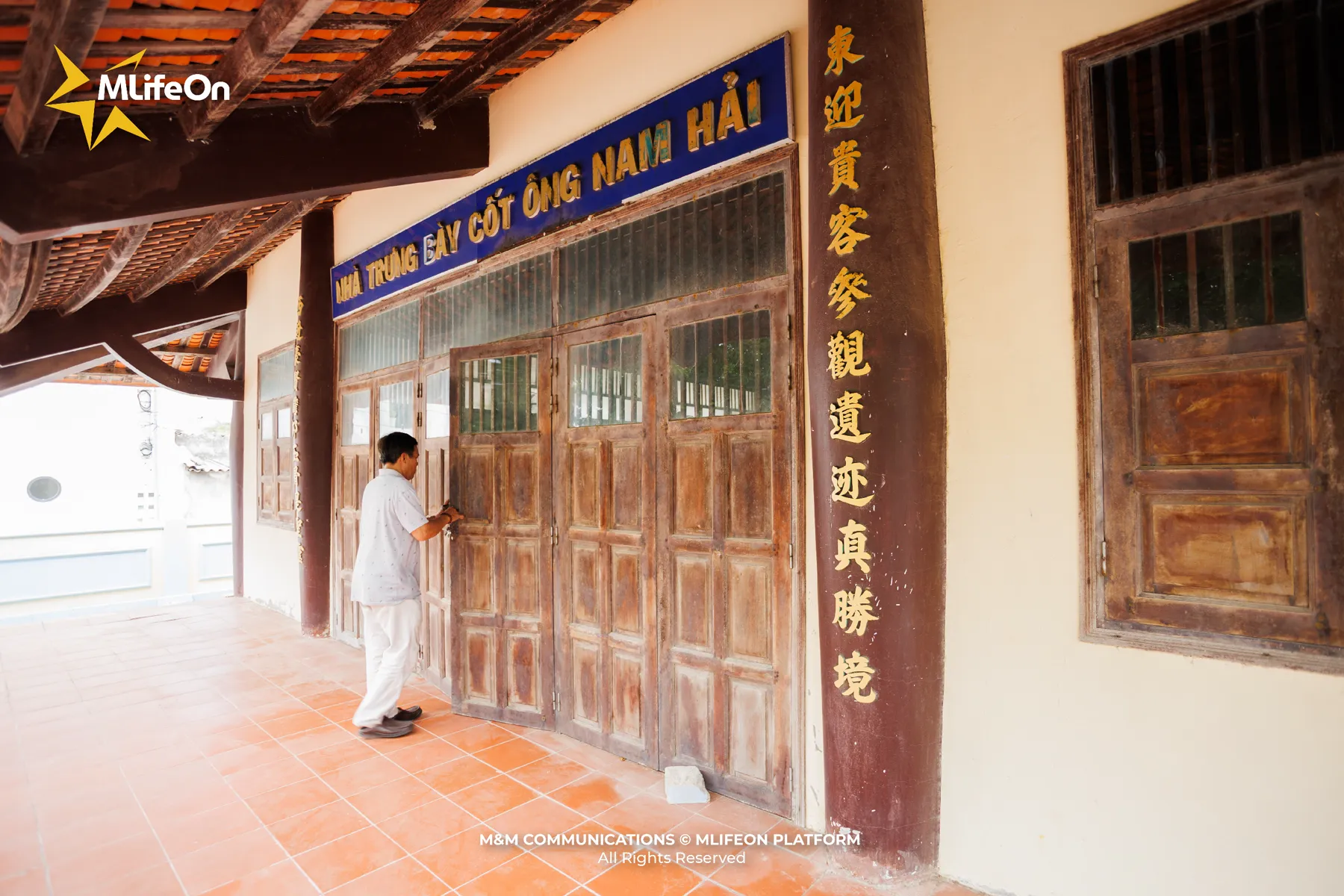
Van An Thanh, Phu Quy Island
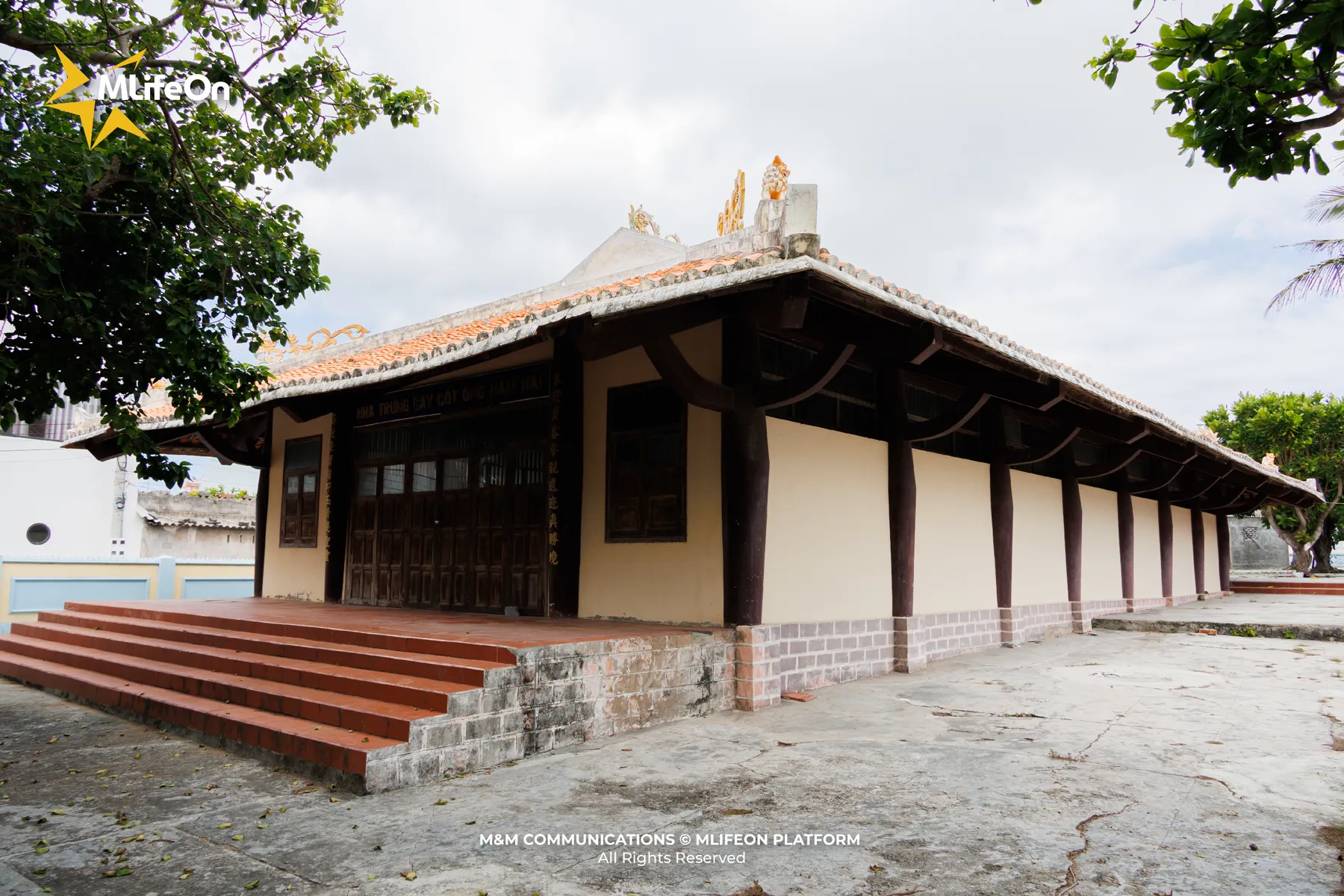
Van An Thanh, Phu Quy Island
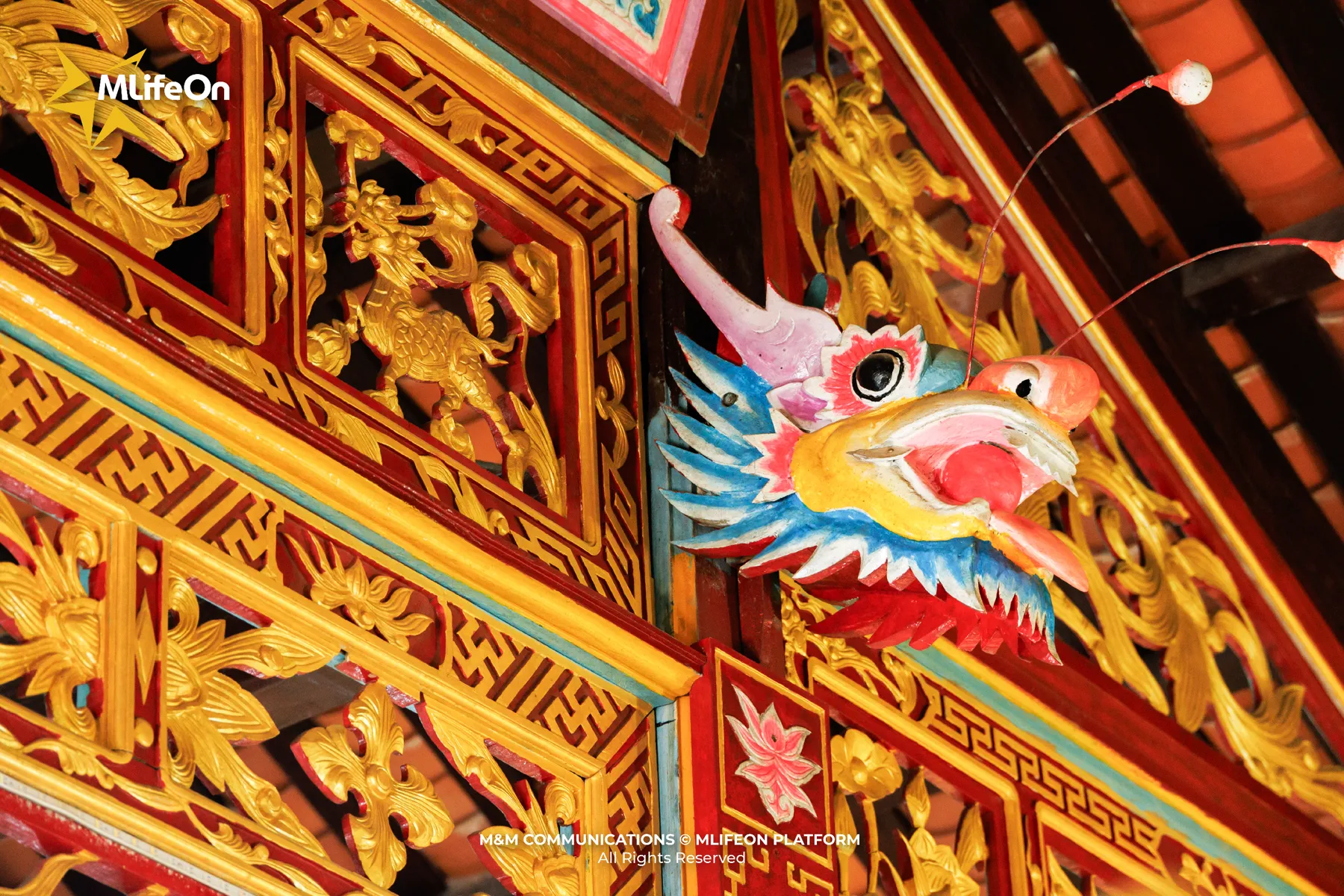
Van An Thanh, Phu Quy Island

The “houses” of Whales

If Ly Son Island has Lang Ong, then Phu Quy Island has Van An Thanh and Van Quy Thanh, which are famous places of worship for Whales, among more than 100,000 places of worship for Whales in this island district of Lam Dong province.

Notably, Van Quy Thanh in Tam Thanh commune is one of the oldest places of worship, with simple wooden architecture, three rooms and two wings facing the sea. The whale skeletons are washed and buried as carefully as humans – that made me emotional when I witnessed the Whale worship ceremony with my own eyes on a windy summer afternoon.
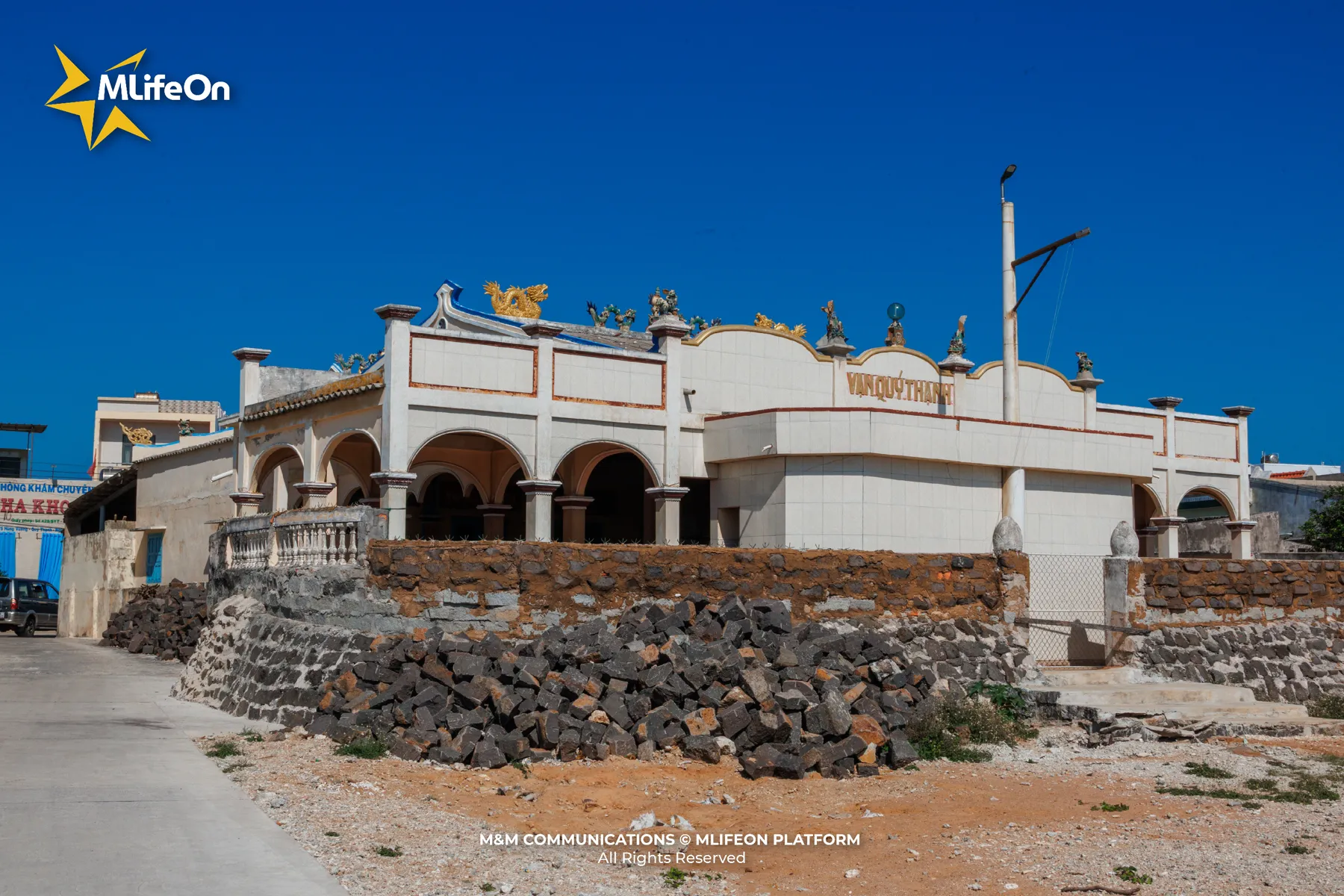
Van Quy Thanh in Phu Quy Island, Lam Dong Province
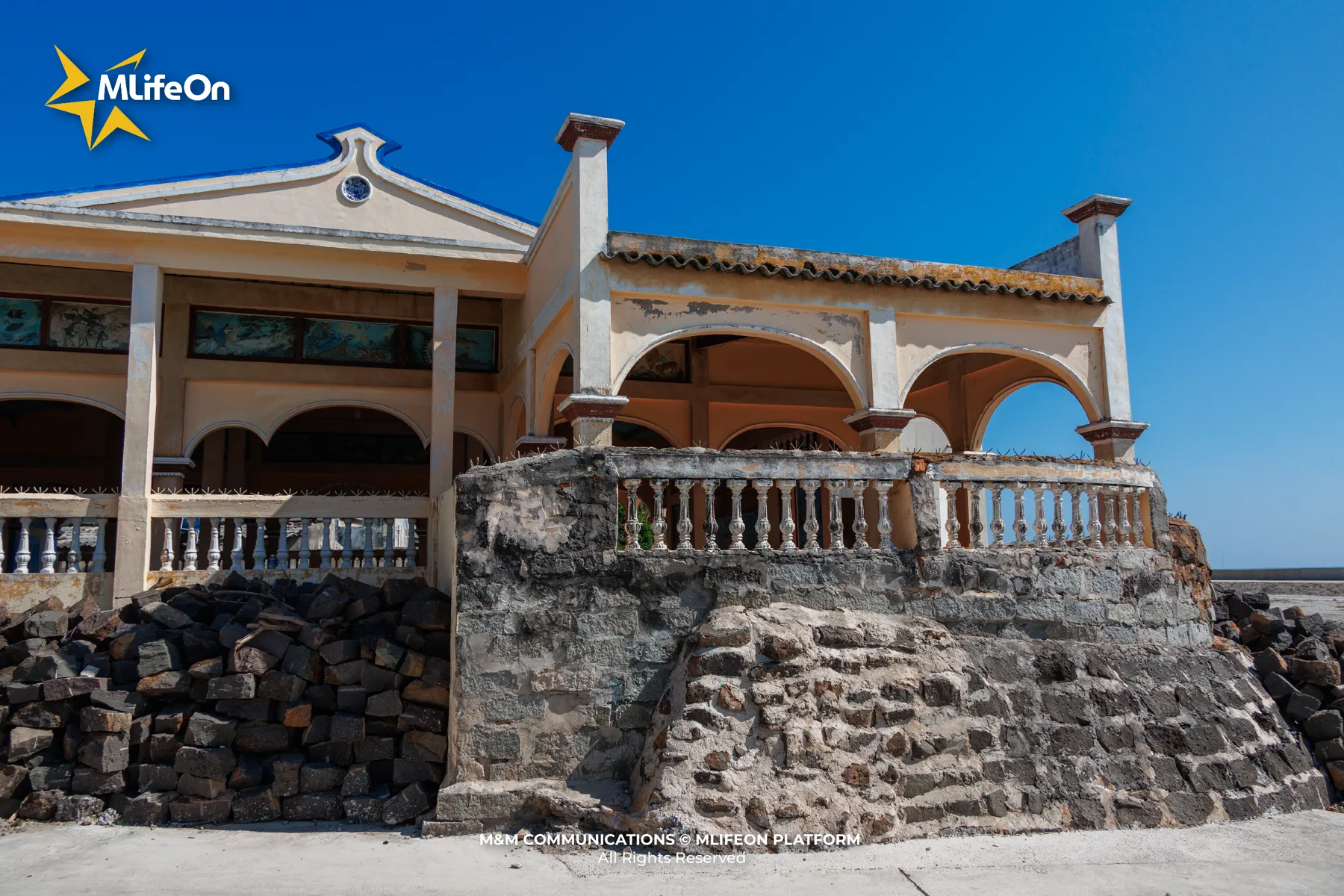
On Phu Quy Island, I heard from the locals about the times when “Mr. Whales drifted ashore” – that is, whales washed ashore and were given a solemn funeral. Each time, they were not afraid, but considered it a blessing from the sea, because it meant that the land where the whales drifted ashore was the land chosen by this species of whale as its resting place, and the people there were the ones entrusted with the whale’s burial. Therefore, the people in these areas always consider the times when “Mr. Whales drifted ashore” and burial as sacred responsibilities that need to be respected.

Conclusion

If belief is the breath of Vietnamese culture, then in the coastal fishing villages – amidst the salty taste of the wind and the breath of the ocean – we find one of the most obvious and enduring manifestations: the worship of the whale.

That belief arose from real life – from the rough seas, the wishes for peace, the wishes for safety, the times when whales saved fishermen. For generations, people in coastal areas have built communal houses, erected shrines, burned incense and called out the name of the "God of the South China Sea" with all silent respect.

And in the midst of today's modern life, when standing in front of the place of worship of Whale, listening to the sound of waves, the sound of the sea wind, I understand that: Vietnamese beliefs are not far away but right in the hearts of the people. Their hearts are for the sea, so the greatest belief also belongs to the sea, to the guardian god - Whale since when.

—----

CREDIT: 

- Photography: Kien Trang, Luan Nguyen 

- Content: Giang Huynh 

- Design: Trung Huynh
About the Authors

All Articles

NGUYEN DYNASTY MAUSOLEUMS - IMPRESSIONS OF KINGS IN THE HEART OF THE ANCIENT CAPITAL

NGUYEN DYNASTY MAUSOLEUMS - IMPRESSIONS OF KINGS IN THE HEART OF THE ANCIENT CAPITAL

Join MLifeOn in the journey to discover the Nguyen Dynasty through the unique mausoleum in Hue.

SEVEN MOUNTAINS BULL RACING FESTIVAL - WHEN CULTURE IS ON THE RACE TRACK

SEVEN MOUNTAINS BULL RACING FESTIVAL - WHEN CULTURE IS ON THE RACE TRACK

Seven Mountains Bull Racing festival is a unique cultural and sporting event of the Khmer people in the An Giang region, bearing the imprint of beliefs, community and local identity. Let's explore this special festival with MLifeOn.

BAU TRUC CHAM CERAMICS - FROM ANCIENT CRAFT TO PRESENT

BAU TRUC CHAM CERAMICS - FROM ANCIENT CRAFT TO PRESENT

Bau Truc Cham Pottery is one of the oldest crafts in Southeast Asia, bearing the mark of Cham culture. Let's explore with MLifeOn the origin, manufacturing process, artistic characteristics and conservation significance of this unique craft.

JOURNEY TO PATUXAI MONUMENT - THE SYMBOL OF VICTORY AND PEACE IN LAOS

JOURNEY TO PATUXAI MONUMENT - THE SYMBOL OF VICTORY AND PEACE IN LAOS

Located in Vientiane, the Patuxai Monument stands as a national symbol of Laos, blending traditional architecture with modern influences. It tells a story of victory, peace, and the enduring pride of the Laotian people.

BECOME AN AUTHOR WITH MLIFEON

BECOME AN AUTHOR WITH MLIFEON

Share your stories and perspectives with MLifeOn through the “Become an Author” feature, a space to write, connect, and spread positive living inspiration.

HUE IMPERIAL CITY - ARCHITECTURAL IMPRESSION IN THE HEART OF THE ANCIENT CAPITAL

HUE IMPERIAL CITY - ARCHITECTURAL IMPRESSION IN THE HEART OF THE ANCIENT CAPITAL

Hue Imperial City is the center of power of the Nguyen Dynasty, famous for its unique royal architecture, bearing the mark of Vietnamese culture. The article explores the history of formation, typical works, architectural characteristics, cultural significance and development direction of this heritage.

RICE - A PEARL OF THE SKY IN VIETNAMESE CULTURE

RICE - A PEARL OF THE SKY IN VIETNAMESE CULTURE

Rice is not only the main food source but also a profound cultural symbol of the Vietnamese people. Let's explore with MLifeOn the origin, role, and beauty of rice in the culture and life of the Vietnamese people.

BANH HOI IN PHU LONG - A HERITAGE CRAFT IN THE MORNING SMOKE

BANH HOI IN PHU LONG - A HERITAGE CRAFT IN THE MORNING SMOKE

Discover the traditional banh hoi craft in Phu Long - where generations preserve the culinary heritage of the white sand land.

“DECODING” THE MID AUTUMN LANTERN

“DECODING” THE MID AUTUMN LANTERN

Explore the meaning behind Mid-Autumn lanterns and the nostalgic stories of Mid-Autumn memories in Vietnam.

MID-AUTUMN FESTIVAL - GOING BACK INTO MEMORY, FINDING BACK TO OLD MOON SEASONS

MID-AUTUMN FESTIVAL - GOING BACK INTO MEMORY, FINDING BACK TO OLD MOON SEASONS

Today's Mid-Autumn Festival is bright and modern, but somewhere the beauty of the old moon season is still preserved. Let's follow MLifeOn back in time, find the beauty of the old Mid-Autumn Festival in today's Mid-Autumn Festival.

CAN GIO WELCOMES THE MIGRATORY SEABIRDS SEASON - THE JOURNEY OF RESILIENT WINGS

CAN GIO WELCOMES THE MIGRATORY SEABIRDS SEASON - THE JOURNEY OF RESILIENT WINGS

Watch the migratory season of sea birds in Can Gio and discover the resilient journey and endurance of these birds along the green sandy shores.

Sydney Buddhist Temples Guide: Finding Peace and Community in Australia's Multicultural Hub

Sydney Buddhist Temples Guide: Finding Peace and Community in Australia's Multicultural Hub

Comprehensive guide to Sydney's diverse Buddhist temples, from Vietnamese pagodas in Cabramatta to Thai forest monasteries, Chinese temples, and Japanese Zen centres. Discover spiritual practice, cultural community, and meditation opportunities.

Meditation and Wellness at Sydney Buddhist Temples: Finding Inner Peace in the City

Meditation and Wellness at Sydney Buddhist Temples: Finding Inner Peace in the City

Discover meditation and wellness programs at Sydney Buddhist temples. Learn mindfulness, Zen, and Vipassana techniques, attend meditation retreats, and find inner peace through authentic Buddhist practices for mental health and spiritual wellbeing.

SALT MAKING - SALTY GRAINS FROM THE SEA, SALTY DROPS OF LIFE

SALT MAKING - SALTY GRAINS FROM THE SEA, SALTY DROPS OF LIFE

Discover Phuong Cuu salt fields in Khanh Hoa, where white salt grains are crystallized from sun, wind, and the sweat of salt workers, revealing both the hardship and the distinctive beauty of salt making.

Nan Tien Temple Wollongong: Southern Hemisphere's Largest Buddhist Temple Guide

Nan Tien Temple Wollongong: Southern Hemisphere's Largest Buddhist Temple Guide

Complete guide to Nan Tien Temple, the Southern Hemisphere's largest Buddhist temple in Wollongong. Discover meditation retreats, vegetarian dining, cultural programs, and stunning Chinese architecture just 90 minutes from Sydney.

Thai Buddhist Temples in Sydney: Forest Tradition, Culture & Community

Thai Buddhist Temples in Sydney: Forest Tradition, Culture & Community

Discover Thai Buddhist temples in Sydney including Wat Pa Buddharangsee. Explore forest tradition meditation, Thai festivals like Songkran and Kathina, Buddhist practices, and authentic Thai spiritual community.

Tibetan Buddhism in Sydney: Vajrayana Centers, Teachings & Practices

Tibetan Buddhism in Sydney: Vajrayana Centers, Teachings & Practices

Explore Tibetan Buddhism in Sydney at Vajrayana Institute and Chandrakirti Centre. Discover Vajrayana practices, deity yoga, philosophical studies, and connection to Tibetan culture and the Dalai Lama.

Vietnamese Buddhist Festivals in Sydney: Tết, Vu Lan & Cultural Celebrations

Vietnamese Buddhist Festivals in Sydney: Tết, Vu Lan & Cultural Celebrations

Explore Vietnamese Buddhist festivals in Sydney including Tết, Vu Lan, Vesak, and Quan Âm celebrations. Discover traditional customs, temple ceremonies, festival foods, and cultural preservation in the Vietnamese-Australian community.