DISCOVER 3 HUNG KING TEMPLES IN SAIGON
Explore three Hung King temples in Saigon. What architectural beauty and historical landmarks await your discovery?
Saigon is known as a youthful and dynamic city, but amidst its bustling pace, there are still quiet places that preserve memories of the nation's origins. Prominent among these are the temples dedicated to King Hung, where people come to remember and express their gratitude for the nation-building contributions of the founding father.
Transitioning from these bustling city rhythms to reflections on heritage, these buildings act as meaningful pauses in the urban symphony, reminding us that: "Even in modernity, there is always room for traditional values."
Origins and age-old legacy
Mentioning the Hung Kings means mentioning the first kings who laid the foundation for the Vietnamese nation, with the initial state of Van Lang. Therefore, for millennia, the Vietnamese people have always been grateful and expressed their reverence for them by building temples to commemorate them, offering incense on major holidays, especially the Hung Kings' Commemoration Day (10th day of the 3rd lunar month) every year. This is an extremely important holiday, a time to remind Vietnamese people everywhere that: "No matter where we go, what we do, we all share a common origin."
Wherever you go, whoever you are
Remember the Hung Kings’ Commemoration Day on the 10th of March
Therefore, in the heart of Saigon - the nation's most vibrant economic and cultural center - the presence of three temples dedicated to the Hung Kings carries extremely special significance. Not merely architectural structures, these temples demonstrate how tradition spread from Phu Tho, the ancestral land, to the South. Their appearance in a modern city seamlessly connects the past to the present, reminding everyone of the Vietnamese nation's history and keeping the memory of our origins alive today.
The temple at the zoo
Located within the grounds of the Saigon Zoo, the Hung King Temple stands as a truly unique historical landmark.
Construction began in 1929, during the French colonial period. Initially named "Temple du Souvenir Annamite," it served as a memorial to Vietnamese soldiers who died in World War I. It wasn't until 1956, when the spirit of "drinking water, remembering the source" became strongly affirmed in society, that the structure was transformed into the Hung King Temple. Since then, it has become a sacred destination for people in the South to remember and express their reverence for the National Ancestor, connecting the memory of Phu Tho province with the distant South.
The temple features a Hue imperial style, with multi-tiered tiled roofs and intricately carved dragon and phoenix details. The combination of traditional architecture and the green space of the Saigon Zoo creates an overall atmosphere that is both majestic and welcoming.
Temple in Tao Dan Park
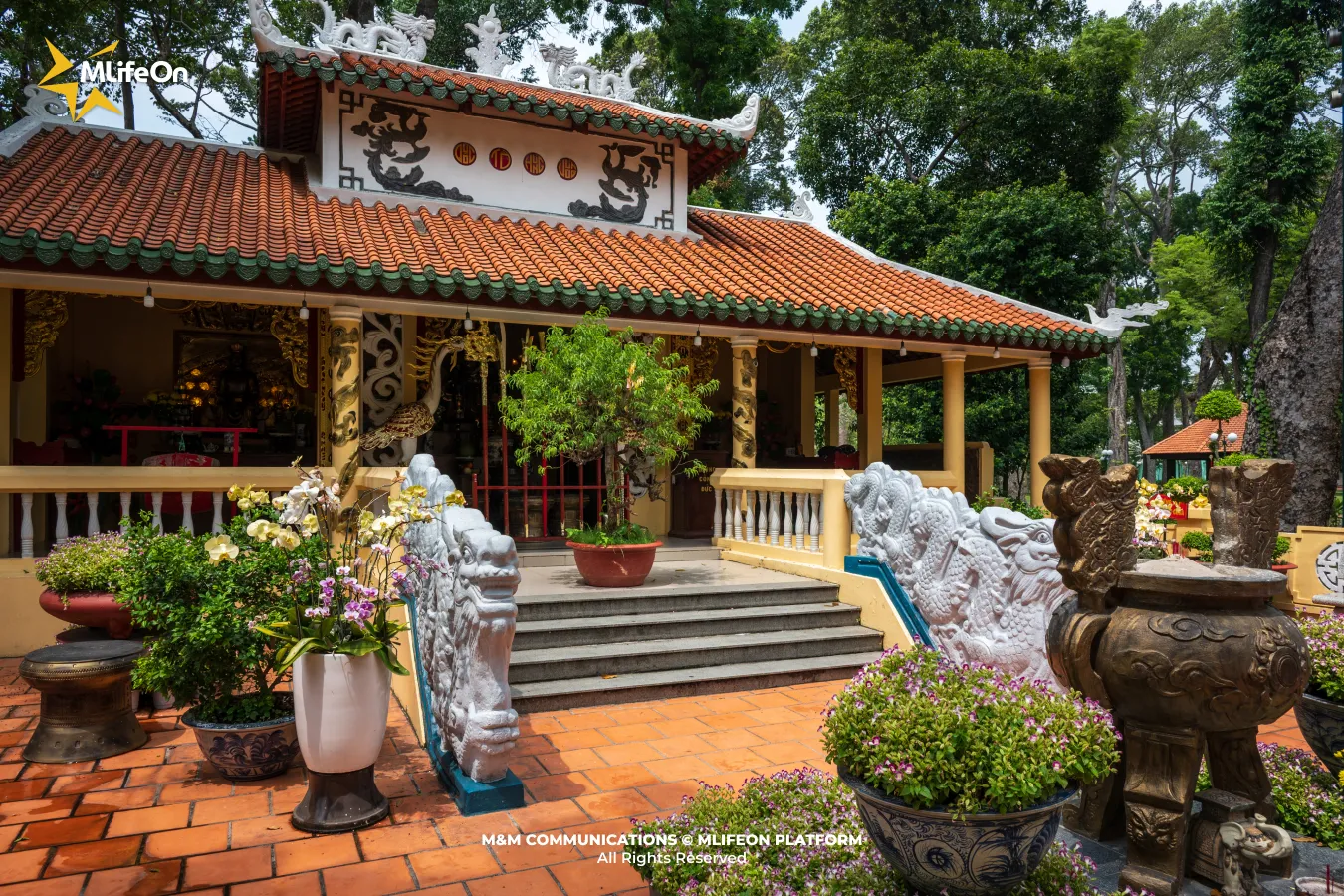
The Hung King Temple is located in Tao Dan Park.
Located on Truong Dinh Street, within the lush green grounds of Tao Dan Park, the Hung Kings Memorial Temple is a prominent cultural and spiritual landmark of Saigon.
Unlike the Hung Kings Temple at the Saigon Zoo, which was converted from a memorial site, the temple in Tao Dan was built from the outset with the purpose of worshipping the National Ancestors. Construction began in 1992 and was officially completed after two years. In 2011, it was renovated and expanded to meet the growing religious needs of the people.
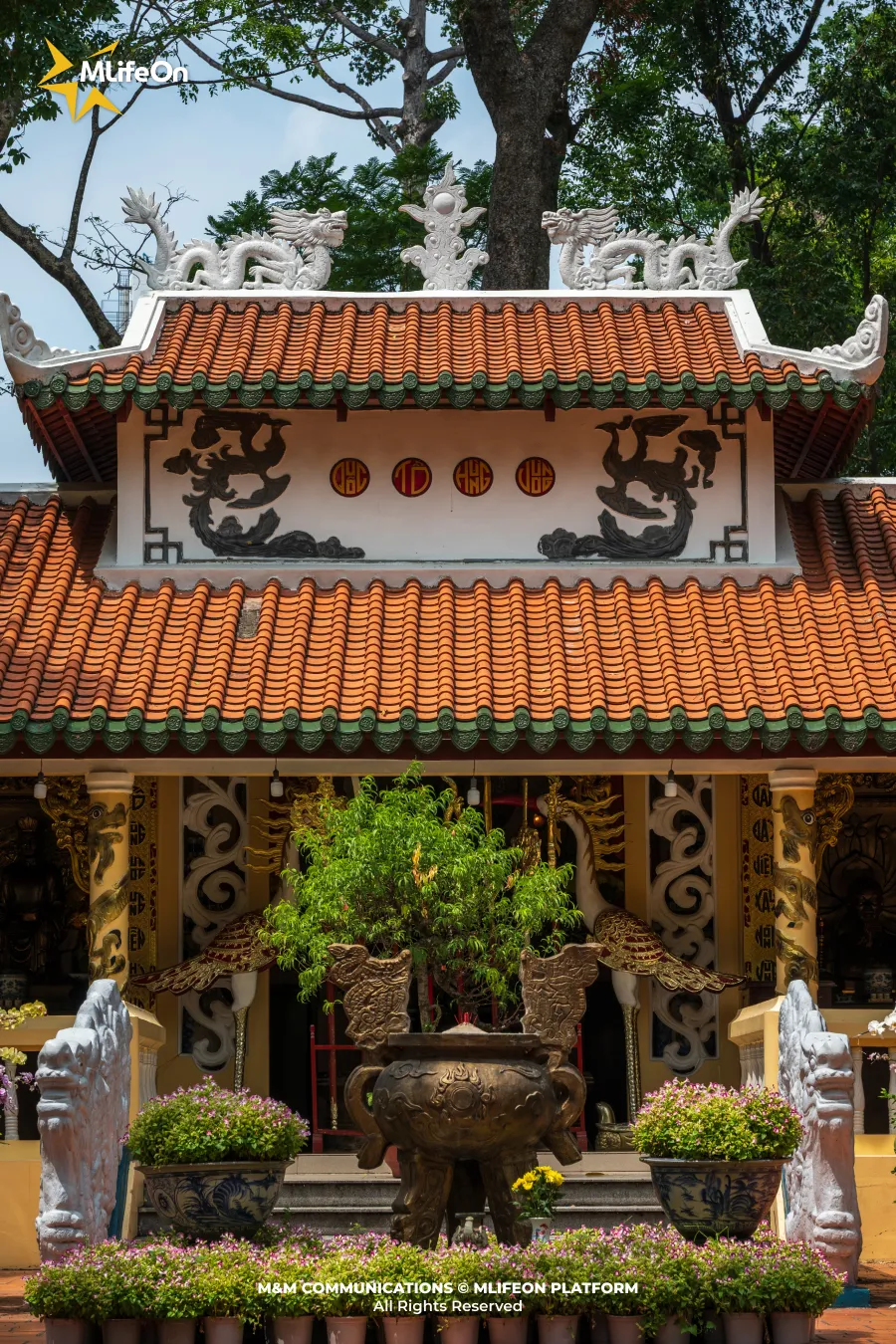
Built in a traditional style, the temple stands out with its majestic triple-arched gate and main hall comprising three altars dedicated to: King Hung Vuong, Queen Au Co, and President Ho Chi Minh – three major symbols of Vietnamese history and national spirit. Within the temple grounds, the most prominent feature is the Oath Stone Pillar, modeled after a similar monument in Phu Tho, recalling the unwavering oath of the descendants of Lac Hong regarding unity and loyalty to the country. The temple's architecture is simple yet dignified, harmonizing with the lush greenery of Tao Dan Park, making it a destination that is both familiar and sacred.
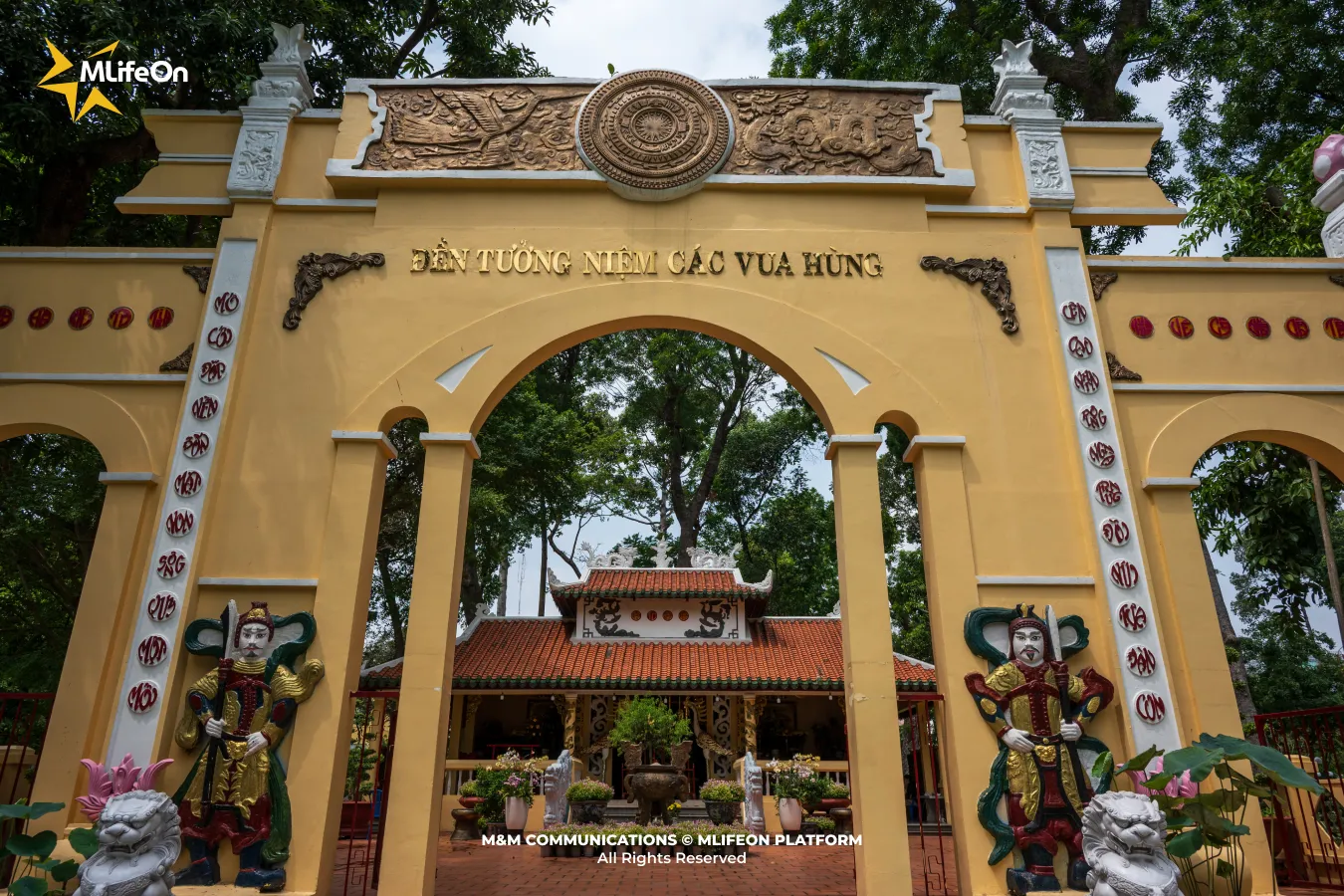
The triple-arched gate of the Hung King Temple in Tao Dan Park.
Temple in Thu Duc City
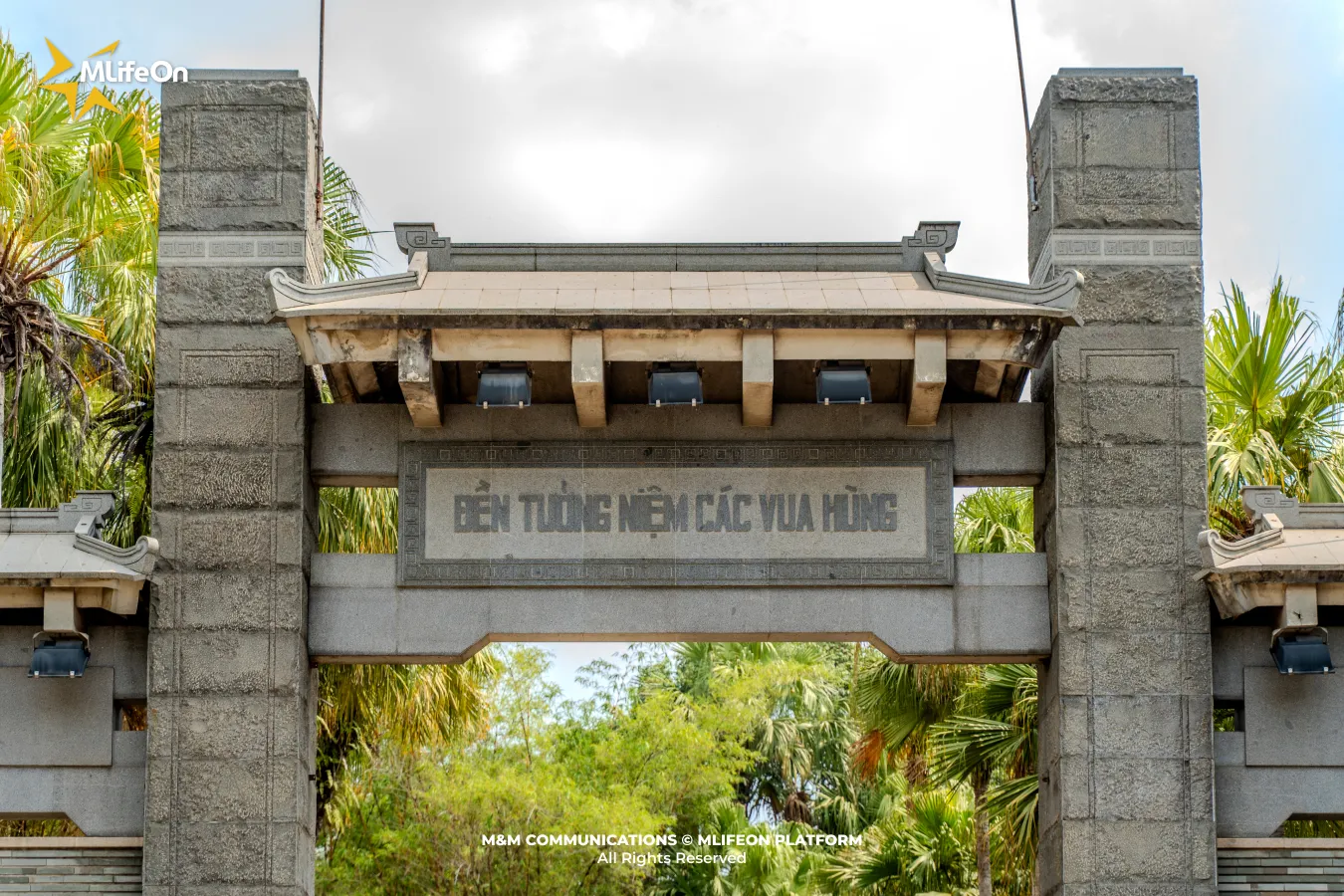
Hung King Temple in Thu Duc City
Located at 207/2 Vo Nguyen Giap Street, Long Binh Ward, Thu Duc City, the Hung King Temple is situated within the National Historical and Cultural Park complex (Long Binh Ward) and is considered the largest temple dedicated to the National Ancestor in the South.
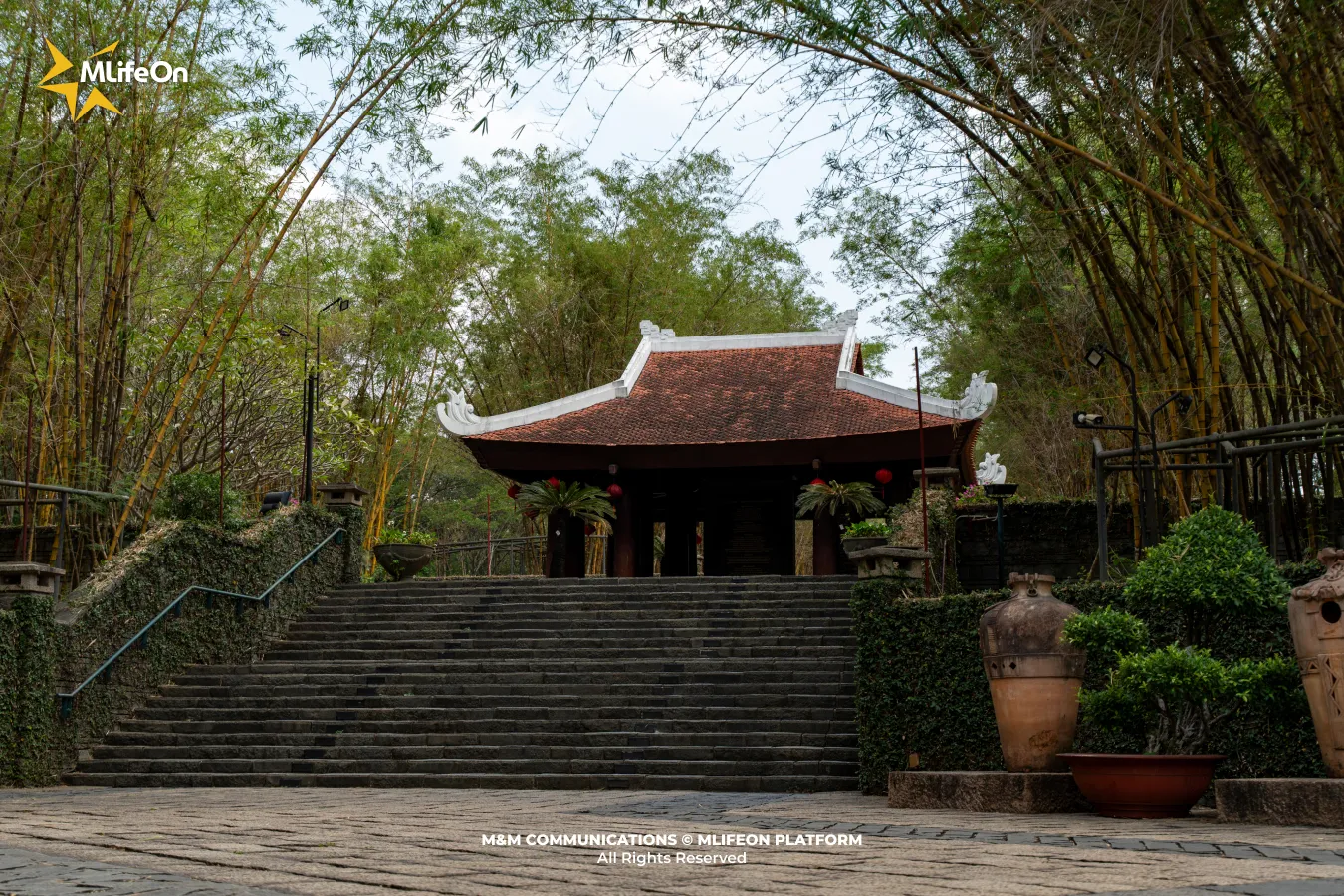
The temple is of great scale
Construction began in the late 1990s and was completed in several phases. The temple is planned on a large area, surrounded by open natural scenery. Placing the structure on a high hill not only creates a sense of solemnity but also evokes the sacred space associated with Phu Tho, the ancestral land and birthplace of the Vietnamese nation.
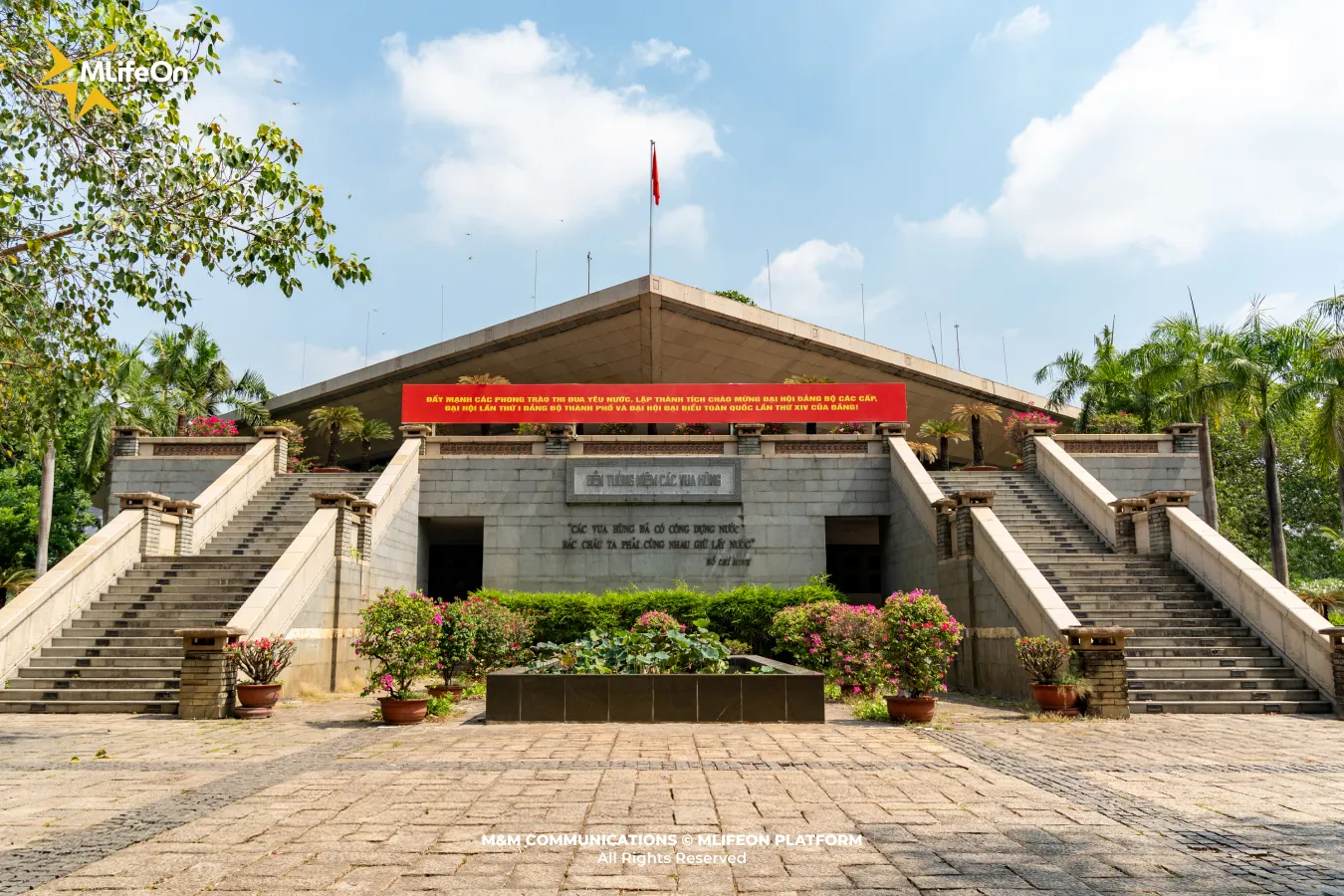
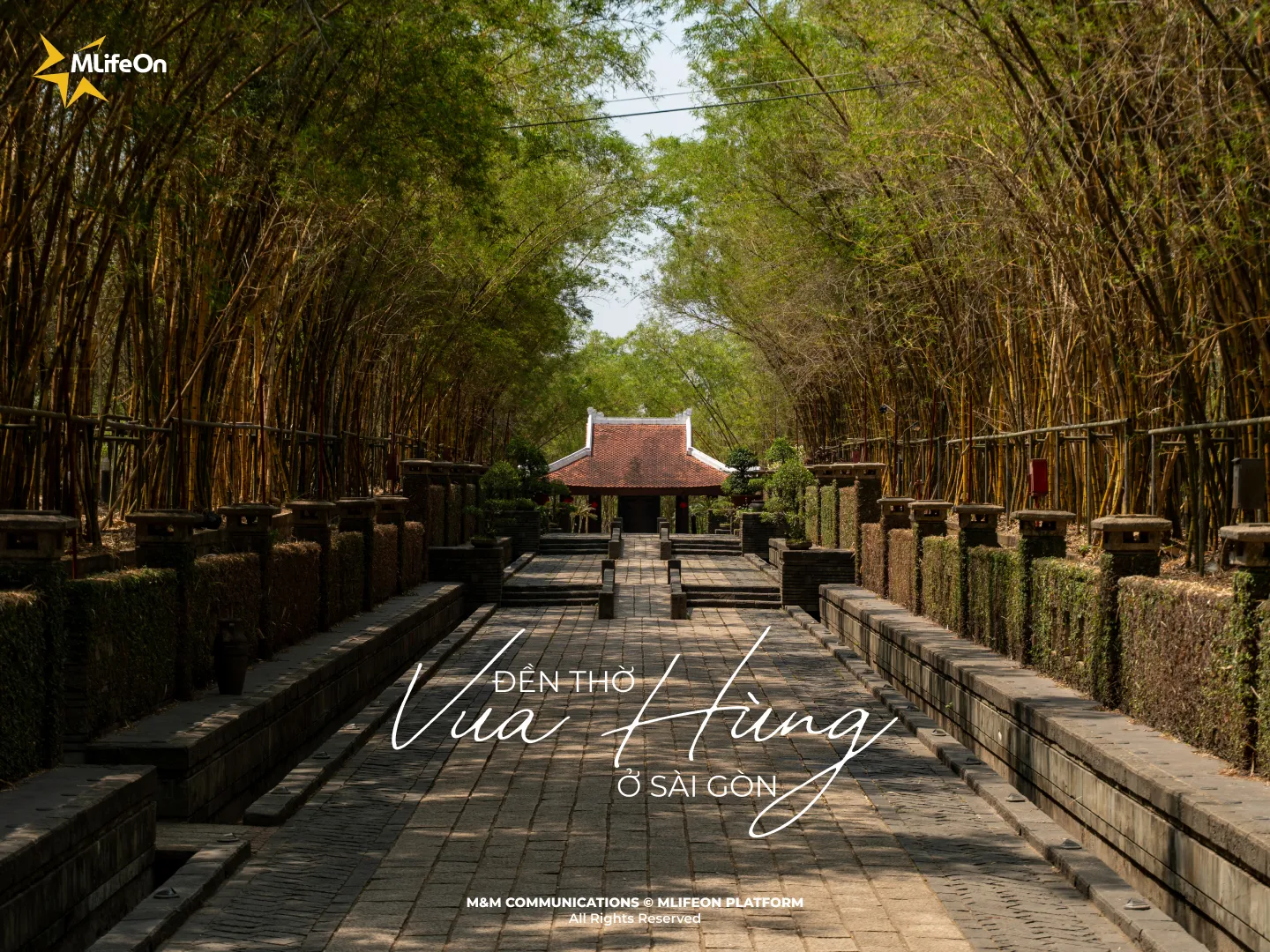
To reach the main hall, visitors must climb 107 stone steps, symbolizing the 18 generations of Hung Kings and the succession of the Lac Hong descendants (similar to the Hung Temple in Phu Tho). The path leading to the temple is surrounded by green bamboo, reminiscent of ancient Vietnamese villages. The highlight is the nearly 4,000 m2 Bronze Drum Square, where nine large stone pillars, 6m high, are placed, symbolizing the strength and longevity of the nation. These architectural details are not only aesthetically pleasing but also contain a message of unity, resilience, and national pride.
It could be said that this structure is a miniature version of Hung Temple in Phu Tho.
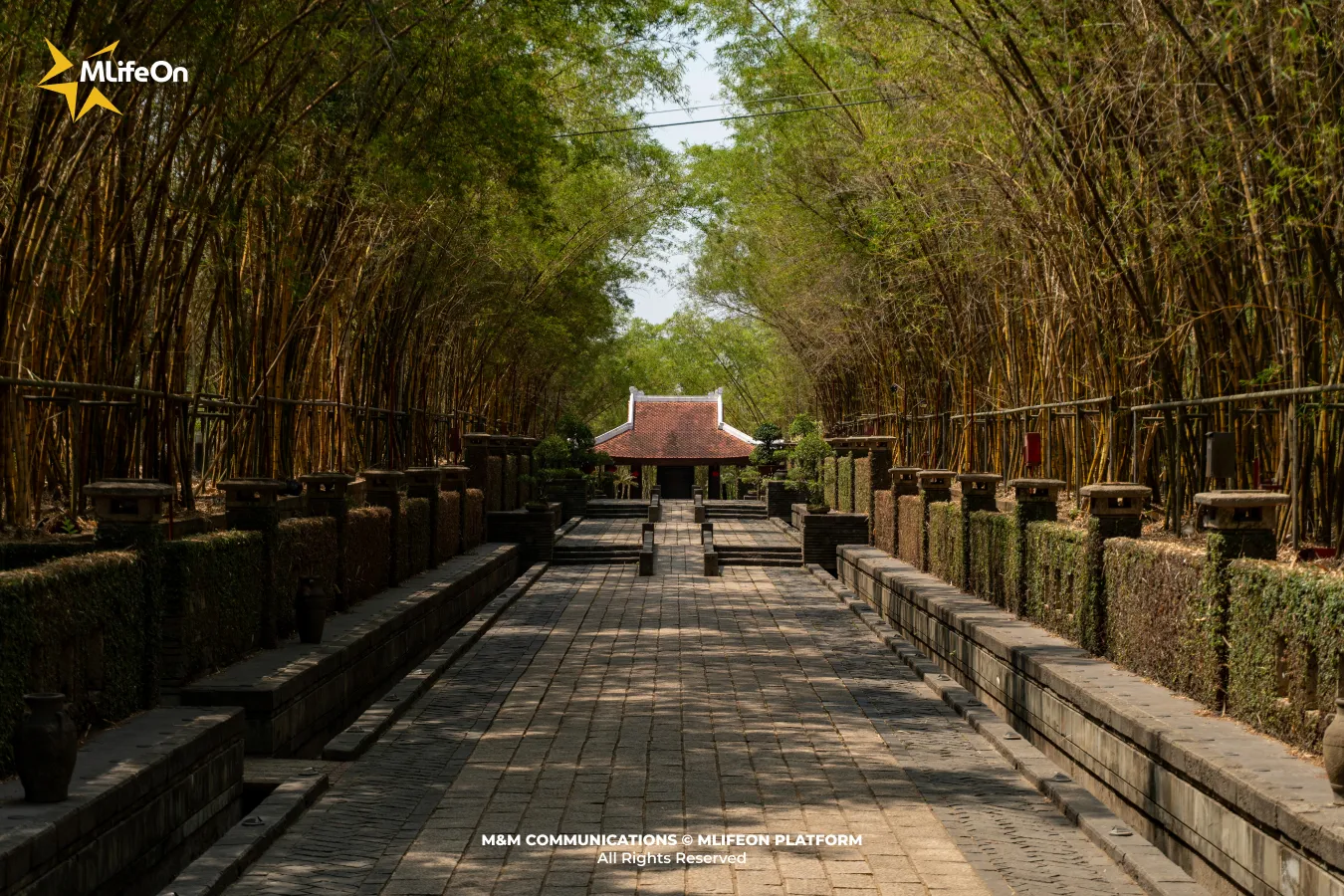
Rows of green bamboo evoke images of Vietnamese villages.
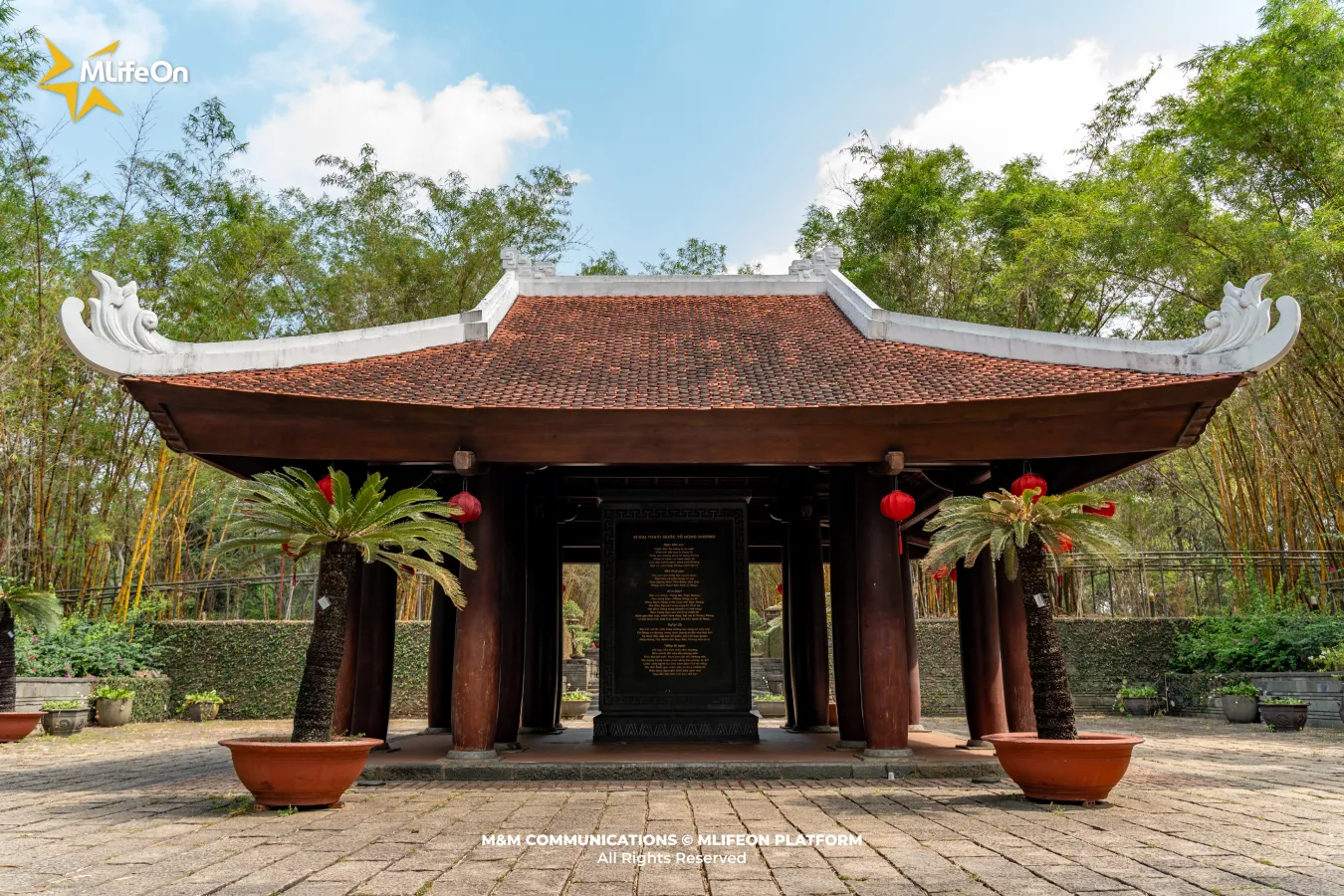
Therefore, on the anniversary of the founding of the nation, this place becomes a gathering point for thousands of people, from students to various organizations, who come together to offer incense and pay respects to the national ancestors. The vast space, majestic architecture, and traditional cultural symbols have transformed this place into an attractive destination for educating the younger generation about history and patriotism.
Conclusion
The three Hung King temples in Saigon are not only places to remember and express gratitude to the Vietnamese people towards their national ancestors, but also cultural and spiritual destinations for locals and tourists. Each structure, while bearing its own unique historical and architectural imprint, shares a common message: "No matter where we go, Vietnamese people still share a common origin."
If you have the opportunity to visit Saigon, try visiting one of these three temples to offer incense and commemorate the nation-building contributions of the Hung Kings. It's not just a sightseeing trip, but also a journey back to yourself, to your history and national traditions.
—---
CREDIT:
- Photography: Tue Tran, Luan Nguyen
- Content: Giang Huynh
- Design: Phuong Nguyen