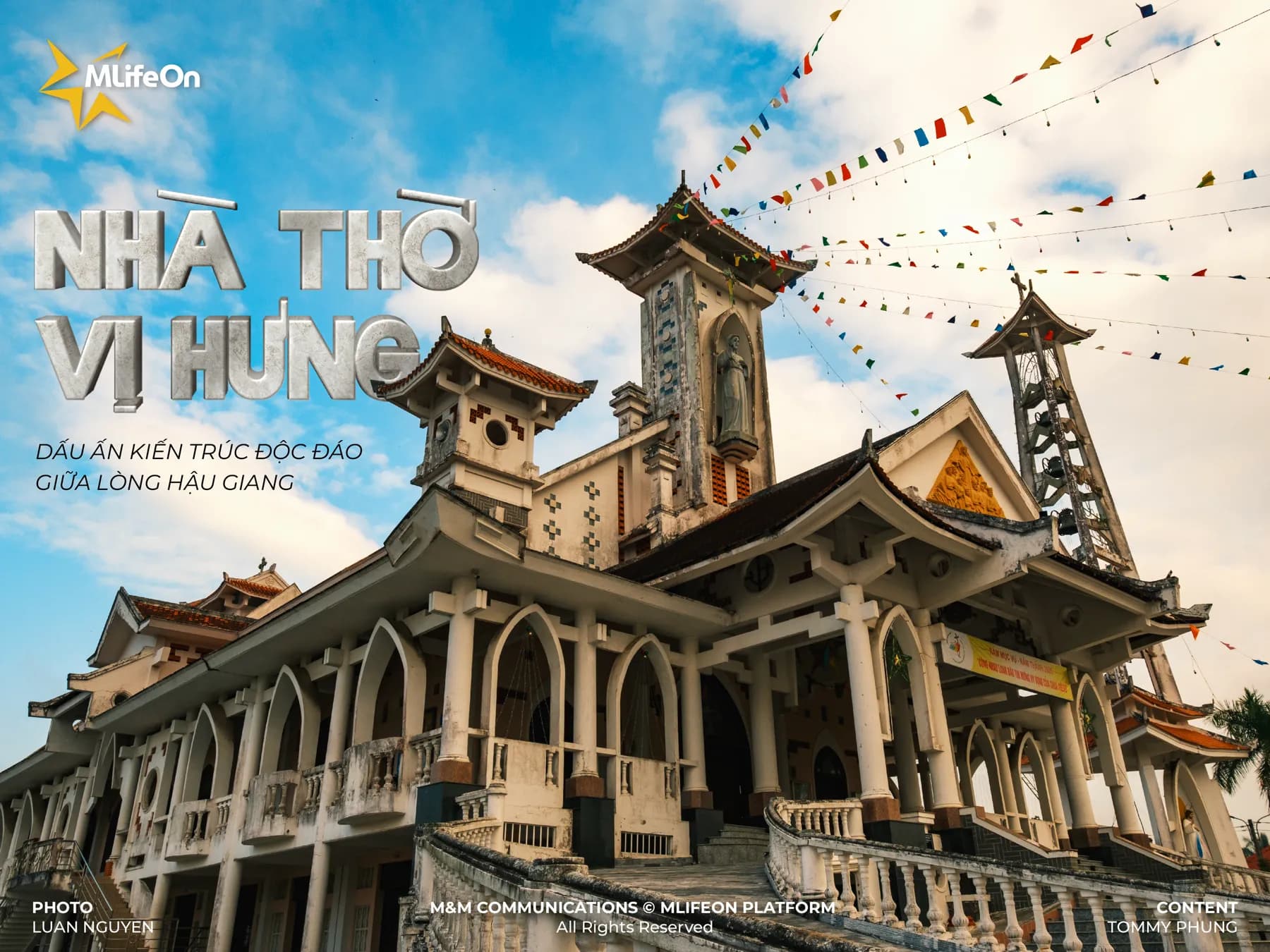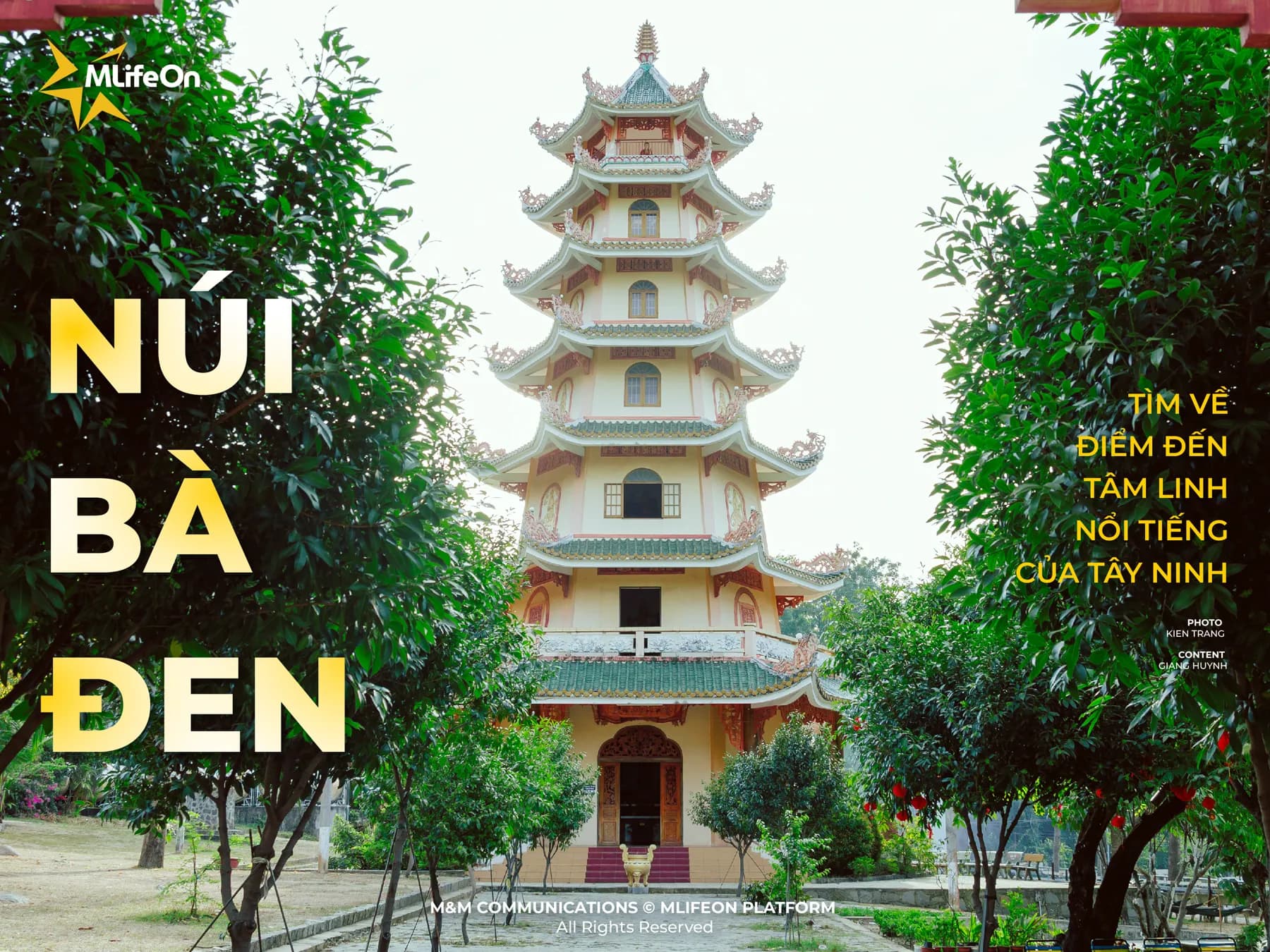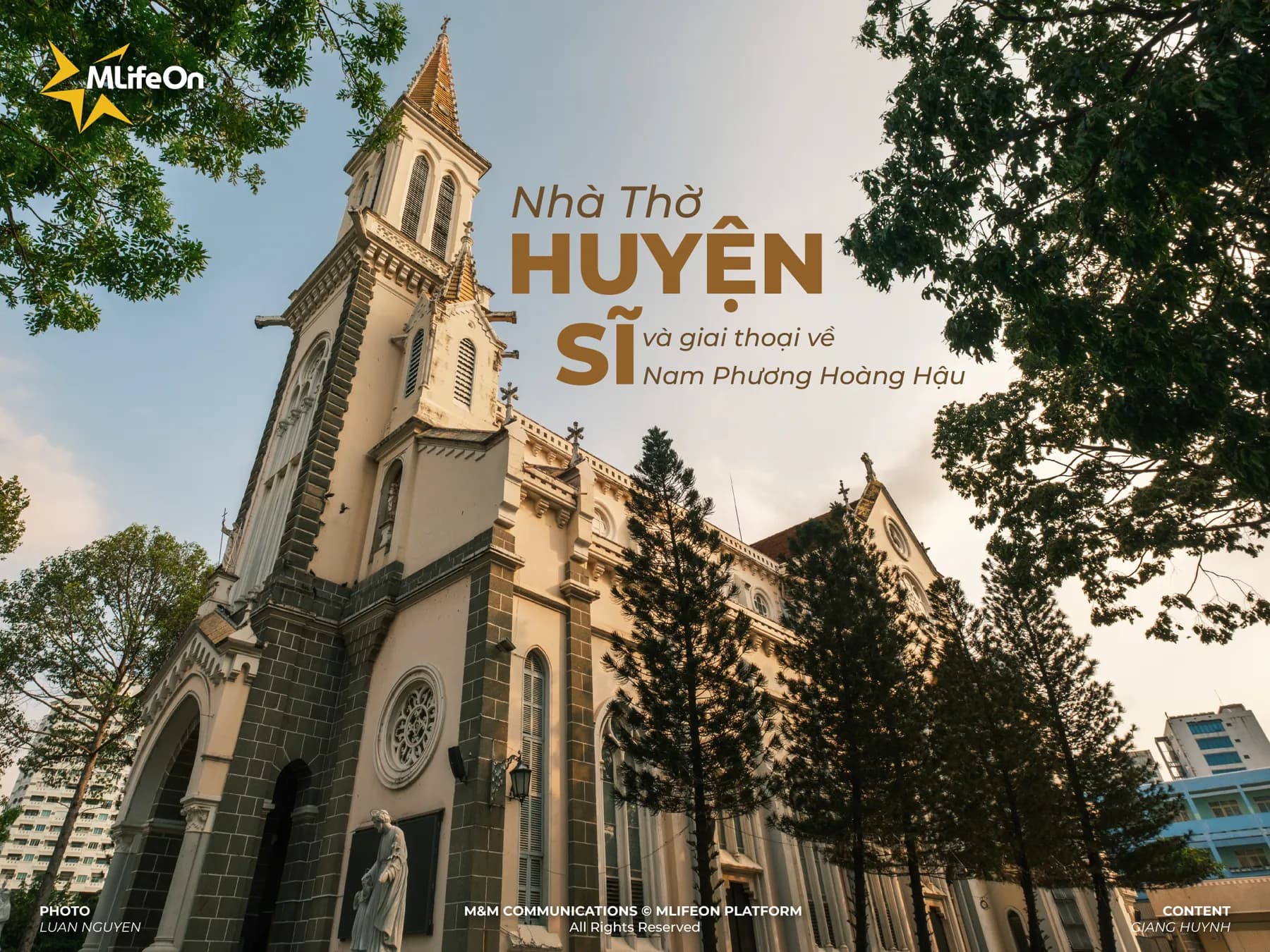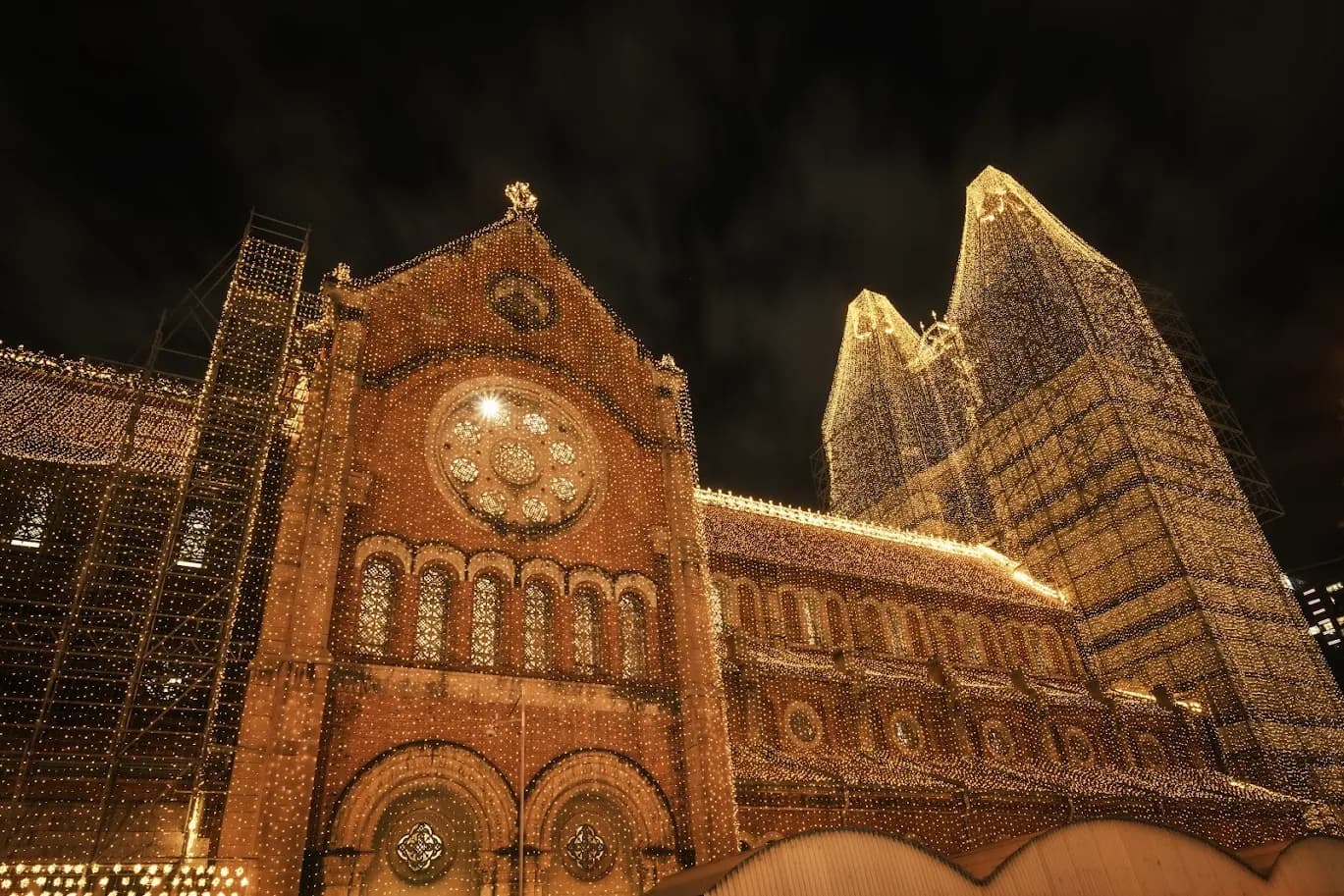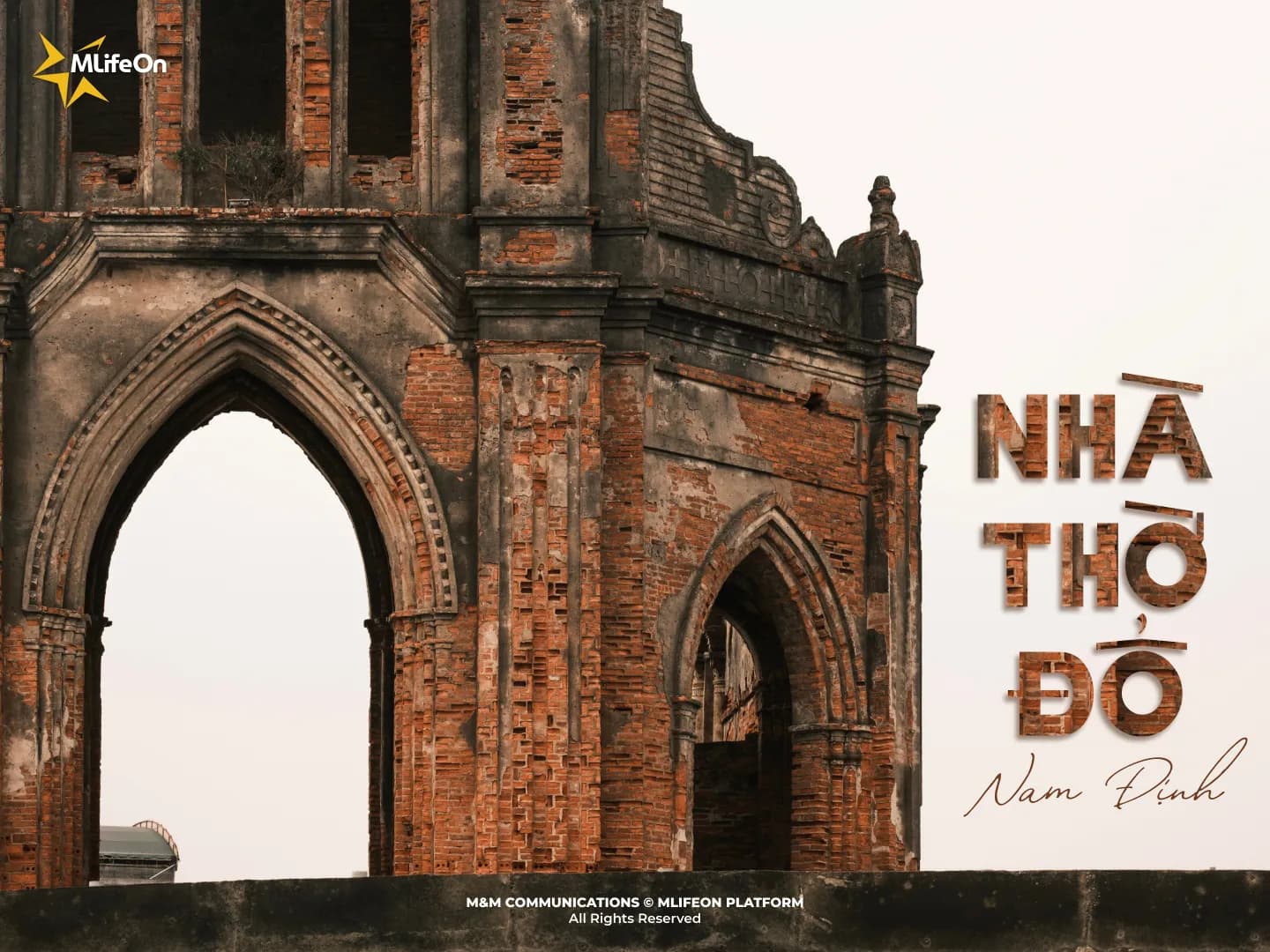
The Ruined Church of Nam Dinh stands quietly along the coast of Hai Hau
The ruined church of Nam Dinh, often known as Hai Ly Church, is located in Hai Ly commune, in the former Hai Hau district. It was once a familiar religious structure for the Catholic community living along the coastal region. Today, however, those who stand before the church are struck not by the presence of religious gatherings, but by a deep and almost absolute silence.
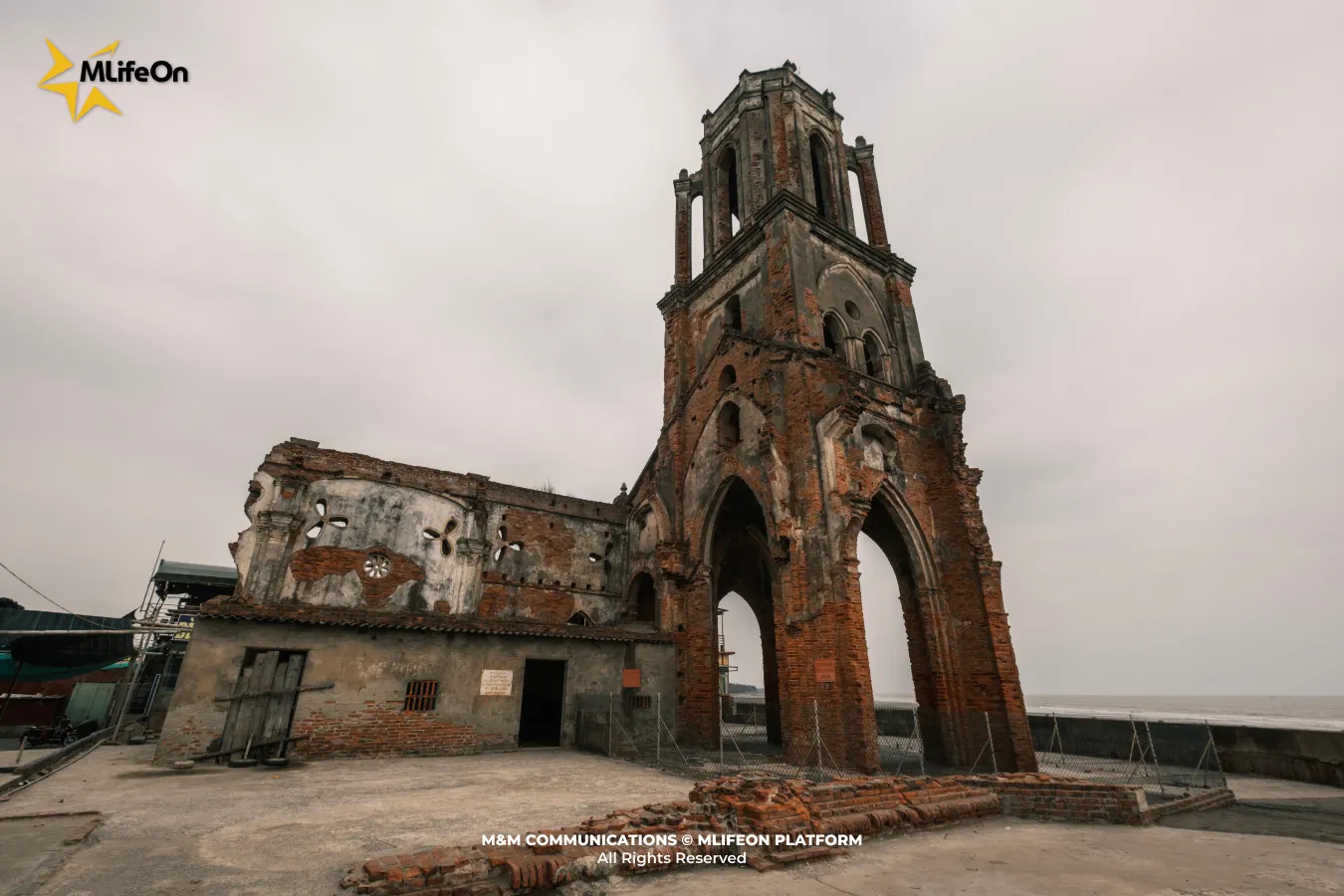
The church stands very close to the sea, where coastal winds blow throughout the year. The surrounding space is wide and open, with nothing but sand, the ocean, and the sky stretching endlessly ahead. Amid this vast landscape, the old brick walls of the church remain quietly in place, like a surviving marker of a past era.
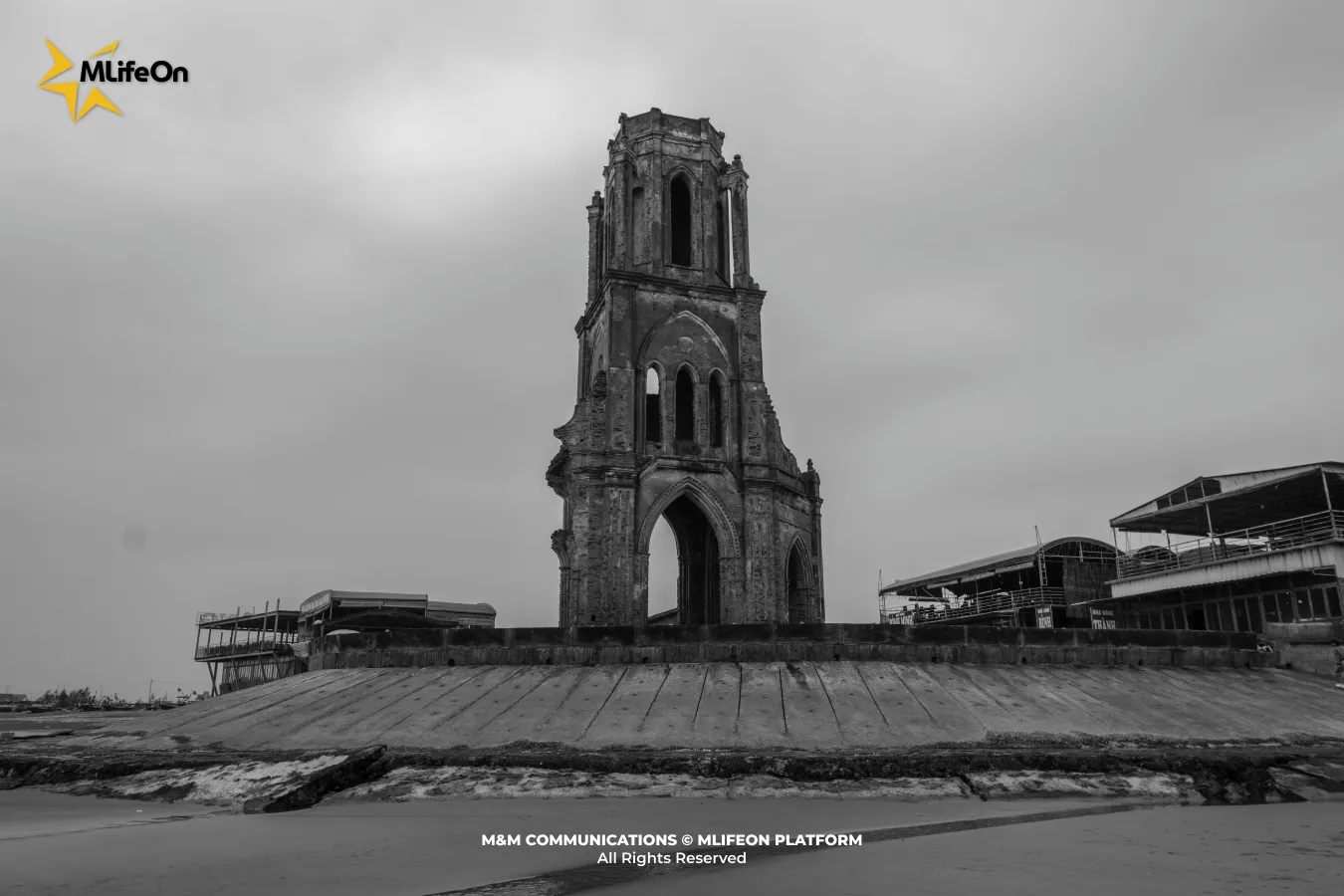
For many visitors, the site feels entirely different from churches that are still intact. There are no church bells ringing or crowds attending services, only silence and the visible traces of time etched into the aging walls.
From a coastal church to a structure left behind by wind and waves
Few people realize that before becoming the ruins we see today, Hai Ly Church was once an important religious structure for the Catholic community in Hai Hau. The church was built in the early 20th century, when this area was still located quite far from the shoreline.
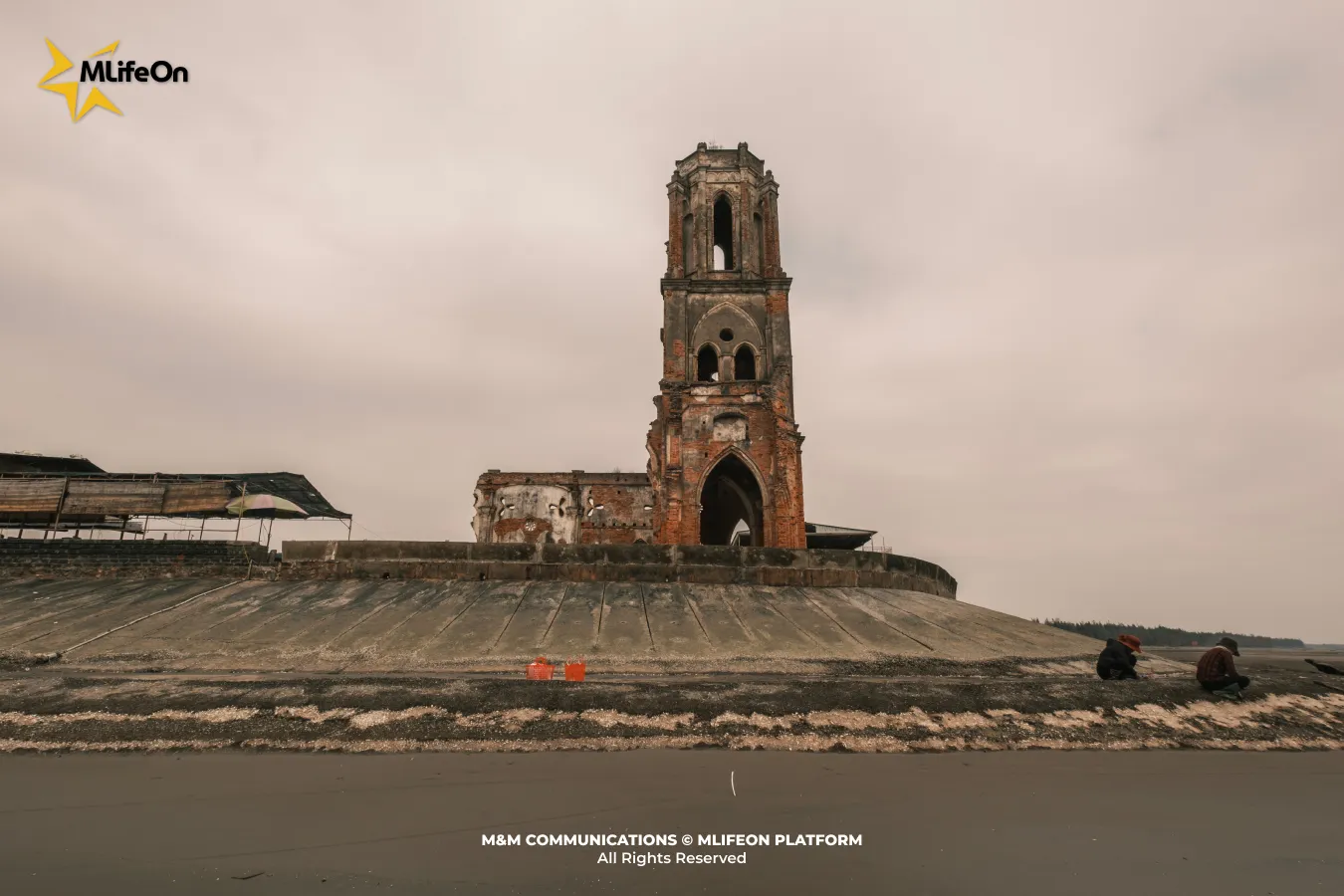
For many years, local residents gathered here for religious activities as a familiar part of daily life. However, the Hai Hau coastline has long been affected by severe coastal erosion. Over time, the sea gradually advanced inland, impacting many structures built near the coast.
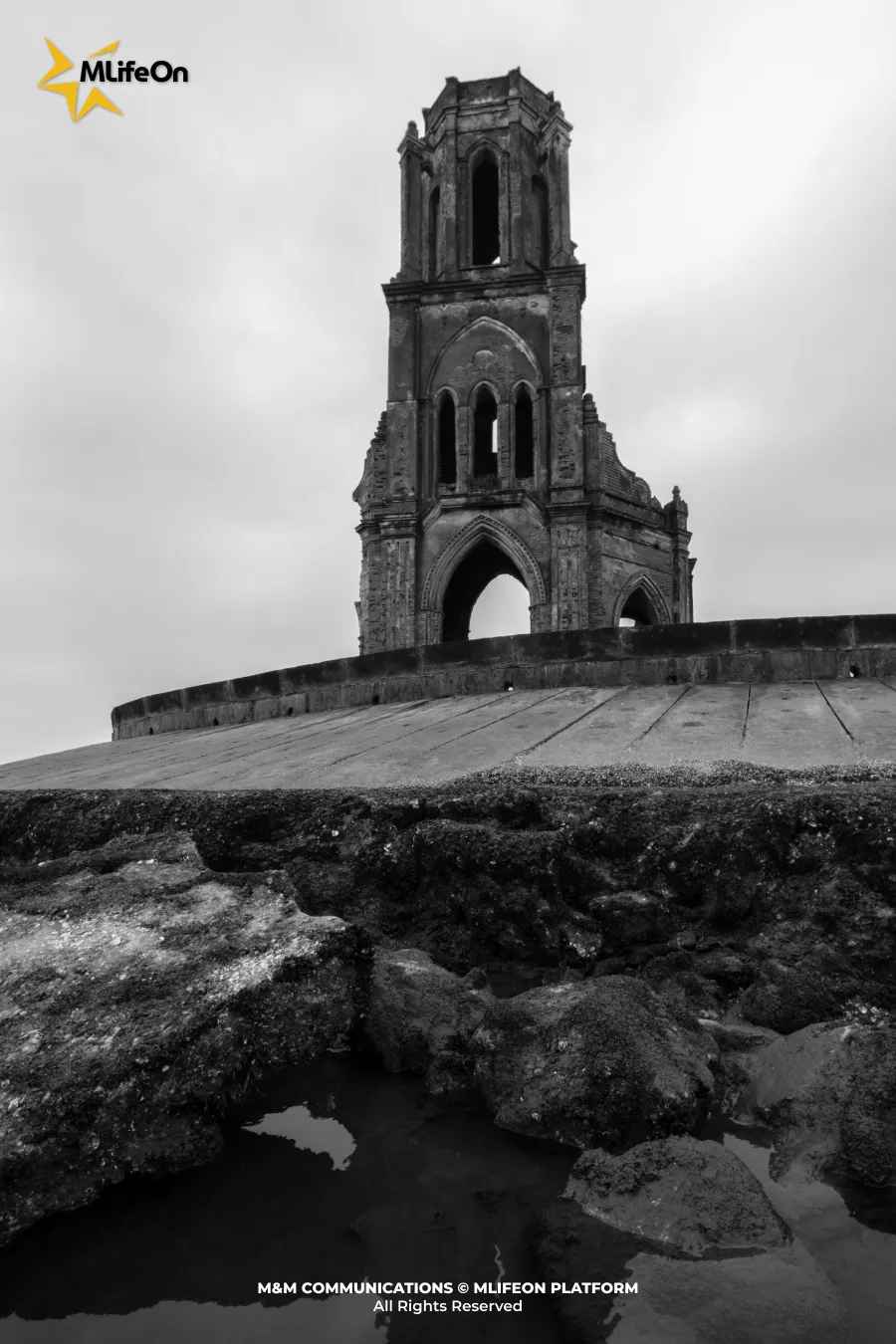
Faced with these natural changes, the Catholic community had to relocate the church to a safer location. The original structure was therefore left behind, exposed to the ongoing forces of sea winds and waves year after year.
Walls weathered by the passage of time
After many years of abandonment, most of the church’s structure has collapsed. The remaining brick walls now stand precariously within the vast coastal landscape, with many sections worn down by wind and salt from the sea.
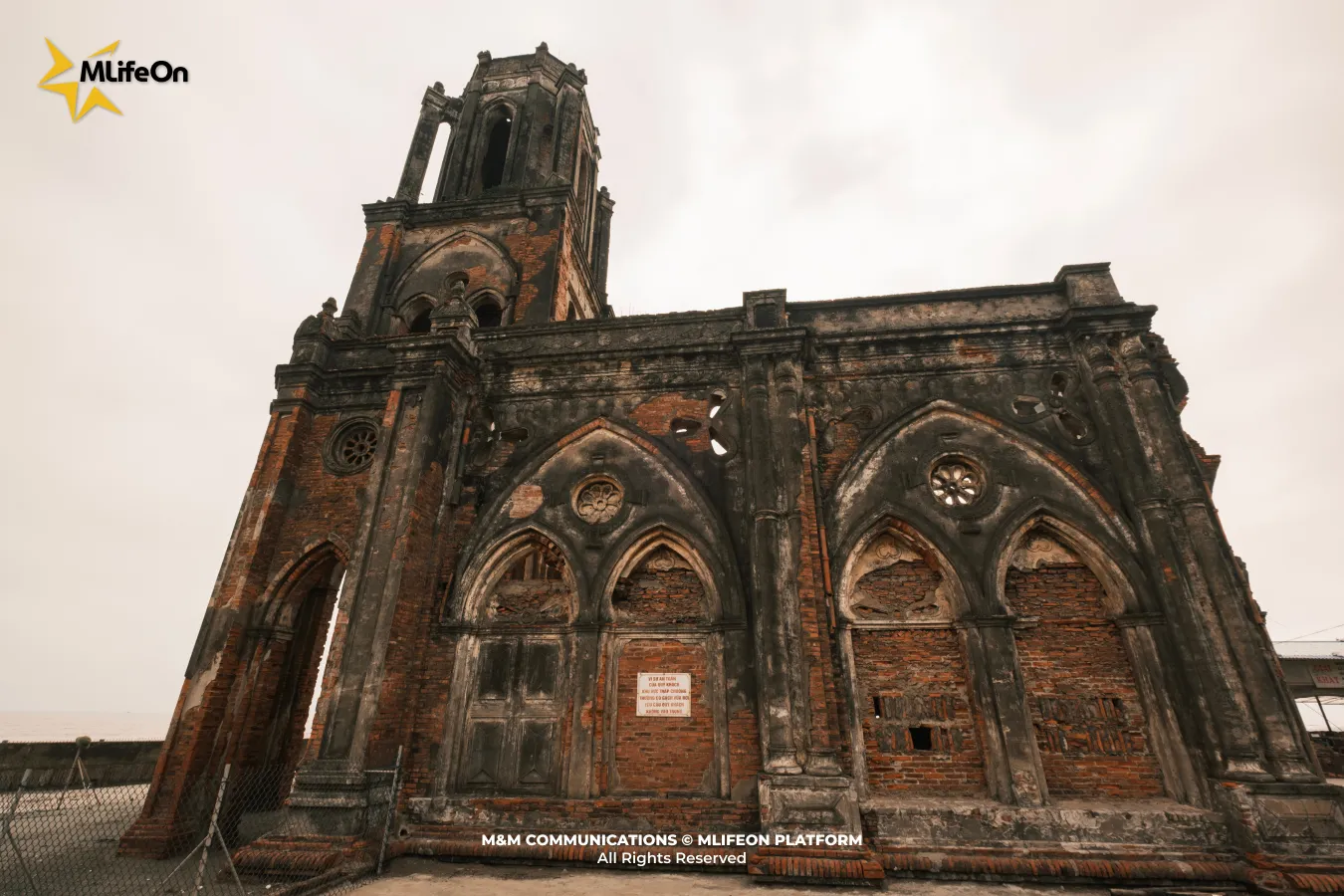
Even though only part of the structure remains, visitors can still recognize the typical features of Western-style church architecture, such as tall arched windows and thick masonry walls. Cracks, aged bricks, and weathered surfaces all reveal the marks of time that have passed over this place.
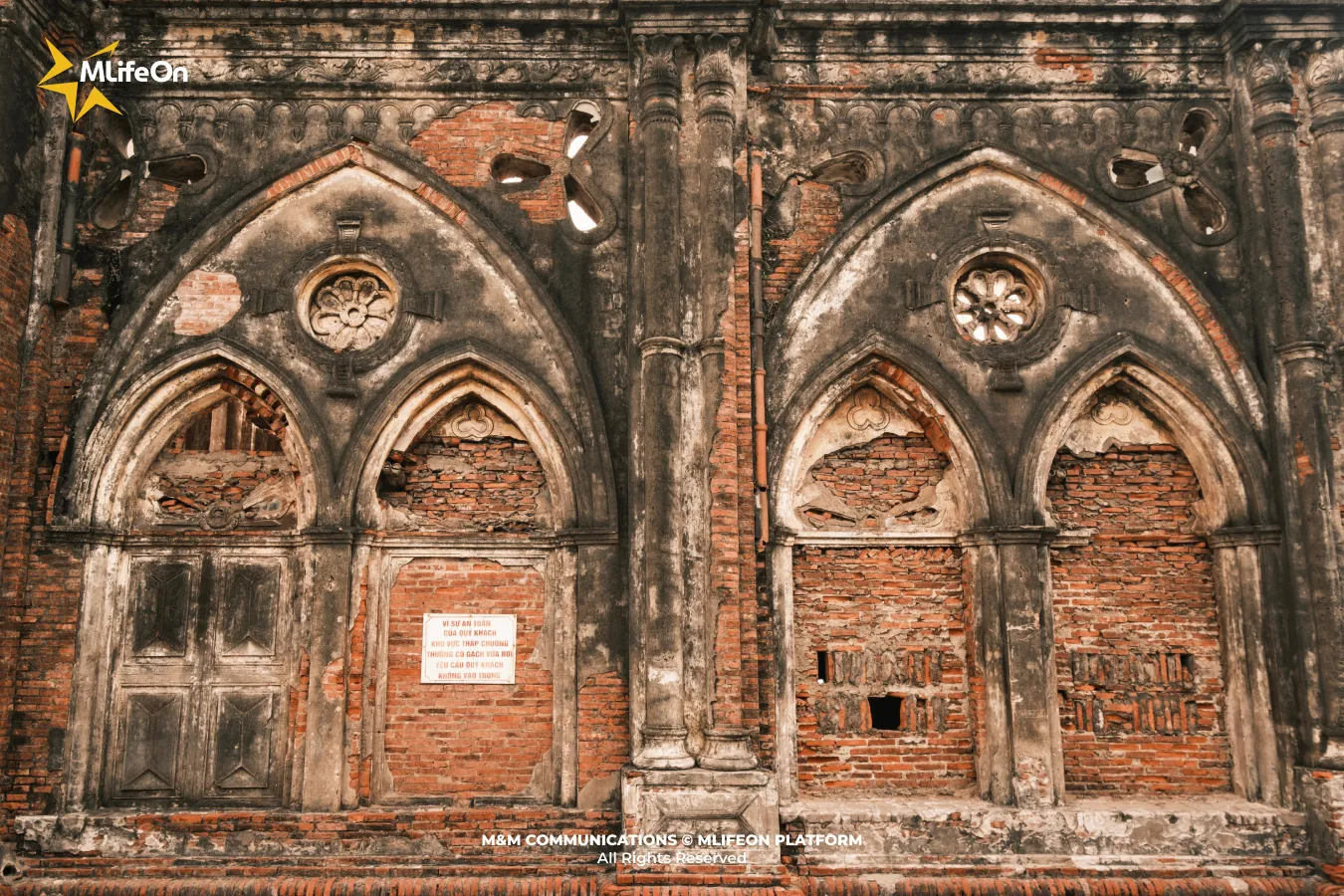
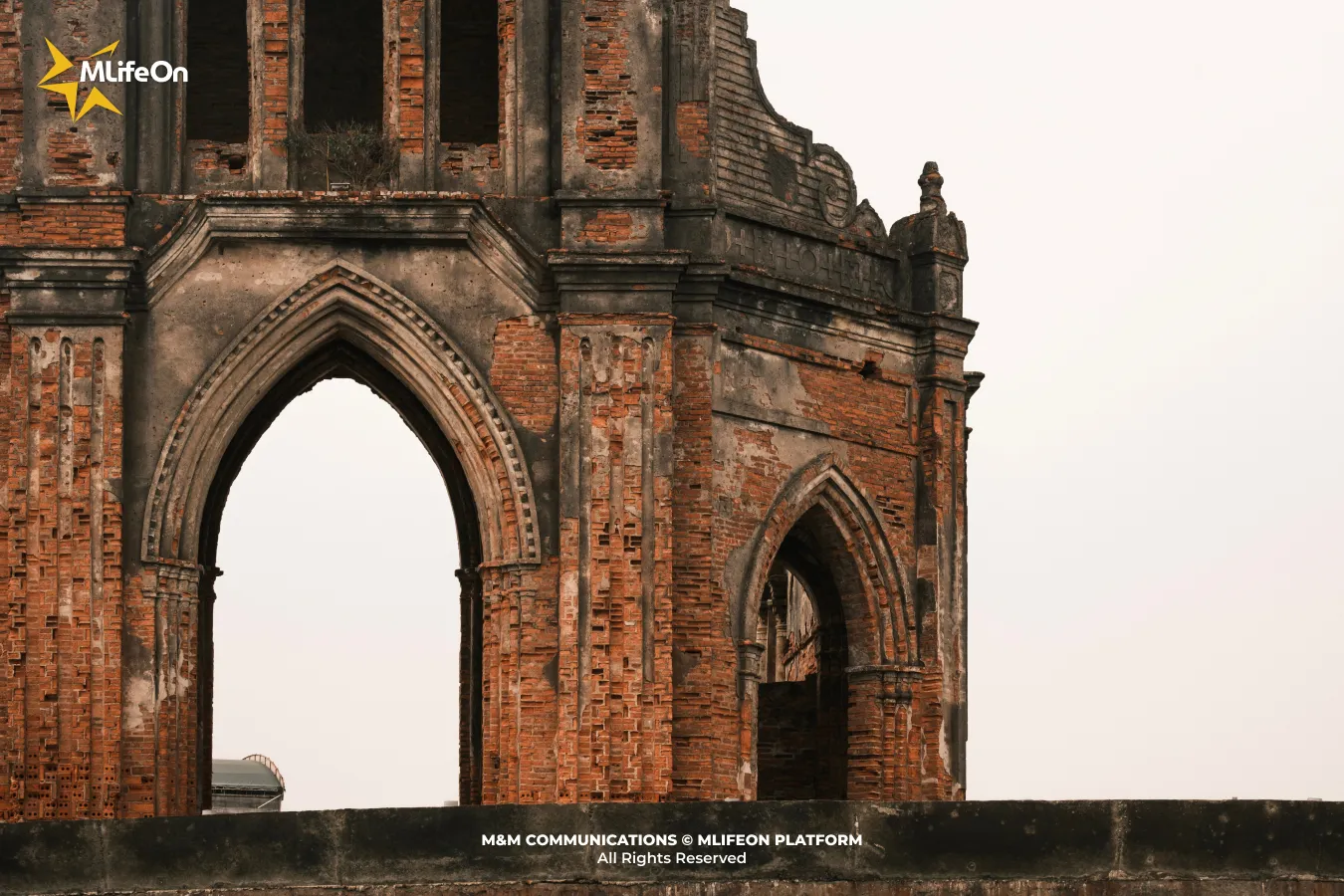
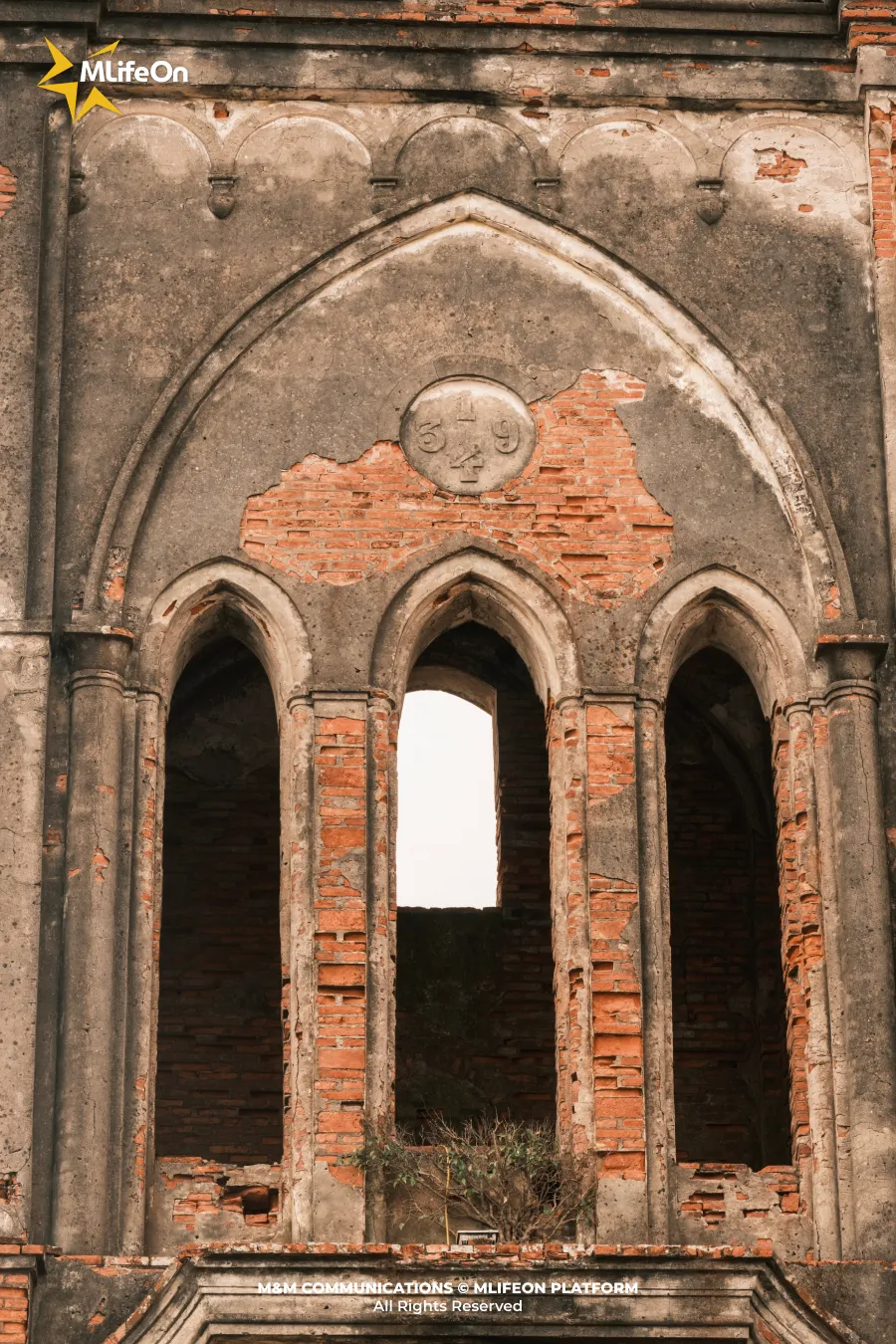
Ironically, it is this very sense of ruin that creates the church’s unique beauty. The structure may no longer be intact, but what remains is enough to evoke the form of a once-standing building that once existed here.
A raw beauty that makes the Ruined Church of Nam Dinh a unique destination
In recent years, the ruined church of Nam Dinh has gradually become a place known to more visitors. Not because of its grand scale or perfectly preserved architecture, but because of its raw and contemplative beauty.
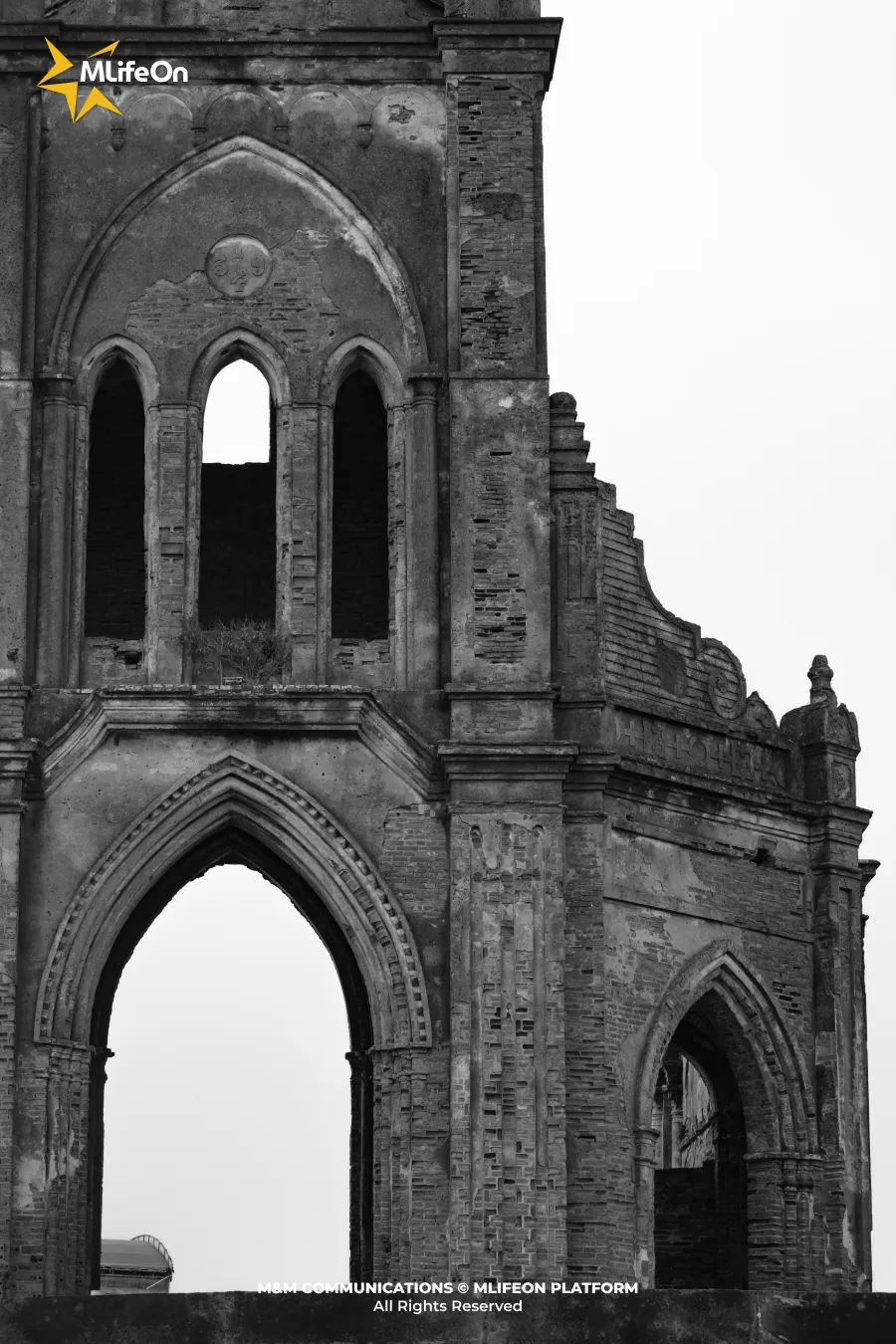
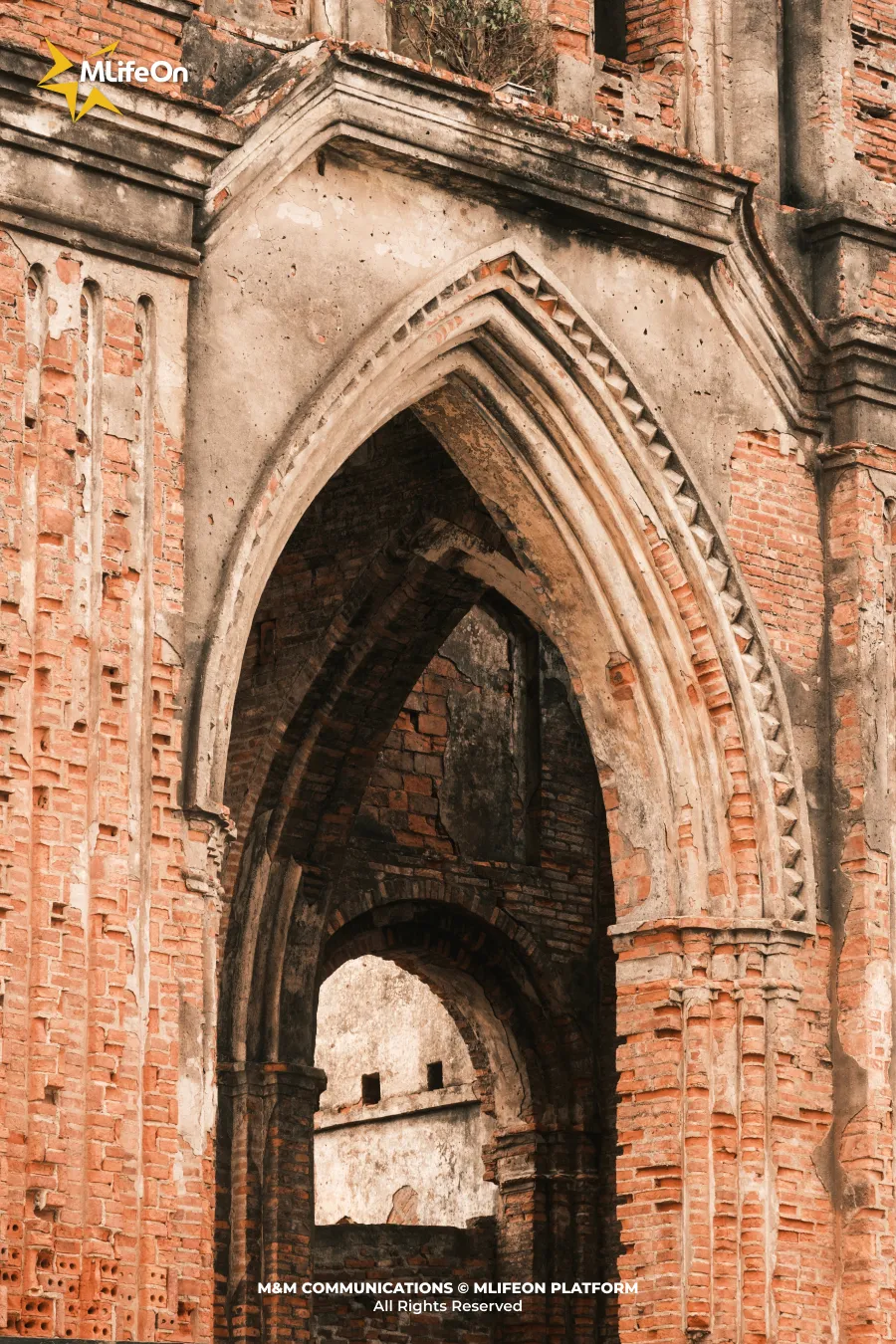
The surrounding landscape of the church is quite distinctive. In front lies the vast sea, while behind it stretches the coastal land with long sand dunes. When the evening light begins to fade, the soft golden glow falling on the old brick walls creates a striking and memorable scene.
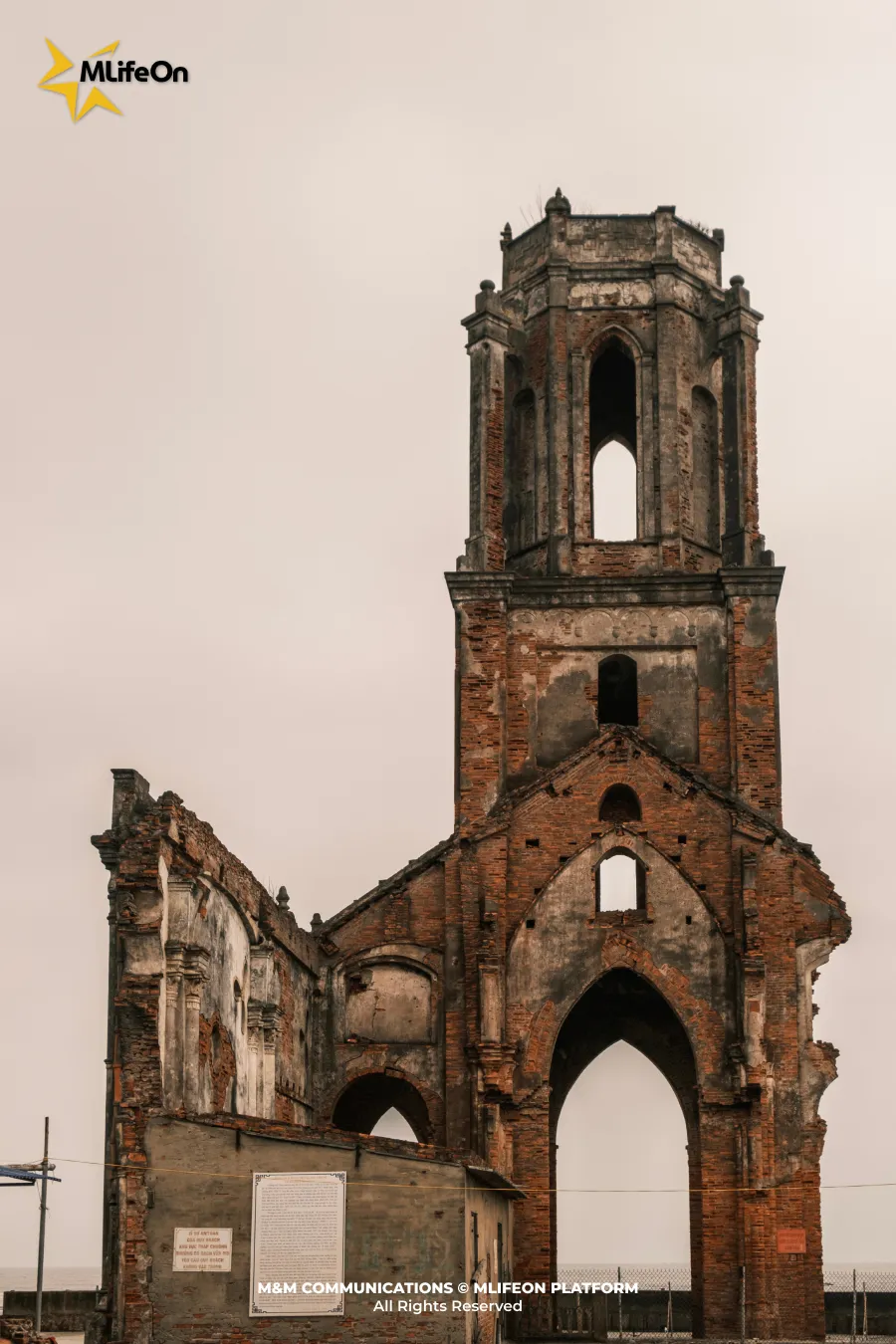
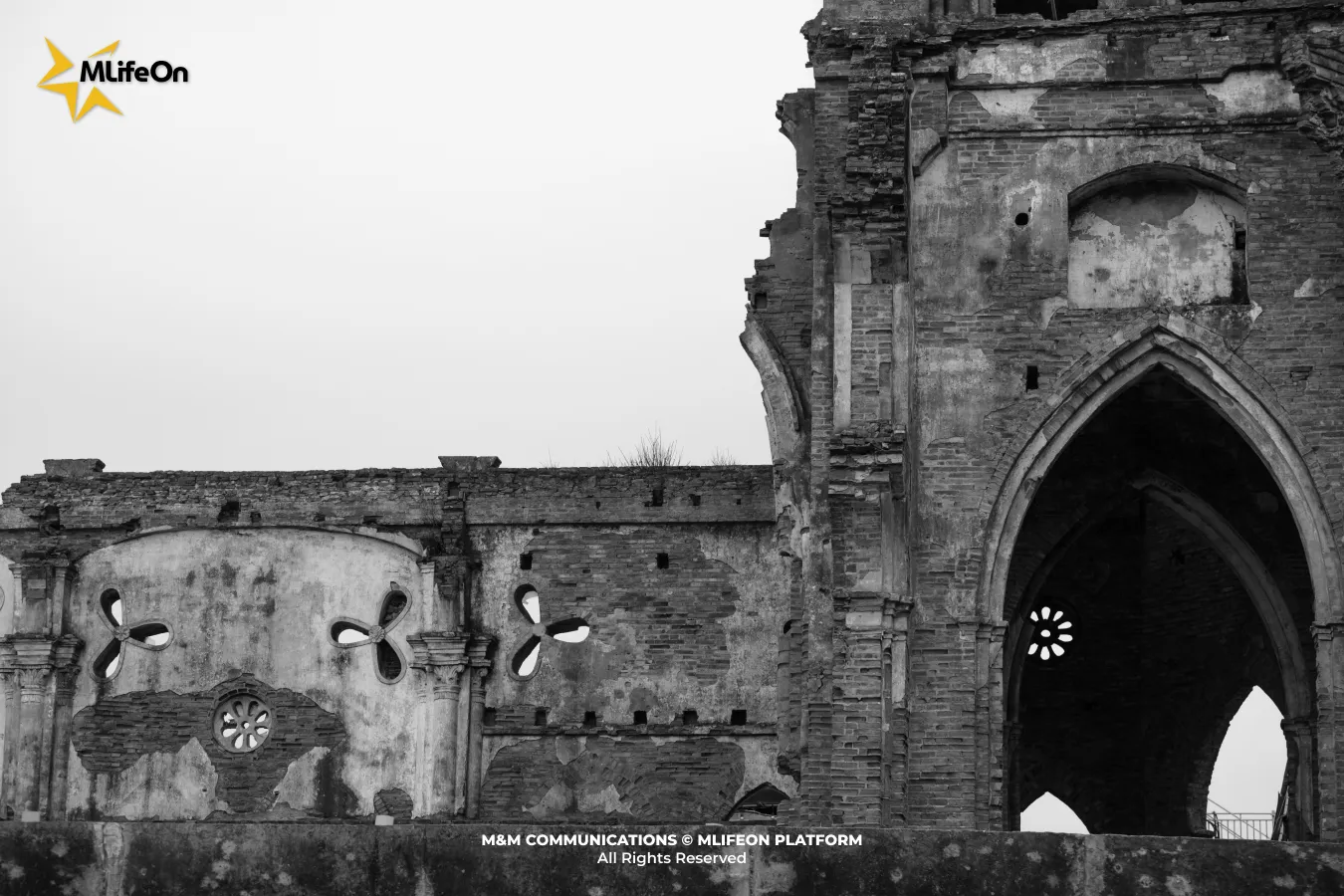
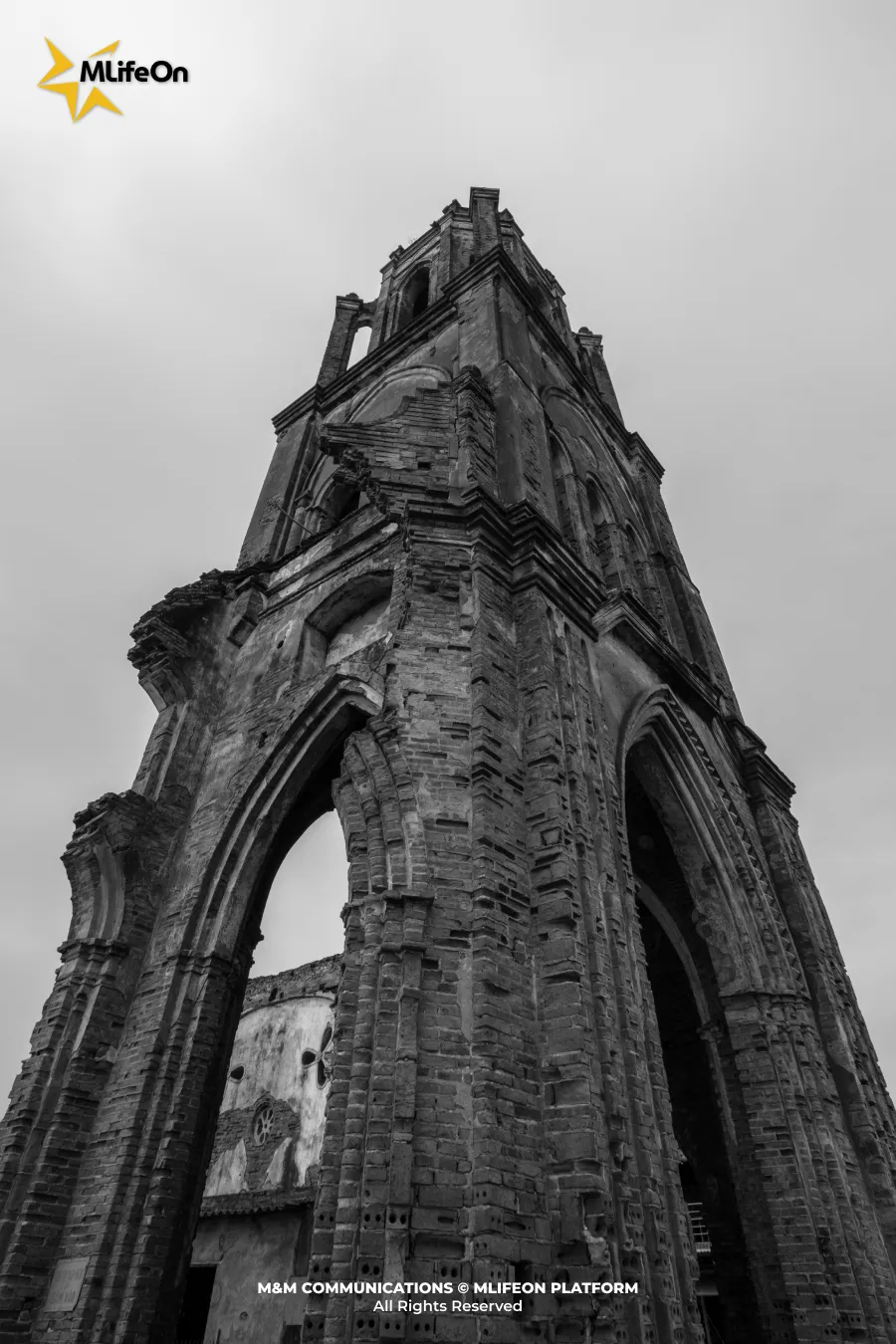
Many visitors come here to take photographs or simply to admire the expansive seascape and the ancient structure slowly blending into nature. Even in its ruined state, the church still carries a rare sense of solemnity and quietness.
Conclusion
The ruined church of Nam Dinh is not a complete structure nor a bustling tourist attraction. Yet it is precisely this sense of decay and solitude that makes the place so distinctive. Amid the vast coastal landscape of Hai Hau, the remaining walls stand quietly as witnesses of time. Despite years of exposure to sea winds and waves, the ruined church still remains as a silent trace of the past, reminding visitors of the stories that once existed along this coastal land.
—---------
CREDIT:
- Photography: Luan Nguyen
- Content: Hoài Hà
- Design: Phuong Nguyen