HÀ GIANG: LEGENDARY LAND OF THE STONE PLATEAU
Hà Giang is not just a tourist destination but a vivid experience of majestic nature, diverse culture, and heroic history of Vietnam's Northernmost region. Each mountain, stream, terraced field, or earth-walled house carries its own story, waiting for visitors to discover.
In the misty haze that shrouds the steep rock faces, the sound of the H'mong khene flute echoes from afar, blending with the whispers of wind rushing through the valley. In Hà Giang, each step is not merely a journey of geographical discovery but an encounter with the rich indigenous culture and heroic history of Vietnam's Northernmost region. Here, the boundary between earth and sky seems separated only by a thin layer of clouds, and every moment brings a sensation of touching the pure soul of the country.
Hà Giang - Legendary Destination of the Stone Plateau
Geographic location and natural features
Hà Giang is Vietnam's northernmost province, sharing a 274km border with China. With an area of nearly 8,000 km², this land has been blessed by nature with diverse and spectacular terrain. The most distinctive characteristic of Hà Giang is its majestic limestone mountain ranges, forming the Đồng Văn Stone Plateau - a geological wonder recognized by UNESCO as a Global Geopark in 2010.
Hà Giang's climate features the distinctive characteristics of high mountain regions, with four distinct seasons. Spring (February-April) is cool with peach and plum blossoms in full bloom. Summer (May-July) is mild with frequent rain, when rice turns golden on terraced fields. Autumn (August-October) is clear with deep blue skies, and winter (November-January) is cold but sunny, creating magnificent scenes of fog-covered mountain peaks.
Hà Giang's ecosystem is incredibly rich with over 1,000 rare plant species, including many endemic varieties such as stone flowers, kim tuyen orchids, and precious medicinal herbs. Regarding wildlife, the region is home to many characteristic animal species such as snub-nosed monkeys, black civets, Asian black bears, and rare bird species.
History and distinctive culture
Hà Giang carries a long-flowing historical legacy. Archaeological sites show that humans have lived here since the Neolithic era. Over many centuries, this region has witnessed the presence of numerous dynasties and become an important cultural crossroads.
Notably, Hà Giang is famous for its role as Vietnam's northern defense line through many periods. The Lũng Cú flagpole - the Northernmost point of the nation - is not just a symbol of sovereignty but also evidence of the indomitable spirit of the local people.
Culturally, Hà Giang is home to 22 ethnic minorities, each with their own distinctive cultural features. Each ethnic group has its own attire, language, customs, and festivals, creating a colorful cultural tapestry. The earth-walled houses of the H'mong people, stilt houses of the Tày people, or the love market customs of the Dao people are all invaluable cultural heritages.
Đồng Văn Stone Plateau - Unique geological heritage
The Đồng Văn Stone Plateau - the heart of Hà Giang - spans four districts: Quản Bạ, Yên Minh, Đồng Văn, and Mèo Vạc, covering an area of 2,356 km². This is the second global geopark in Southeast Asia recognized by UNESCO and the only one in Vietnam.
This plateau was formed through geological processes spanning hundreds of millions of years, creating spectacular karst topography with limestone mountain ranges, caves, valleys, and deep gorges. Notably, scientists have discovered many marine fossil organisms here dating from 400-600 million years ago, evidence of the complex geological evolution of this region.
The most miraculous aspect of the stone plateau is how humans have adapted to the harsh environment. Local people have created terraced fields on rock, harvesting each grain from barren land. As the H'mong people often say: "Elsewhere, rocks lie in the soil; in Đồng Văn, soil lies in the rocks" - a saying that truly reflects the harshness and wonder of this land.
Exploring Unmissable Destinations
Quản Bạ - Gateway to paradise
When setting foot in Hà Giang, the first stop is usually Quản Bạ - the "gateway to paradise." The Quản Bạ Pass summit offers a breathtaking panoramic view of the Tam Sơn valley below, home to the Twin Mountains (also called the Fairy Mountains) with their special shape resembling a woman's breasts, symbolizing fertility and prosperity.
The Tày people's cultural village of Lùng Tám is famous for its traditional linen weaving craft, hundreds of years old. Here, visitors can witness the entire process from growing flax plants, spinning thread, dyeing colors, to weaving cloth, all done using traditional manual methods.
Yên Minh - Beauty of the Northeastern mountains and forests
Continuing the journey, Yên Minh appears with vast grasslands and deep green pine forests. The Yên Minh valley is described as the "green lung" of Hà Giang with its fresh air and diverse ecosystem.
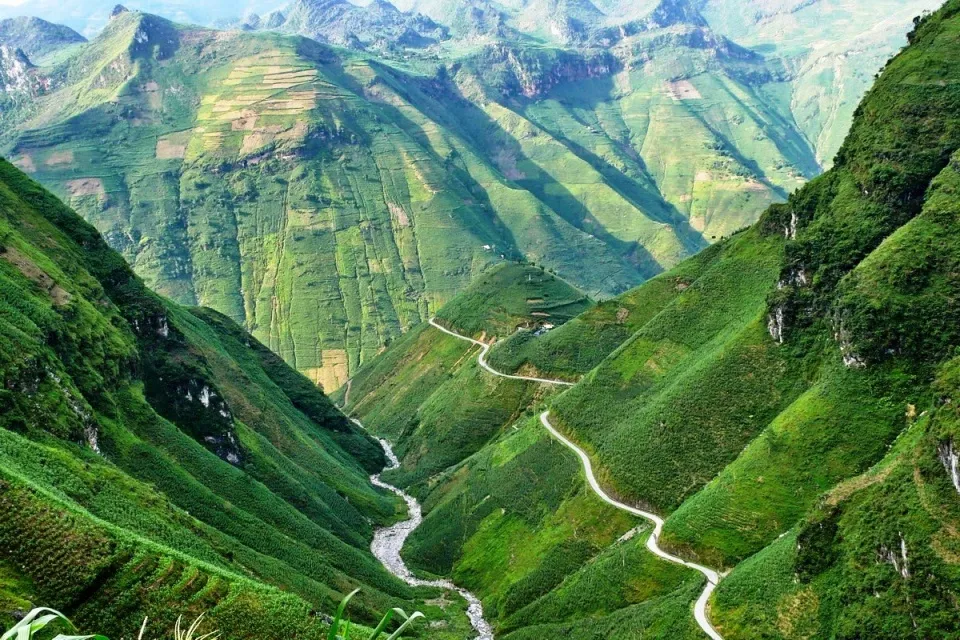
The 20km Mã Pì Lèng Pass is considered the "King of Passes" in Vietnam, connecting Yên Minh with Đồng Văn. This is a construction built entirely by human power over 6 years (1959-1965), with each curve on the pass offering spectacular views of the deep abyss below and the Nho Quế River winding like a green silk ribbon.
Đồng Văn - Heart of the stone plateau
The ancient town of Đồng Văn with its centuries-old earth-walled houses is an ideal stopping point. The old quarter of Đồng Văn is preserved intact with unique architecture blending ancient Vietnamese and Chinese styles, bearing the strong imprint of the ancient trade route.
The Vương family mansion in Sà Phìn is a massive architectural work built from 1919 to 1928 by Vương Chính Đức - the leader of the Đồng Văn autonomous region during the French colonial period. This mansion is a harmonious combination of Chinese, French, and H'mong architecture, with 64 rooms and 4 building wings in a large compound.
Mèo Vạc - Wild beauty of the border region
Mèo Vạc is a border district located in the eastern part of the stone plateau. This is where Khâu Vai Market is held - a unique rendezvous organized once a year in the third lunar month, for lovers who cannot be together due to circumstances. Here, they can meet, talk, and share for one day before returning to their current lives.
The Lũng Cú area with its flagpole marks the Northernmost point of Vietnam, where visitors can admire the panoramic view of the Vietnam-China border and feel the majesty of the Heng mountain range piercing the clouds.
The Happiness Road and Nho Quế River
The Happiness Road connecting the 4 districts on the stone plateau is one of Vietnam's most beautiful mountain pass routes. This road is not only an engineering feat but also a historical witness to the development of the highland border region.
The Nho Quế River - a jade-colored river flowing through the deep Tú Sản gorge, creates a scene like a painting. Visitors can experience kayaking on this river to feel the majesty of the steep rock walls on both sides.
Distinctive Cultural Experiences and Rich Cuisine
Unique festivals and customs
Hà Giang is where many ethnic cultures intersect, with distinctive festivals held throughout the year. The Gầu Tào festival of the H'mong people at the beginning of the new year is an occasion to pray for health, bountiful harvests, and numerous descendants. The rituals of planting the neu tree in the yard, playing the khene, and drinking corn wine are indispensable features.
The Lồng Tồng festival of the Tày people takes place in the first lunar month and is a harvest ritual with activities such as deity worship, then singing, gong playing, and folk games. This is also an opportunity for young men and women to meet and court.
Highland markets are cultural highlights not to be missed. Đồng Văn Market is held on Sundays, Mèo Vạc Market on Sundays, and especially Khâu Vai Market - the unique love market held once a year. Here, visitors can not only admire the colorful attire of the ethnic groups but also participate in the vibrant trading atmosphere.
Hà Giang cuisine - Flavors of the mountains and forests
Hà Giang cuisine carries the rich flavors of mountains and forests with ingredients characteristic of the highlands. Thắng cố - a stew of horse or buffalo meat with special spices - is the symbolic dish of the H'mong people. This dish is usually enjoyed with corn wine, creating an unforgettable culinary experience.
Ấu tẩu porridge - a dish of the Red Dao people - is prepared from corn flour, pork, and wild vegetables, with a unique flavor and health benefits. Lạp sườn, a smoked meat of the Tày people, is made from pork marinated with spices and smoked over the hearth for a long time, creating a distinctive flavor that cannot be mistaken.
Mèn mén - a dish made from coarsely ground corn flour cooked and mixed with wild vegetables - is the main food of highland people during the hungry season before harvest. Today, this dish has become a specialty attracting tourists.
Corn wine and honey wine from Hà Giang are famous for their pure taste and secret production formulas. Each ethnic group has its own method of brewing, creating wines with different strengths and flavors.
Traditional arts and craft villages
Hà Giang folk art is rich with many forms such as the khene dance of the H'mong people, then singing of the Tày people, and páo dung singing of the Dao people. Each art form carries deep spiritual meaning and reflects the distinctive cultural life of each ethnic group.
Traditional craft villages are still preserved, such as the Lùng Tám linen weaving village, the Phó Bảng blacksmith village, and the Dao people's traditional paper village. Here, visitors can witness production processes firsthand and purchase unique handcrafted products.
The embroidery craft of H'mong women is a precious cultural heritage with complex and meaningful patterns. Each embroidered piece is a work of art telling the history, beliefs, and life of this ethnic group.
Practical Travel Guide
Ideal times to explore Hà Giang
Hà Giang is beautiful year-round, but each season brings its own distinctive beauty. February-March (spring) is when peach and plum blossoms bloom, covering the hillsides in pink. April-May is the season of lush green terraced fields filled with water, reflecting sparkling sunlight.
September-October (autumn) is when rice ripens to golden yellow on the terraced fields, creating a beautiful natural painting. Especially, from October to December is the season when triangular buckwheat flowers bloom, covering the stone plateaus in pink and becoming an unmissable highlight.
January-February (winter) brings a different landscape with fog, temperatures that can drop below 0°C, creating rare frost and snow phenomena in Vietnam.
Transportation and accommodation
From Hanoi, visitors can travel to Hà Giang by bus (taking about 6-7 hours) or motorbike (recommended for those who love excitement and freedom). In Hà Giang, renting a motorbike is the ideal way to explore the mountain passes, costing around 150,000-200,000 VND per day.
For accommodation, visitors have many options from standard hotels in Hà Giang city to homestays in villages. The homestay experience is recommended to gain a deeper understanding of local culture, with prices around 150,000-300,000 VND per person per night, including dinner and breakfast.
Famous exploration routes
The Hà Giang Loop is the most popular route, stretching about 350km, passing through 4 districts of the stone plateau. The journey usually takes 3-5 days depending on the specific itinerary.
Some unmissable stops on this route include:
- Day 1: Hà Giang - Quản Bạ - Yên Minh (about 80km)
- Day 2: Yên Minh - Đồng Văn (about 50km)
- Day 3: Đồng Văn - Mèo Vạc - Yên Minh (about 100km)
- Day 4: Yên Minh - Hà Giang (about 120km)
Additionally, other exploration routes such as Hà Giang - Bắc Mê - Bắc Quang or Hà Giang - Hoàng Su Phì also offer unique experiences with terraced fields and the distinctive cultures of the Dao and Nùng peoples.
Cultural and safety notes
When traveling in Hà Giang, visitors should respect local customs such as asking permission before photographing locals and dressing appropriately when entering sacred spaces like family shrines or temples. When invited to drink wine, one should take at least a sip to show respect.
Regarding safety, Hà Giang routes have many steep passes and dangerous curves, especially during the rainy season. Visitors should drive carefully, not drink alcohol when driving, and should stop to rest frequently. It's advisable to prepare motion sickness medicine, personal medications, and rain gear and warm clothing regardless of the season.
Hà Giang Today and Future
Sustainable tourism development
In recent years, Hà Giang has become an attractive tourist destination with steadily increasing numbers of visitors each year. Local authorities have been implementing many sustainable tourism development projects, focusing on preserving natural landscapes and traditional culture.
Community-based tourism models are being encouraged, helping local people participate directly in tourism activities and benefit from this smokeless industry. Projects such as "Đồng Văn Green Tourism" or "Lũng Cẩm Cultural Tourism Village" have brought positive results in improving people's lives and preserving cultural identity.
Challenges in cultural and environmental preservation
Alongside opportunities, tourism development also brings many challenges. The preservation of traditional architecture, customs, and the natural environment faces pressure from urbanization and commercialization processes.
Tourism waste, especially plastic waste, is polluting the environment at some popular tourist sites. The phenomenon of fragmented construction lacking proper planning is also distorting the unique landscape of the stone plateau.
Future vision and development direction
Hà Giang aims to become Vietnam's leading eco-cultural tourism destination with a sustainable development strategy. Infrastructure upgrade projects, human resource training, and tourism promotion are being strongly implemented.
The application of technology in tourism management, such as Geographic Information Systems (GIS) to monitor environmentally sensitive areas, or smart tourism applications to enhance visitor experiences, is being emphasized in development.
In particular, Hà Giang is moving toward a high-quality tourism model, attracting environmentally and culturally conscious visitors rather than pursuing quantity. This promises a sustainable future for the province's tourism industry while ensuring balance between economic development and preservation of traditional values.
Hà Giang - An Unmissable Experience
Hà Giang is not just a tourist destination but a vivid experience of majestic nature, diverse culture, and heroic history of Vietnam's Northernmost region. Each mountain, stream, terraced field, or earth-walled house carries its own story, waiting for visitors to discover.
When setting foot in Hà Giang, visitors not only admire the beauty of the stone plateau - a rare geological wonder of the world - but also immerse themselves in the rich indigenous cultural space. The bustling markets, traditional khene dances, or warm meals in stilt houses are all memorable moments in the journey of exploring this land.