DISCOVERING A TRADITIONAL HUE CAKE PLATTER - WHEN SOPHISTICATION LIES IN THE SIMPLEST THINGS
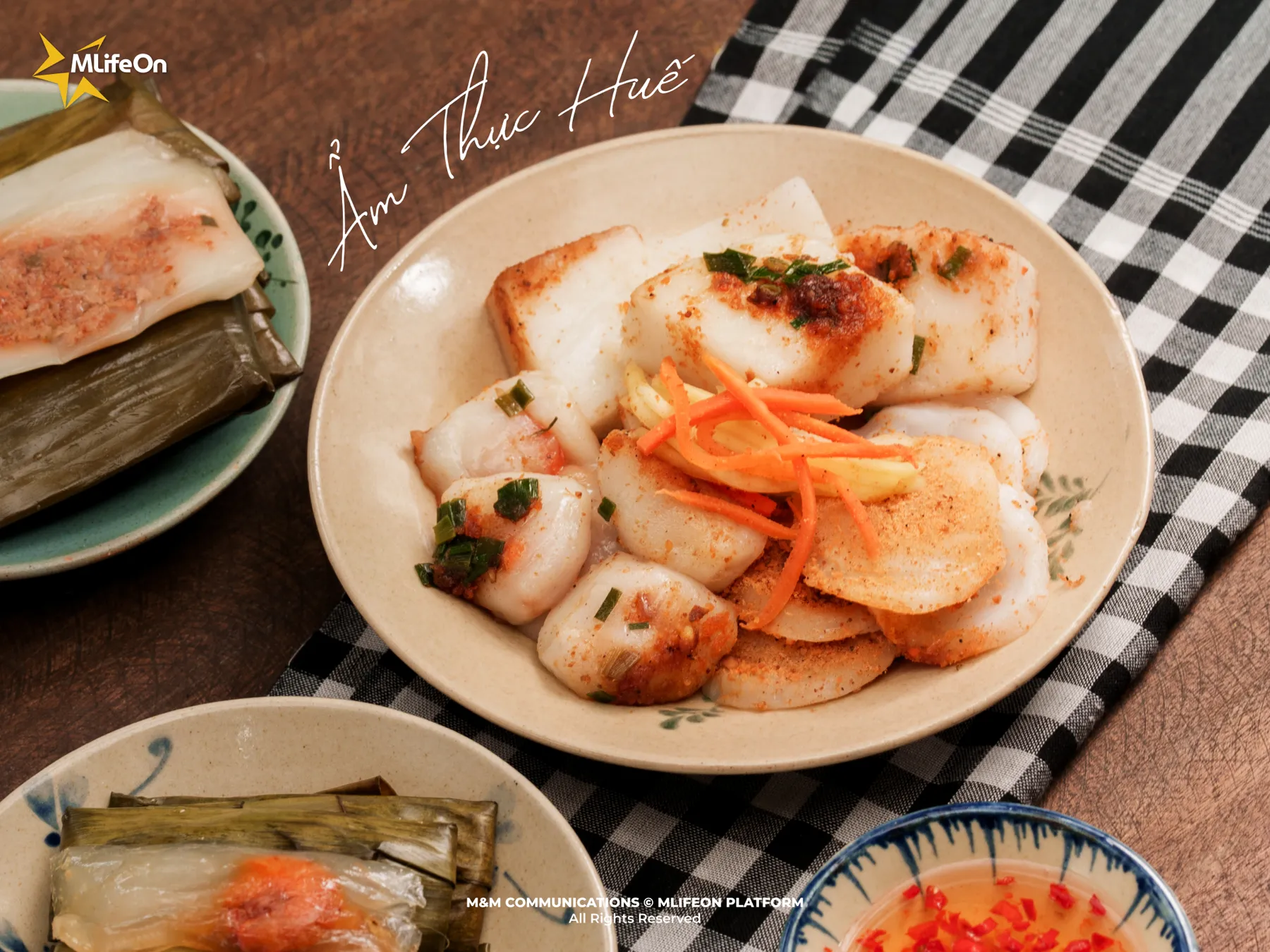
Translucent banh bot loc, soft and delicate banh nam and fragrant, chewy banh it, three small cakes, each offering a distinctive taste of Hue. Made from familiar ingredients with meticulous preparation, this traditional platter reflects the skill and subtle sophistication that have long defined the cuisine of Vietnam’s former imperial capital.
A Traditional Hue Cake Platter - Small delicacies that capture the flavors of the former imperial capital
Hue cuisine has long been known for dishes carefully prepared in both flavor and presentation. What makes it particularly interesting is that this distinctive character is not limited to elaborate dishes. It can also be found in the humble cakes that have long been part of everyday life.
Banh bot loc, banh nam, and banh it do not require expensive ingredients. Rice flour, glutinous rice flour, tapioca starch, shrimp, pork, scallions, banana leaves, and other simple ingredients are all familiar sights in Vietnamese kitchens. Yet from these everyday ingredients, the people of Hue have created different kinds of cakes, each with its own shape, texture, and way of being enjoyed.
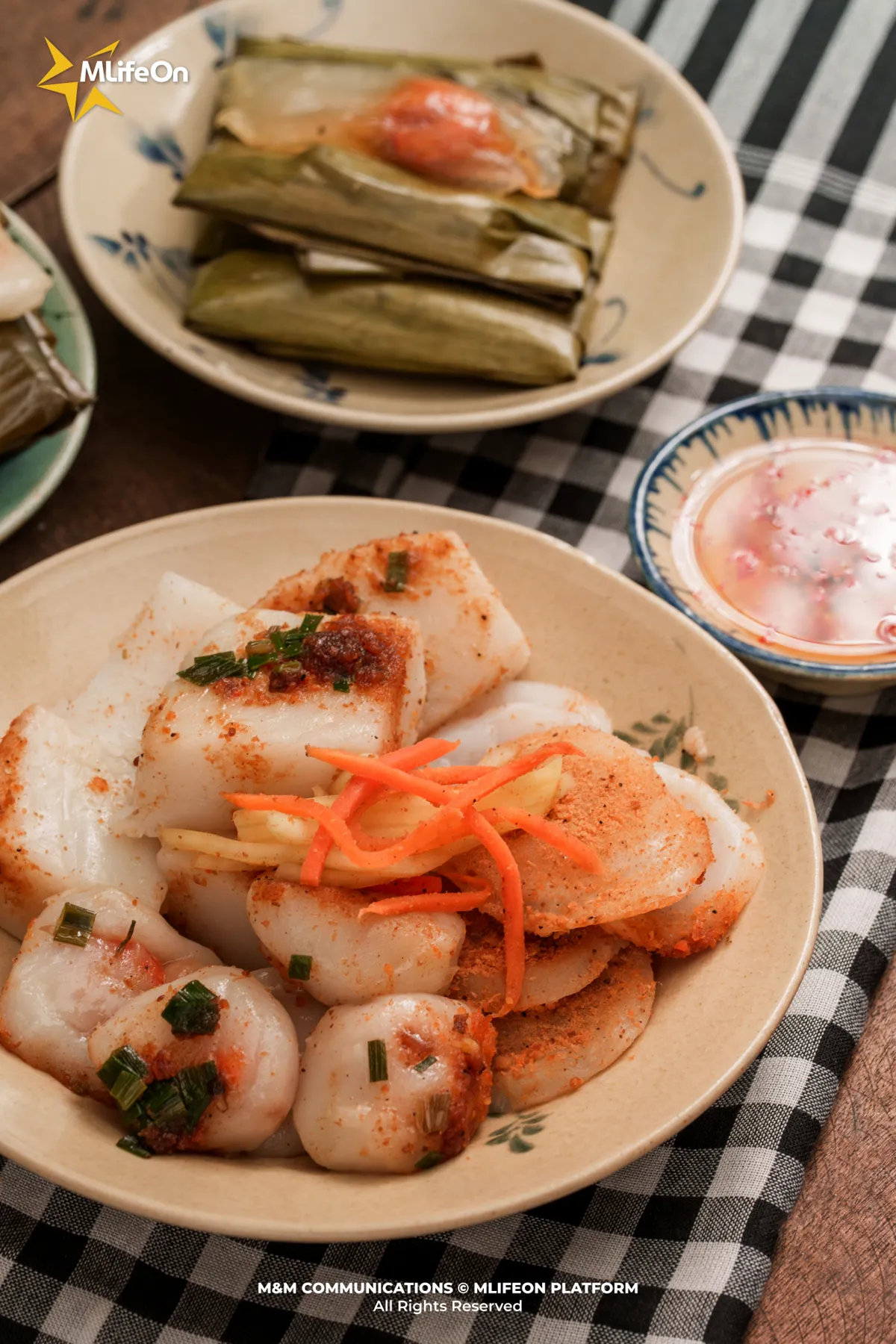
These small delicacies can be found in local markets, humble food stalls, or served as a light meal during the day. Diners can order their favorite variety separately or choose a mixed platter and enjoy a little of everything.
At first glance, a platter of Hue cakes may seem remarkably simple. But once you begin tasting each one, you realize just how much care goes into these small delicacies. The batter must have the right consistency, the filling must be flavorful, the cakes must be steamed to just the right texture, and even the dipping sauce needs to be carefully balanced so that it complements rather than overwhelms the distinctive flavor of each cake.
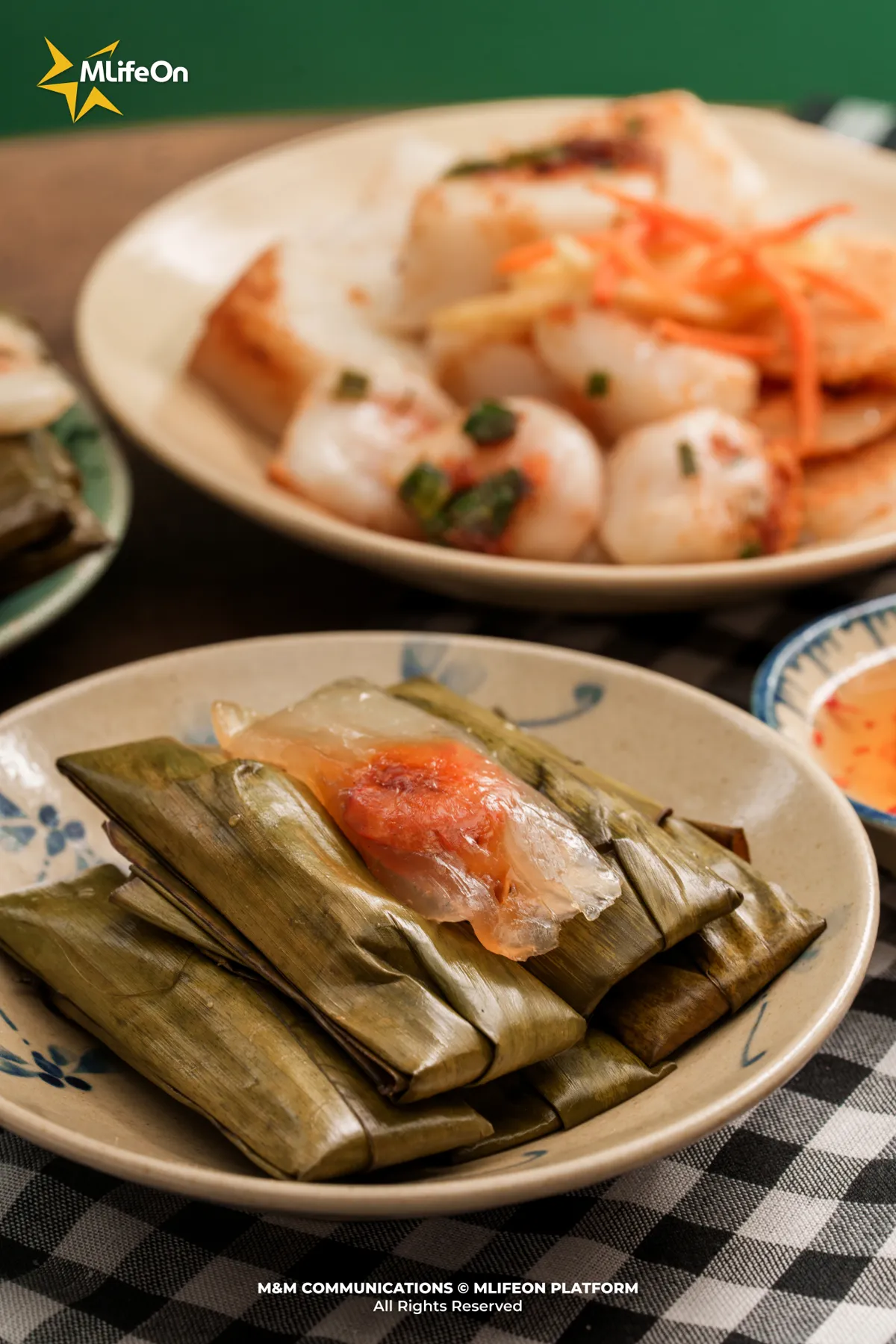
Banh Bot Loc - A translucent wrapper filled with savory shrimp
Among the cakes on a traditional Hue platter, banh bot loc is perhaps the easiest to recognize. Once cooked, its wrapper becomes beautifully translucent, revealing the reddish-orange shrimp filling inside. That contrast alone makes this little cake remarkably appealing.
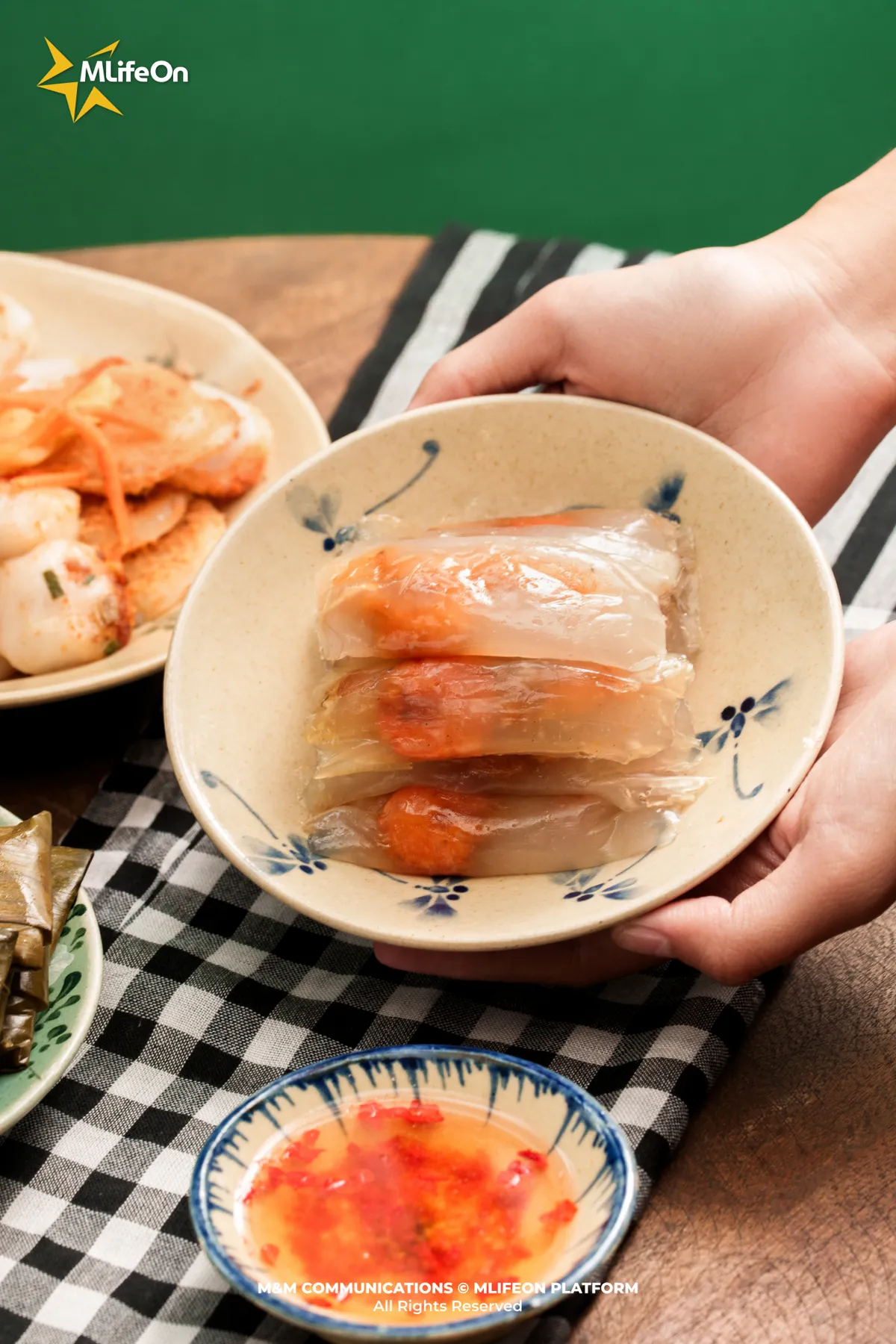
Hue-style banh bot loc generally comes in two forms: wrapped in banana leaves or served without leaves. The wrapper is made from tapioca starch, giving it its characteristic chewy texture. The filling usually consists of shrimp, sometimes combined with pork, which is braised beforehand so that the flavors become richer and more concentrated. In the banana-leaf-wrapped version, the leaves also lend the cake a subtle fragrance after steaming.
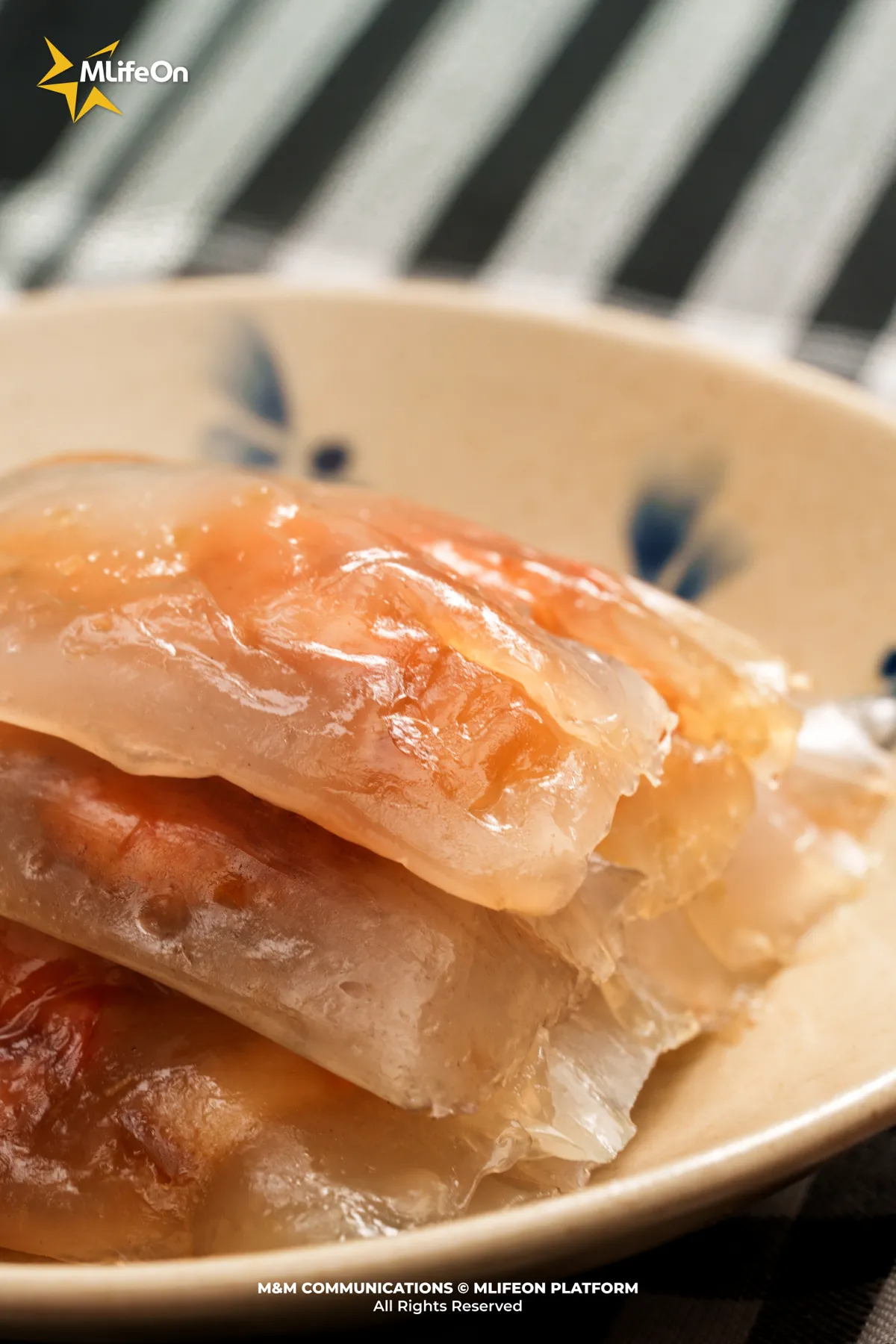
The appeal of banh bot loc lies in its balance. The wrapper should be pleasantly chewy without becoming tough, while the filling should be flavorful without being overly salty. Each cake is small enough to be enjoyed in just a few bites. Dipped lightly in fish sauce, the savory shrimp, chewy wrapper, and touch of chili come together in an irresistibly satisfying combination.
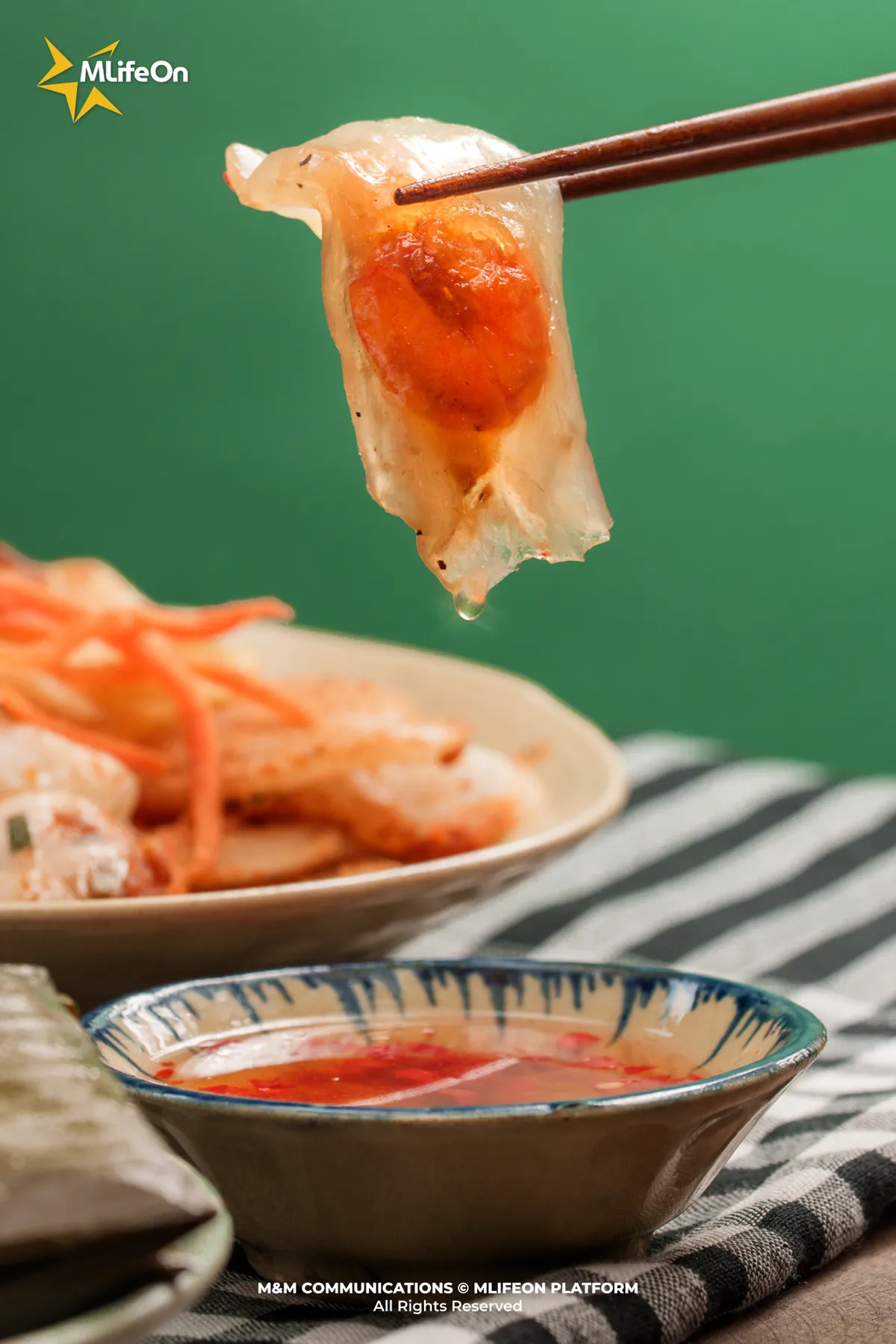
Perhaps that is why banh bot loc needs very little decoration. Its nearly transparent wrapper hides almost nothing, allowing the bright red shrimp inside to become the cake’s most natural and attractive highlight.
Banh Nam - Soft, delicate and far more refined than it looks
While banh bot loc stands out for its chewy texture, banh nam offers an entirely different experience.
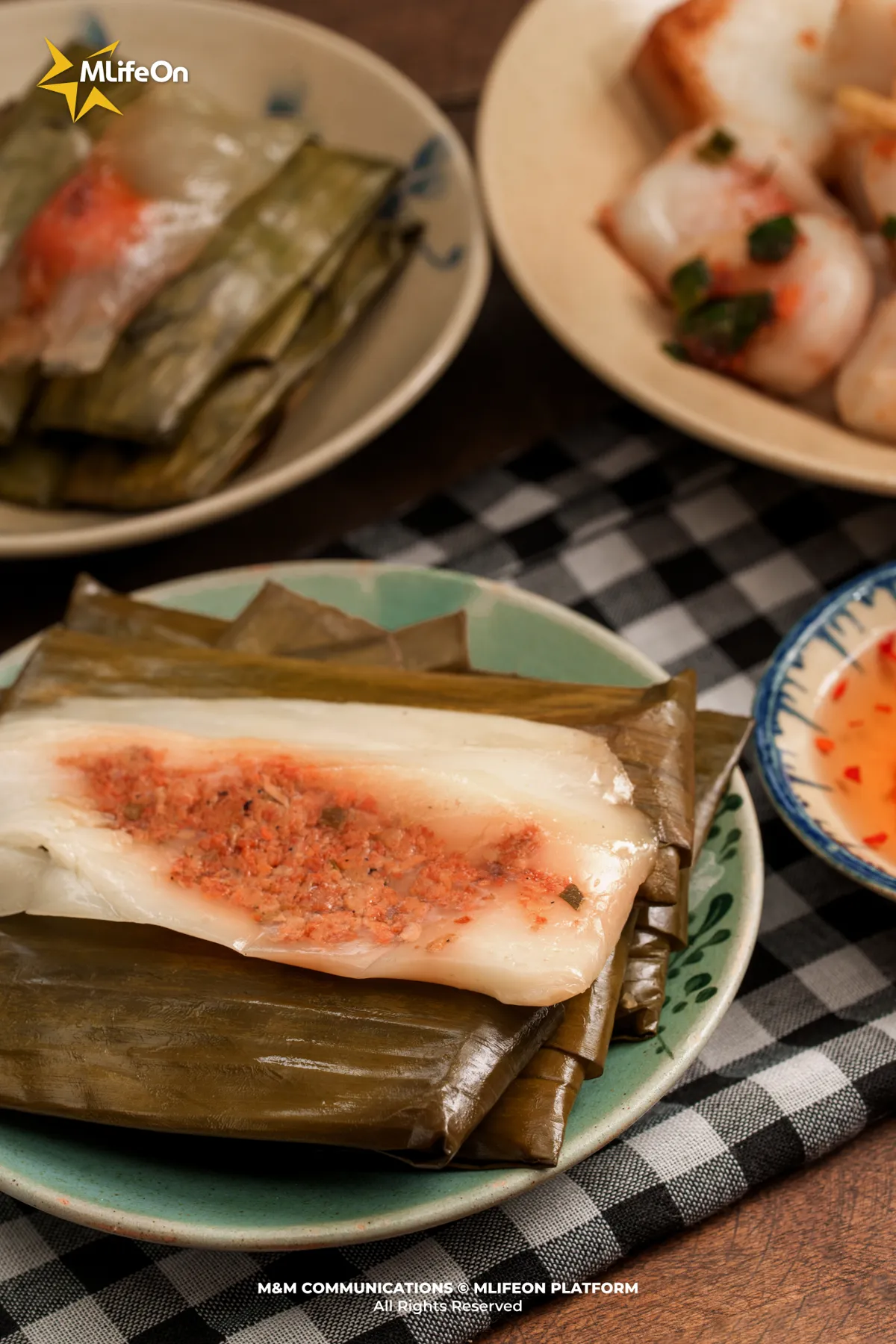
Banh nam is typically made from rice flour prepared into a soft batter and spread in a thin layer over a banana leaf. A finely minced mixture of shrimp and pork, seasoned just enough to enhance its flavor, is then placed on top. The banana leaf is folded into a flat rectangular parcel before the cake is steamed.
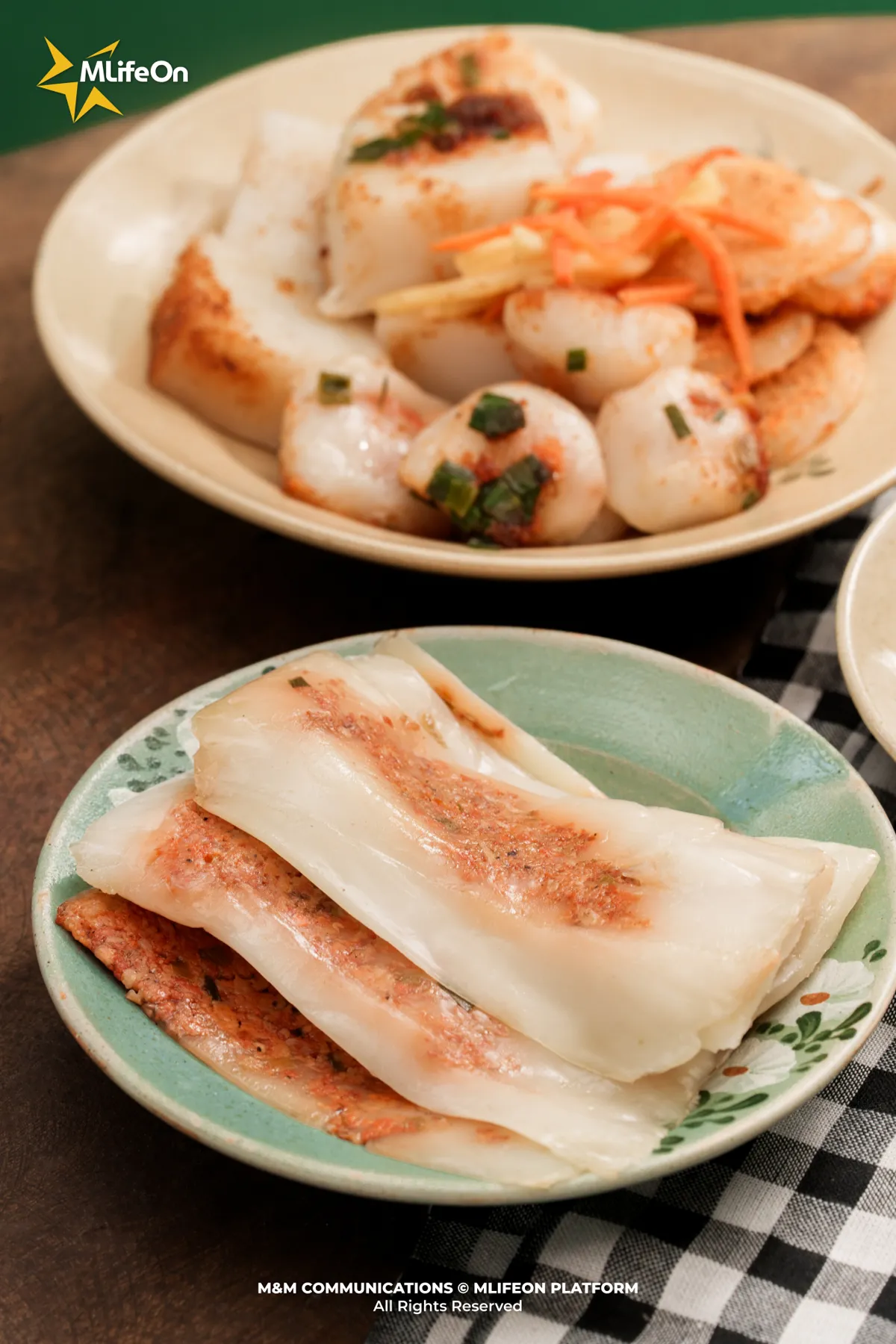
Once the leaf is opened, a thin, delicate cake is revealed, with its white rice-flour base contrasting beautifully with the reddish-orange shrimp filling spread across the surface. The cake is exceptionally soft, almost melting in the mouth, while the filling provides just enough flavor without overpowering the lightness of the batter.
Looking at banh nam, it is easy to assume that it is a very simple dish. Yet achieving a layer thin enough to remain soft after steaming without becoming watery or falling apart requires considerable skill in balancing the batter and controlling the steaming time.
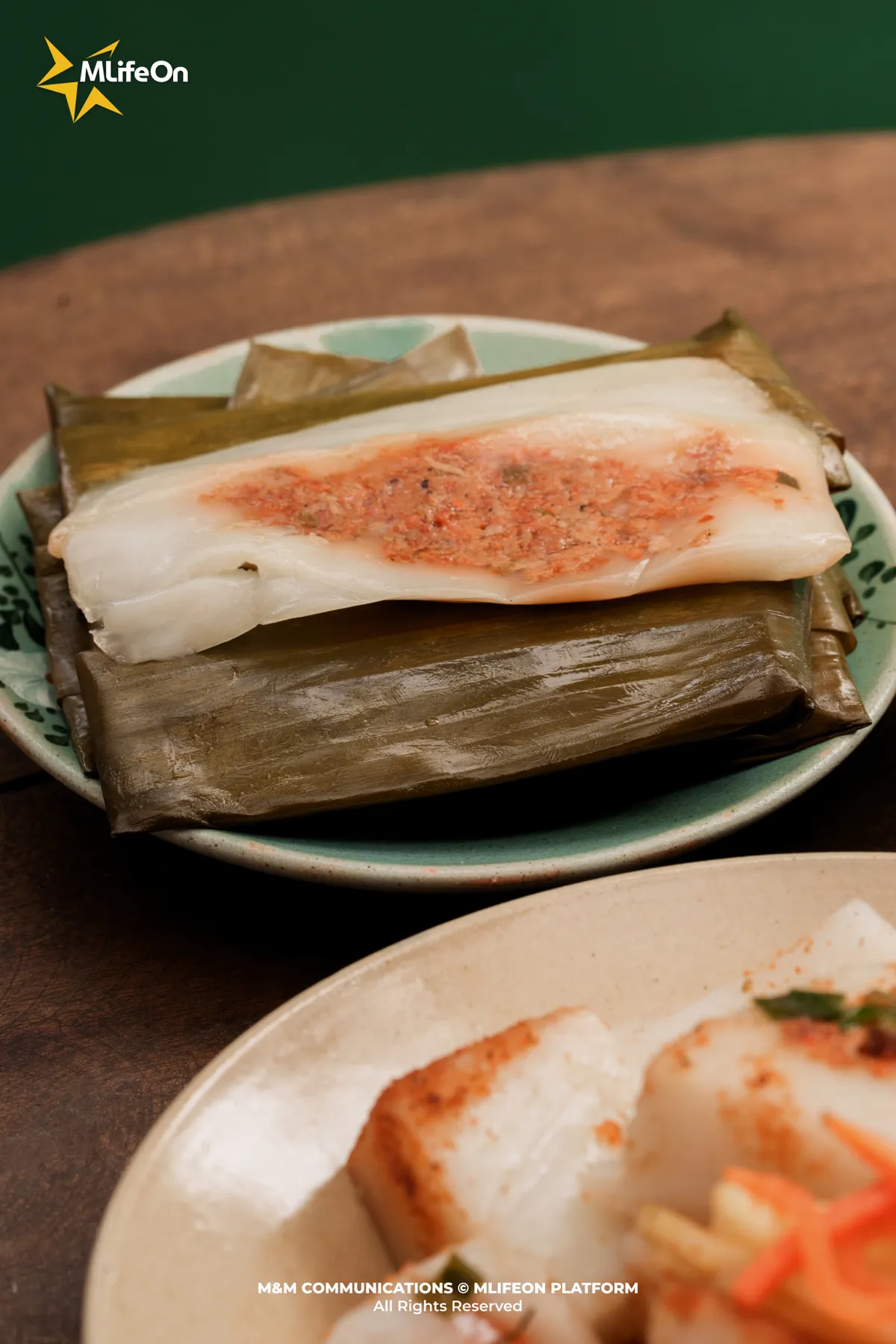 he charm of banh nam truly lies. It needs neither an elaborate shape nor an abundance of filling. Its appeal comes from something much simpler: a soft, delicate texture and a flavor that feels perfectly balanced.
Banh It - A fragrant, chewy touch that completes the traditional Hue Cake Platter
Alongside the gentle chewiness of banh bot loc and the delicate softness of banh nam, banh it brings another texture to the traditional Hue cake platter: the satisfying chew of glutinous rice.
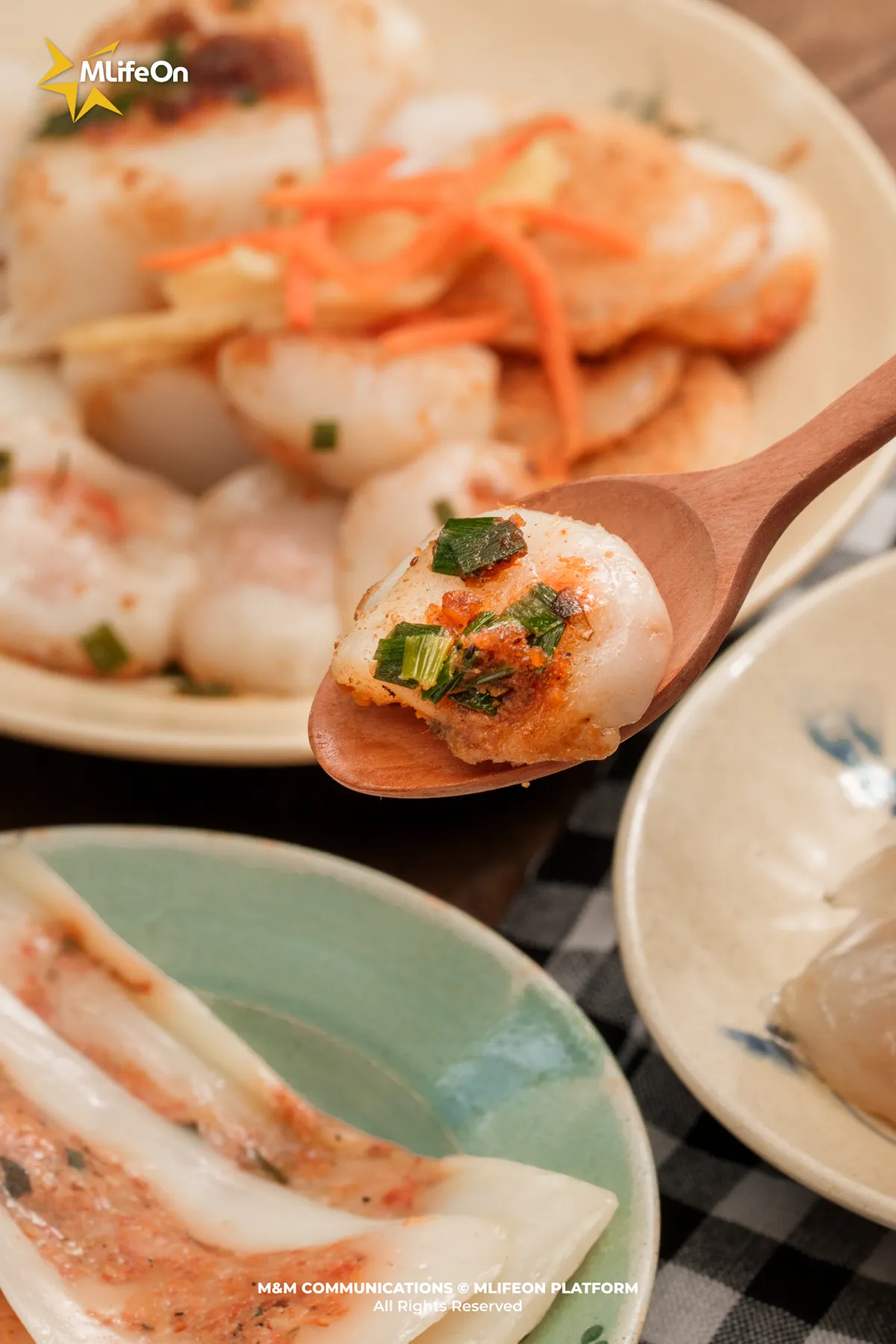
Small and rounded, each cake has a soft, chewy glutinous rice dough wrapped around a savory filling. In savory versions of banh it, shrimp and pork provide a rich, flavorful center, while a little scallion oil or shrimp may be added on top for extra aroma and visual appeal.
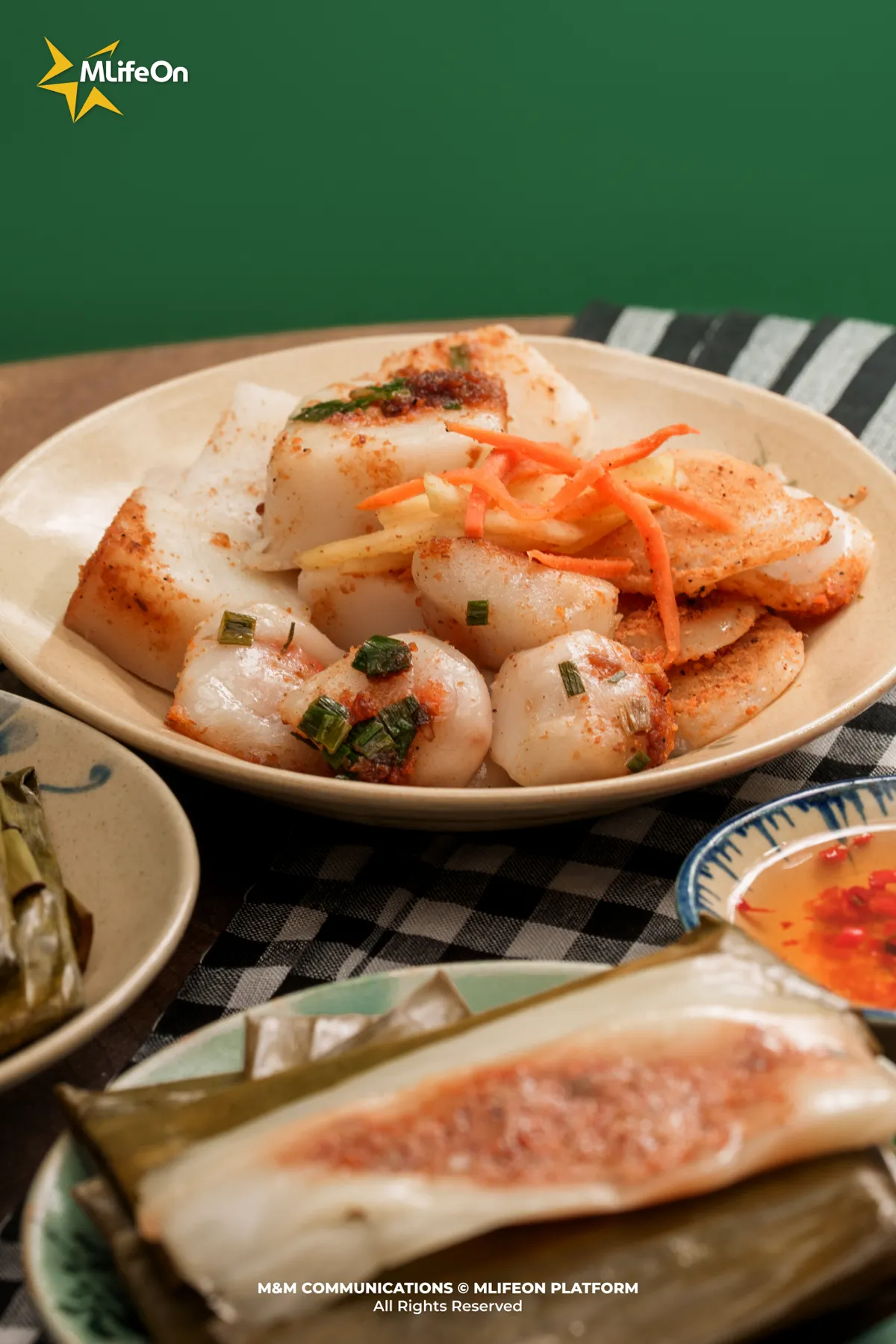
Banh it feels more substantial than the other two cakes. With the first bite comes the soft, chewy texture of the glutinous rice, followed by the savory filling inside. As a result, even one small cake can deliver a surprisingly complete and satisfying flavor.
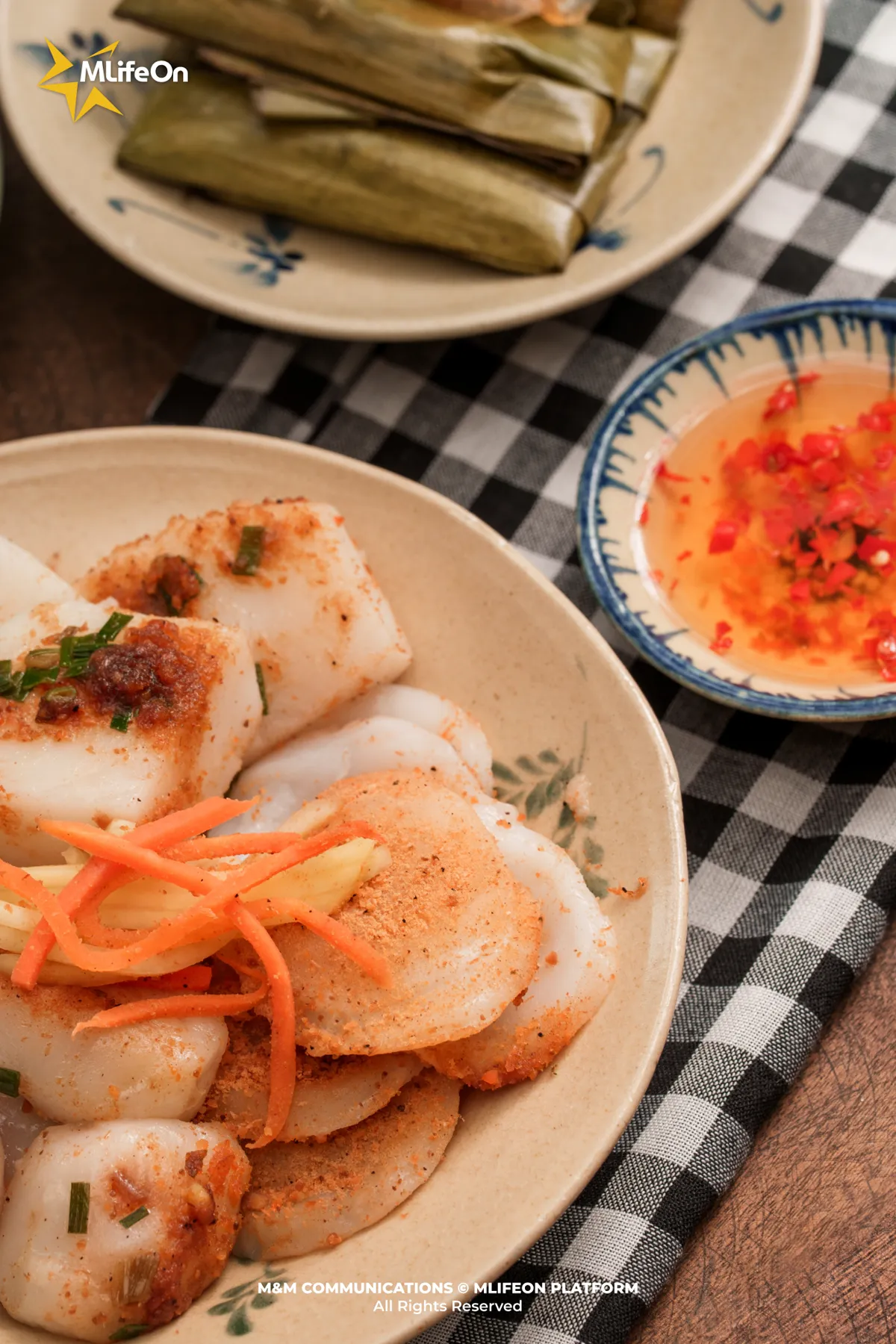
Place all three cakes side by side, and the variety of a traditional Hue cake platter becomes clear. Banh bot loc is translucent and pleasantly chewy, banh nam is thin and soft, while banh it is plump, fragrant, and satisfyingly sticky. They may all be small cakes, yet almost nothing about their shapes or textures is the same.
This variety keeps the experience interesting from beginning to end. After enjoying the chewiness of banh bot loc, diners can move on to the softness of banh nam before finishing with the fragrant, sticky texture of banh it. A little of each is enough to make the entire platter feel wonderfully diverse without requiring an elaborate list of ingredients.
A small bowl of fish sauce - An essential part of the Hue Cake Platter
A traditional Hue cake platter would hardly feel complete without a small bowl of dipping fish sauce served alongside it.
The dipping sauce for these cakes is usually prepared to balance salty, sweet, and spicy flavors. Its intensity may vary depending on the cake and the way it is served, but its purpose remains the same: to bring greater depth to the relatively mild flavor of the flour-based cakes.
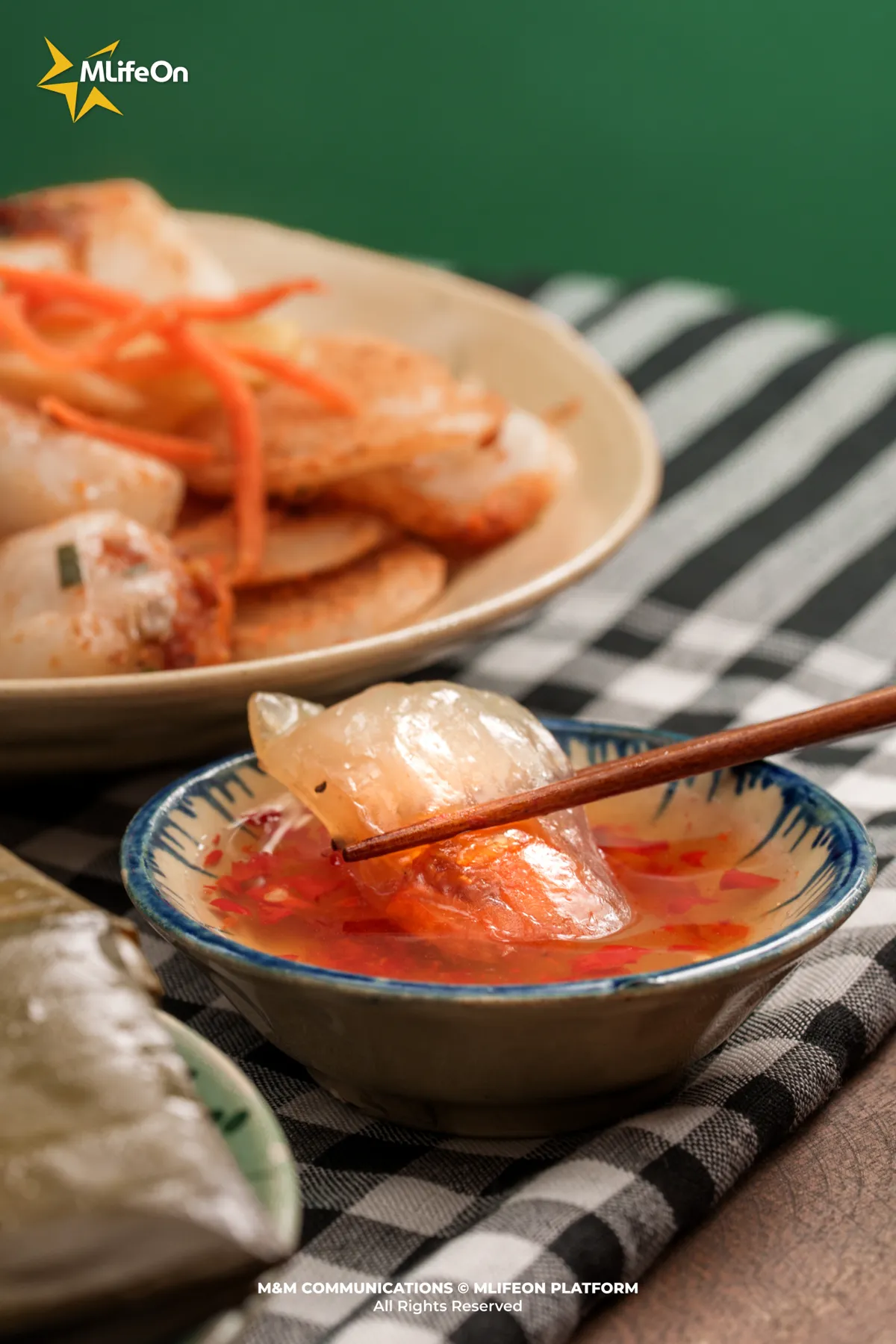
Dip a piece of banh bot loc lightly into the sauce, and the flavor of the braised shrimp immediately becomes more pronounced. With banh nam, only a small amount is needed so that the soft cake retains its delicate taste. The fragrant, chewy banh it also becomes more balanced as the dipping sauce complements its savory filling.
Although the bowl of fish sauce may be small, it is by no means an afterthought. It connects the different flavors on the platter, allowing each cake to retain its individual character while bringing everything together as a complete meal.
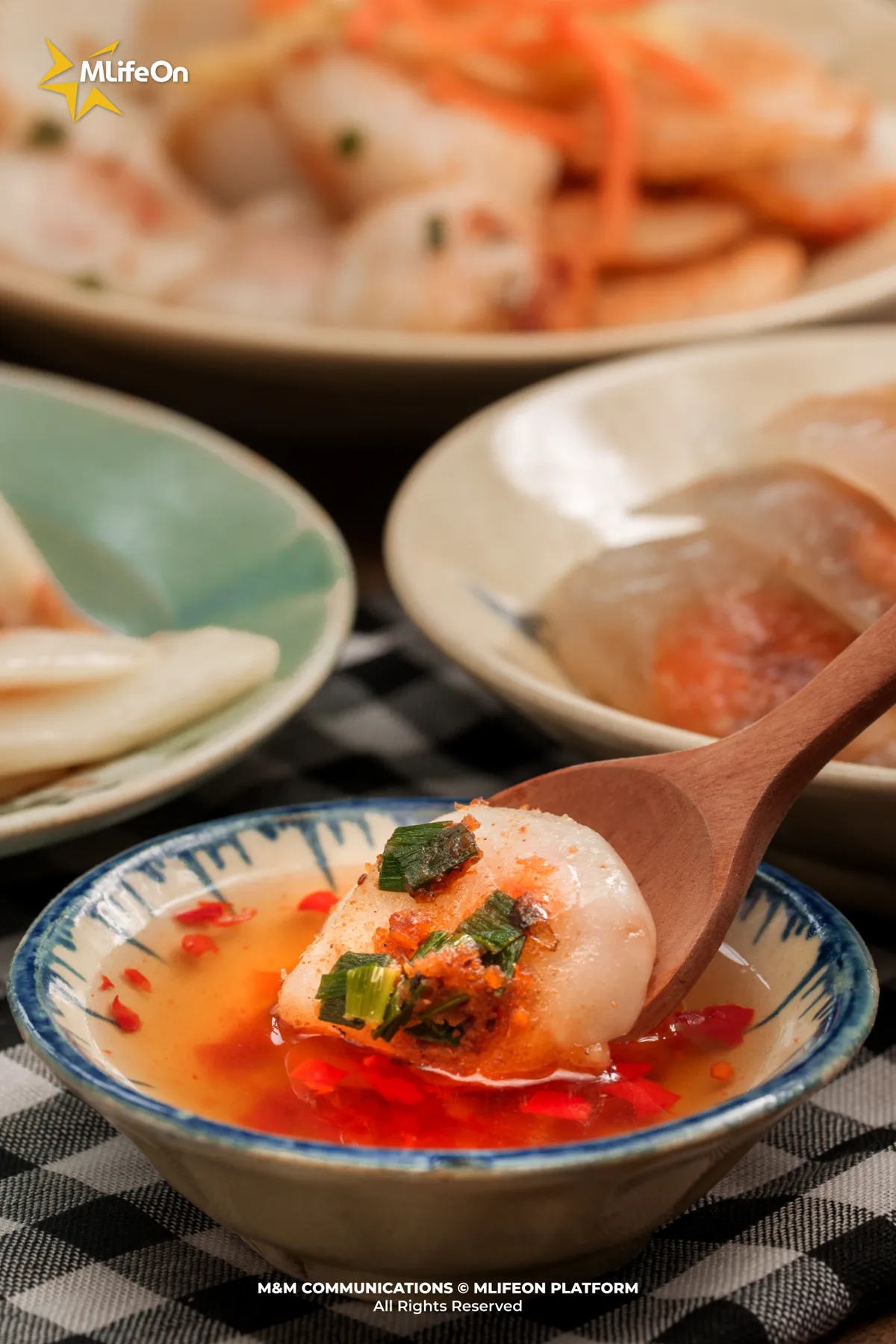
And sometimes, enjoying Hue cakes requires nothing more than that: a platter with just enough of each variety, a good bowl of dipping fish sauce, a little chili for those who enjoy some heat, and enough time to slowly savor each bite.
Understanding the refinement of Hue cuisine through a simple cake platter
Perhaps the most interesting thing about a traditional Hue cake platter lies in the ingredients from which it is made. There is nothing particularly unusual: rice, glutinous rice, tapioca starch, shrimp, pork, scallions, banana leaves, and fish sauce.
Yet simply by changing the type of flour, the way the batter is mixed, how the filling is prepared, or how each cake is steamed, the people of Hue have created remarkably different delicacies. Banh bot loc requires a wrapper that is both translucent and chewy. Banh nam needs to be exceptionally thin and soft. Banh it must retain the characteristic chewiness of glutinous rice without feeling too heavy. Even the fillings are adjusted to complement the texture of each cake.
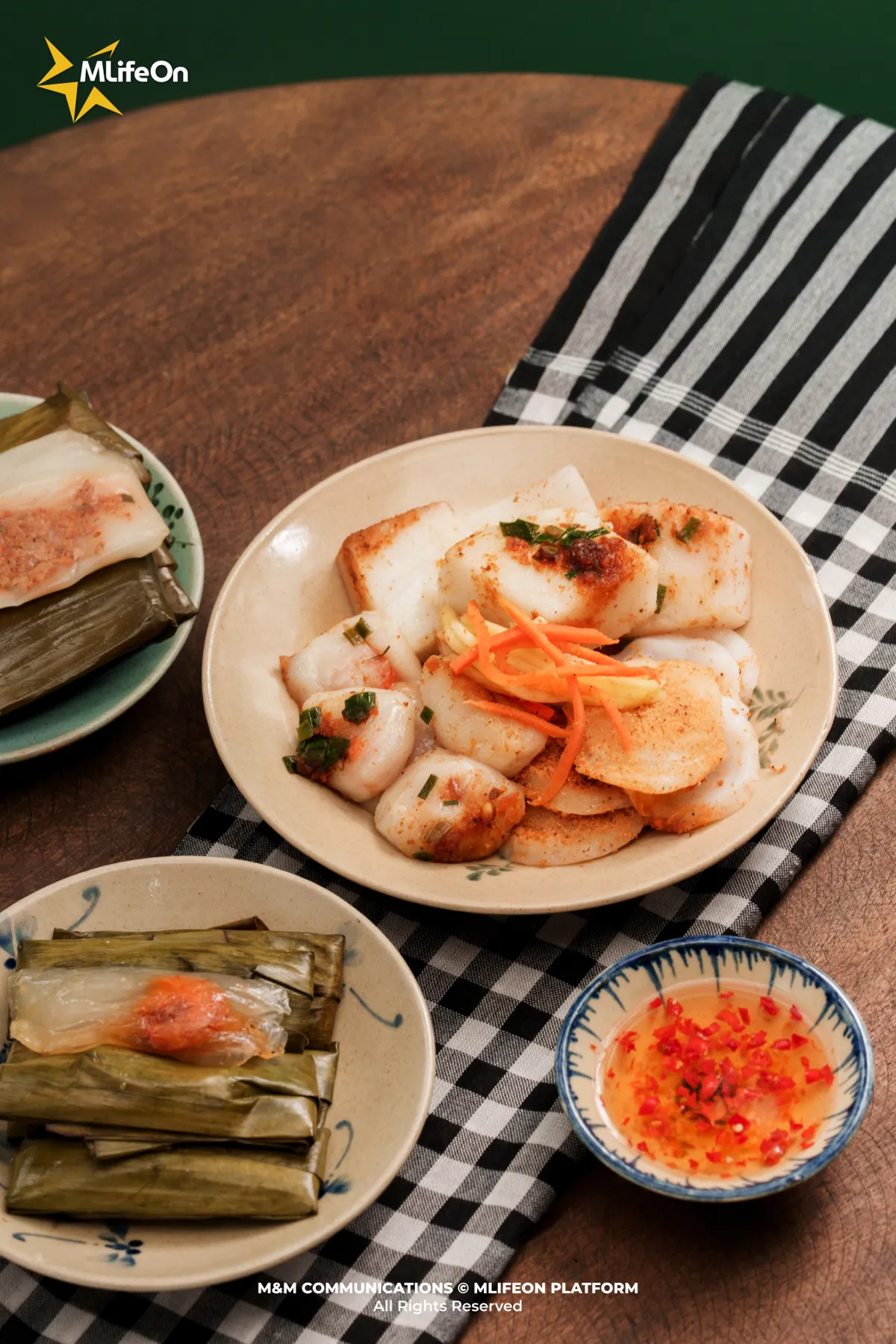
Sophistication, therefore, does not necessarily come from using a long list of elaborate ingredients. Sometimes it lies in the care given to something that appears very simple: making the batter just a little thinner, adding just the right amount of filling, or shaping each cake small enough that diners still want to try another.
That is also part of the charm of a traditional Hue cake platter. No single cake tries to overpower the others. Each brings its own flavor and texture, and together they create a small platter that feels both visually appealing and wonderfully complete.
Conclusion
Banh bot loc, banh nam, and banh it all begin with familiar, everyday ingredients, yet in skilled hands, each develops a character and flavor of its own. Arranged together on a small platter, every cake adds another dimension to the experience, allowing diners to discover more of what makes the cuisine of Vietnam’s former imperial capital so distinctive. And sometimes, understanding the flavor and refinement of Hue begins with something as simple as these humble traditional cakes.