BA TRANG CAKE – THE SOUL OF THE DUANWU FESTIVAL IN CHINESE KITCHENS
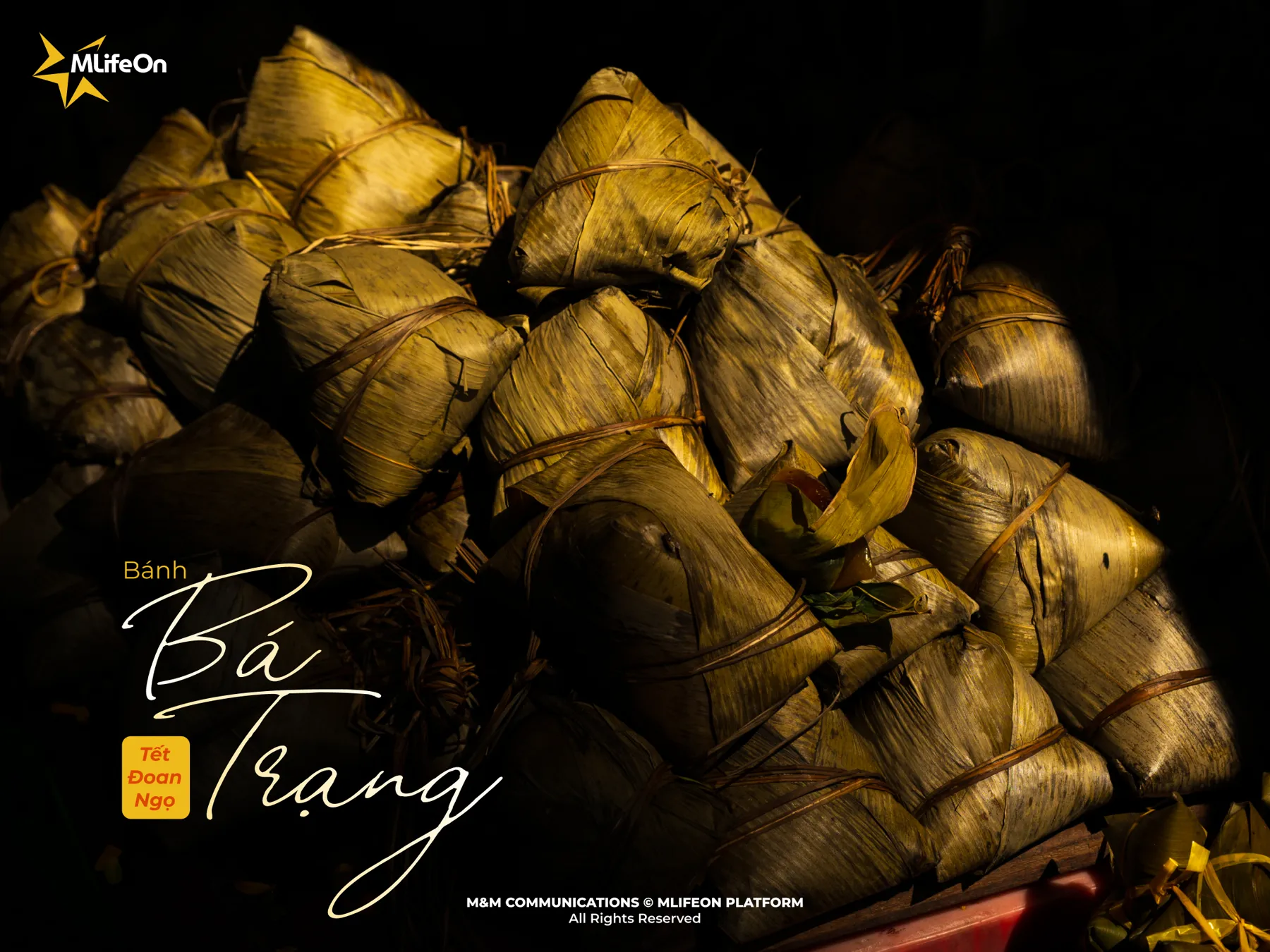
With its fragrant, chewy glutinous rice and generous filling of pork, salted egg yolk, Chinese sausage, mushrooms, and more, Ba Trang Cake is a familiar food during the Double Fifth Festival among the Chinese community. More than a small parcel filled with layers of flavor, this traditional cake also tells a story of the festival, family kitchens, and a cultural tradition preserved across generations.
Ba Trang Cake - A familiar taste of the double fifth festival
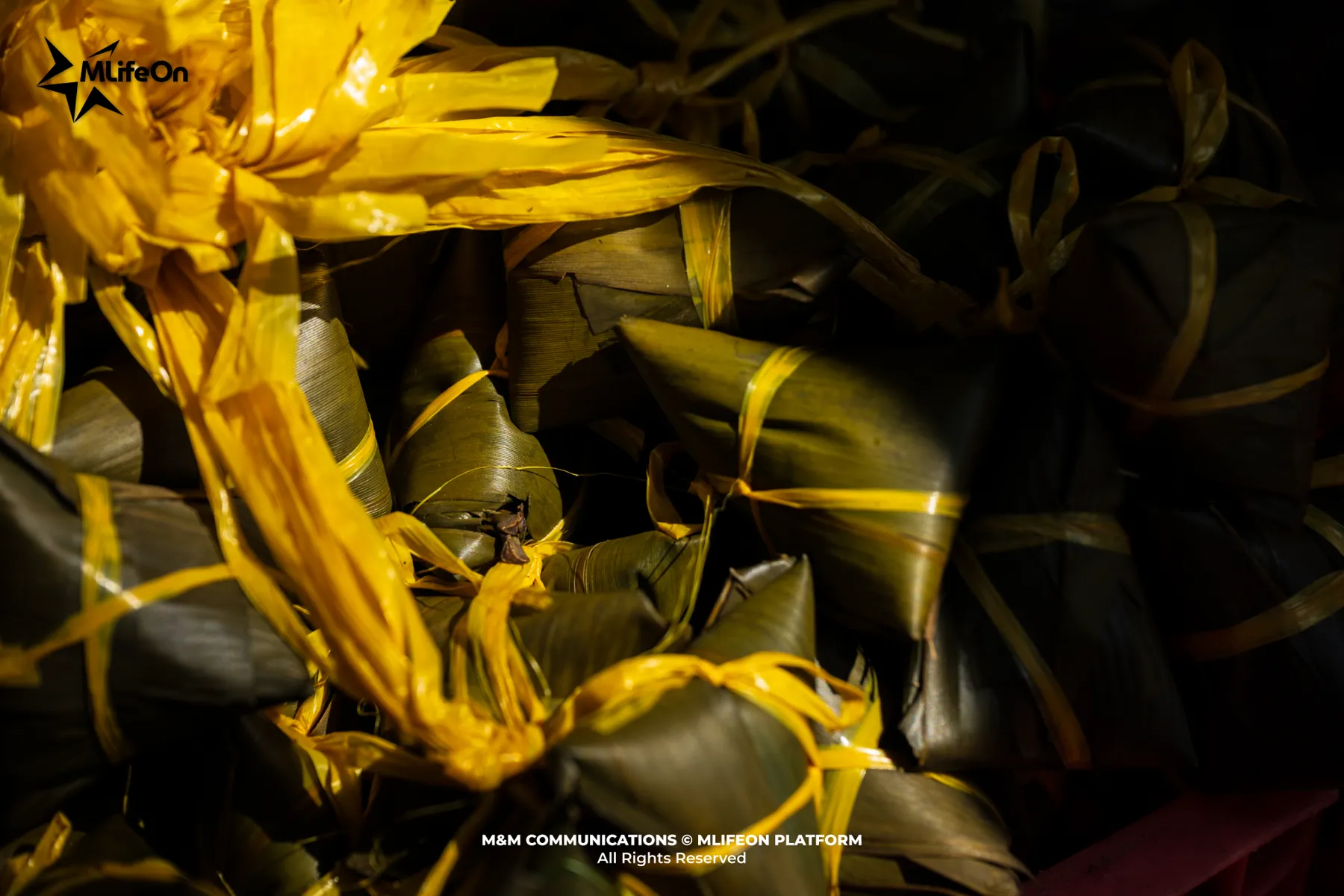
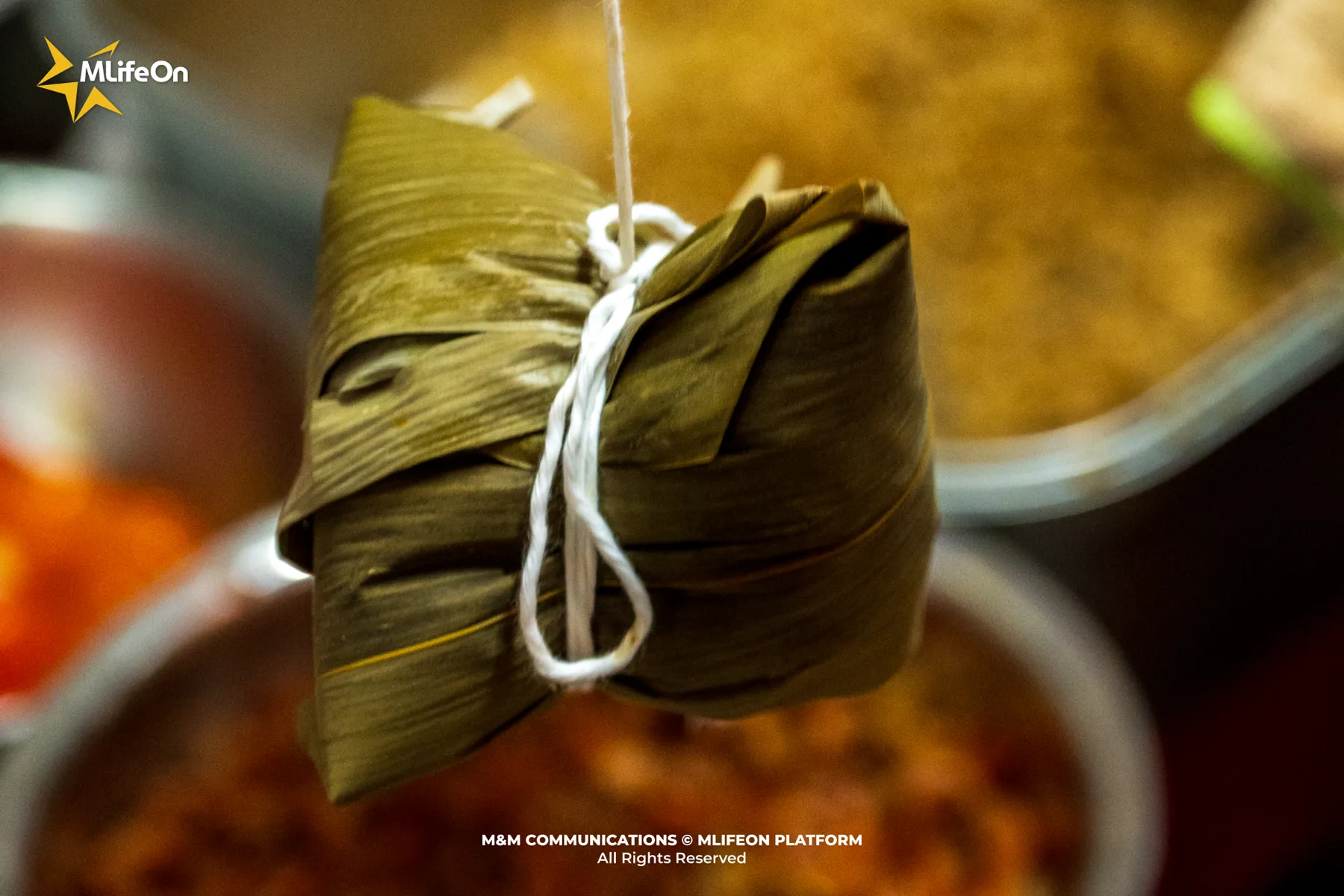
Ba Trang Cake, also commonly known in Vietnam as banh u Ba Trang, is a traditional savory glutinous rice cake closely associated with Chinese culinary culture. There are many variations among different communities and families, but the cake is typically wrapped in leaves, folded into its distinctive angular shape, and cooked for several hours.
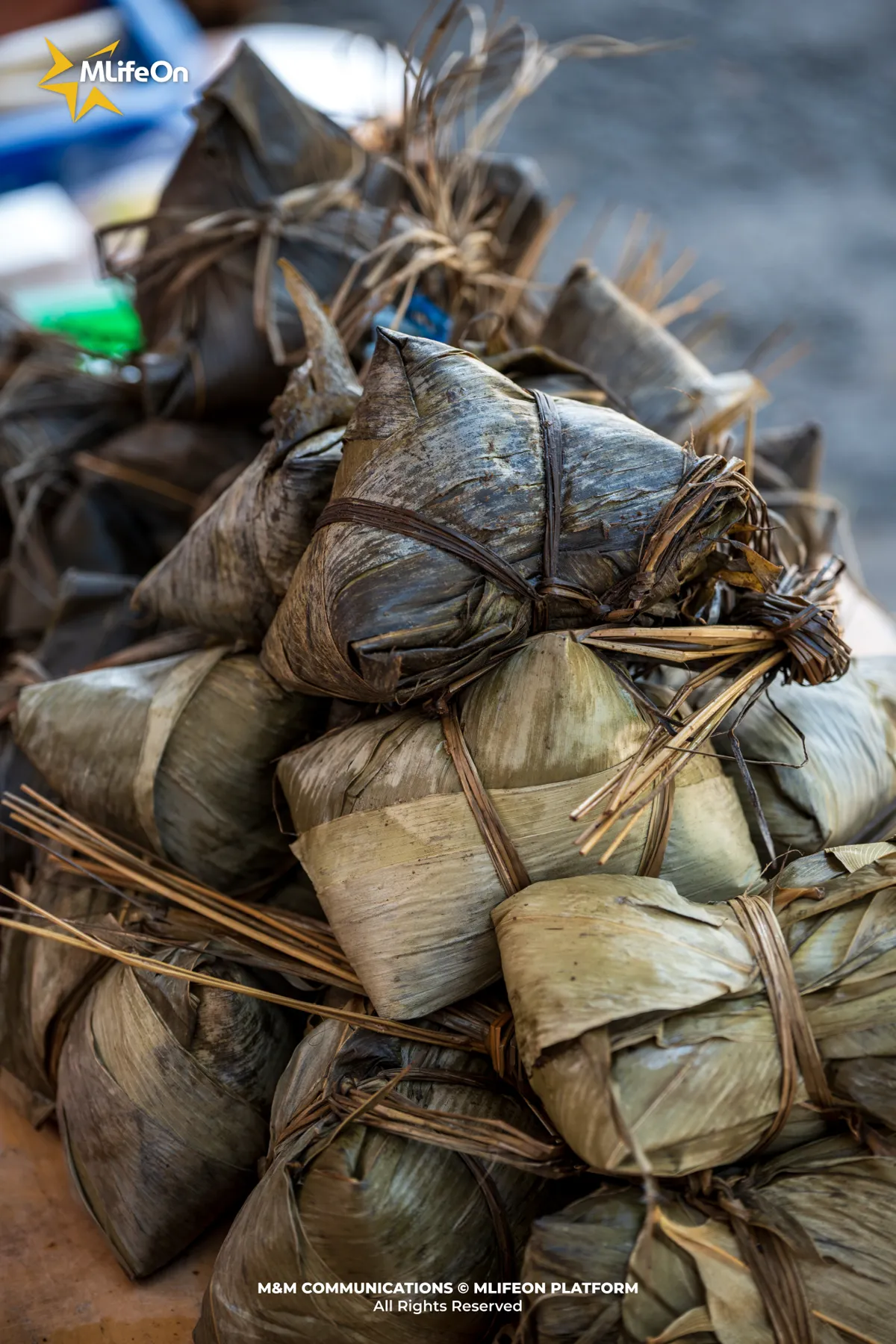
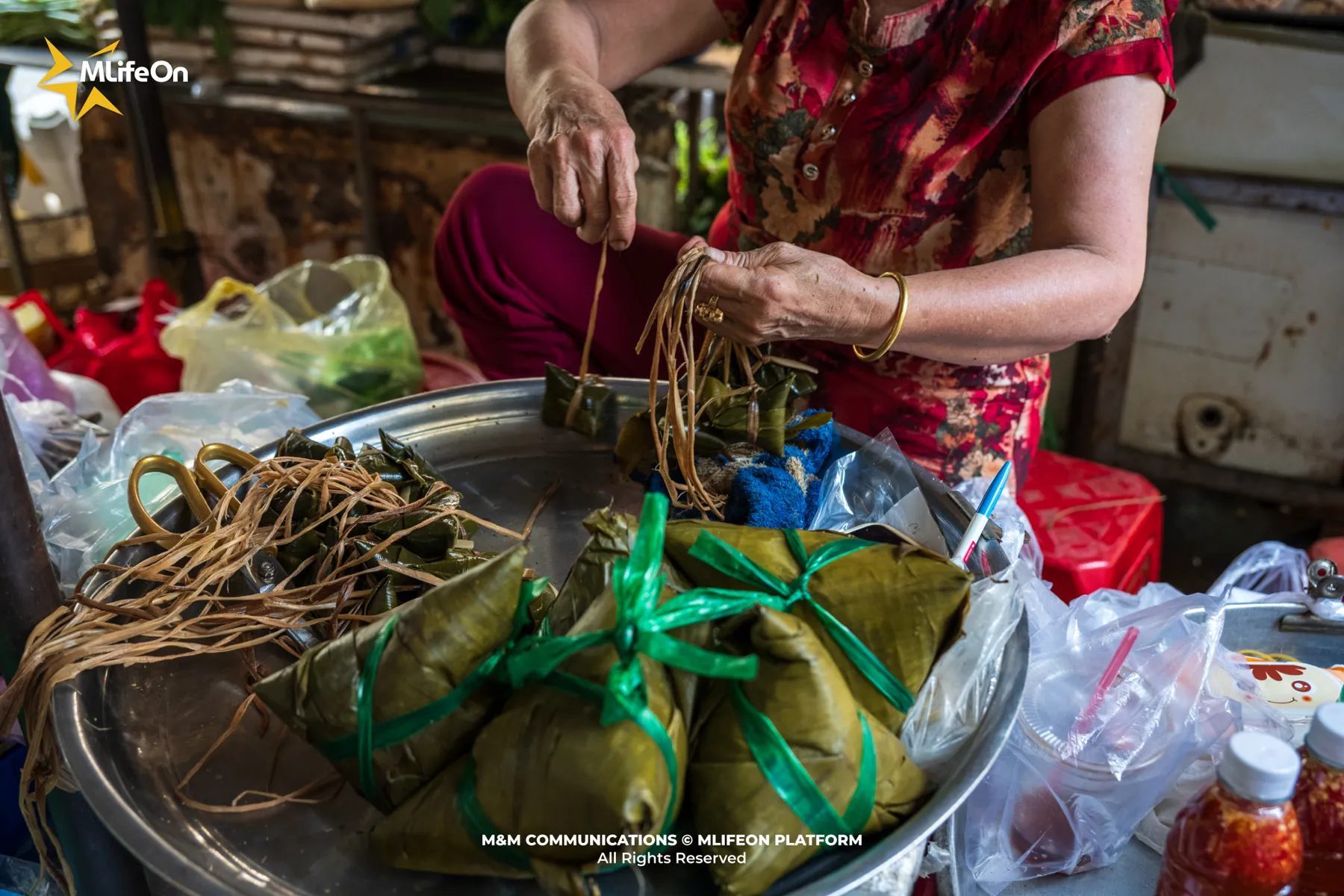
Ba Trang Cake can be found year-round at Chinese bakeries and food shops, especially in Cho Lon, Ho Chi Minh City. However, it becomes much more widely available as the Double Fifth Festival approaches. Families buy the cakes to enjoy together, place them on ancestral altars as offerings, or give them as gifts to relatives.
The custom of eating leaf-wrapped glutinous rice cakes on the fifth day of the fifth lunar month in Chinese culture is commonly associated with the story of Qu Yuan. According to a widely told legend, after he drowned himself in the Miluo River, grieving local people threw rice into the water. Over time, this story became intertwined with the traditions of the Double Fifth Festival, and leaf-wrapped glutinous rice cakes became one of the foods most closely associated with the occasion.
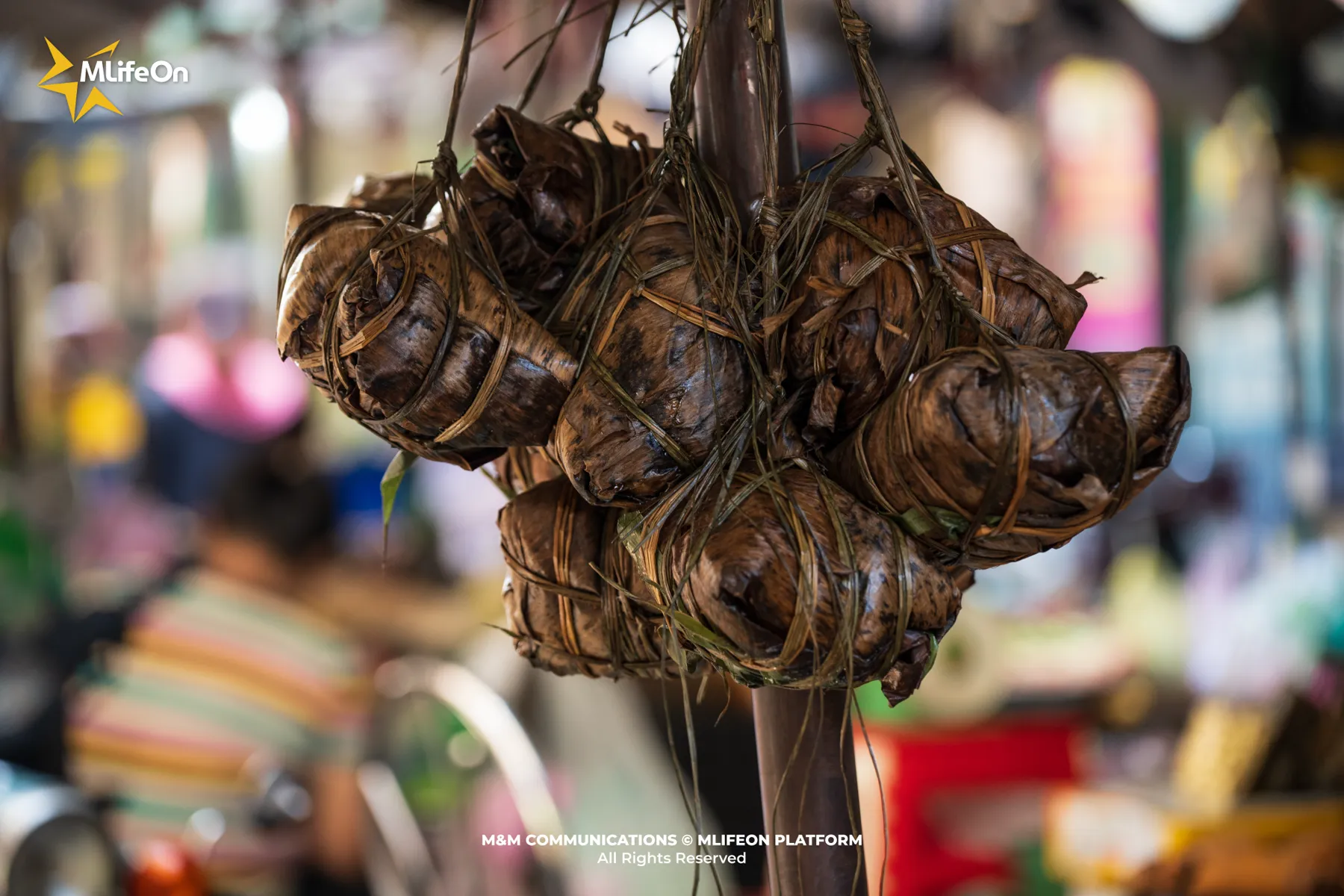
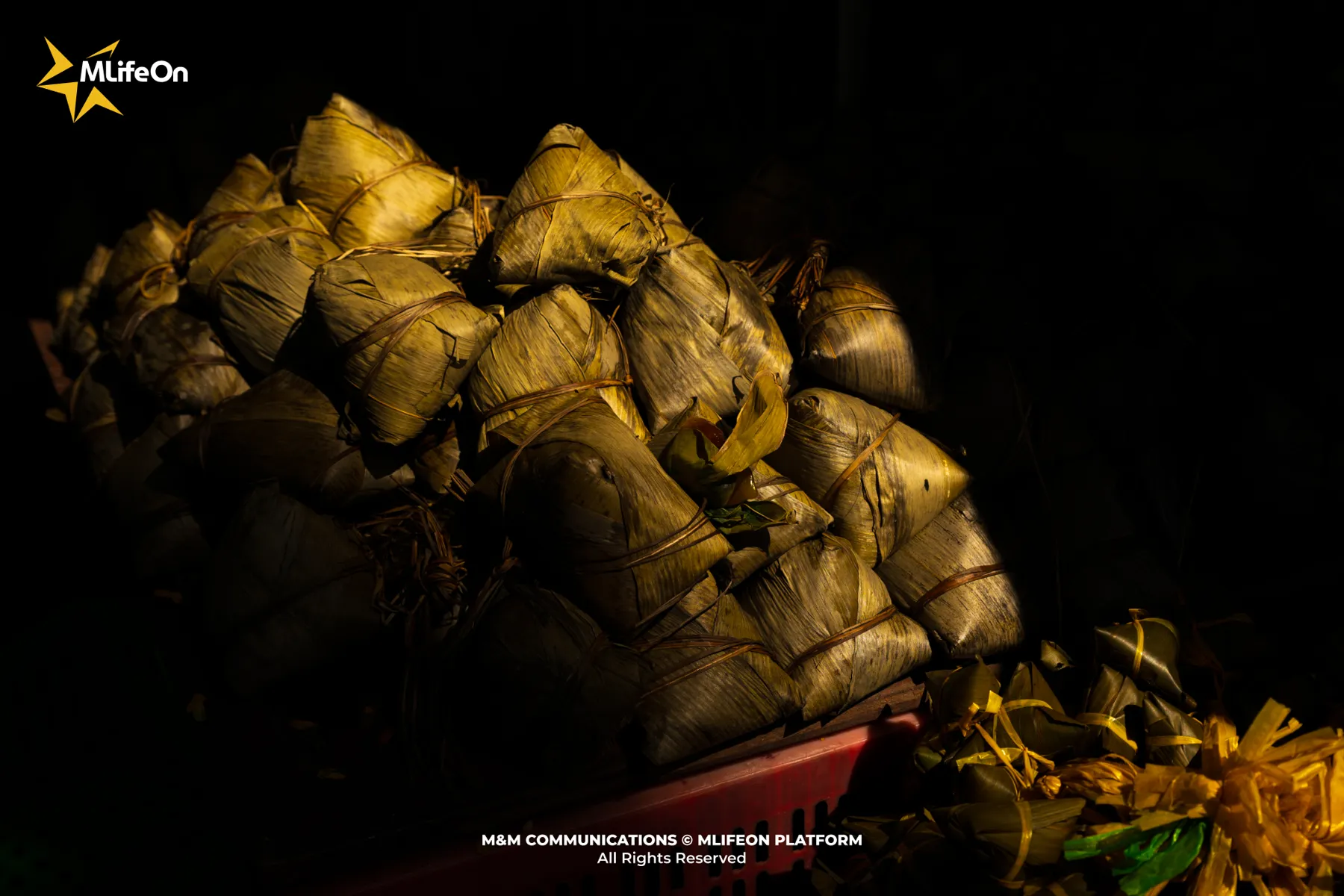
As Chinese communities migrated and settled in different regions, the cake gradually evolved in both its ingredients and preparation. In Vietnam, Ba Trang Cake has become a familiar part of life for many Chinese-Vietnamese families, particularly when the fifth lunar month arrives each year.
A small Ba Trang Cake filled with layers of flavor
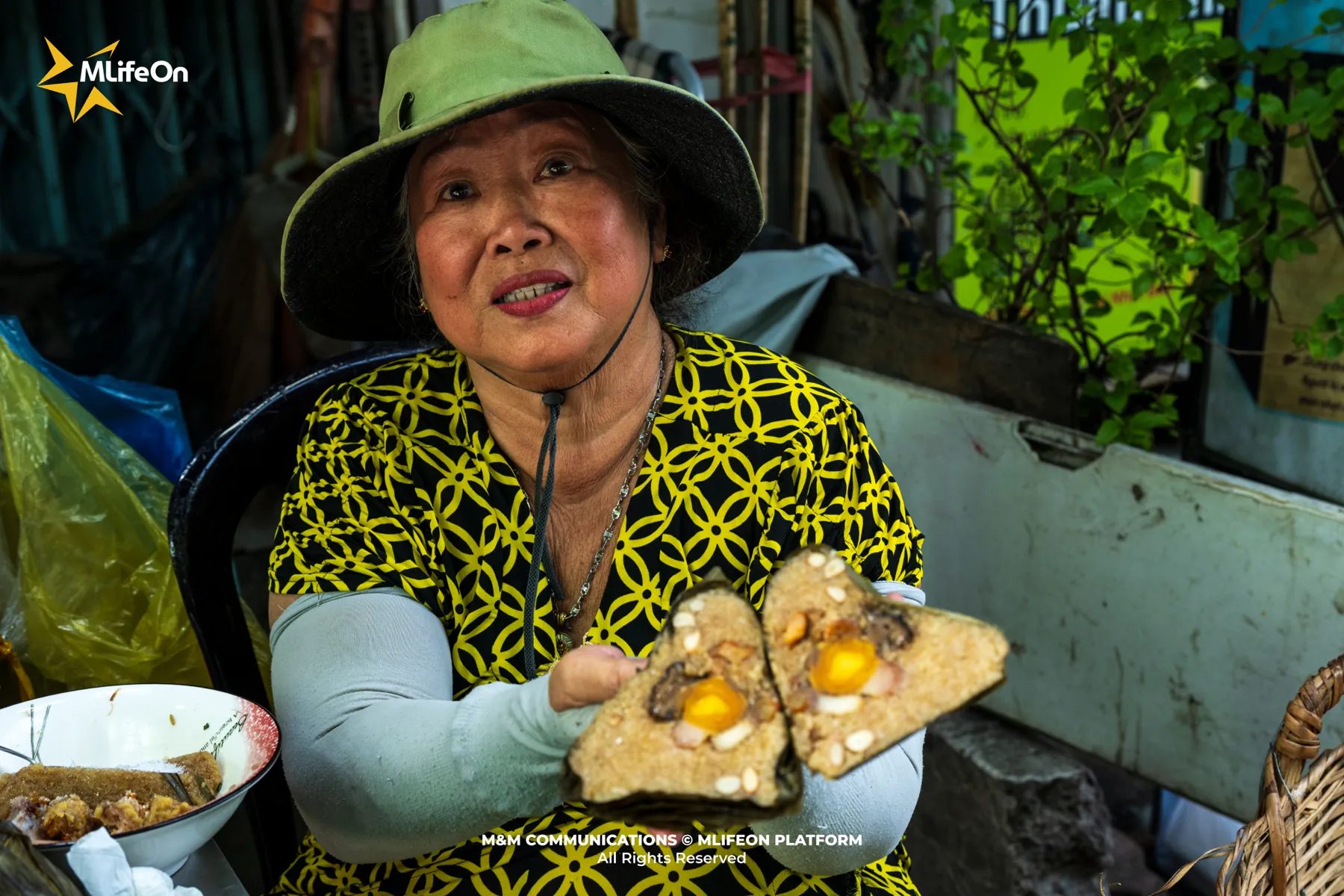
From the outside, wrapped neatly in leaves, Ba Trang Cake may look rather simple. But once the leaves are unwrapped and the cake is cut open, its generous filling reveals what makes this traditional dish so appealing.
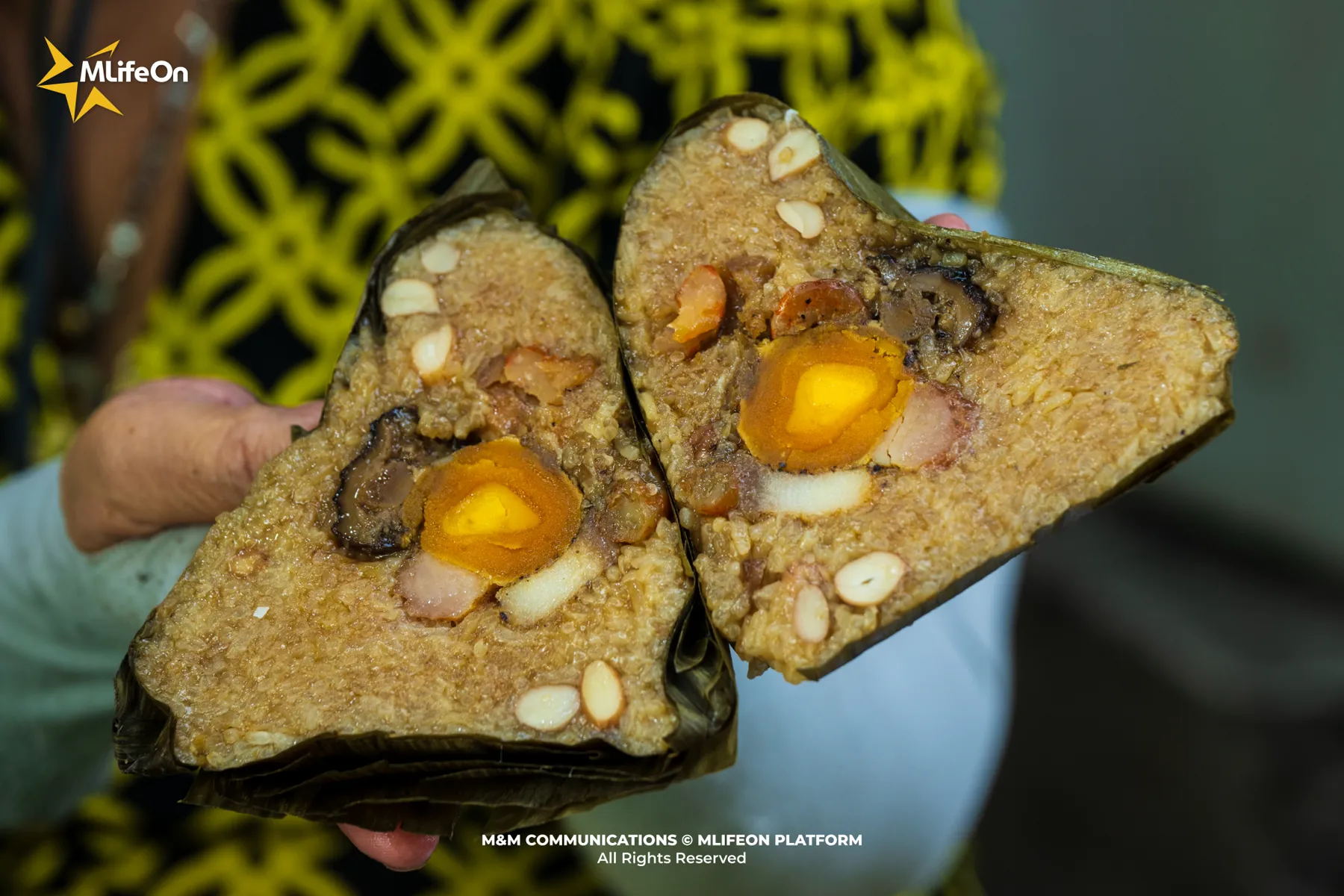
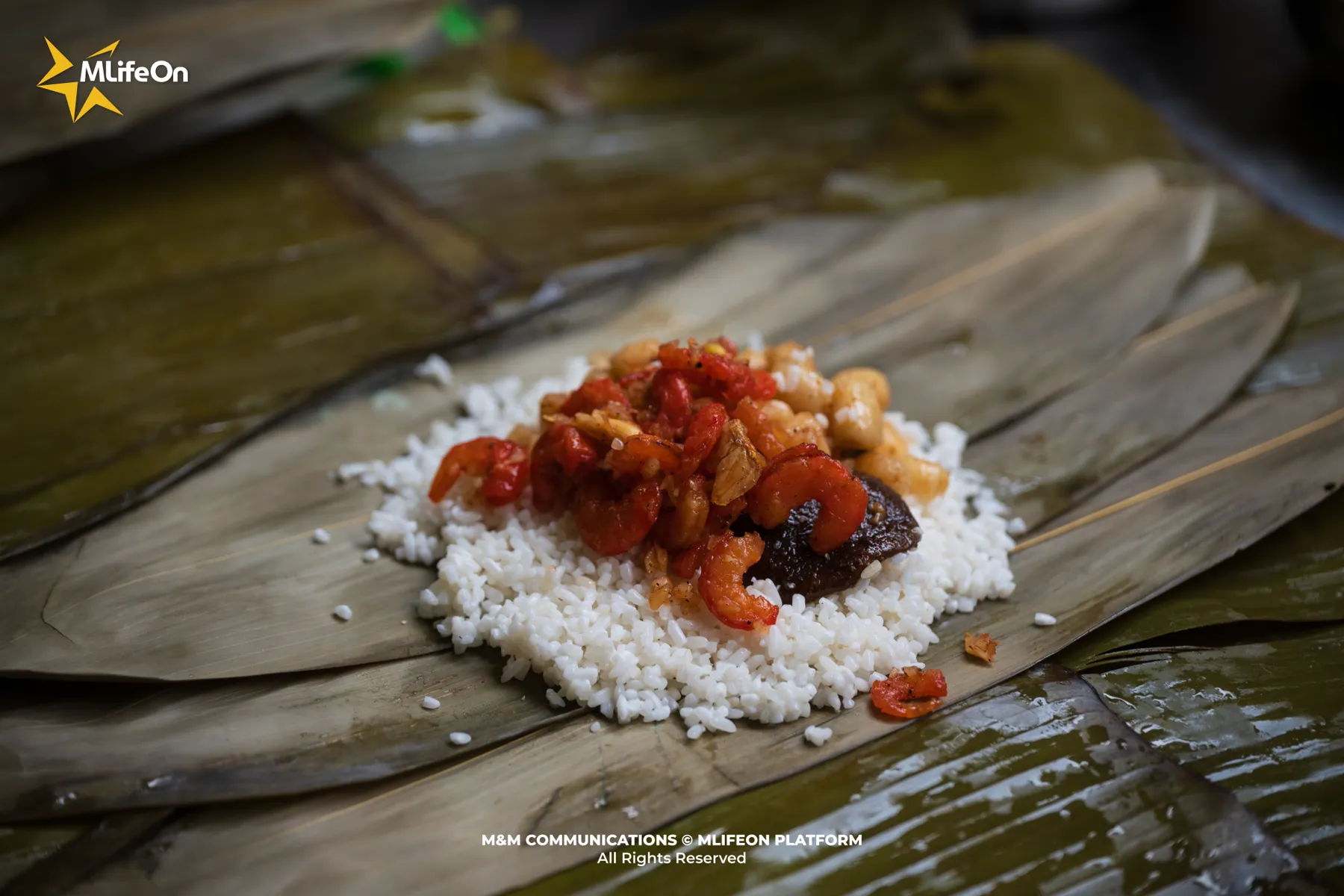
The main ingredient is glutinous rice. After hours of cooking, the grains become soft and chewy while gradually absorbing the flavors of the filling. Depending on the recipe, the cake may contain pork, salted egg yolk, Chinese sausage, dried shrimp, shiitake mushrooms, lotus seeds, preserved radish, or various nuts and seeds.
This combination creates multiple layers of flavor in every bite. There is the soft, fragrant chewiness of glutinous rice, the richness of pork, the distinctive savory creaminess of salted egg yolk, the aroma of mushrooms and Chinese sausage, and the depth of flavor from ingredients seasoned before being wrapped. Each contributes something different, yet together they create the unmistakable taste of Ba Trang Cake.
Interestingly, no two Ba Trang Cakes are necessarily the same. One family may prefer a filling with more pork, while another may add lotus seeds, mushrooms, or other ingredients according to a recipe that has been passed down for years. In this way, each cake can also carry the distinctive taste of the family that makes it.
That is why Ba Trang Cake does not have just one fixed flavor. The name may be the same, but each time the leaves are opened, diners may discover a slightly different combination inside.
The elaborate preparation hidden beneath a simple leaf wrapper
A Ba Trang Cake may take only a few minutes to eat, but preparing one requires considerable time and effort.
The wrapping leaves must first be cleaned and treated until they are soft enough to fold. The glutinous rice is washed, soaked, and prepared before wrapping. The filling ingredients cannot simply be placed together without preparation either. The pork needs to be marinated, the mushrooms prepared, and the salted egg yolks handled separately. Chinese sausage, dried shrimp, and other ingredients must also be prepared carefully so that they retain their flavor throughout the long cooking process.
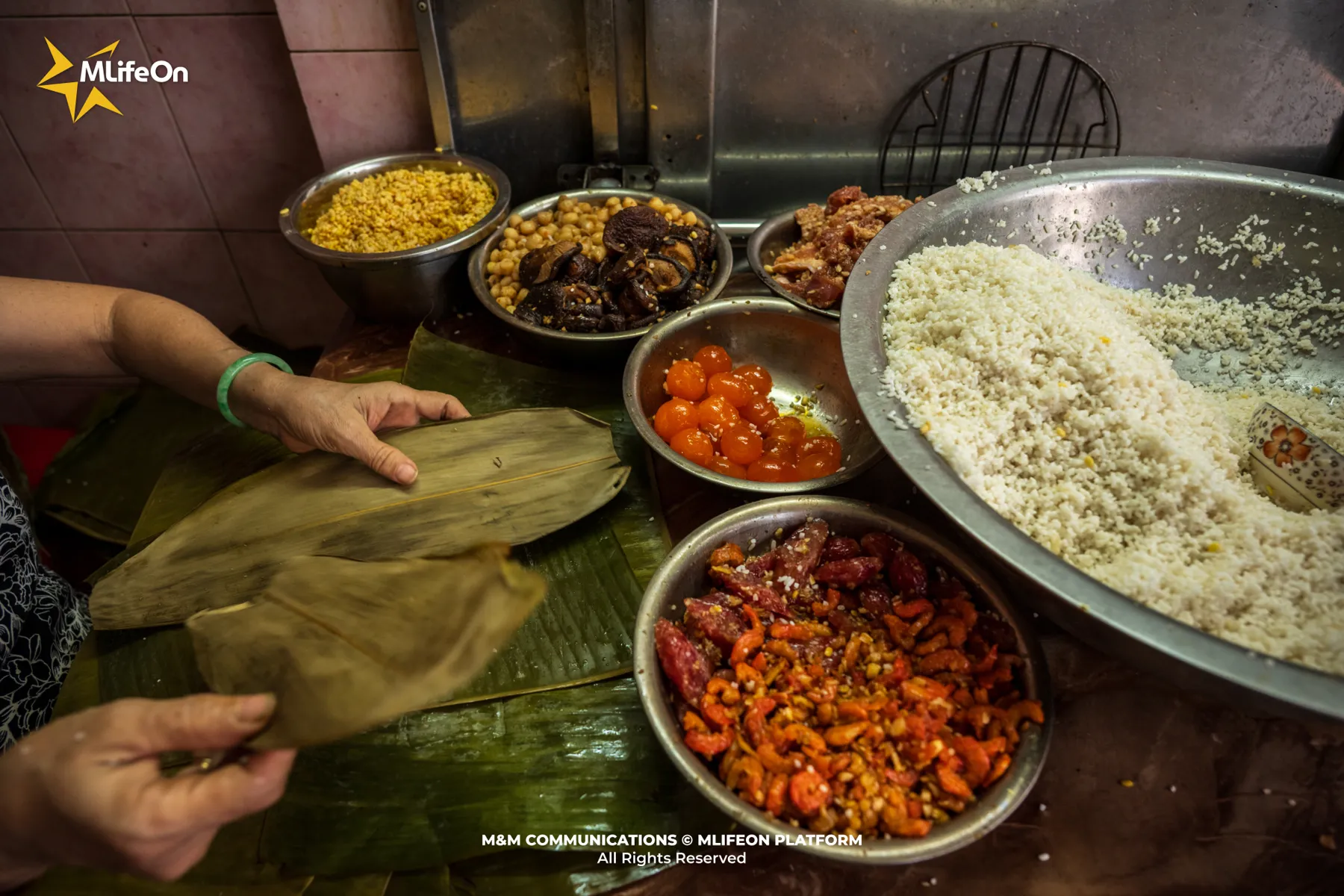
Wrapping the cake requires an experienced pair of hands. The leaves must be folded so that they securely hold the rice and filling. The ingredients are layered inside, covered with more glutinous rice, then wrapped tightly and tied with string. The parcel needs to be secure enough not to fall apart during cooking while still maintaining its distinctive shape.
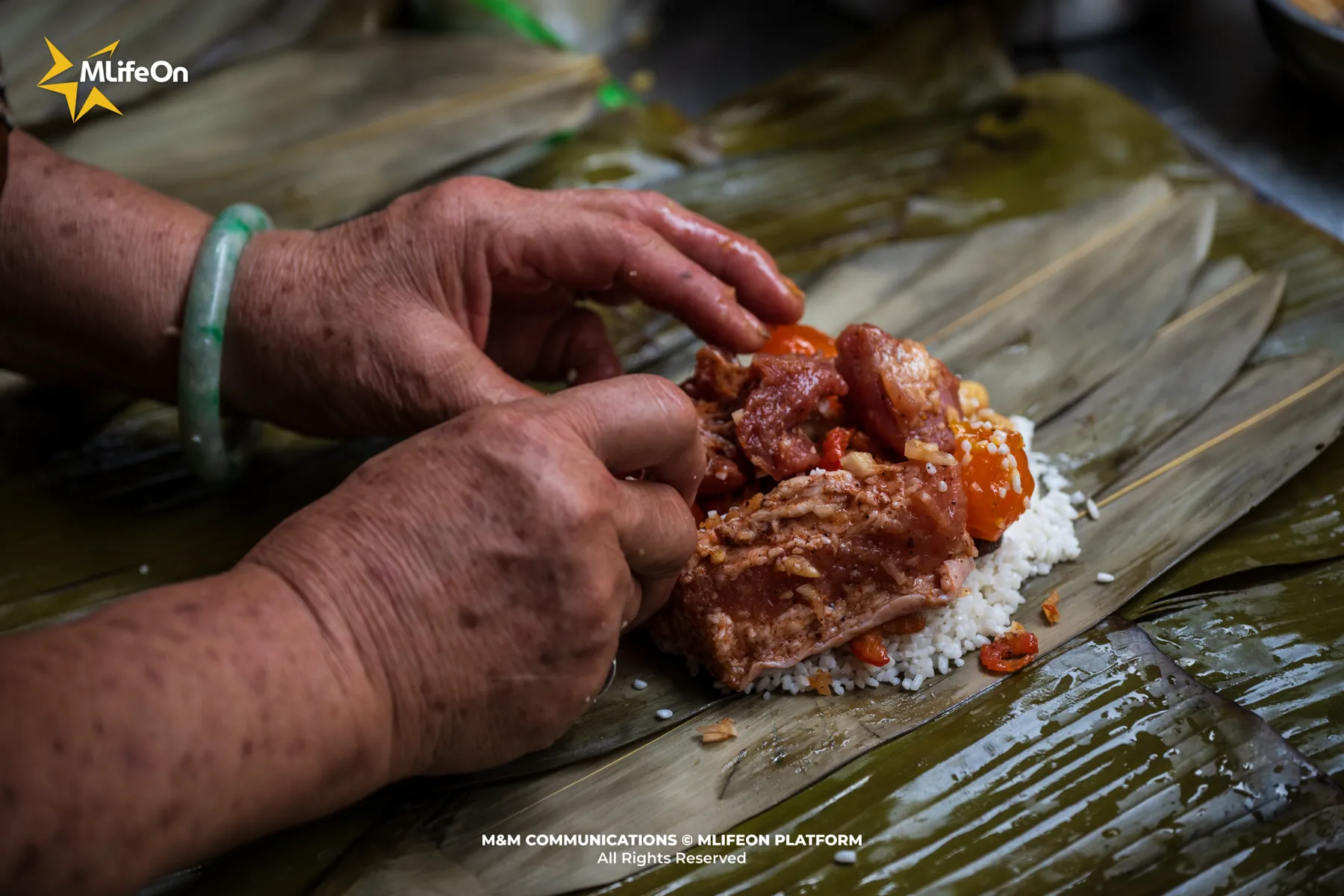
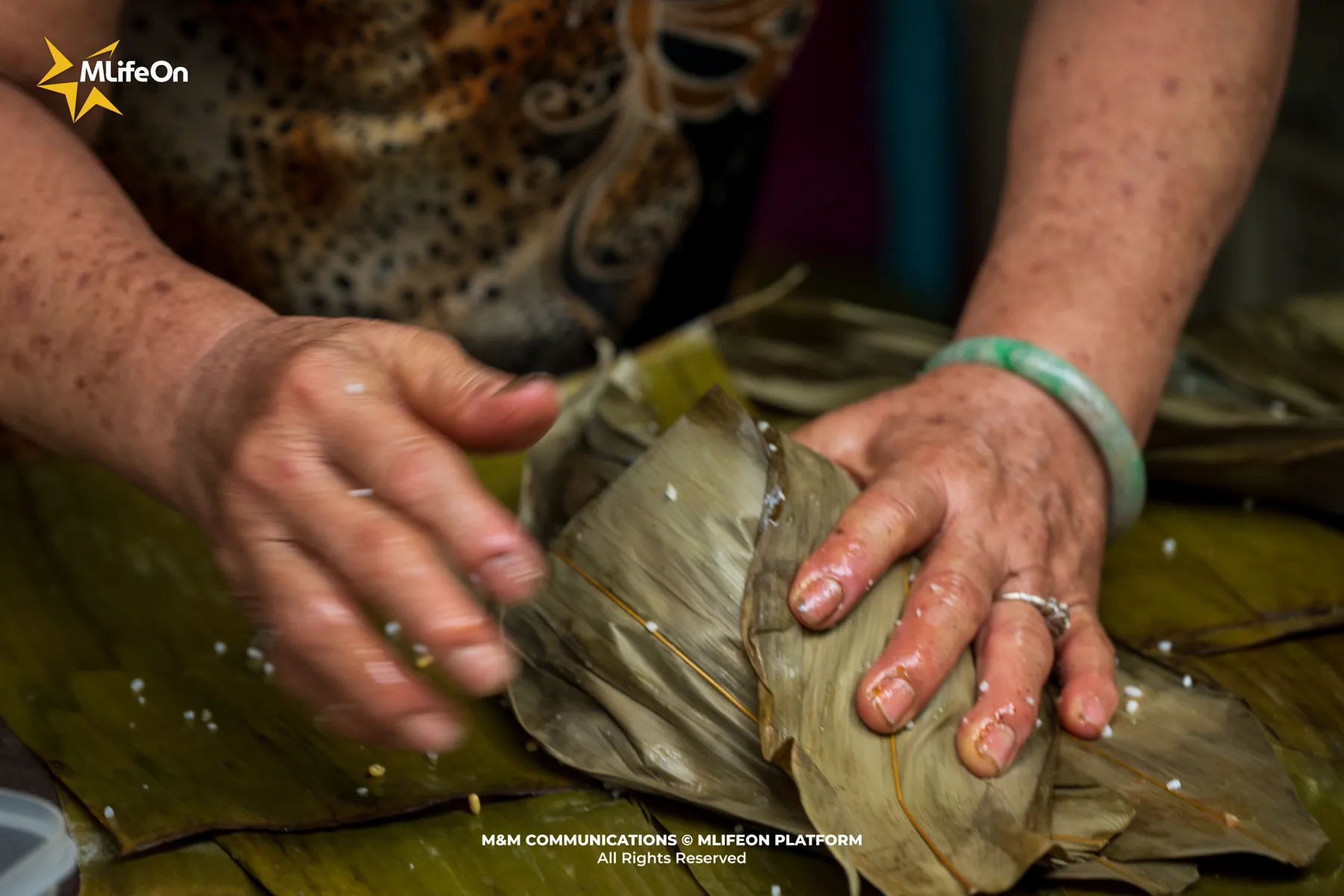
Then comes the long wait for the cakes to cook. Heat and moisture slowly soften the glutinous rice while allowing the flavors of the pork, mushrooms, salted egg yolk, and other ingredients to seep into every grain.
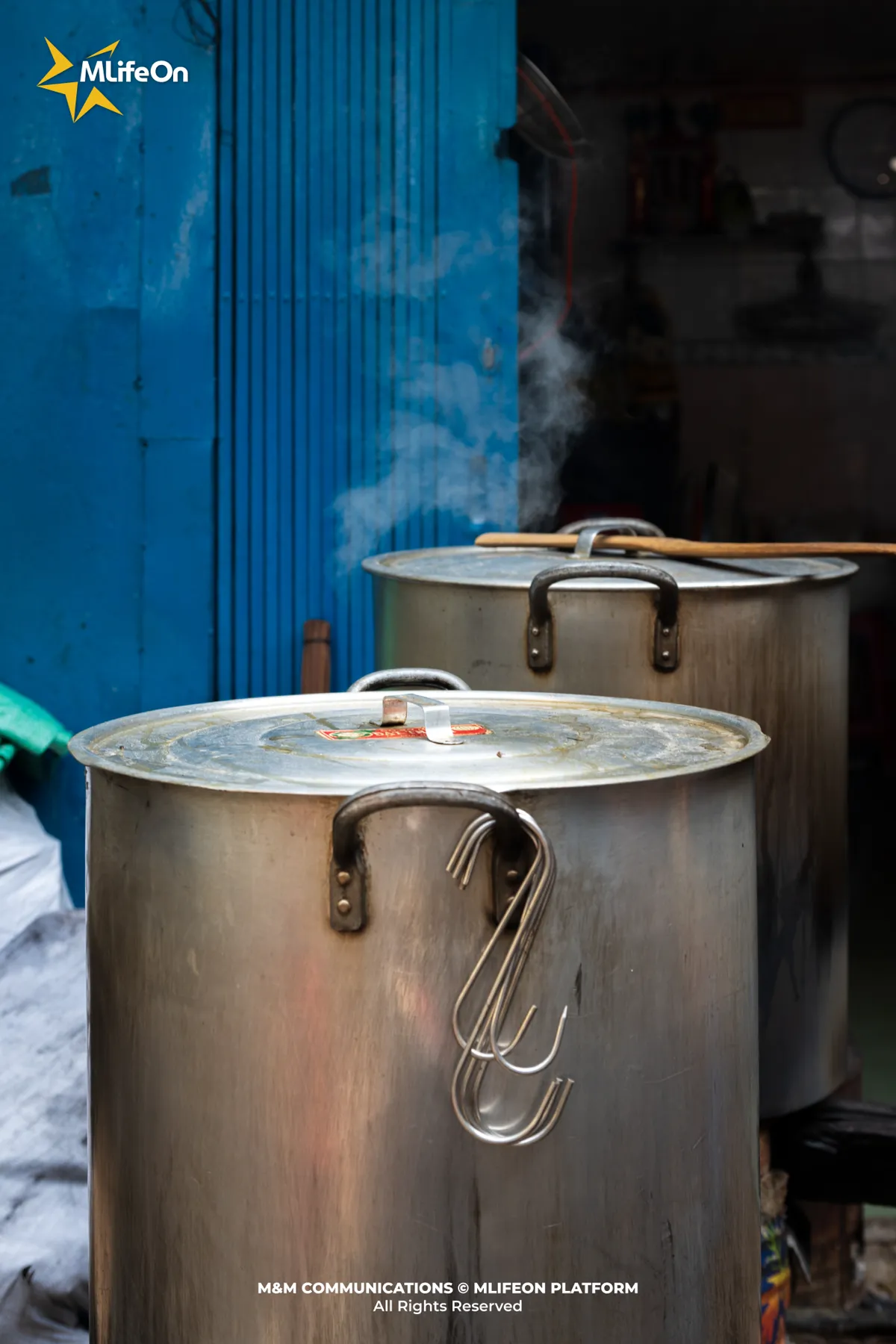
For this reason, what makes Ba Trang Cake delicious is not simply the abundance of its filling. Its appeal also comes from the careful preparation of each ingredient and the skill required to bring so many different flavors together in a single cake while maintaining a harmonious balance.
Preserving a traditional cake, preserving a piece of the past
Life today is very different from what it once was. Not every family has enough time to prepare each ingredient and spend hours wrapping Ba Trang Cakes at home. Many people now choose to buy them from familiar shops, while Chinese bakeries and traditional cake makers become especially busy as the Double Fifth Festival approaches.
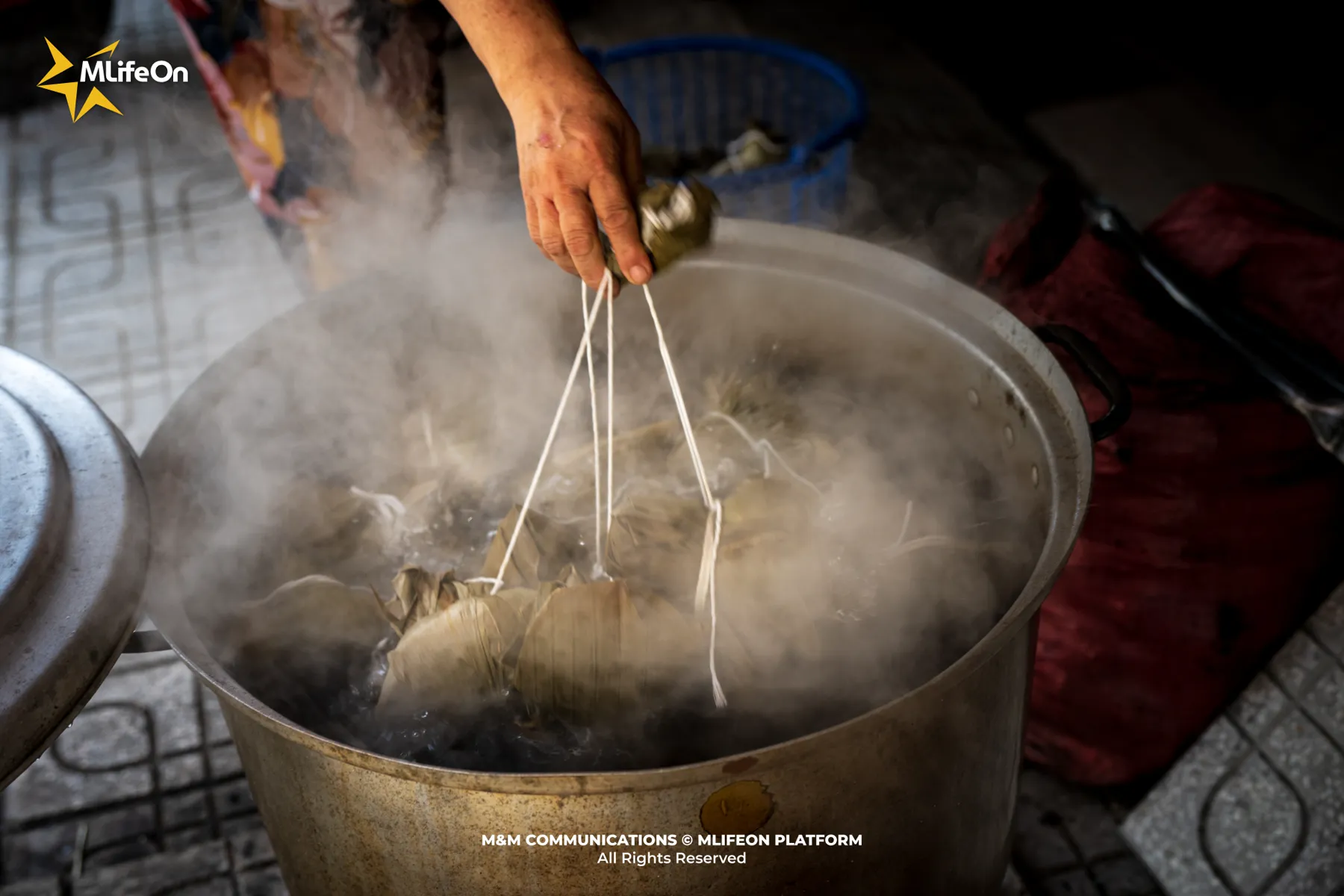
The way families prepare for the festival may have changed, but Ba Trang Cake remains. People still buy the cakes to place on ancestral altars, give to parents and relatives, or simply unwrap and enjoy together as a family on the fifth day of the fifth lunar month. The cake continues to be part of the celebration not only because it tastes good, but also because people still remember when it should be eaten and why it belongs to this particular festival.
This is also how culture can be preserved in the most natural way. It does not always require grand gestures. Sometimes, it is simply about making sure that the food grandparents once enjoyed during the festival still appears in the family home today.
In Cho Lon and in many Chinese-Vietnamese households, Ba Trang Cakes continue to be wrapped, purchased, shared, and given as gifts every Double Fifth Festival. With each passing year, this small traditional cake carries a little piece of the past into modern life.
Conclusion
Ba Trang Cake is loved for its fragrant, chewy glutinous rice and generous filling, but behind those flavors lies a deeper story of the Double Fifth Festival and Chinese family traditions. Despite the many changes brought by time, the cake continues to appear on ancestral altars, in family kitchens, and as a gift shared with loved ones whenever the fifth lunar month returns. As long as its familiar flavor continues to be remembered, a part of this traditional custom will continue to live on in the present day.