
PHAM PHU THU BROOM ALLEY - AN OLD CRAFT STILL PRESERVED IN THE HEART OF SAIGON
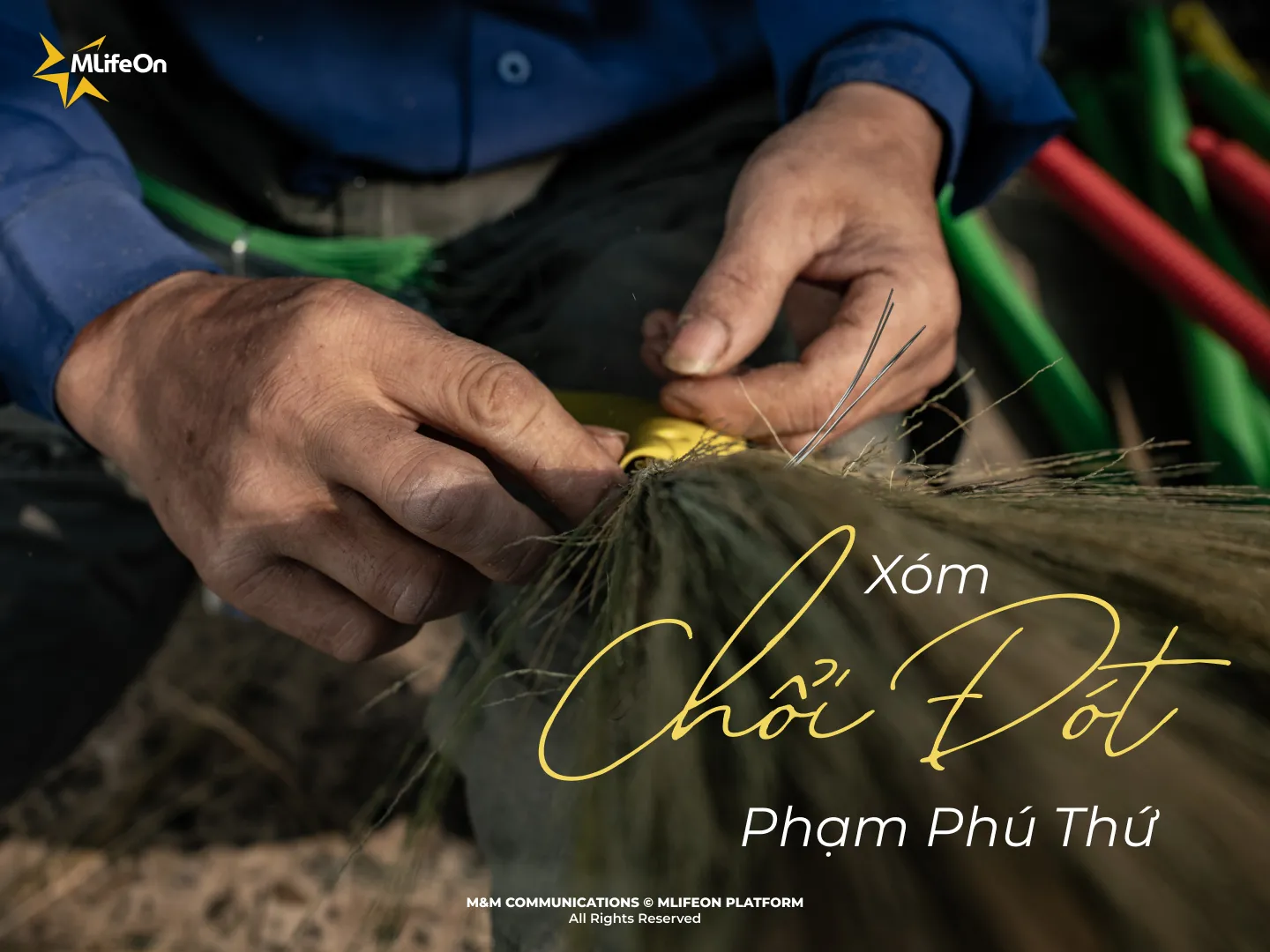
Pham Phu Thu Broom Alley was once one of the best-known craft neighborhoods in District 6, Saigon. As you move deeper into the alley, you are met by the golden color of dried grass, bundles of raw material stacked against the walls, brooms hanging in front of porches, and a very distinct earthy scent in the air.
When people from central Vietnam brought the dot broom trade to Saigon
The broom-making neighborhood in District 6 did not appear by chance. It began with migrants from Central Vietnam, mainly from Quang Ngai, who came to Saigon to build a life in the early 1960s. Bringing with them the craft of making dot broom, they gradually settled around Binh Tien Market and along Pham Phu Thu and Pham Van Chi streets. As a result, what began with a few struggling families trying to make a living grew into a craft neighborhood of its own.
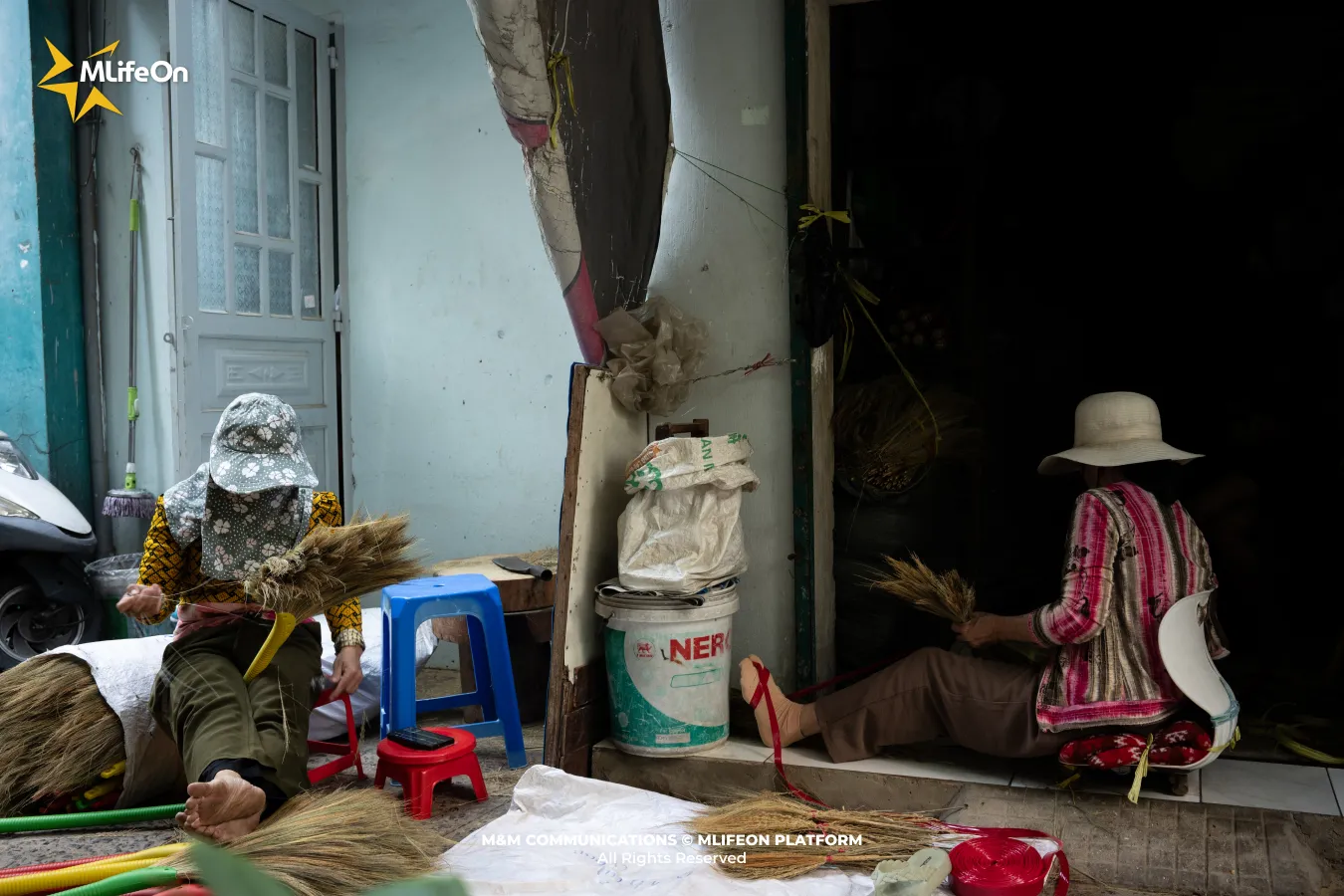
It may sound simple, but behind this development was an entire story of working people on the move. Arriving with little except a trade that could support their families and memories of sun-drenched, wind-swept lands, they brought a piece of Central Vietnam into the heart of Saigon. For this reason, the broom alley is not just a workplace; it is also where part of an old homeland has been preserved through daily life and tradition.
Perhaps that is why, when people speak of broom alley, they are not only talking about a handicraft trade. They are also talking about a generation of people, a way of making a living, and a chapter in the history of this city.
Broom making looks simple, but it takes great skill and effort
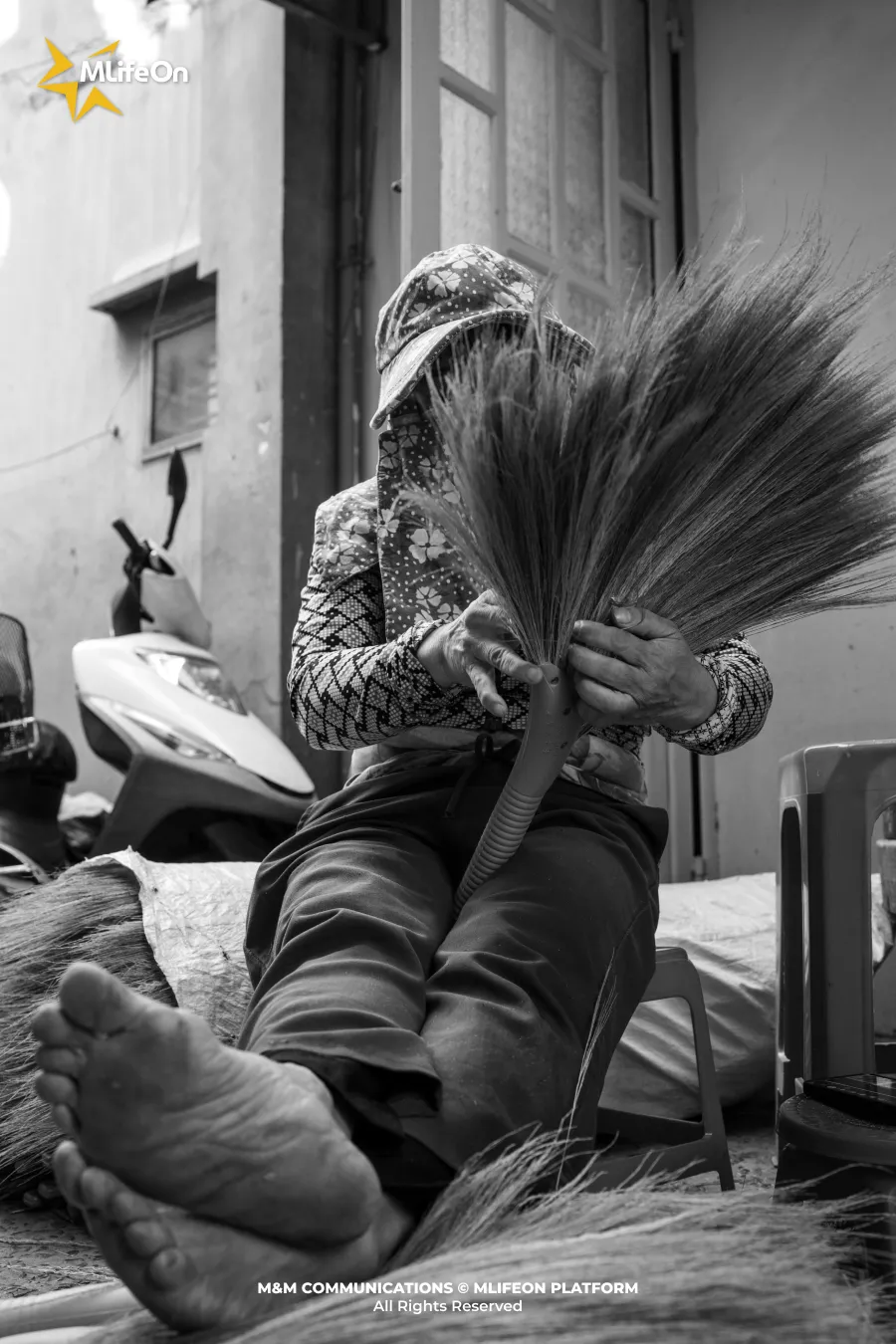
Looking at a dot broom, many people might assume it is something quick and easy to make. But once you stand inside this craft neighborhood, it becomes clear that producing a finished broom is far from simple. According to local artisans, making a dot broom involves many steps, including splitting the flowering grass heads, shaping the tassels, tying the handle section, bundling the broom, weaving it together, and trimming it neatly. Nearly every stage is done by hand, with very little machine support.
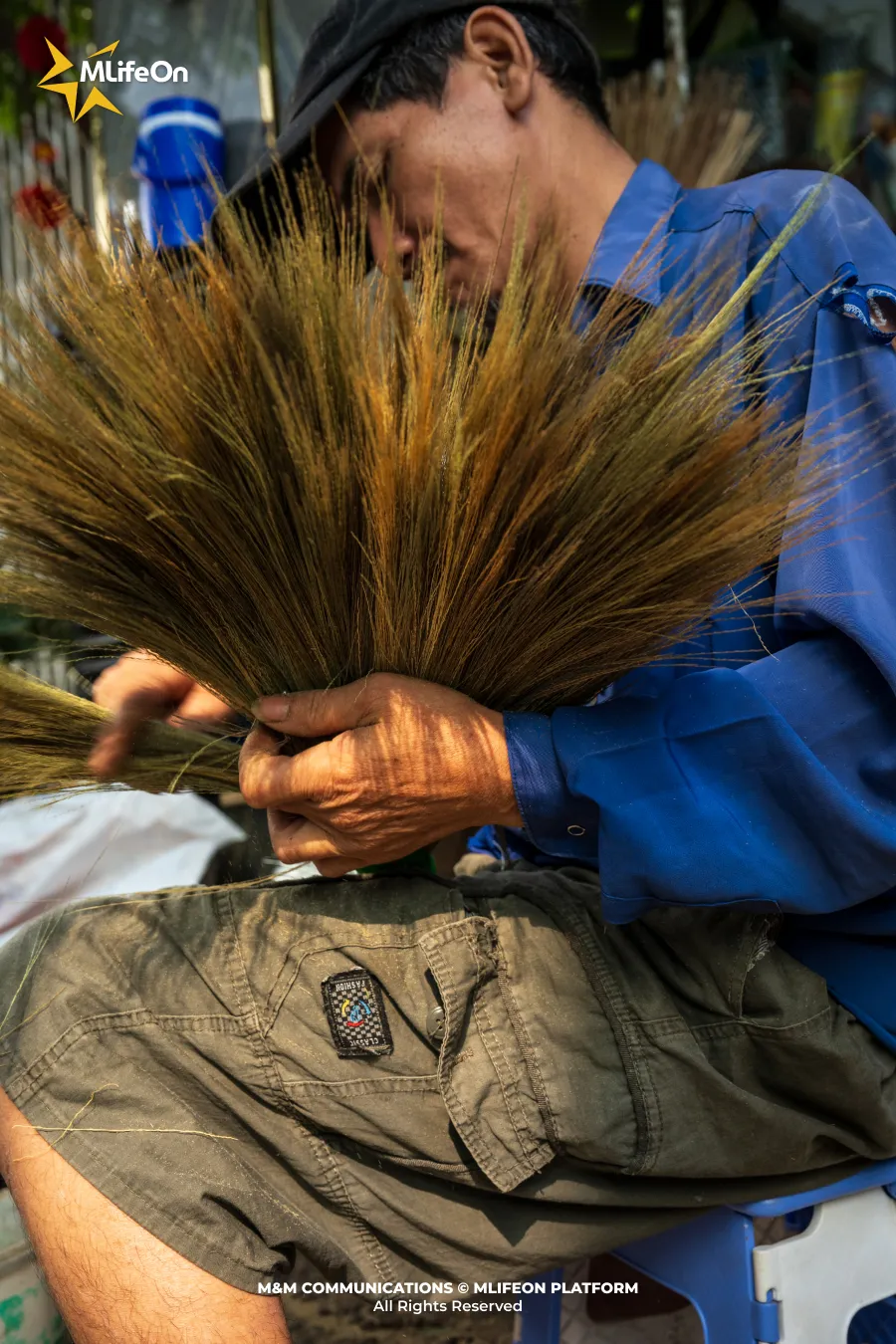
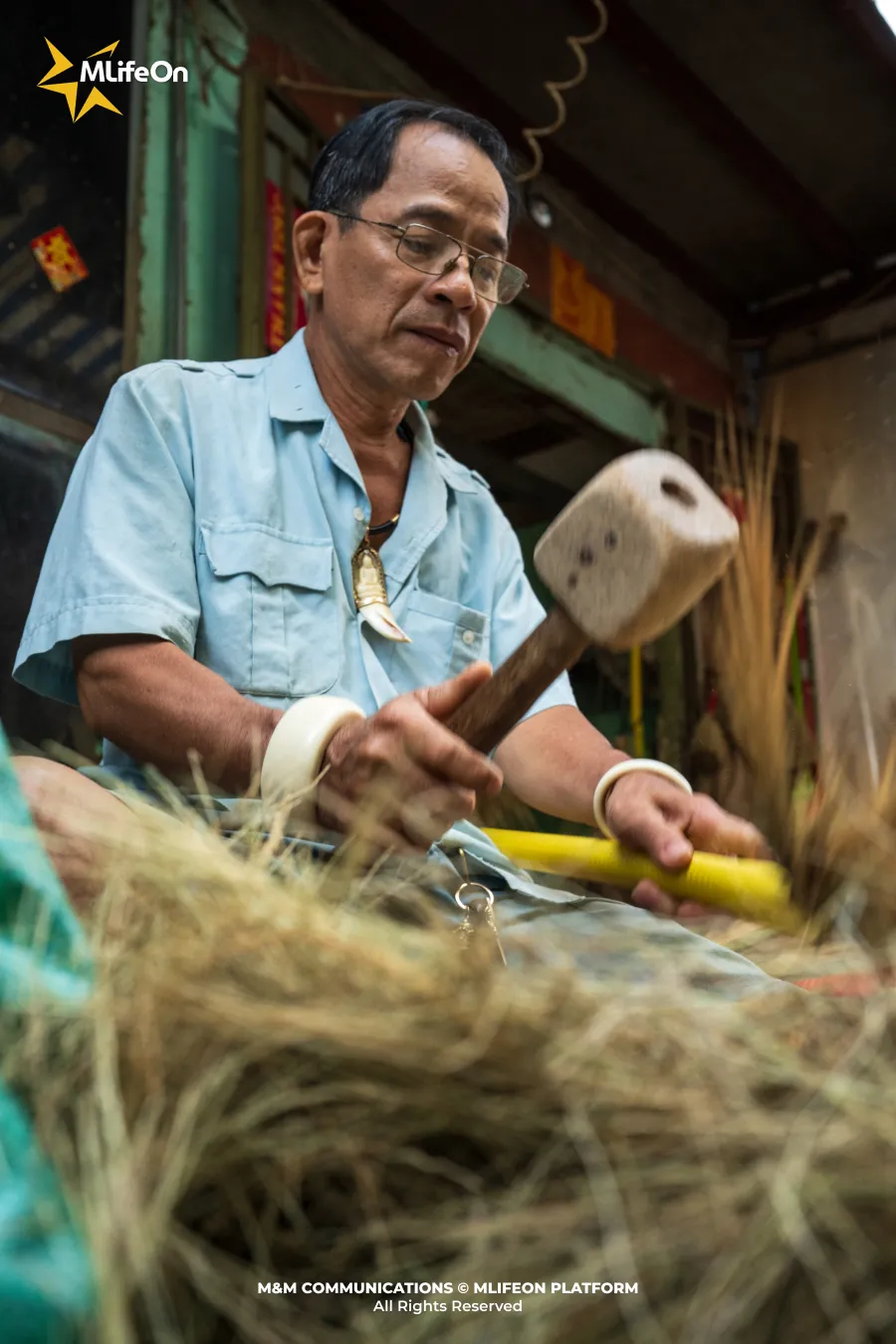
The main material is dot grass, brought in from provinces in Central Vietnam and the Central Highlands such as Quang Ngai, Kon Tum, and Gia Lai. The grass may look plain, but turning it into a beautiful, durable broom that feels sturdy in the hand requires experience. Each bundle of grass must be even, the tassels neatly arranged, and the body tightly secured. Even a small bit of carelessness shows immediately in the finished product.
What makes this trade difficult is the patience it demands. Making brooms is not the kind of work where results appear instantly. It requires sitting for long periods, working carefully, enduring dust, handling hardship, and repeating small motions over and over again, motions that may seem minor, but are anything but light. That is why, although the work appears simple at first glance, the more closely you look, the more you see just how much labor goes into a single broom.
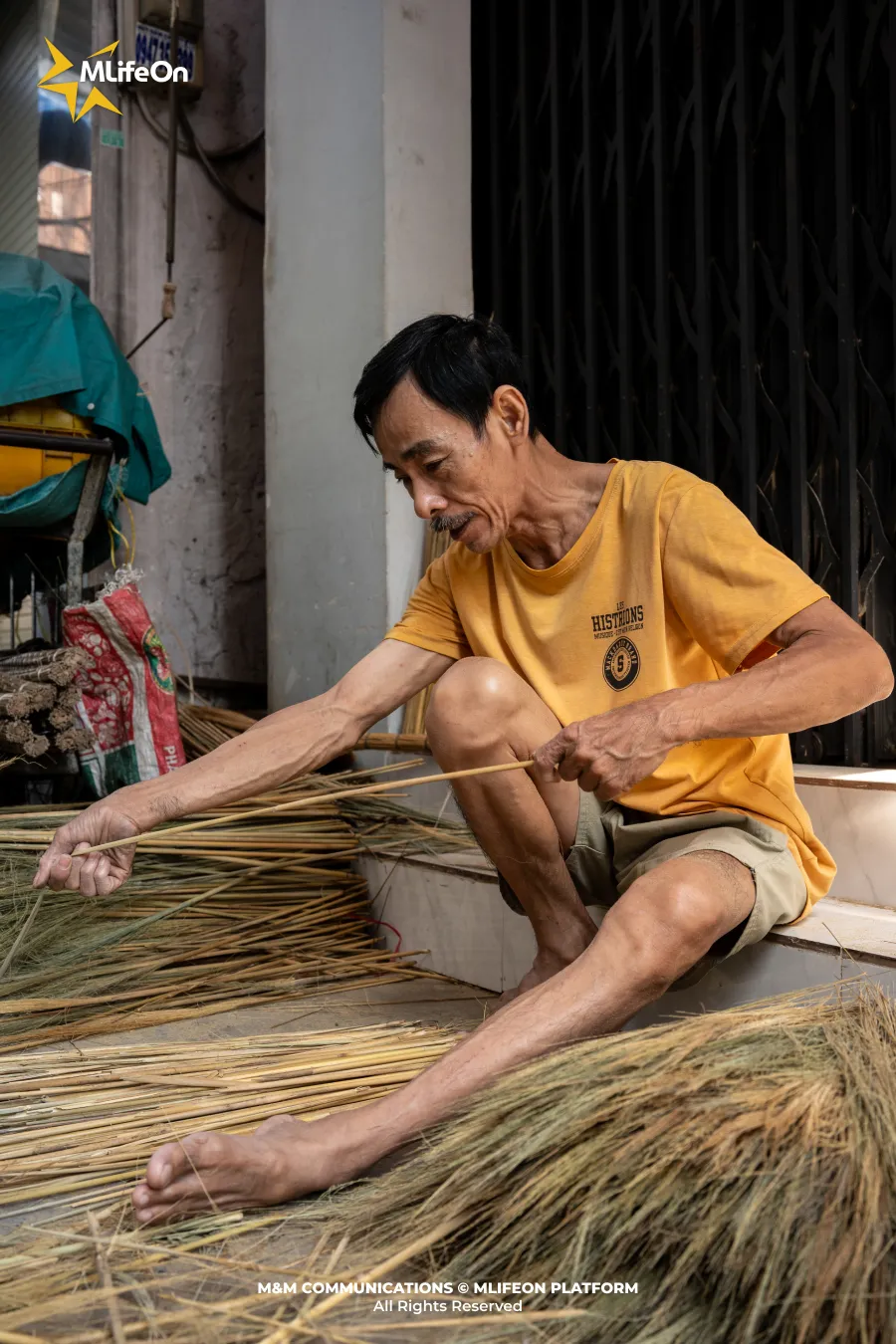
Broom Alley feels like a slice of memory
The sense of age and memory in Pham Phu Thu Broom Alley does not come from anything grand. It comes from the golden-yellow dot grass lining the passageway. From small porches piled high with raw materials. From the earthy scent of dried grass, a smell that may seem unusual to outsiders, but has become deeply familiar to those in the trade. Some people have lived with it for decades, to the point that the color and scent of dot grass have become part of their everyday lives.
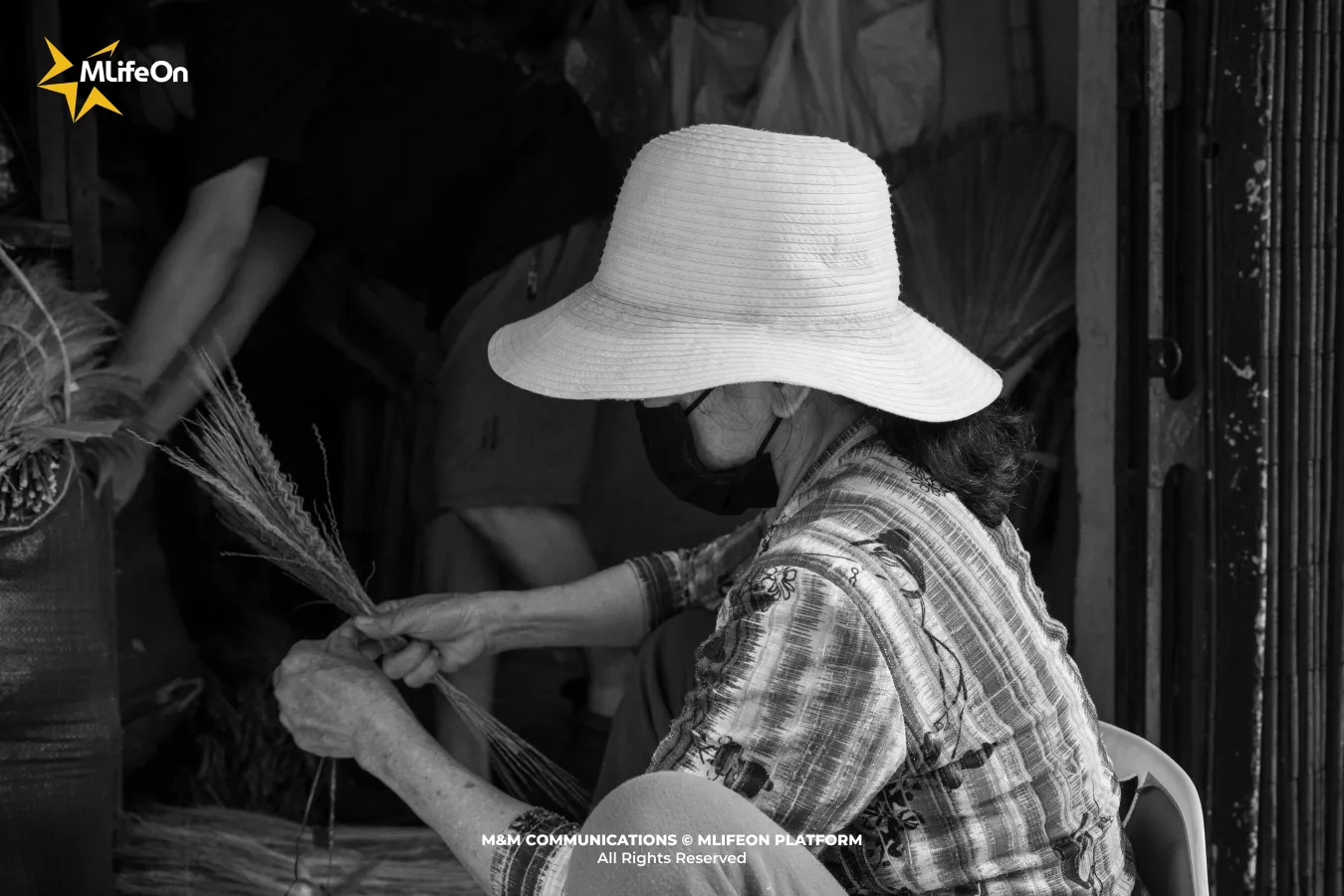
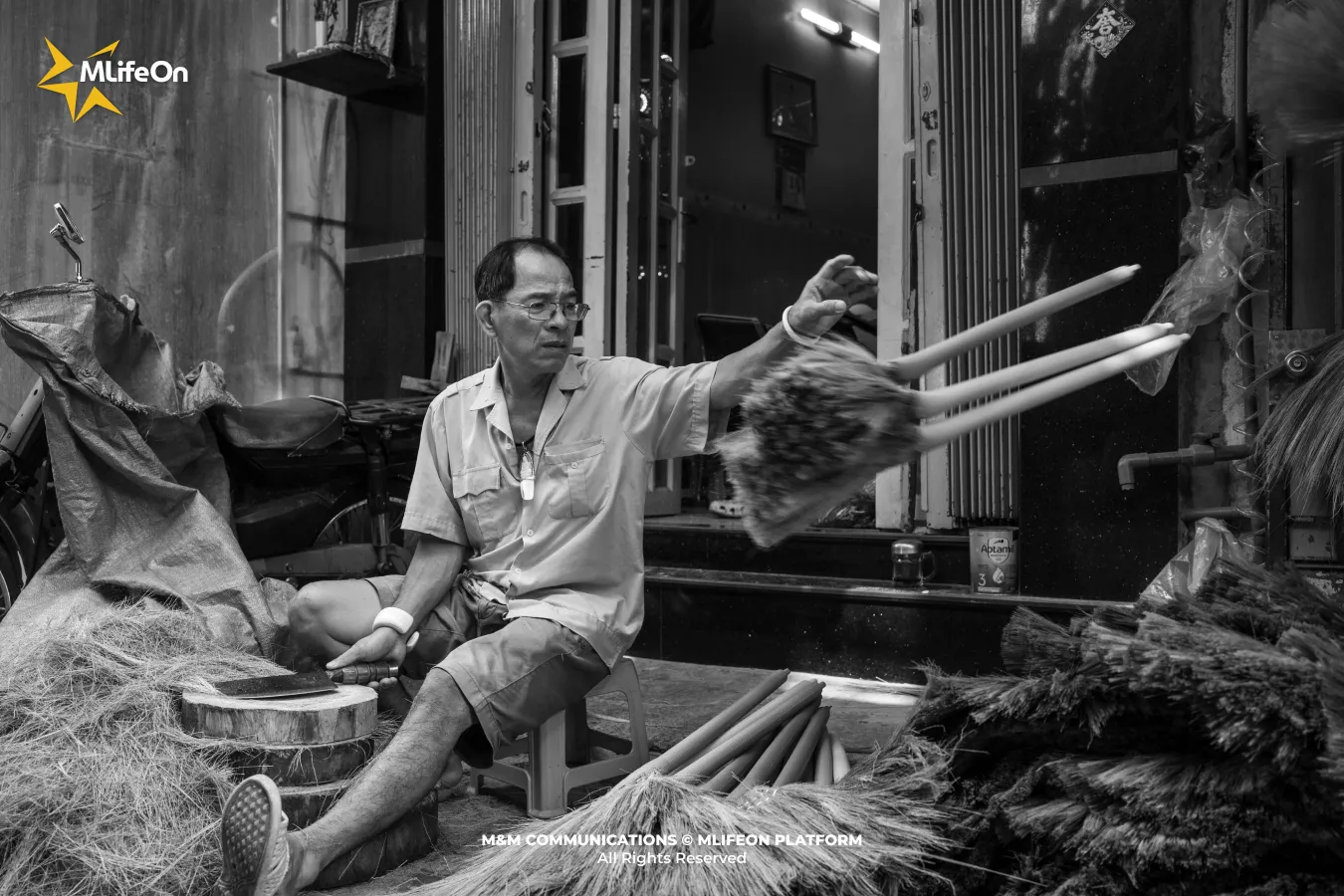
In the middle of Saigon, there is still an alley where a profession reveals itself right at people’s doorsteps. No large signs, no staged displays. Just the sight of bundles of grass and rows of hanging brooms is enough to tell you exactly how this place makes its living. That is what makes Broom Alley feel like a surviving slice of memory. Small, yes, but enough to help people imagine a Saigon that once had many neighborhoods like this.
A craft neighborhood with fewer and fewer people keeping it alive
There was a time when more than 100 households in the alley made brooms. Today, only around 10 families remain committed to the trade. That thinning presence is visible without much explanation. Most of the people still doing the work are older. Younger generations rarely follow. So the broom alley has gradually grown quieter with the years.
The reasons are not hard to understand. Dot brooms now have to compete with many other types of brooms, as well as modern cleaning devices such as vacuum cleaners. On top of that, brooms from other places, especially from the very source regions such as Quang Ngai are often cheaper, making the market in Saigon much more difficult. The work is dusty, demanding, and not particularly profitable, making it even harder to attract younger people.
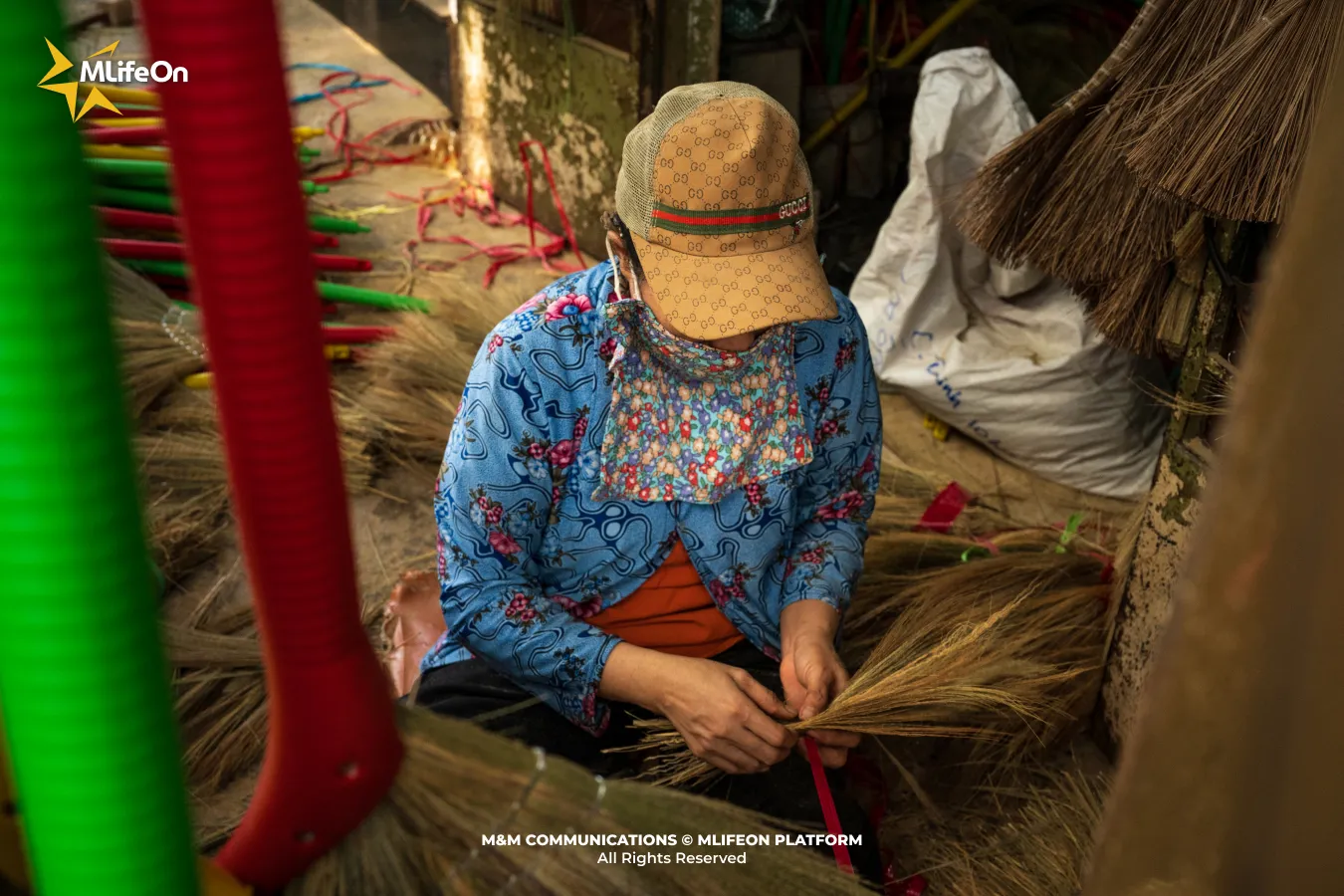
A craft neighborhood survives through continuity between generations. When that link begins to thin, the sense of uncertainty becomes very clear. The Broom Alley is still there, but it no longer carries the lively, bustling atmosphere it once had, when goods were made in large quantities and sold to many places. Some people in the trade recall that during its golden years, the brooms were even exported abroad. Today, everything feels far more precarious.
Preserving the trade has gradually become a growing concern
For those who have spent decades with this craft, broom making is not just about earning a living. It is also the trade handed down by their parents and grandparents. Some say they started when they were young, kept doing it until it became familiar, and over time, it became something they cared deeply about. The smell of dot grass, the dust of the trade, the hardship of the work, all of it may sound exhausting, but leaving it behind is not easy. So even though the trade is no longer as viable as it once was, they continue holding on, as a way of preserving something they do not want to lose.
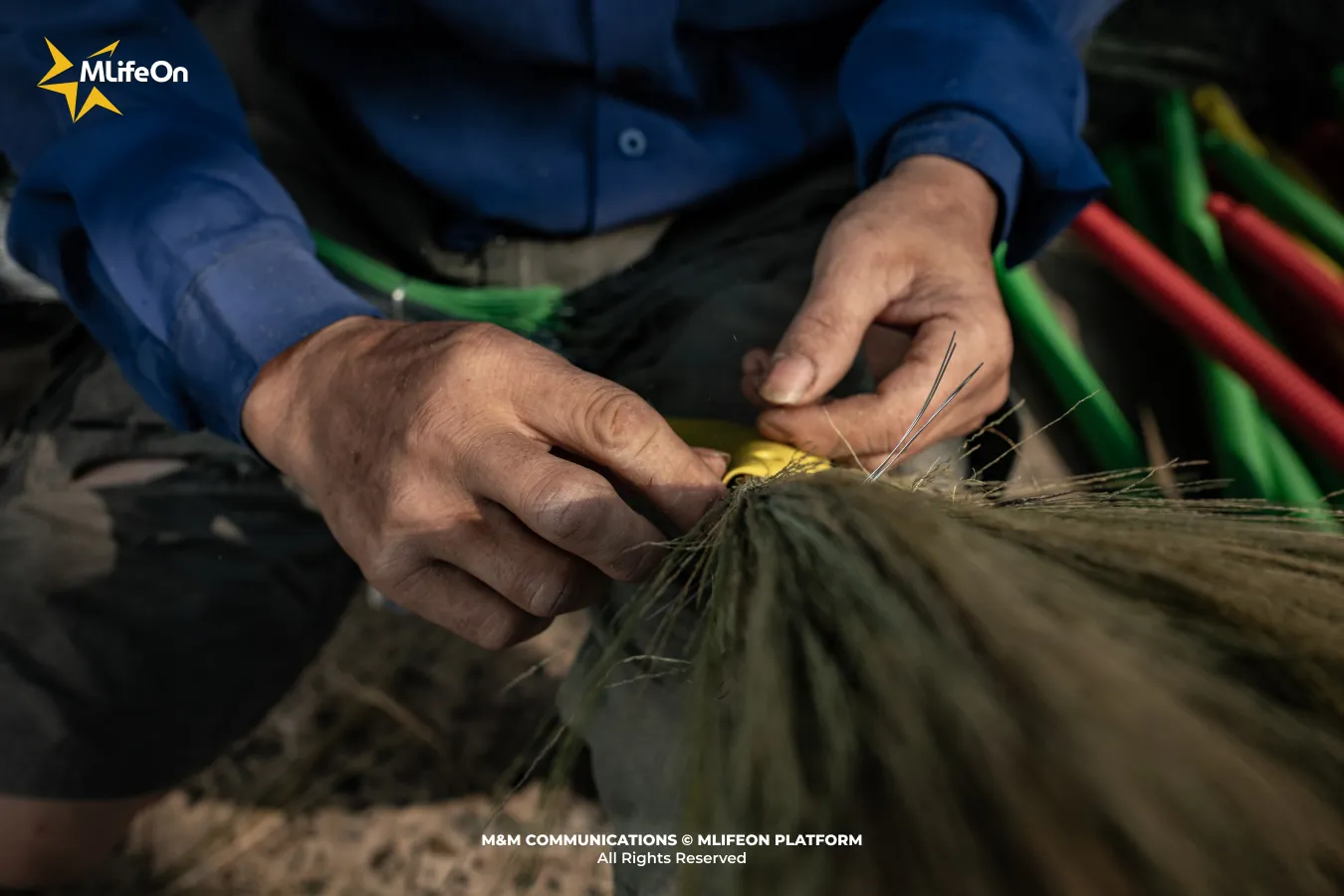

But preserving a craft today can no longer rely on emotion alone. For a traditional trade to survive, it still needs an output market, workers, and a reason for the next generation to see it as something worth continuing. In reality, however, the broom alley is moving in the opposite direction: older workers are aging, younger people are leaving the trade, and the market is shrinking. The concern is no longer simply how to do the work well, but how to keep the trade itself from disappearing from the alley that has depended on it for decades.
Conclusion
Walking through broom alley, people do not only see a handicraft trade with fewer and fewer people following it. More importantly, they see the persistence of those who are still trying to preserve an old way of life in the middle of the city today. And that is exactly what makes this small alley such a distinct and irreplaceable part of Saigon’s memory.
—---------
CREDIT:
- Photography: Luan Nguyen
- Content: Hoài Hà
- Design: Phuong Nguyen