KY YEN FESTIVAL AT VUON LAI TEMPLE: WHERE TRADITIONAL CULTURE PRESERVES THE SOUL OF THE CITY
Discover the Ky Yen Festival at Vuon Lai Temple, where the resonant sounds of ceremonial drums and the art of Hat Boi continue to thrive in the heart of modern Saigon. Rooted in Southern Vietnamese folk beliefs, the festival preserves community traditions, urban memories, and the enduring cultural spirit of old Saigon.
Ky Yen Festival and the lingering rhythms of old Saigon
Amid crowded streets and the relentless pace of urban life, Ngu Hanh Temple in Vuon Lai Ward emerges as one of the city’s rare remaining pockets of stillness. Tucked away inside a narrow alley behind weathered walls marked by time, the temple rests quietly through the day like many old spiritual sites scattered across Saigon.
Yet whenever the Ky Yen Festival arrives, the small courtyard awakens beneath glowing lights, the lingering scent of incense, and the resonant beat of ceremonial drums echoing through the night air.
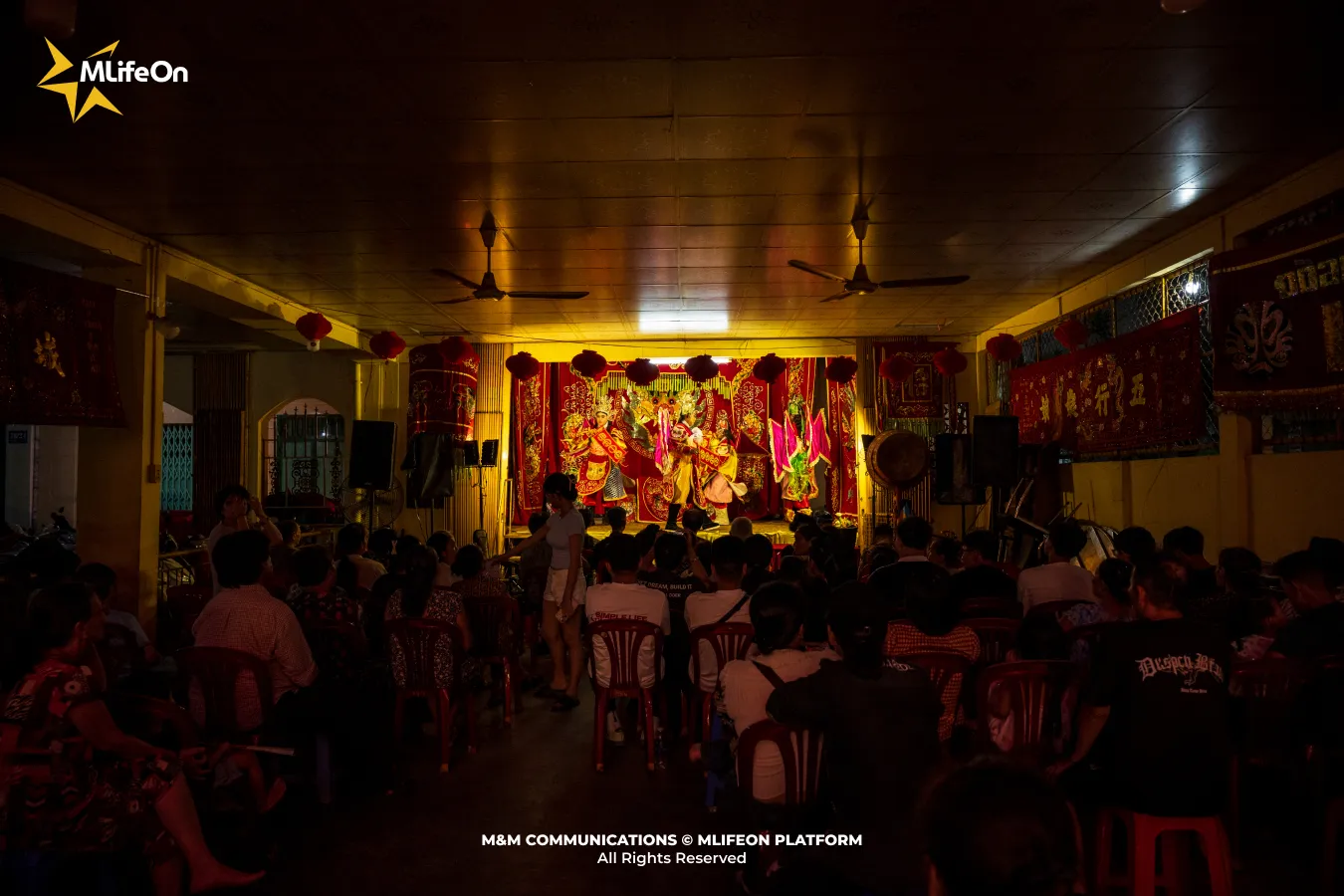
Audiences filled the courtyard of Vuon Lai Temple during the Hat Boi performance of the Ky Yen Festival, as ceremonial drums echoed through the small neighborhood late into the night.
A narrow alley, a modest corner of the city, yet one that holds an entire cultural world filled with life and memory. Residents in the neighborhood have long been familiar with the steady flow of people entering the temple during festival season, the sound of drums echoing late into the night, and the appearance of traditional Hat Boi costumes glowing beneath warm yellow lights. During those evenings, the pace of daily life seems to soften, making room for a tradition that has endured through generations.
The Ky Yen Festival at Vuon Lai Temple carries none of the spectacle often associated with performances staged for visitors. Instead, it exists naturally as part of the collective memory of the local community. People come not only to offer prayers for peace and prosperity, but also to meet neighbors, share conversations, and preserve a familiar rhythm of life amid a city in constant transformation.
A festival sustained by the bonds of a small neighborhood
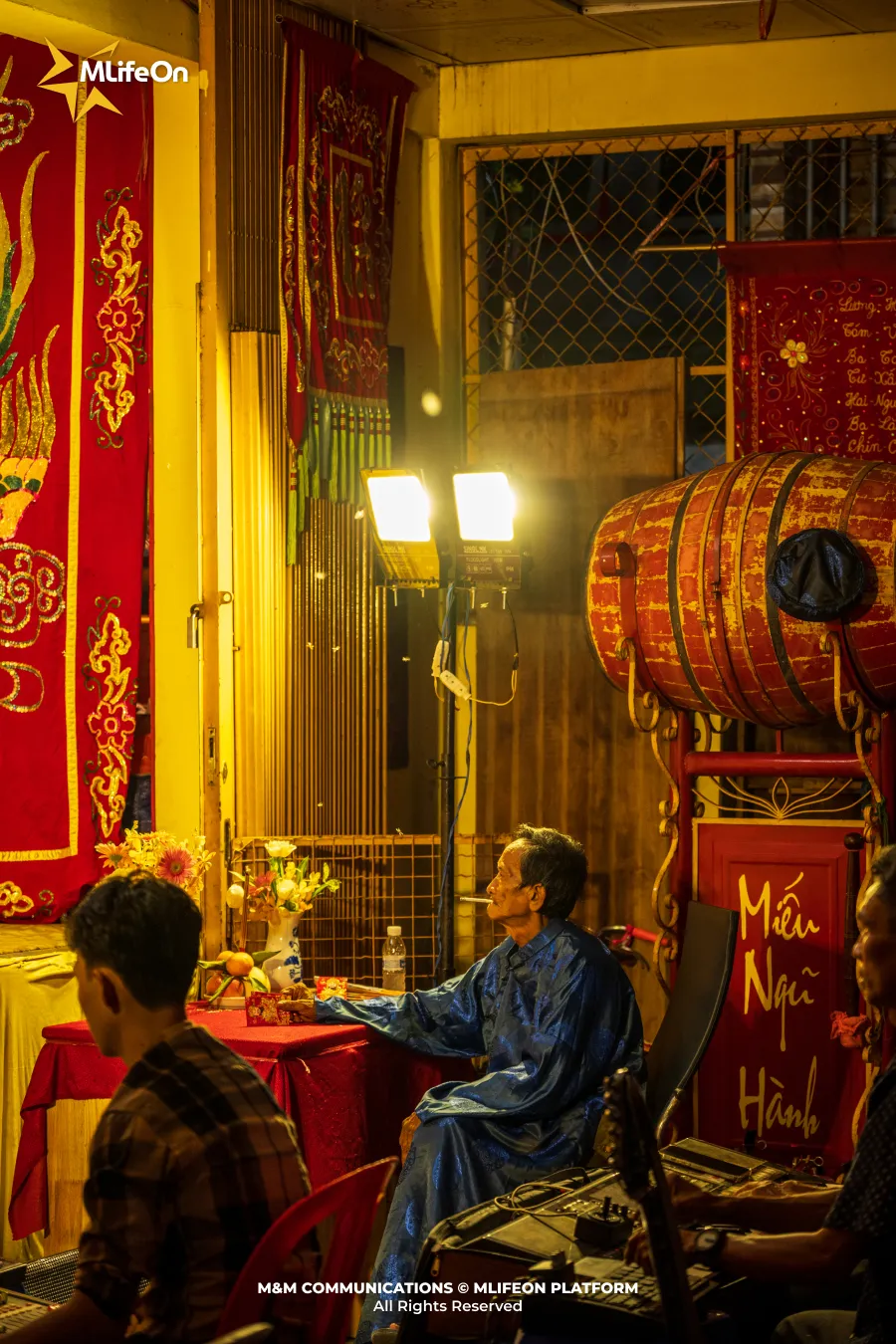
By late afternoon, the courtyard in front of the temple gradually comes alive. Elderly residents prepare ceremonial offerings, younger locals help assemble the stage, arrange chairs, and hang lights, while children run across the temple grounds with their voices echoing through the narrow alleyways.
The atmosphere carries an intimacy rarely found in large-scale, highly staged festivals. At Vuon Lai Temple, everyone contributes in their own way to keeping the Ky Yen Festival alive, from those quietly cleaning the space to residents who stay late into the night to watch every final act of the Hat Boi performance.
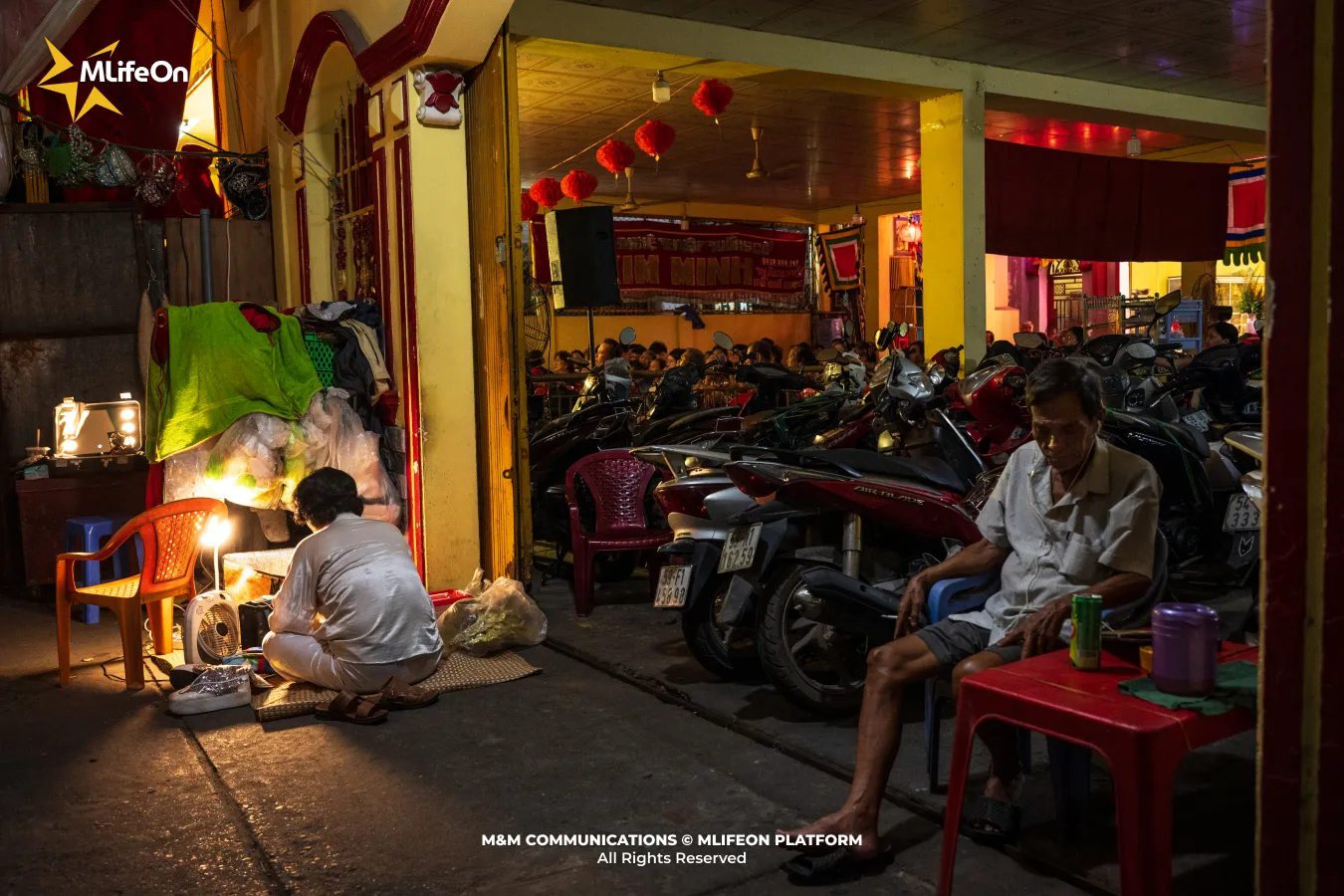
Residents gathered along the veranda of Vuon Lai Temple during the Ky Yen Festival, following the ceremonial drums and Hat Boi performance as part of a long-standing rhythm of life deeply woven into the neighborhood.
In today’s urban landscape, where people have less and less time for one another, the presence of a festival that still preserves a strong sense of neighborhood connection feels increasingly rare. Without grand campaigns for cultural preservation, the steady participation of the community through each festival season has quietly allowed these long-standing traditions to endure across generations.
When Hat Boi lives beyond the stage and within everyday life
For generations, the Ky Yen Festival and Hat Boi have remained deeply intertwined, from grand communal houses to small neighborhood temples. The opening drumbeats that signal the beginning of a performance not only revive memories for older audiences once familiar with traditional courtyard theaters, but also draw younger generations to pause and quietly follow performances that continue late into the night.
There is no grand stage or elaborate lighting. Behind a temporary curtain set up beside the temple, performers quietly apply their makeup beneath stark white lights. Layers of paint and intricate facial details are carefully completed before the performance begins, while ornate headdresses, armor costumes, and traditional stage footwear are adjusted within the narrow backstage space.
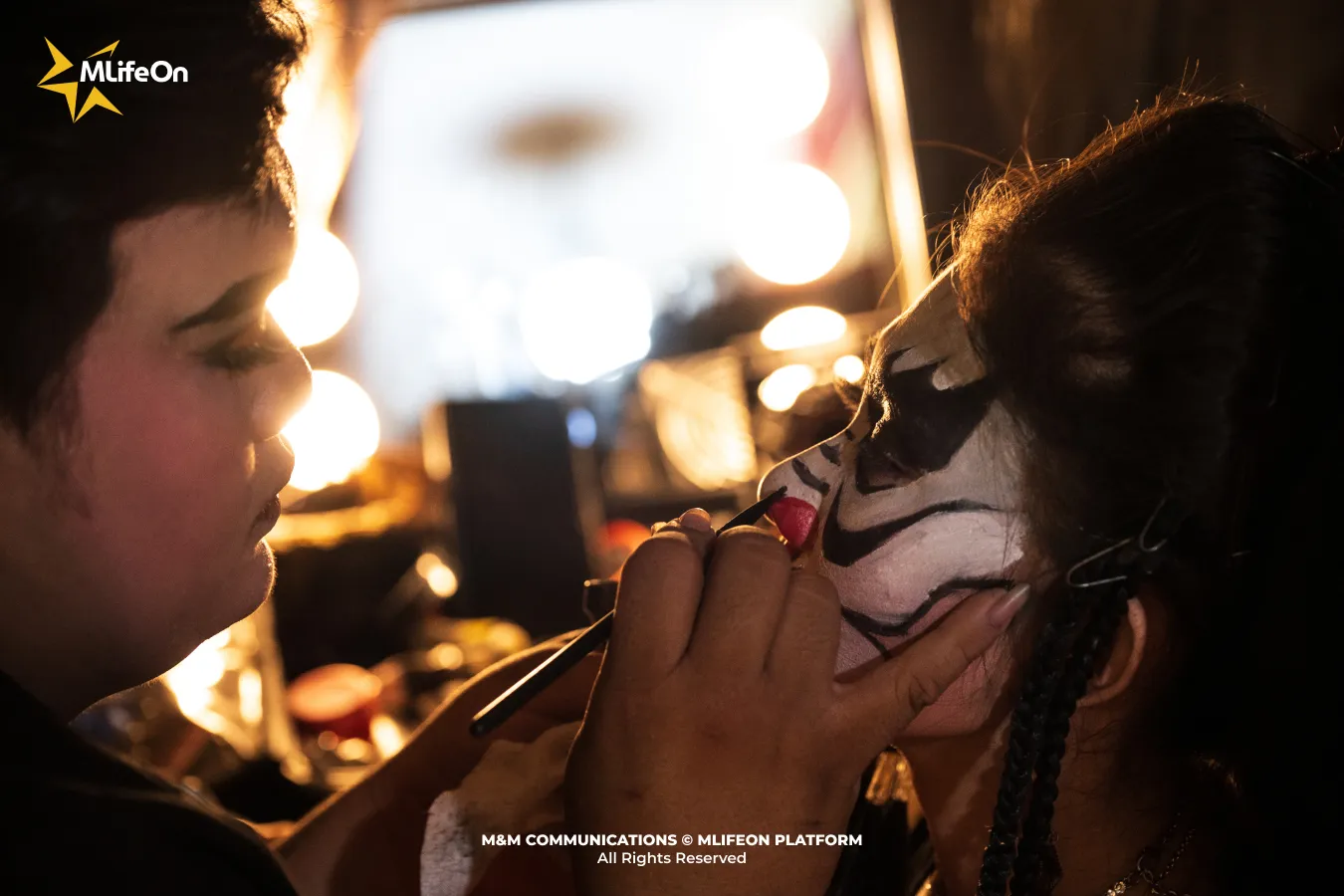
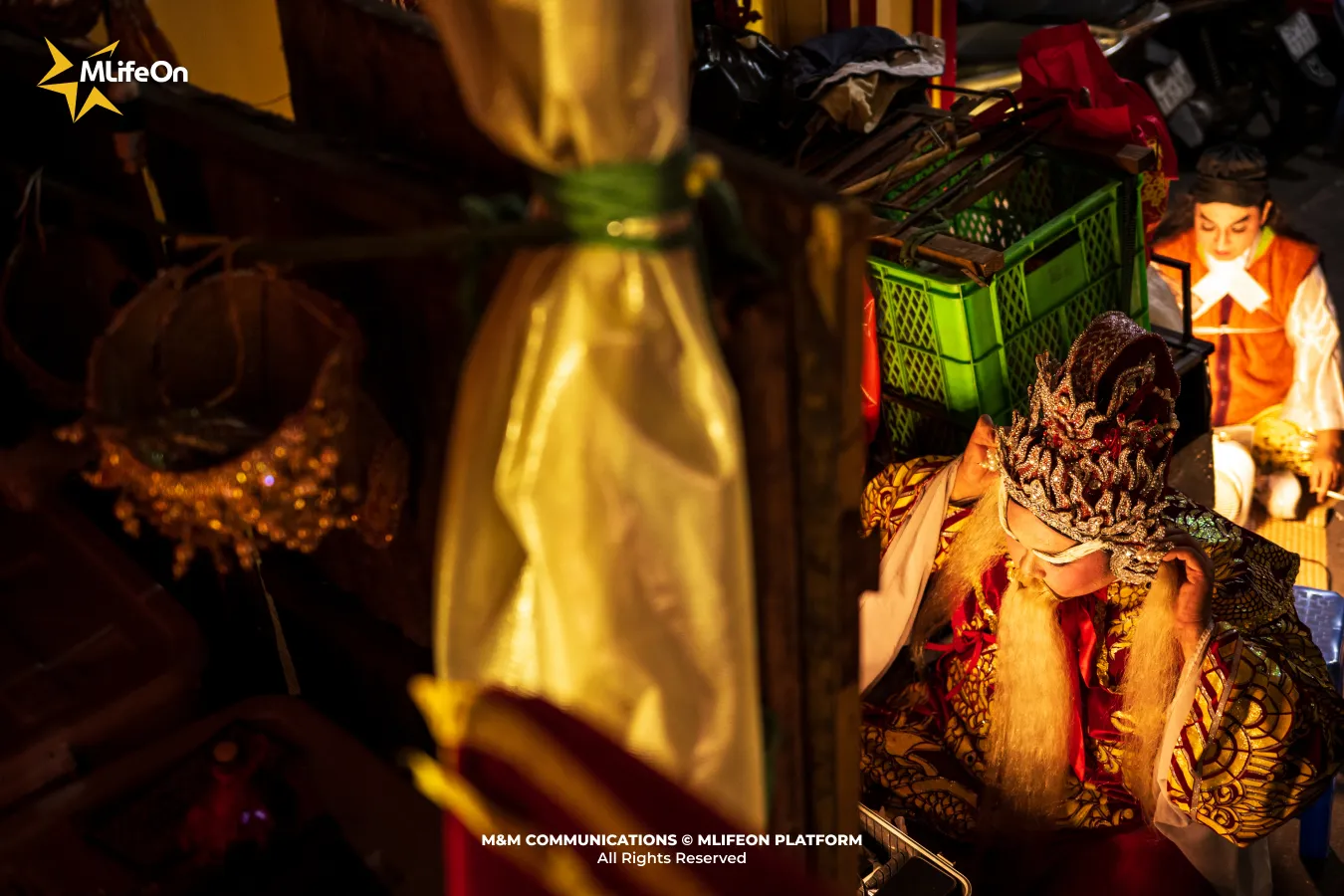
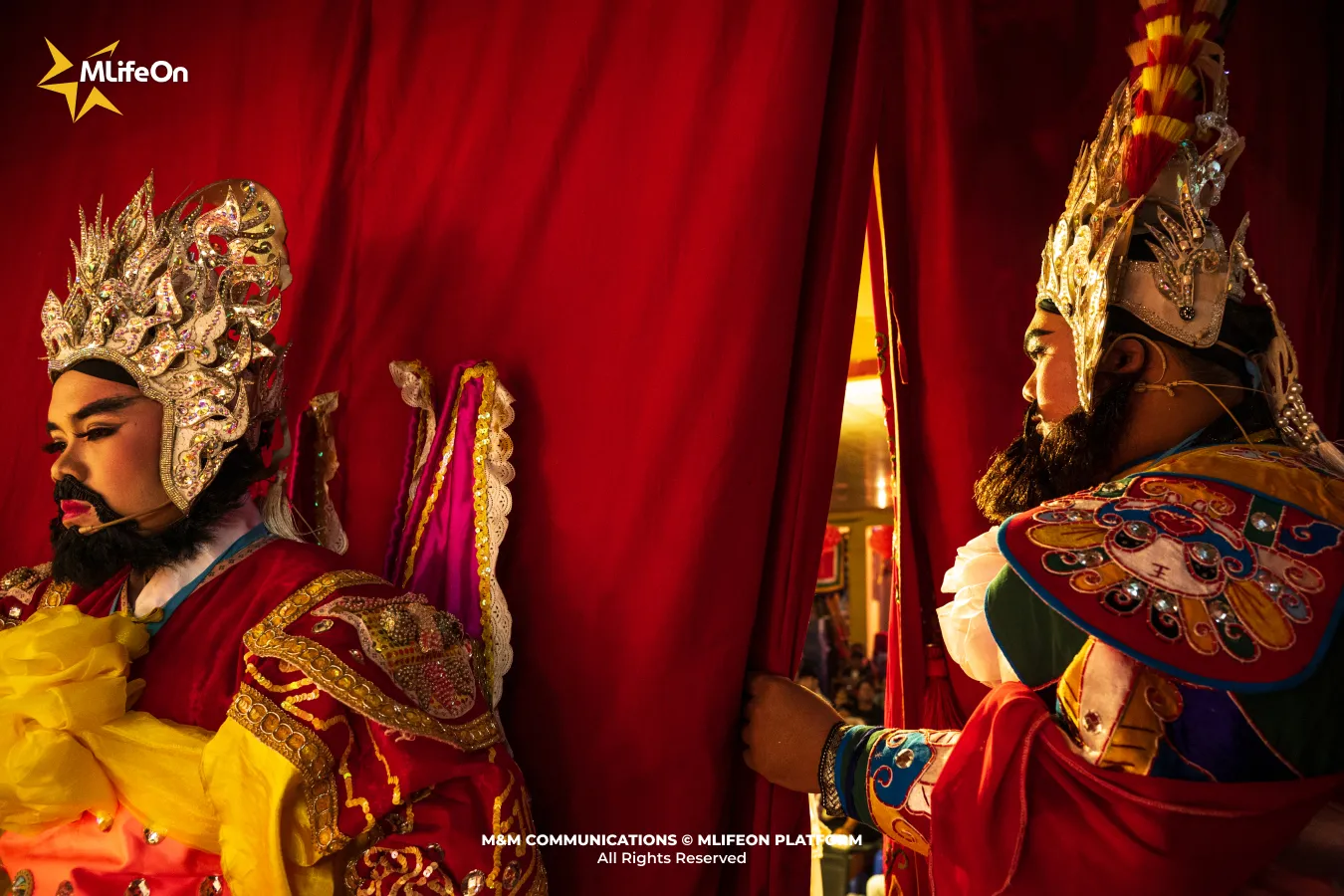
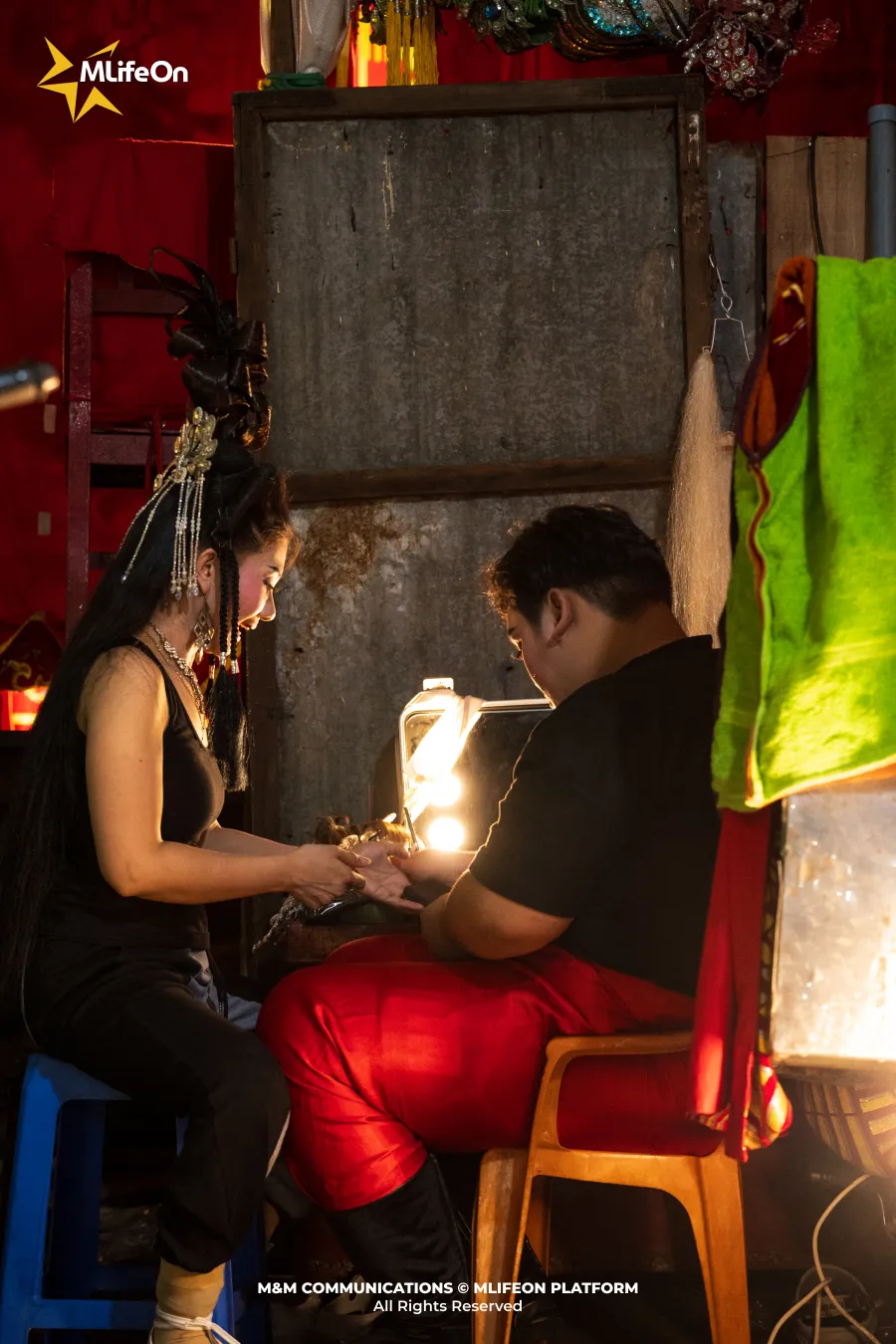
The performers sit quietly behind the curtains, carefully completing each layer of makeup as the final step before stepping into their roles on the Hat Boi stage.
For photographers, the backstage moments hold a distinct fascination. Yet what gives the space its deepest sense of life are the ordinary scenes unfolding around the temple courtyard: an elderly woman watching the performance beside a cup of hot tea, men gathered beneath the awning in conversation, children running through the narrow alleyways as the sounds of ceremonial drums echo into the night.
The audience stands remarkably close to the performers close enough to catch the concentration in an actor’s eyes or hear soft exchanges while costumes are adjusted backstage. In that setting, the boundary between performance and everyday life seems to quietly disappear.
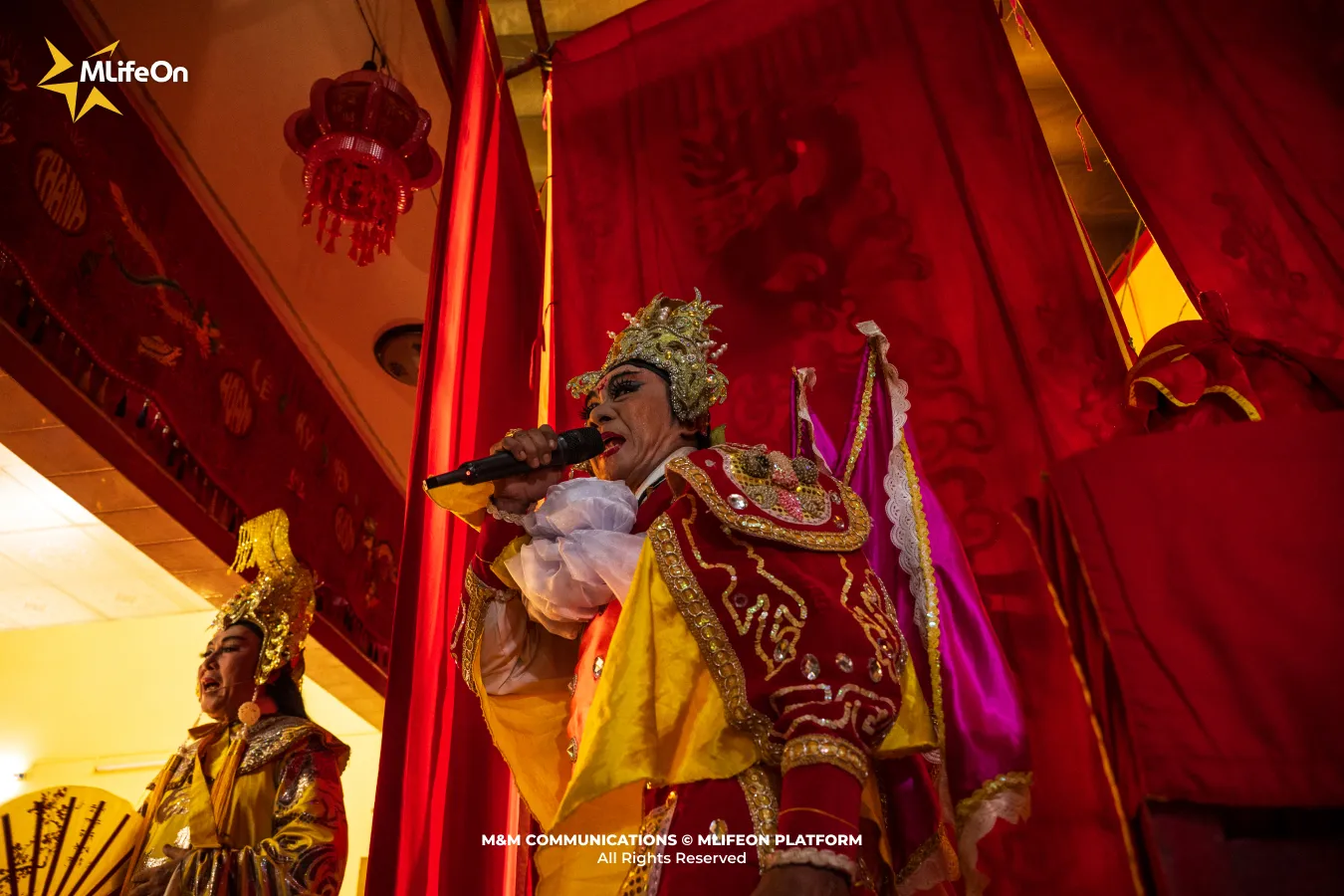
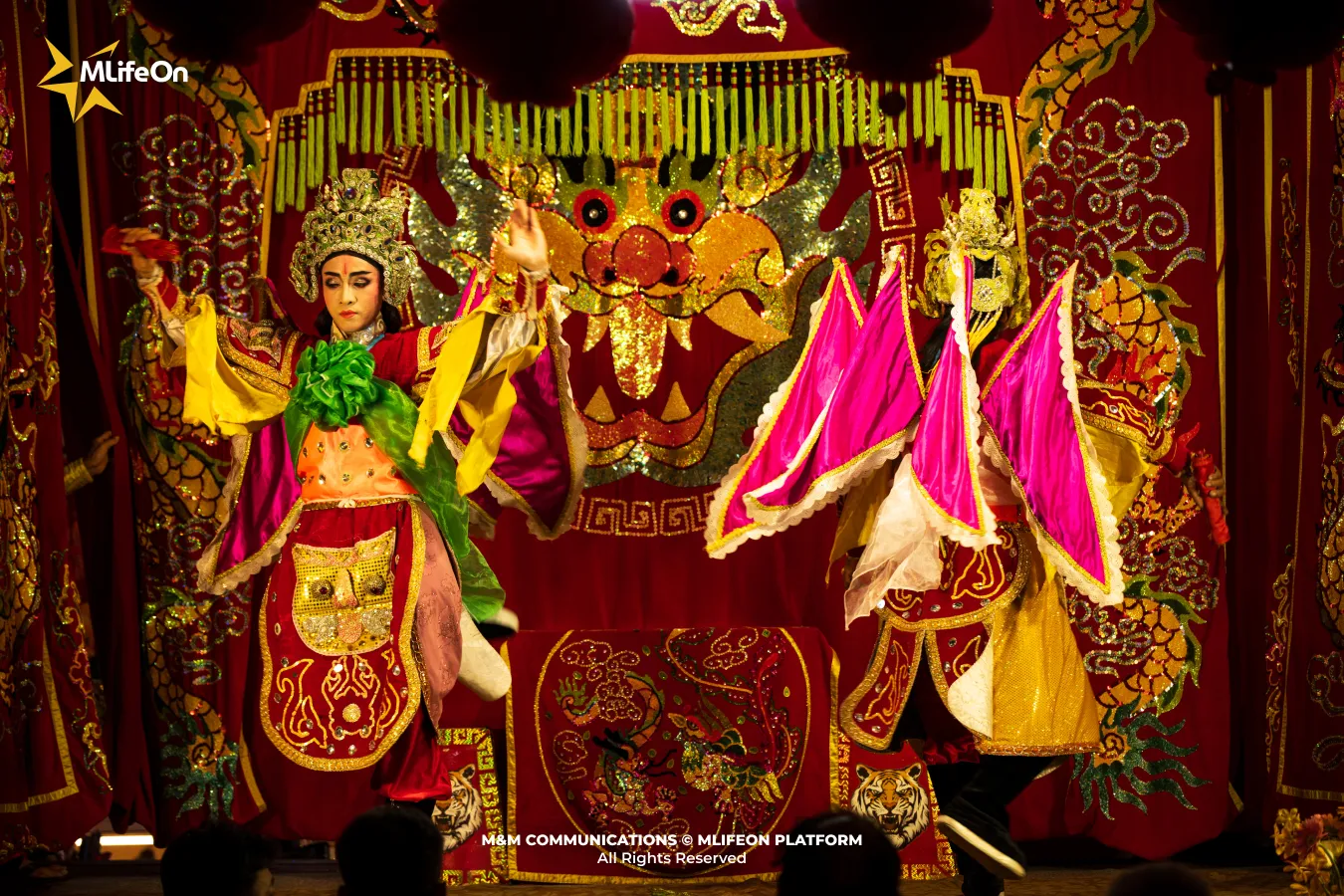
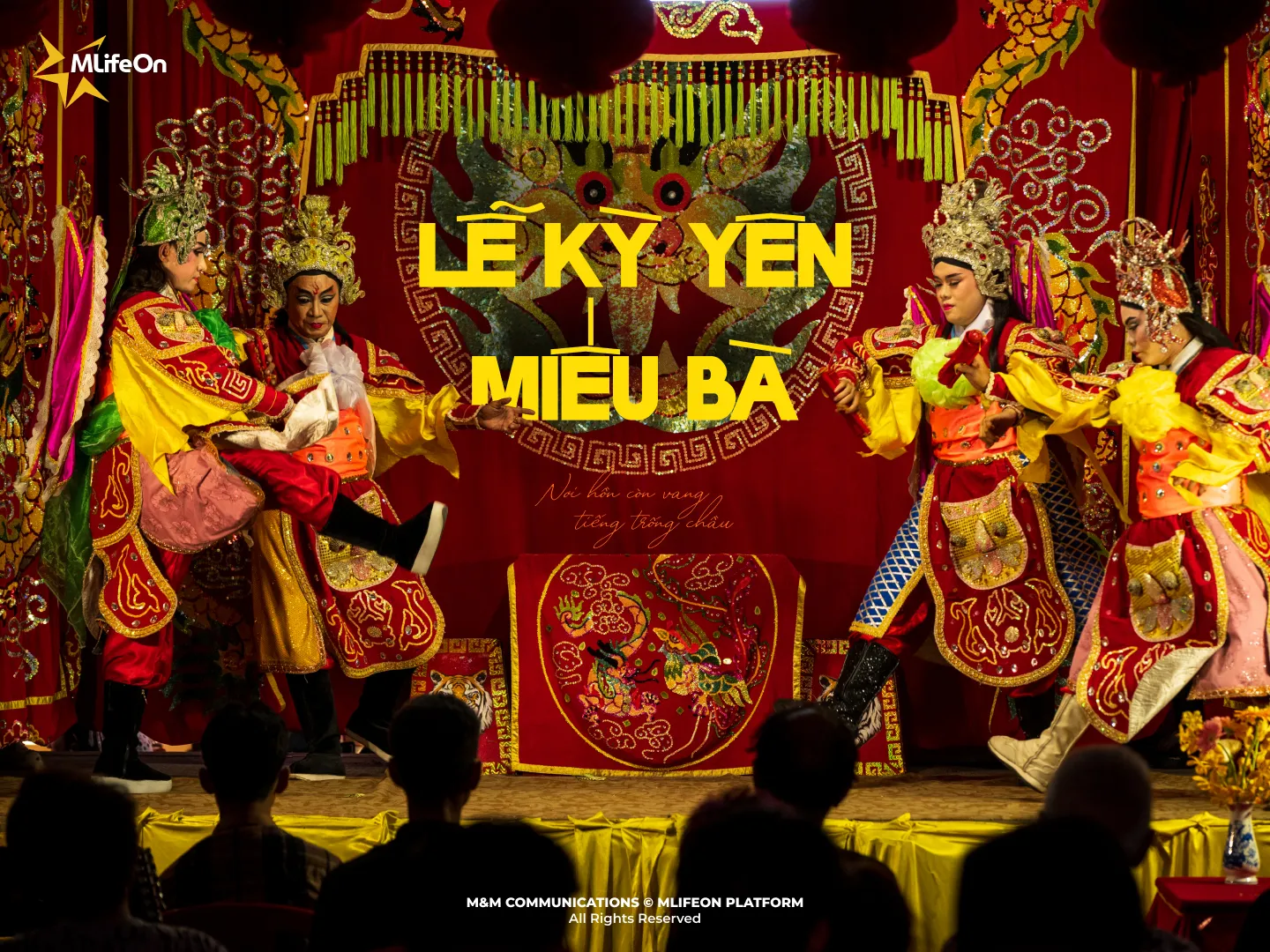
Beneath the deep red glow of the stage lights, Hat Boi performers emerge in elaborate costumes, carrying forward a traditional theatrical art form that has long been intertwined with the Ky Yen Festival.
Then, as the drums begin to sound, the small courtyard transforms entirely. Prolonged melodic chants, precise gestures, and vividly painted faces draw the audience into the world of classical opera. Amid the ordinary rhythms of neighborhood life, Hat Boi no longer feels separate from its surroundings, but instead becomes part of the alley’s living atmosphere, woven into the collective memory and spiritual life of the local community.
Amid a changing city, certain traditions continue to endure quietly
What makes the Ky Yen Festival at Vuon Lai Temple remarkable lies not in its scale or crowds, but in the quiet way long-standing cultural traditions continue to be preserved within a city constantly reshaped by modern life.
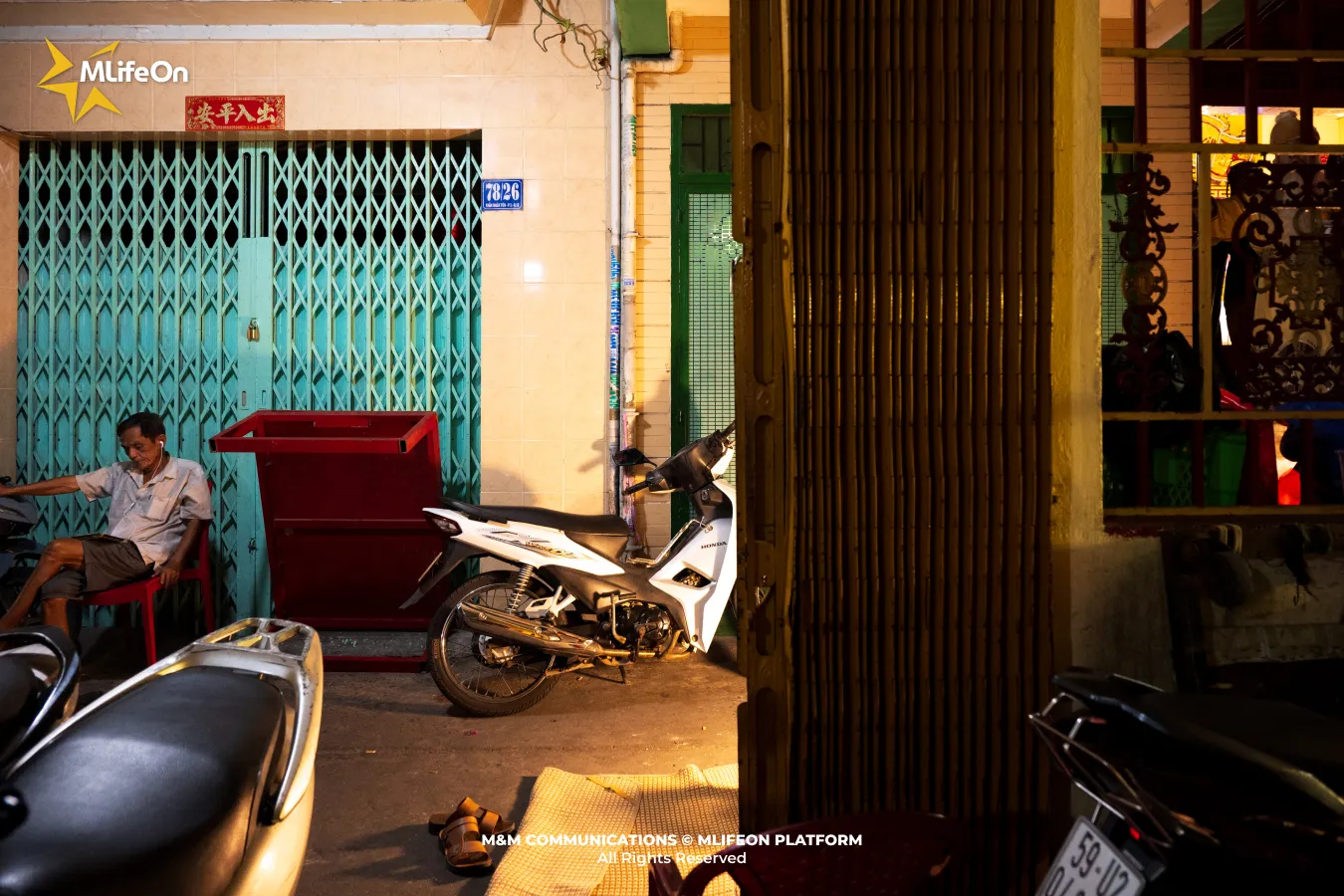
Amid newly built houses rising across the city each day, there remains a small courtyard where the sounds of Hat Boi drums still return every festival season, and where local residents continue gathering to preserve traditions passed down through generations. Without spectacle or fanfare, the festival endures quietly as part of the collective memory of one of Saigon’s long-established neighborhoods.
Perhaps that is why, after each Ky Yen season comes to an end, what lingers is more than a prayer ceremony or a night of classical opera. What remains is the feeling that a fragment of the city’s soul is still being safeguarded within the narrow alleys of Vuon Lai Ward, where folk culture has never drifted away from everyday life, but continues to exist through drifting incense smoke, attentive audiences, and performances that carry on deep into the night.
Conclusion
The Ky Yen Festival at Vuon Lai Temple preserves the spiritual traditions of Southern Vietnamese communities while revealing how folk culture continues to endure quietly within a rapidly modernizing city. Through the resonant drumbeats heard at night, the elaborate makeup of Hat Boi performers, and the gatherings of residents around the temple courtyard, long-standing cultural values continue to be passed from one generation to the next.
In a city constantly in motion, cultural spaces like Vuon Lai Temple remain places where the memory of old Saigon is gently anchored. Without the need for grand displays, the festival’s quiet persistence through the years has allowed it to become part of the city’s cultural soul, where people can still find a connection to their heritage amid the rhythms of contemporary urban life.
------------
CREDIT:
Photography: Luan Nguyen
Content: Như Quyền
Design: Phuong Nguyen