DISCOVER THE VILLAGE OF CENTURY-OLD BUDDHA STATUE MAKING IN SAIGON
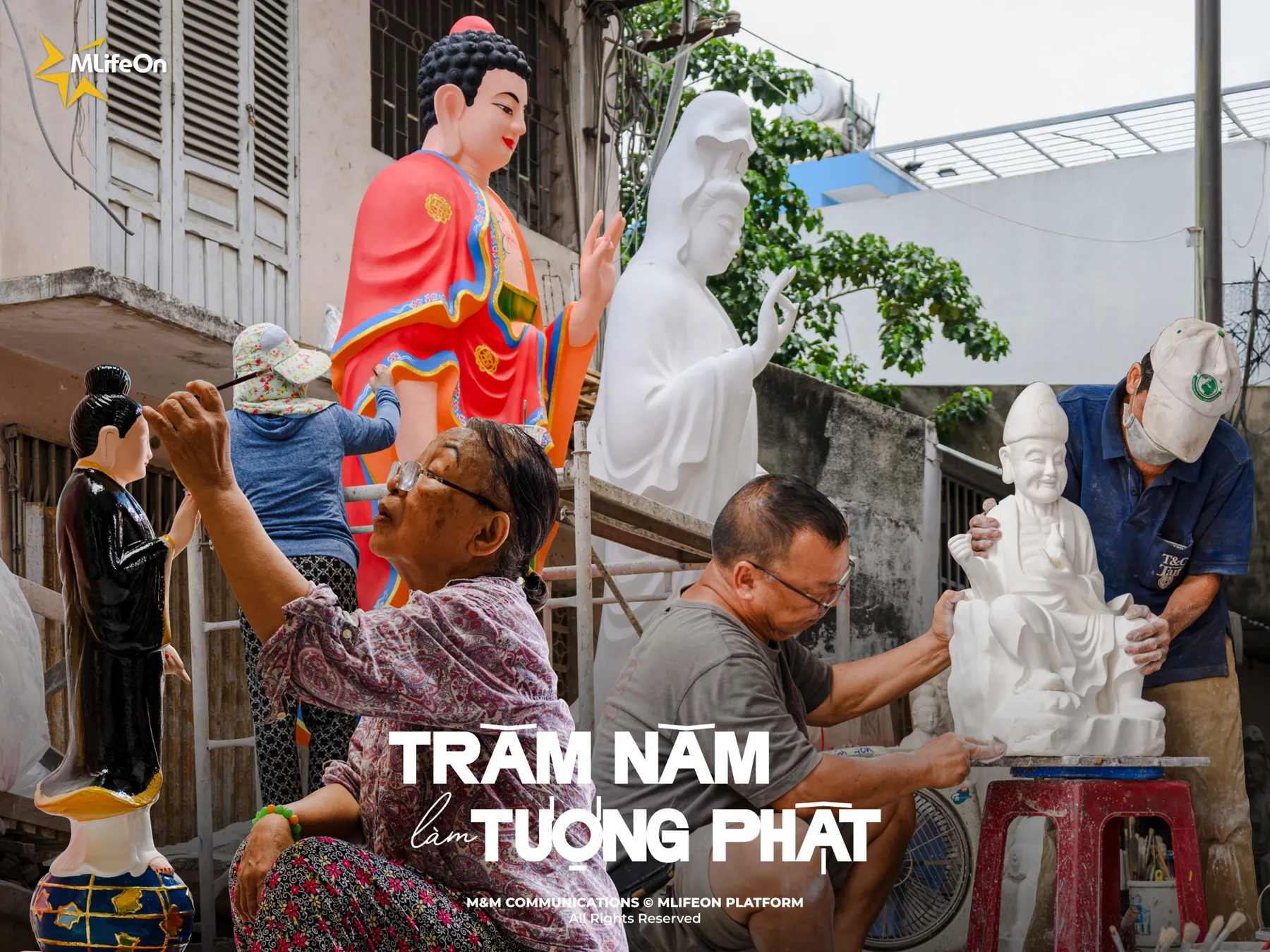
Discover the Buddha statue-making neighborhood in District 6, Ho Chi Minh City, a century-old craft enclave located by Ong Buong Bridge.
Amidst the bustling pace of Saigon lies a small neighborhood where the sounds of chiseling and sanding, mingled with the scents of paint and plaster, have formed a familiar backdrop for nearly a century. Locals call it the "Buddha statue neighborhood," a place where artisans chant the Buddha's name as they work, pouring their very souls into every statue.
Originating from a small neighborhood
The Buddha statue-making neighborhood in District 6 is located in Phu Lam Ward, at the foot of Ong Buong Bridge, near Giac Hai Pagoda.
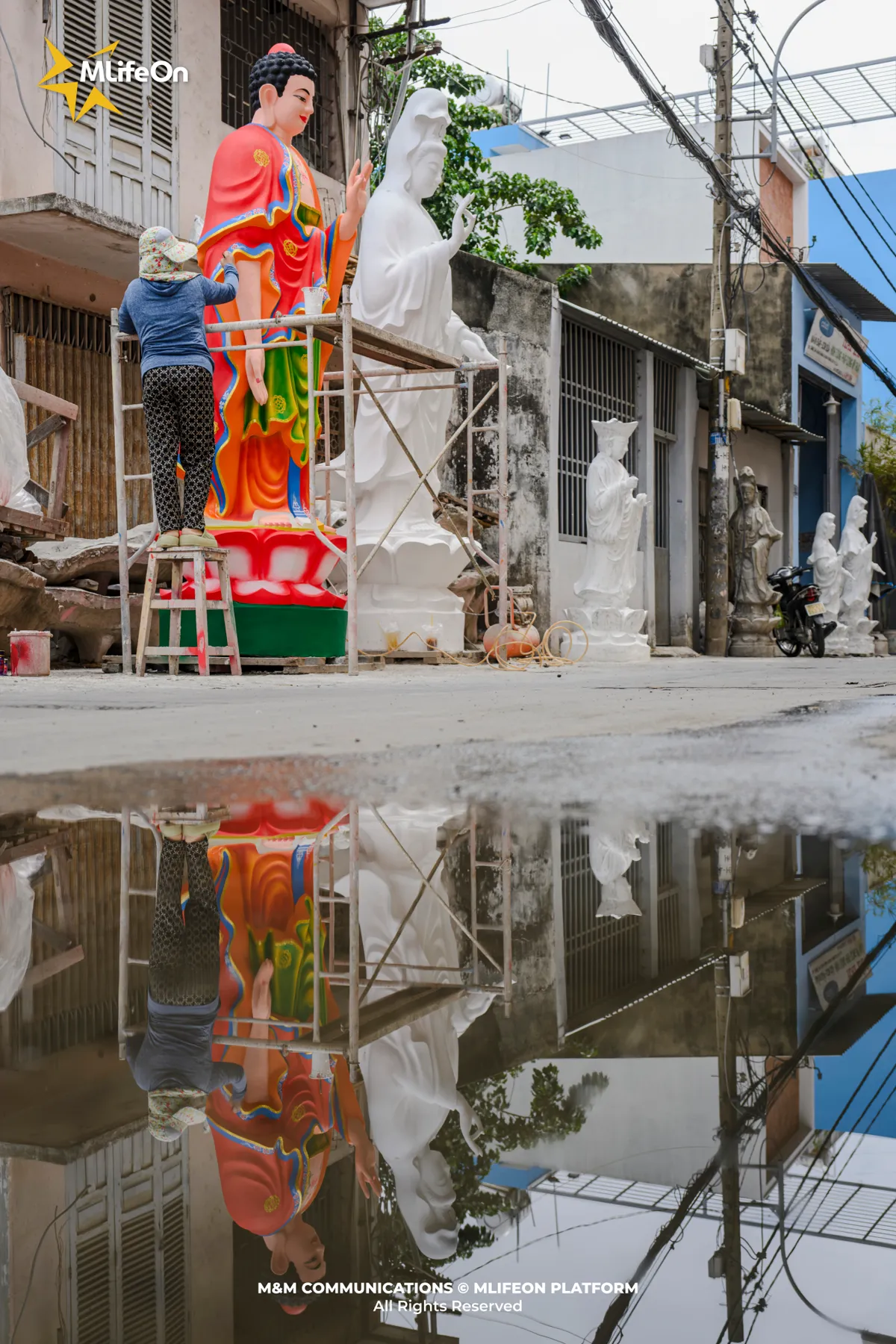
A neighborhood of reclining Buddha statue makers nestled at the foot of Ong Buong Bridge.
As I strolled through the Buddha statue-making neighborhood in District 6, I felt as though I had stepped out of the city’s hectic pace and into a different realm, one that was at once rustic and deeply imbued with a spiritual atmosphere. The narrow alley leading into the neighborhood carried faint scents of paint and plaster, mingled with the dust rising from the crafting process.
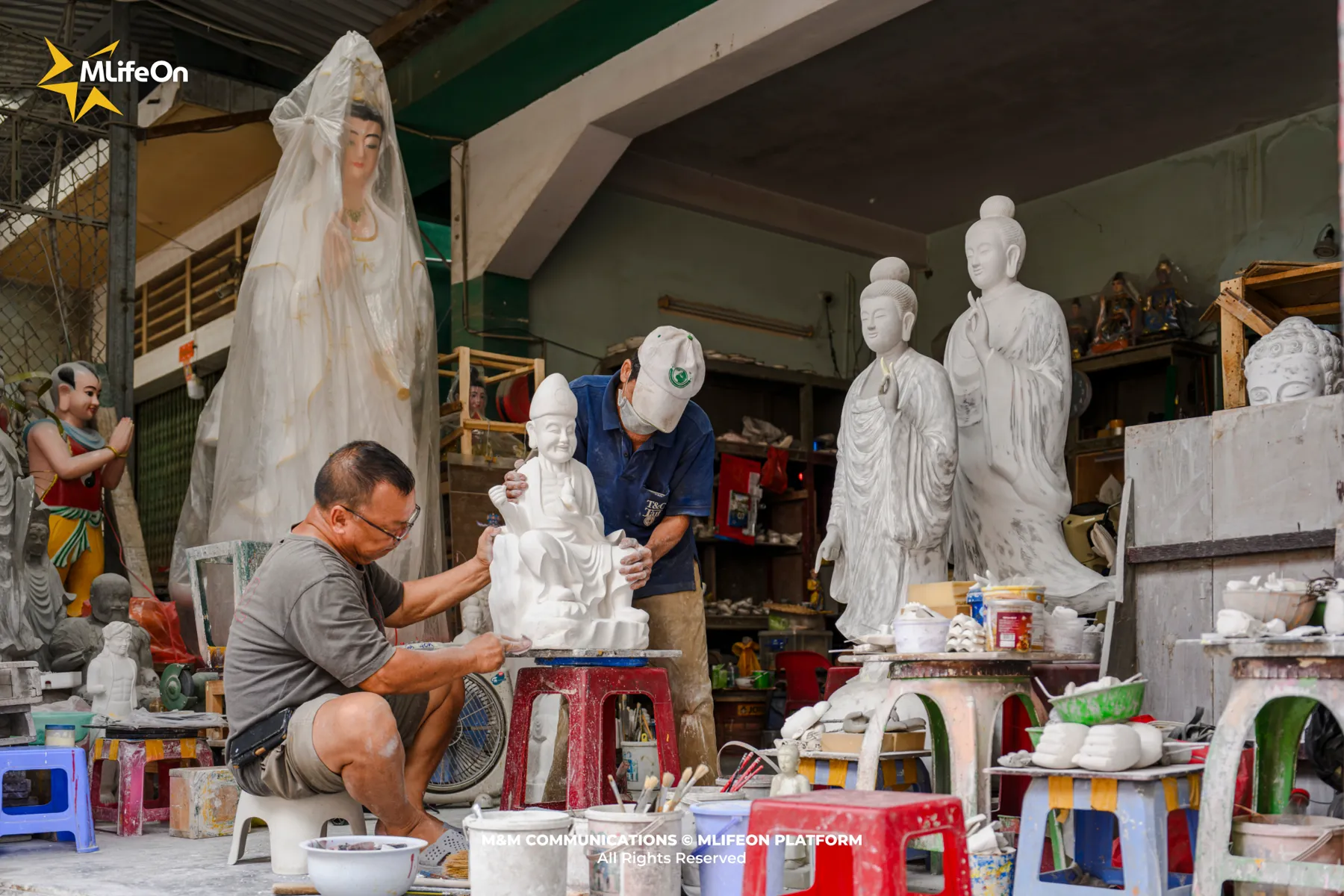
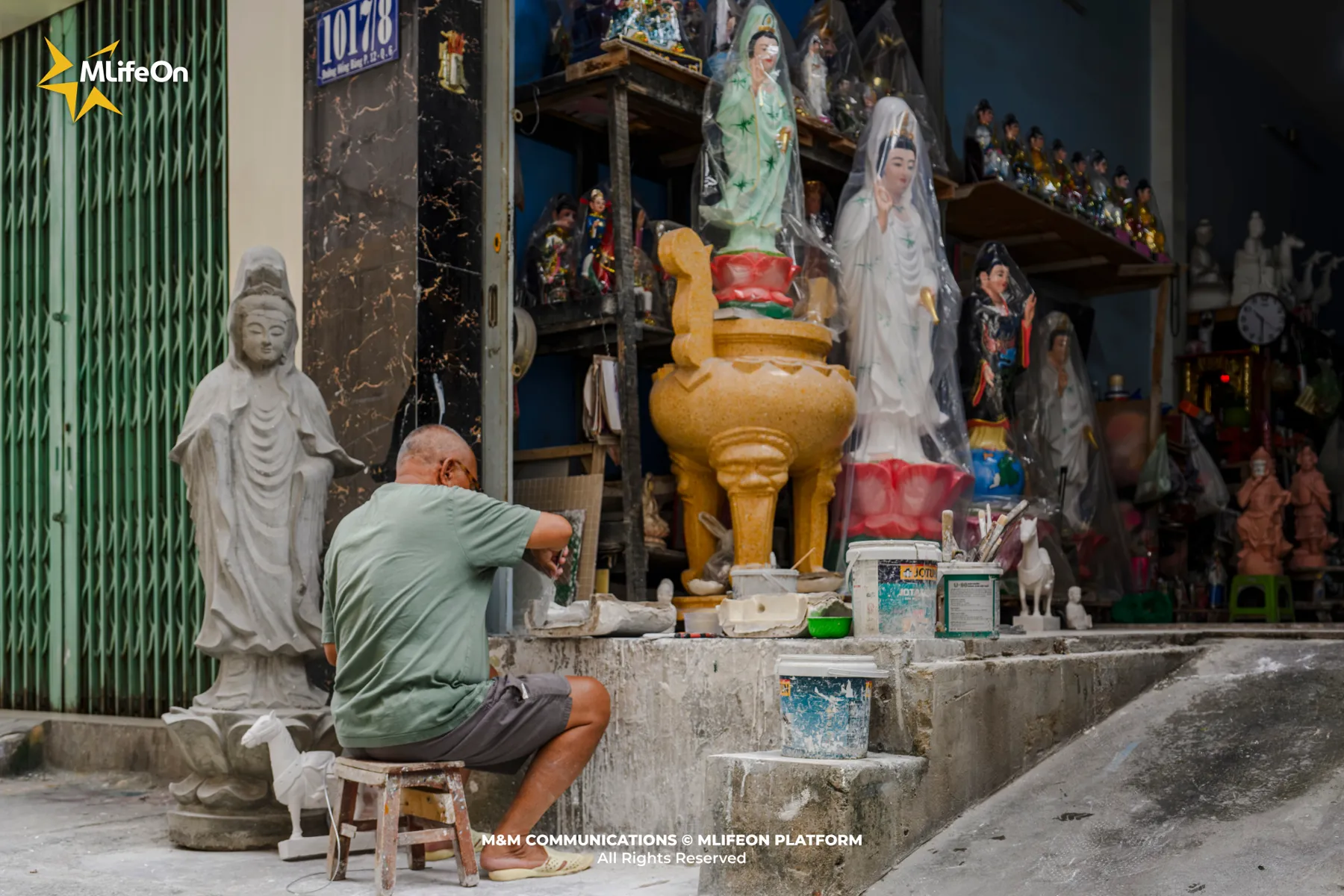
The craft of making Buddha statues originated from the need for devotional images in pagodas; it gradually expanded to become a distinctive craft village in Saigon. While it began with just a few pioneering households, the trade has been passed down from father to son and across generations, fostering a community united by shared faith and vocation. To date, this craft has a history spanning nearly a century.
Currently, about ten workshops remain active in the neighborhood, each operating as a small facility tucked away in the alleyways. Some families have been dedicated to the craft for three generations, viewing statue-making not merely as a livelihood but as a responsibility to preserve a part of their spiritual culture.
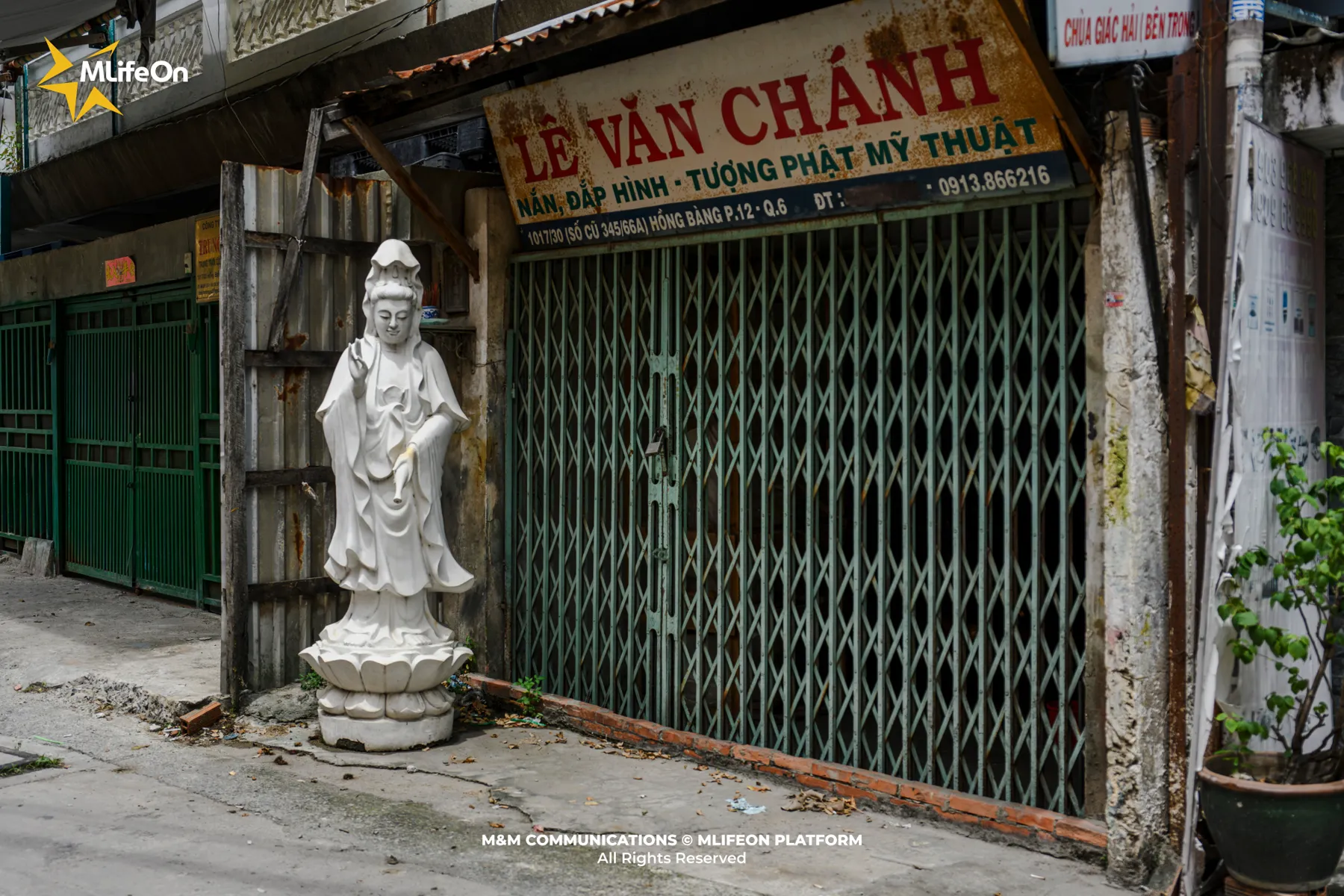
A Buddha statue workshop in District 6.
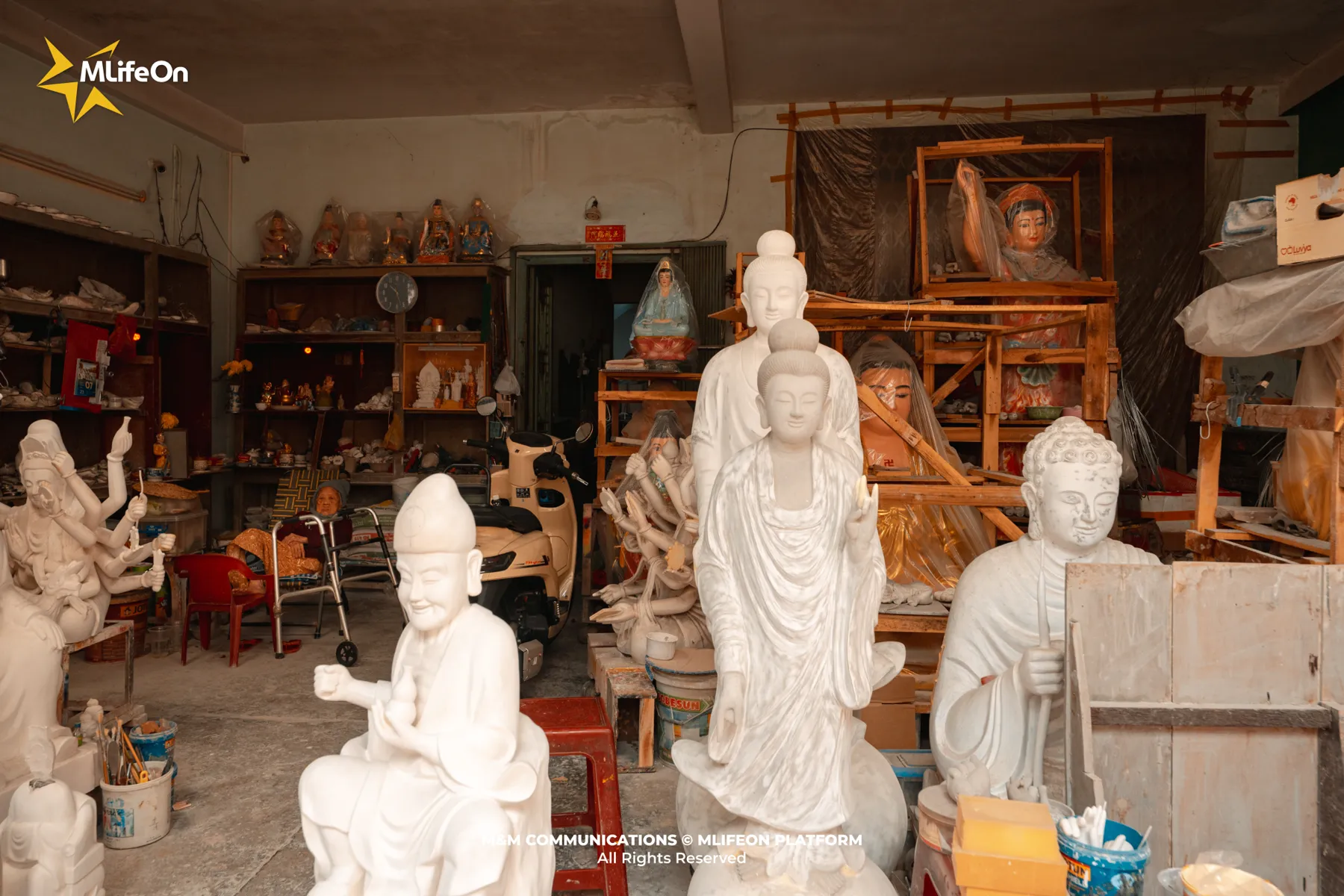
Inside a Buddha statue workshop in District 6.
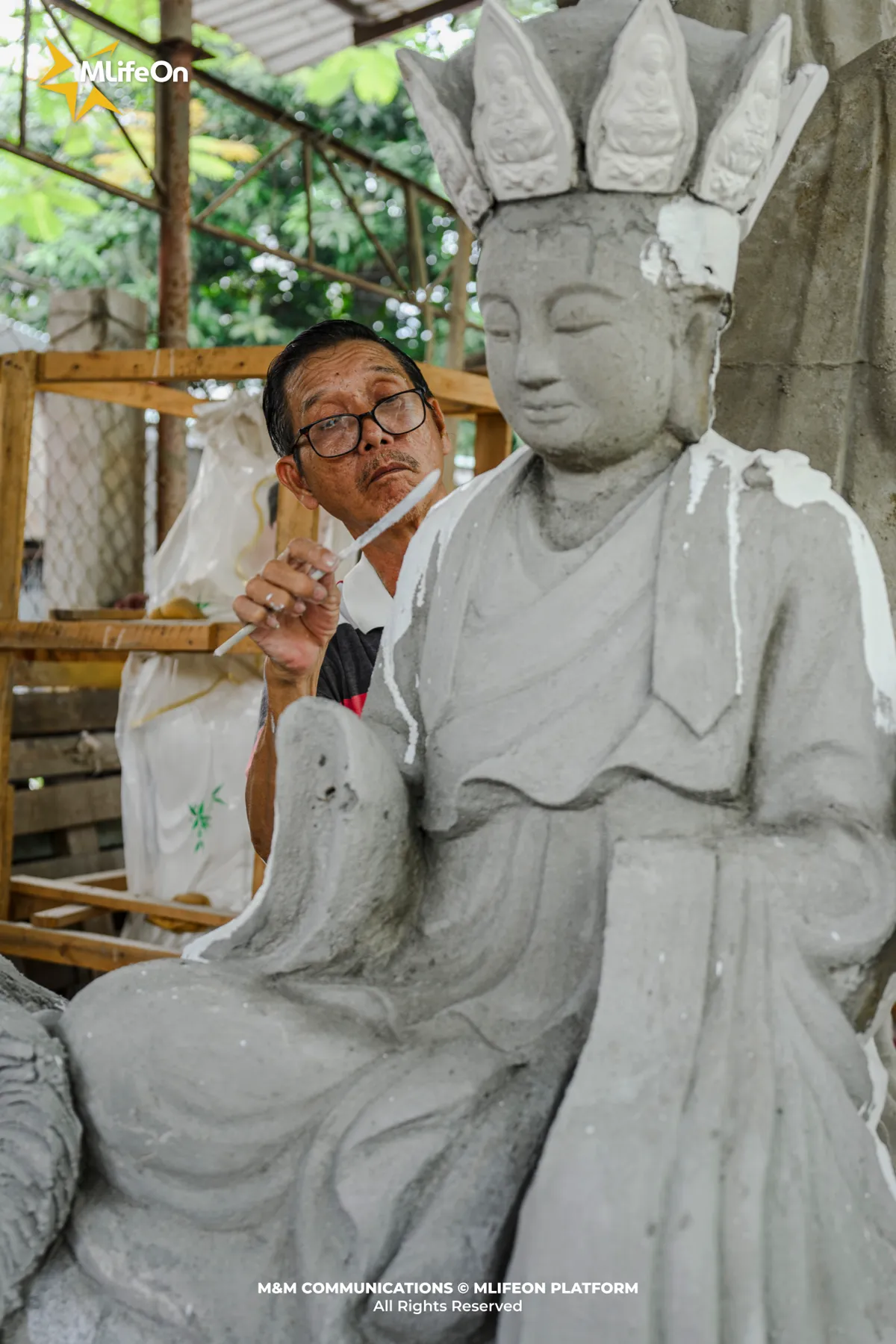
Amidst the narrow alleys, the sounds of chiseling and sanding, mingled with the scents of paint and plaster, have become familiar sounds—an integral part of the local residents' lives for nearly a century.
People and the Craft of Making Buddha Statues
In the Buddha statue-making neighborhood of District 6, each artisan is not merely a craftsman but also a guardian of spiritual values. For them, crafting a statue is not simply about creating a product; it is a meditative journey, a way to embody their faith and devotion.
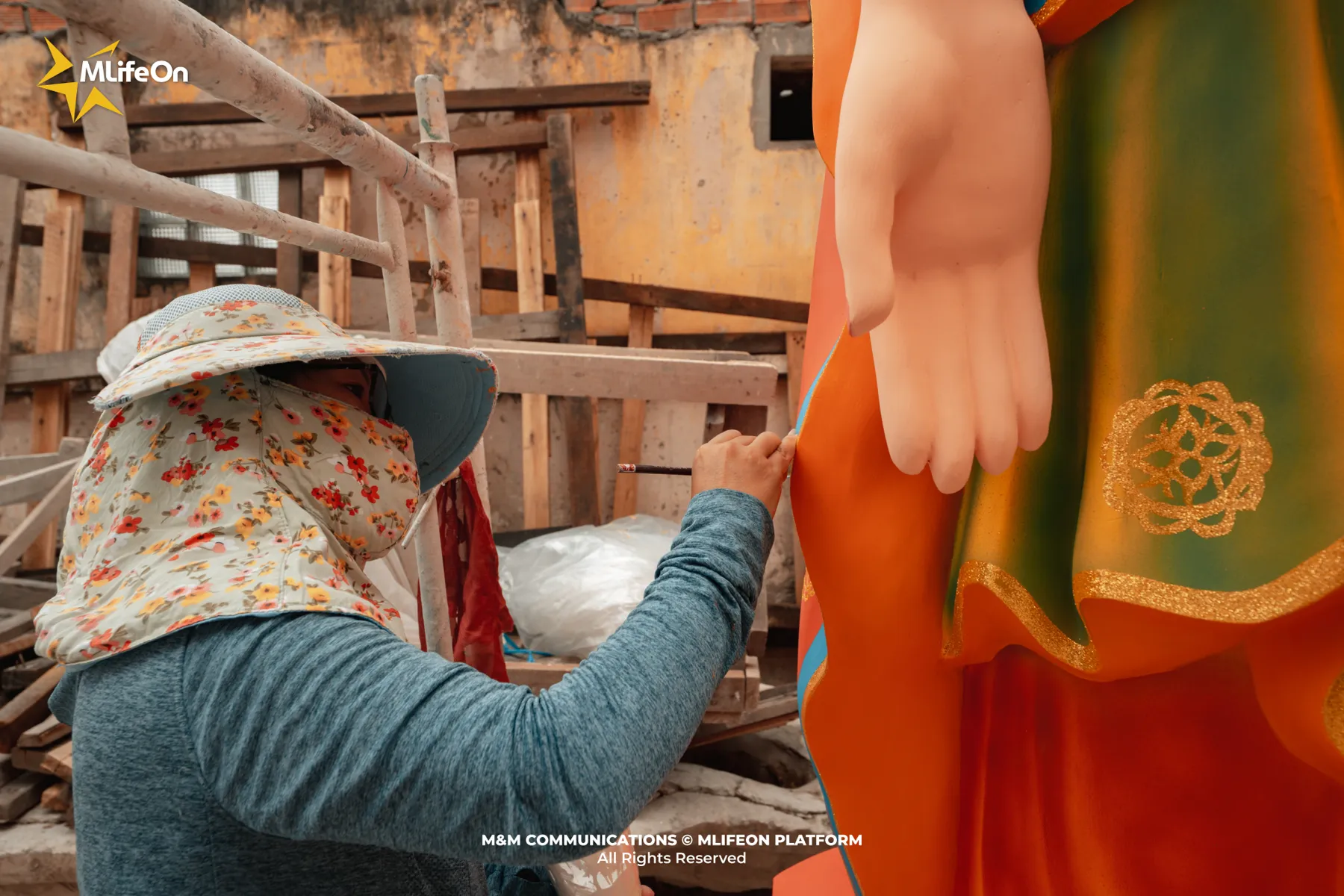
That journey requires the artisan to be patient and meticulous at every stage:
The artisan begins by constructing an armature, typically made of iron or wood to establish the statue's initial form. Next, they apply layers of cement or plaster, sanding the surface until it is smooth and takes on the soft, lifelike texture of human skin. The final stage involves painting and detailing, with the eyes being the most crucial element. Artisans often say that "the eyes are the soul of the statue," as a single misplaced stroke can cause the figure to lose its spiritual essence.
Creating a finished statue can take weeks or even months; throughout this process, the artisan must pour their emotion, patience, and sincerity into every detail.
That is why the Buddha statue here is not only beautiful in form but also possesses a "soul", an inner vitality that instills a sense of peace in the beholder.
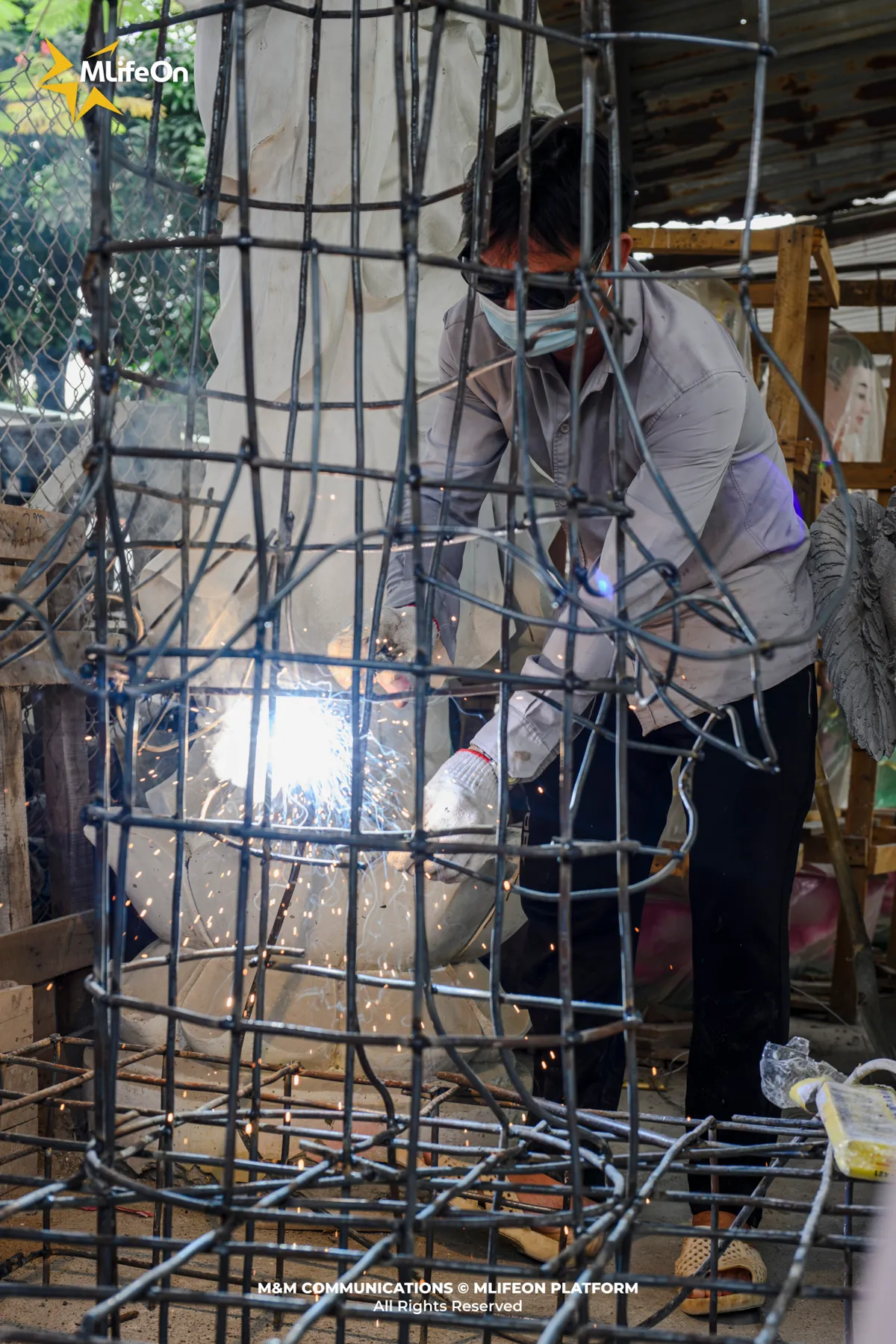
constructing an iron armature for the Buddha statue
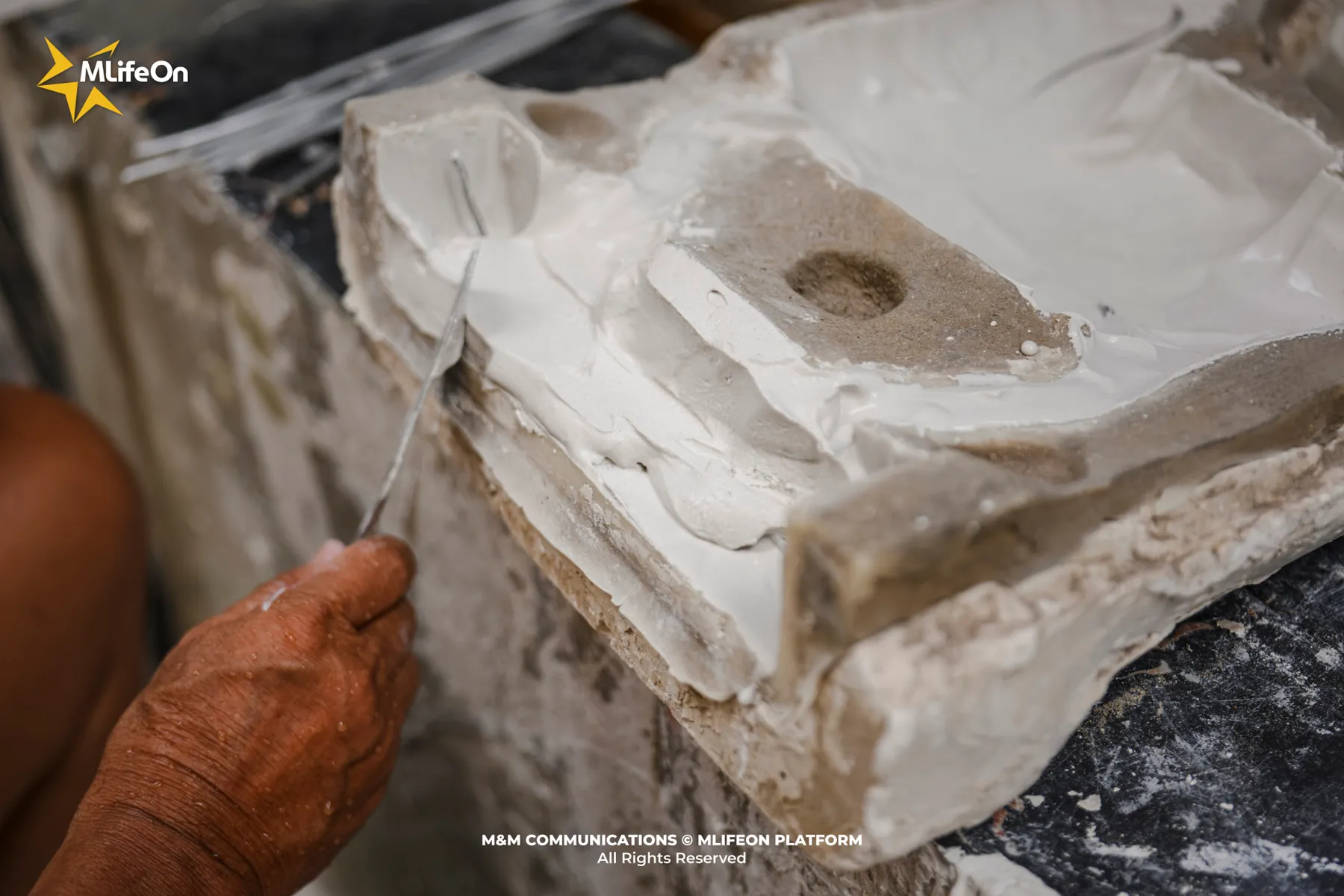
cement/plaster application stage
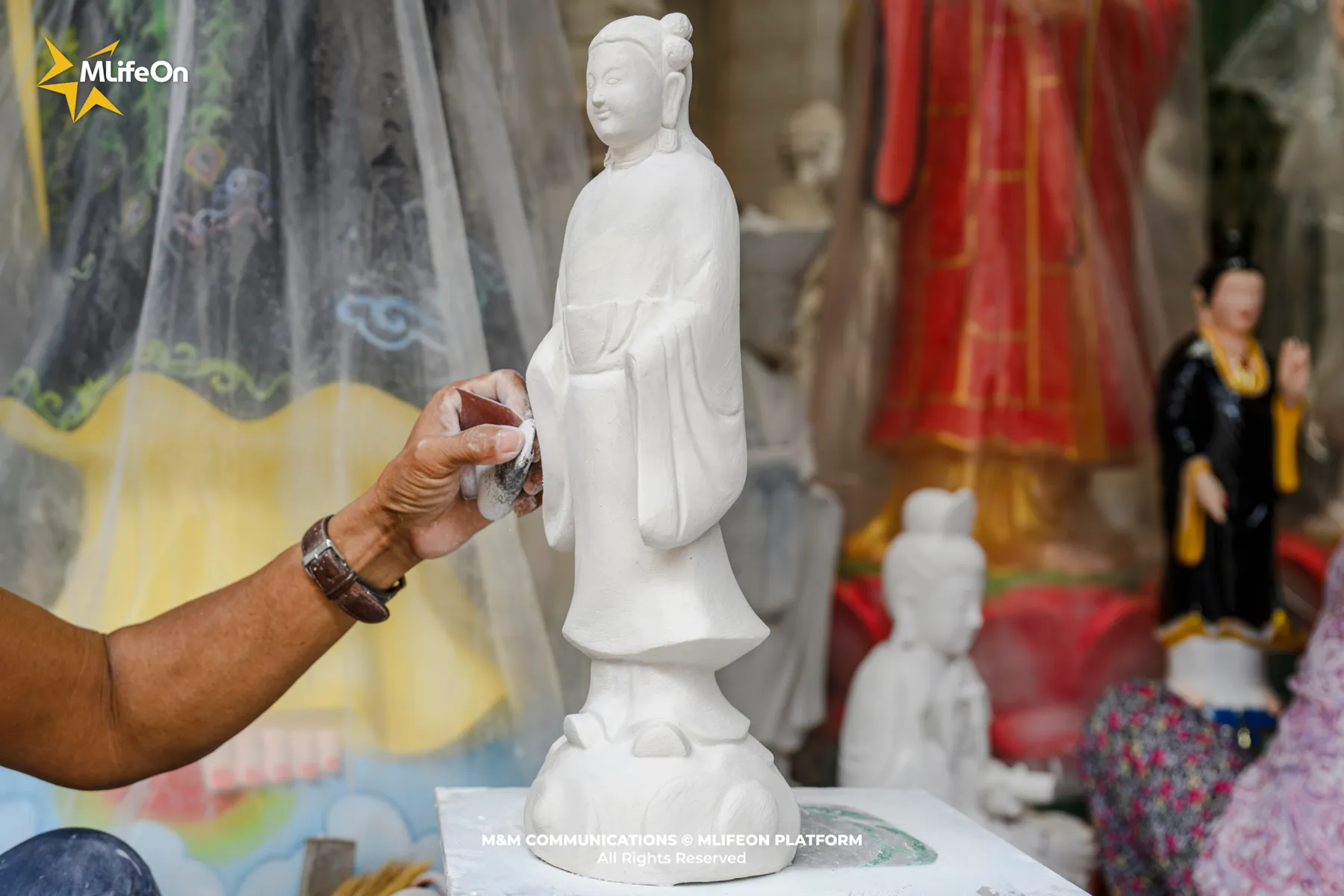
sand the Buddha statue until smooth
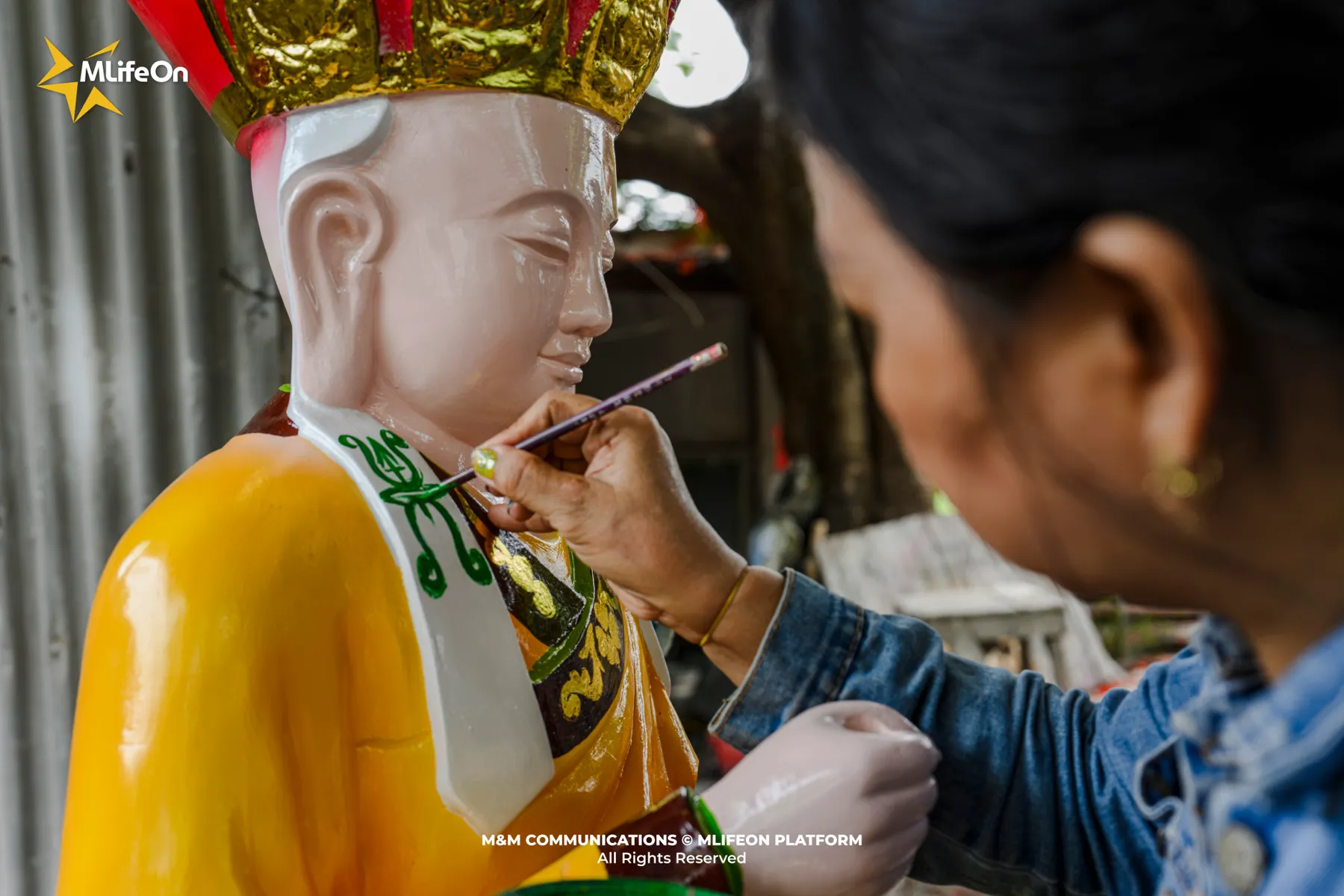
Painting and detailing the statue
In the Buddha statue-making neighborhood, the craft is more than just a livelihood; it is a continuation of tradition and a source of pride for families who have been devoted to it for generations. Fathers pass the trade to their children, who in turn pass it on to their own, creating a bond that links the past with the present. It is this deep connection that has forged a close-knit community, where the sounds of chiseling and sanding resonate daily, serving as the heartbeat of a living heritage in the very heart of Saigon.
The challenges of the times
Despite its profound cultural and spiritual significance, the craft of making Buddha statues in this small neighborhood in District 6 faces numerous challenges, making the path to its preservation and development increasingly arduous.
First, the market is shrinking. In the past, handcrafted Buddha statues were virtually the only choice for pagodas, households, and places of worship. Today, however, the advent of mass-produced, inexpensive, and quickly manufactured statues has led to a marked decline in demand for handmade ones. Consequently, many artisans struggle to find outlets for their products, often having to accept small, sporadic orders just to keep the craft alive.
Next is the rising cost of raw materials. Familiar materials such as wood, cement, and plaster have all seen price hikes, driving up production costs. Meanwhile, raising selling prices is difficult due to fierce market competition. Artisans must balance maintaining quality with managing expenses, resulting in increasingly meager profits.
Another challenge is the shortage of young workers. Statue making is a demanding craft requiring patience and high levels of skill, yet the income is unstable. As a result, few young people are interested in carrying on their forebears' trade. In many households within the neighborhood, only the elderly continue the work, placing the craft at risk of fading away.
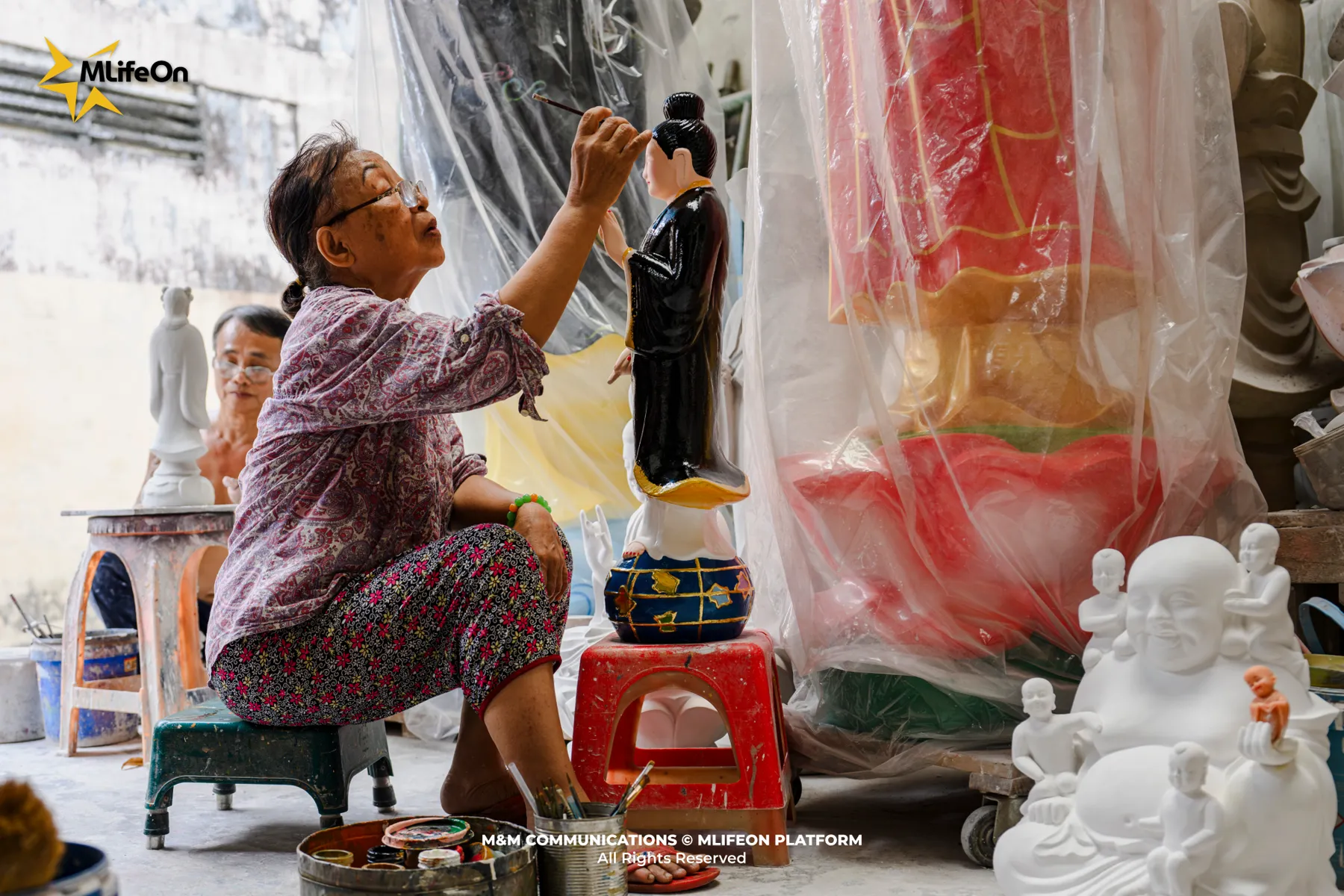
In many families within the neighborhood that craft Buddha statues, only the elderly continue to carry on the work.
Limited production space also poses a challenge. The Buddha statue-making enclave is situated within narrow alleys where houses are packed closely together, making it virtually impossible to expand workshops or invest in modern machinery. Consequently, artisans must work in somewhat constrained conditions, relying primarily on manual skill and generations-old expertise.
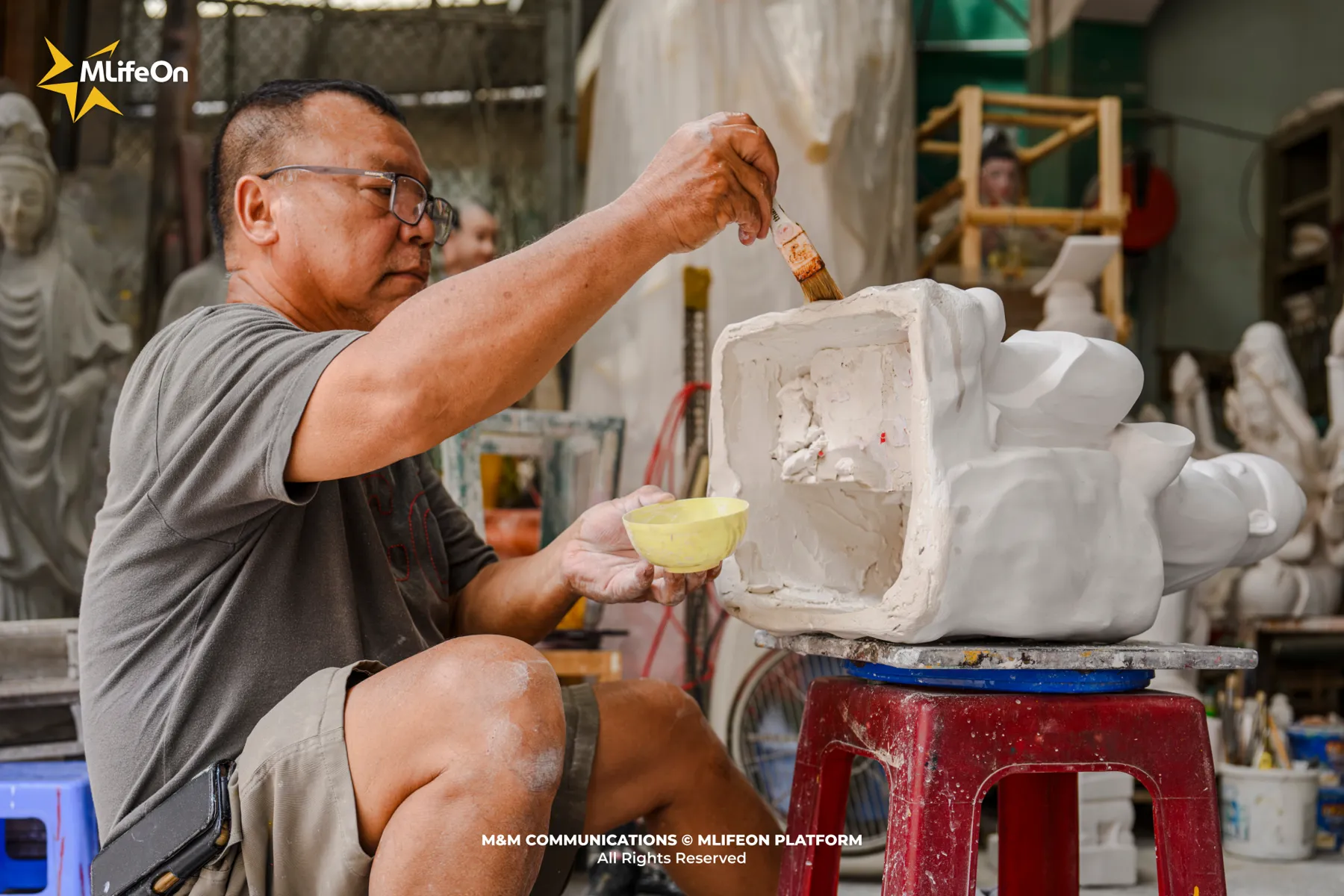
The craft of making Buddha statues here relies on skilled hands and experience passed down through generations.
Yet, above all else, the local artisans steadfastly preserve their craft. For them, crafting Buddha statues is not merely a livelihood but a responsibility toward their ancestors and their national culture. Each completed statue stands as a testament to the perseverance, sincerity, and faith of these artisans.
Conclusion
The Buddha statue-making enclave in District 6 is not merely a place where statues of artistic and spiritual value are created; it also stands as a testament to the enduring nature of a traditional craft village amidst the modern urban landscape.
If you have the chance, do visit this neighborhood; you will experience the harmonious blend of craftsmanship and spiritual faith, a truly unique facet of Saigon's charm.
—-------
CREDIT:
- Photography: Luan Nguyen, Quan Tran
- Content: Giang Huynh
- Design: Phuong Nguyen