BUN DAU MAM TOM - HANOI’S RENOWNED DELICACIES
Discover Hanoi-style vermicelli with tofu and shrimp paste, a rustic dish and a specialty of the Old Quarter.
With nothing more than a serving of rice vermicelli, a few pieces of golden-fried tofu, and a bowl of aromatic shrimp paste, this dish has captivated countless diners. Hanoi’s bun dau mam tom is exactly that kind of dish: rustic and unpretentious, yet it has become an integral part of the local people's memories and a source of their pride.
The origins of the dish
In the past, bun dau mam tom (Rice Vermicelli with Fried Tofu and Fermented Shrimp Paste) was a simple dish consisting of small cuts of bun la (pressed vermicelli patties) served with hot, crispy fried tofu and a bowl of shrimp paste mixed with a touch of lime, chili, and sugar. What set Hanoi’s version apart back then was the use of Tu Ky vermicelli*, noodles that were snow-white and pleasantly chewy, holding their texture perfectly when dipped in the shrimp paste.
*Tu Ky vermicelli: a traditional vermicelli specialty from the long-standing craft village of Tu Ky (now part of Hoang Liet Ward, Hoang Mai District, Hanoi).
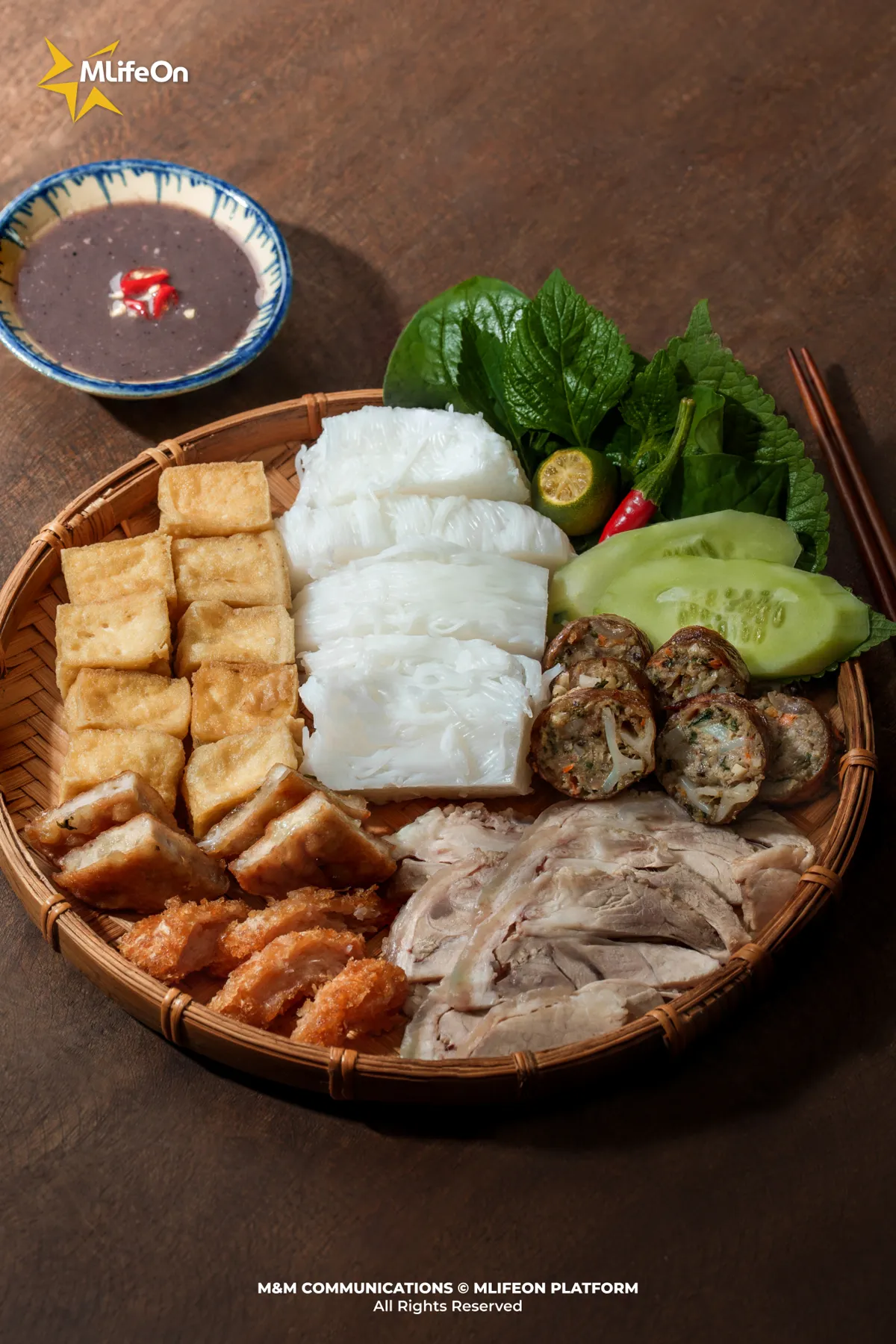
Then there is the dipping sauce, a key element that sets this dish apart. Hanoians have a distinctive way of preparing mam tom (fermented shrimp paste): it is whipped until smooth and fluffy with calamansi, sugar, and chili, sometimes with a splash of clear rice spirit or fried shallots added for aroma. It is precisely this refinement that transforms such a humble, rustic dish into a truly unique culinary experience in Hanoi.
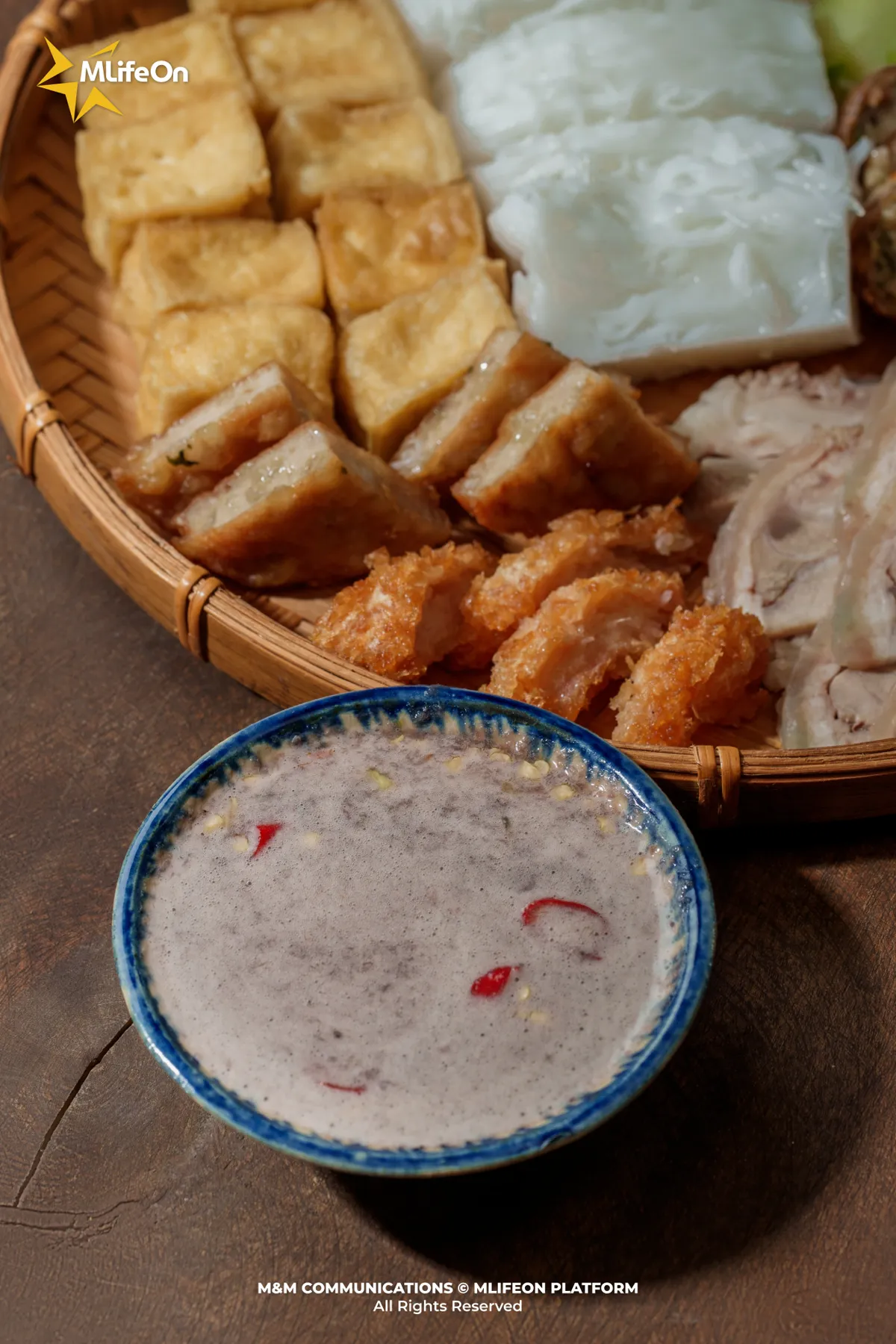
The shrimp paste is whipped together with calamansi, sugar, and chili.
In the past, bun dau mam tom was a familiar dish among laborers and students alike, as it was affordable, filling, and easily found at street vendor stalls in Hanoi's Old Quarter.
The image most closely associated with this dish back then was the vendor’s carrying pole with its two baskets: one held a small stove for frying tofu until hot and crispy to order, while the other contained a flat basket of rice vermicelli, fresh herbs, and a small bowl of shrimp paste. The vendor would typically sit on a low stool, with customers gathered around the carrying pole to enjoy their meal.
At that time, the familiar street vendor’s call, “Who wants bun dau?”, echoed through the streets of Hanoi, becoming a cherished part of the capital’s collective memory.
Hanoi-style bun dau today
Originally, bun dau mam tom was merely a dish for the working class and was not highly regarded. Over time, however, this appealing dish spread throughout Hanoi, winning over the palates of people from all walks of life. From the Old Quarter, it eventually reached other provinces and cities, becoming a favorite across various social strata.
Today, Hanoi’s bun dau mam tom has firmly established itself as a beloved national dish, a unique and vibrant highlight within the rich tapestry of Vietnamese cuisine.
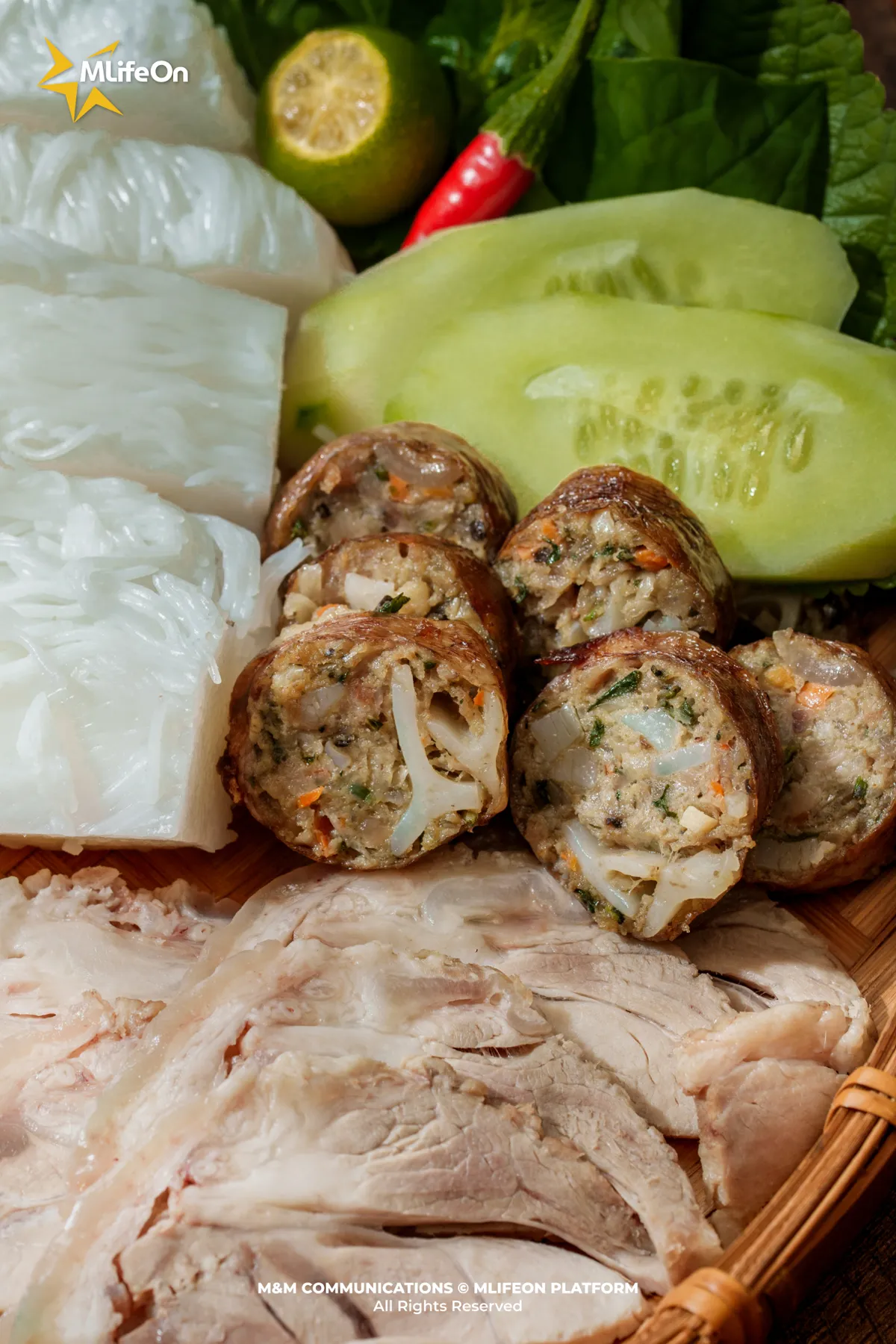
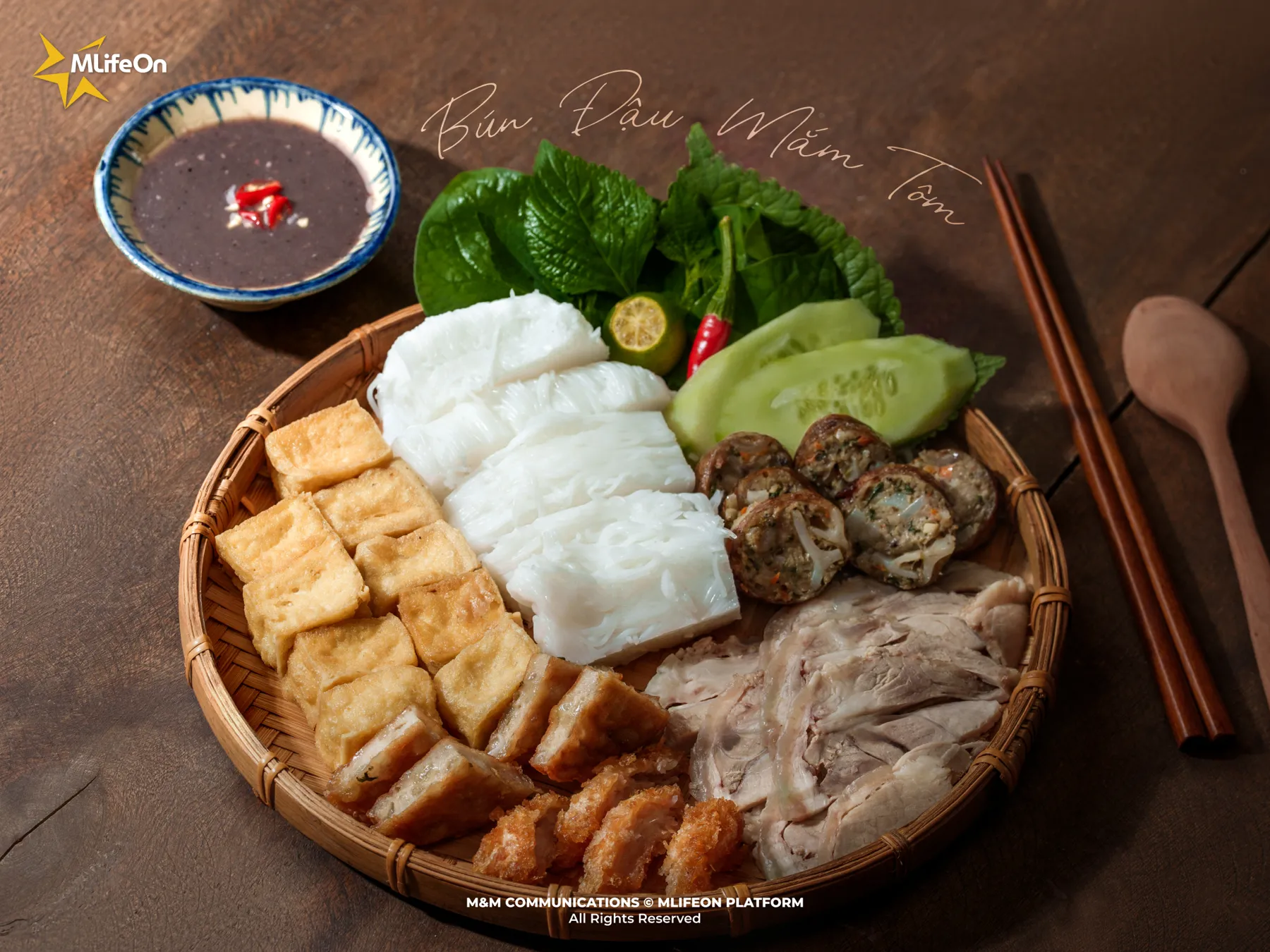
A bun dau platter is no longer limited to just rice vermicelli and fried tofu; it now features a wide variety of additional toppings. Everything is arranged on a bamboo tray lined with banana leaves, creating a presentation that is both rustic and eye-catching.
-
Mo Village tofu: golden and crispy on the outside, soft and smooth on the inside.
-
Green rice patties (cha com): chewy and aromatic, capturing the signature flavor of Hanoi's autumn delicacy.
-
Boiled pork shank: tender and sweet, thinly sliced.
-
Fried fermented pork rolls and fried offal: crispy and crunchy, adding variety.
-
Accompaniments: fresh herbs and cucumber, helping to balance the flavor of the shrimp paste sauce.
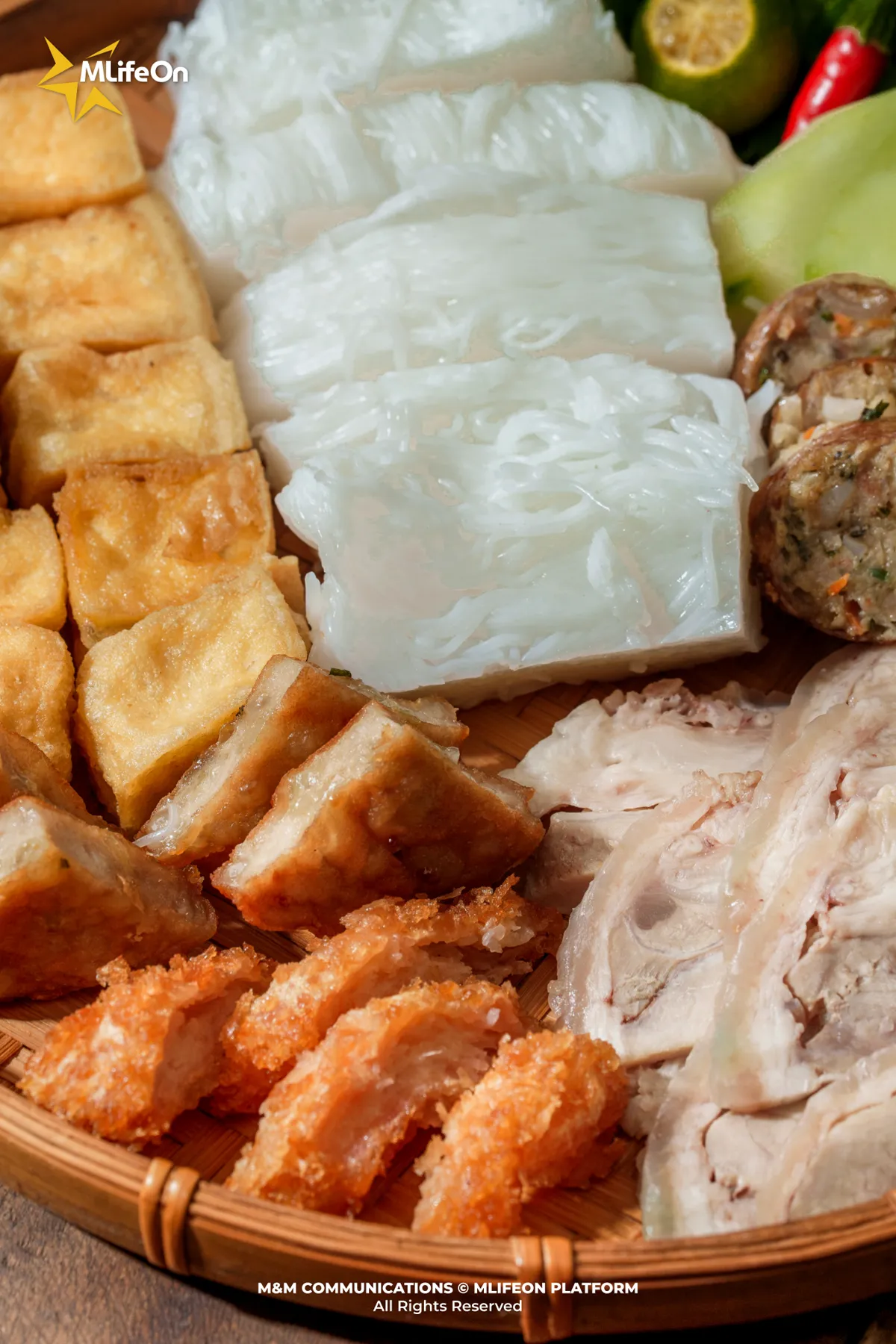
Nowadays, bun dau comes with a wide variety of toppings.
From street corners to eateries, bun dau mam tom is now available at a wide range of price points, from budget-friendly to upscale. Yet, regardless of the version, it is the rustic essence, the bamboo tray, banana leaf, pressed vermicelli cakes, hot fried tofu, and a bowl of pungent shrimp paste, that leaves a lasting impression of this Hanoi specialty.
Eating Hanoi-style bun dau is not merely about enjoying a delicious meal; it is a unique culinary-cultural experience that leaves a lasting impression.
Conclusion
Hanoi’s bun dau mam tom stands as a testament to the enduring vitality of rustic Vietnamese cuisine. From the humble street hawker stalls of the past to today’s bustling eateries, the dish, in any of its forms, retains its down-to-earth character and unmistakable, signature flavor.
If you have the chance to visit Hanoi, be sure to stop by a shop, order a platter, and savor the experience to appreciate what makes it so special.
—-----
CREDIT:
- Photography: M&M Productions
- Content: Giang Huynh
- Design: Phuong Nguyen