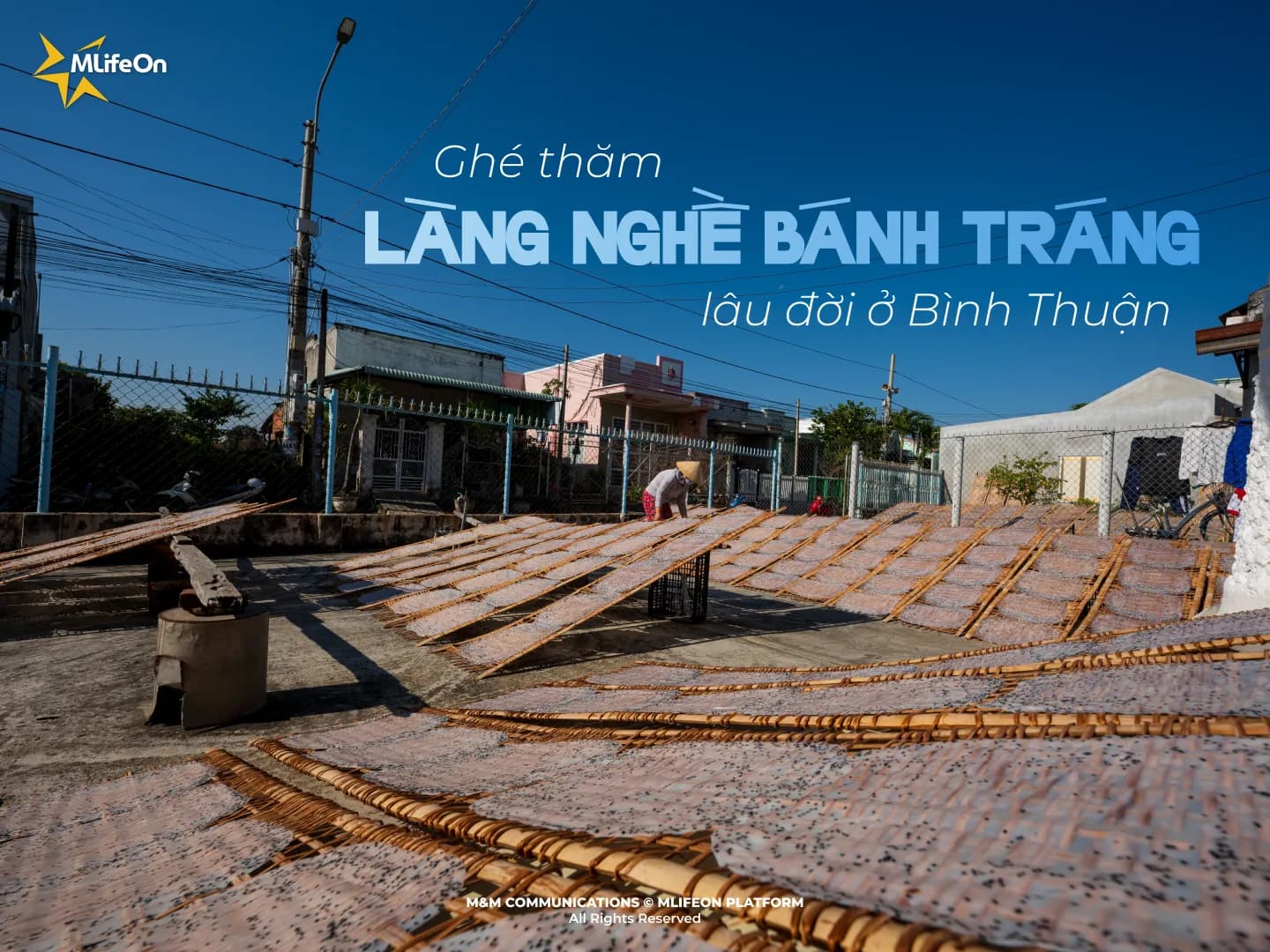
VISITING A LONG-STANDING RICE PAPER CRAFT VILLAGE IN BINH THUAN

Hoài Hà
VISITING A LONG-STANDING RICE PAPER CRAFT VILLAGE IN BINH THUAN
Amid the characteristic sun and wind of Binh Thuan, traditional rice paper villages continue to keep their stoves burning every day. From wood-fired stoves and pots of rice batter to bamboo racks filled with drying sheets, the craft of hand-made rice paper not only creates a familiar flavor but also preserves a tradition passed down through generations.

Rice paper villages under the sun and wind of Binh Thuan

When people think of Binh Thuan, they often picture blue seas, white sand, and year-round sunshine and wind. Yet beyond its coastal landscapes, the province is also home to long-standing rice paper craft villages that have been an intergral part of local life for generations.

The traditional hand-made rice paper craft can be found most clearly in villages such as Phu Long (Ham Thuan Bac District) and Cho Lau (Bac Binh District). For many years, these villages have maintained a steady pace of production quiet and unassuming, yet distinctive enough to leave a mark on the everyday life of Binh Thuan.
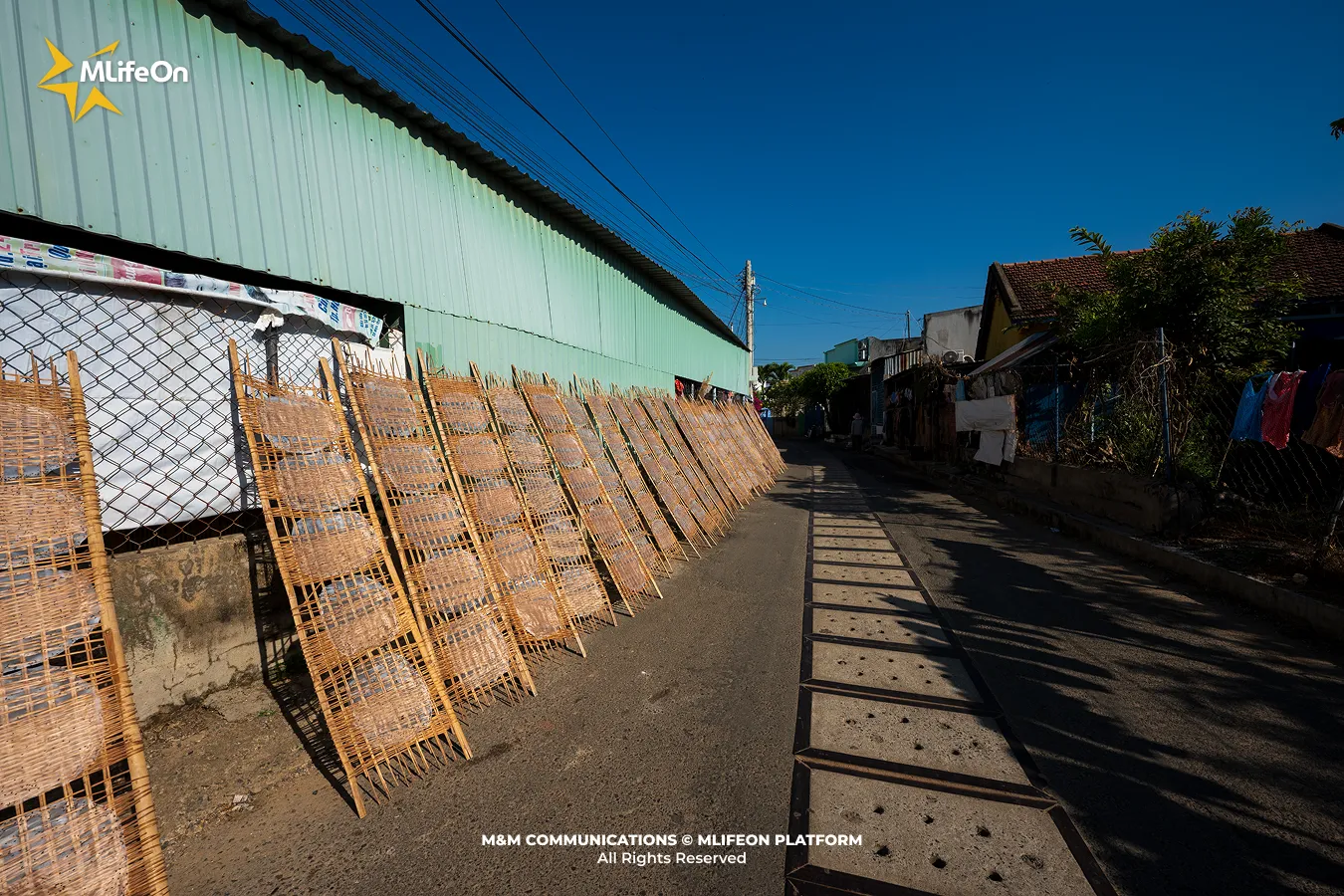
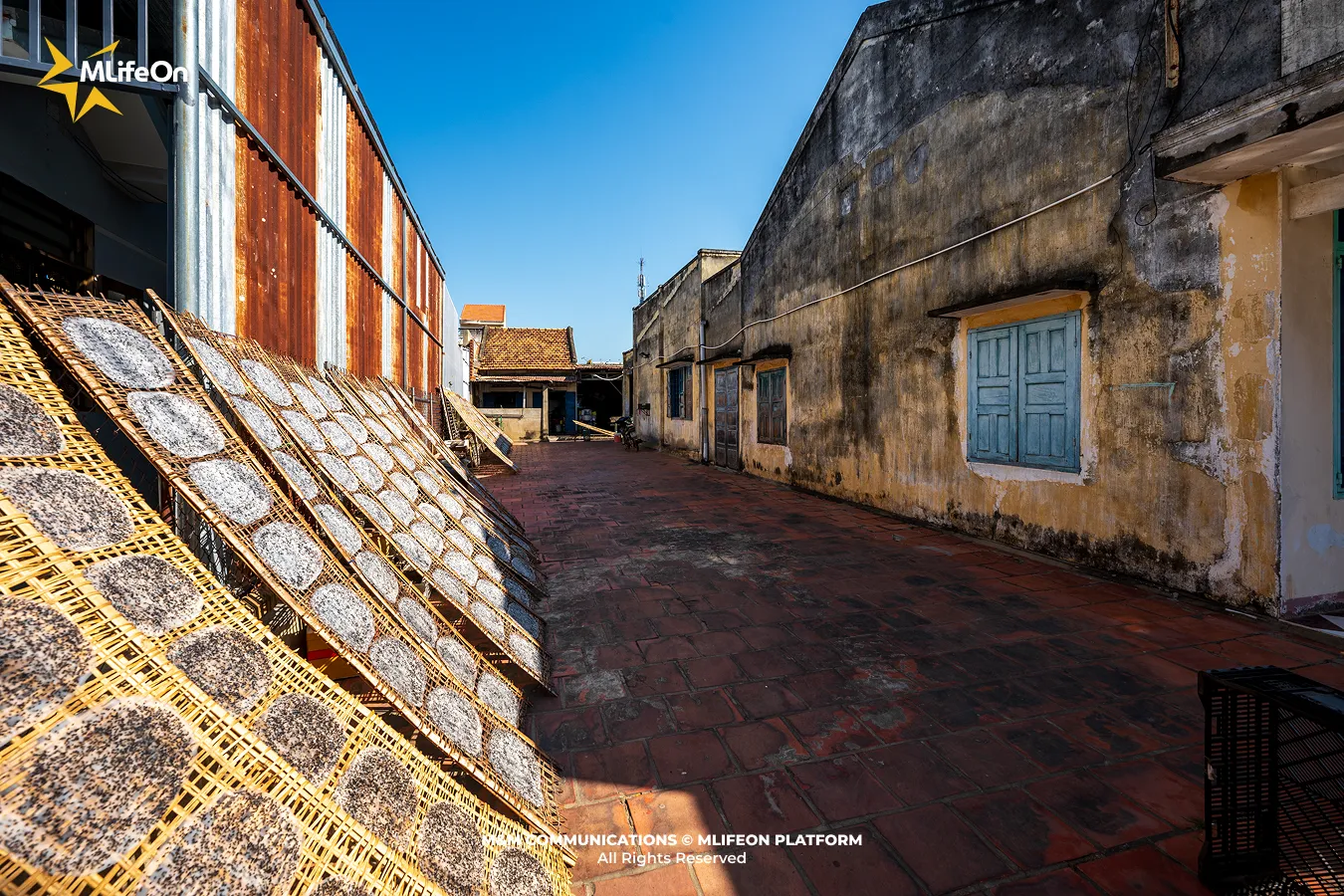
Frame 1103.png

Frame 1107.png

Rice paper here is not a mass-produced industrial product. Each sheet is the result of many careful manual steps that require both experience and patience. The craft continues to exist thanks to the dedication of local residents and the kitchen fires that remain lit every day in household courtyards.

A new day begins with the stove and a pot of rice batter

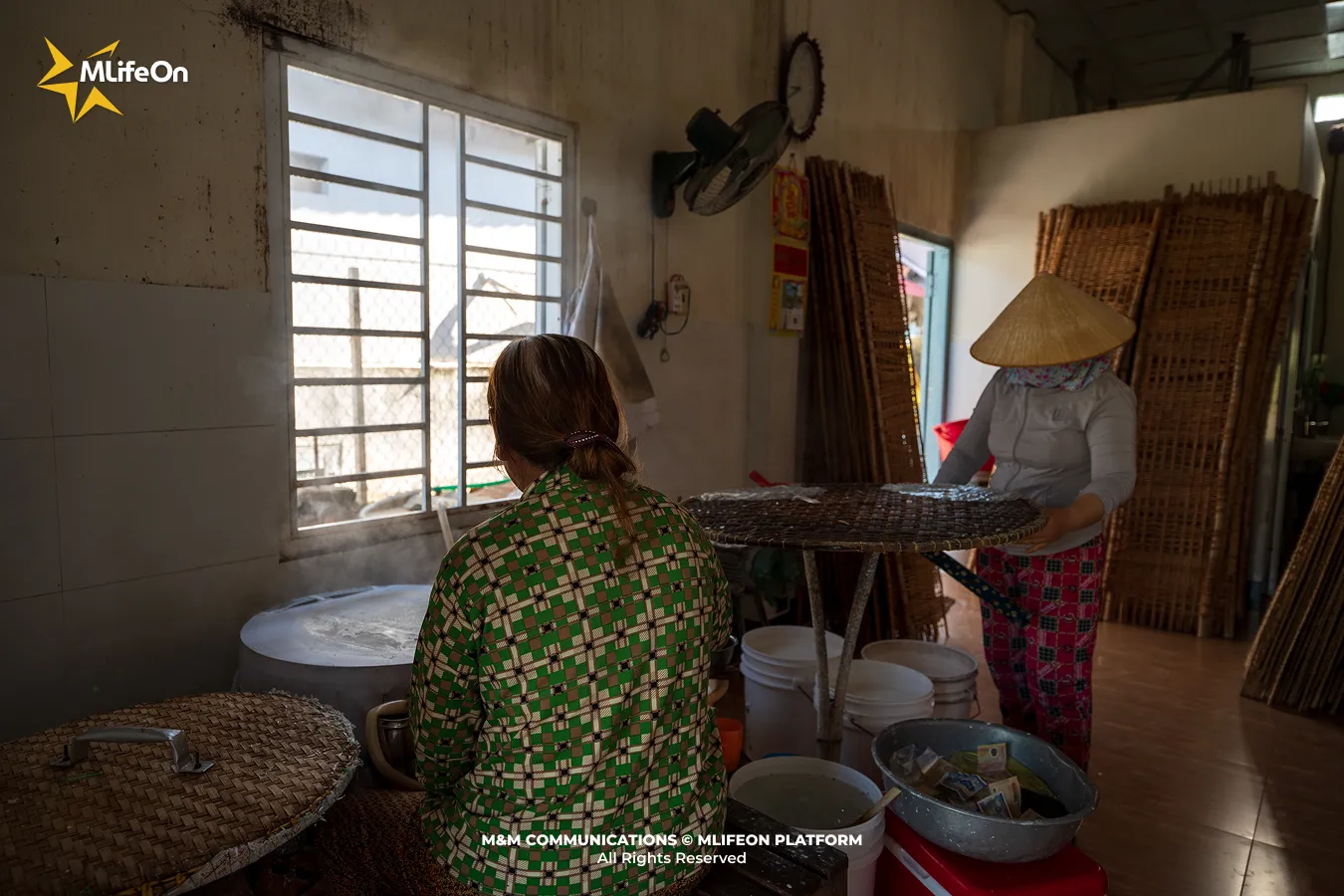
From early morning, before the sun rises high, families begin lighting their stoves. The fire is fueled by rice husks - a familiar and readily available material that requires skill to control in order to maintain a steady heat.
Frame 1096.png

To produce fragrant and flexible rice paper, the makers must first select high-quality rice, soak it until soft, and grind it into fine batter. Mixing the batter is considered the most challenging step because even a slight mistake in thickness or water ratio can affect the final quality of the rice paper.

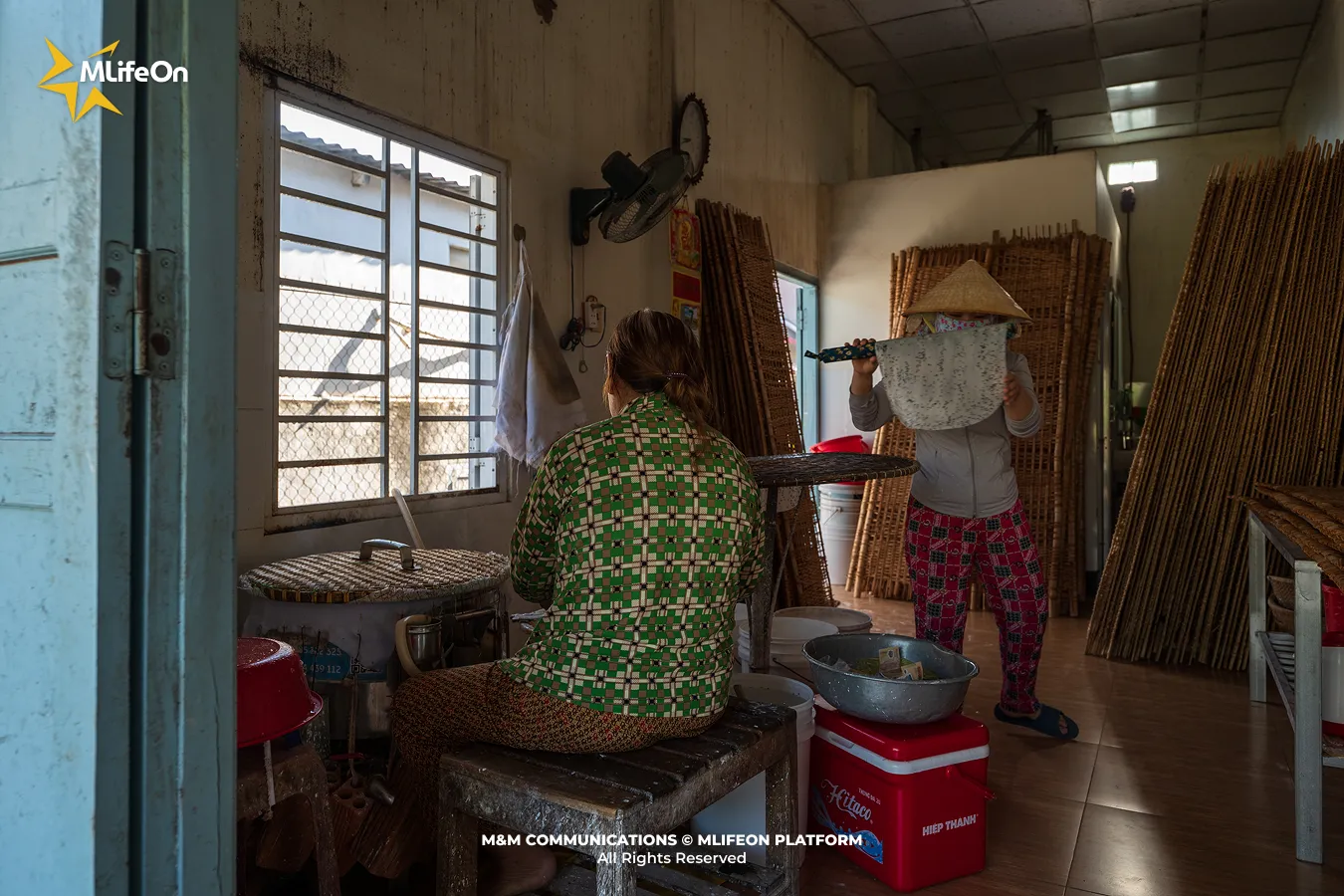
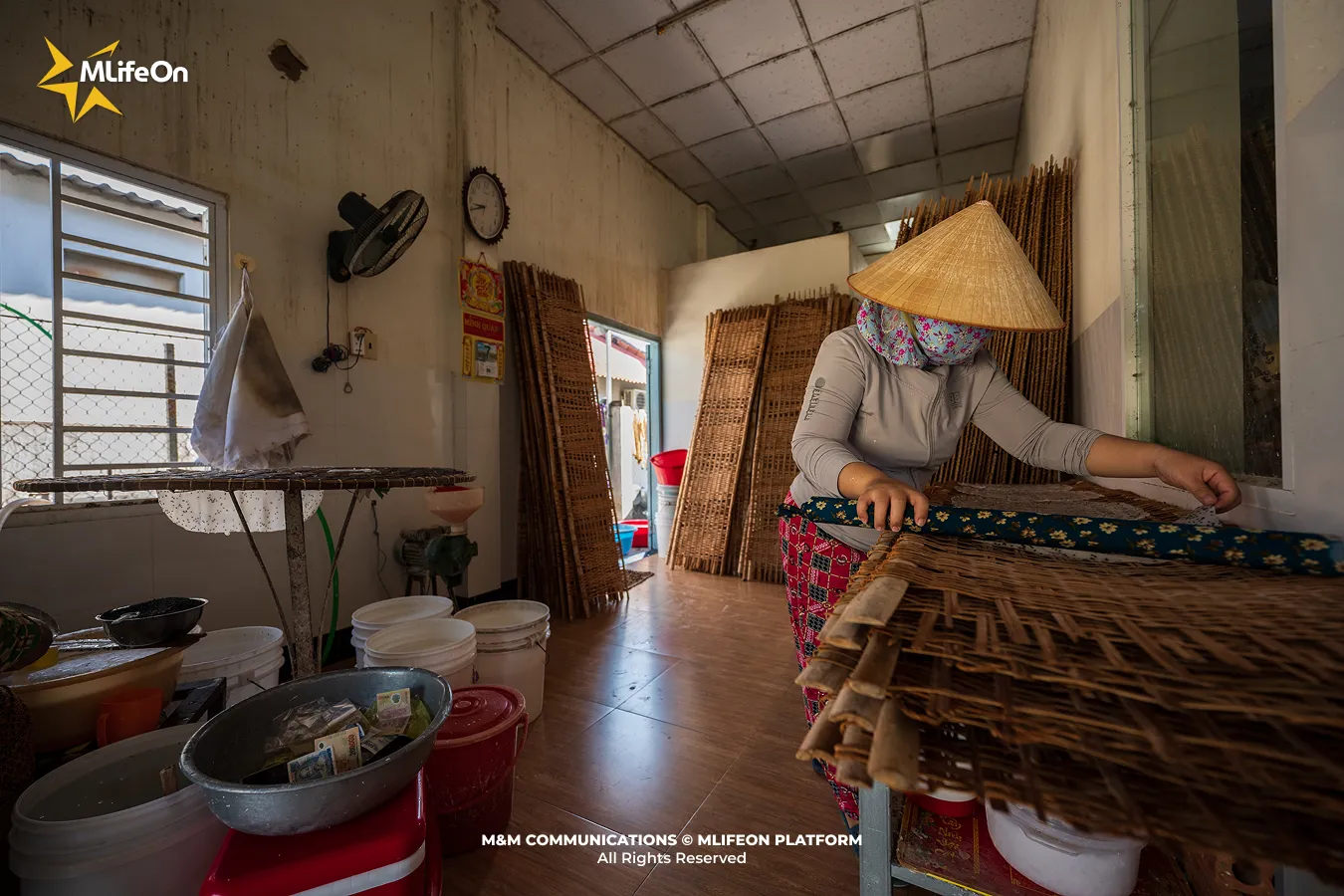
When steaming, a ladle of batter is poured onto a cloth stretched over a pot of boiling water and spread evenly into a thin circular layer. The lid is then placed on top to allow the sheet to cook. The fire cannot be too weak, or the rice paper will remain undercooked; it cannot be too strong either, or the edges will dry out.
Frame 1095.png

Frame 1085.png

Once the rice paper is cooked just right, the maker skillfully uses a bamboo stick to lift it from the cloth and place it onto a drying rack. This motion is repeated hundreds of times in a single morning steady and precise.

Behind each batch of rice paper lies patience and precision

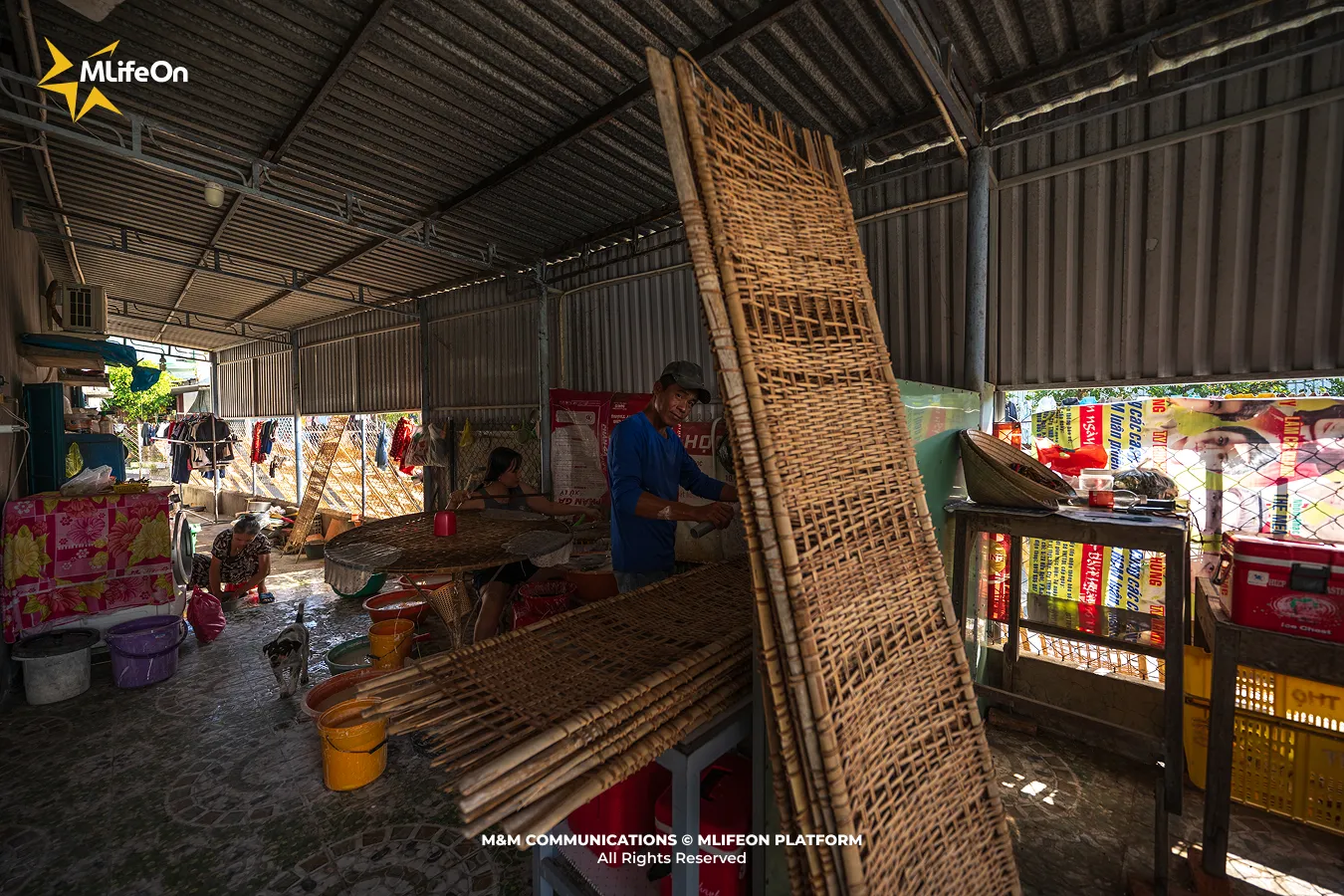
Rice paper making leaves no room for haste. From selecting rice and mixing batter to controlling the fire and removing the sheet from the mold, every step requires experience accumulated over many years.

Each batch reflects the patience of the craftsperson. Standing beside a hot stove, their hands move quickly while their eyes carefully monitor every sheet. A single small mistake can cause the rice paper to tear, warp, or lose the thinness required.
Frame 1105.png

Frame 1084.png

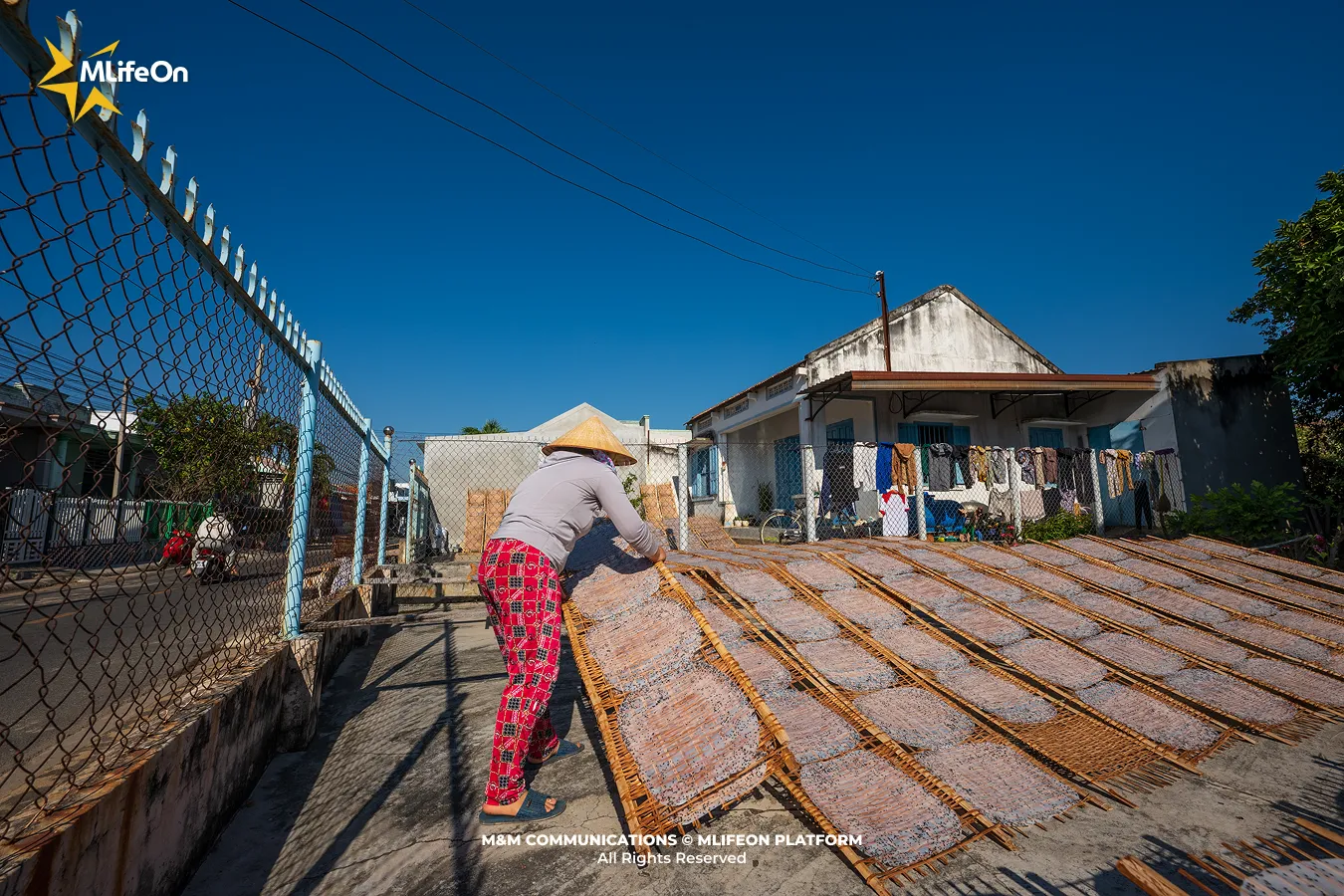
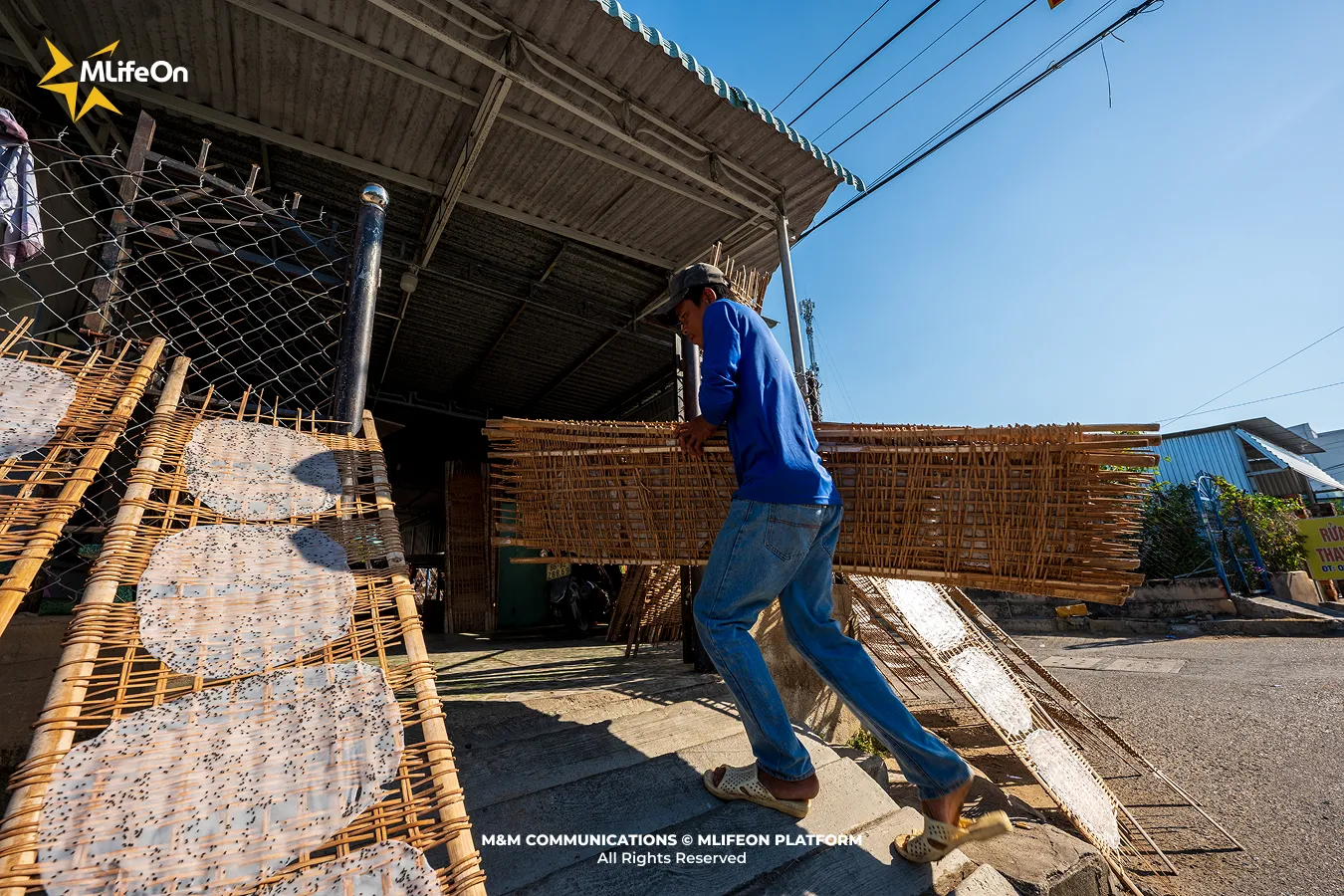
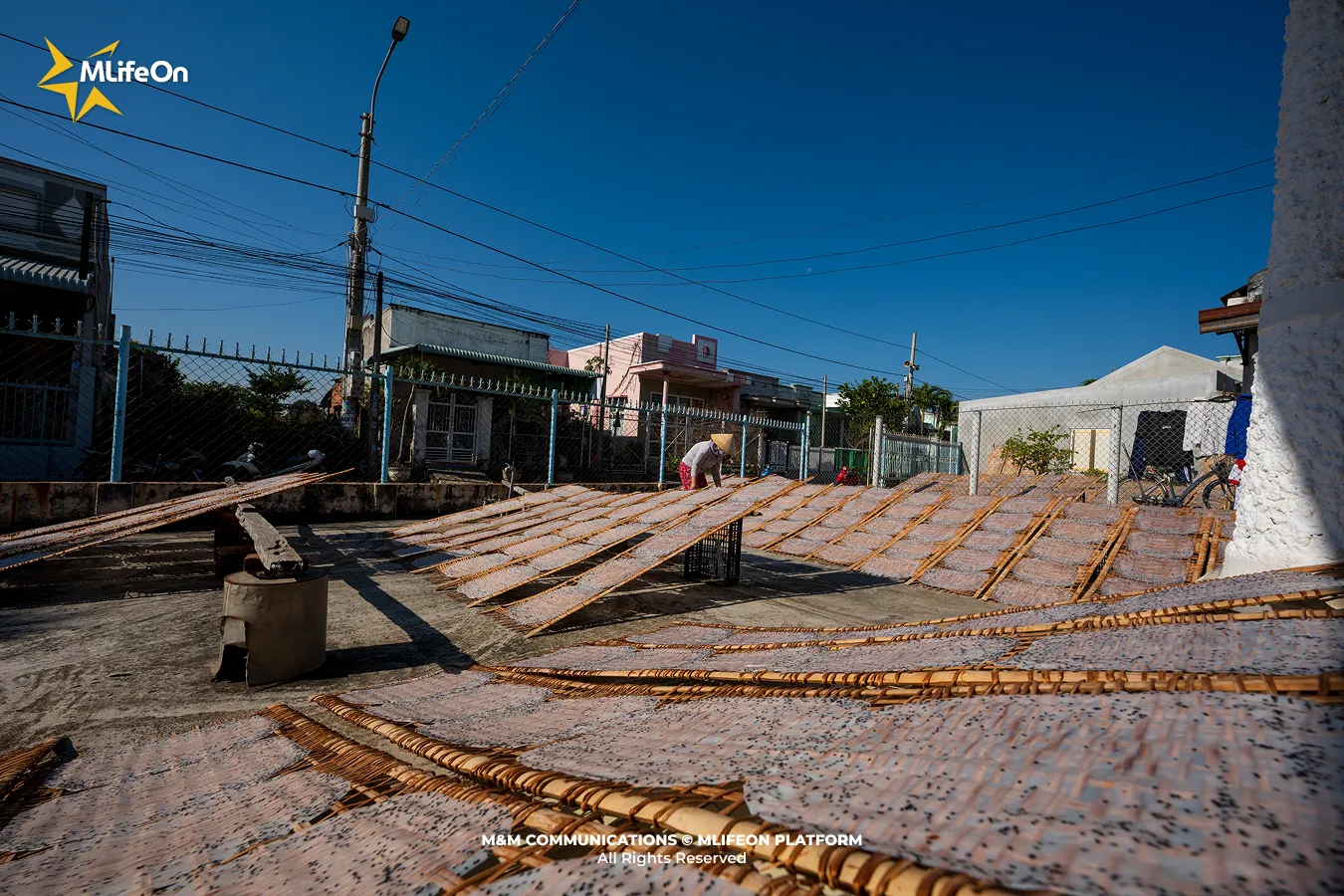
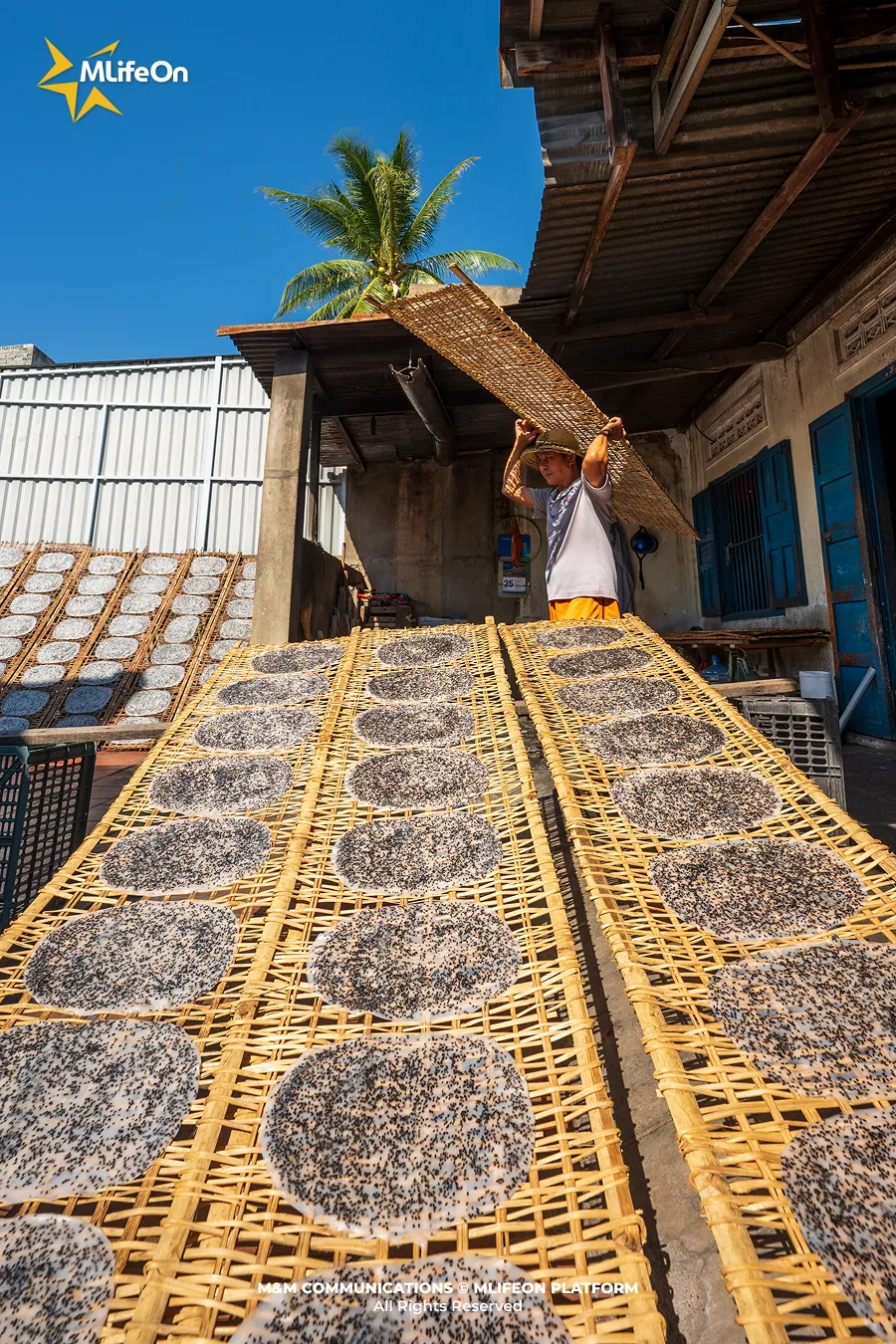
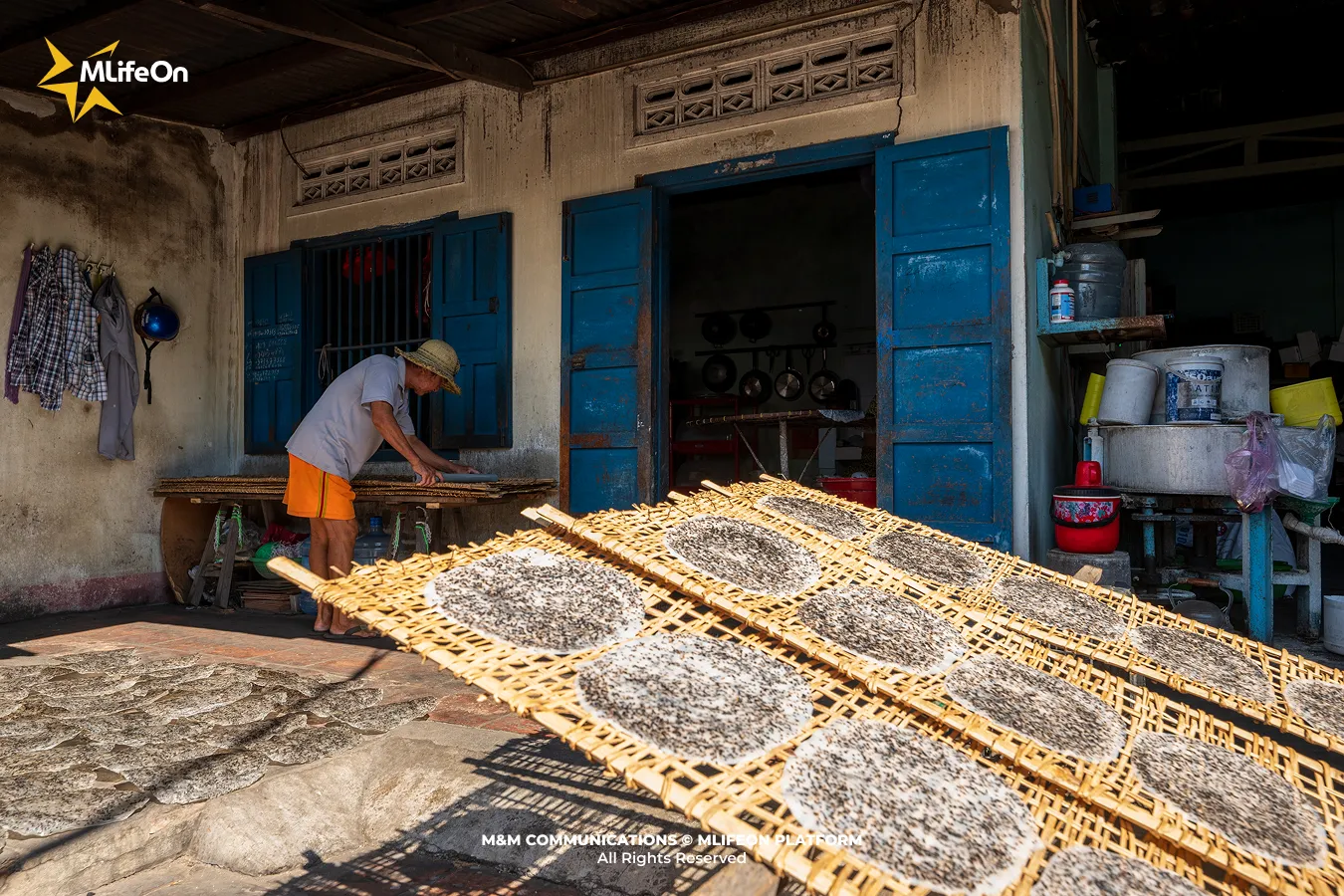
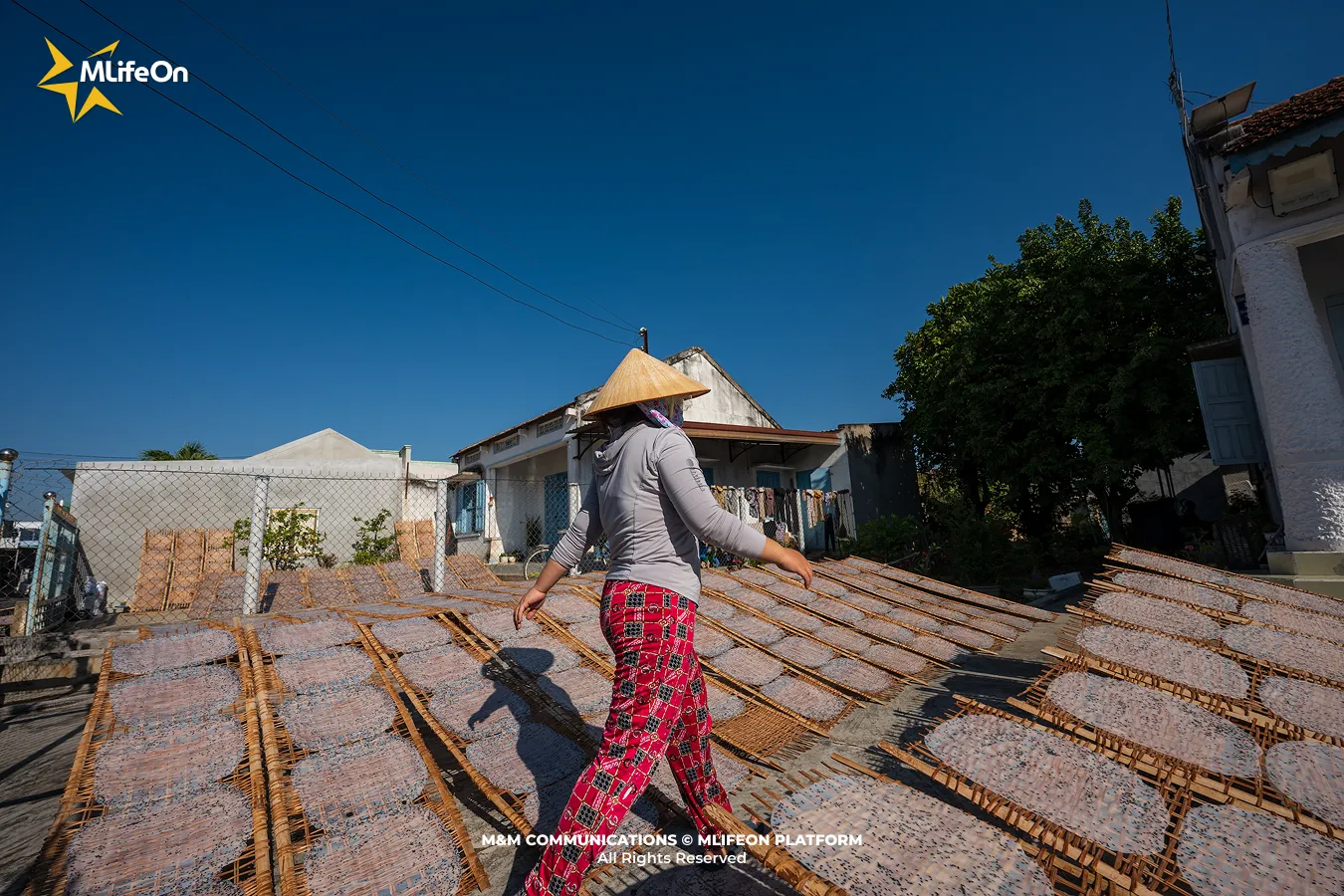
After steaming, the sheets are laid out to dry. Although drying may seem simple, it also requires care. Each sheet must be placed neatly on bamboo racks without overlapping so that the sunlight can dry both sides evenly.
Frame 1100.png

It is this meticulous process that gives Binh Thuan rice paper its distinctive character: soft, aromatic, and pleasantly chewy.

Rice paper making depends on the "sun"

In Binh Thuan, abundant sunshine is a major advantage for the craft villages. Rice paper needs consistent sunlight to dry properly. On sunny days, the sheets may dry in just a few hours. But if the sky turns cloudy or sudden rain appears, an entire batch may be affected.
Frame 1102.png

Frame 1087.png

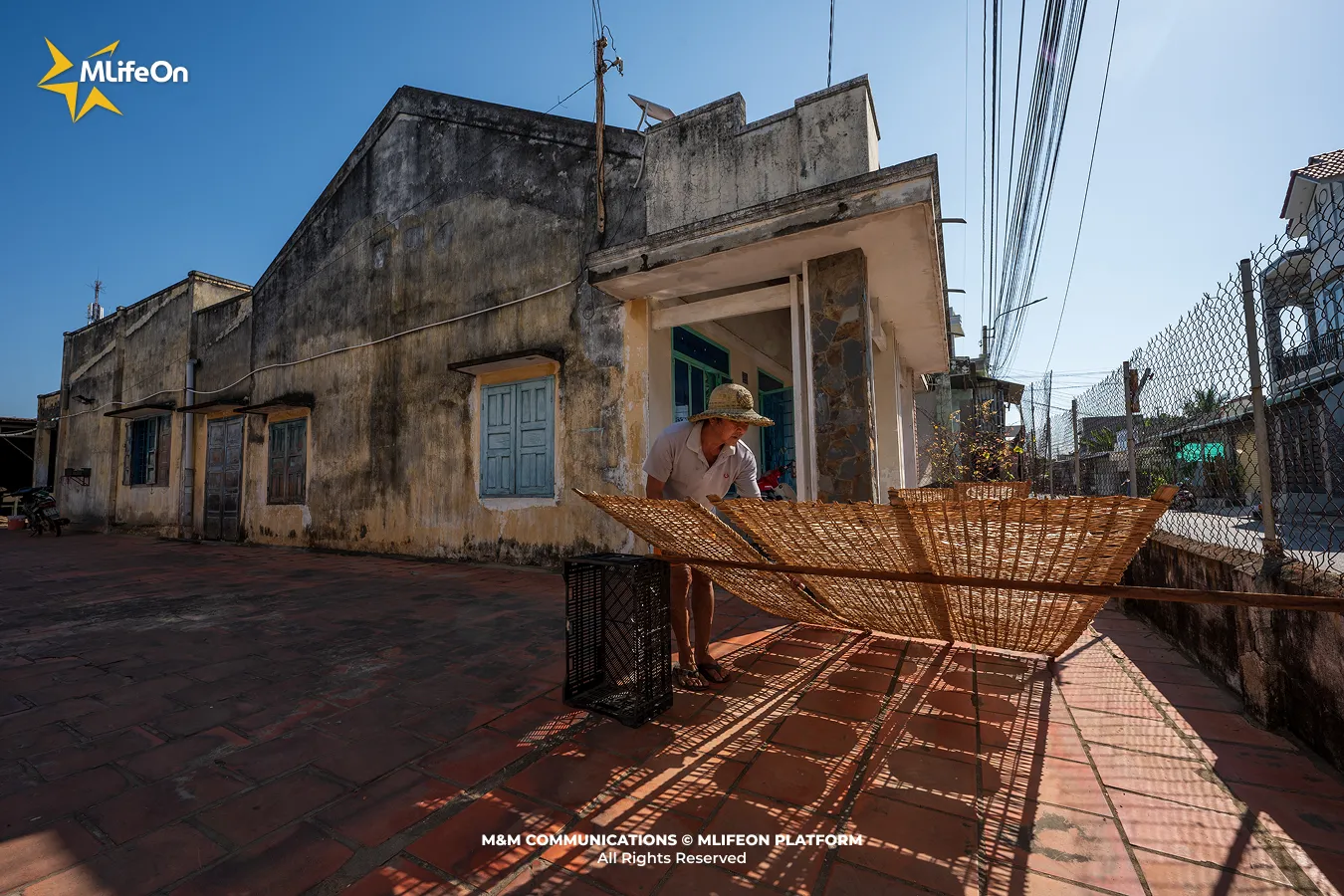
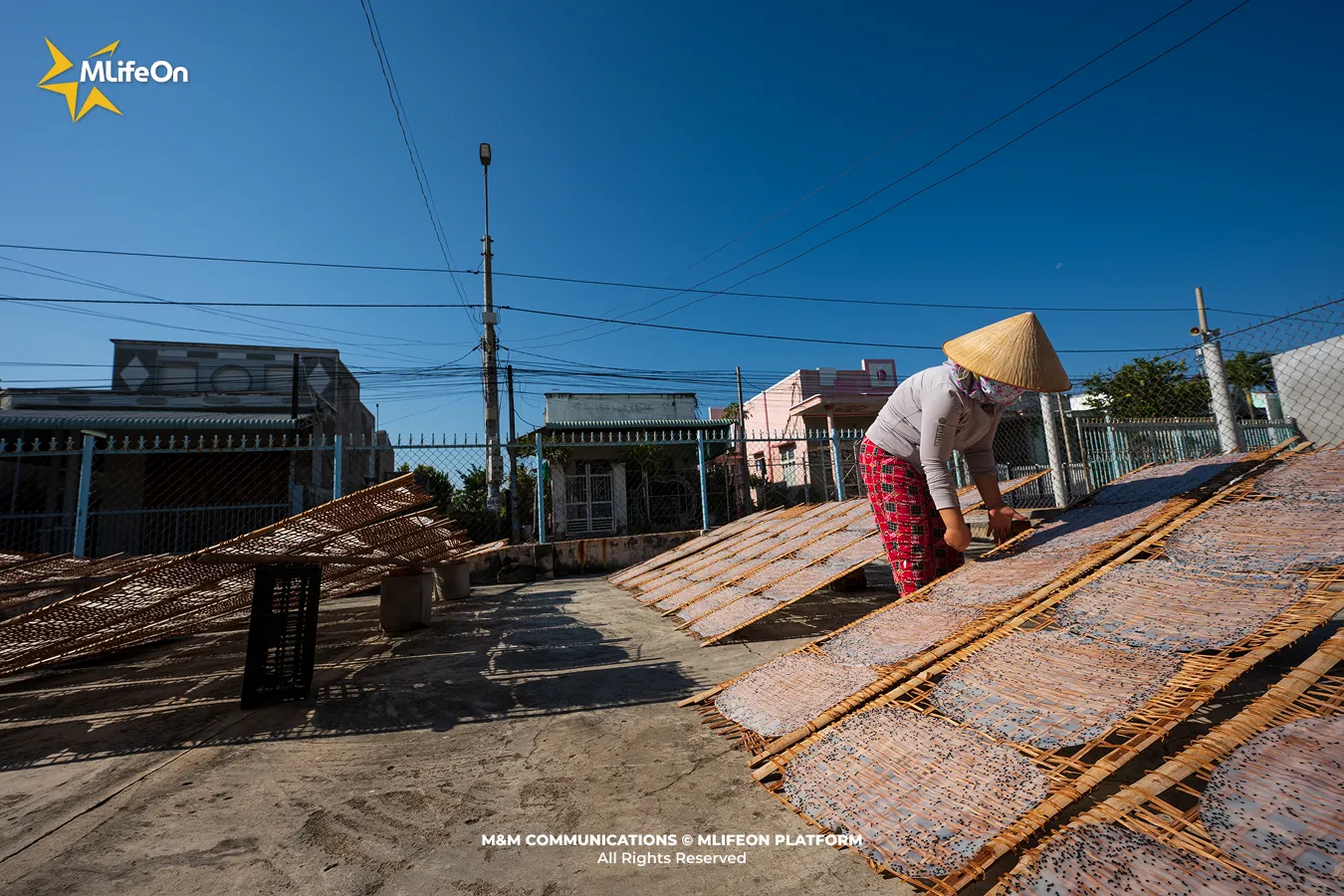
However, intense sunlight is not always ideal. If exposed to strong sunlight for too long, the rice paper may become overly brittle and easy to break. Makers must therefore learn to “read the sun,” carefully observing the weather and adjusting drying time accordingly.
Frame 1099.png

Frame 1104.png

In many ways, making rice paper in Binh Thuan means working together with the sun. Sunlight is not just a natural condition, it is an essential part of the craft, shaping the quality of each batch.

Amid change, the rice paper villages still keep their fires burning

Today, many households have begun using machines to steam rice paper in order to increase productivity. Even so, hand-made rice paper still holds a special place thanks to its flavor and texture that machines cannot easily replicate.

Although the income is modest and the work can be demanding, rice paper making continues to provide jobs for many local residents. For numerous families, it remains a stable source of livelihood, especially when farming seasons end.
Frame 1086.png

Frame 1101.png

More importantly, maintaining the craft is also a way of preserving a tradition handed down from previous generations. As long as the kitchen fires remain lit, the village continues its familiar rhythm of life.

Conclusion

Under the sun and wind of Binh Thuan, bamboo racks filled with drying rice paper still stretch across household courtyards, a familiar image of this land. The craft of rice paper making is neither noisy nor glamorous, yet it endures through diligence and quiet perseverance. Through this daily repetition, the craft villages continue to exist year after year, carrying with them the humble yet distinctive flavor of traditional Vietnamese rice paper.

—---------

CREDIT: 

- Photography: Luan Nguyen 

- Content: Hoài Hà

- Design: Phuong Nguyen 

About the Authors

All Articles

VISITING A LONG-STANDING RICE PAPER CRAFT VILLAGE IN BINH THUAN

VISITING A LONG-STANDING RICE PAPER CRAFT VILLAGE IN BINH THUAN

Amid the characteristic sun and wind of Binh Thuan, traditional rice paper villages continue to keep their stoves burning every day. From wood-fired stoves and pots of rice batter to bamboo racks filled with drying sheets, the craft of hand-made rice paper not only creates a familiar flavor but also preserves a tradition passed down through generations.

THE CHARM OF VIETNAMESE WOMEN

THE CHARM OF VIETNAMESE WOMEN

Explore the beauty of Vietnamese women across the three regions of North, Central, and South to better understand their personalities, characteristics, and unique traits.

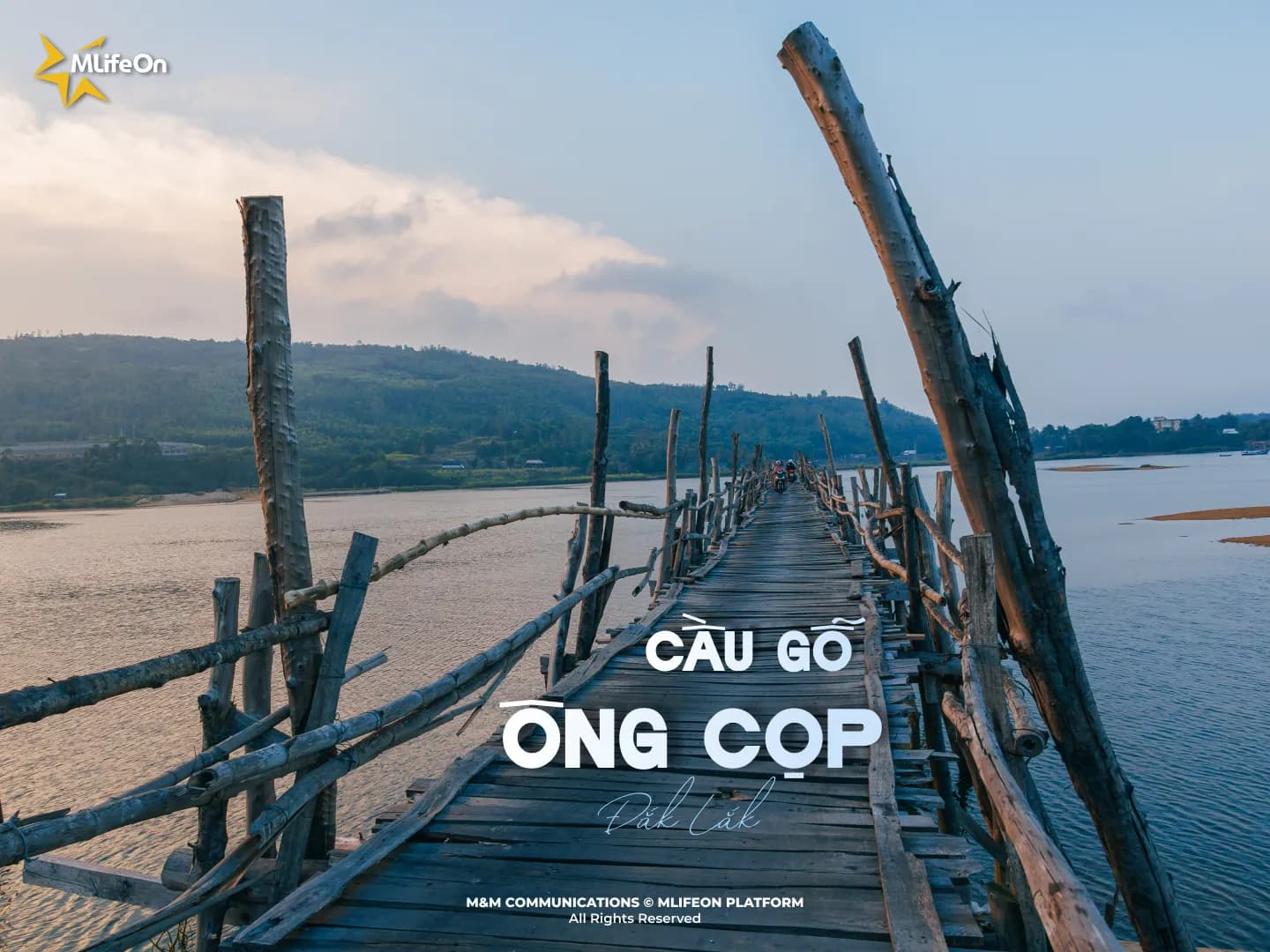
ONG COP WOODEN BRIDGE - A RUSTIC LINK BETWEEN PHU YEN’S RIVER LANDS

ONG COP WOODEN BRIDGE - A RUSTIC LINK BETWEEN PHU YEN’S RIVER LANDS

Discover Ong Cop Wooden Bridge - the longest wooden bridge in Vietnam, located in Dak Lak. Learn about its history, riverside life, role in transportation, and the rustic cultural values that the bridge has preserved over the years.

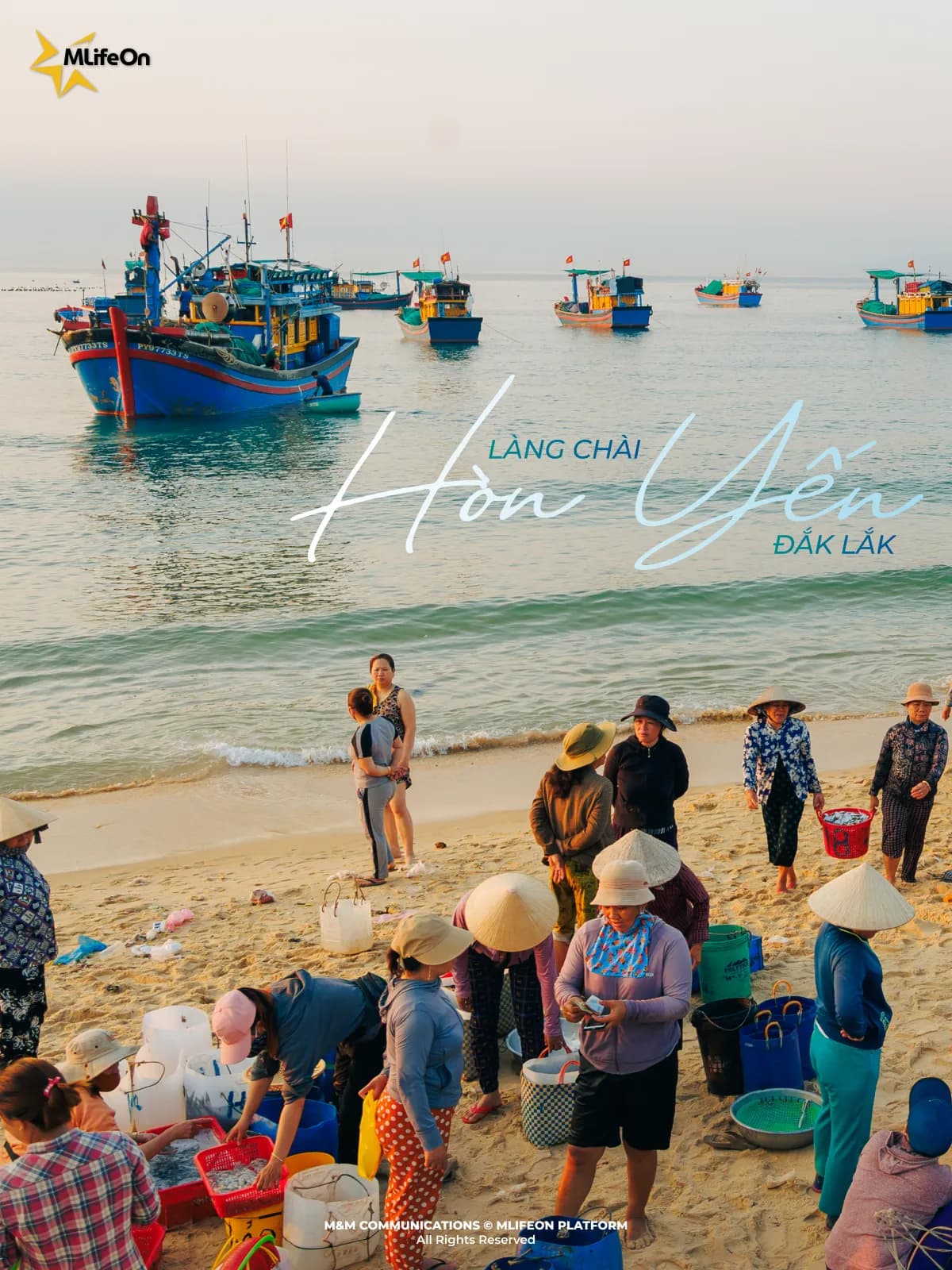
WANDER INTO HON YEN FISHING VILLAGE – WHERE MORNINGS BEGIN WITH THE RHYTHMIC PULL OF FISHING NETS ALONG THE SHORE.

WANDER INTO HON YEN FISHING VILLAGE – WHERE MORNINGS BEGIN WITH THE RHYTHMIC PULL OF FISHING NETS ALONG THE SHORE.

Discover Hon Yen Fishing Village – one of the most rustic and peaceful coastal villages in Dak Lak. Explore the daily life of local fishermen, the slow rhythm of seaside living, the untouched natural beauty of Hon Yen, and the traditional cultural values that have been preserved through generations.

SOUND AND COLOR IN TEOCHEW TRADITIONAL OPERA

SOUND AND COLOR IN TEOCHEW TRADITIONAL OPERA

Discover Teochew Traditional Opera, a unique and enduring art form of the Chinese community, where sound, color, ritual, and memory intertwine on stage.

GAZING AT SAIGON NEAR TET - A VERY DIFFERENT BEAUTY

GAZING AT SAIGON NEAR TET - A VERY DIFFERENT BEAUTY

Explore the atmosphere of Saigon during the period leading up to Tet, experience the changing weather, people, and streets.

INSIDE THANH DA HOUSING ESTATE - A TIME-FADED SLICE OF OLD SAIGON

INSIDE THANH DA HOUSING ESTATE - A TIME-FADED SLICE OF OLD SAIGON

With a history spanning more than half a century, Thanh Da Housing Estate is an enduring fragment of Ho Chi Minh City’s urban memory. Located entirely on the Thanh Da (Binh Quoi) Peninsula and surrounded on three sides by the Saigon River, the estate carries a quiet, time-worn beauty, its apartment blocks softened by moss and age.

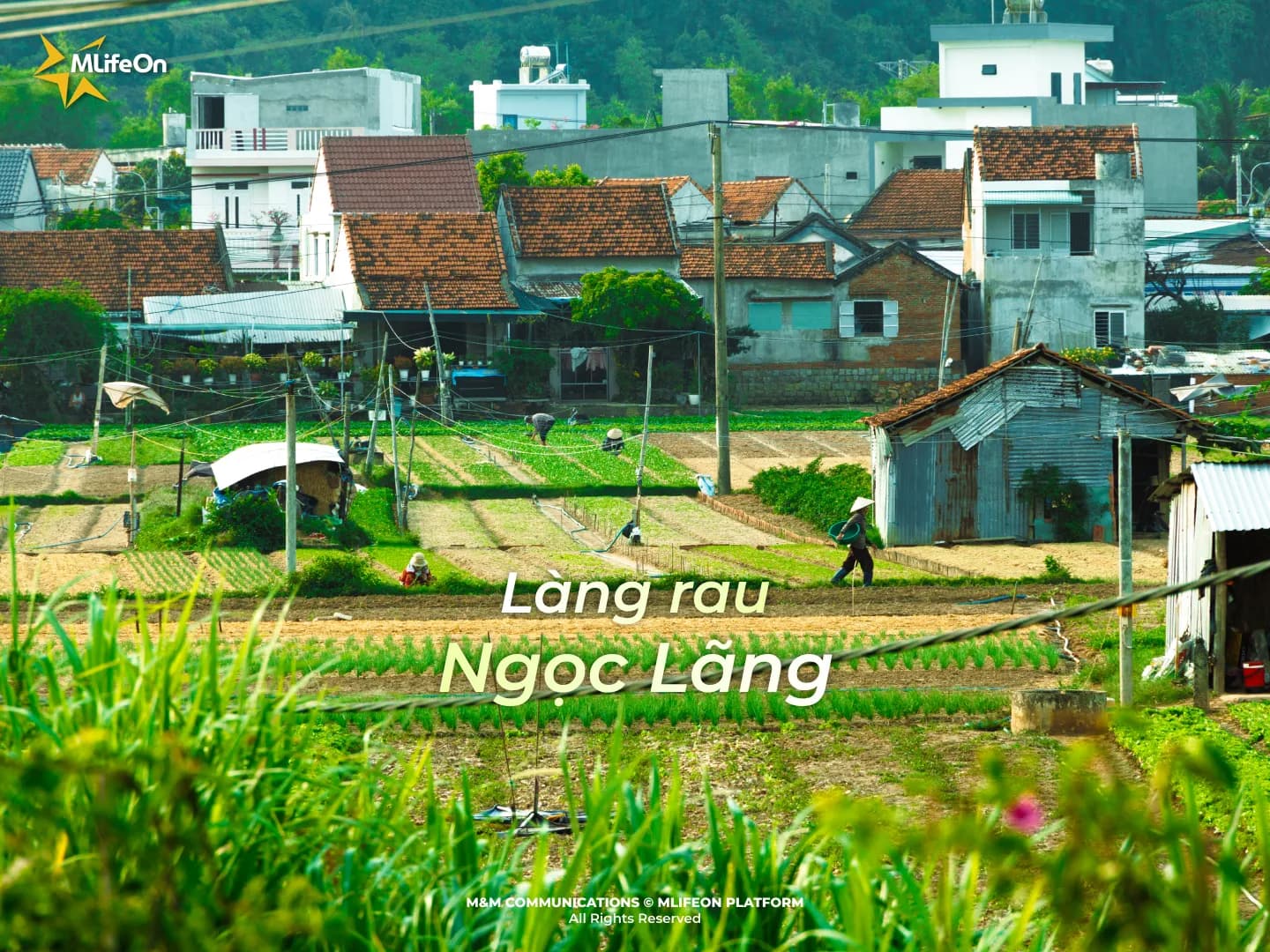
NGOC LANG VEGETABLE VILLAGE – A SERENELY PEACEFUL GREEN GEM OF PHU YEN OLD

NGOC LANG VEGETABLE VILLAGE – A SERENELY PEACEFUL GREEN GEM OF PHU YEN OLD

Nestled beside the Da Dien River, Ngoc Lang Vegetable Village is a quiet green stretch on the outskirts of Tuy Hoa City, Phu Yen (formerly). Free from noise and showiness, the village preserves the slow rhythm of a traditional vegetable-farming community, where people remain deeply connected to the land through simple, everyday work.

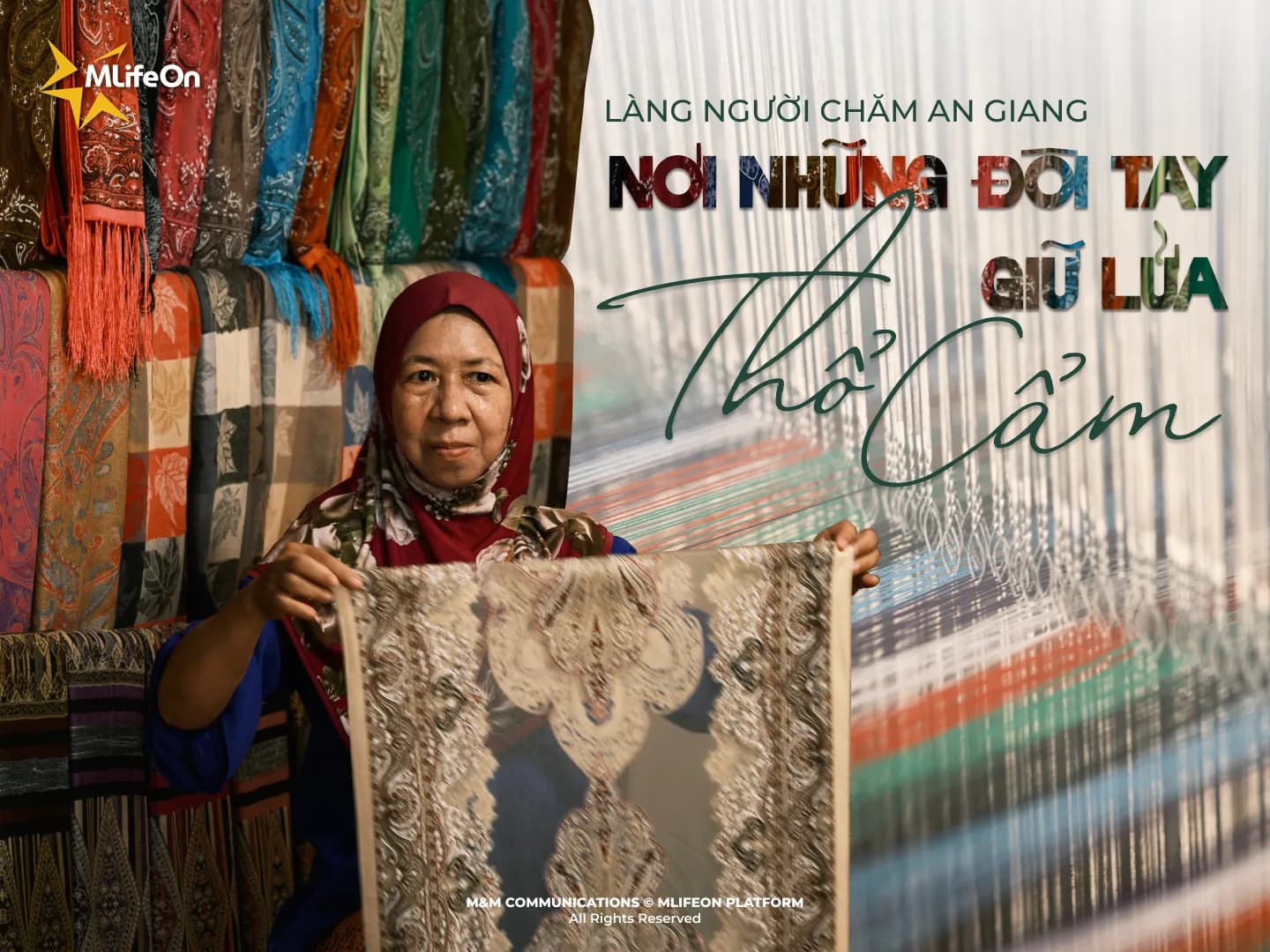
CHAM VILLAGES IN AN GIANG - WHERE SKILLED HANDS KEEP THE FLAME OF BROCADE WEAVING ALIVE

CHAM VILLAGES IN AN GIANG - WHERE SKILLED HANDS KEEP THE FLAME OF BROCADE WEAVING ALIVE

In An Giang, where the cool waters of the Hau River meet the Chau Doc River, Cham villages have existed quietly for generations. Unassuming and unshowy, life here flows slowly, much like the river in front of each home. Within this gentle rhythm, one tradition has been steadfastly preserved over time: the art of brocade weaving, passed down through the hands of Cham women.

TRADITIONAL HAIRDRESSING - OLD SHOP, OLD PROFESSION

TRADITIONAL HAIRDRESSING - OLD SHOP, OLD PROFESSION

Explore the traditional Vietnamese hairdressing profession to discover its history, current state, and the cultural values ​​that are gradually fading amidst today's modern life.

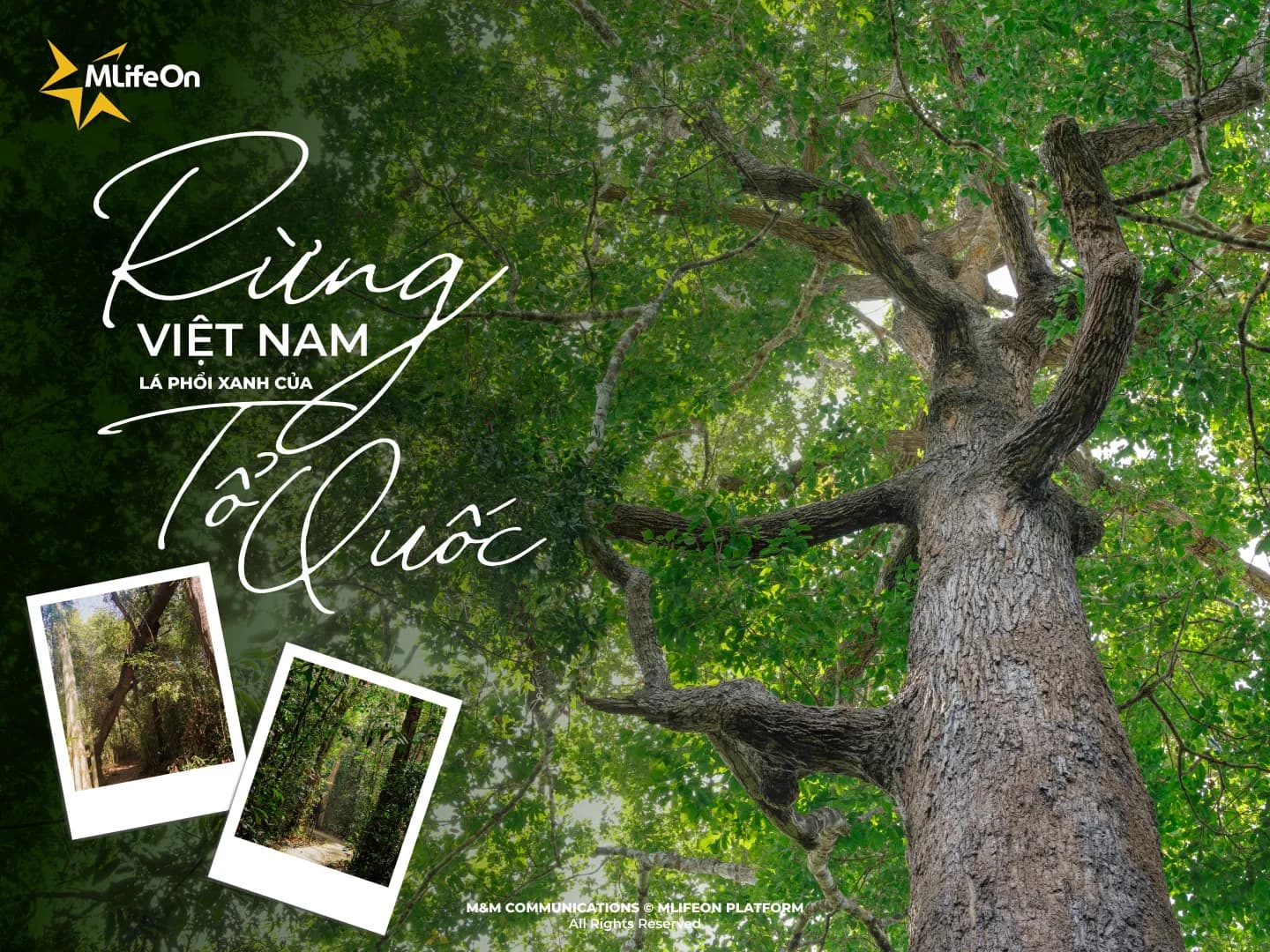
VIETNAMESE FORESTS - THE GREEN LUNGS OF THE HOMELAND

VIETNAMESE FORESTS - THE GREEN LUNGS OF THE HOMELAND

Exploring Vietnamese forests, the current situation, and highlights in forest restoration in recent years.

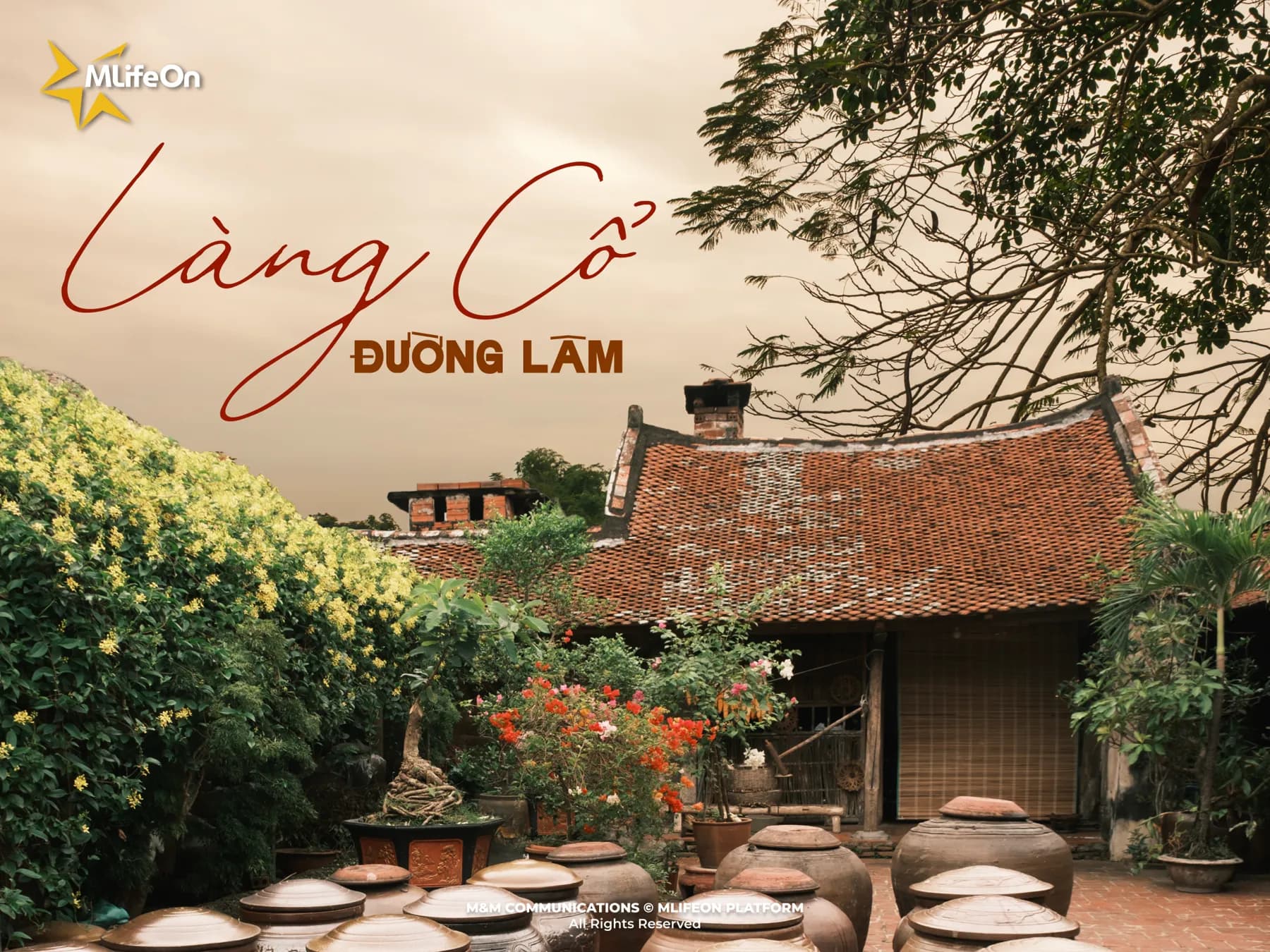
DUONG LAM ANCIENT VILLAGE - A CULTURAL HERITAGE OF DOAI REGION, HANOI

DUONG LAM ANCIENT VILLAGE - A CULTURAL HERITAGE OF DOAI REGION, HANOI

Experience the rhythm of life and the atmosphere of a Northern Vietnamese village at Duong Lam Ancient Village, a distinctive cultural destination in Hanoi.

VIETNAMESE MARKETS - WHERE THE LIFE OF EACH REGION REVEALS ITSELF MOST CLEARLY

VIETNAMESE MARKETS - WHERE THE LIFE OF EACH REGION REVEALS ITSELF MOST CLEARLY

Vietnamese markets are not merely places of trade; they are the clearest reflections of local life, daily rhythms, and regional character - from river deltas and waterways to coastal shores.

THE CLAM-RAKING TRADE – WEATHERED BY SEA WINDS, BURDENED BY LIVELIHOOD

THE CLAM-RAKING TRADE – WEATHERED BY SEA WINDS, BURDENED BY LIVELIHOOD

The clam-raking trade in Can Gio carries the salty taste of the sea and the hardship of coastal laborers. Join MLifeOn as we explore an authentic slice of life on the tidal flats tough, rugged, yet filled with resilience and quiet strength.

HU TIEU – A "FREE-SPIRITED" DELICACY FROM THE SOUTHERN LAND

HU TIEU – A "FREE-SPIRITED" DELICACY FROM THE SOUTHERN LAND

The broth of Hu tieu carries the sweetness of pork bones and seafood, enriched with the aroma of fried garlic. Shrimp, meat, quail eggs, heart, liver - even fish and squid - can all appear in one bowl. Calling Hu tieu a “free-spirited” dish is no exaggeration. It’s a true Southern region “specialty” and there’s no place quite like it!

SAIGON DURING CHRISTMAS - FILLED WITH COLORS AND LIGHTS

SAIGON DURING CHRISTMAS - FILLED WITH COLORS AND LIGHTS

Join MLifeOn in exploring the beauty and atmosphere of Christmas in Saigon at the end of the year.

THE GENUINE PEOPLE OF THE WESTERN REGION - THE BEAUTY OF THE RIVER LANDSCAPE

THE GENUINE PEOPLE OF THE WESTERN REGION - THE BEAUTY OF THE RIVER LANDSCAPE

Are people of the Mekong Delta genuine and honest? Is this notion true or false? Let's explore the character of people from the Mekong Delta through trips to Vinh Long, Can Tho, and An Giang with MLifeOn.

CAM RANH FLOATING VILLAGE, A LONG-ESTABLISHED AQUACULTURE AREA IN KHANH HOA

CAM RANH FLOATING VILLAGE, A LONG-ESTABLISHED AQUACULTURE AREA IN KHANH HOA

Explore Cam Ranh floating village, a long-established aquaculture area in Central Vietnam.