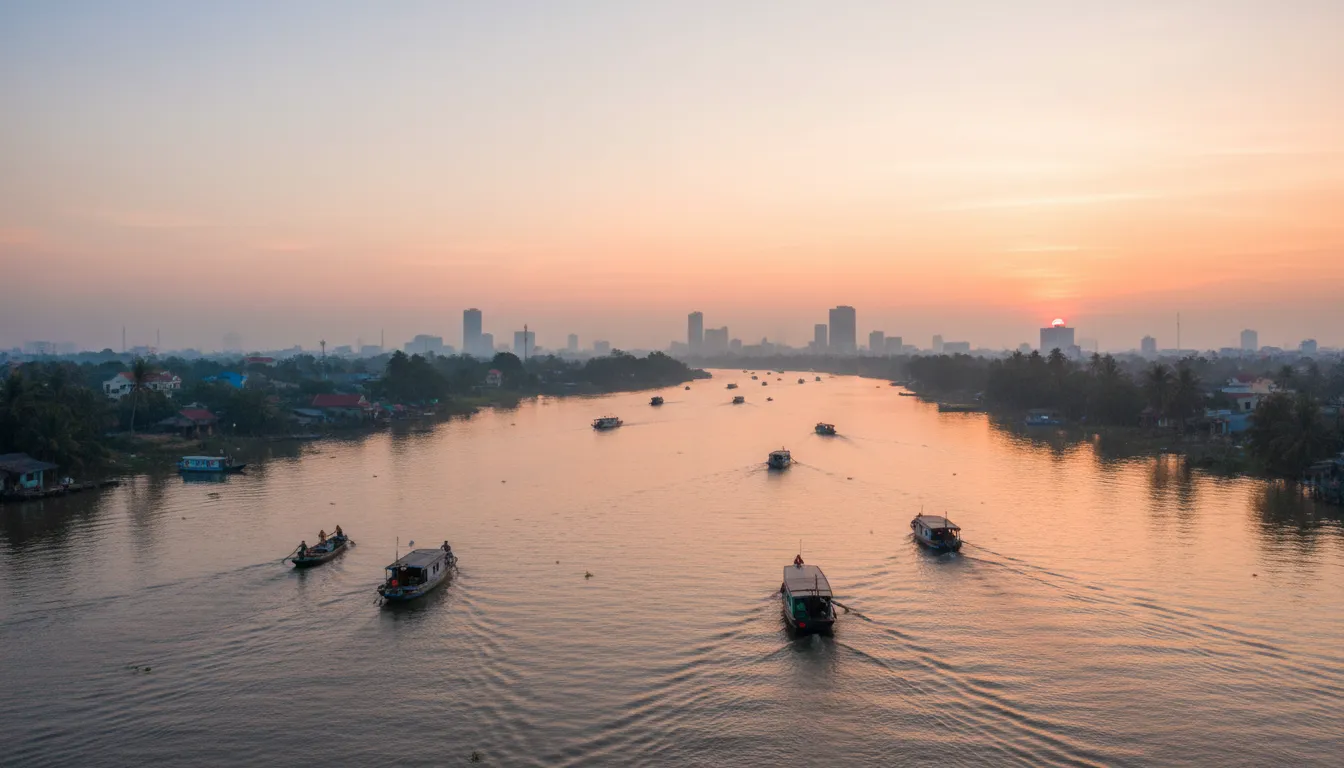
The Mekong Delta, a vibrant tapestry of waterways, rice paddies, and bustling markets, often conjures images of sampans gliding silently and vendors hawking their wares from floating stalls. While the Cai Rang Floating Market is undeniably iconic, to truly understand the soul of this fertile region, one must delve deeper into its historical foundations. Beyond the immediate sensory delights, South Vietnam holds a trove of historic sites, each telling a story of resilience, cultural exchange, and enduring heritage.
My own journeys through this captivating part of Vietnam have always been driven by a desire to uncover these hidden narratives. It's a land where ancient traditions meet colonial influences, creating a unique cultural mosaic. Among its many gems, Can Tho stands out as a crucial destination for anyone seeking to unravel the rich layers of South Vietnam's past.
Can Tho: The Cultural Heart of the Mekong Delta
Can Tho, often referred to as the capital of the Mekong Delta, is much more than just a transit point for river tours. It is a city that pulsates with life, yet also holds a profound sense of history within its tree-lined boulevards and quiet back alleys. Here, the intertwining forces of Vietnamese ingenuity, French colonial elegance, and Chinese mercantile spirit have shaped a distinctive identity.
My first arrival in Can Tho immediately struck me with its blend of urban energy and rural charm. Unlike the frenetic pace of Ho Chi Minh City, Can Tho offers a more relaxed rhythm, allowing for deeper engagement with its cultural fabric. It serves as an ideal base for exploring the significant south vietnam historic sites explained within the delta.
From its strategic position on the Hau River, a distributary of the Mekong, Can Tho has historically been a nexus for trade, culture, and governance. This pivotal role has endowed it with a fascinating collection of architectural and cultural landmarks. These sites provide invaluable insights into the lives, struggles, and aspirations of the people who built this delta region.
Exploring Can Tho is to embark on a journey through time, encountering stories that have shaped modern Vietnam. It's a place where the past isn't just preserved in museums, but actively lives on in its buildings, its people, and its traditions. This guide aims to illuminate some of Can Tho’s most significant historic treasures, offering a window into the rich heritage of the Mekong Delta.
The Binh Thuy Ancient House: A Fusion of East and West
One of Can Tho’s most captivating historic sites, and a true testament to its unique cultural synthesis, is the Binh Thuy Ancient House. Located just outside the city center, this magnificent ancestral home offers a rare glimpse into the opulent lifestyle of a wealthy Vietnamese family during the late 19th and early 20th centuries. It stands as a remarkable example of how Vietnamese culture gracefully absorbed and adapted foreign influences.
Stepping through its ornate gates, I felt an immediate sense of stepping back in time. The house itself is a living museum, meticulously preserved and still cared for by descendants of the original family. Its architecture is particularly striking, showcasing a harmonious blend of French colonial design with traditional Vietnamese elements.
History of the Duong Family
The Binh Thuy Ancient House, also known as Huynh Thuy Le Old House, was built in 1870 by the Duong family, a prominent landowning clan in the Mekong Delta. This family accumulated significant wealth through rice cultivation and trade, becoming influential figures in the region. Their prosperity allowed them to construct a home that reflected both their traditional values and their openness to Western modernity.
The Duong family’s legacy is deeply intertwined with the history of Can Tho and the broader delta. They were not merely wealthy landowners; they were also patrons of the arts and education, contributing to the cultural development of the area. The house itself became a symbol of their status and their commitment to preserving their ancestral roots while embracing progress.
Over generations, the family meticulously maintained the property, passing down not only the physical structure but also the stories and traditions associated with it. This continuous care is evident in the remarkable state of preservation the house enjoys today. It allows visitors to truly connect with the family's history and the era in which they thrived.
Their decision to build such a grand, hybrid-style house speaks volumes about the socio-cultural landscape of French colonial Vietnam. It was a time when Vietnamese elites navigated a complex world, balancing their heritage with the powerful new influences arriving from Europe. The Duong family’s home perfectly encapsulates this fascinating period of adaptation and synthesis.
Architectural Highlights and Film Locations
The architecture of the Binh Thuy Ancient House is its most compelling feature, a stunning dialogue between East and West. From the outside, the house presents a distinctly French colonial façade, complete with ornate balconies, arched windows, and decorative cornices. The pastel blue and white exterior, along with its symmetrical design, evokes the grandeur of European villas.
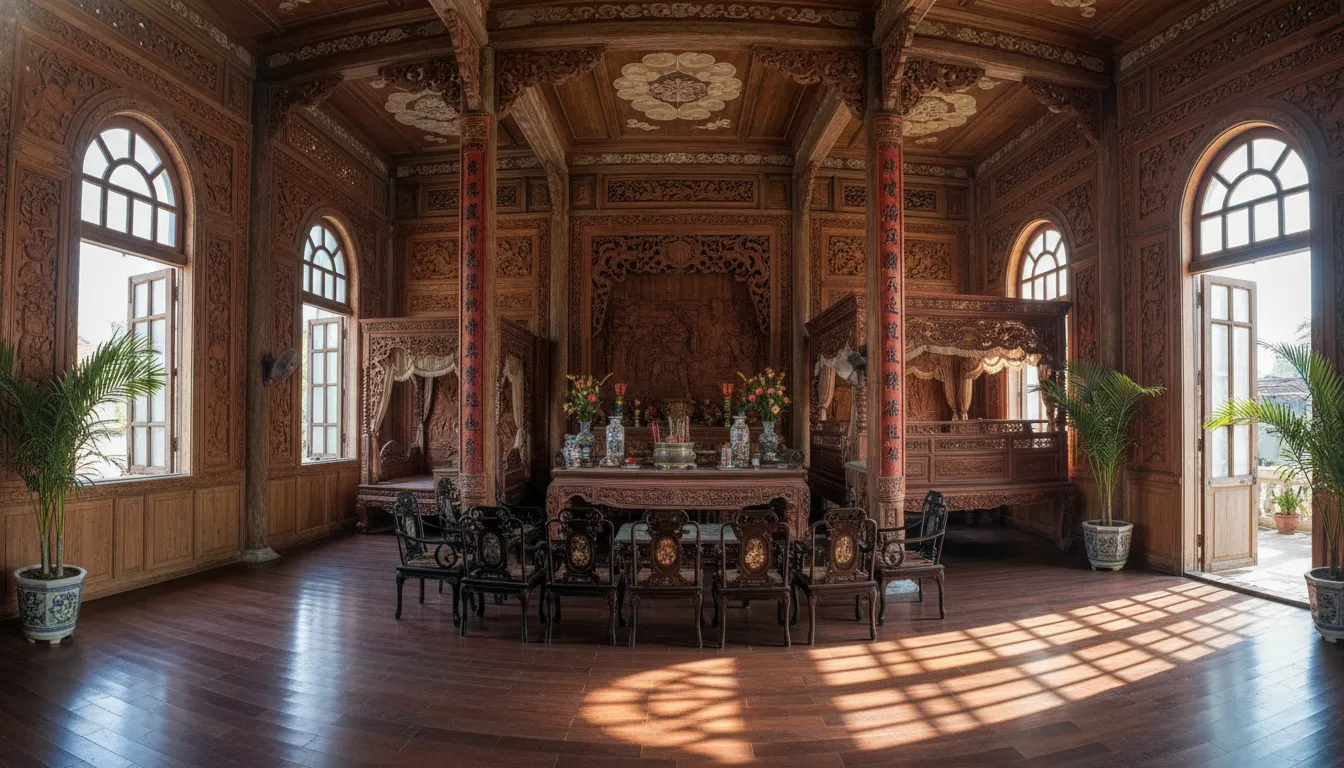
However, once inside, the traditional Vietnamese influence becomes immediately apparent. The interior layout follows a typical Vietnamese ancestral house structure, with a central altar room dedicated to ancestor worship. The use of dark, polished wood, intricate carvings, and traditional furniture creates a warm, inviting, and distinctly Vietnamese atmosphere.
Walking through the rooms, I was captivated by the details: the exquisite stained-glass windows, imported from France, casting colorful patterns on the wooden floors. The elaborate wooden carvings on the doors and columns depict traditional Vietnamese motifs like dragons, phoenixes, and lotus flowers, symbolizing prosperity and good fortune. The patterned tile floors, some imported, some locally made, add to the house's unique charm.
The house is also surrounded by a lush, well-maintained garden, featuring ancient trees, bonsai, and traditional Vietnamese landscaping. This outdoor space provides a tranquil contrast to the architectural grandeur of the house itself. It further enhances the feeling of stepping into a historical oasis.
Beyond its architectural significance, the Binh Thuy Ancient House has also achieved international fame as a film location. Most notably, it served as a primary setting for the 1992 French film L'Amant (The Lover), based on Marguerite Duras' autobiographical novel. The film's portrayal of a forbidden romance in colonial Vietnam perfectly utilized the house's evocative atmosphere, bringing its unique beauty to a global audience.
The house has also appeared in other Vietnamese films and television series, further cementing its status as a cultural icon. Its photogenic qualities and historical authenticity make it an ideal backdrop for stories set in the colonial era. For me, standing in the very rooms where these cinematic moments were created added another layer of magic to the experience, blending history with artistic interpretation. This site is a must-visit among south vietnam historic sites guide.
Can Tho Museum: Preserving the Delta’s Narrative
To gain a comprehensive understanding of Can Tho and the broader Mekong Delta, a visit to the Can Tho Museum is absolutely essential. This well-curated institution serves as the primary repository for the region's history, culture, and ethnography. It meticulously preserves and presents the narrative of the delta, from its prehistoric origins to its modern-day complexities.
Located in the heart of the city, the museum is housed in a modern, spacious building designed to accommodate its extensive collections. Its exhibits are thoughtfully organized, guiding visitors through a chronological and thematic exploration of the delta’s past. This allows for a deep dive into the forces that have shaped this unique landscape and its people.
The museum’s collection spans a vast period, beginning with archaeological findings that hint at the region’s earliest inhabitants, including artifacts from the ancient Oc Eo culture. These exhibits offer a fascinating glimpse into the delta’s deep history, predating even the arrival of the Vietnamese. They reveal a landscape that has long been a crossroads of civilizations.
Moving forward in time, the museum details the establishment of Vietnamese settlements in the delta and their struggles against various invaders. It highlights the strategic importance of the region throughout different historical periods, including the resistance against French colonial rule and the American War. This section provides crucial context for understanding the resilience and determination of the local population.
A significant portion of the museum is dedicated to the diverse ethnic groups that call the Mekong Delta home. Exhibits showcase the distinct cultures of the Kinh (Vietnamese majority), Khmer, Chinese, and Cham communities. Traditional costumes, tools, musical instruments, and religious artifacts are displayed, illustrating their unique contributions to the delta's rich cultural tapestry.
I found the sections on traditional delta life particularly engaging. They depict the daily routines, agricultural practices, and ingenious adaptations to the watery environment. Models of floating markets, fishing boats, and traditional stilt houses provide a vivid representation of life along the rivers. This offers a tangible connection to the past.
The museum also sheds light on the delta's economy, focusing on its agricultural bounty, particularly rice cultivation and aquaculture. It explains the intricate irrigation systems and traditional farming methods that have sustained the region for centuries. These displays underscore the importance of the delta as Vietnam's 'rice bowl.'
Through its comprehensive exhibits, the Can Tho Museum effectively preserves the delta’s narrative, ensuring that its rich history and vibrant cultural heritage are accessible to all. It provides a vital educational resource for both locals and international visitors. This institution is a cornerstone for anyone seeking to understand south vietnam historic sites explained in a broader context.
The History of the Ong Temple and Chinese Heritage
Amidst the bustling streets of Can Tho, a splash of vibrant red and gold announces the presence of the Ong Temple, also known as Quang Trieu Hoi Quan. This magnificent Chinese temple is not just a place of worship; it is a profound historical and cultural landmark, embodying the enduring presence and contributions of the Chinese community in the Mekong Delta. Its intricate architecture and spiritual atmosphere make it a truly captivating destination.
The temple was established in 1894 by the Cantonese Chinese community in Can Tho, who had migrated to the region primarily for trade and commerce. As with Chinese communities across Southeast Asia, the temple served as a central hub for social gatherings, cultural preservation, and mutual support, in addition to its primary religious function. It quickly became a cornerstone of their identity in a foreign land.
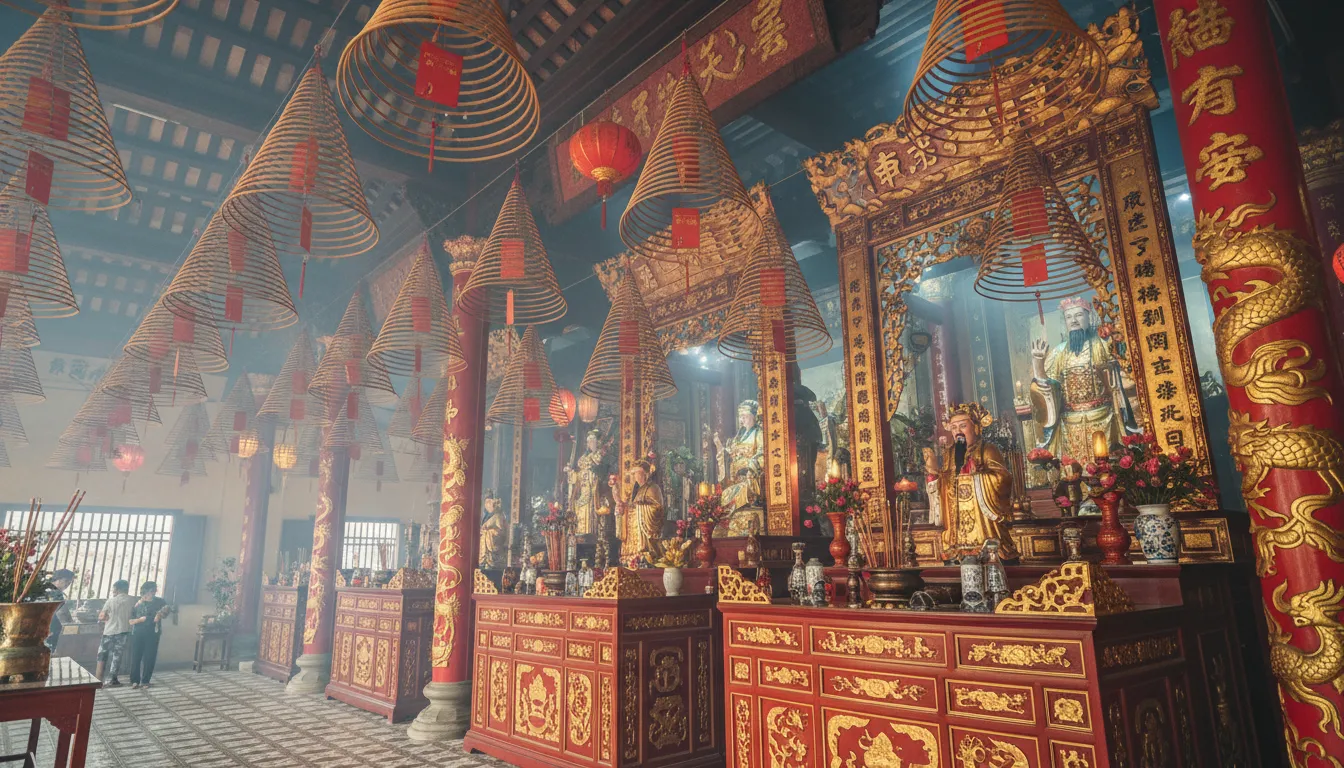
From the moment I stepped inside, the air was thick with the sweet scent of incense, swirling from countless coils hanging from the ceiling. The temple is dedicated primarily to Quan Cong (Quan Van Truong), a revered general from the Three Kingdoms period in China, worshipped as a deity of loyalty, bravery, and justice. Other deities, such as Thien Hau (the Goddess of the Sea) and Ong Bon (a protector deity), are also honored here, reflecting the diverse spiritual needs of the community.
The architecture of the Ong Temple is a feast for the eyes, a quintessential example of traditional Chinese temple design. The roof, adorned with intricate ceramic figures of dragons, phoenixes, and other mythical creatures, immediately catches the eye. These vibrant decorations are not merely ornamental; they carry deep symbolic meaning, warding off evil spirits and bringing good fortune.
Inside, the temple is a riot of color and detail. Ornate wooden carvings decorate the altars and pillars, depicting historical scenes and auspicious symbols. Large, gilded statues of the deities command attention, their benevolent expressions overseeing the worshippers. The walls are often adorned with vibrant murals, telling stories from Chinese folklore and history.
The atmosphere within the Ong Temple is one of reverence and quiet devotion, even amidst the occasional chatter of visitors. Devotees come to offer prayers, light incense, and make offerings, seeking blessings for health, prosperity, and peace. It’s a powerful reminder of the deep spiritual roots that anchor the Chinese diaspora in Vietnam.
Beyond its religious significance, the Ong Temple has played a crucial role in maintaining Chinese cultural identity in Can Tho for over a century. It has been a venue for traditional festivals, educational activities, and community events. This continuity of tradition is palpable, offering a direct link to the community's heritage.
The temple stands as a vibrant symbol of Can Tho’s multicultural heritage, showcasing how different communities have coexisted and enriched the region. It is an essential stop for anyone wishing to understand the full scope of south vietnam historic sites guide, highlighting the diverse threads that weave together the delta's rich tapestry. My visit there always leaves me with a profound appreciation for the enduring power of faith and community.
Conclusion
Can Tho, often celebrated for its bustling floating markets and scenic river tours, reveals a much deeper narrative for those willing to explore its historic sites. From the sophisticated blend of East and West at the Binh Thuy Ancient House to the comprehensive historical insights offered by the Can Tho Museum, and the vibrant spiritual heart of the Ong Temple, each location contributes a vital piece to the mosaic of South Vietnam’s past. These sites are not mere relics; they are living testaments to the resilience, adaptability, and rich cultural exchange that have shaped the Mekong Delta over centuries.
My own experiences traveling through this region have always reinforced the idea that true discovery lies beyond the obvious. Can Tho offers a unique opportunity to connect with the authentic stories of its people, their heritage, and the enduring spirit of their land. It’s a journey that enriches understanding and fosters a deeper appreciation for the complex layers of Vietnamese identity.
For the culturally curious traveler seeking substantive narratives and meaningful connections, Can Tho is an indispensable destination. It serves as an excellent starting point for any south vietnam historic sites guide, inviting visitors to immerse themselves in a fascinating blend of history, culture, and tradition. Embrace the opportunity to uncover these treasures and allow Can Tho to guide you through its unforgettable stories.
Your journey to unforgettable cultural stories and inspiring connections. More Discovery, More Experience.