Western Australia is a land of immense scale and breathtaking natural wonders, a canvas where ancient forces have sculpted landscapes unlike anywhere else on Earth. As an expert in travel and cultural exploration, I’ve had the privilege of witnessing many of these marvels, but few evoke the same sense of awe and connection to deep time as Wave Rock. This geological masterpiece, often heralded as one of the best Perth Famous Landscape examples, truly embodies the spirit of discovery that MLIFEON champions.
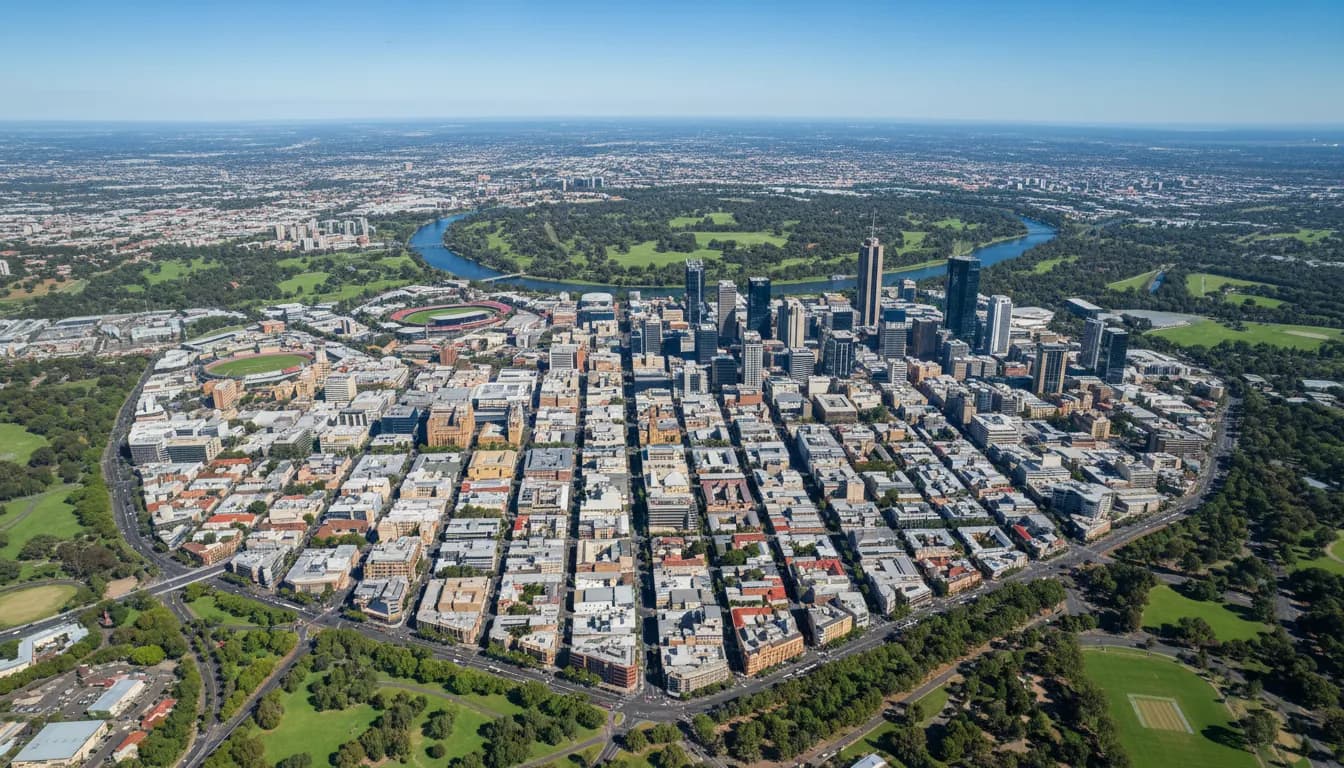
Our journey often begins from Perth, the vibrant capital, yet the true magic of this region lies in venturing beyond its urban embrace into the vastness of the Golden Outback. It is here, amidst the golden wheatfields and ancient woodlands, that Wave Rock stands as a sentinel of natural artistry. This isn't just a rock formation; it's a testament to millions of years of Earth's tireless work, a silent storyteller of geological epochs and the rich Aboriginal heritage embedded within the land.
My own experiences exploring Australia’s diverse landscapes have always sought to uncover the stories beneath the surface, to understand not just what we see, but how it came to be. Wave Rock offers this profound insight, inviting us to contemplate the immense power of nature and the enduring spirit of the communities who have called this land home for millennia. It's an essential pilgrimage for anyone seeking to understand the true depth of Western Australia's natural and cultural tapestry.
The Geology Behind the 15-Meter High Wave
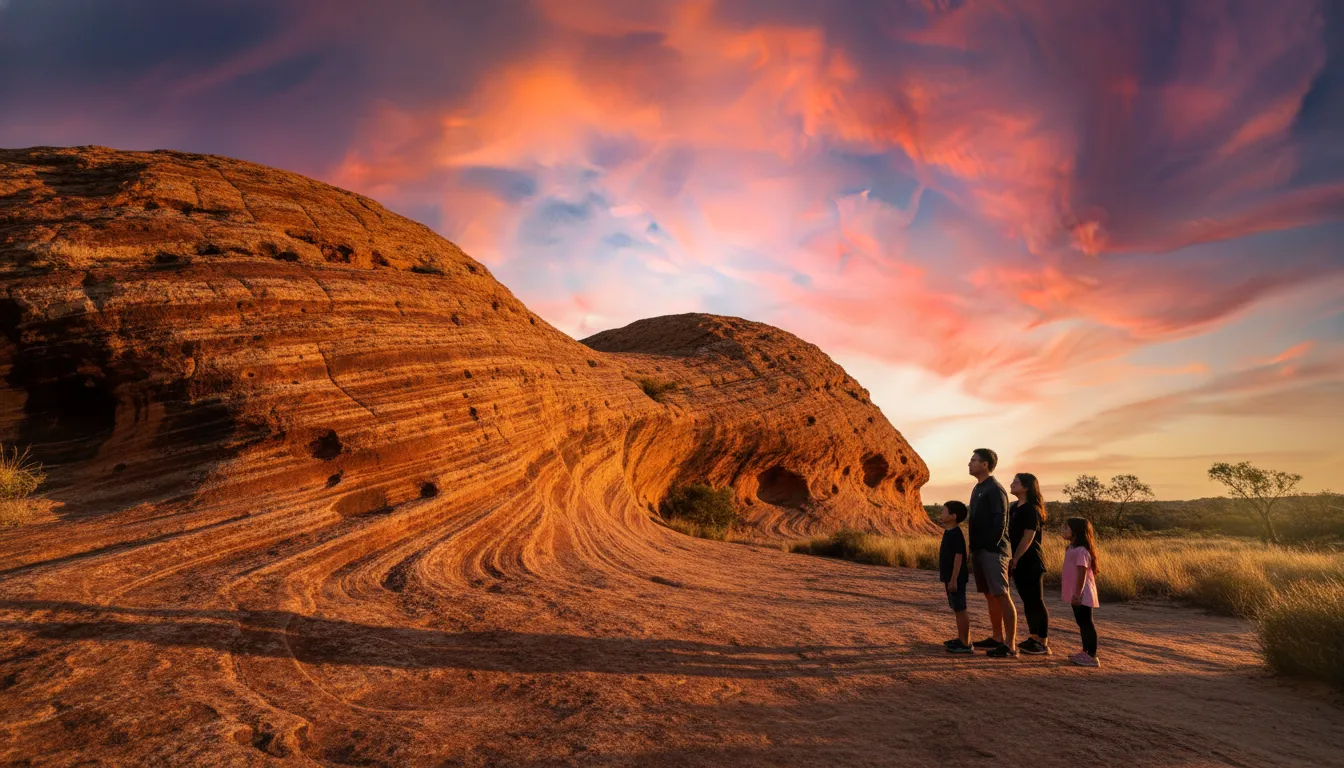
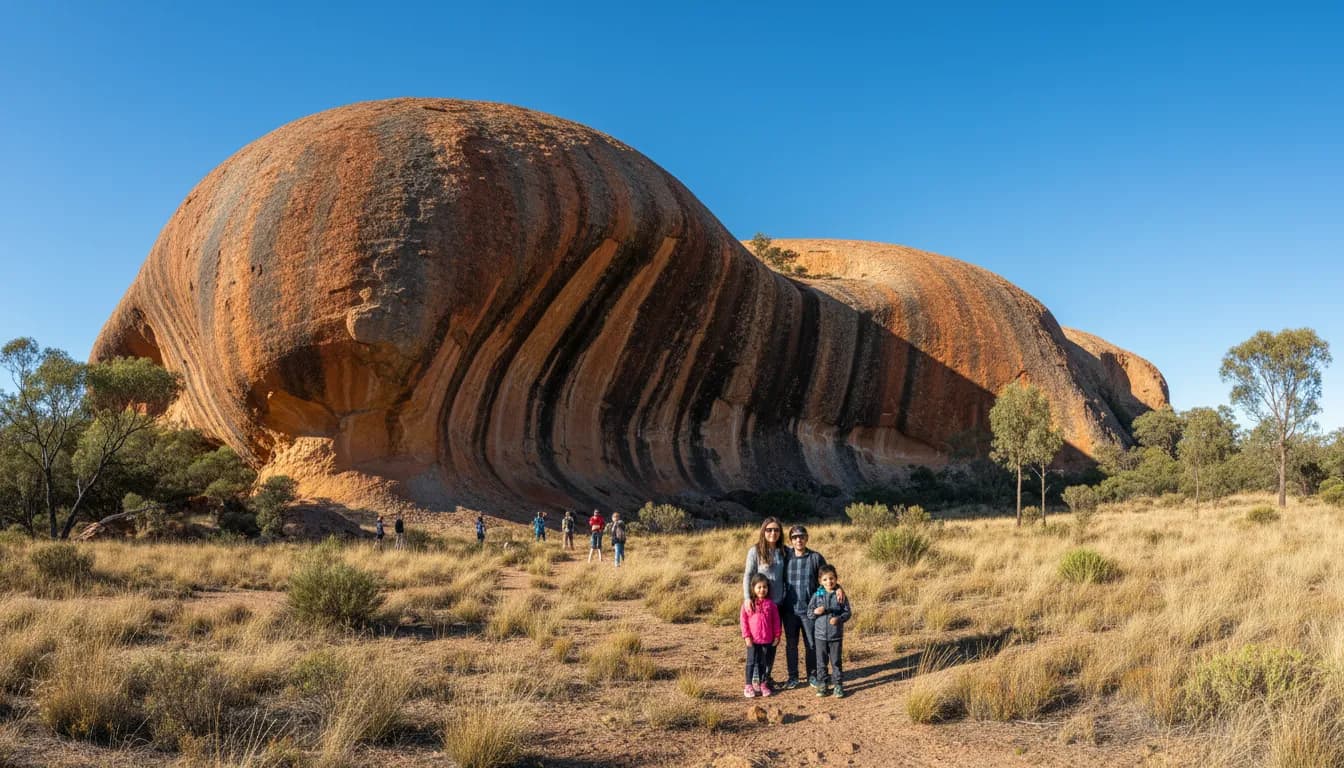
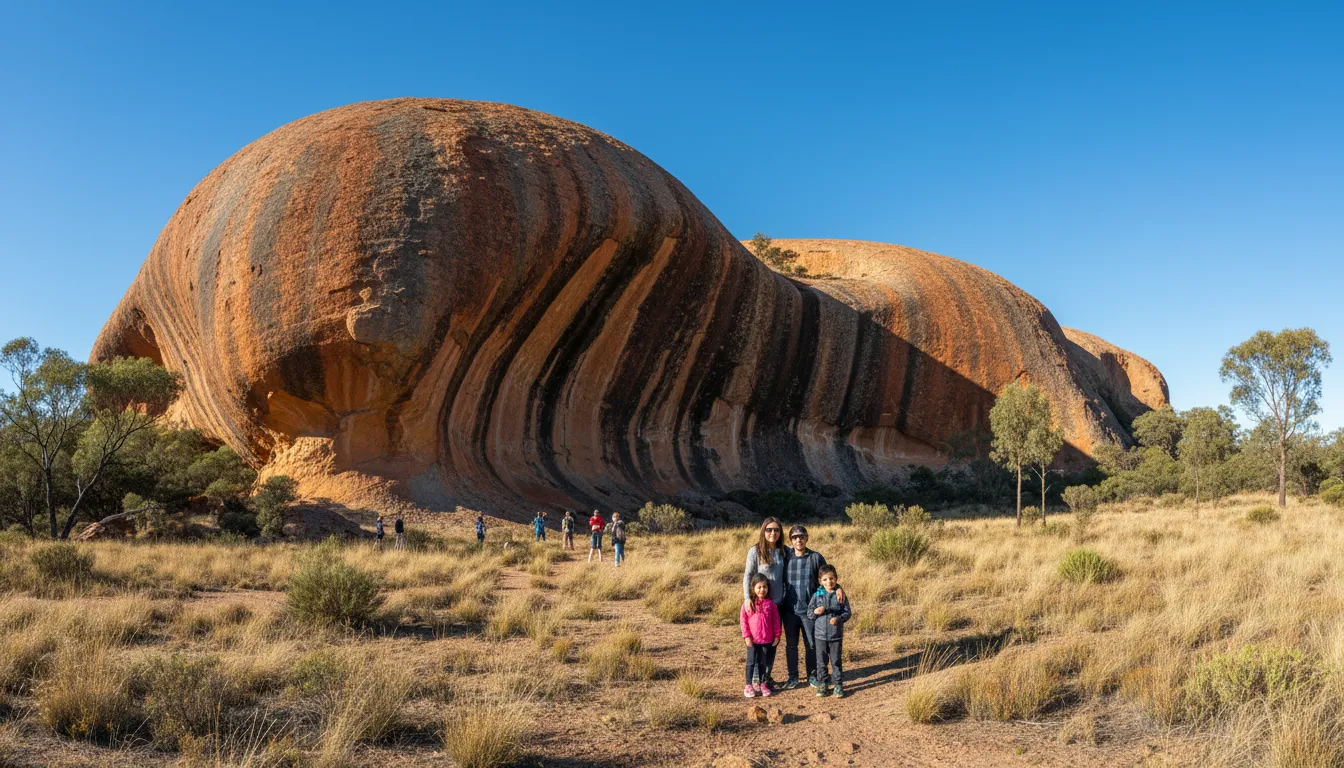
Standing before Wave Rock for the first time is an experience that truly humbles you. The sheer scale of this natural wonder, a towering granite cliff that looks precisely like a colossal ocean wave about to break, is utterly captivating. It stretches approximately 110 meters long and stands an impressive 15 meters high, its unique shape honed over an incomprehensible span of 60 million years.
The formation of Wave Rock is a fascinating tale of geological processes, primarily involving weathering and erosion. This massive granite inselberg, or 'island mountain,' was once part of a much larger subterranean rock mass. Over eons, the surrounding softer rock and soil eroded away, gradually exposing the harder granite core.
The distinctive wave-like shape itself is a result of chemical weathering, specifically the action of water seeping down the rock face. This water, carrying dissolved minerals, softened and eroded the rock more rapidly at its base, creating an undercut profile. Simultaneously, the upper sections remained more resistant, leading to the dramatic, overhanging curve we see today.
The striking vertical stripes of grey, red, and yellow adorning the rock face add another layer of visual intrigue. These vibrant hues are caused by different minerals and chemicals, such as iron oxides and carbonates, washing down the rock with rainwater. Each stripe tells a story of the specific mineral content and the path of ancient water flows, making the rock a living, evolving canvas.
For me, understanding the science behind such wonders only deepens the appreciation; it’s like understanding the brushstrokes of a master artist. It transforms a beautiful sight into a profound lesson in Earth's history, highlighting why it stands as a pre-eminent example of Perth's famous landscape. This ancient geological marvel is a powerful reminder of the planet's continuous, slow-motion artistry, a process that continues even today, albeit imperceptibly to our human eyes.
Hippos Yawn and Nearby Rock Formations
While Wave Rock is undeniably the star, the surrounding area offers a constellation of other incredible geological and cultural sites that enrich the visit. Just a short walk from Wave Rock, you’ll discover another captivating formation known as Hippo’s Yawn. This granite cave, shaped remarkably like a hippopotamus opening its mouth wide, provides a playful contrast to the majestic wave.
Exploring Hippo’s Yawn is a delightful experience, particularly for families. The smooth, cool interior of the cave offers a welcome respite from the sun, and its unique acoustics make for an interesting auditory experience. It’s a perfect spot for children to explore and let their imaginations run wild, seeing the 'hippo' come to life before their eyes.
Further afield, but still within easy reach, lies The Humps, another significant granite outcrop. This site is home to Mulka's Cave, a place of immense cultural importance to the local Aboriginal people, particularly the Noongar community. My travels have taught me the profound significance of respecting and understanding Indigenous heritage, and Mulka's Cave is a powerful example of this.
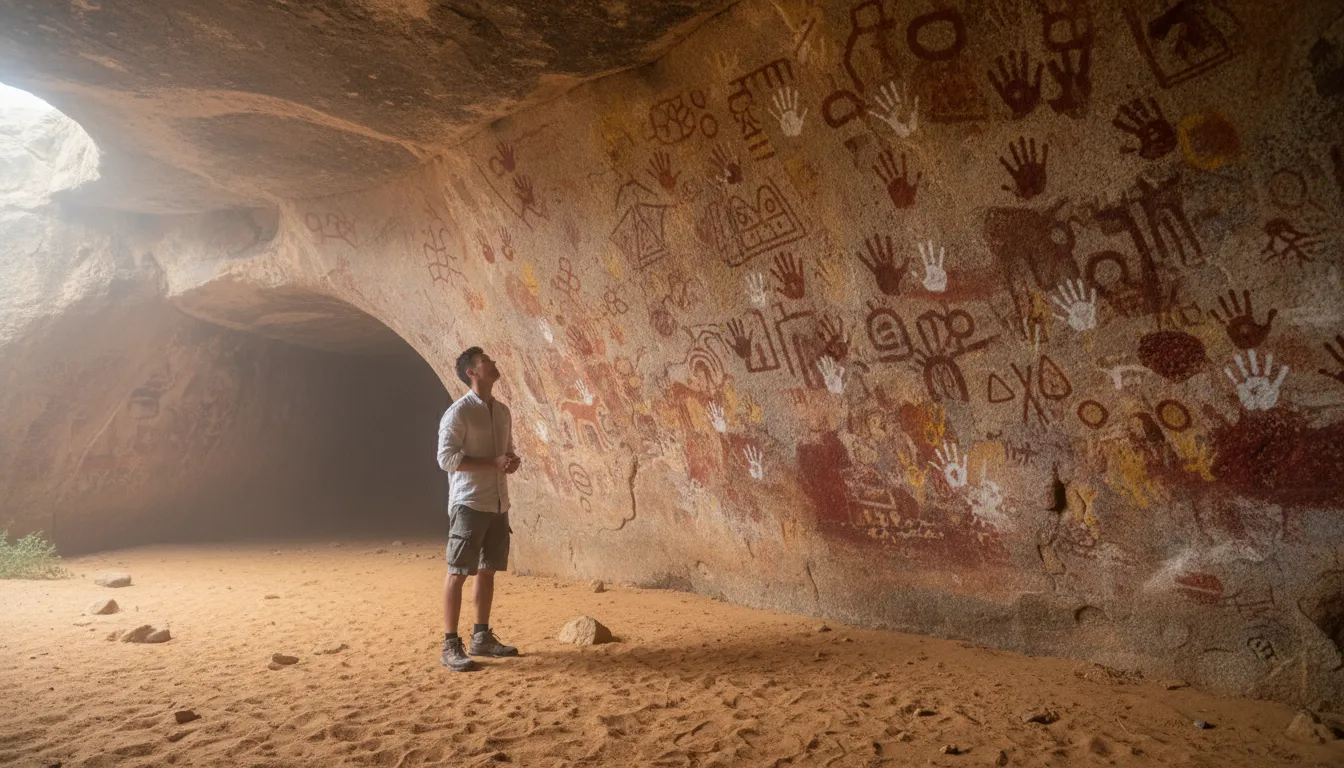
Mulka's Cave features ancient Aboriginal rock art, including handprints and depictions of traditional hunting tools. The cave is named after Mulka, a local Aboriginal man who, according to legend, was born cross-eyed and lived an isolated life in the cave. This tragic but compelling story, passed down through generations, adds a deep layer of human history and spirituality to the natural landscape.
Visiting Mulka's Cave is not just about seeing ancient art; it’s about connecting with the stories, the resilience, and the spiritual depth of Australia's first peoples. It’s a reminder that these landscapes are not just geological marvels but living repositories of culture and memory. Understanding these narratives transforms a scenic stop into a truly meaningful cultural exchange, embodying the very essence of MLIFEON's mission.
How to Frame Your Shots at Wave Rock
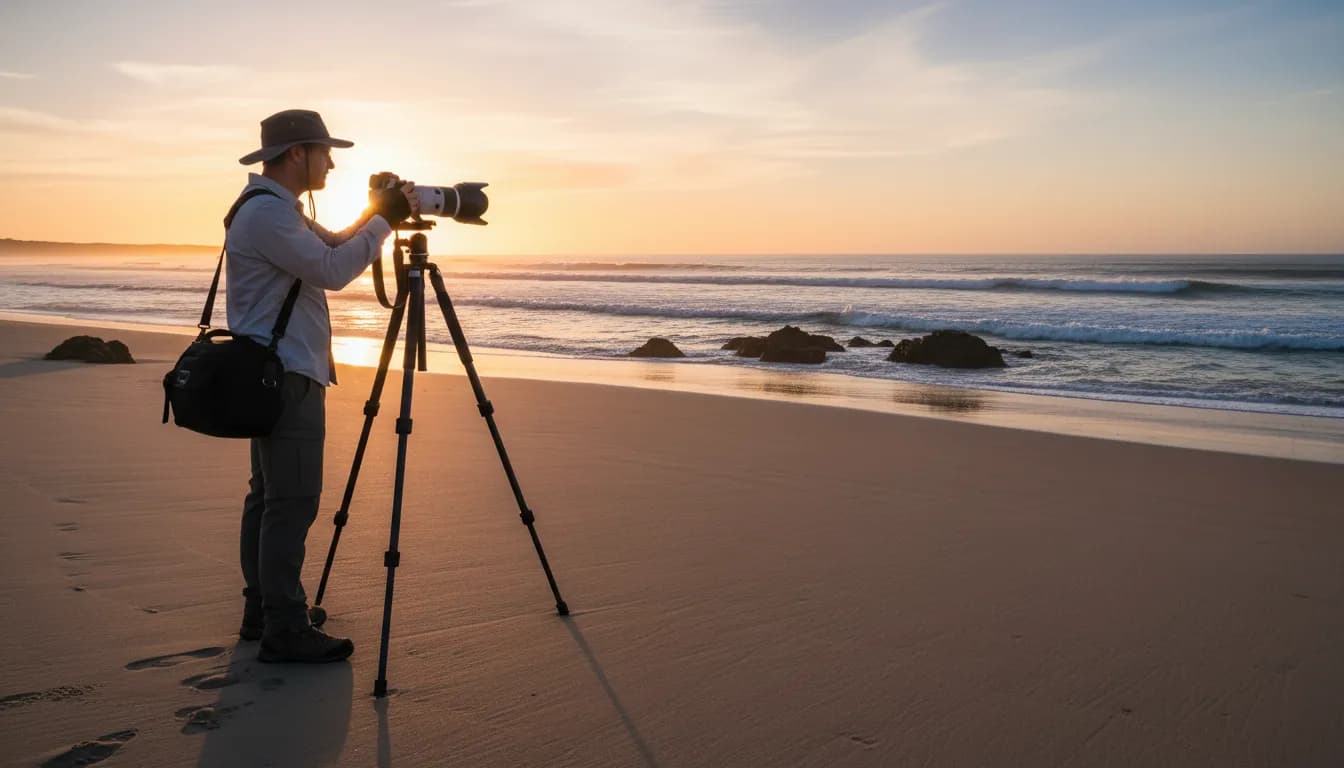
Capturing the majesty of Wave Rock through your lens is an essential part of the experience, allowing you to carry a piece of its grandeur home with you. Over the years, I’ve learned that the secret to truly great travel photography lies not just in the subject, but in understanding light, composition, and the story you want to tell. Wave Rock offers incredible opportunities for photographers of all skill levels.
One of the most crucial elements is timing. Visiting Wave Rock early in the morning, just after sunrise, or late in the afternoon, before sunset, provides the most dramatic lighting. The low angle of the sun at these times casts long shadows, enhancing the texture and depth of the rock face, and making the vibrant mineral stripes truly pop. Golden hour light bathes the 'wave' in a warm, ethereal glow that is simply magical.
For composition, consider shooting from different angles. A wide-angle lens is fantastic for capturing the full sweep of the wave, emphasizing its immense scale against the expansive sky. Try lying on the ground to get a low perspective, making the wave appear even taller and more imposing. Conversely, climbing to the top of the wave (via designated paths) offers panoramic views of the surrounding bushland and agricultural plains, providing context to this isolated marvel.
Don't shy away from close-up shots either. The intricate patterns and colours of the rock's surface, formed by millions of years of mineral deposition, are beautiful in their own right. Look for interesting textures, unique colour combinations, and the subtle ways light plays across the granite. These details often tell a more intimate story of the rock's formation.
If you have people in your group, use them to provide a sense of scale. A person standing at the base of the wave immediately conveys its impressive height. Encourage them to wear bright colours to stand out against the earthy tones of the rock. Remember, every photograph is a personal interpretation, so experiment and find the angles that best capture your wonder at this magnificent Perth Famous Landscape example.
Planning the Road Trip from Perth
Embarking on a road trip from Perth to Wave Rock is an adventure in itself, a quintessential Western Australian experience that truly allows you to appreciate the vastness and beauty of the state. Having crisscrossed countless landscapes, I can attest that the journey is often as rewarding as the destination, especially when it involves traversing such unique terrain. The drive covers approximately 340 kilometres, typically taking around 3.5 to 4 hours of continuous driving.
While it's possible to do a day trip, I highly recommend making it an overnight stay to fully immerse yourself in the experience and avoid rushing. The drive takes you through the picturesque Western Australian Wheatbelt, a region dotted with charming country towns and endless fields that shift in colour with the seasons. Consider stopping at historic towns like York, Western Australia's first inland town, which boasts beautiful colonial architecture and a rich heritage. It’s a perfect place to stretch your legs and grab a coffee.
As you plan your trip, think about the time of year. Spring (September to November) is particularly beautiful, with wildflowers blooming across the landscape, adding splashes of vibrant colour to the golden fields. Summer can be very hot, so ensure you have plenty of water and plan your outdoor activities for cooler parts of the day. Autumn and winter offer milder temperatures, making exploration more comfortable, though nights can be chilly.
Accommodation options in Hyden, the small town closest to Wave Rock, range from motels and caravan parks to farm stays, offering a taste of rural Australian hospitality. I always find that staying in local accommodations enhances the cultural experience, allowing for interactions with residents and a deeper understanding of regional life. Enjoying a meal at a local pub or cafe also provides an opportunity to sample regional produce and support local businesses.
Remember to pack essentials: plenty of water, snacks, sunscreen, a hat, comfortable walking shoes, and a camera with extra batteries. The cell phone reception can be patchy in some areas, so download offline maps and inform someone of your travel plans. This road trip is more than just reaching a destination; it's an opportunity for personal discovery, a chance to disconnect from the hustle and bustle, and to connect with the raw, untamed beauty that makes Western Australia truly special.

Conclusion
Wave Rock, undeniably one of the most compelling Perth Famous Landscape examples, is far more than just a geological curiosity; it is a profound natural and cultural landmark that offers a truly immersive experience. From its ancient geological origins to its deep connection with Aboriginal heritage, and the captivating journey through the Wheatbelt to reach it, every aspect of visiting Wave Rock is infused with discovery and meaning. It represents the very essence of what MLIFEON seeks to highlight: authentic cultural stories and inspiring connections.
My own travels have consistently reinforced the idea that the most memorable destinations are those that engage not just our sight, but our intellect and our spirit. Wave Rock does precisely that, inviting us to ponder the immense forces of nature, to listen to the whispers of ancient stories, and to appreciate the profound beauty that lies beyond the familiar. It’s a place where the earth’s history is etched in stone, and where human stories have unfolded for millennia.
For the culturally curious reader, particularly those with a Vietnamese-Australian background seeking meaningful connections, a journey to Wave Rock offers a unique opportunity. It allows for a deeper understanding of Australia's diverse landscapes and Indigenous cultures, fostering a sense of wonder and respect for the world around us. This magnificent 'wave' stands as a testament to the enduring power of nature and the rich tapestry of human experience that graces this incredible continent. Your journey to unforgettable cultural stories and inspiring connections truly begins here, in the heart of Western Australia's ancient land.