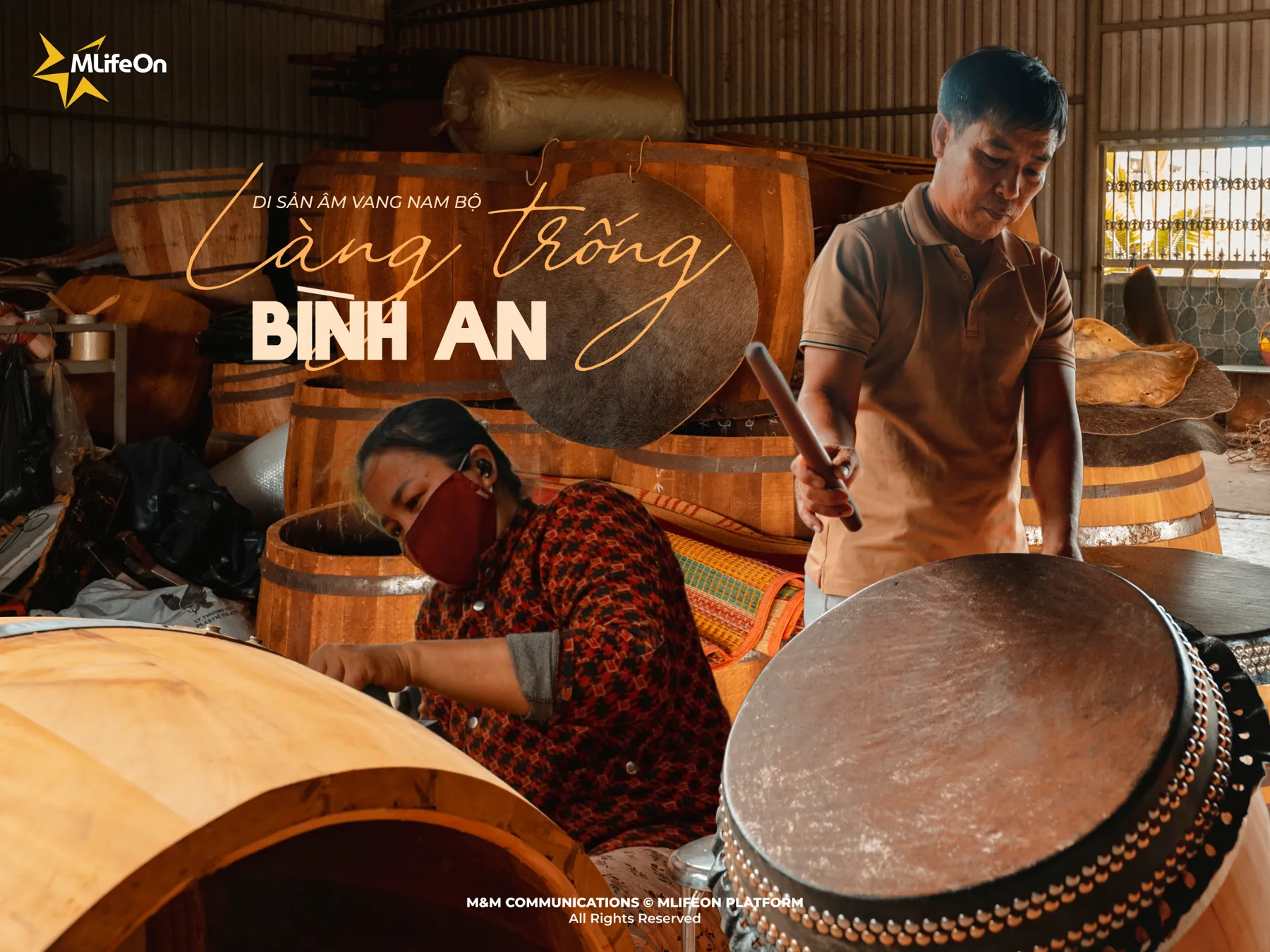
BINH AN DRUM-MAKING VILLAGE - WHERE SOUNDS RESONATE
In Tay Ninh, there exists a craft village with a history spanning nearly two centuries, a place where the sound of drums resonates not only within communal houses, pagodas, and festivals but also stands as a cultural symbol of the entire Southern region.
This is Binh An Drum-Making Village, the cradle of exquisitely handcrafted drums that embody memories, music, and national pride.
Coming to the Drum-Making Village


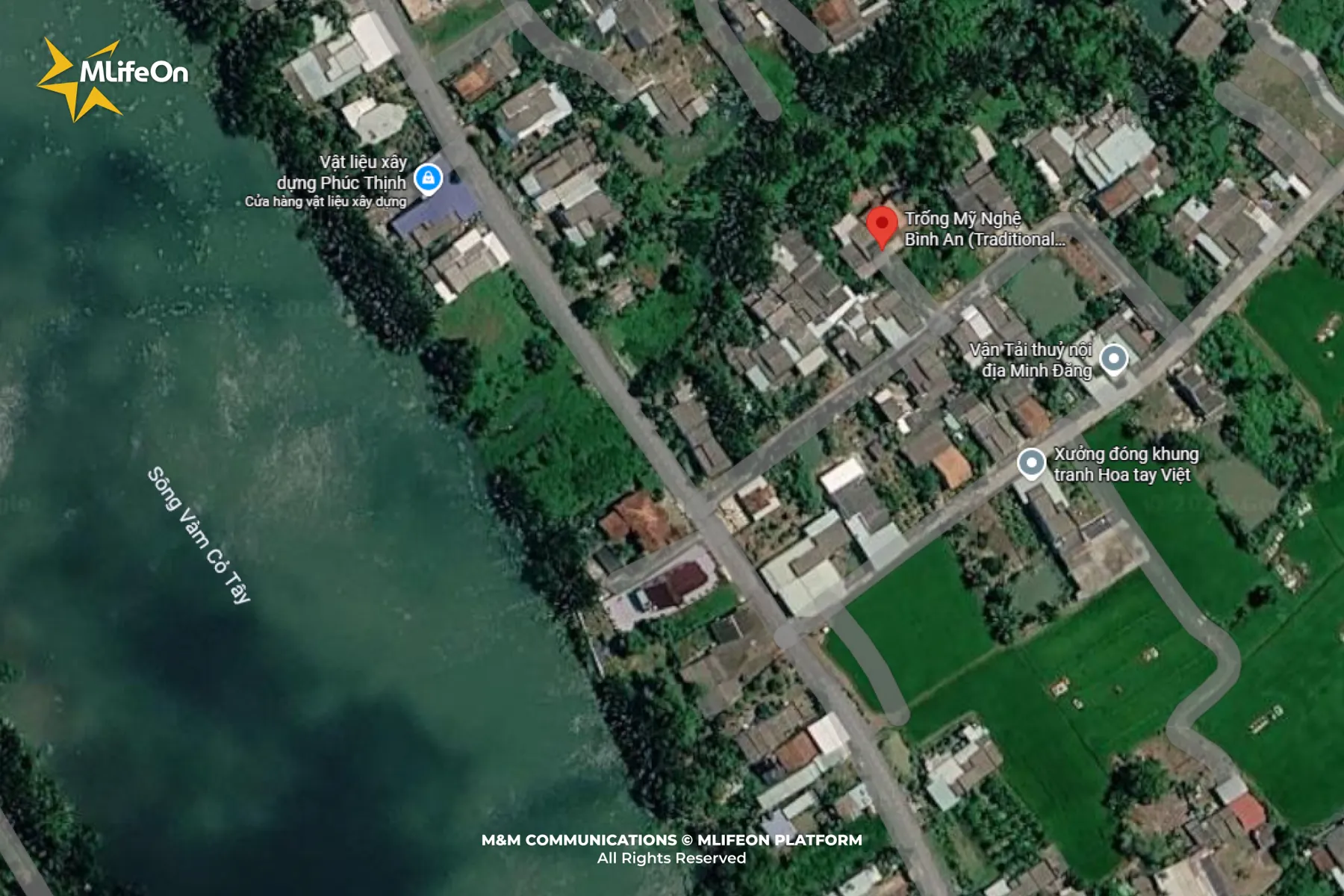
Binh An Drum-Making Village is located in Tan Tru Commune, Tay Ninh Province (formerly part of Tan Tru District, Long An Province), nestled beside the gentle Vam Co Tay River. This location not only facilitates waterborne trade, allowing the drum-making craft to easily spread to neighboring areas, but is also deeply intertwined with the river-based culture of Southern Vietnam.

The Vam Co Tay River has long served as a lifeline for local residents, carrying with it rich silt, abundant produce, and a wealth of cultural stories. Thanks to this strategic location, the Binh An Drum-Making village enjoys both a plentiful supply of timber from the riverbanks and the logistical advantage of transporting its drums via merchant boats, first throughout the Western and Southeastern regions, and eventually across the entire country.

The history of Binh An Drum-Making village
The drum-making craft in Binh An Drum-Making Village originated in the 19th century with artisan Nguyen Van Ty, who is regarded as the craft's founding father. During trading journeys along the Vam Co Tay River, he learned drum-skinning techniques from artisans in other regions and brought this knowledge back to share with the villagers. Since then, the craft has taken root, becoming an integral part of the local community's cultural life.

Spanning more than five generations of father-to-son succession, the craft of making Bình An drums has weathered many ups and downs. Although it once seemed on the verge of fading away due to the advent of modern musical instruments, the perseverance and passion of the artisans have ensured that the sound of these drums continues to resonate in communal houses, pagodas, festivals, and even Lion-Dragon dance performances.

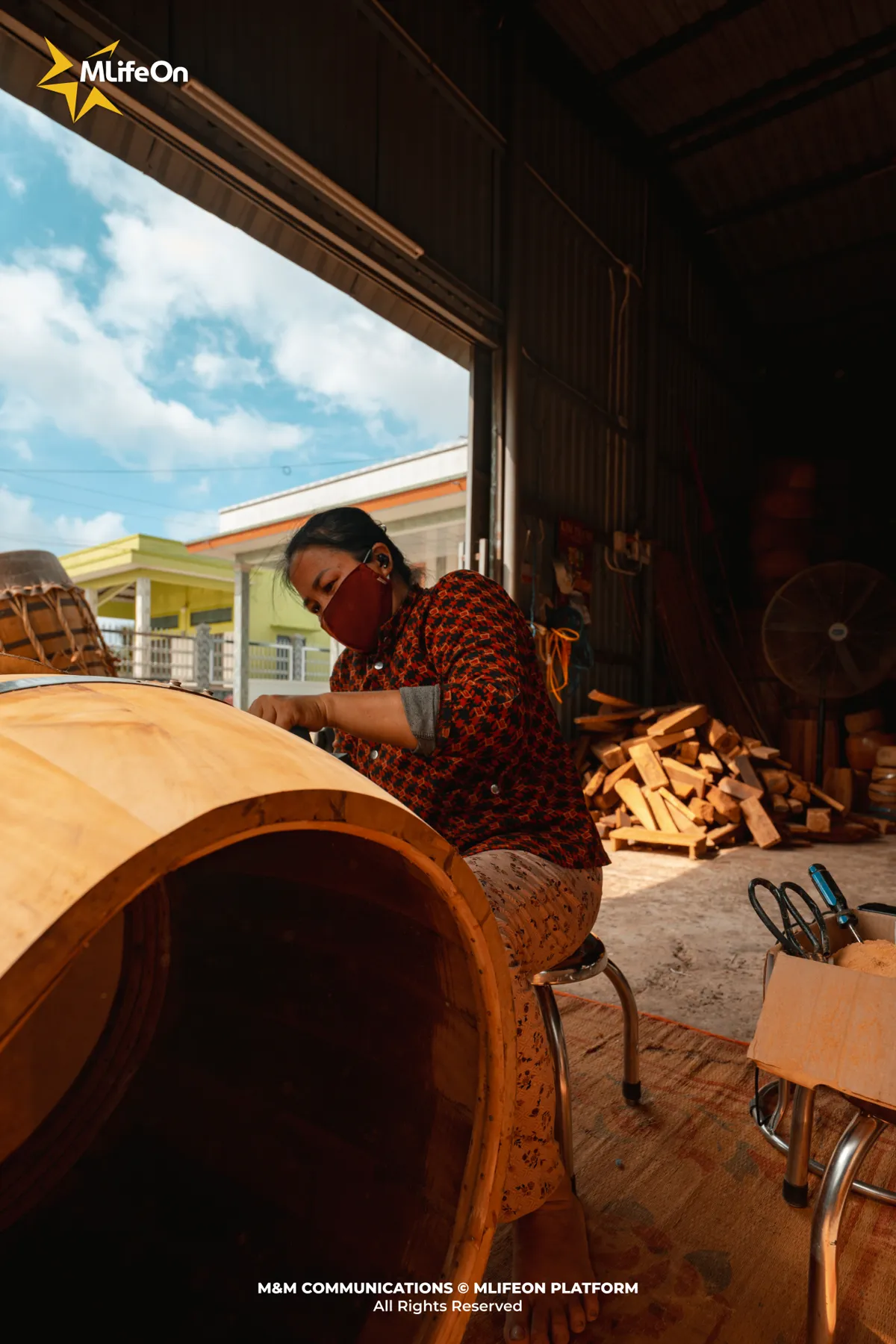
The craft of drum making here has been passed down through generations.

Each generation introduces new techniques and refines processes, yet preserves the traditional artisanal spirit.
Characteristics of Binh An drums
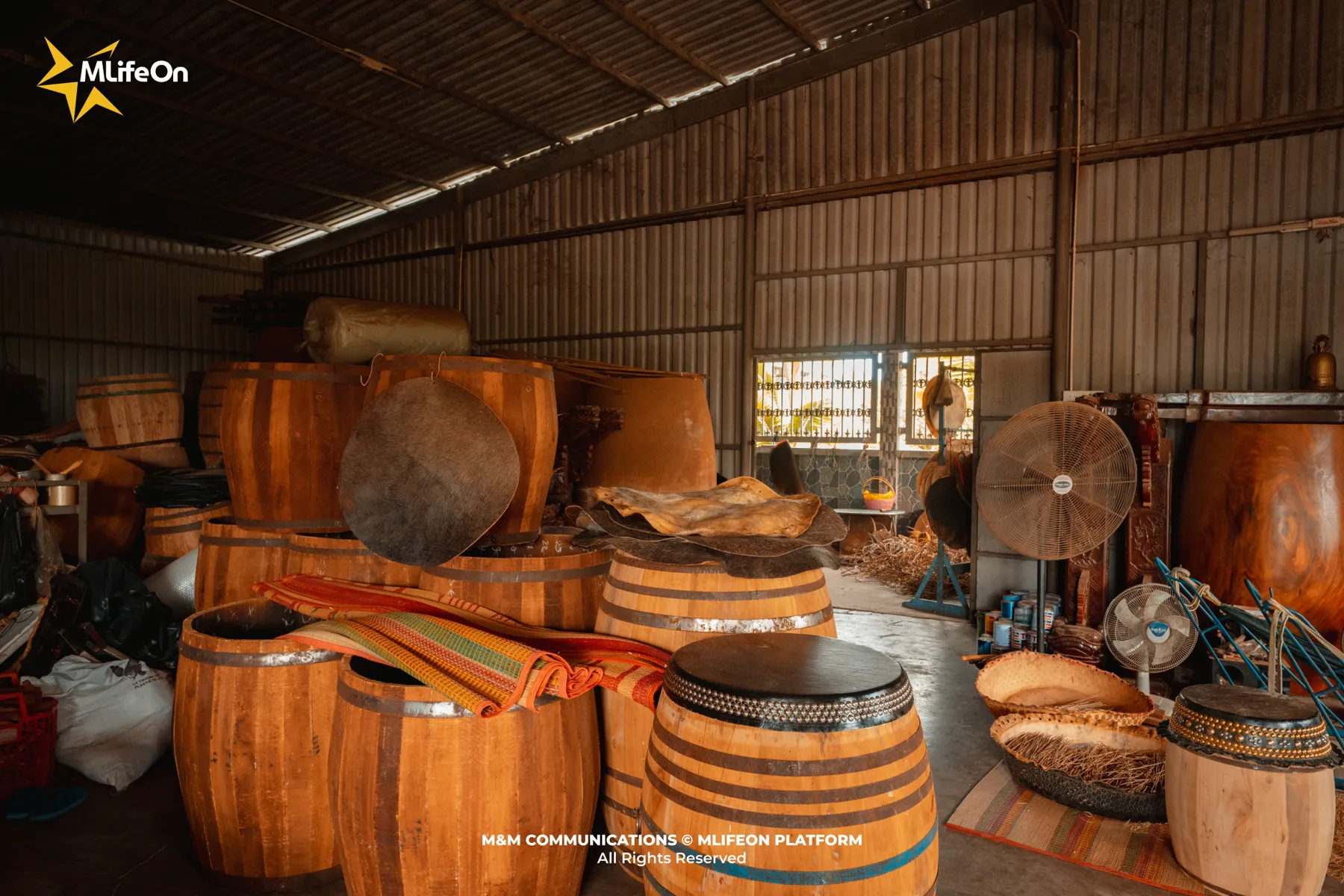
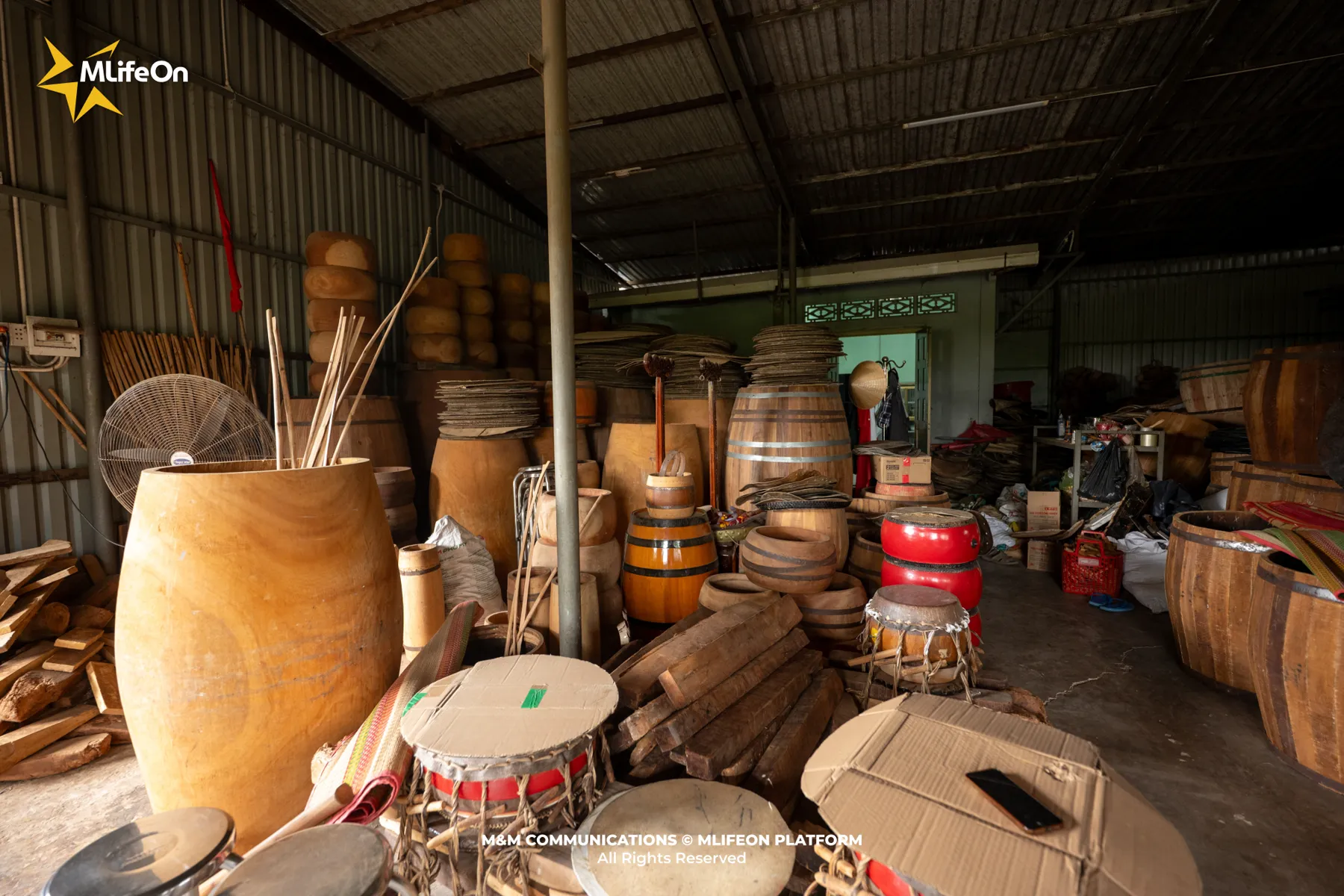
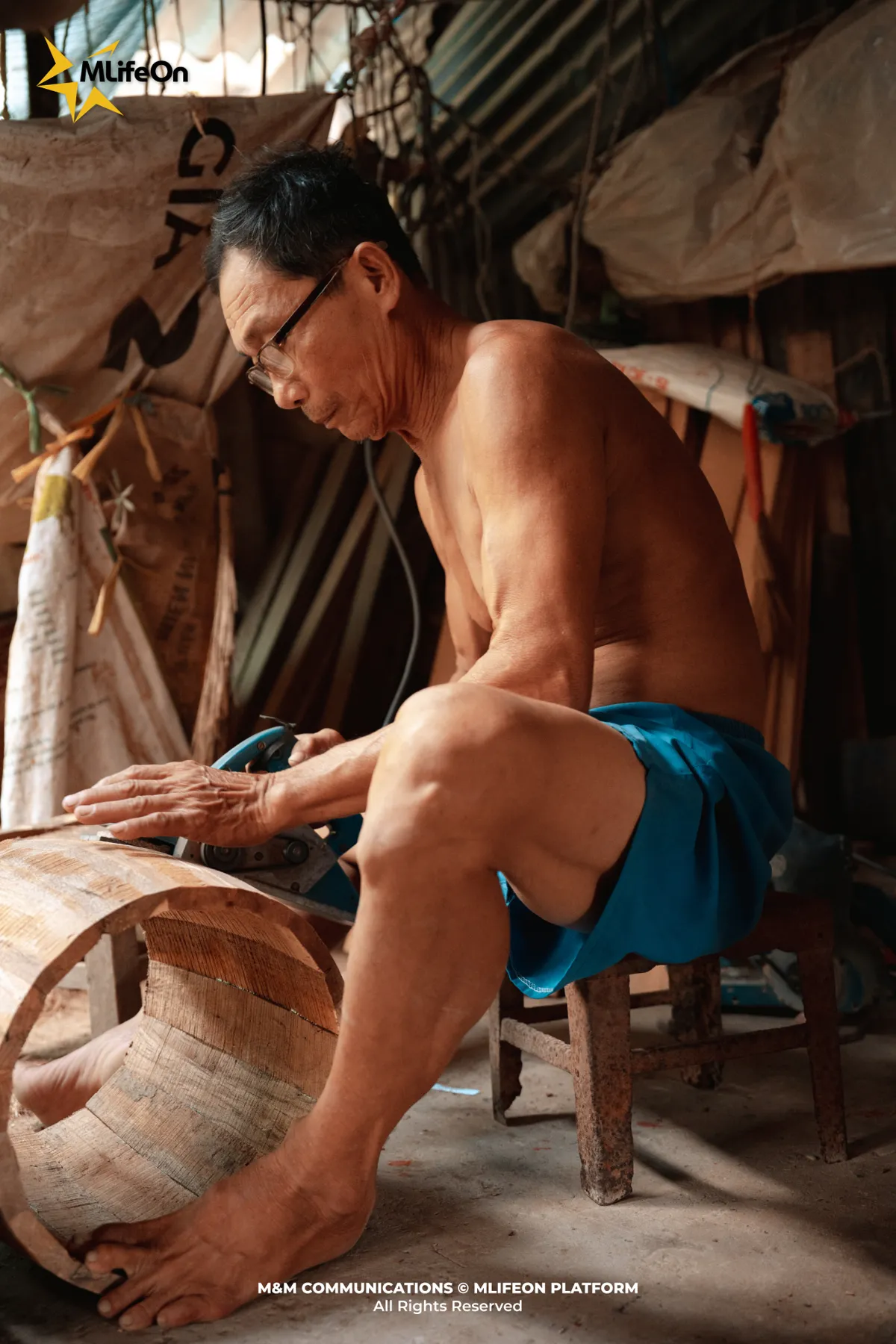
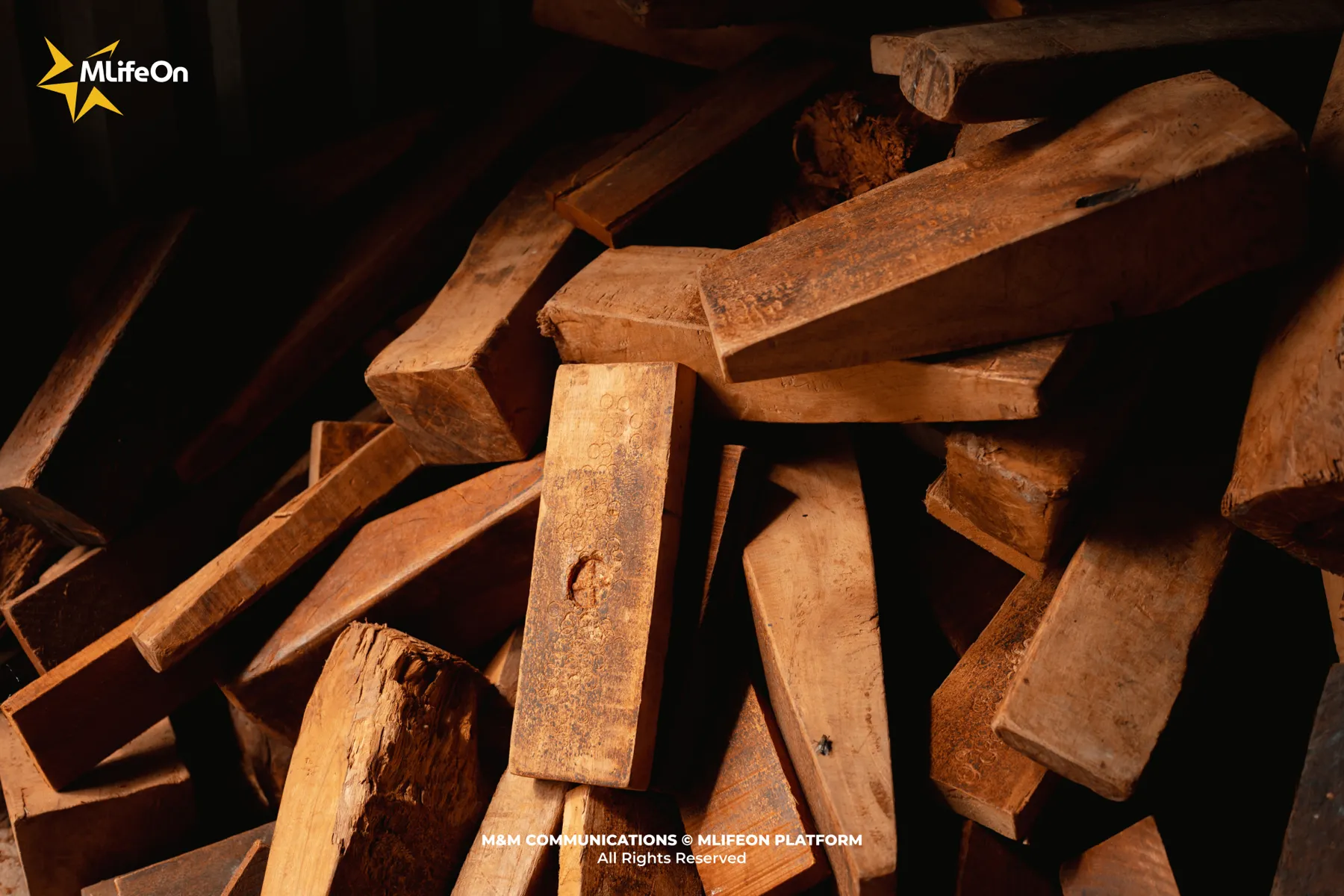
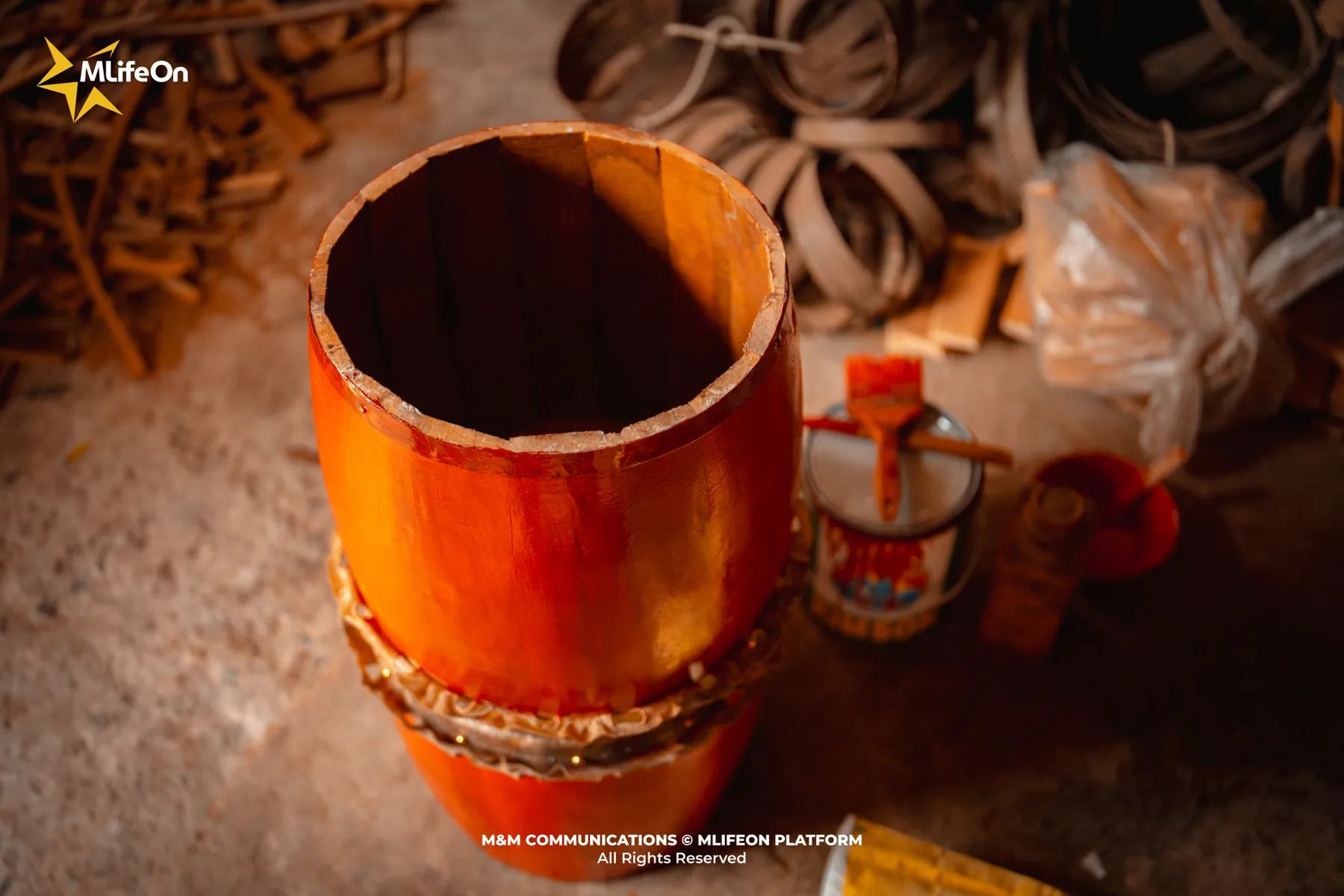
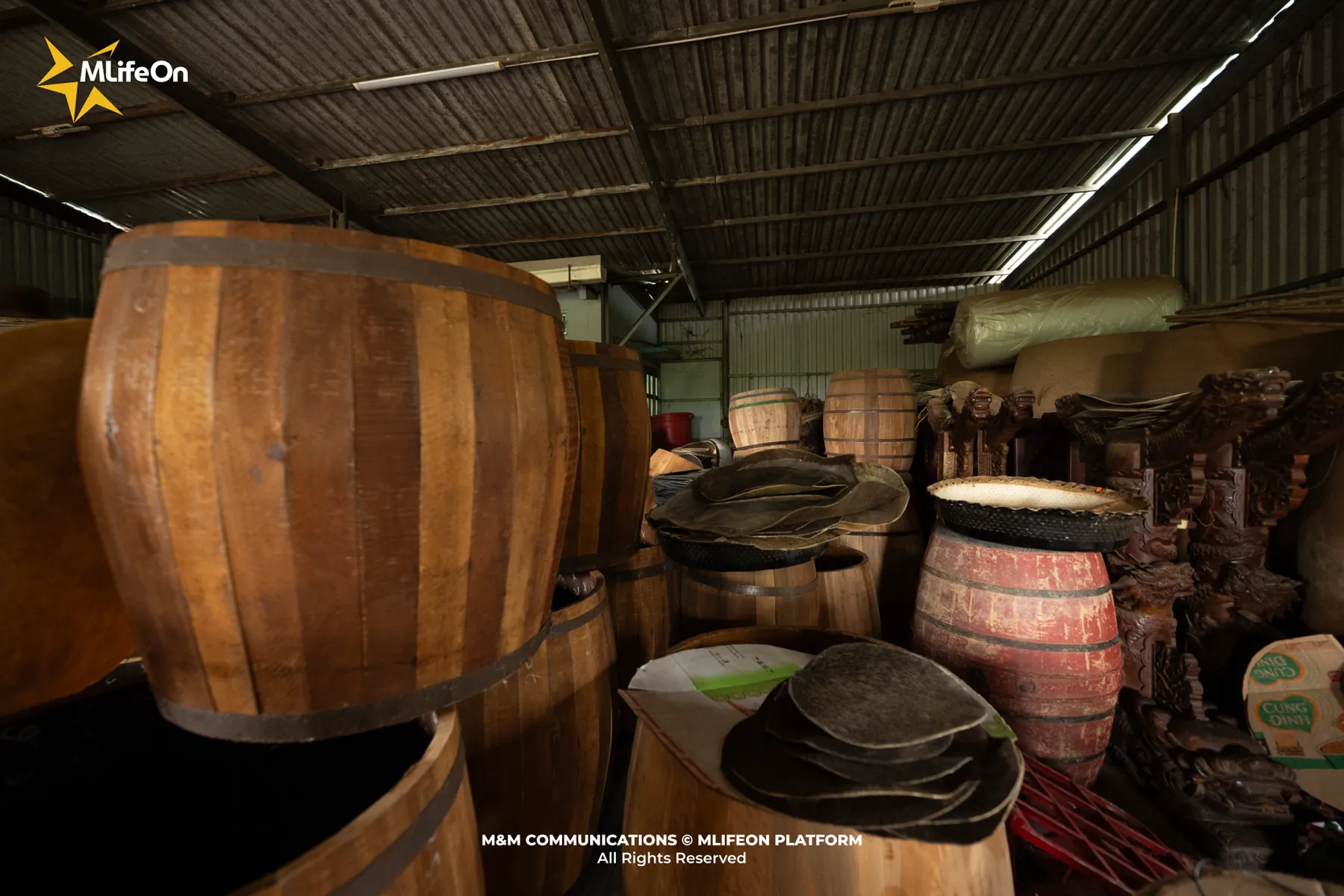
The drums here embody the refinement of a long-standing artisanal tradition. Craftsmen meticulously select the wood such as *sao*, jackfruit, *sến*, or coconut, choosing varieties that are both sturdy and resilient; the wood is then smoked to prevent termite damage and ensure the drum body remains durable over the years.

The wood used for the drums is carefully selected.

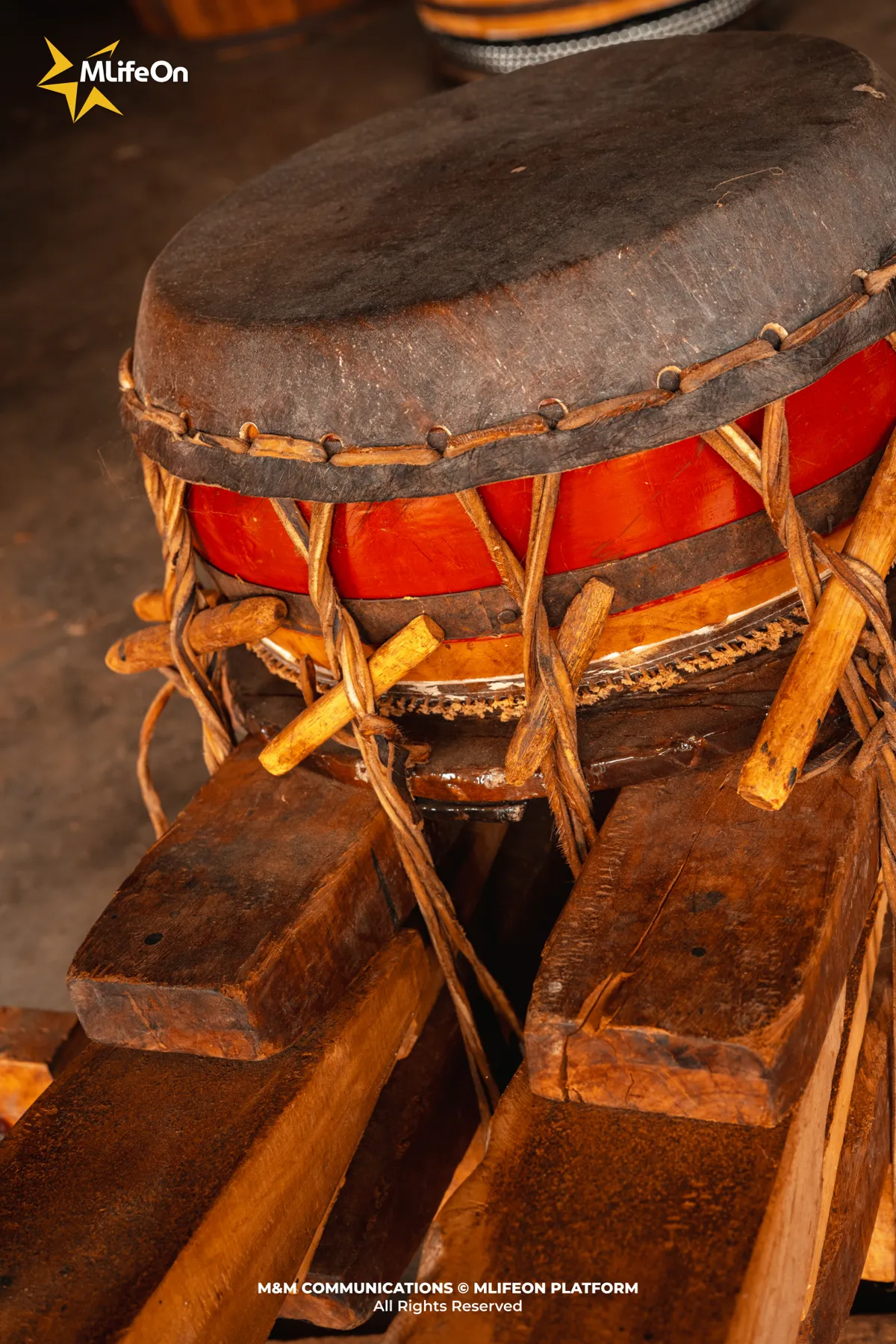
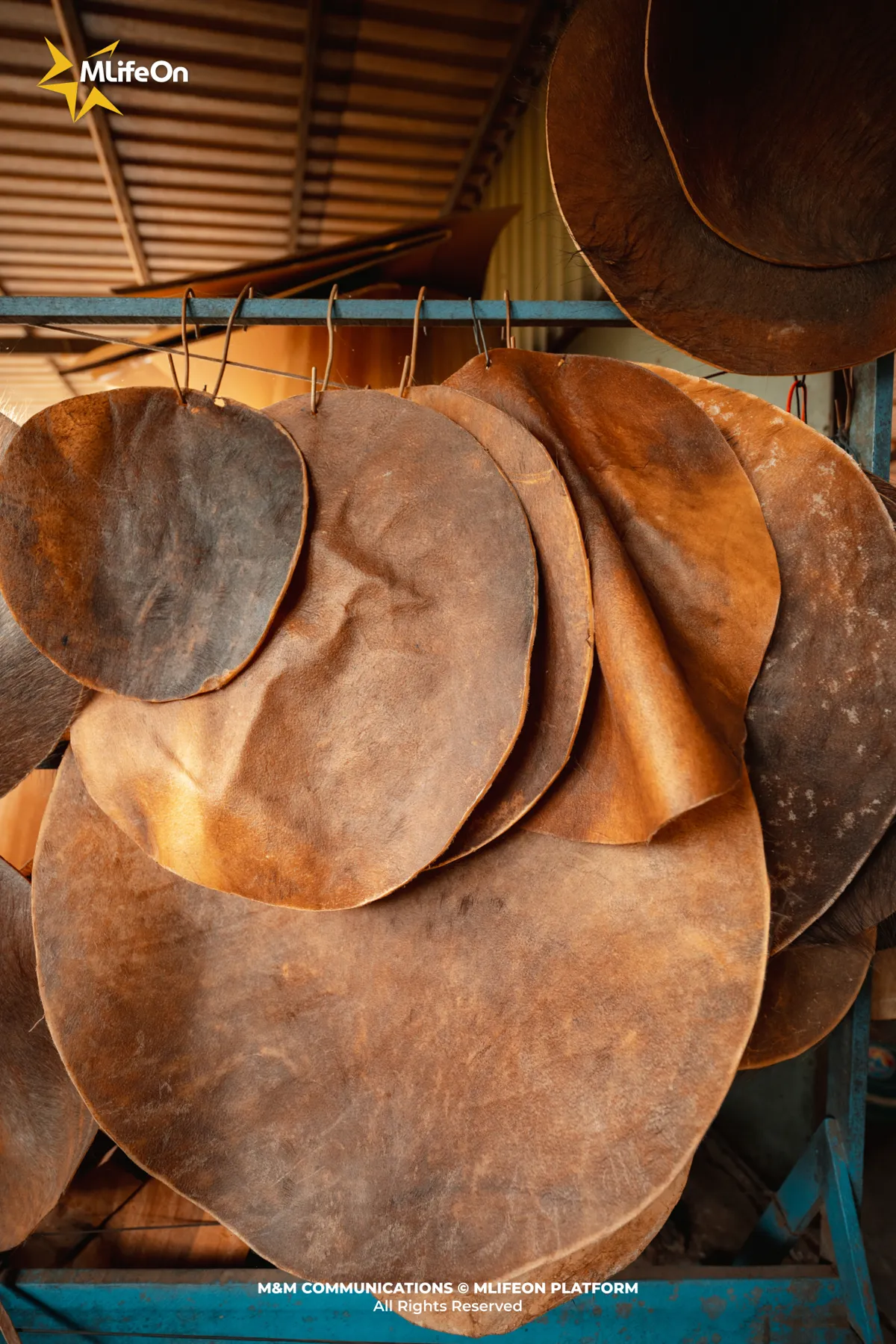
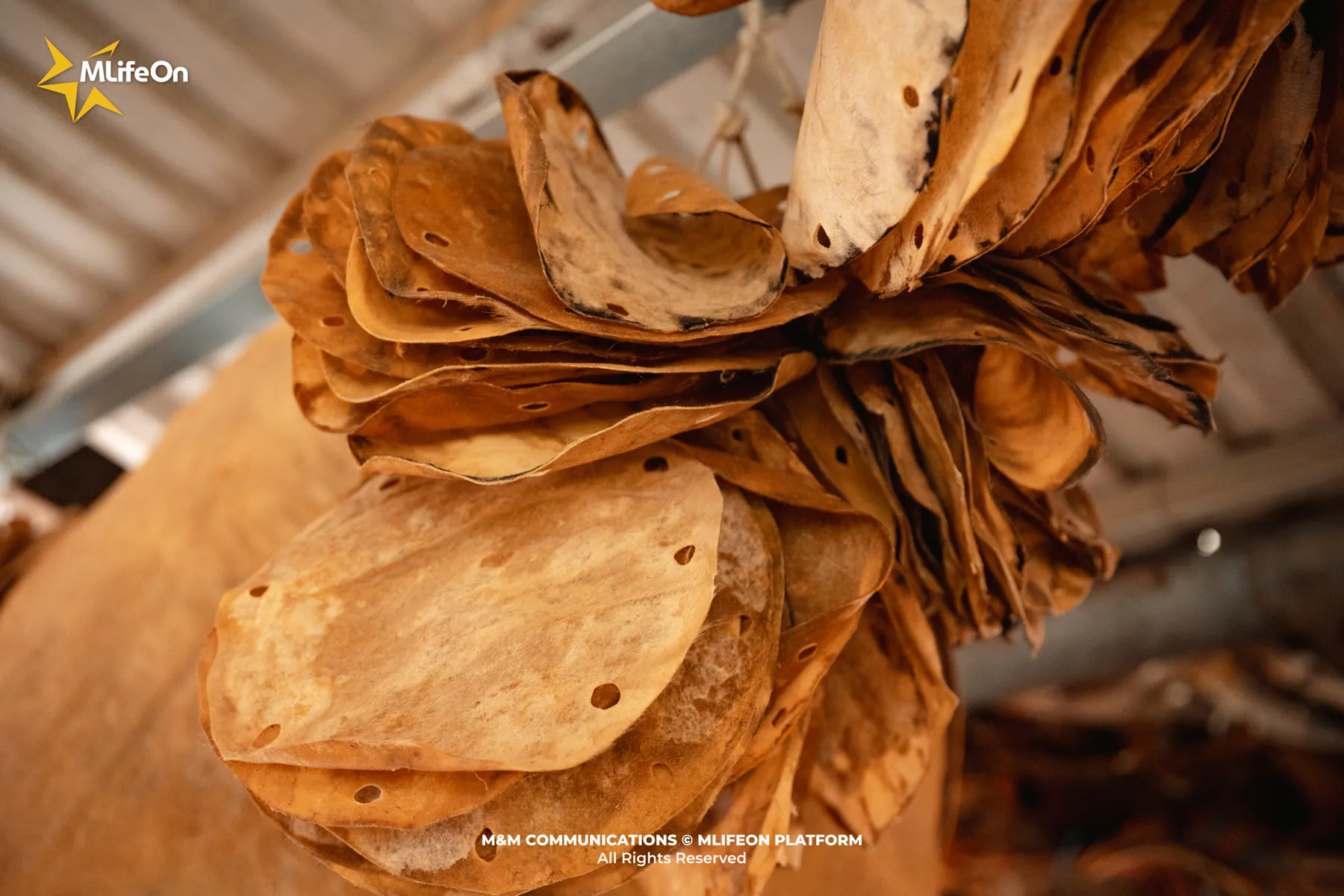
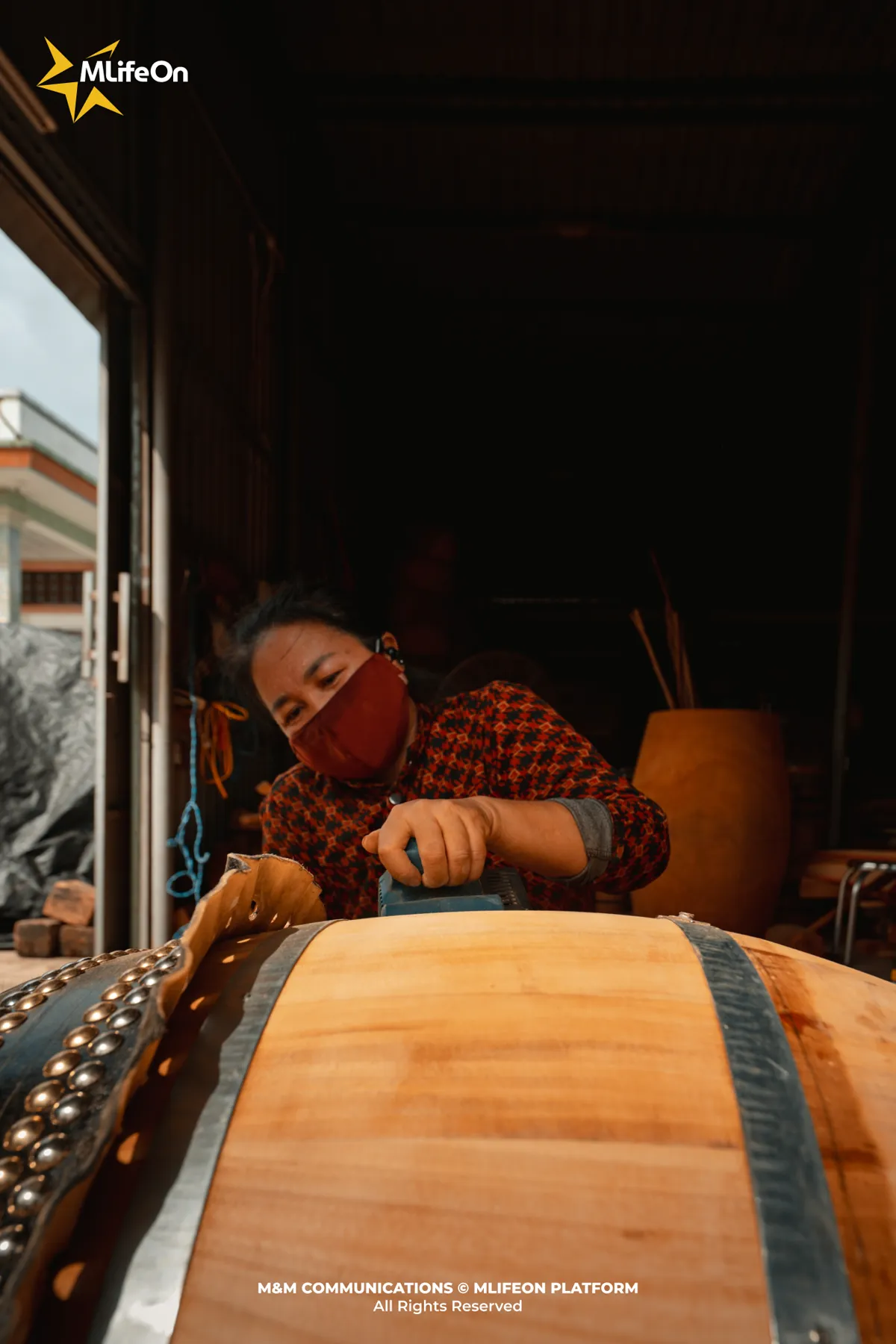
The drumhead itself requires even more meticulous craftsmanship: it must be made from the hide of a buffalo over twenty years old, carefully treated to ensure the right balance of tension and thickness, thereby producing a full, resonant sound. From the fire-bending of the wood and the assembly of the body to the stretching of the head using a *traditional *chò* wood frame, the entire process involves over twenty manual steps, demanding both patience and the artisan's skillful hands.
* traditional *chò* wood frame: a specialized tool and manual technique used in the traditional craft of drum making.

The hide used for the drumhead is selected with equal care.

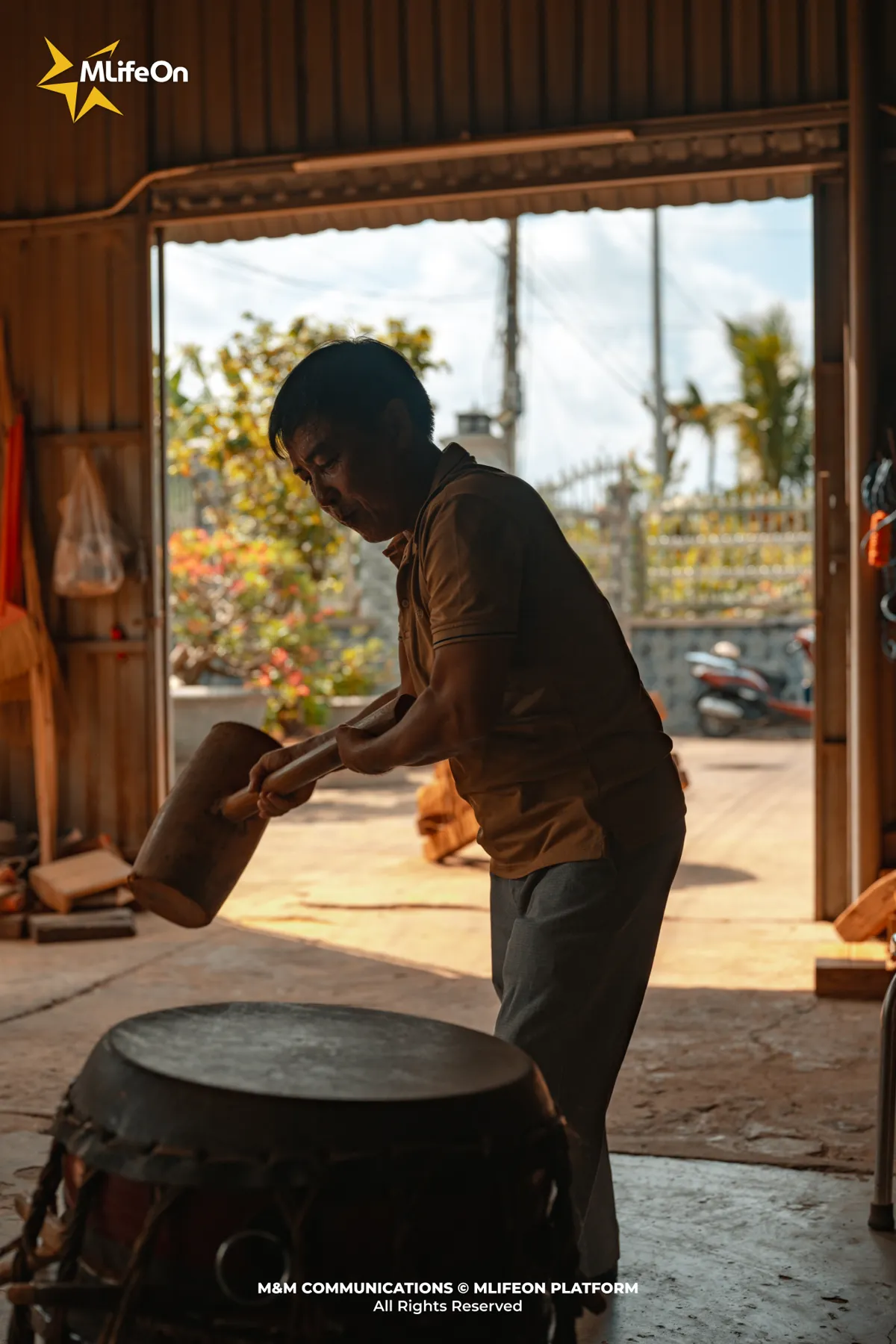
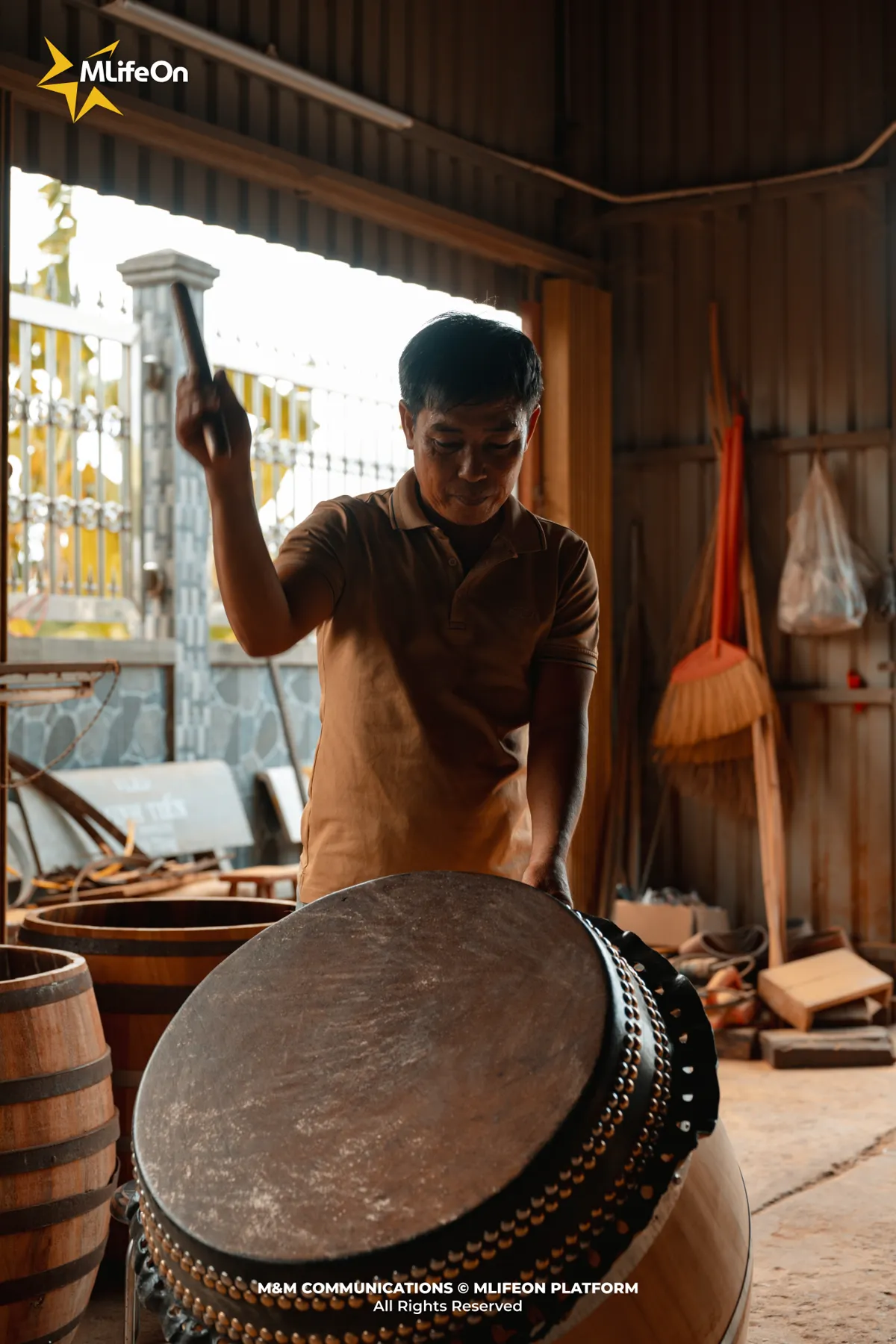
The sounds of Binh An drums possess distinct characteristics: the lion dance drum beats are crisp and rapid, seemingly urging the performers forward, while the drums used in communal houses and pagodas produce deep, resonant tones that evoke a sense of sanctity and solemnity. It is this very diversity that creates a unique "symphony" of drumming, encompassing everything from festival and school drums to those used for Lion-Dragon dances and traditional stage performances.

The sounds of different types of drums will carry their own distinct nuances.
Each drum is not merely a musical instrument but an embodiment of culture, community memory, and the pride that the artisan infuses into every resounding beat.
Current value

The value of Binh An Drum-Making Village lies not only in its resounding drums but also in the profound layers of meaning embodied by this craft village.
-
Culture: Binh An preserves Southern Vietnamese folk music; here, the sound of drums intertwines with festivals and spiritual beliefs, serving as a bridge between people and their spiritual lives. Each drumbeat is more than just a sound, it embodies communal memory and the living breath of tradition.
-
Economy: Drum-making sustains over twenty households in the village, providing stable employment and bringing traditional craftsmanship to the global stage. Binh An drums have reached countries such as the United States, France, Canada, and Singapore, carrying the resonance of Vietnamese culture to the international community.
-
Spirit: The Binh An drum stands as a symbol of resilience and creativity. Each drum is the product of skilled hands, national pride, and the steadfast dedication to keeping the tradition alive across generations.
Above all, regarding its heritage status, the drum-making craft of Binh An has been recognized as National Intangible Cultural Heritage. This serves not only as an acknowledgment but also opens up opportunities for preservation and development, ensuring that the sound of the village's drums continues to resonate in life today and for generations to come.

The drum-making craft here has been recognized as National Intangible Cultural Heritage.
Conclusion
Binh An Drum-Making Village is not only the birthplace of drums renowned throughout the Southern region but also a testament to the enduring vitality of a traditional craft village. The sound of its drums resonates not only during festivals and at temples but also within the memories and cultural pride of the entire nation.
If you have the opportunity, do visit Binh An Drum-Making Village to experience the value and beauty of a heritage that has stood the test of time.
—------
CREDIT:
- Photography: Luan Nguyen
- Content: Giang Huynh
- Design: Phuong Nguyen