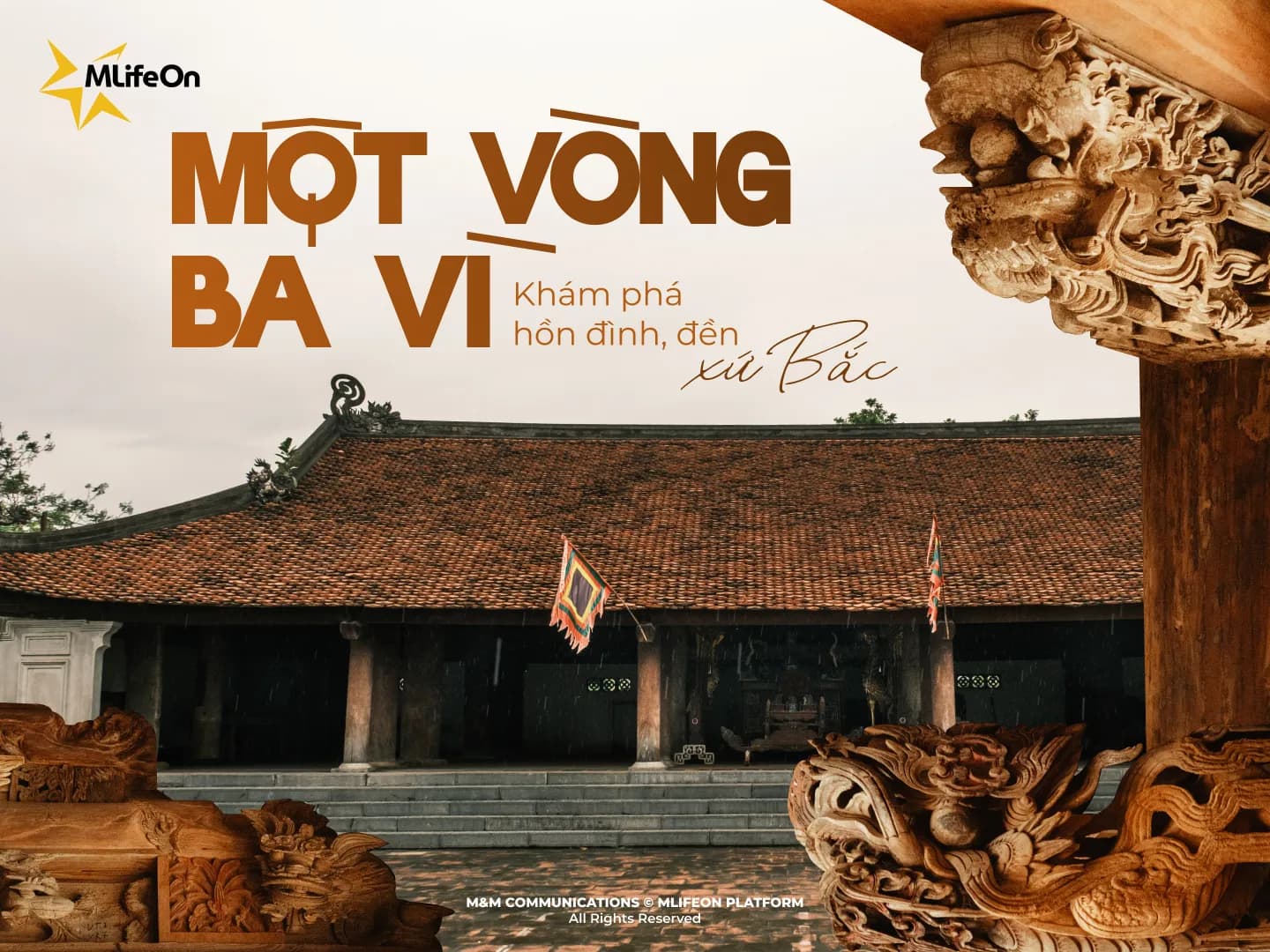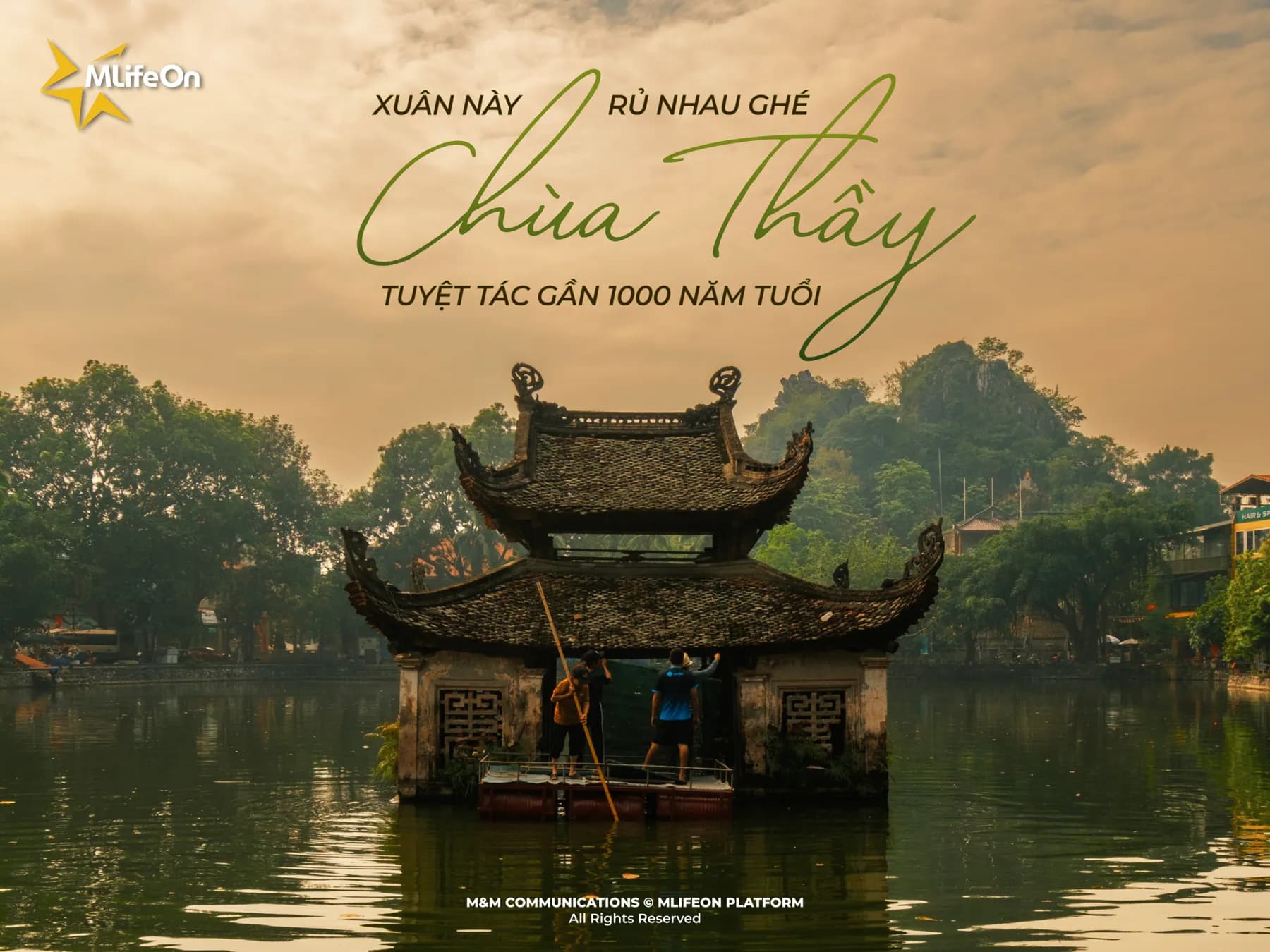
Spring in Hanoi is the season when people naturally slow down when they feel the urge to pause somewhere, take a deep breath, and observe more than usual. And Thay Pagoda is an especially fitting place to do just that.
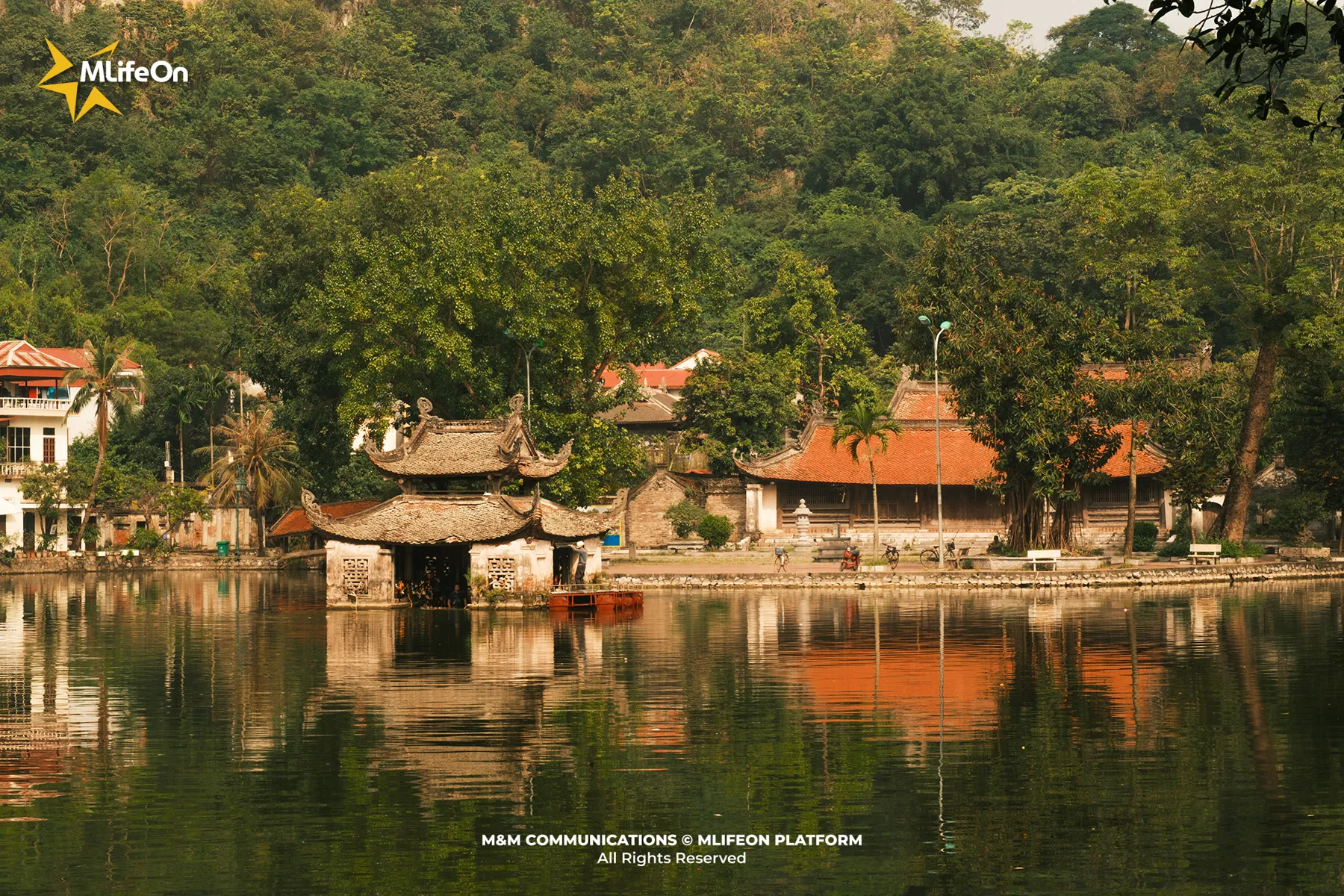
Thay Pagoda – A temple marked by the "front buddha, rear saint" architecture
Built during the Ly Dynasty, Thay Pagoda is closely associated with Zen Master Tu Dao Hanh, a figure of particular significance in Vietnamese Buddhist history and folk belief. After nearly a thousand years, the pagoda has preserved its ancient, contemplative character through its distinctive "front Buddha, rear Saint" architectural style.
This design reflects a dual devotion: the worship of Buddha alongside the veneration of a Saint, deeply tied to folk spirituality and the life of Zen Master Tu Dao Hanh. The combination vividly illustrates the spiritual life of ancient Vietnamese society where Buddhism was not separate from everyday life, but seamlessly woven into local beliefs and daily practices.
Perhaps for this reason, entering Thay Pagoda never feels distant or intimidating. One does not need deep knowledge of Buddhist teachings or rituals. Simply standing still for a moment is often enough for the mind to soften and the heart to settle.
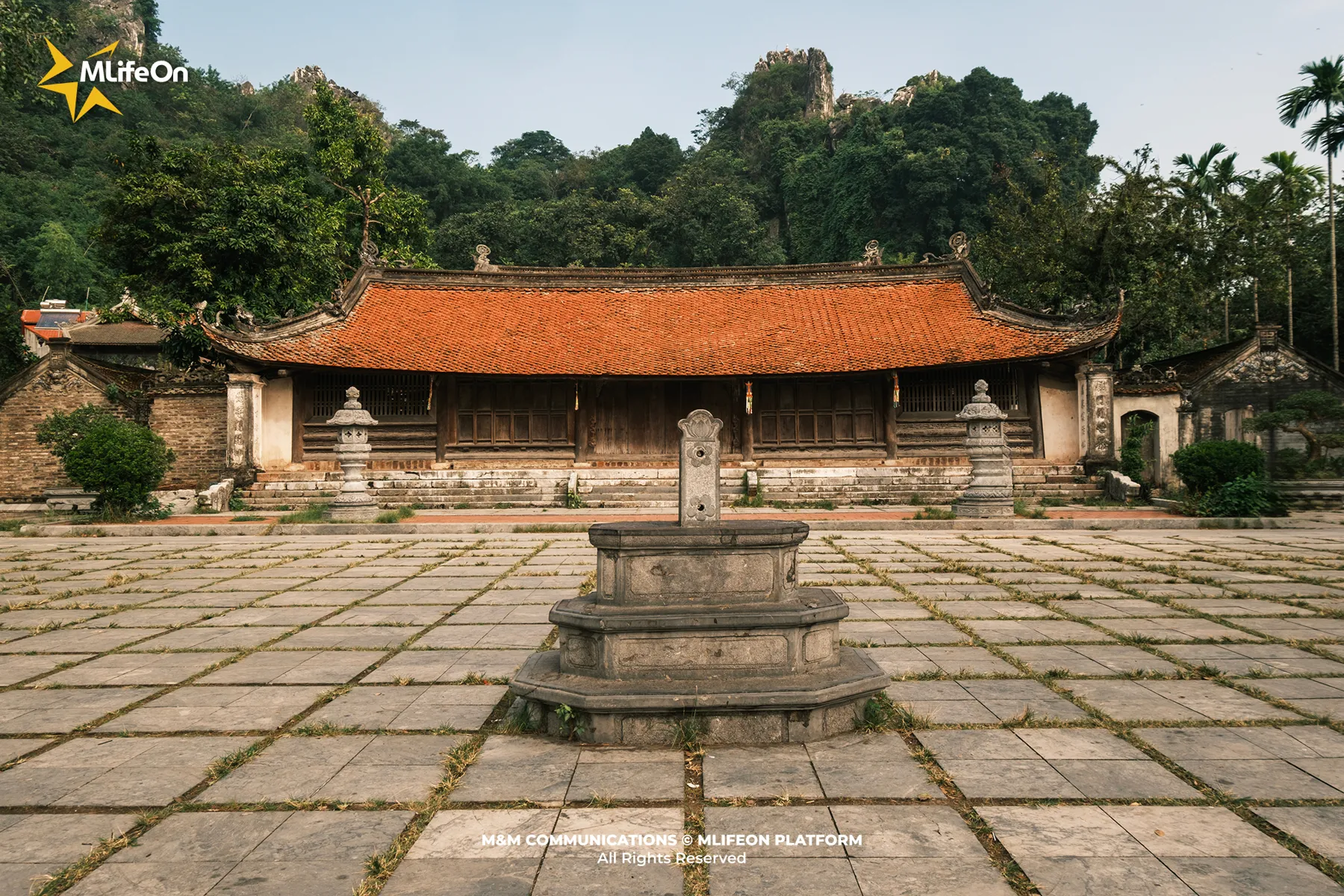
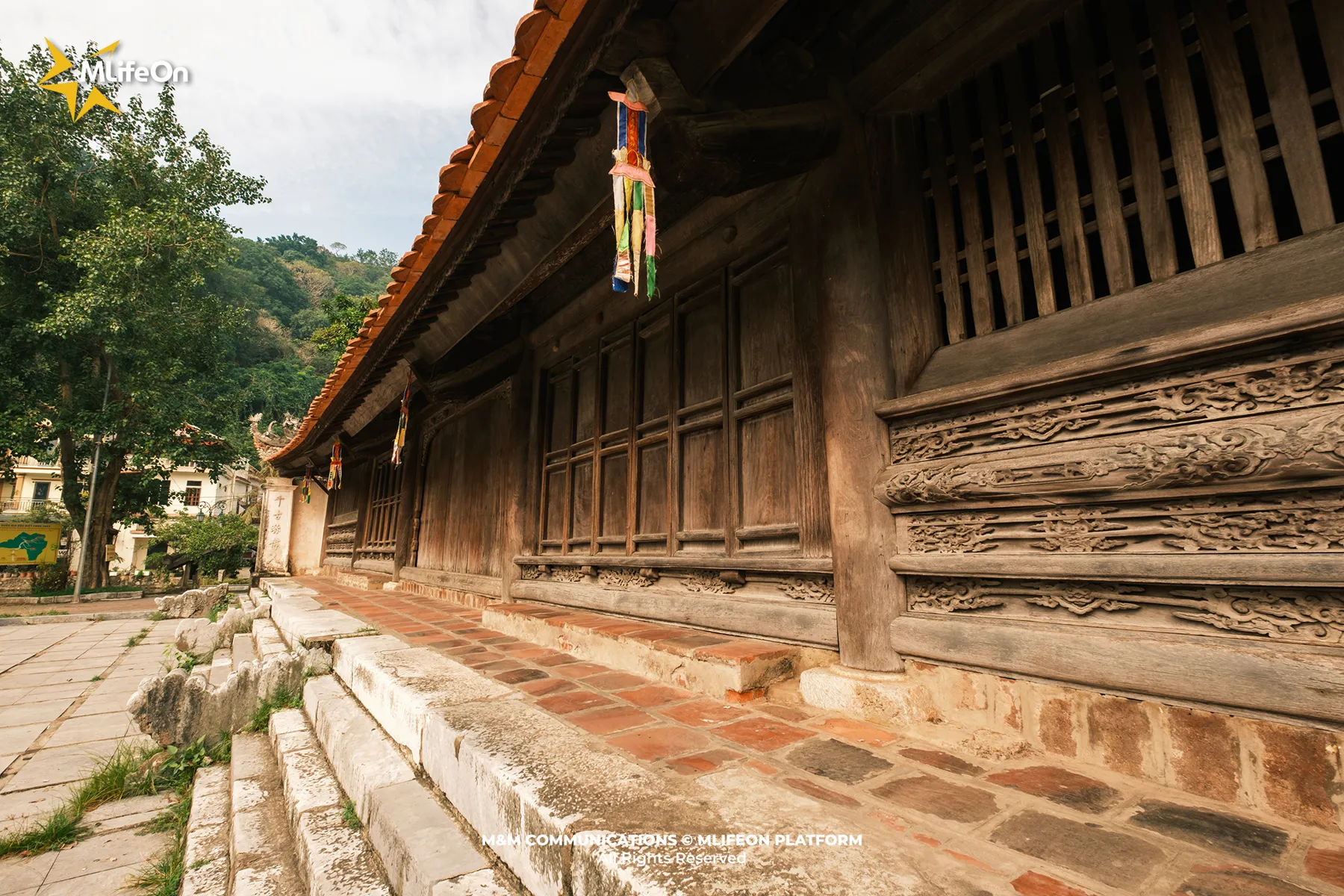
At the foot of Sai Son mountain, Thay Pagoda finds its stillness
Nestled quietly at the base of Sai Son Mountain, Thay Pagoda faces Long Tri Lake at the front and leans against rocky hills behind - an ideal "mountain-backed, water-facing" position deeply valued in East Asian philosophy. Mountain, water, and temple come together to form a self-contained space, gently separated from the outside world.
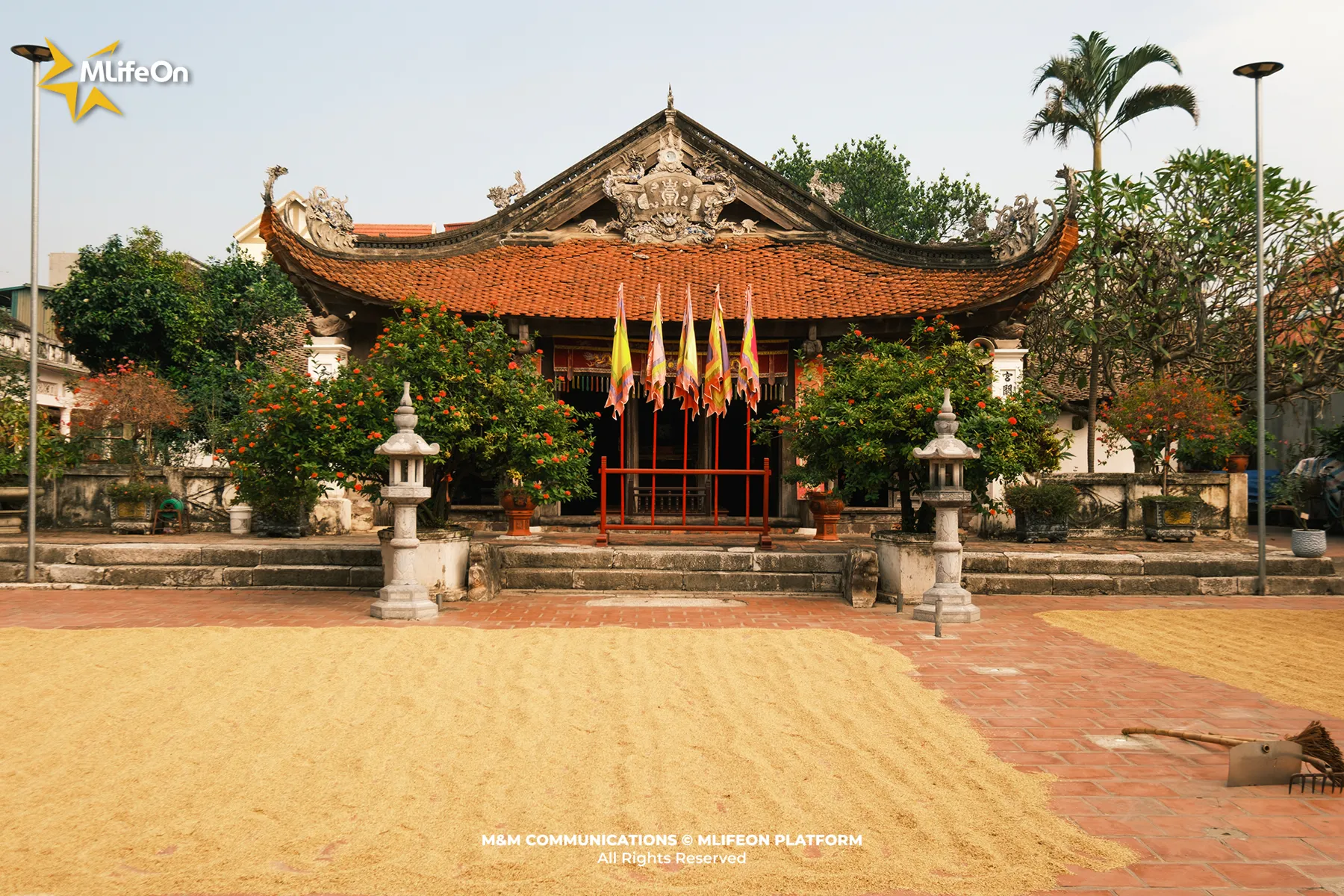
In the late afternoon, when the sunlight softens and visitors thin out, the temple grounds take on an unusually profound calm. There is no clamor, only the faint rustle of wind through tree canopies, the soft echo of footsteps on aged stone. Moss-covered roof tiles and worn stairways shaped by time become more visible when no longer obscured by crowds.
At this moment, Thay Pagoda ceases to feel like a tourist site or a familiar place of worship. It becomes a pause - a quiet interval where one can stop, look around, and wonder how long it has been since they last allowed themselves such unhurried stillness.
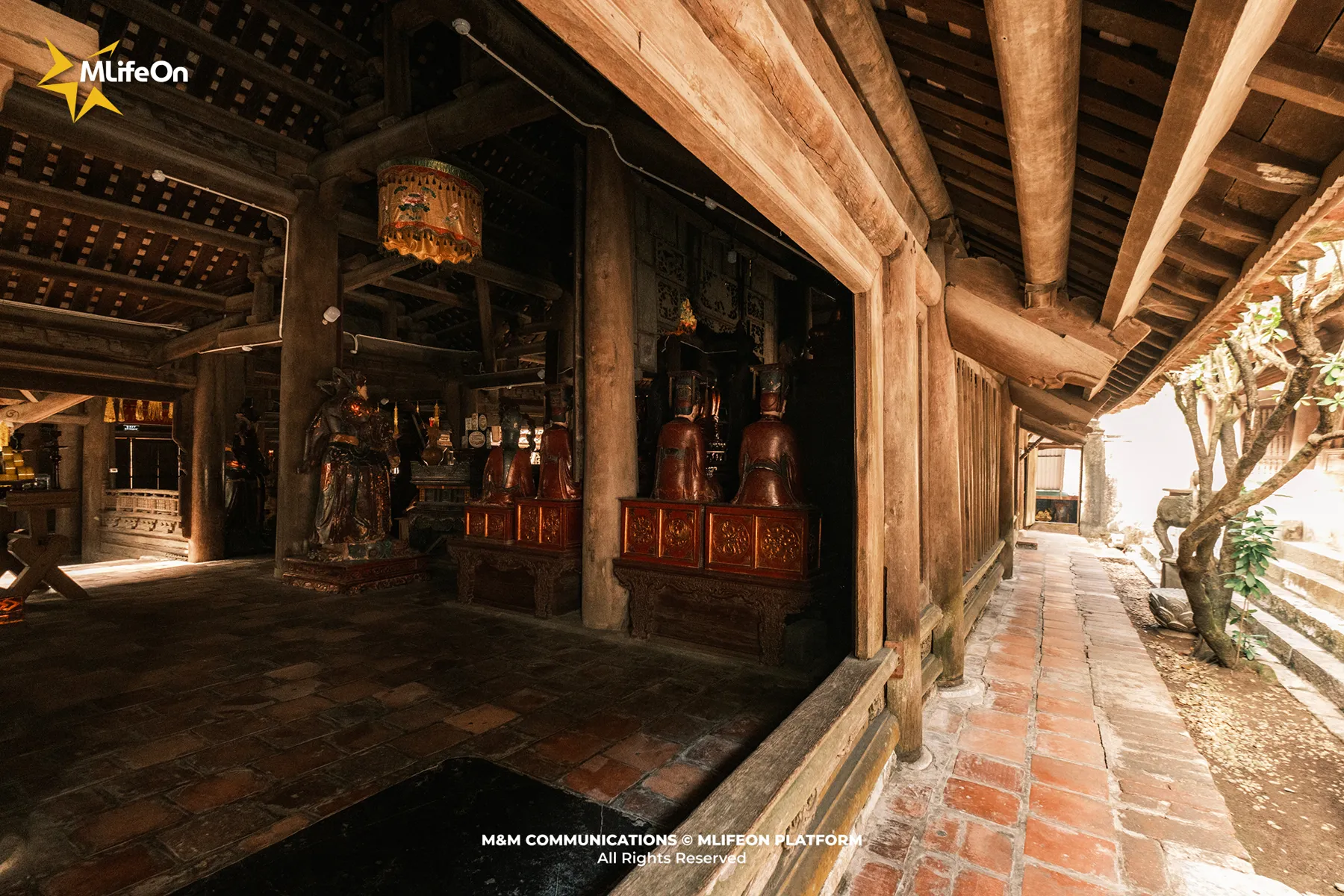
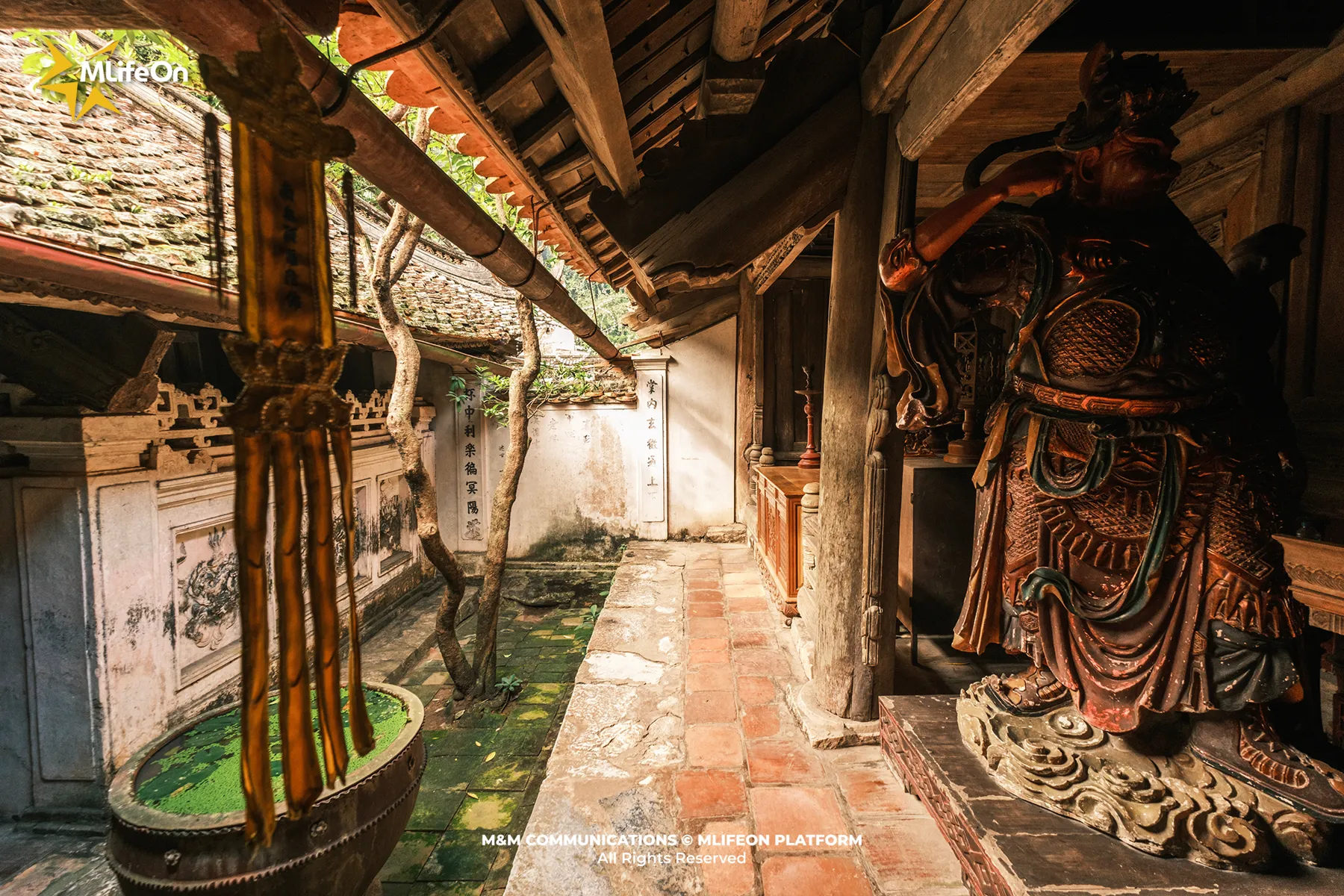
The details that give Thay Pagoda its soul
Venturing deeper into Thay Pagoda, what lingers in memory is not grandeur, but small details imbued with spirit. Long Tri Lake lies directly in front of the temple, its calm surface reflecting the gentle curves of Nhat Tien Bridge and Nguyet Tien Bridge. These two arched bridges seem to connect the earthly world with the spiritual realm - at once tangible and dreamlike.
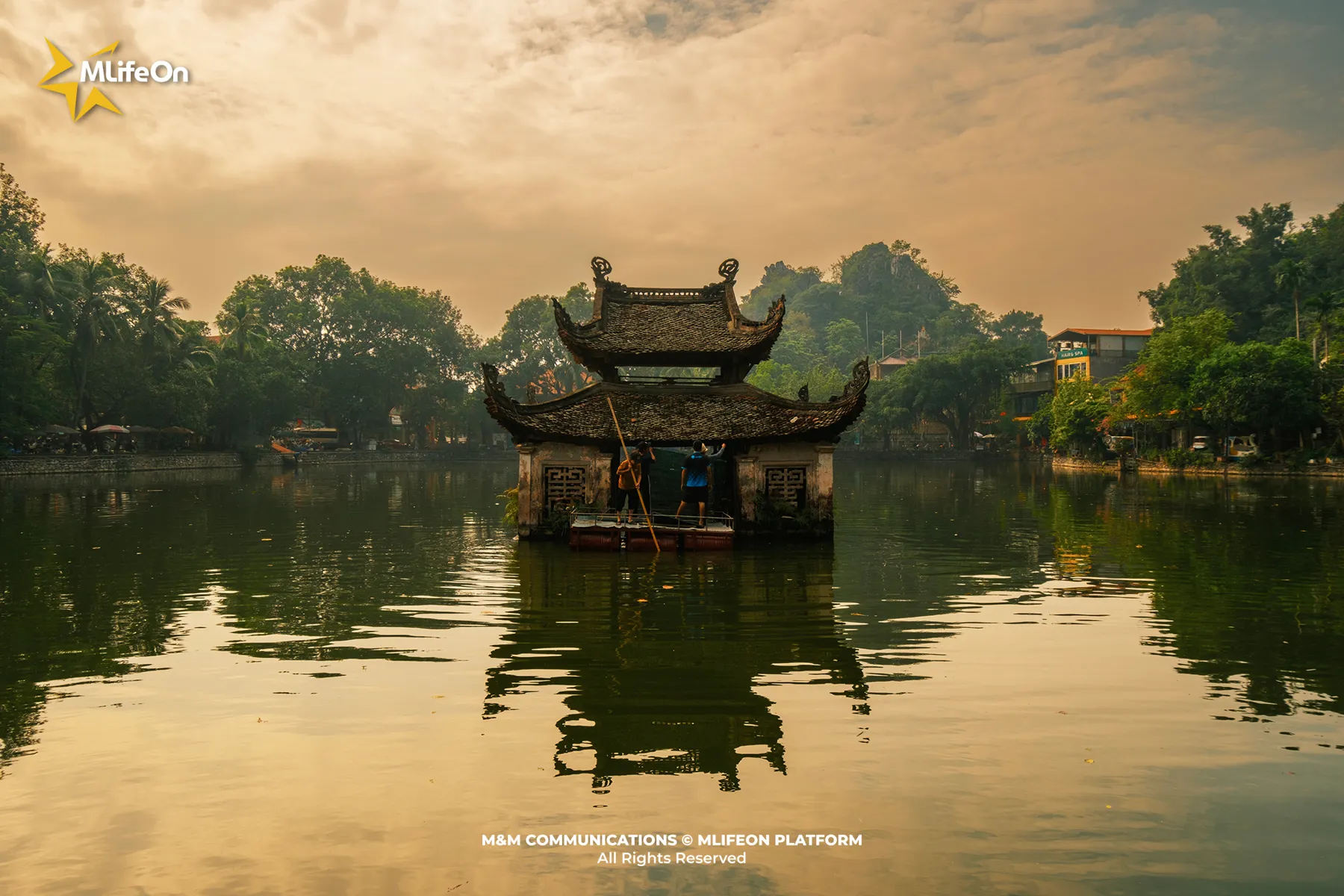
Stone corridors running alongside the temple, worn steps smoothed by countless feet, layered roof tiles blanketed in moss - nothing here feels new or polished. Yet it is precisely this weathered quality that creates a sense of intimacy and authenticity, as if the place has quietly existed for centuries, witnessing generations come and go.
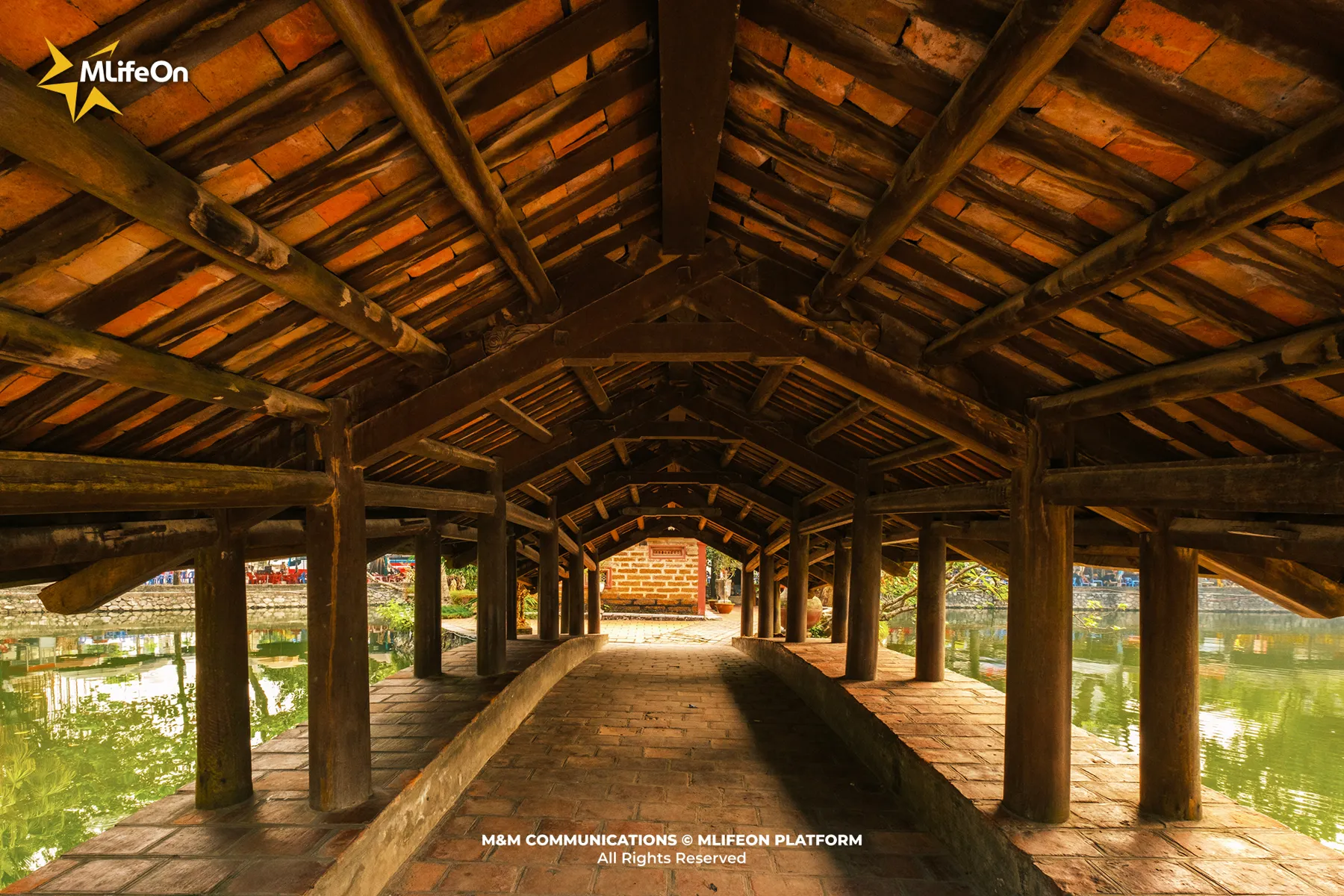
Standing here, one easily realizes that Thay Pagoda does not try to impress. Everything exists naturally, as though the temple has simply always been here and will continue to be regardless of time’s steady passage.
Spring at Thay Pagoda – Festivals, belief and traditional cultural life
With the arrival of spring, Thay Pagoda becomes livelier. People come to pray at the beginning of the year, seeking peace, health, and a smooth path ahead. Some families arrive early in the morning, while young visitors stop by to capture moments of springtime calm.
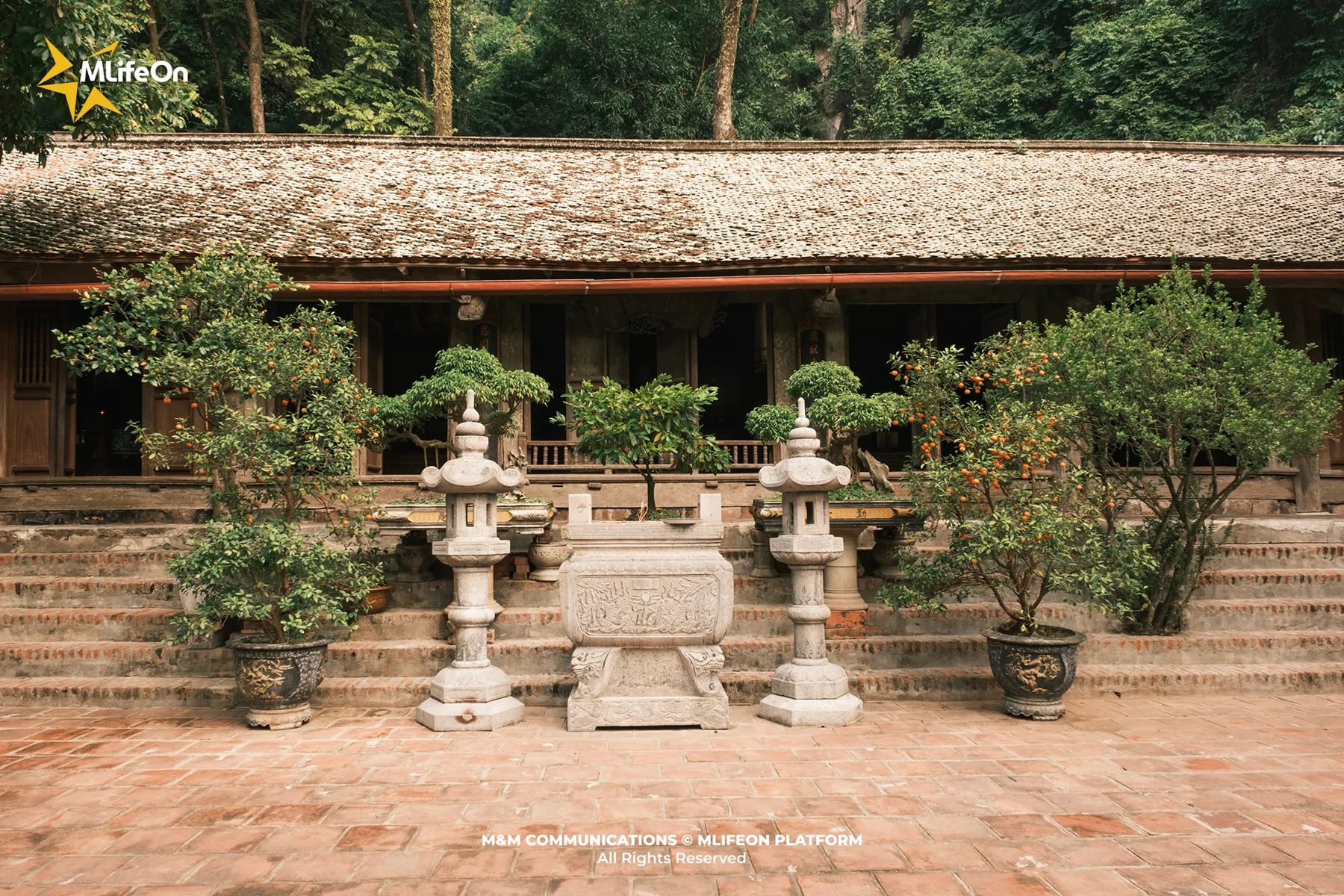
The pagoda is also closely associated with the Thay Pagoda Festival, held in the third lunar month. This annual event commemorates Zen Master Tu Dao Hanh and features traditional folk activities, most notably water puppet performances at the pavilion on Long Tri Lake.
Despite the increased crowds, Thay Pagoda retains its own rhythm. People come and go without haste or excessive noise. Perhaps the space here is expansive enough to hold both liveliness and tranquility depending on the moment and how each visitor chooses to pause.
Conclusion
Amid an increasingly crowded and fast-paced Hanoi, Thay Pagoda continues to maintain its gentle, unhurried rhythm. And on a spring afternoon, when the sunlight has softened, one might wander around the lake, stand quietly at the foot of Sai Son Mountain and realize:
Sometimes, a moment of stillness like this is all it takes to feel lighter within.
—---------
CREDIT:
- Photography: Luan Nguyen
- Content: Hoài Hà
- Design: Trung Huynh