The days before Tet in Saigon’s Chinese quarters
Toward the end of the year, Saigon begins to shift its rhythm not through grand events or loud celebrations, but through subtle changes in everyday life. In the Chinese quarters, this seasonal transition arrives a little earlier. A walk along familiar streets such as Phung Hung, Hai Thuong Lan Ong, or Tong Duy Tan is enough to sense that Tet is approaching.
The streets remain busy, but something feels different. Shops open earlier and close later. Pedestrians slow their pace slightly, lingering longer in front of storefronts filled with seasonal goods. No questions are needed, no calendars required just by observing the street, one can tell that the old year is drawing to a close.
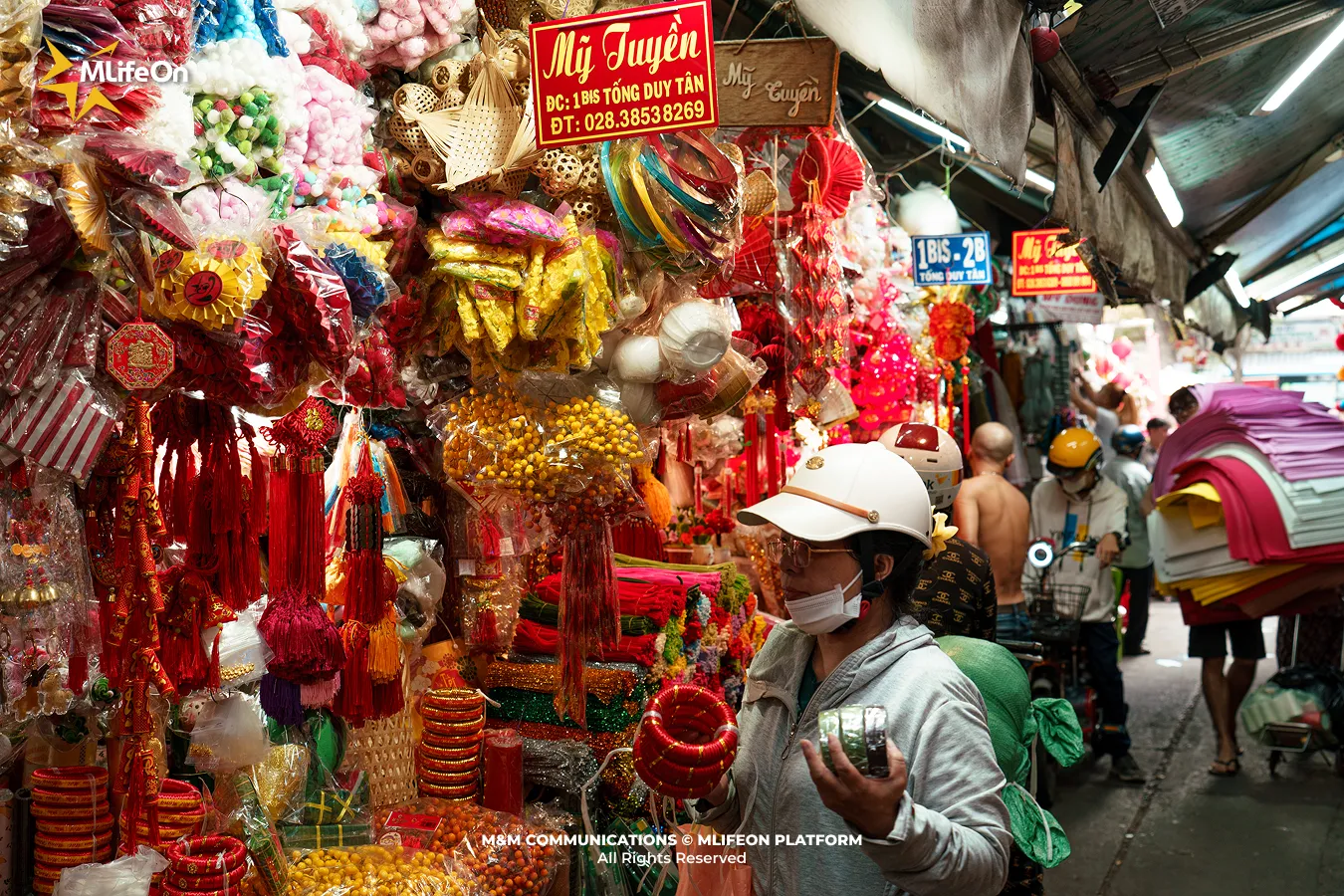
Tet in the Chinese quarters does not arrive suddenly. It spreads gradually, settling into daily routines in a way that makes its presence unmistakable to anyone passing by.
Red as the unmistakable sign of Tet
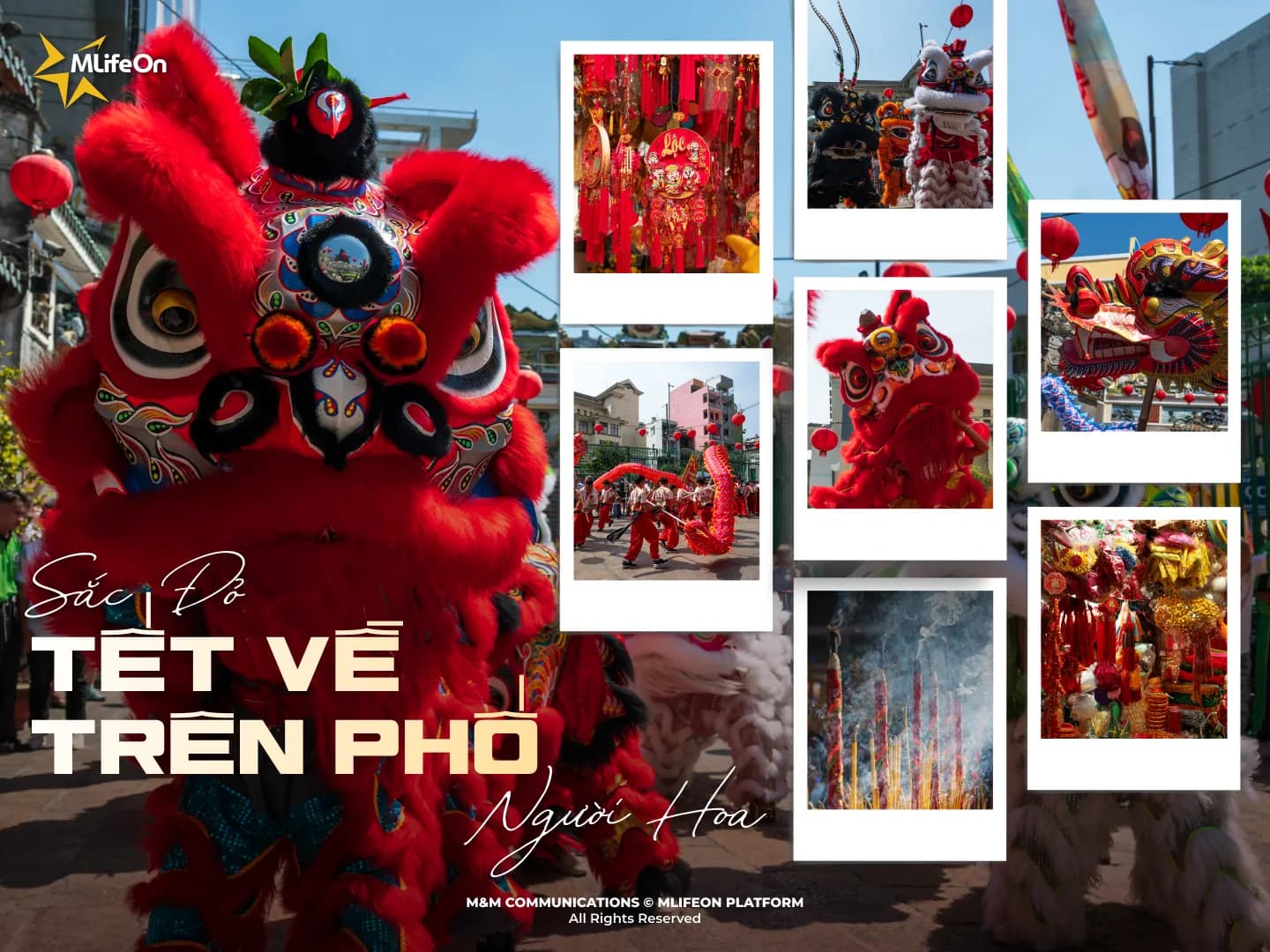
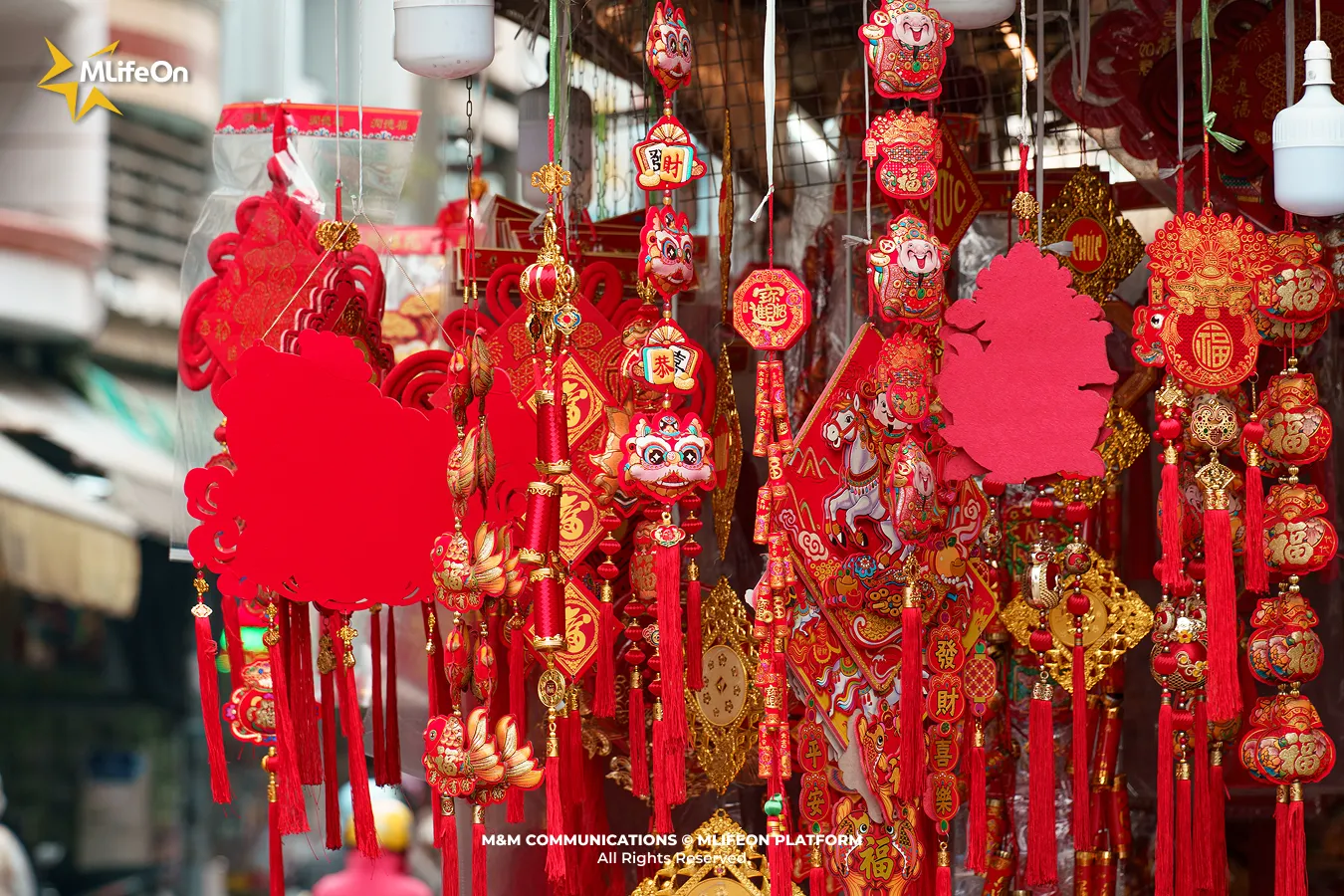
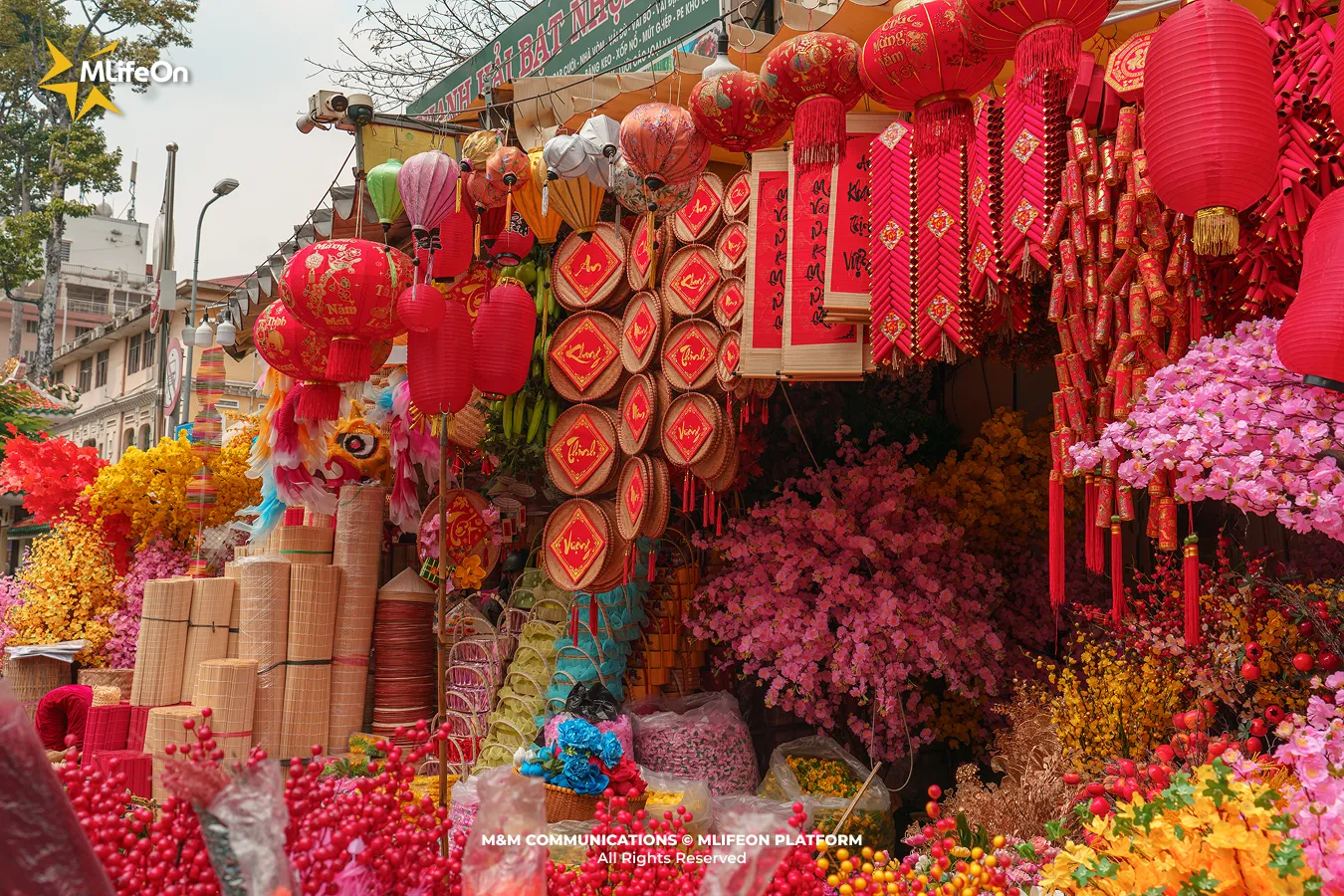
The clearest signal of Tet in Saigon’s Chinese neighborhoods is the color red. It first appears on shopfronts, then spreads throughout entire streets. Lanterns hang high under eaves, red couplets lean against doorways, and stacks of red envelopes are neatly arranged on shelves. These familiar hues make the streets feel warmer and more vibrant than usual.
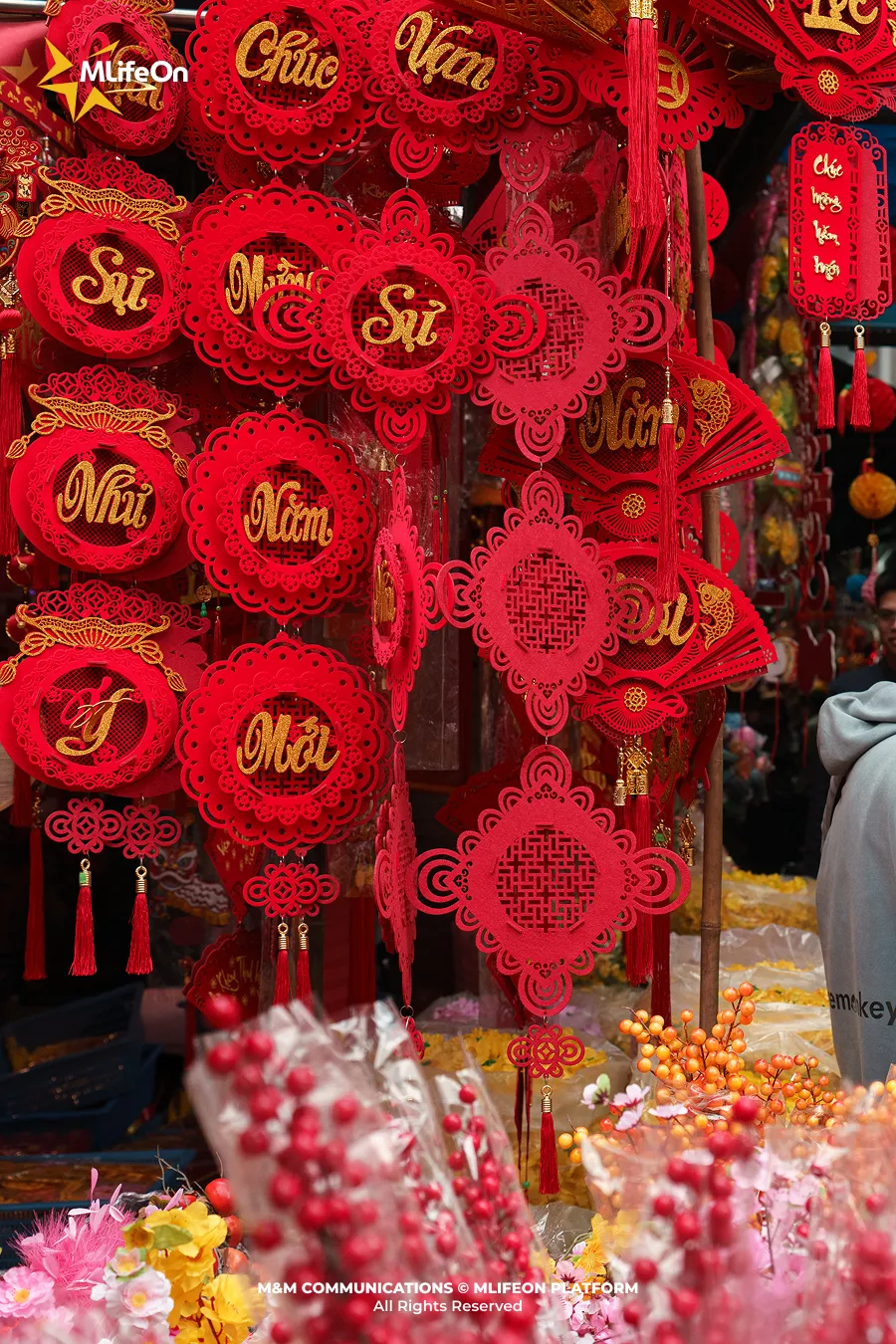
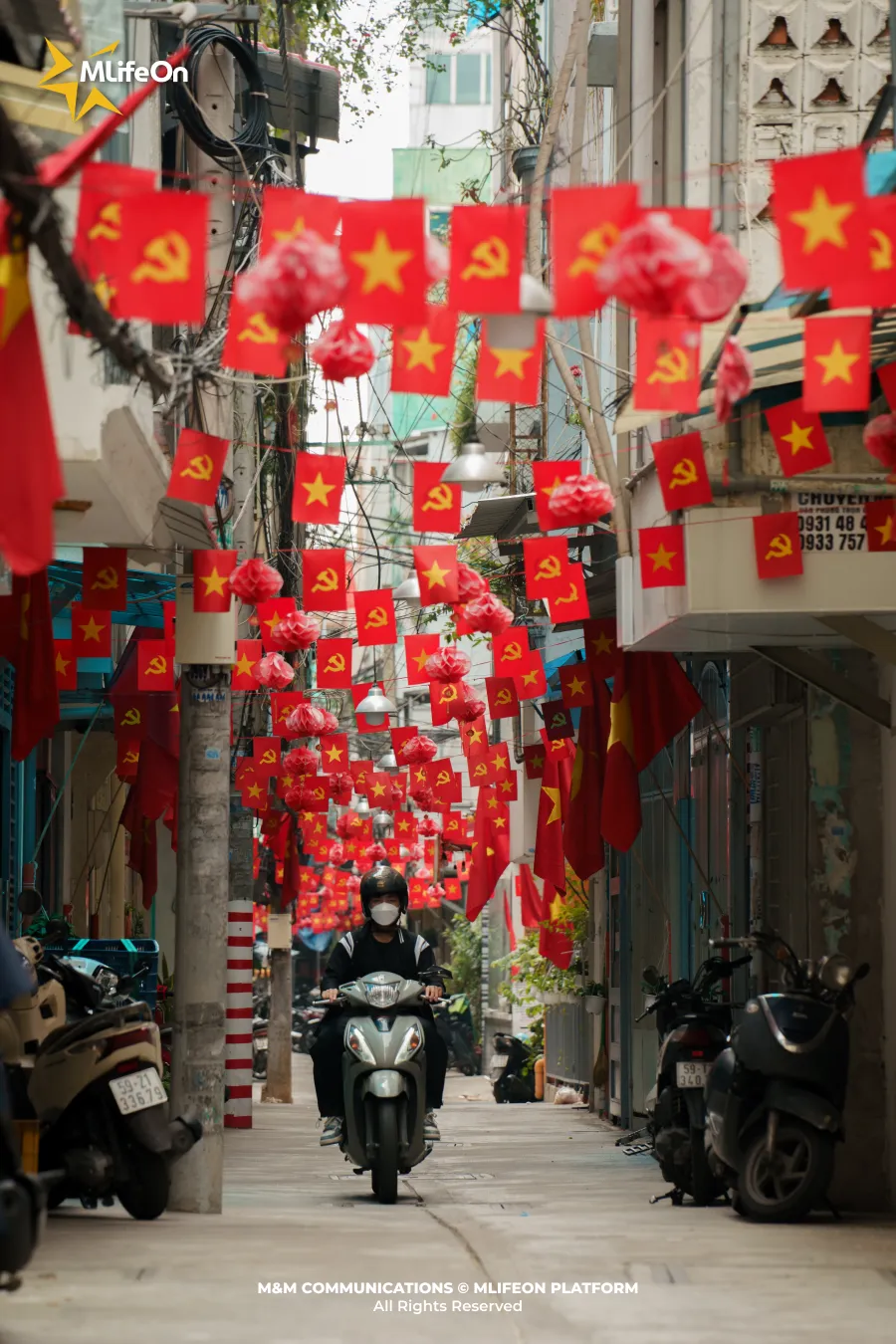
Red here is not merely decorative. For the Chinese community, it represents luck, auspicious beginnings, and good fortune for the year ahead. Even as buildings age and rooftops fade with time, the return of red each Tet season is enough to revive the entire neighborhood.
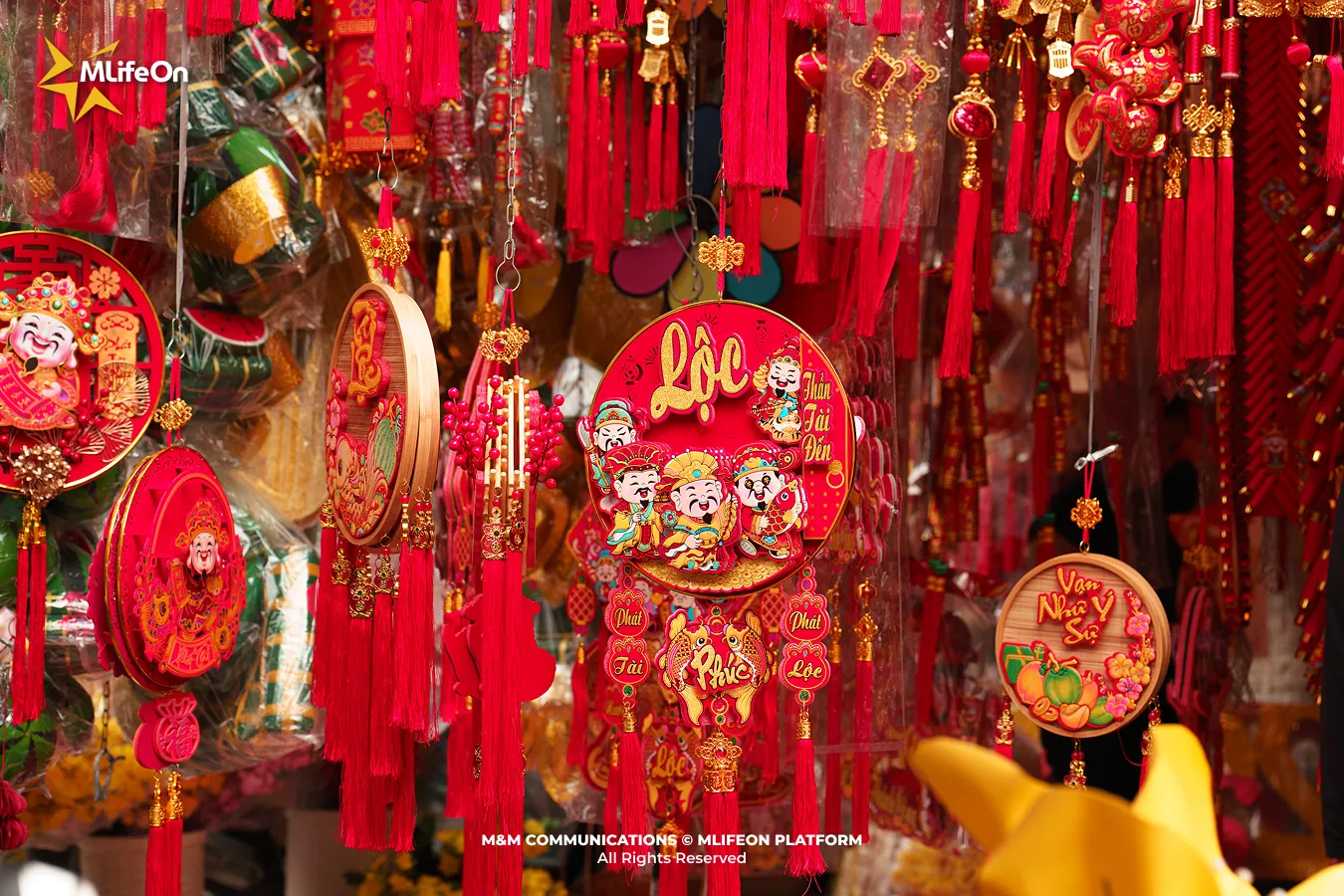
In the late afternoon, when shop lights begin to glow, their warm reflections give the streets a renewed presence. There is no need for crowds or noise when red appears in abundance, Tet has clearly arrived.
The distinct character of Tet in the Chinese community
A closer look reveals that Tet in the Chinese quarters is not defined only by colors or decorations, but by a distinctive way of preparing for the new year. Small shops fill every available space, goods stacked high, sometimes nearly reaching the ceiling. Vendors move quickly arranging, hanging, calculating and answering customers’ questions.
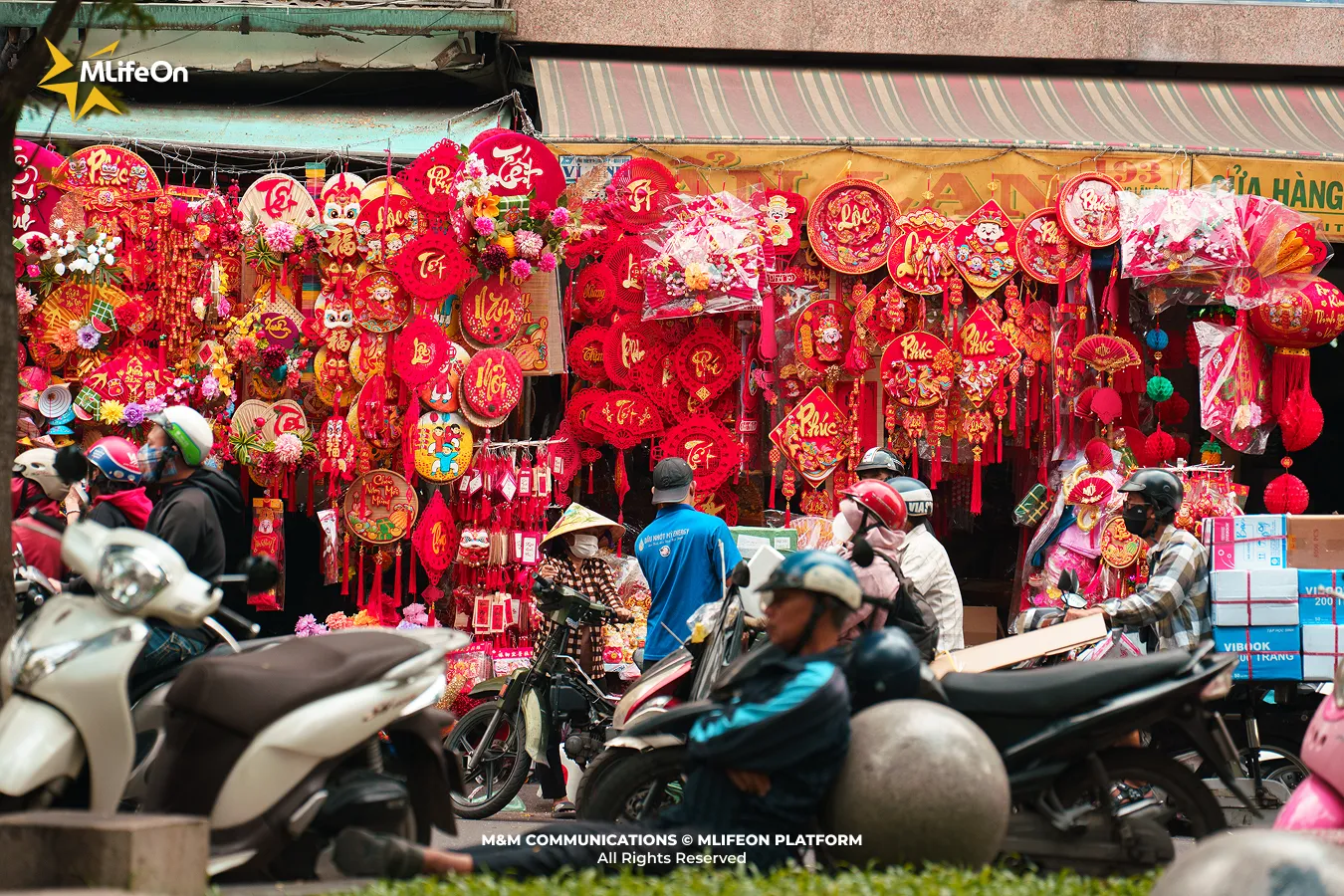
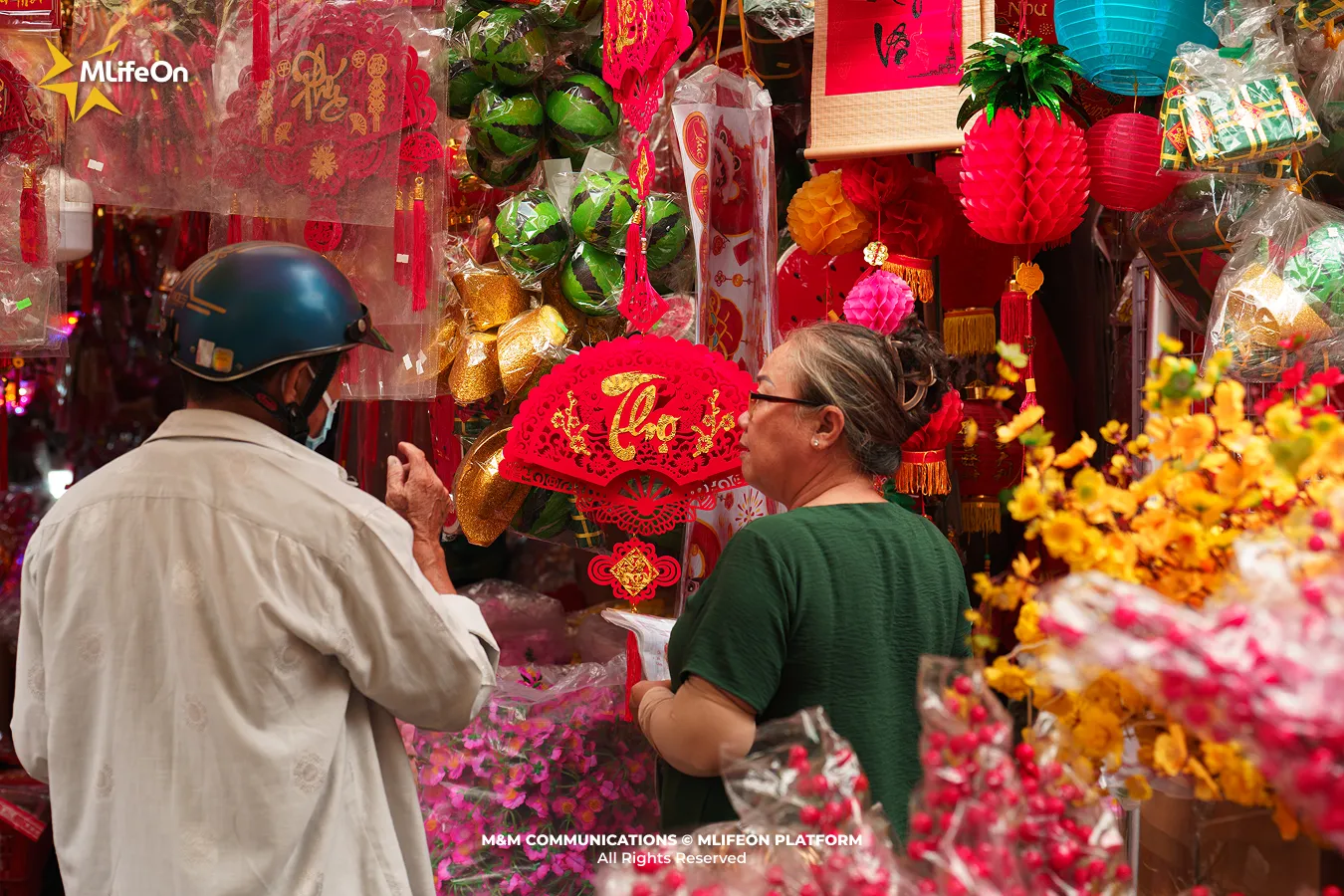
Commerce unfolds steadily, without chaos. Buyers choose carefully, asking questions and weighing each purchase. For the Chinese community, Tet is never rushed. It is a process of preparation that lasts many days, even weeks, guided by a sense of care and completeness.
Ong Bon Pagoda – a spiritual anchor before Tet
Amid the vibrant streets, Ong Bon Pagoda offers a necessary pause. Located right within the Chinese quarter, the pagoda is not isolated, yet it follows an entirely different rhythm. Stepping through its gate, the noise of traffic and street life seems to fall away.
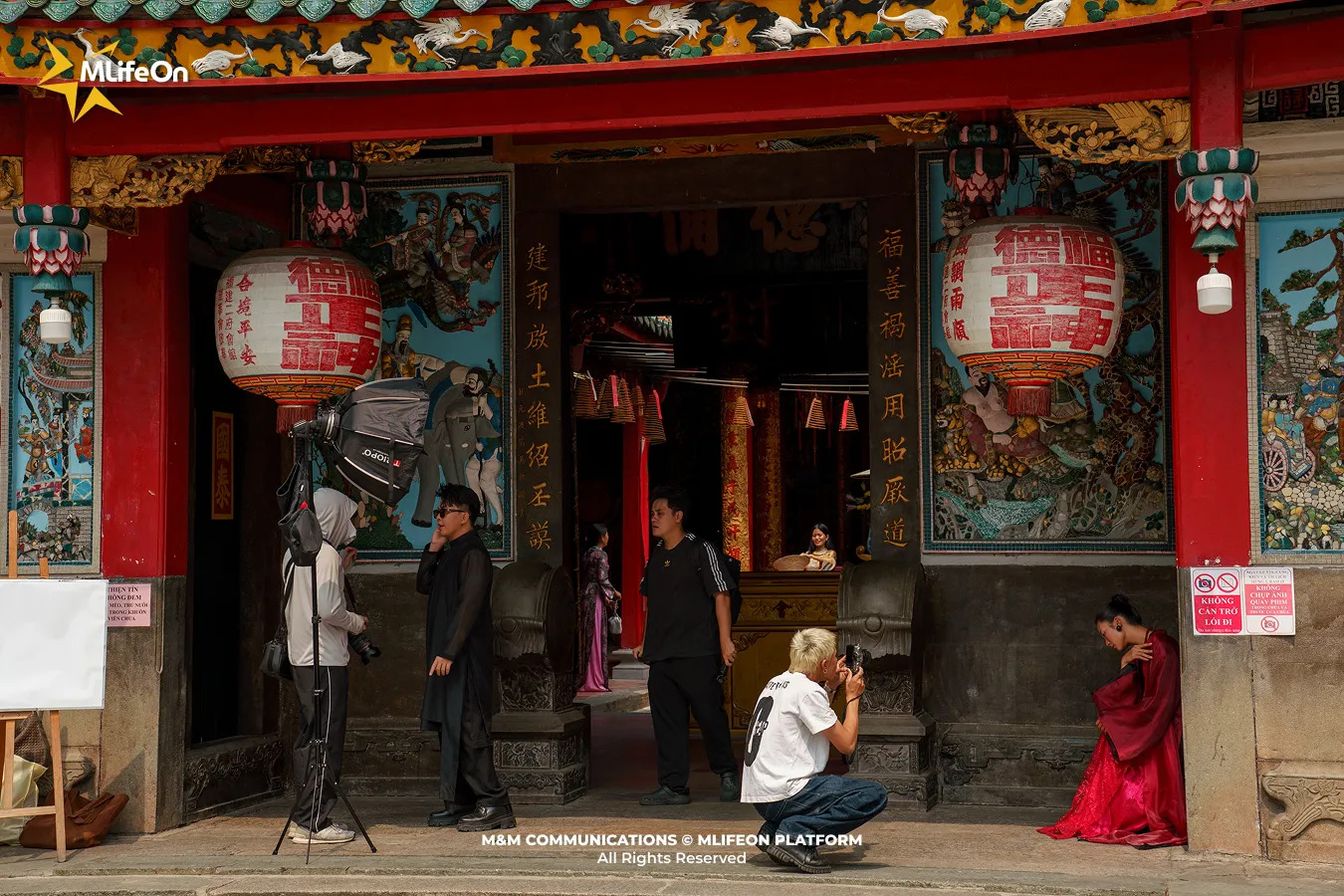
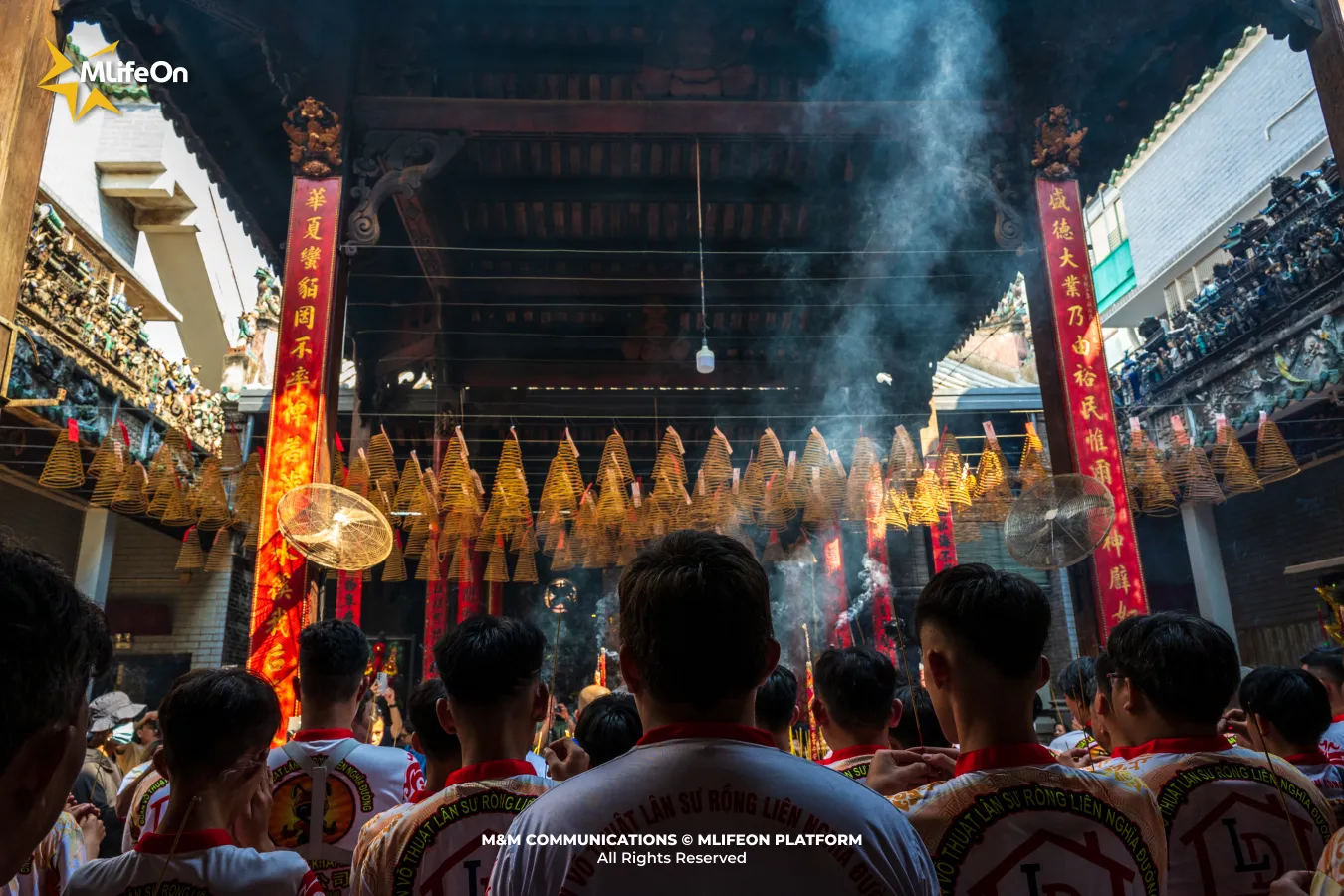
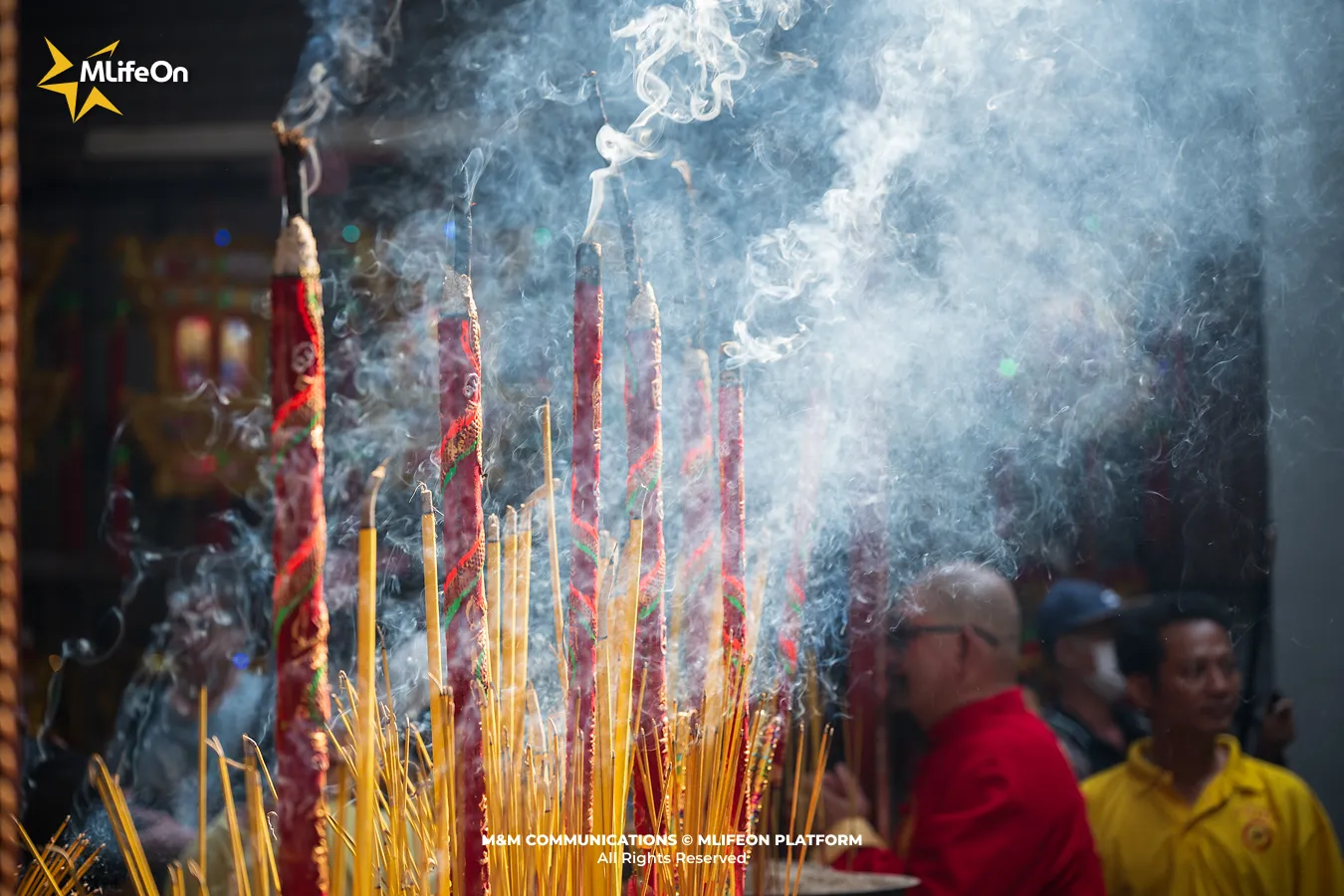
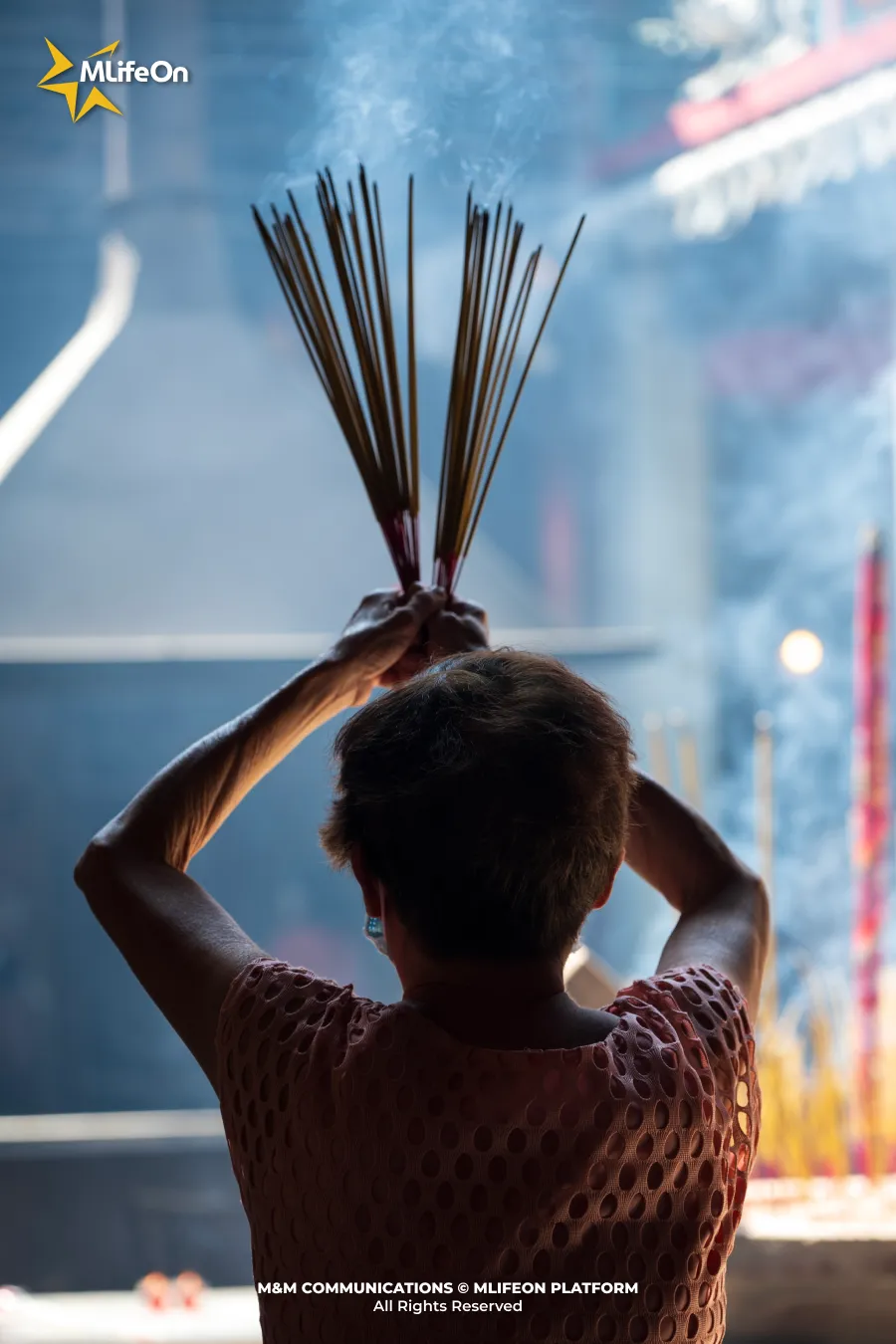
In the days leading up to Tet, people visit not only to light incense, but to pray for peace, prosperity, and harmony in the coming year. Inside the pagoda, everything feels slower and more subdued. The scent of incense lingers softly, the lighting is gentle, and the movements are calm and restrained.
Ong Bon Pagoda is more than a place of worship, it serves as a spiritual anchor for the Chinese community each New Year. Amid the festive red outside, its quiet atmosphere restores balance, reminding visitors that Tet is not only about material preparation, but also about turning toward more enduring values.
Lion dance – An indispensable Tet tradition of the Chinese community
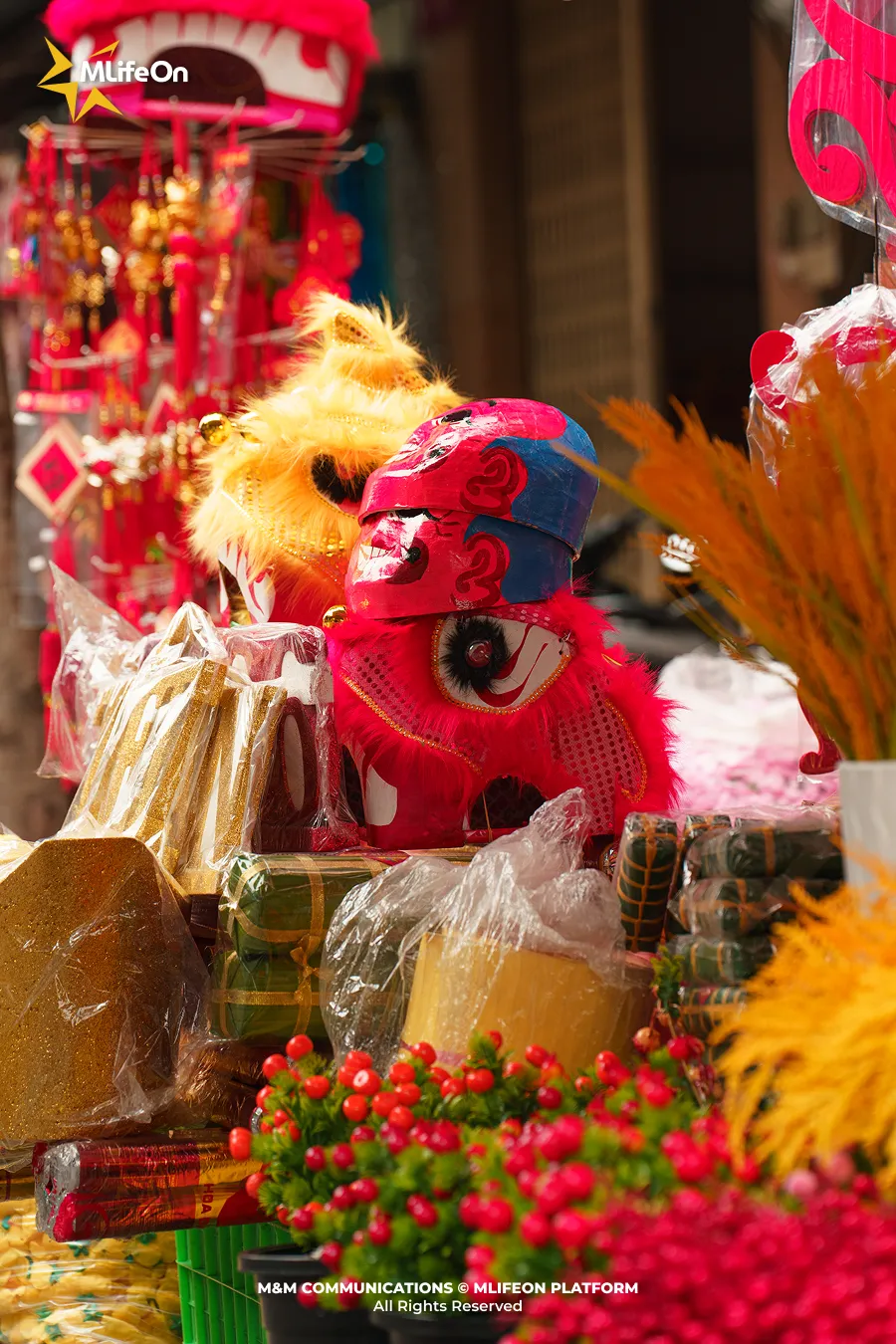
Alongside the dominant red hues and the lively buzz of trading, Tet in Saigon’s Chinese quarters is inseparable from the image of the lion dance. Lion dancing is a long-standing traditional art form closely tied to customs, beliefs and significant festive occasions of the Chinese people. In folk belief, the lion symbolizes strength and bravery, a sacred creature believed to ward off evil spirits and bring good fortune, prosperity, and wholeness to people’s lives.
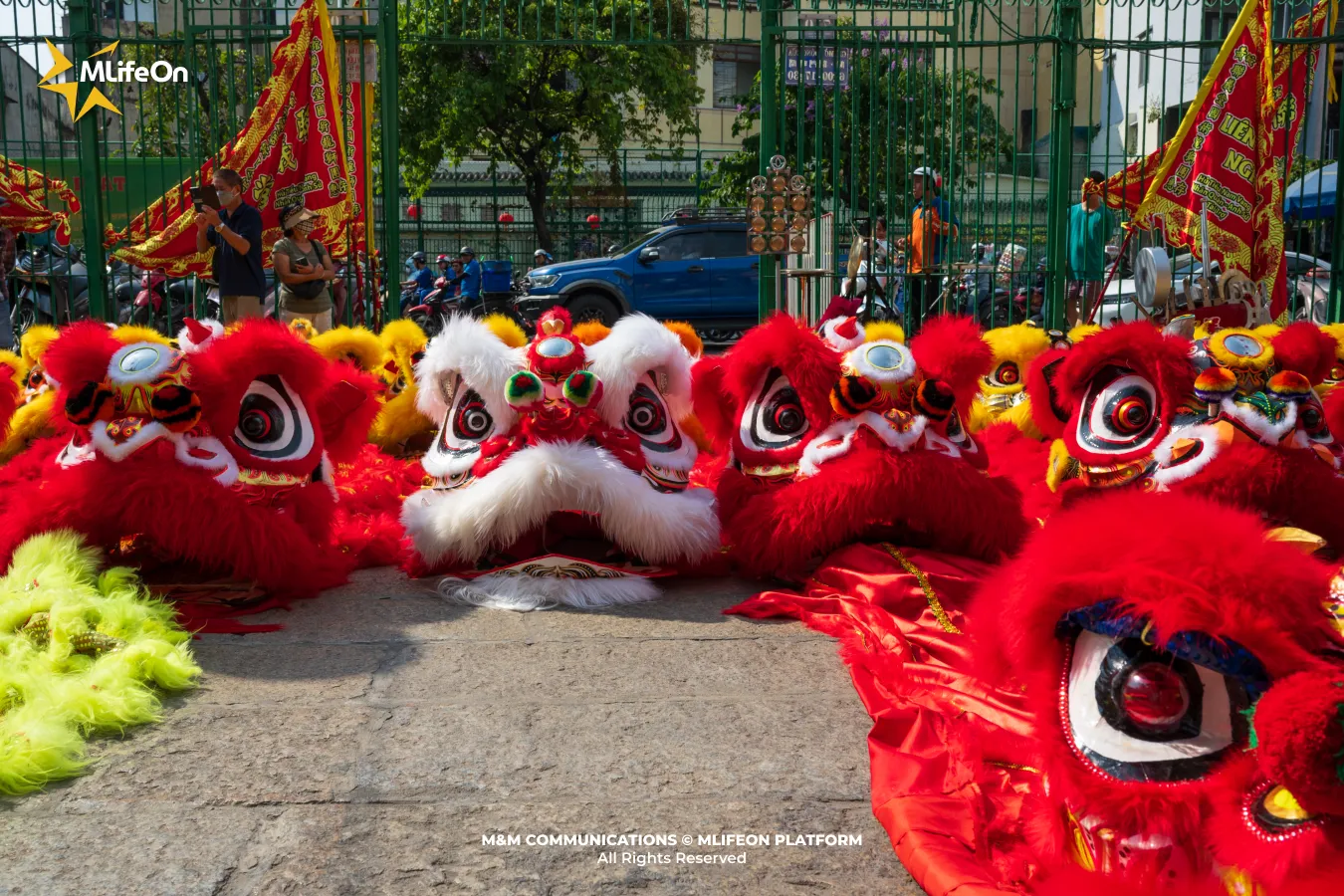
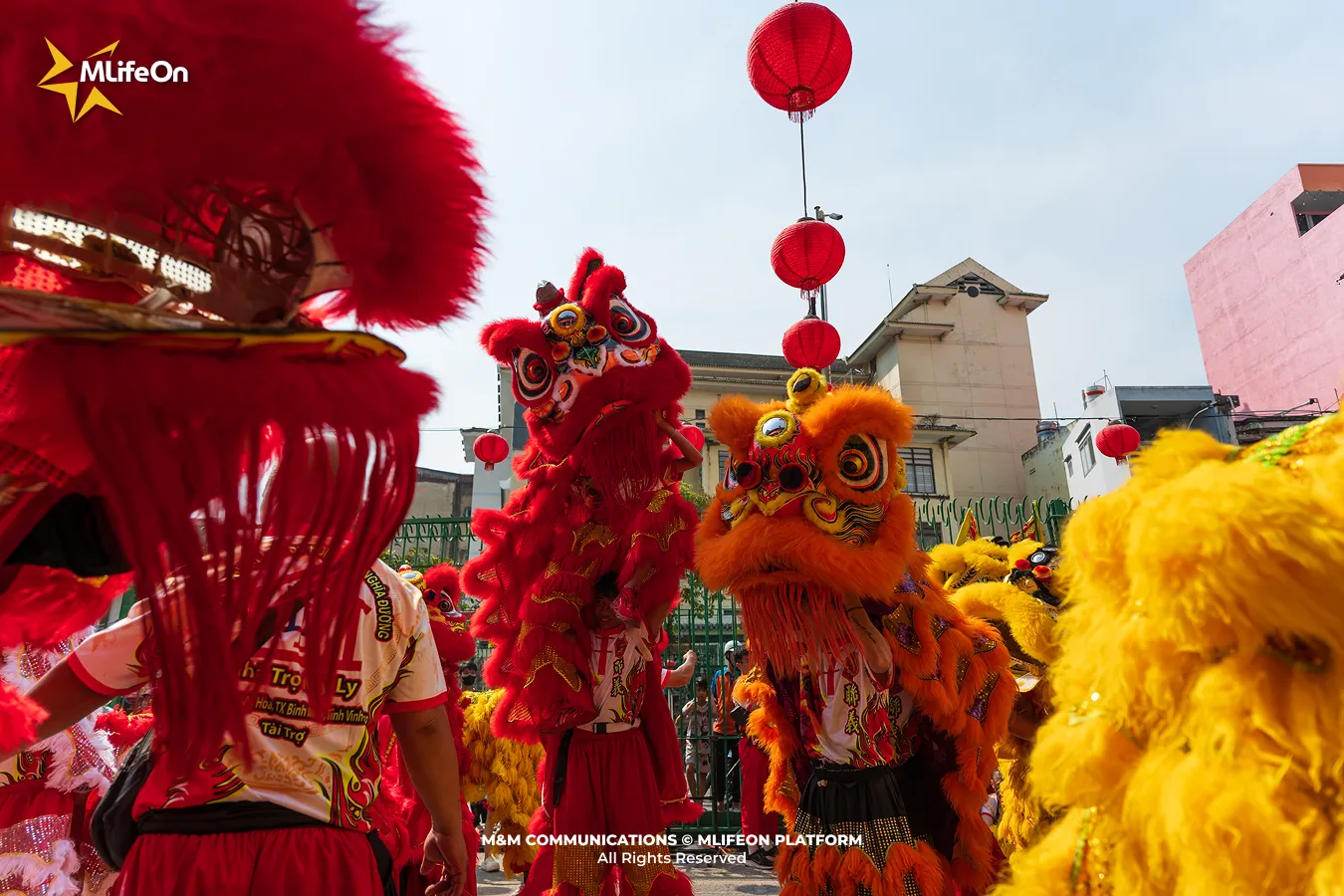
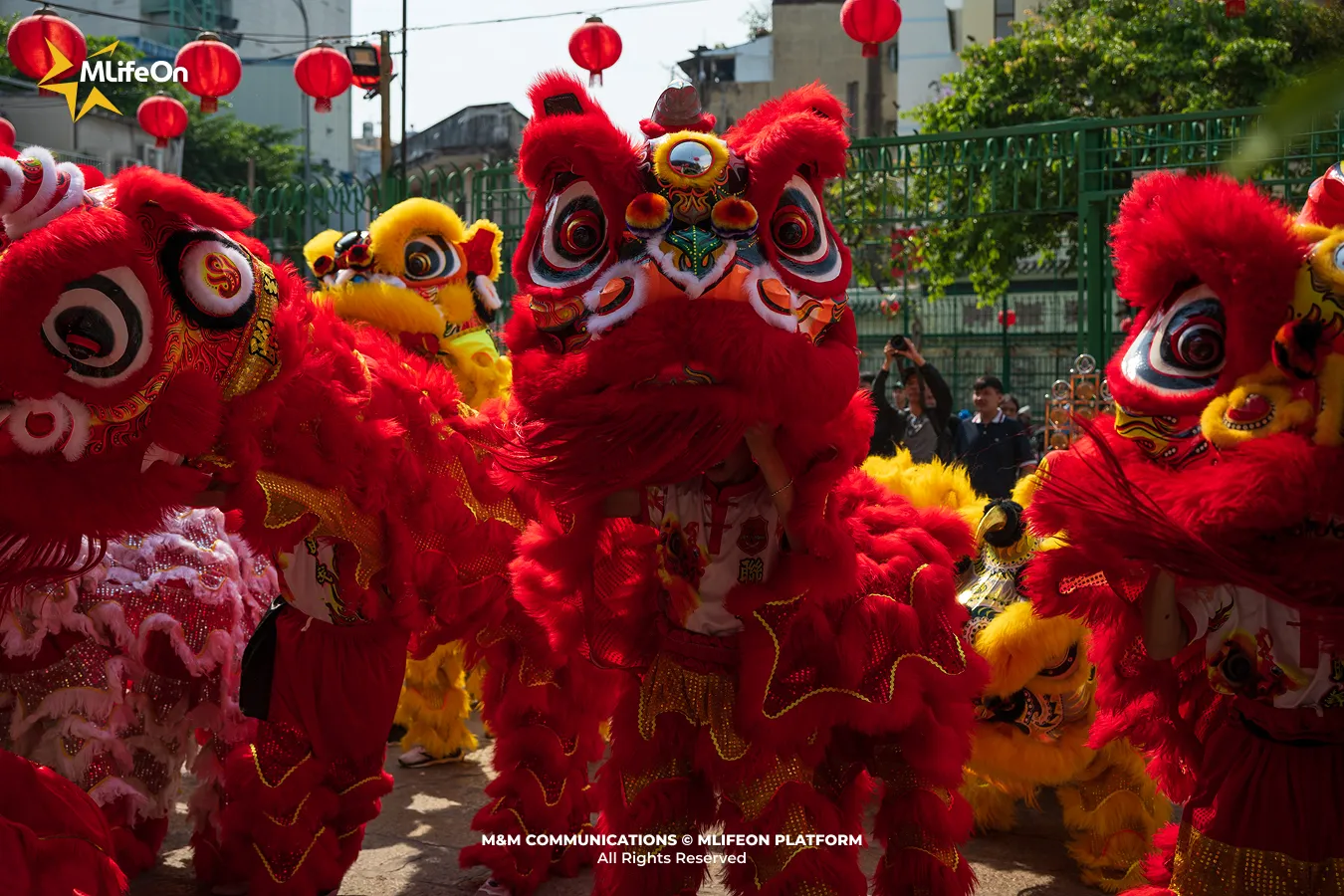
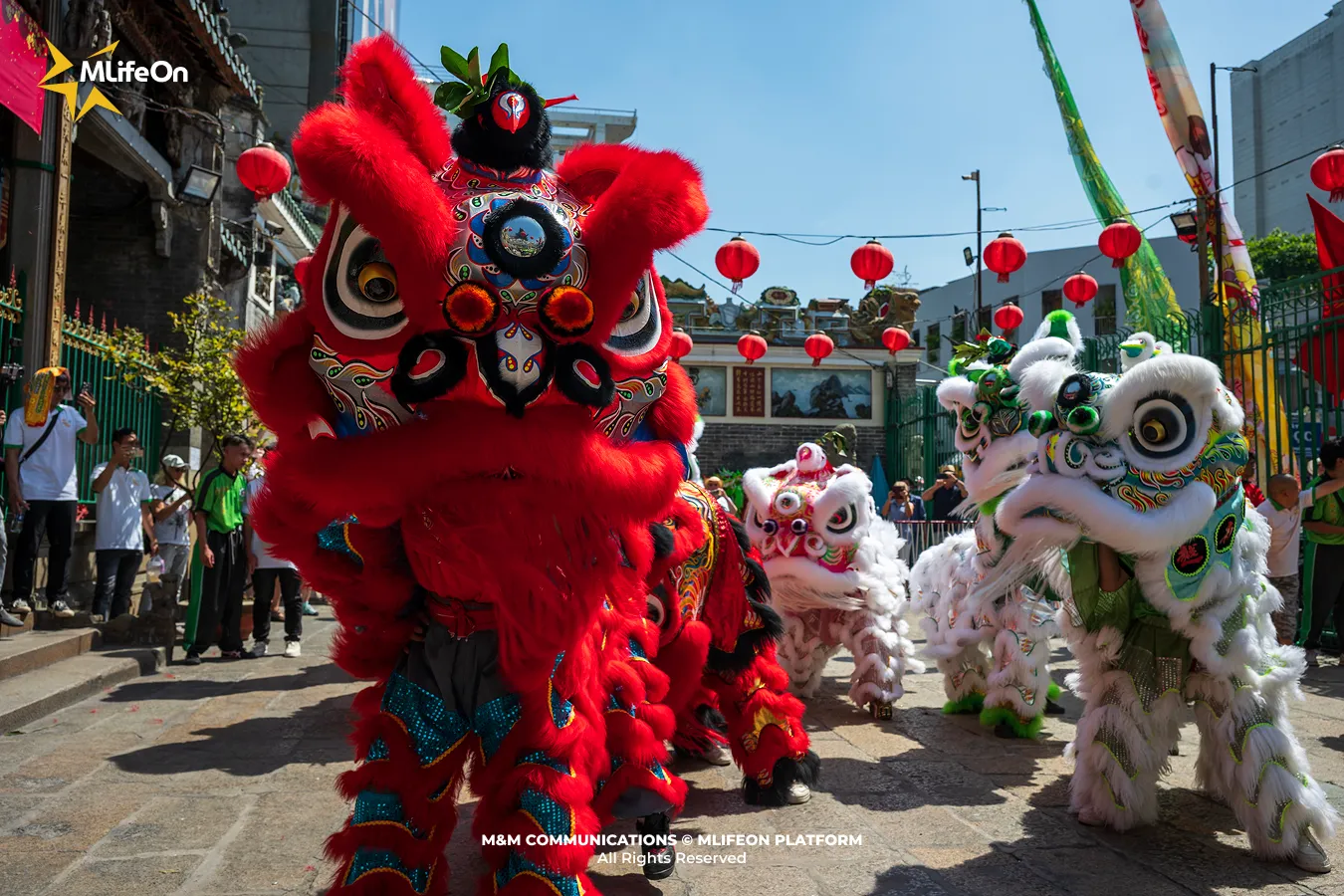
Lion dance troupes visit shop after shop, street after street, delivering New Year’s blessings through rhythmic movements, resounding drums, and vibrant energy. Shop owners welcome the lions not only to bring good luck, but also to preserve a tradition passed down through generations.
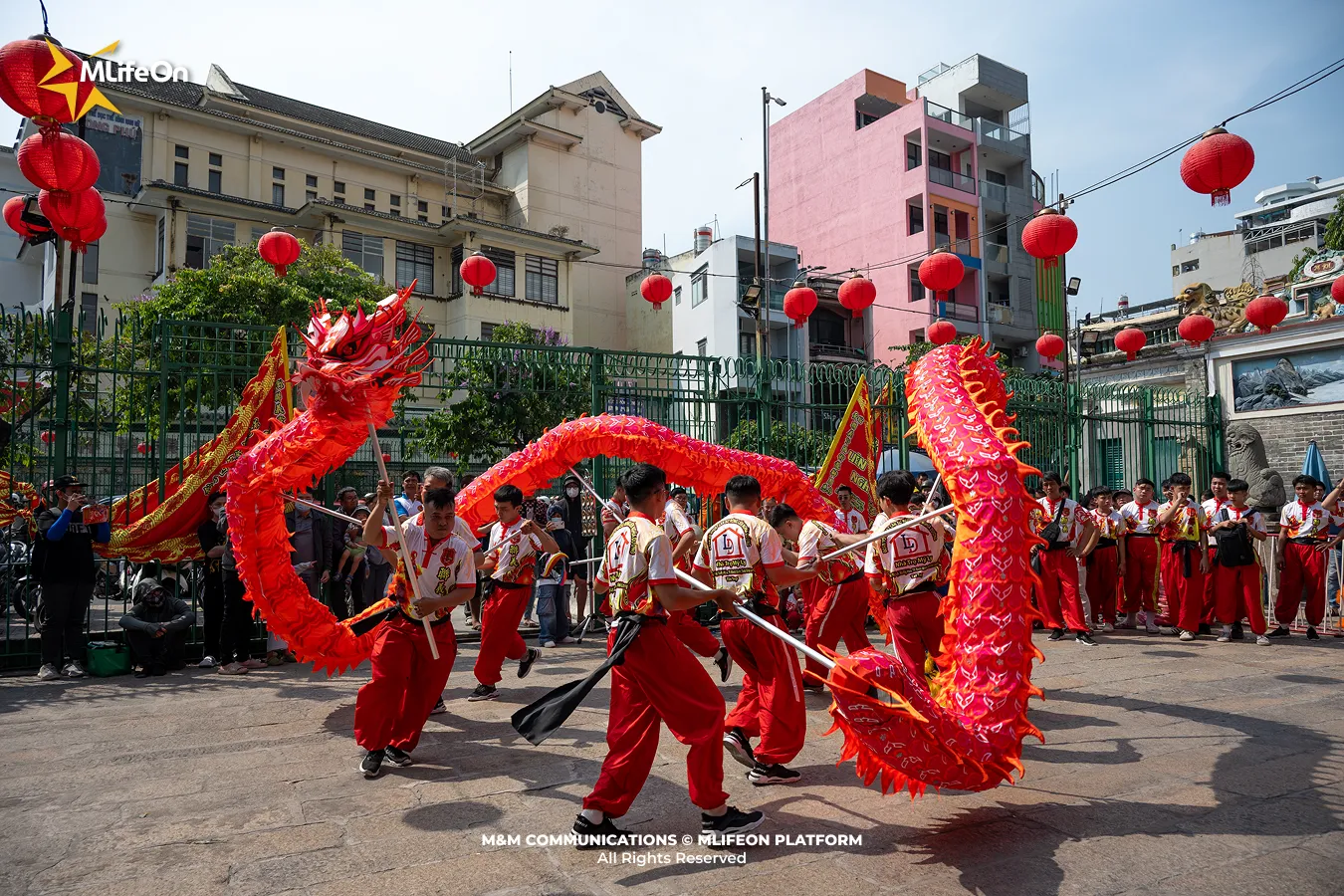
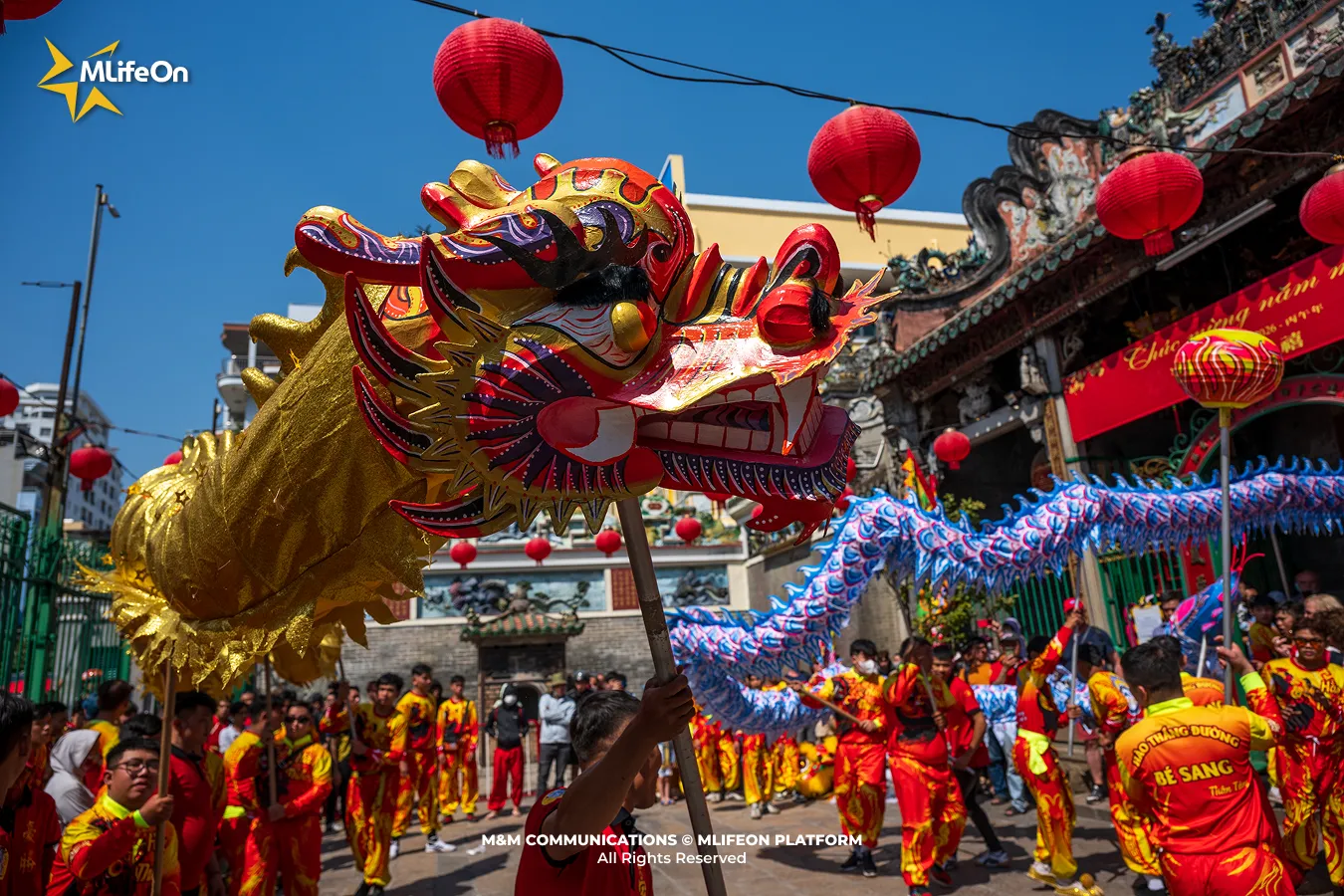
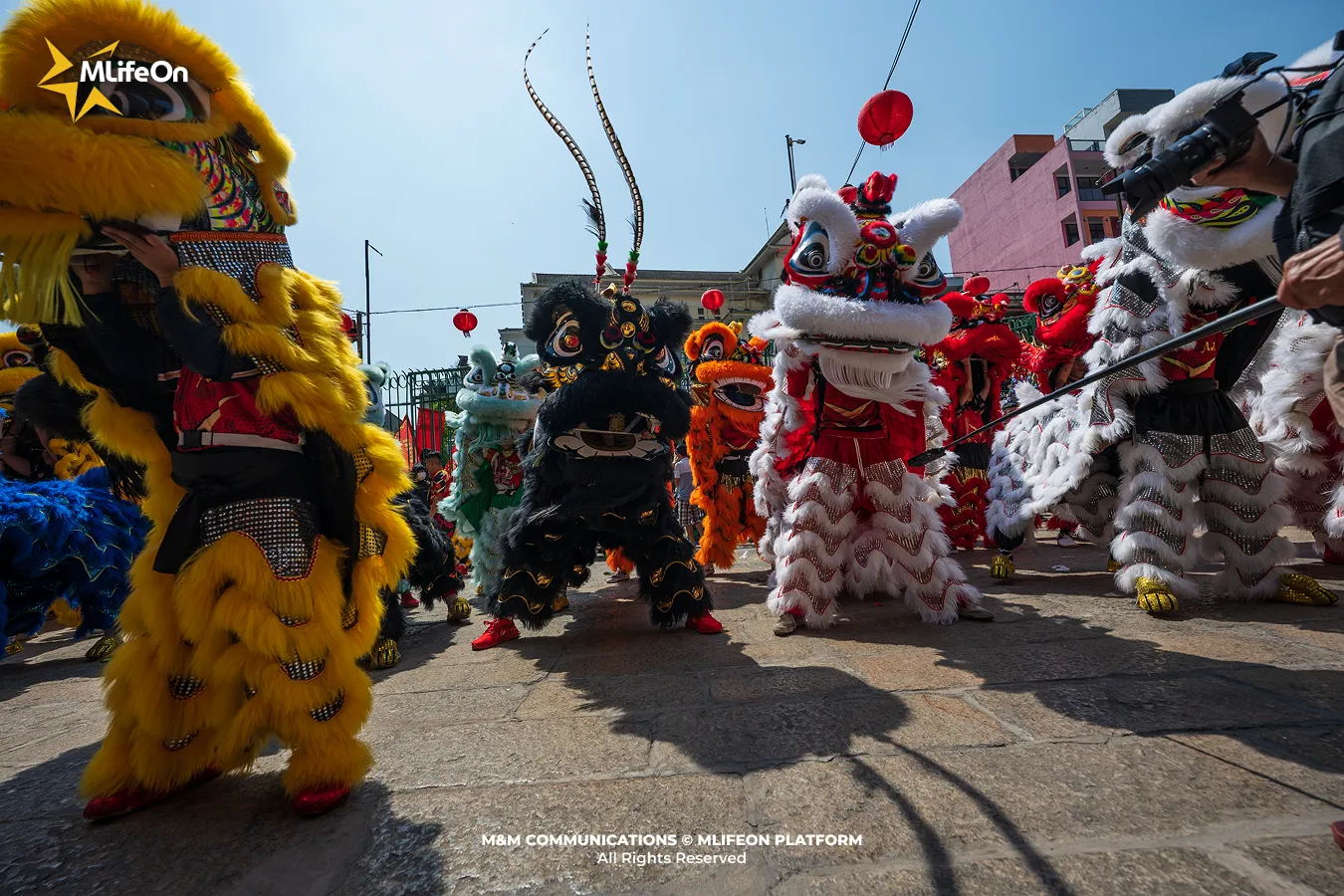
Amid Saigon’s old streets, the sight of lion dances during Tet is more than a cultural performance. It is a clear sign that tradition continues to live on, remaining present and meaningful within the fabric of today’s urban life.
Conclusion
In the midst of Saigon’s dynamic pace, the Chinese quarters still embrace Tet in their own distinctive way. Red decorations, familiar daily rhythms, lion dances, and spiritual spaces such as Ong Bon Pagoda together create a festive atmosphere that is both lively and deeply intimate. Walking through these streets in the final days of the year, one can easily sense that Tet does not arrive all at once, it gradually unfolds through everyday life, close enough for everyone to feel that the new year is just around the corner.
—---------
CREDIT:
- Photography: Kien Trang, Luan Nguyen
- Content: Hoài Hà
- Design: Phuong Nguyen