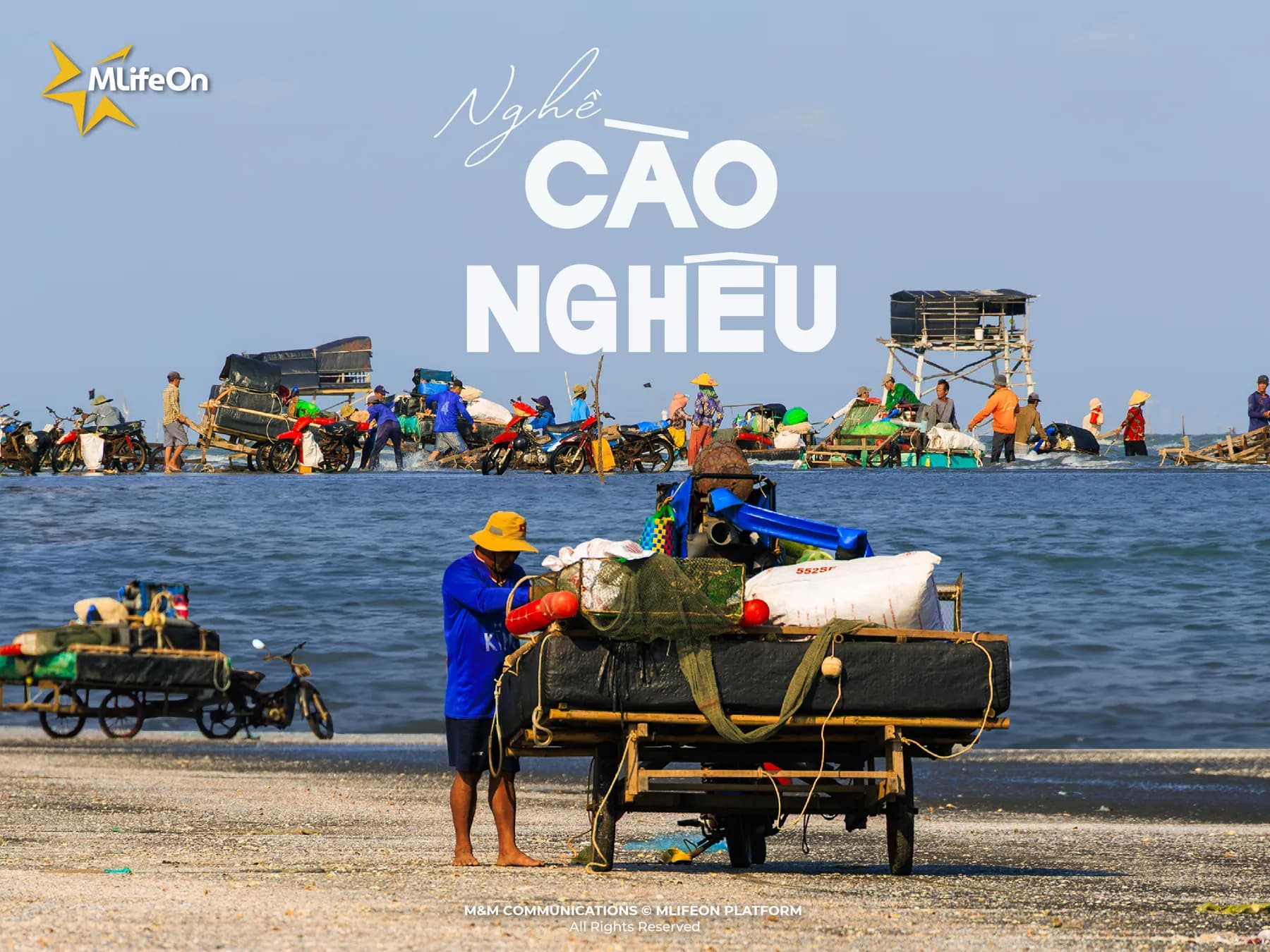
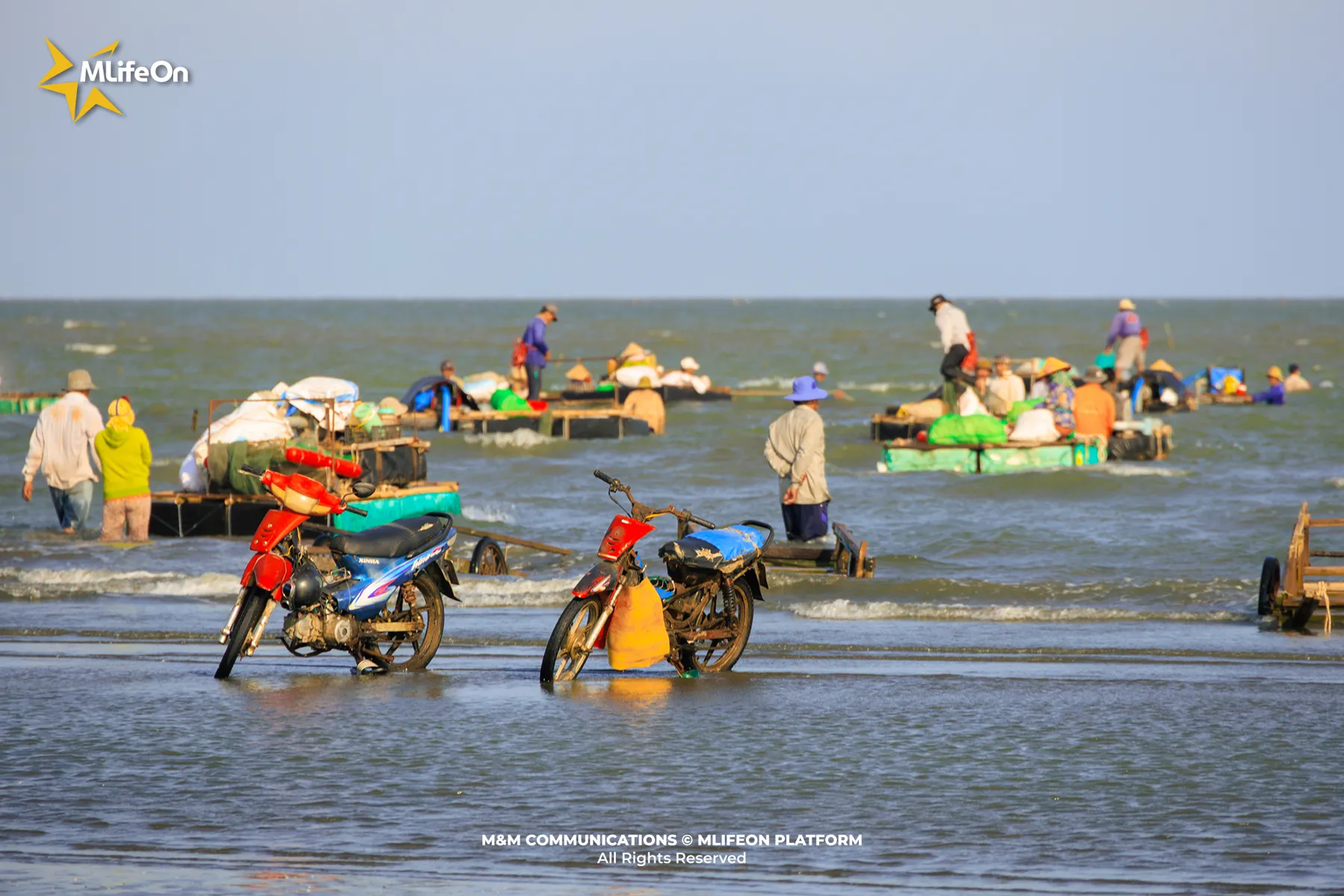
Not everyone has witnessed a real clam-raking shift from start to finish. But for those living near Can Gio beach - the sight of motorbikes lined up on the sand at dawn is a familiar scene. Even before the sky brightens enough to reveal a person's face, silhouettes in faded shirts and wooden carts are already scattered across the shore, as if the sea simply took a short nap before starting another laborious day.
Clam-raking - A job that looks simple but weighs heavily on those who do it
At first glance, clam-raking doesn’t seem complicated: head out to the tidal flats, drag a steel rake across the sand, and collect clams into a basket. But anyone who has seen it firsthand or heard stories from locals knows it demands far more than physical strength. It requires experience, intuition, and an ability to "read" the sea - its sand layers, its tides, its rhythms.
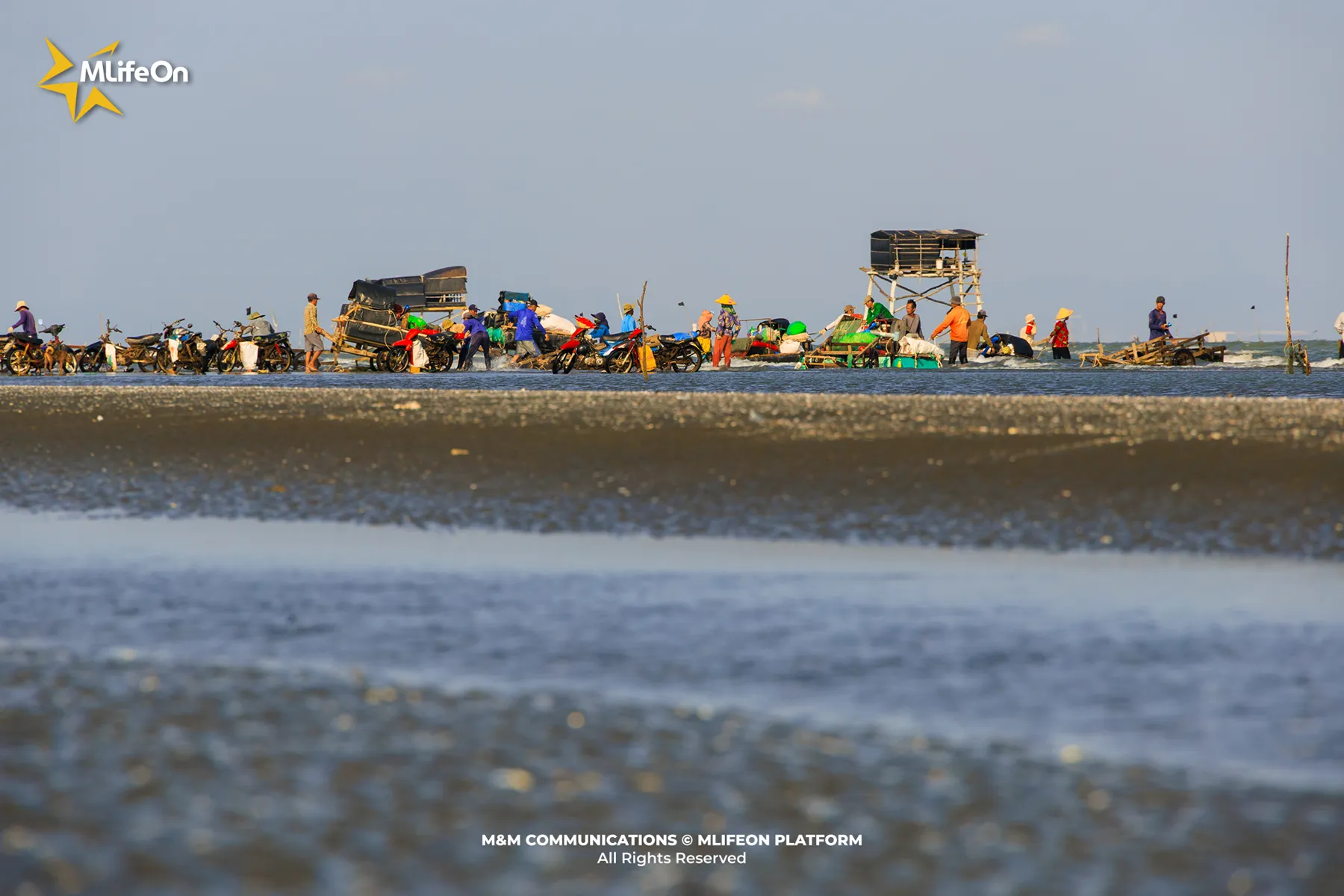
This job depends entirely on the tides. Only when the water recedes does the clam bed reveal itself, and workers must seize every minute. Move quickly and you’ll have clams. Move too slowly and the sea rises, forcing everyone to pack up and head back.
From shore to sea: Where the day’s livelihood begins
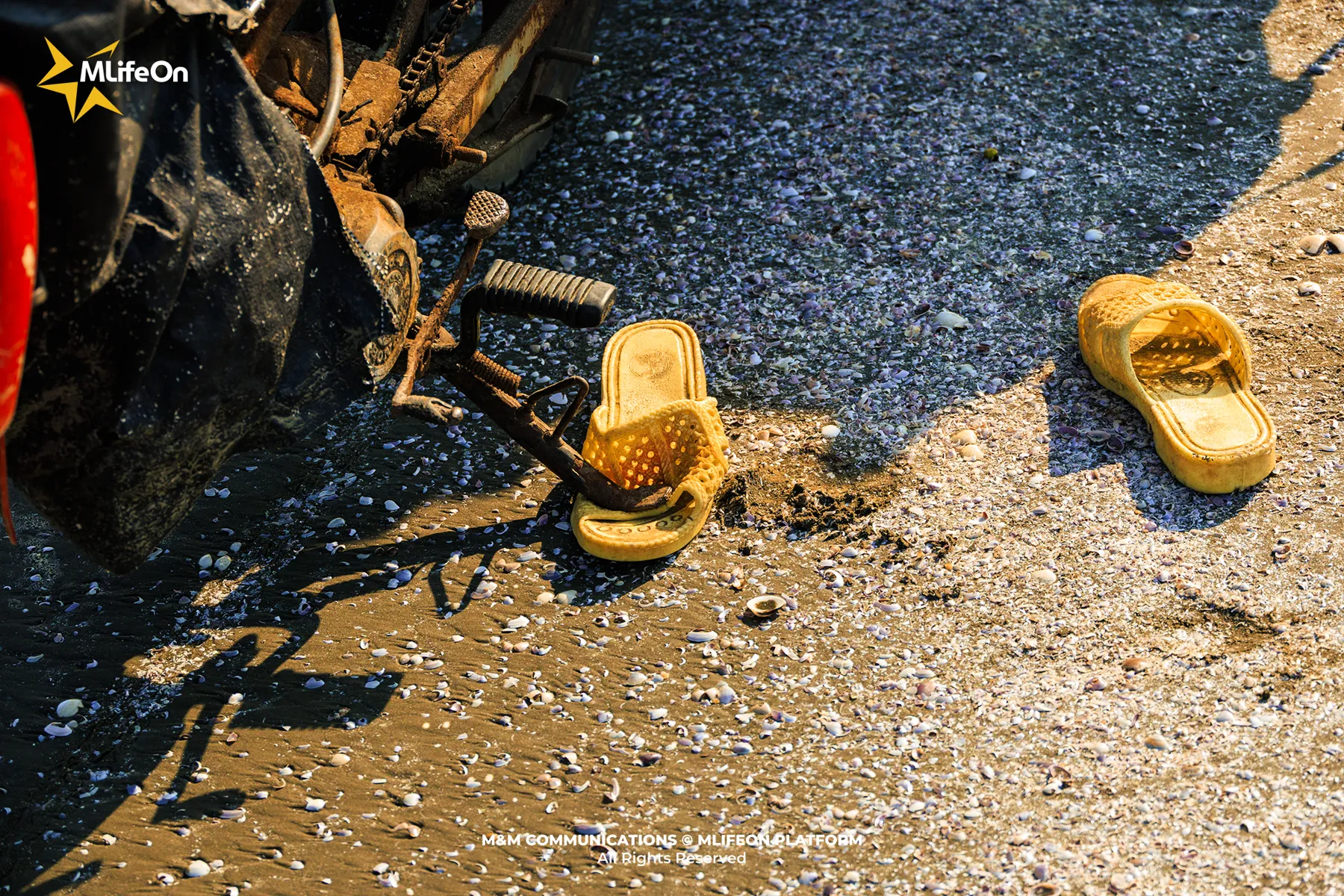
At clam beds, the most familiar sight is rows of old motorbikes covered in mud, fitted with baskets, ropes, and wooden carts. These are their "transport trucks" carrying tools in the morning and the day’s earnings in the afternoon.
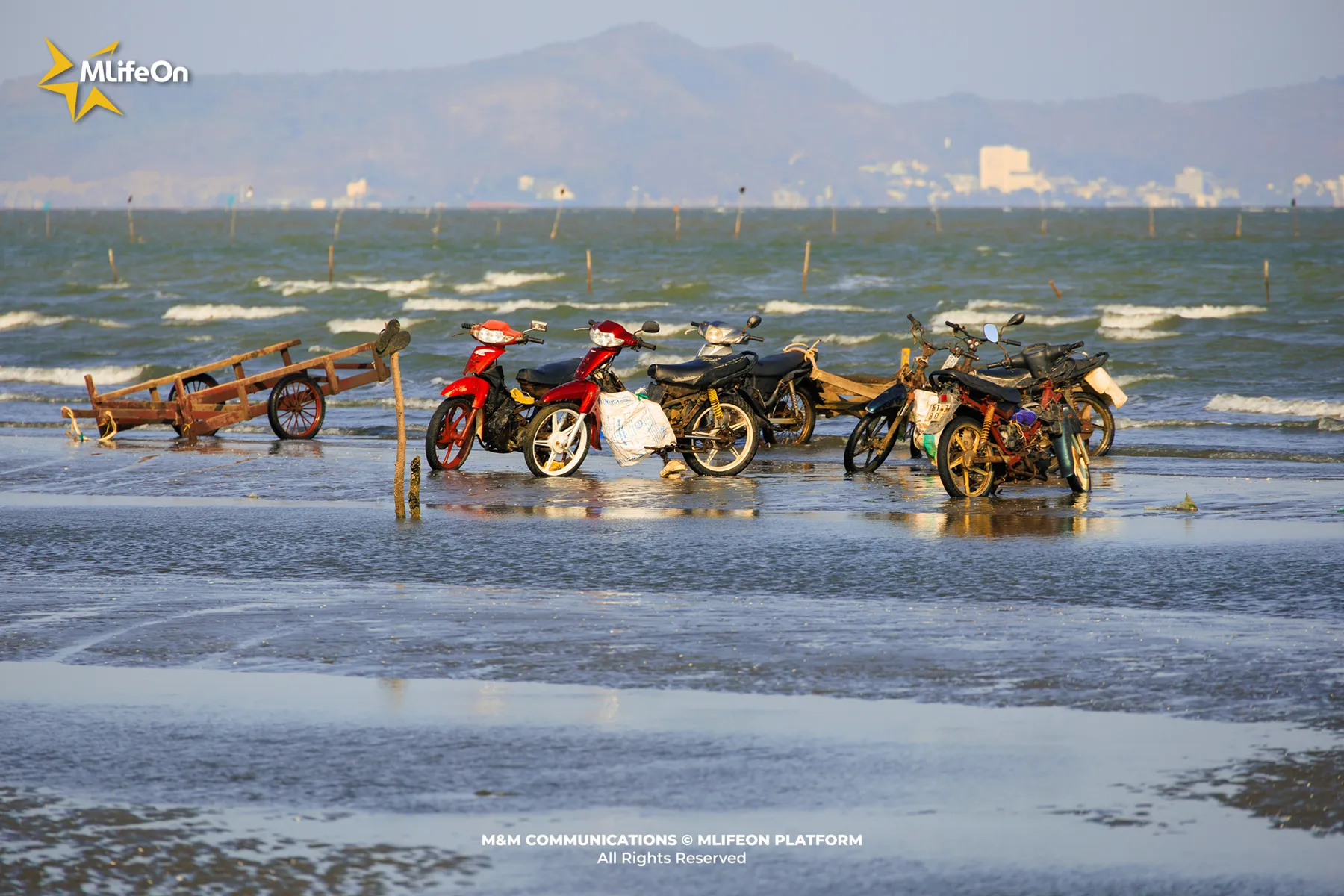
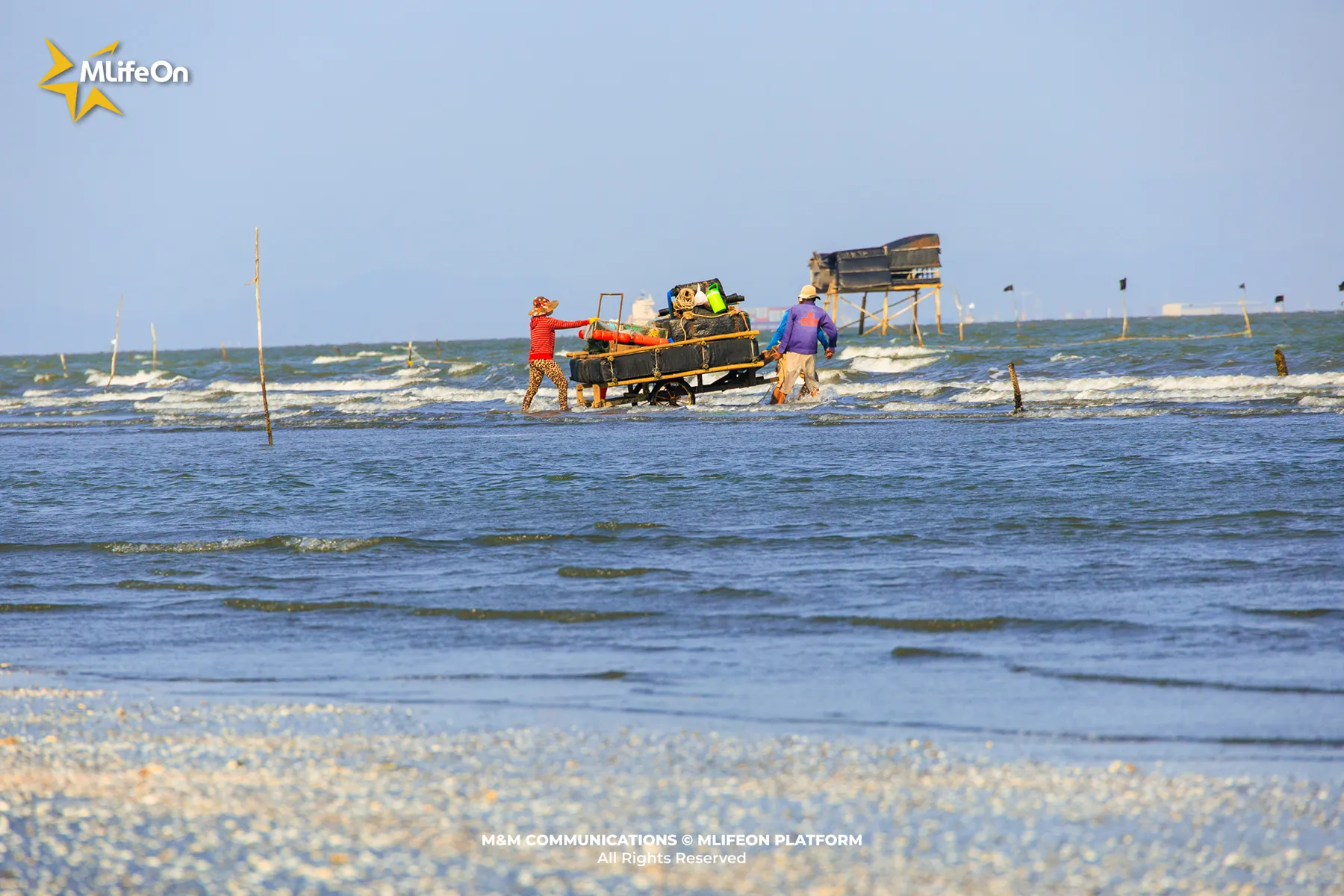
From the shore, locals load their tools onto small wooden boats, makeshift rafts, or platforms tied together with plastic barrels. These vessels take them farther out, to where the water reaches their knees. The boats are small, just enough space for sacks and a few people but each one becomes a "mini cargo truck" on the sea every morning.

The rumble of engines, the splash of paddles, the sound of waves tapping gently against the hull - all blend into the familiar soundtrack of a working coastline.
A morning of raking clams
When the boat reaches the clam bed, workers jump into the water without hesitation. Their pants and shirts soak instantly. The sand, dark and soft, shifts under every step. Women shield their faces with hats or damp scarves against the sun, while the men usually wear a single thin cap. In their hands is always a heavy steel rake.
One pull of the rake slices into the sand, scraping backward with a rhythmic xoạt xoạt. Sometimes they bend down to pick clams one by one; other times a whole basketful rises gleaming under the sun. Experienced workers can simply feel the sand or sense the softness of the seabed to know exactly where the clams are.
Behind these seemingly simple movements lie unspoken hardships: arched backs, calloused hands, legs soaked in water for hours, skin burned by the sun, and the constant risk of rising tides or sinking sand.
Baskets full of clams, backs weighed down
When the baskets are full, workers help each other load the harvest onto the boat. The sacks soaked with seawater and heavy are stacked onto the planks. Sometimes the catch is just a few dozen kilos. On good days, it can reach hundreds. But none of it ever comes easily.
Some spend half a day and gather only a handful of clams because the beds are sparse. Others work tirelessly yet still fall short of earning enough for a decent meal. This trade is as unpredictable as the tides full today, empty tomorrow; abundant this year, barren the next.
And yet, strangely, in these tidal flats, kindness outweighs hardship. If someone sinks into the sand, others rush to pull them out. If someone wades too far, a nearby boat swings over to give them a ride.

When they rest, people sit together and chat about their children, their crops, their lives. Laughter mixes with the sound of the waves, making the fatigue feel lighter.
A harsh sea, an uncertain livelihood
In the past, clams were plentiful, and many families lived comfortably off the sea. But in recent years, overharvesting, extreme weather, and environmental changes have made the trade more unstable. Many areas now form cooperatives to manage the clam beds dividing zones, limiting open harvesting, and protecting the resource.
Young people rarely take up the trade nowadays not because the sea offers no hope, but because the job demands immense physical strength while offering little stability.
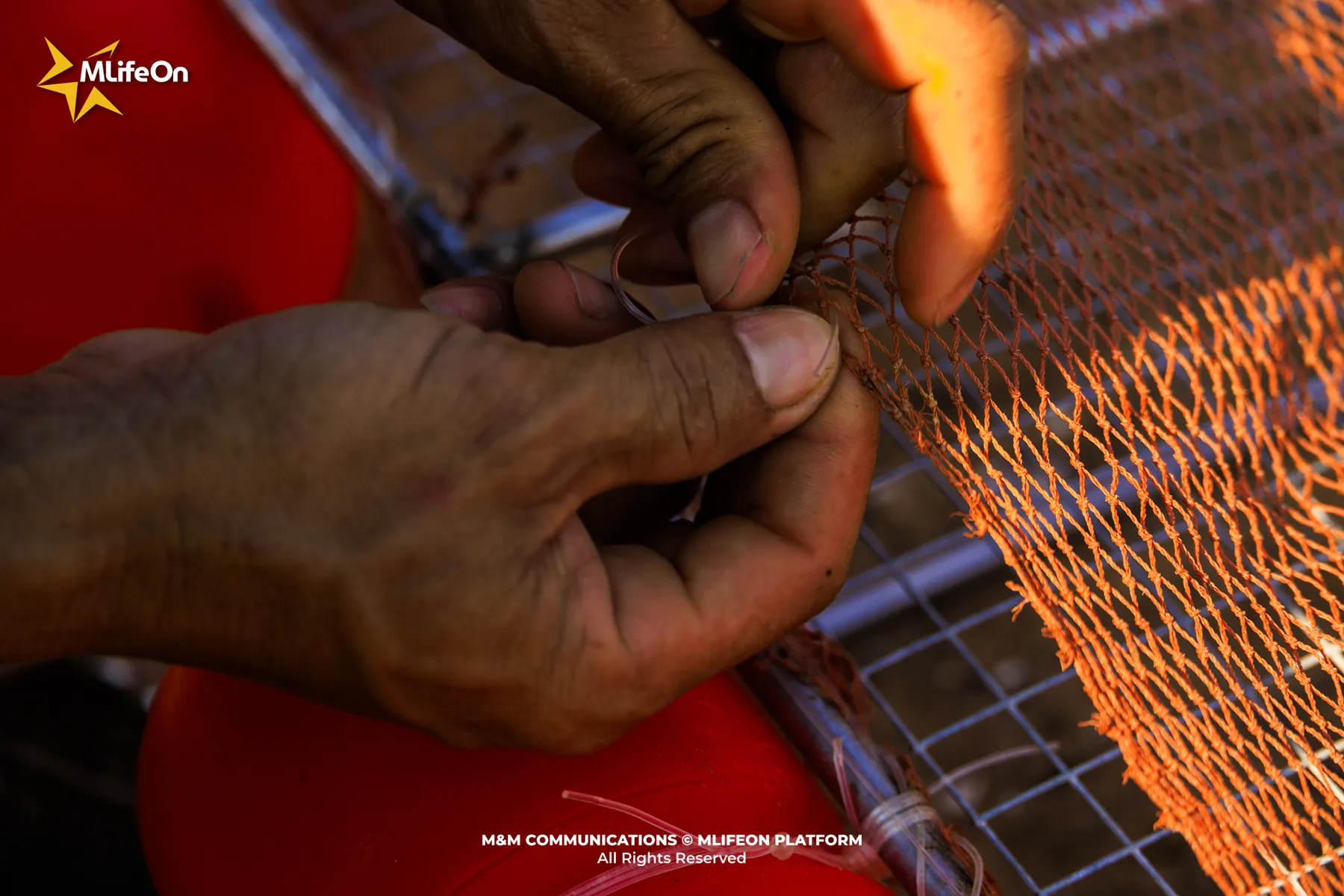
Still, for those who grew up with the sound of waves, clam-raking remains a memory and a part of life that’s hard to leave behind.
Conclusion
Clam-raking is more than a means of survival, it is a story of resilience. The people with sun-faded shirts, feet sinking in muddy sand, and backs bent with every pull of the rake are living symbols of the hardworking spirit of the Mekong Delta.

Time may change many things, but the image of clam-raking at low tide will forever remain a raw, honest glimpse into southern life: humble, unpolished, yet overflowing with human warmth.
—---------
CREDIT:
- Photography: Kien Trang
- Content: Hoài Hà
- Design: Trung Huynh