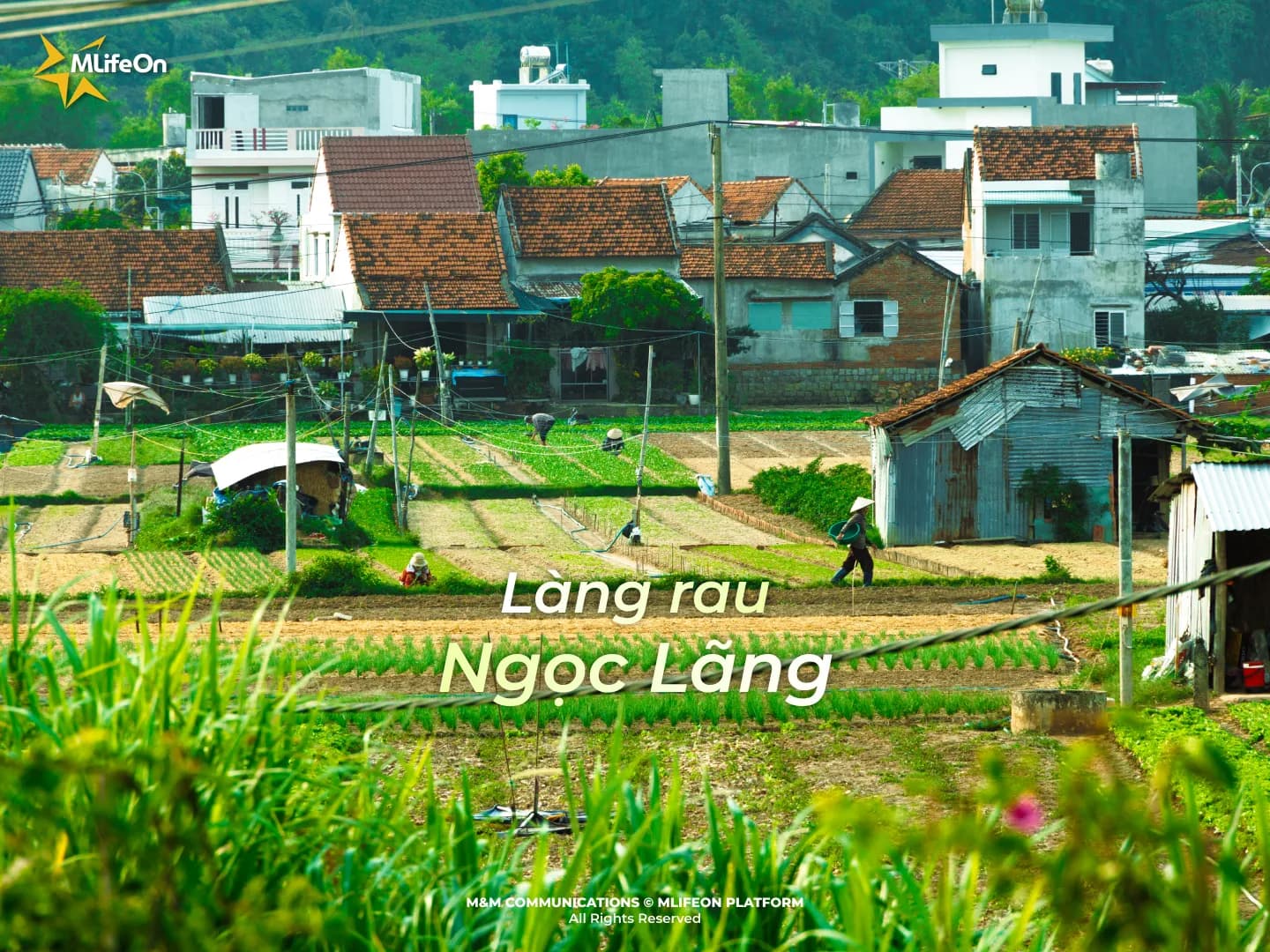
Ngoc Lang vegetable village on a tranquil morning
Ngoc Lang vegetable village is located in Ngoc Lang Hamlet, Binh Ngoc Commune, Tuy Hoa City (former). Viewed from above, the village appears as a wide green strip, embraced on three sides by the Da Dien River. This unique position has created exceptionally fertile land: loose, alluvial soil, abundant water sources, and a mild climate year-round.
Mornings in Ngoc Lang begin very early. As the sun rises above the bamboo groves along the riverbank and dew still clings to the leaves, the village reveals rows of vegetables neatly stretching across the fields. The space feels open and airy, with river breezes carrying the scent of moist soil and young greens. There are no tall fences or rigid boundaries here. One garden flows seamlessly into the next, forming a calm, continuous landscape that feels gentle and unforced.
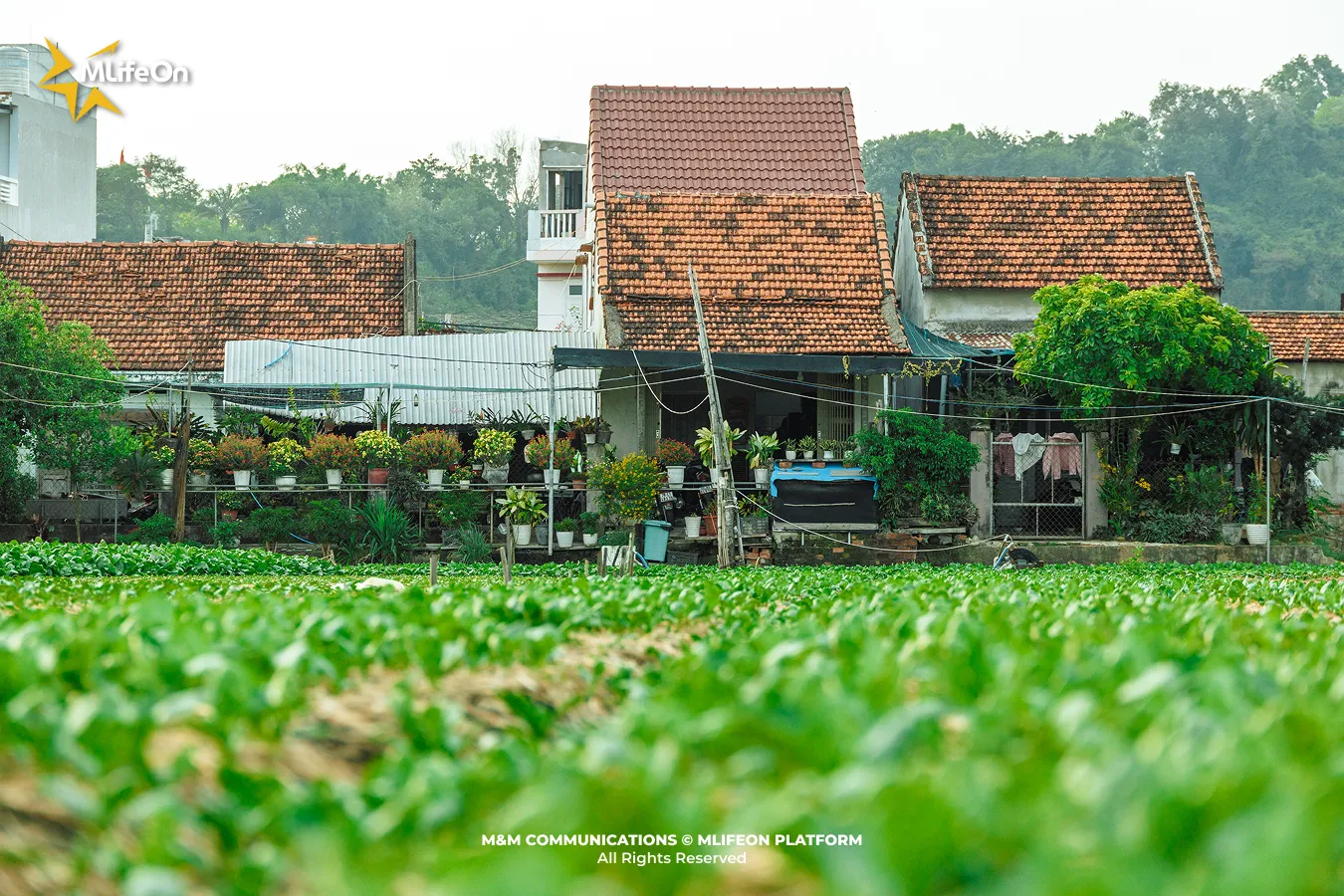
This sense of peace is not absolute stillness, but rather a familiar, steady rhythm, a way of life that has unfolded the same way for generations.
Rows of green vegetables, like the village’s breath
Walking through Ngoc Lang’s gardens, it is easy to notice how carefully the land is divided. Vegetable beds are arranged in neat rows, raised just enough to drain excess water during the rainy season while retaining moisture in dry weather. Crops are rotated seasonally: mustard greens, lettuce, scallions, coriander, water spinach, and more. Nothing is overly decorative, yet everything follows practical knowledge accumulated over many generations.
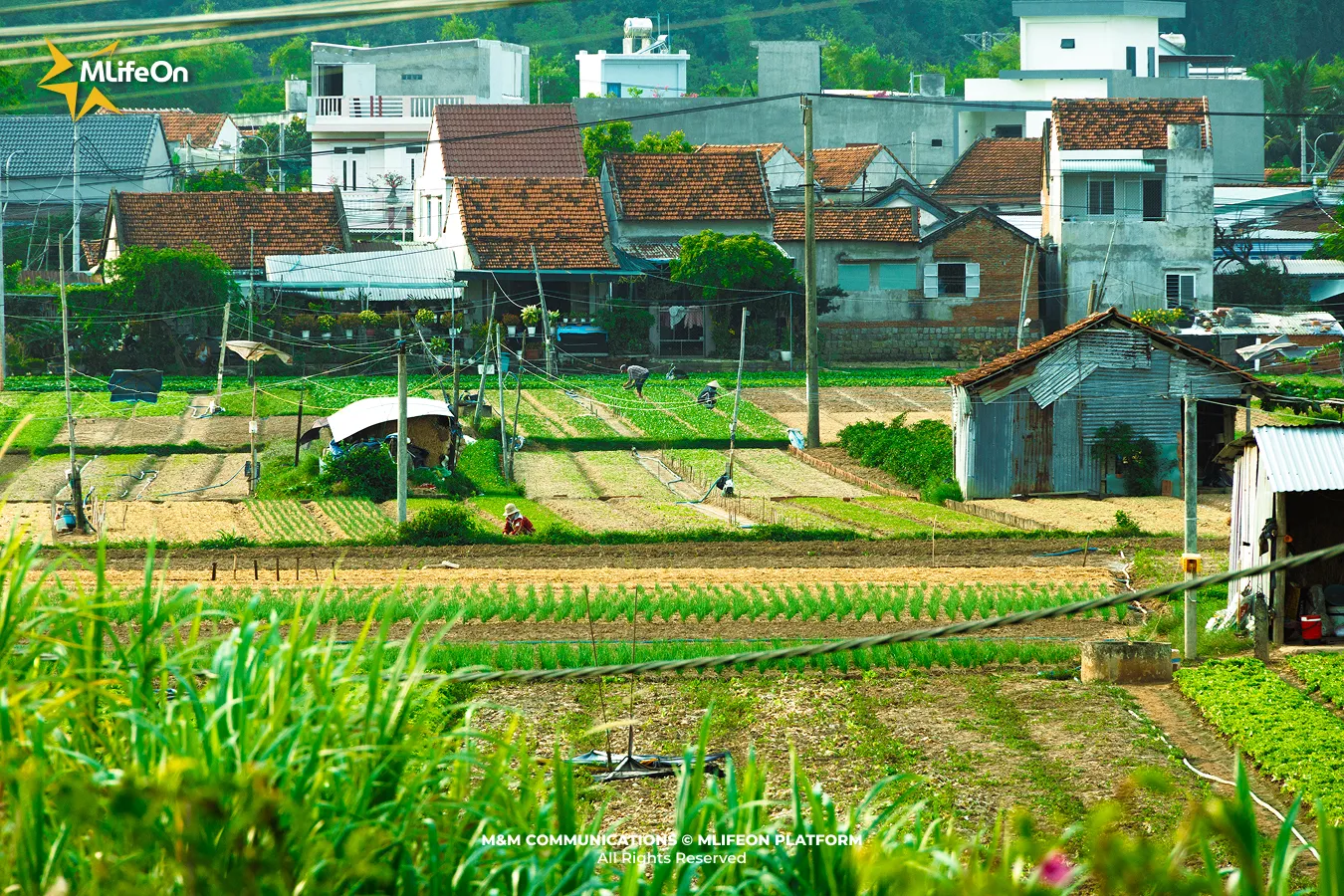
The green here is far from monotonous. Each row carries a slightly different shade, creating layers of light and dark that blend naturally together. When sunlight falls across the fields, it reflects softly not harshly or glaringly, but even and gently. From a distance, the gardens resemble a calm green surface, except that they breathe in rhythm with human life.
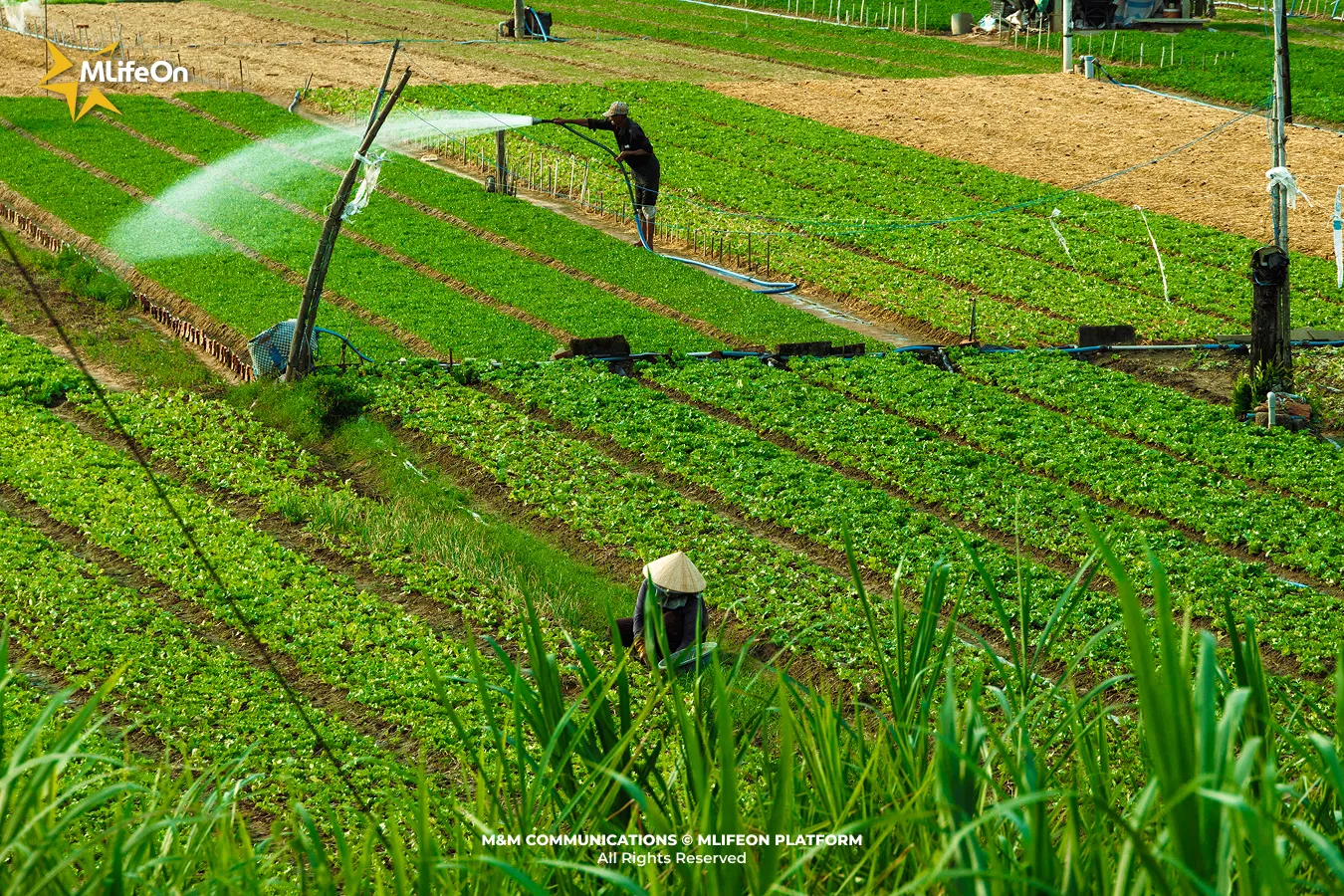
For the people of Ngoc Lang, these vegetable beds are not merely goods for the market. They are livelihoods, indicators of the season, and quiet signals of whether the soil is "healthy" today. As the vegetables grow day by day, so too does the village steadily, over time.
Ngoc Lang farmers and a life bound to the soil
The most familiar sight in the gardens is that of farmers bending over the soil. Some water the plants, others loosen the earth, while others carefully place young seedlings into the beds. Their movements are not fast or performative, but confident and practiced.
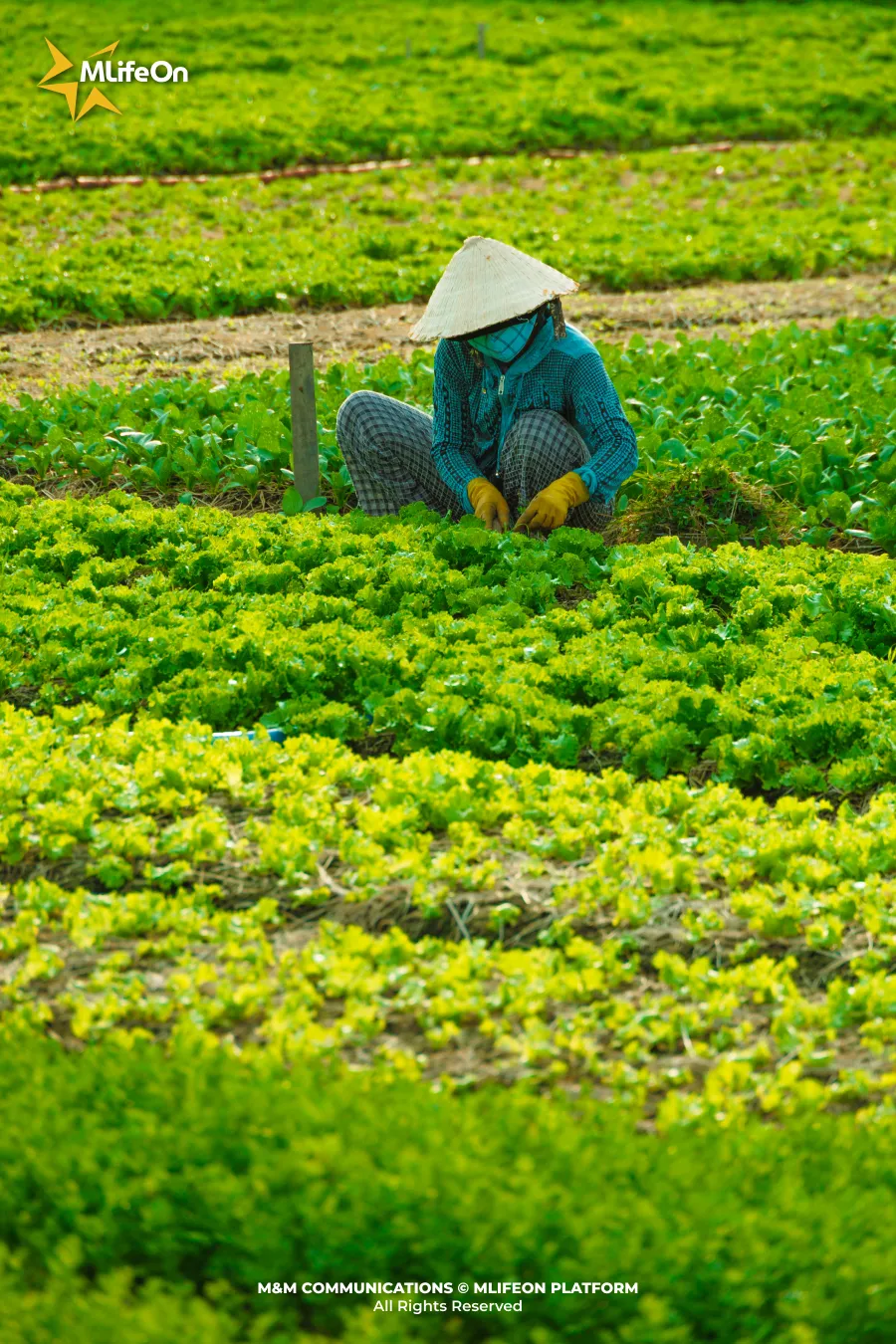
Here, work is literally grounded in the earth. Hands touch soil every day; feet follow the same narrow paths between rows of vegetables. The gardeners speak little and rarely feel the need to explain what they do. They work because this is the work that needs to be done, a craft passed down and lived with over time.
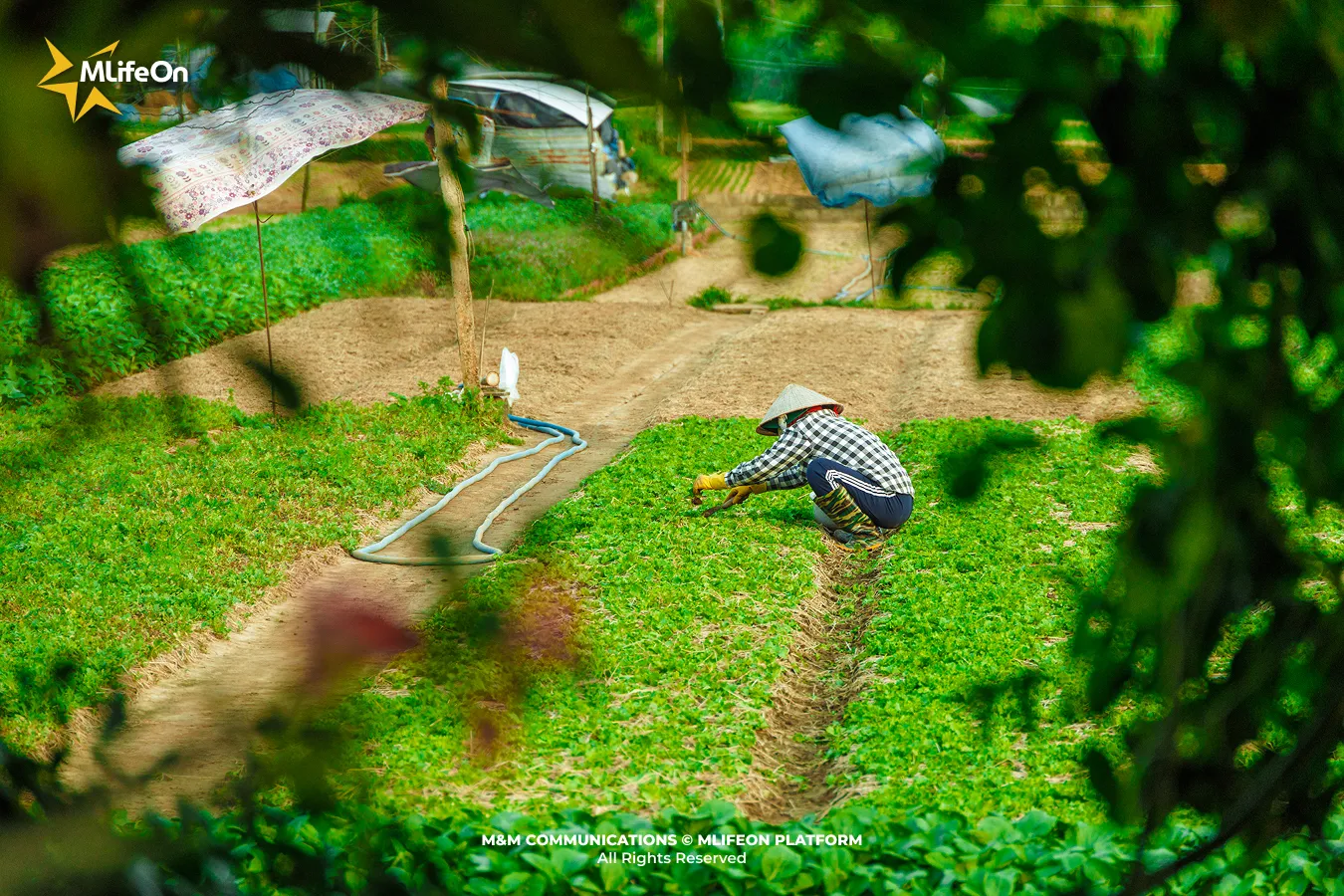
Vegetable farming in Ngoc Lang does not resemble large-scale production. Each household tends a modest plot of land, cultivating and caring for it independently. As a result, the pace of work is unhurried. Everything follows the cycles of sun, rain, and the water of the Da Dien River.
Ngoc Lang vegetable village – A gentle stop for visitors
Not a bustling tourist destination, Ngoc Lang attracts visitors quiet and understatedly. People do not come to "check it off a list", but to experience a way of life different from the pace of the city.
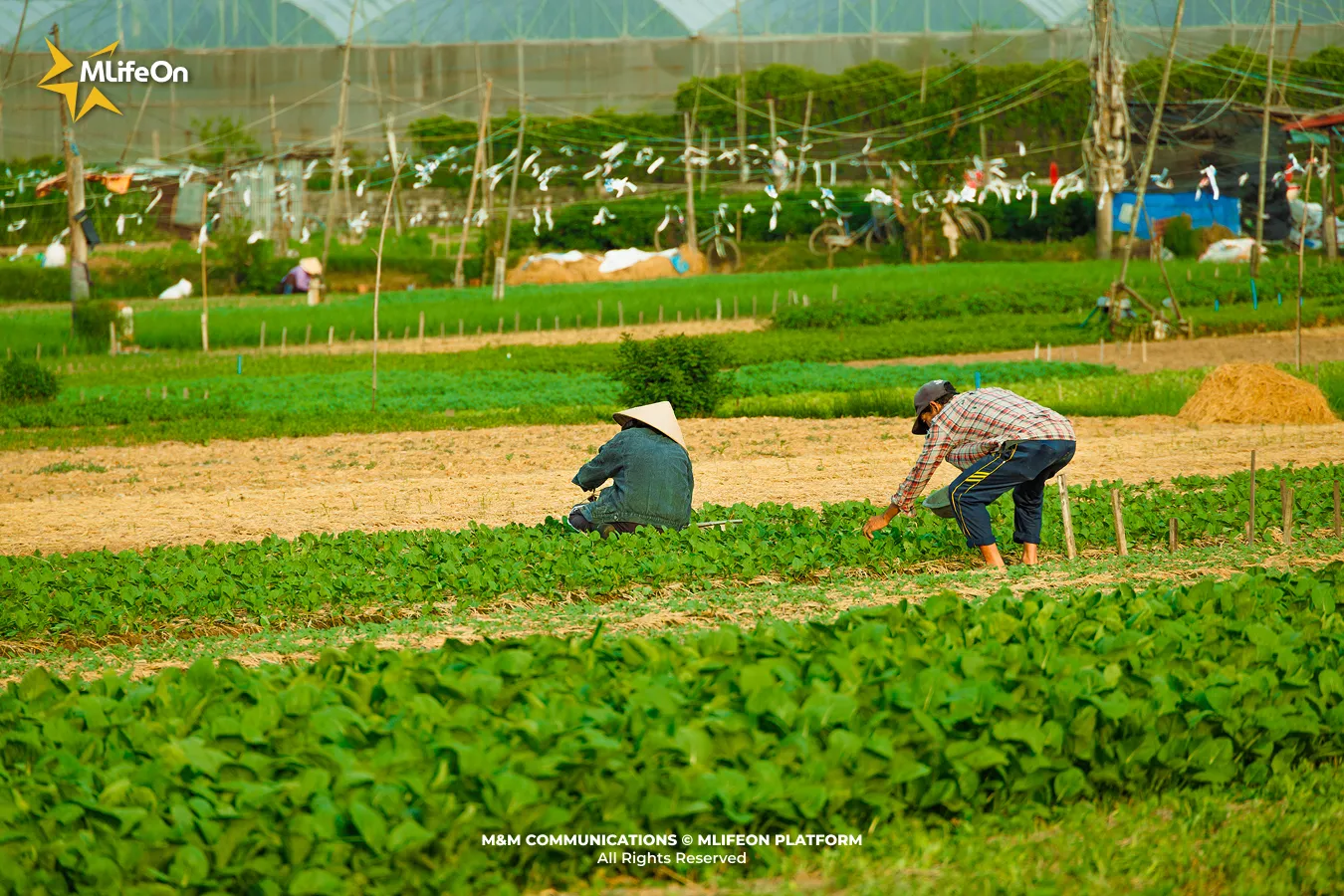
A simple walk through the vegetable fields watching farmers at work and listening through irrigation channels is often enough to bring a sense of calm. There are no noisy cafés, no curated activities. Ngoc Lang allows life to unfold naturally, just as it always has.
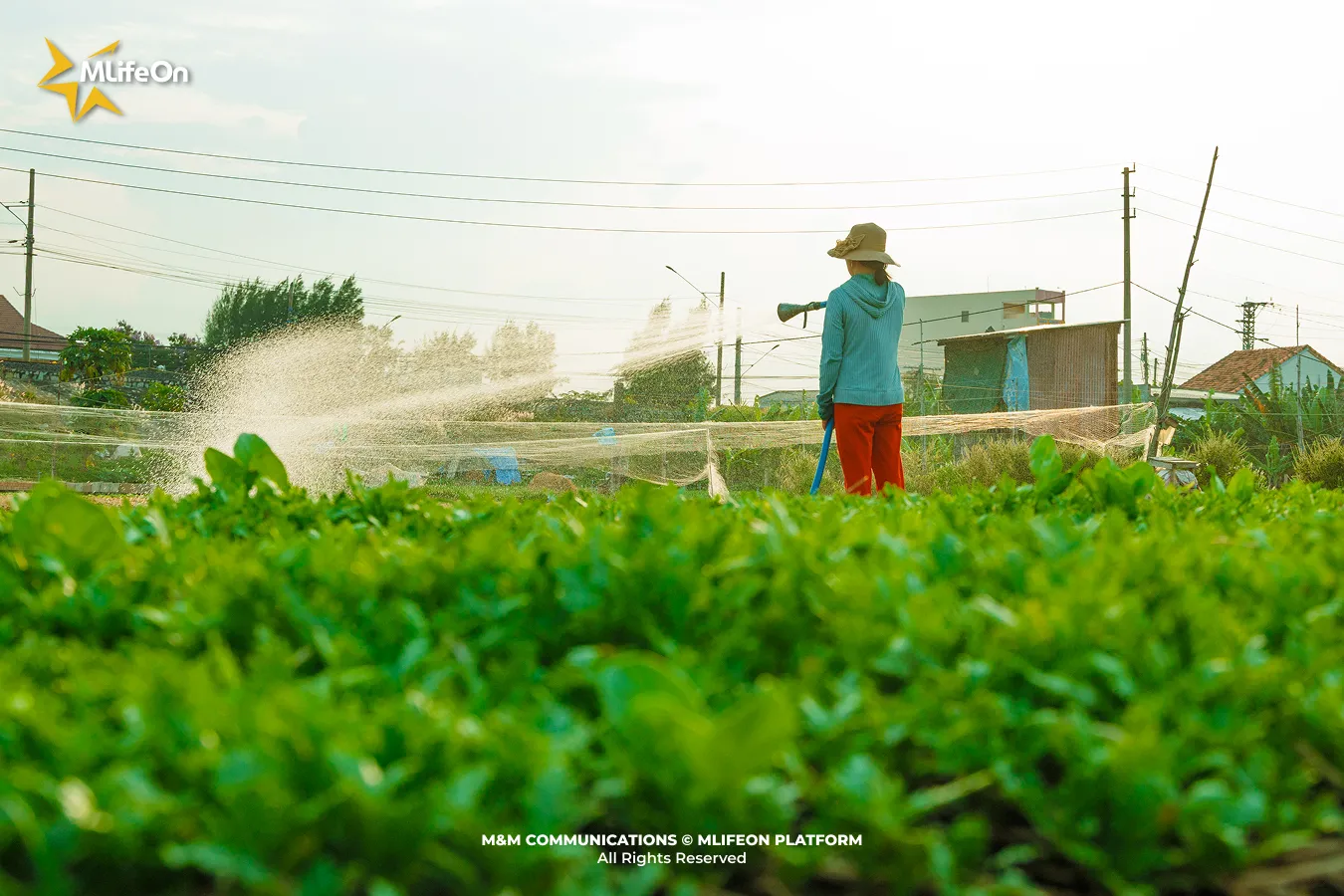
For many, Ngoc Lang Vegetable Village feels like a rare green pocket that has remained intact amid Tuy Hoa’s rapid growth. A place that needs little introduction, yet lingers gently in memory long after one leaves.
Conclusion
Ngoc Lang Vegetable Village exists as a natural extension of life along the rivers of Tuy Hoa. Fertile soil, diligent people, and a slow, steady daily rhythm define this place. A single visit is enough to understand why this green expanse continues to be preserved as a living memory of the land and people of old Phu Yen.
—---------
CREDIT:
- Photography: Kien Trang
- Content: Hoài Hà
- Design: Phuong Nguyen