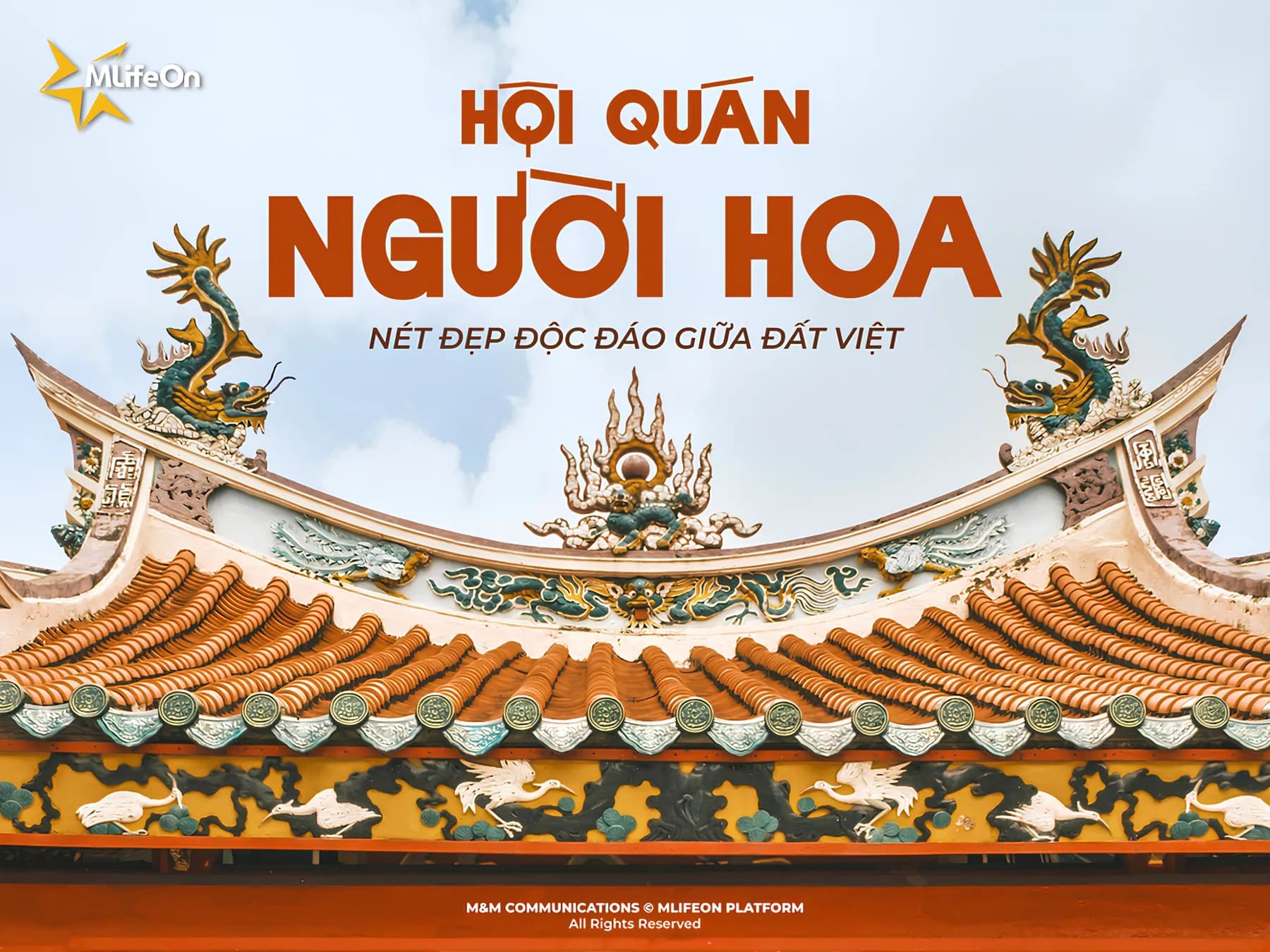
Vietnam is a multi-ethnic and multi-religious country, where each community leaves its own unique mark on architecture and cultural life. Therefore, traveling along the S-shaped strip of land, one easily encounters structures bearing the distinct characteristics of each ethnic group. In the Southwest, there are Khmer temples and stilt houses; in the South Central Coast (formerly the Central Highlands), there are Ede communal houses and longhouses; while scattered throughout the provinces and cities, prominently featured in urban spaces, are the Chinese assembly halls. These buildings both embody traditional architecture and reflect the rich spiritual life of the Chinese community in Vietnam.
Meeting hall and its functions
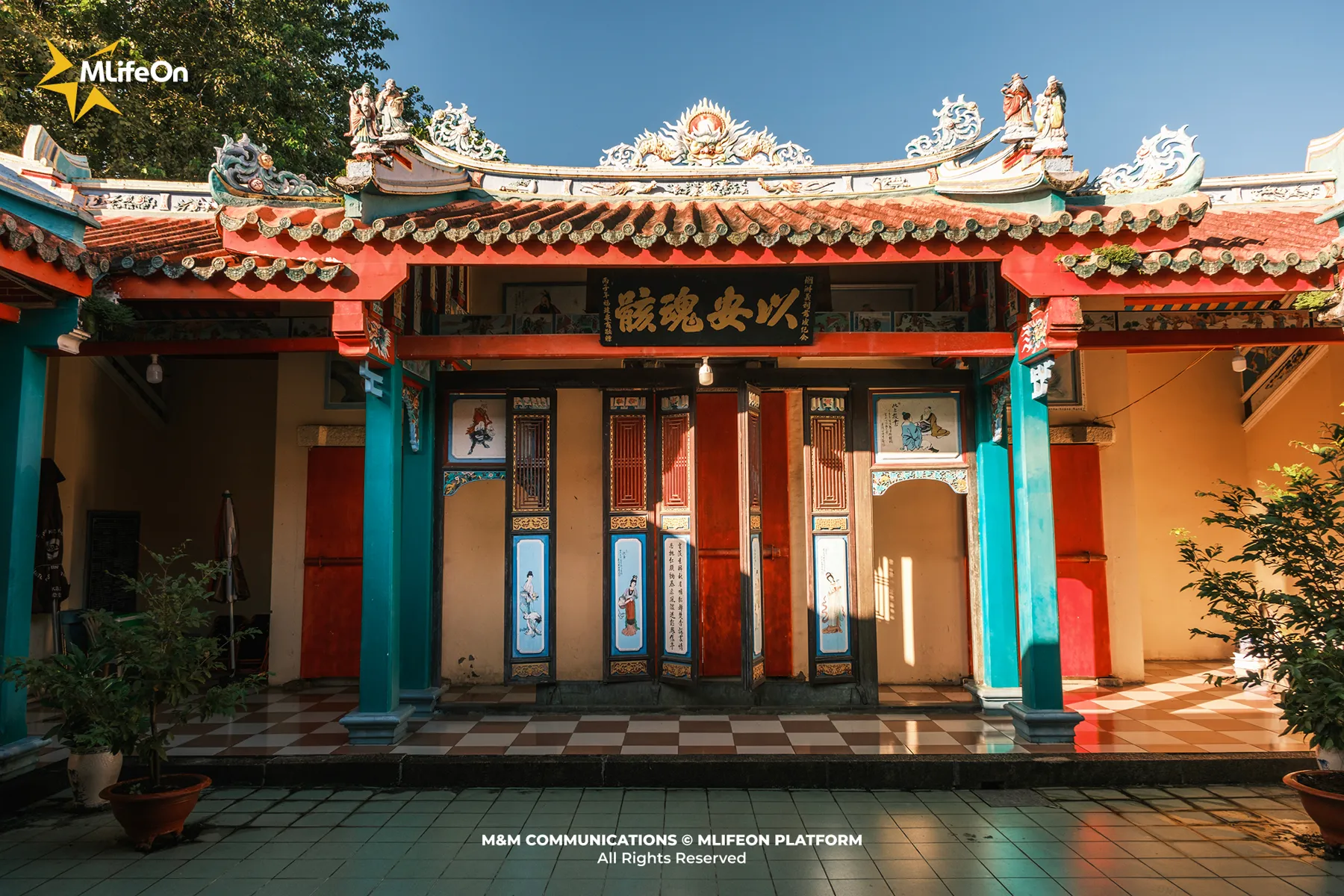
Nghia An Assembly Hall is located in Rach Gia ward, An Giang province (formerly Kien Giang province)
Chinese community halls in Vietnam are not only iconic architectural structures but also spiritual and cultural centers for the entire community. Each hall is associated with three main functions, interwoven and complementary, creating a space that is both sacred and close to daily life.
First, there is the function of worship. These assembly halls typically worship deities that symbolize protection and are closely associated with the spiritual life of the Chinese people, such as Guan Yu (a symbol of righteousness and loyalty), the Goddess of Heaven (a deity protecting sea voyages), or the God of Fortune (a deity protecting land and life), and many other deities representing various professions. In Chinese assembly halls, this worship is not only a religious ritual but also a way for the community to express their faith and pray for peace and prosperity.
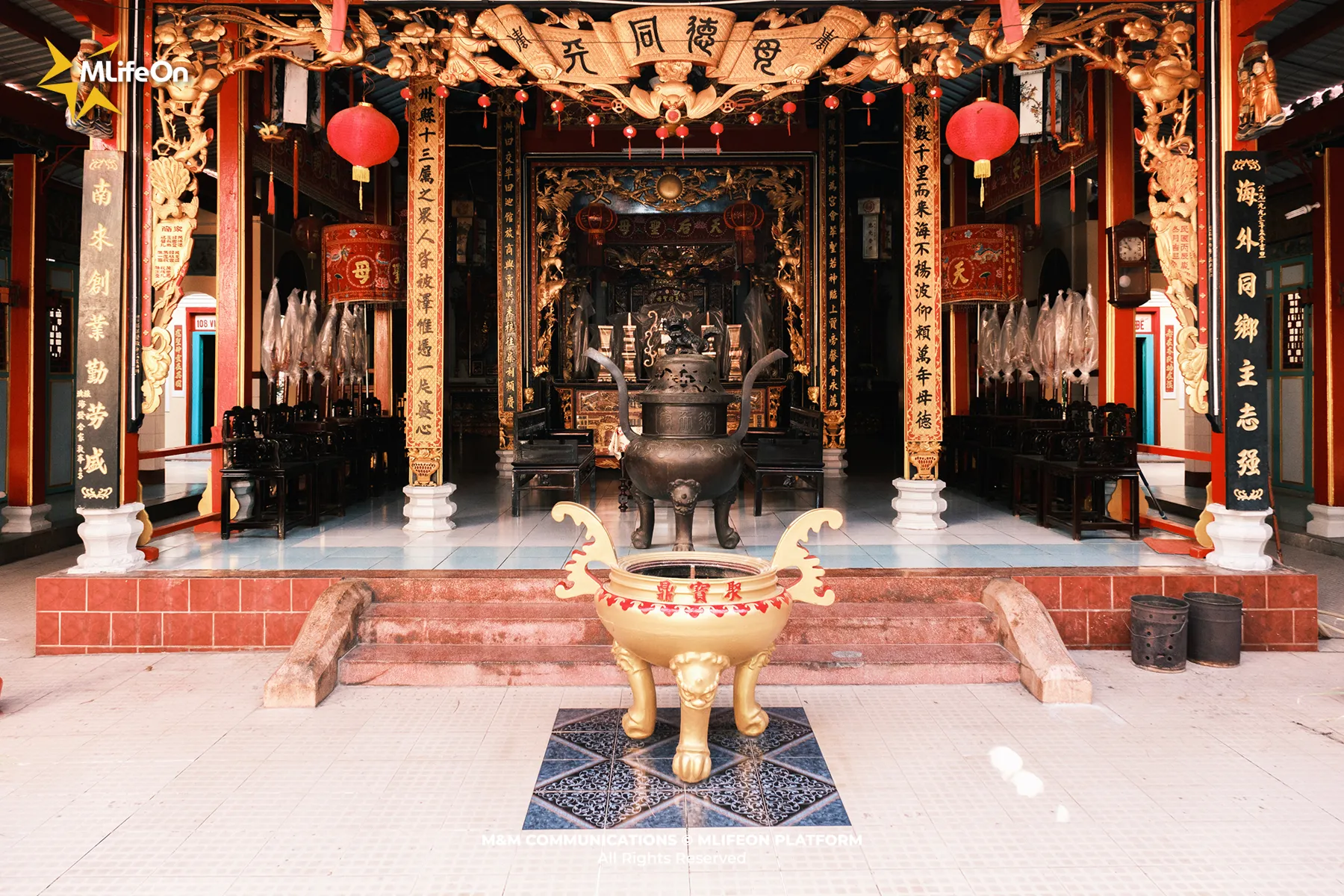
The worship area at Hainan Guild Hall in Rach Gia ward, An Giang province (formerly Kien Giang province)
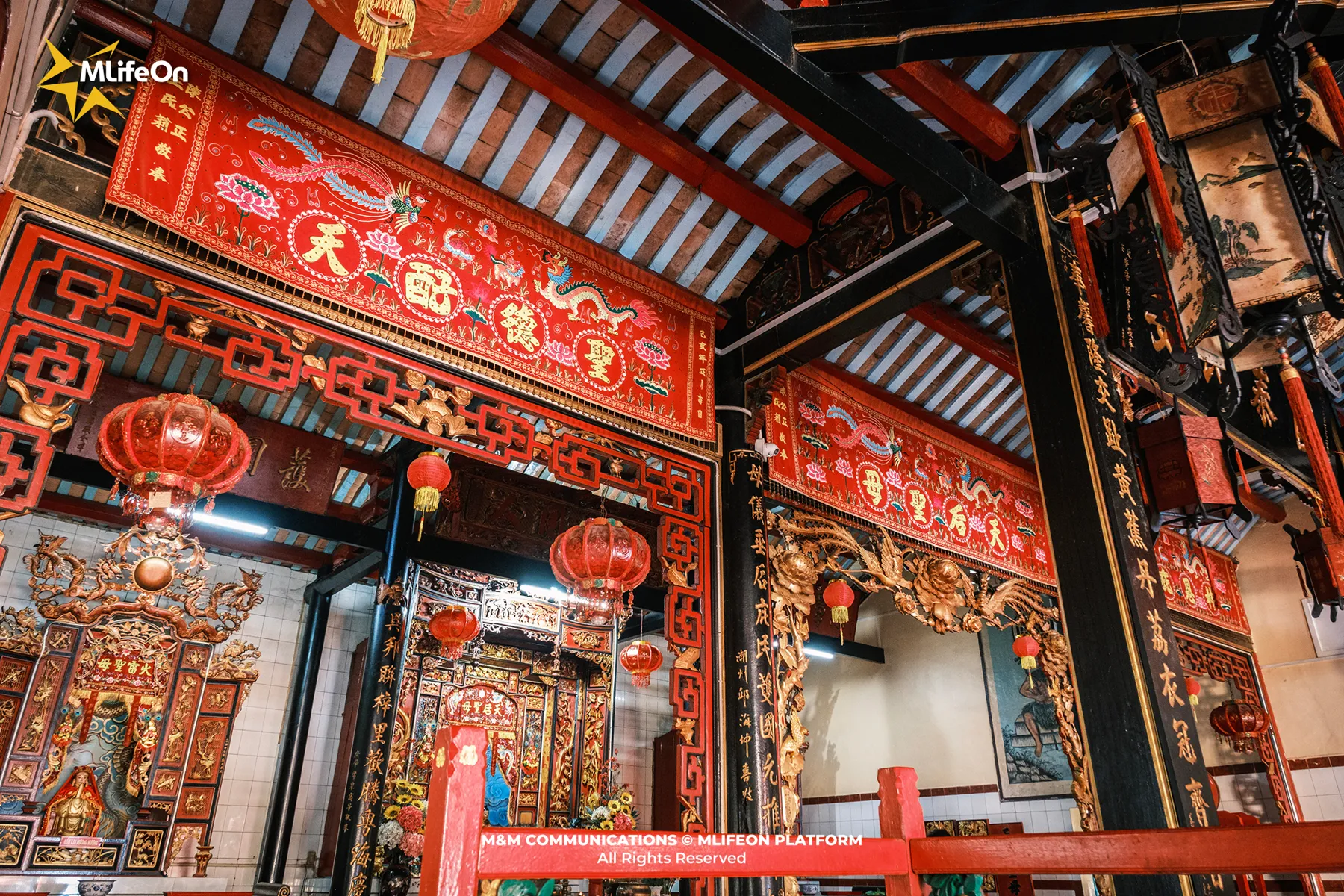
The worship area at Hainan Guild Hall in Rach Gia ward, An Giang province (formerly Kien Giang province)
Secondly, it serves as a community center. The community center is a place where compatriots meet, discuss common affairs, share difficulties, and support each other in life. On ordinary days, the community center is like a shared home, where the elderly tell stories, children learn, and those who have been away return to reconnect. Thanks to the community center, the Chinese community in Vietnam has maintained its cohesion and mutual support, enabling them to develop economically and improve their lives together.
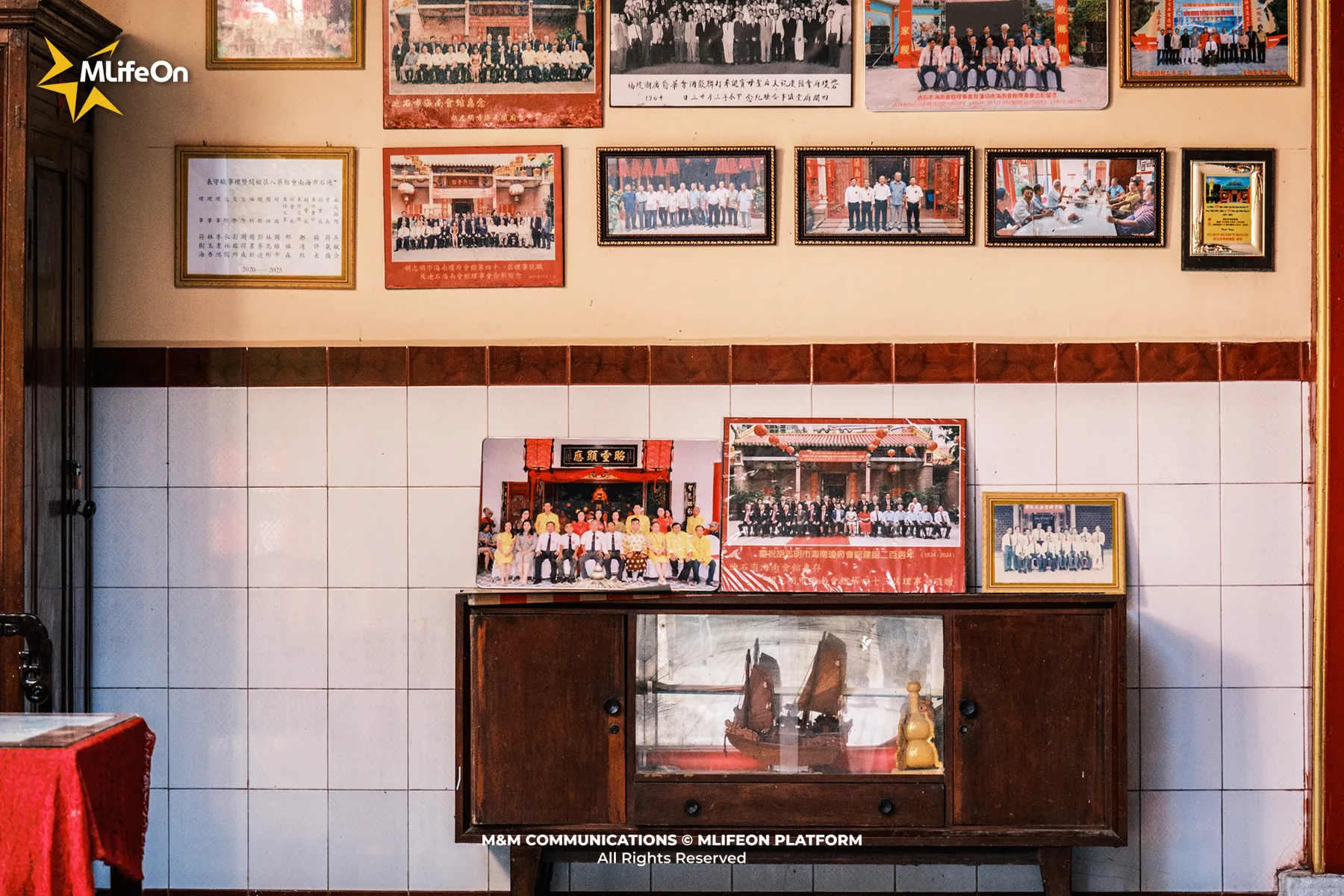
The Chinese community hall also serves as a community gathering place
Finally, Chinese community halls serve an educational and cultural function. These structures are not only venues for traditional festivals, but also centers for teaching Chinese characters to the younger generation and preserving customs and traditions. The rituals, performances, and vibrant festivals not only help the community maintain its Chinese identity but also create a unique way of life, enriching the diverse cultural landscape of Vietnam.
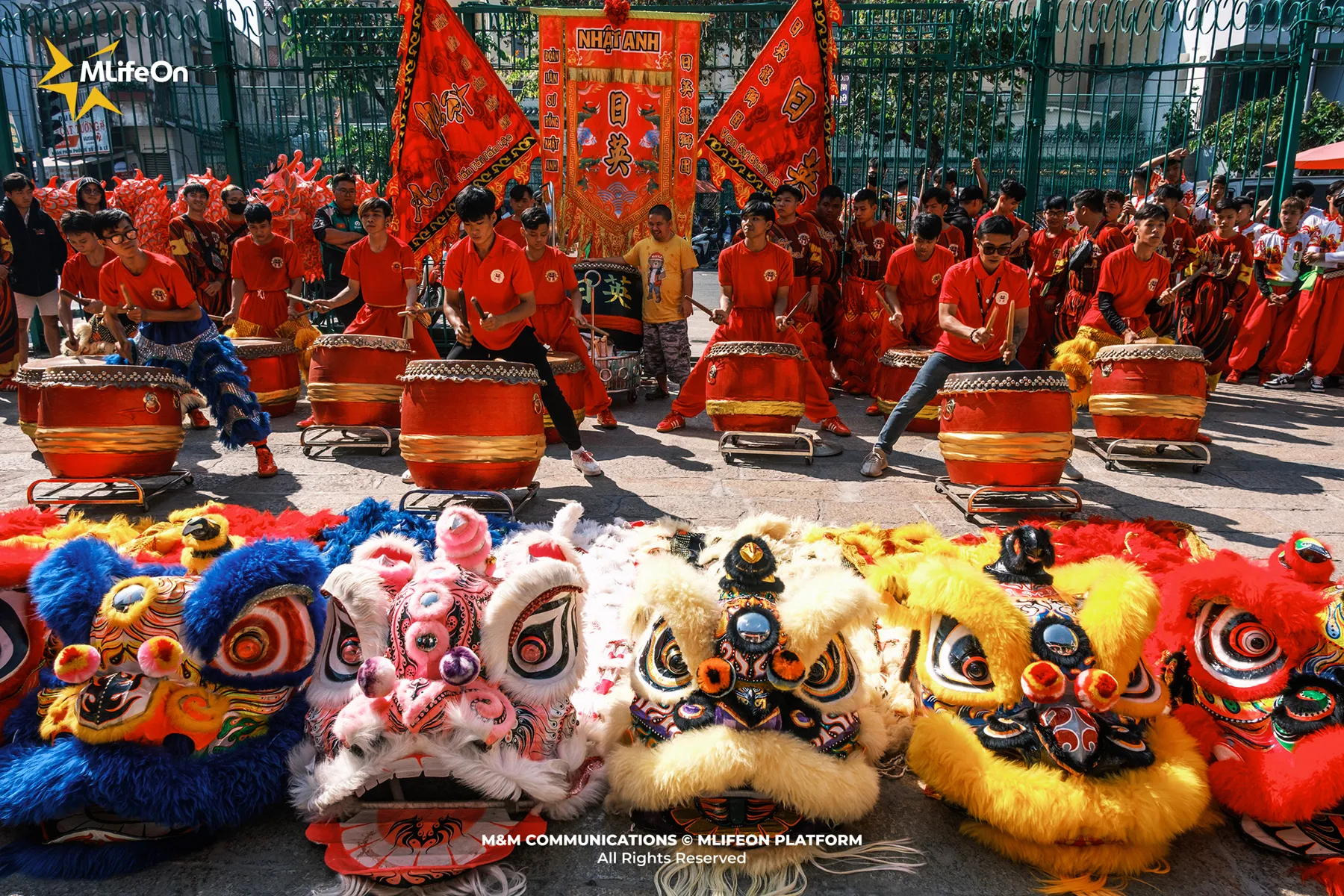
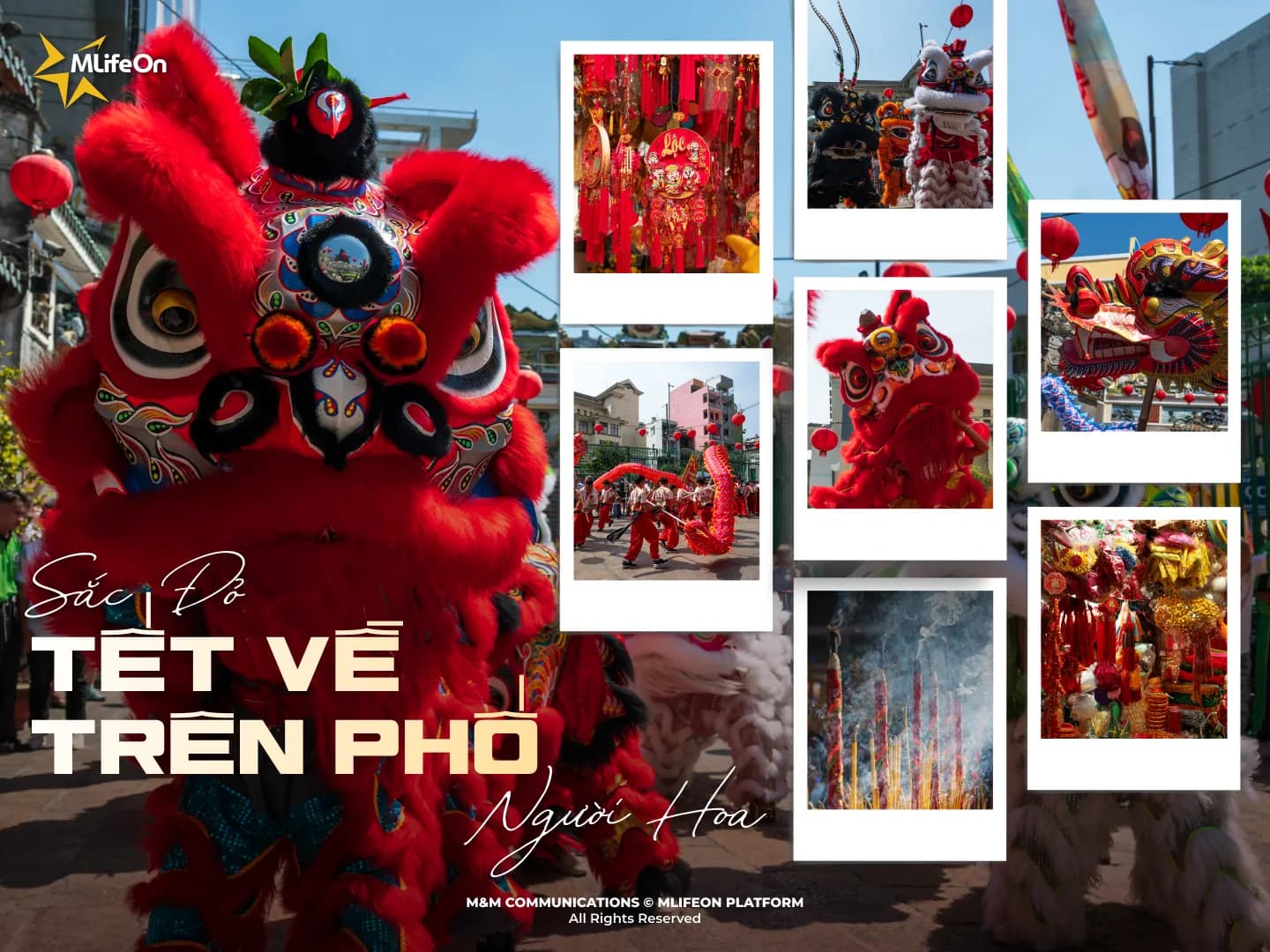
The Eye-Opening Ceremony of the Hainan Lion-Dragon Dance Troupe, a Chinese community art group, took place at the Tue Thanh Hall (Ba Thien Hau Temple, District 5), Ho Chi Minh City
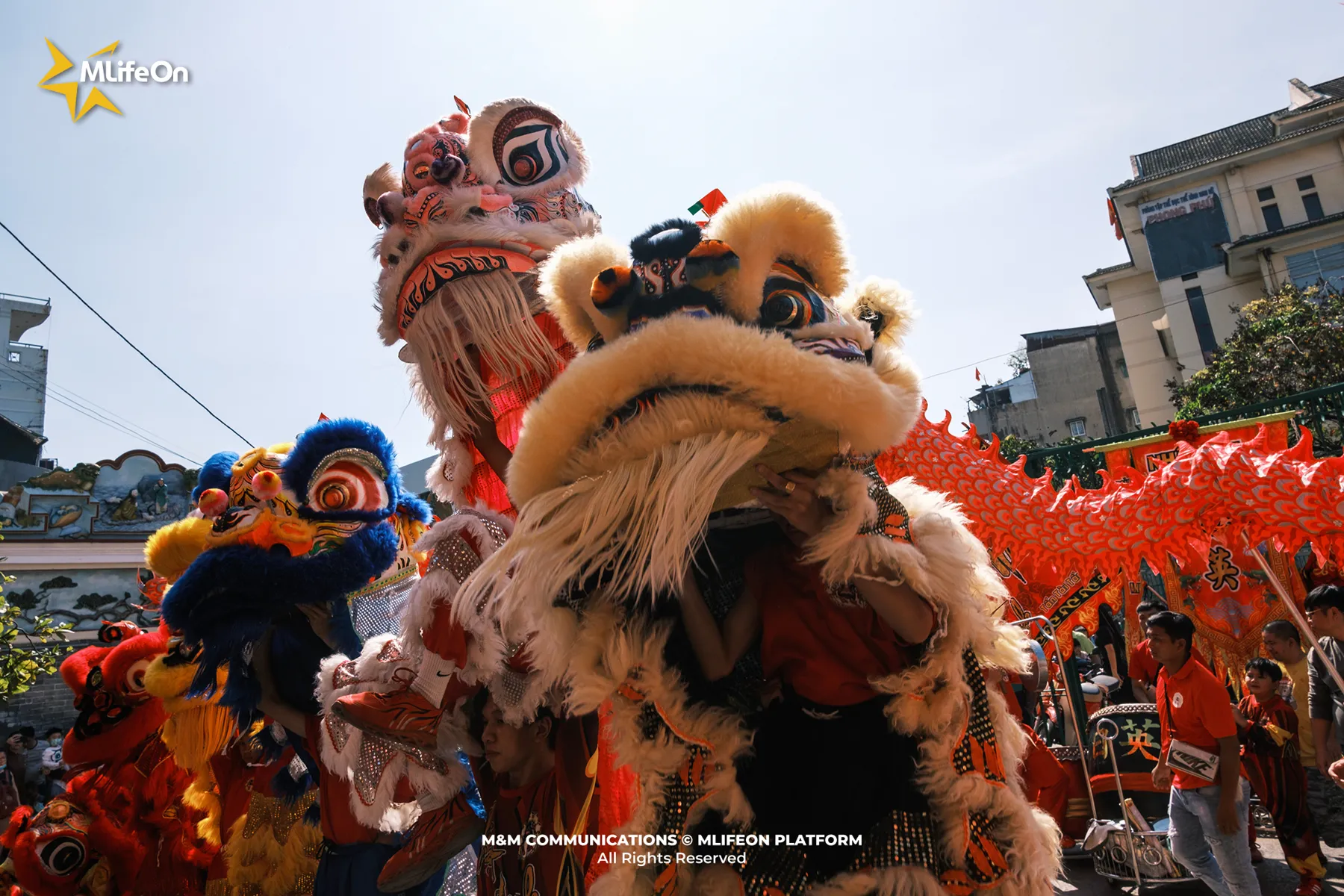
It can be said that Chinese community halls in Vietnam serve as multi-functional structures, helping to unite people, preserve culture, and support and develop the community's economy.
Architectural features
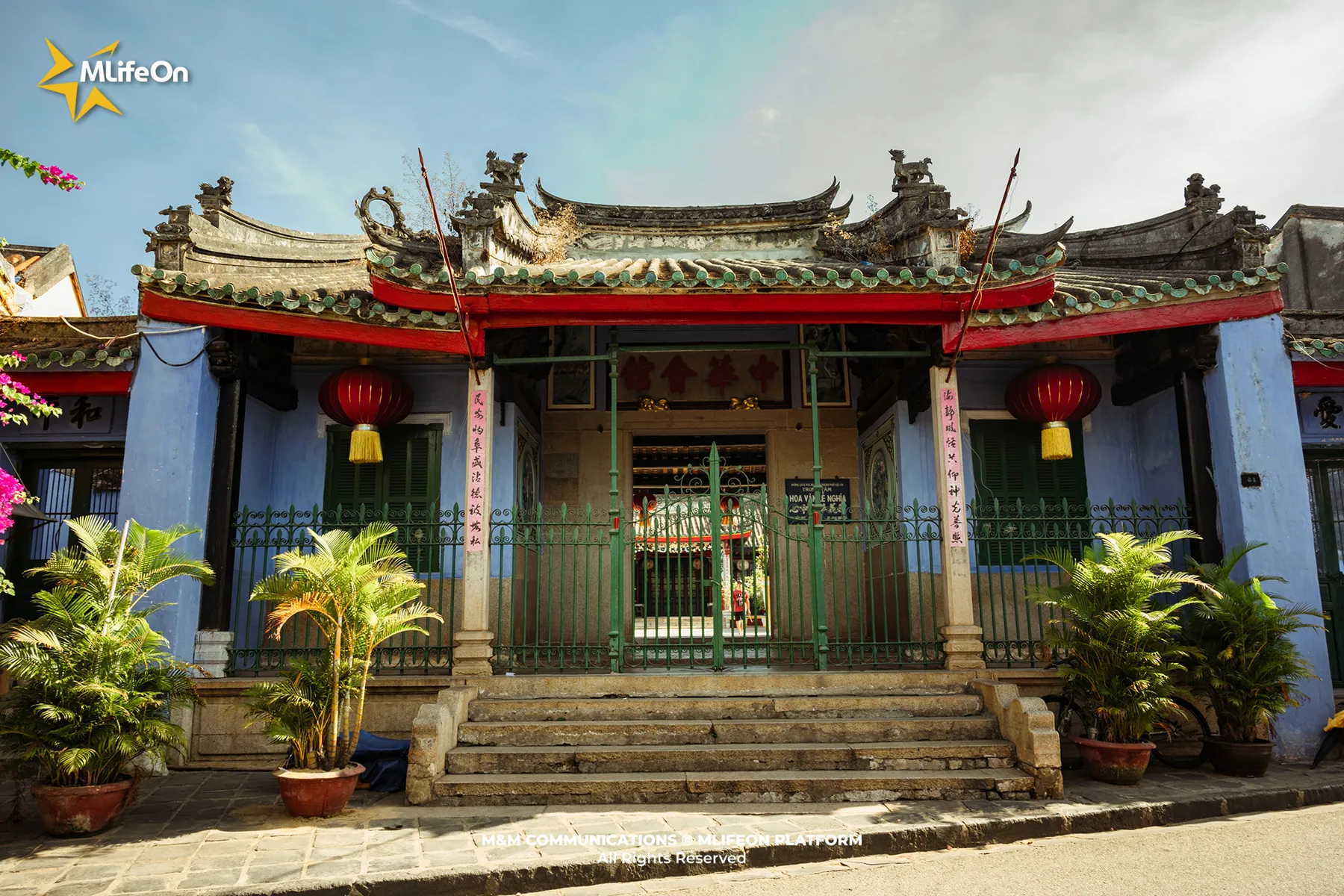
Chinese assembly halls in Vietnam possess a beauty that is both majestic and refined, reflecting the interplay between art and religion. Depending on the community that established them, these buildings exhibit certain architectural differences. However, generally, most assembly halls share the following characteristics:
Yin-Yang tile roof
The tiled roofs, often featuring a yin-yang pattern and soaring, curved eaves, create a powerful yet graceful appearance characteristic of Chinese assembly halls. These roofs are typically constructed from multiple overlapping layers in a "double-tiered roof" style. Intricate carvings of dragons, phoenixes, and carp transforming into dragons adorn the roofs, symbolizing both prosperity and longevity.
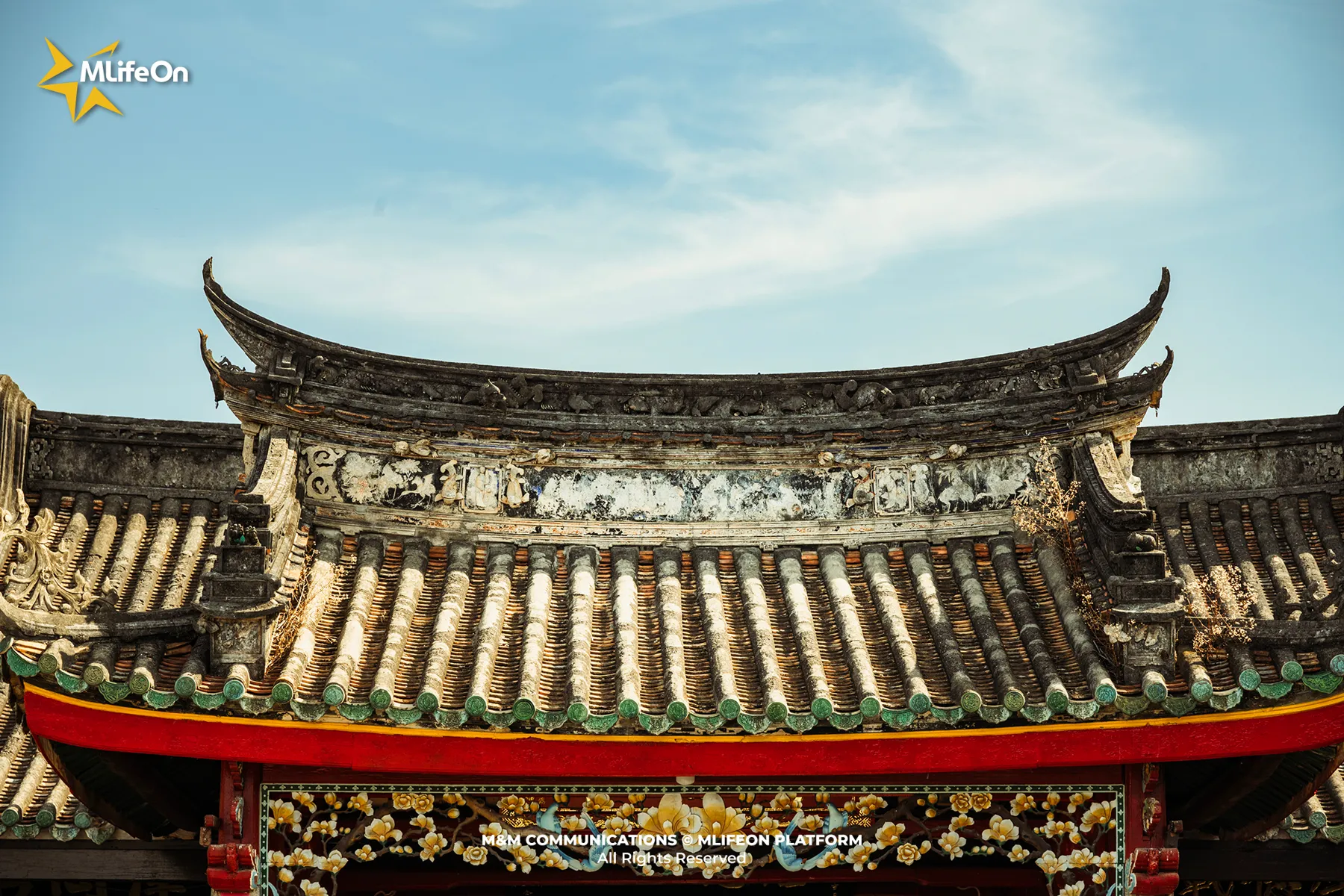
The yin-yang tiled roof of the Ngũ Bang Assembly Hall, Hoi An
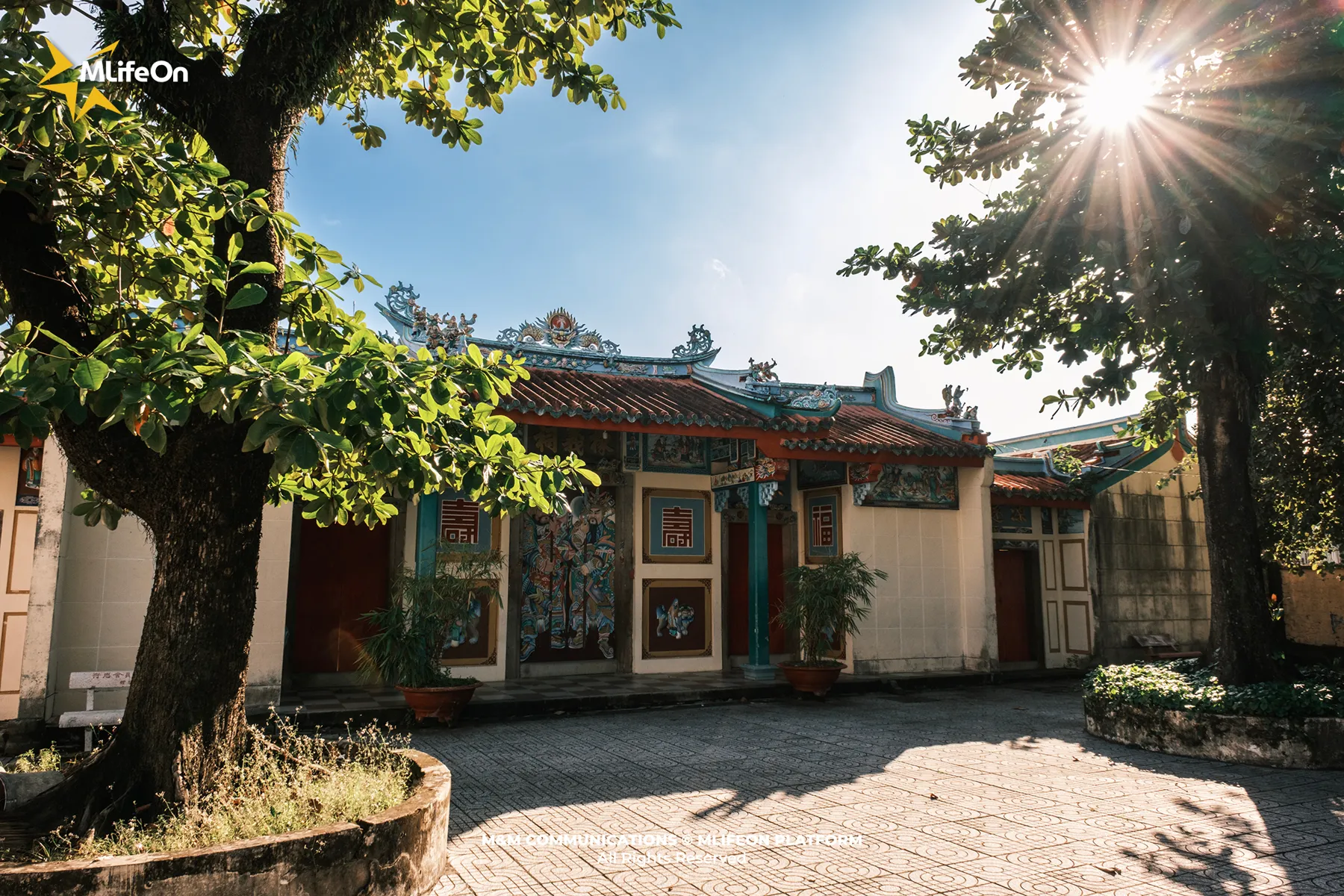
The yin-yang tiled roof of Nghia An Assembly Hall, An Giang province (formerly Kien Giang area)
Triple-arched gate
Most Chinese guildhalls have a triple-arched gate, with a structure of three doors (the central door is large, and the two left and right doors are smaller). This gate in guildhalls usually has a curved roof, covered with tubular tiles, divided into multiple tiers, and is intricately carved and decorated with elaborate patterns, couplets, and horizontal plaques, highlighting its solemn and ancient appearance.
The Chinese characters carved on the gate not only represent the name of the guildhall but also convey the meaning of worship, reminding the community of its origins and beliefs. Therefore, for Chinese guildhalls, the triple-arched gate is not just an entrance, but also a boundary between daily life and the sacred space inside.
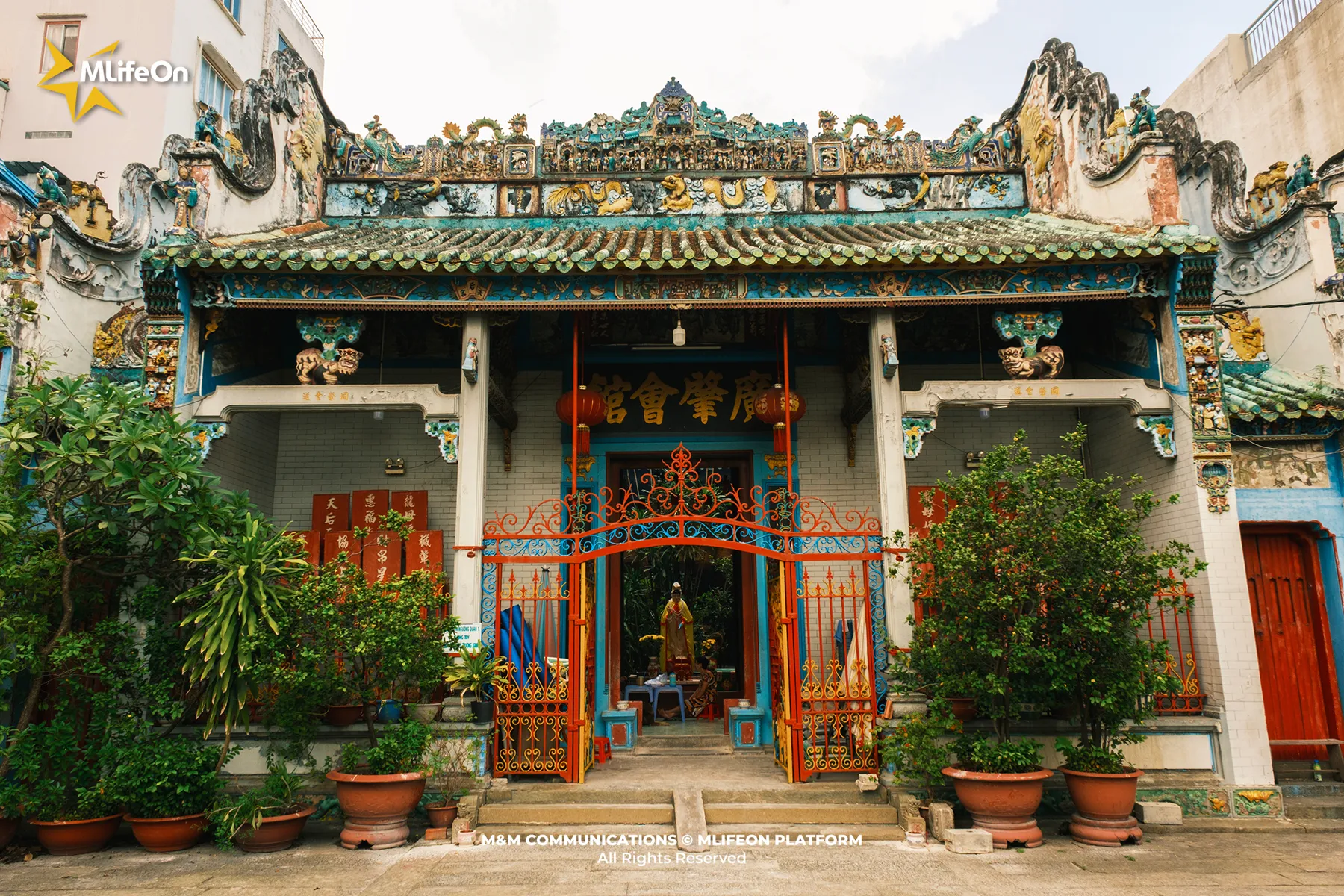
The triple-arched gate at Quang Trieu Assembly Hall, Ho Chi Minh City
Space layout
Chinese community halls often have an overall architectural design in the shape of the Chinese character "口" (kou). This type of building has a discreet, enclosed shape, resembling the Chinese character "口," usually with a balanced design, creating a courtyard or open space in the middle of the structure. This unique architectural style of the community halls has feng shui significance, creating harmony, accumulating positive energy, and bringing warmth, peace, and prosperity.
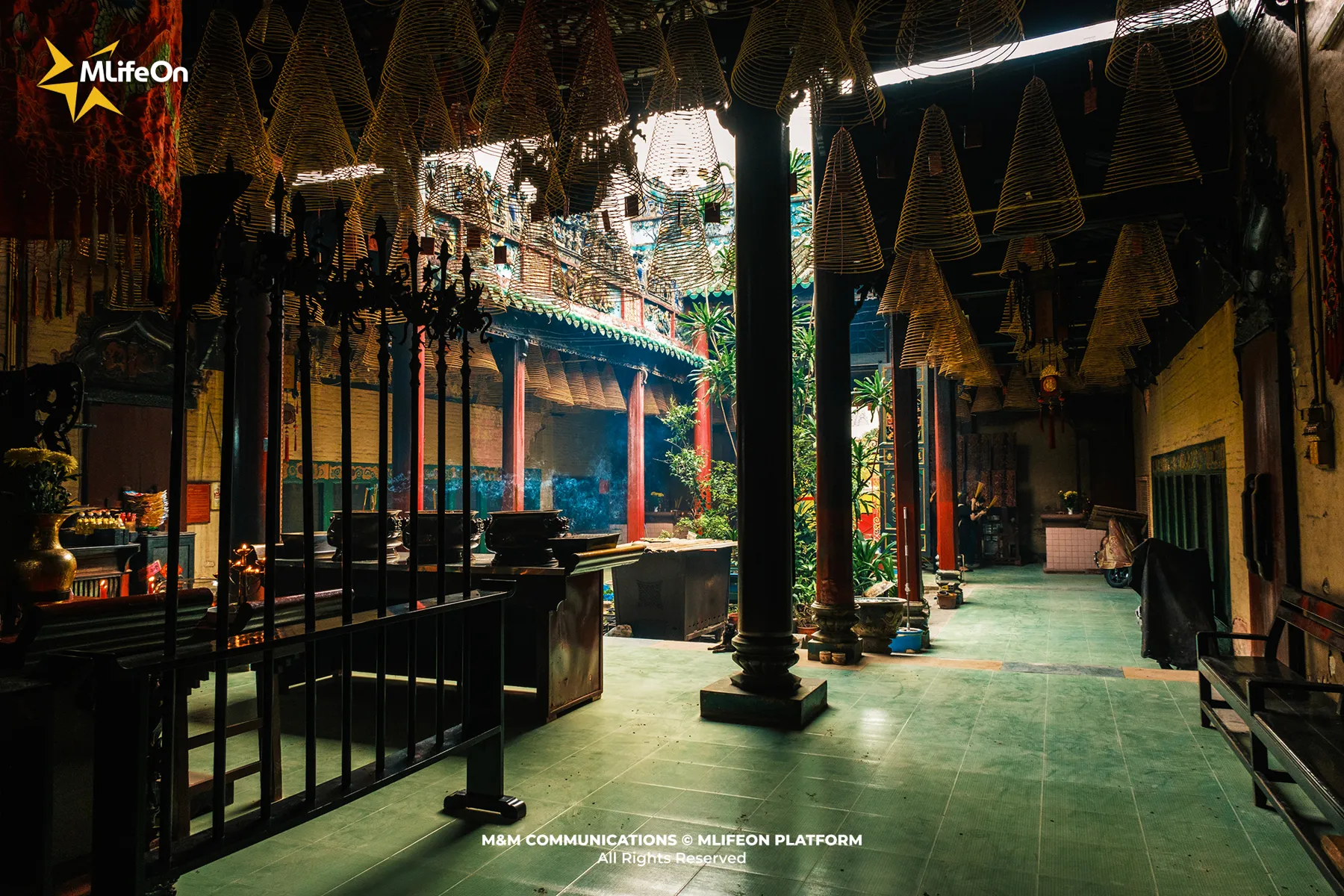
The overall architecture is in the shape of the Chinese character "口" (mouth) with a courtyard in the middle of the building (Quang Trieu Assembly Hall, Ho Chi Minh City)
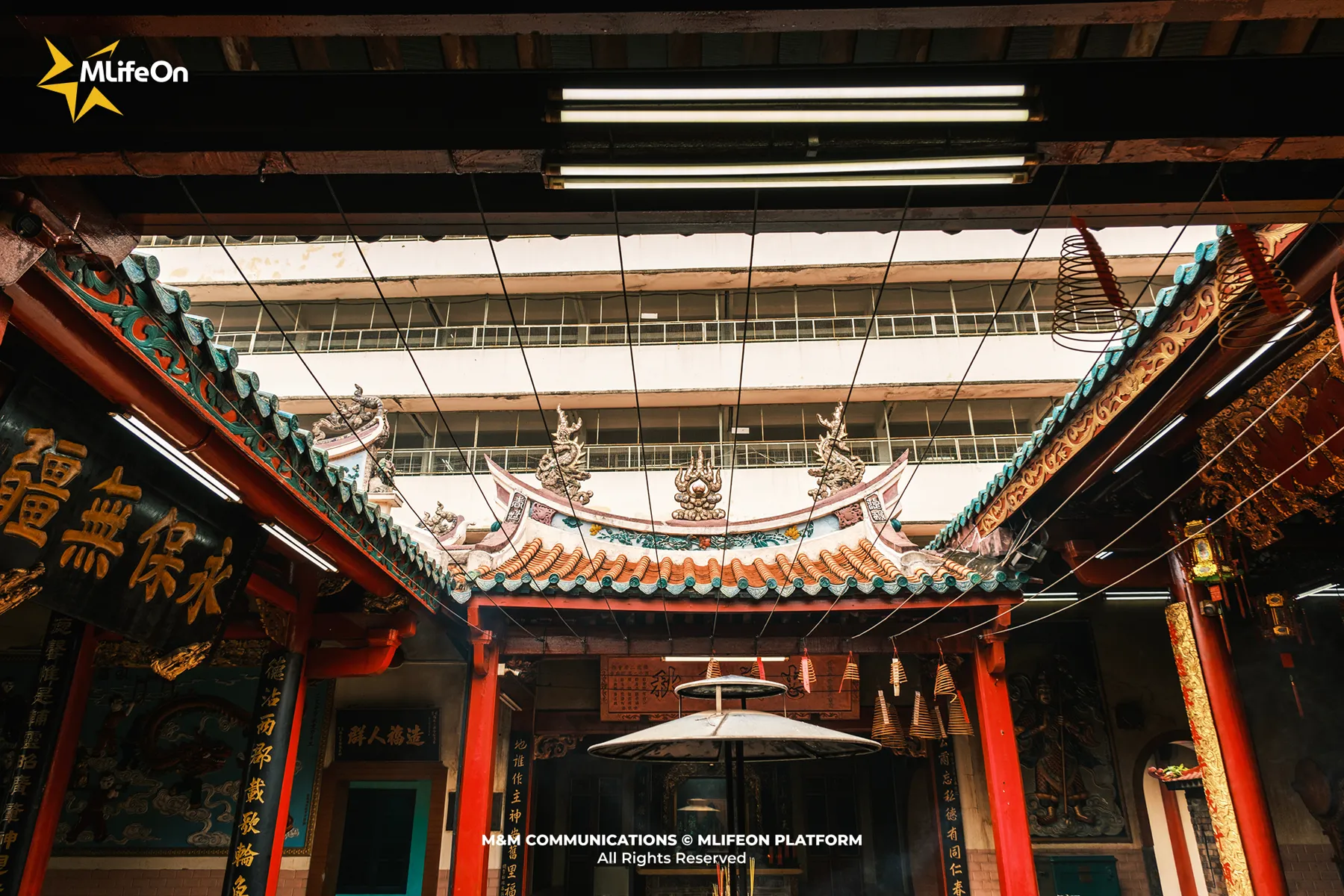
Nhi Phu Meeting Hall, Ho Chi Minh City
This arrangement creates a cozy atmosphere with enclosed chambers, yet remains airy thanks to open spaces, encouraging visitors to explore each layer, creating a captivating spiritual journey.
Red color
Appearing prominently in most assembly halls, red symbolizes good fortune, prosperity, and happiness. From gilded and lacquered plaques and couplets to wooden pillars, doorways, and even the smallest decorative details, this color is present almost everywhere, adding warmth and coziness to the solemn atmosphere. Especially when light shines on these patches of color, the assembly hall space seems to brighten, allowing anyone who visits to feel the sacredness and vitality.
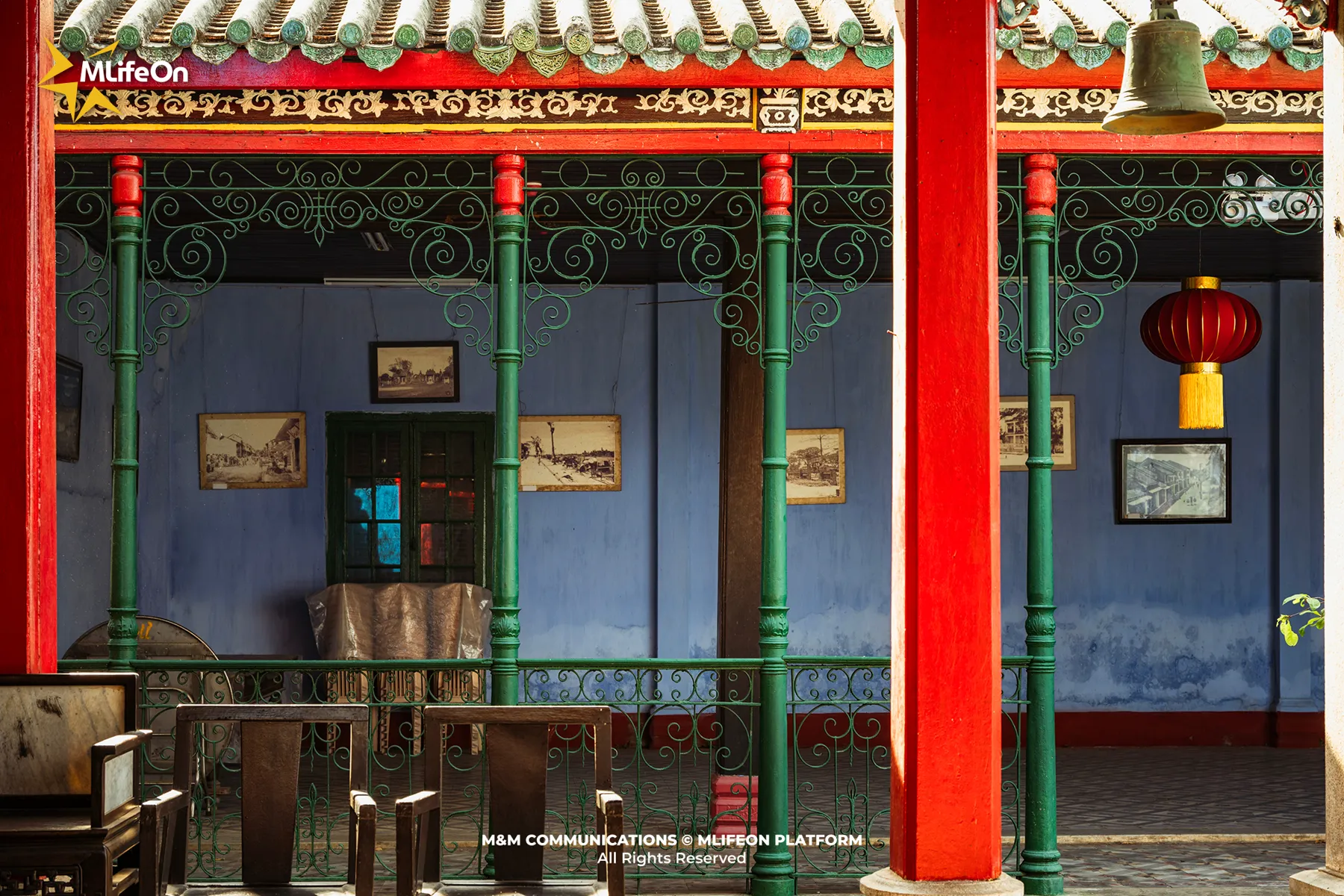
The color red appears in many places within Chinese community halls
Ceramic mosaic art
The final, and most noticeable, feature of Chinese assembly hall architecture is the art of mosaic. This traditional decorative technique uses broken or specially crafted pieces of pottery and porcelain, pieced together to create vivid images on roof tiles, walls, columns, or reliefs.
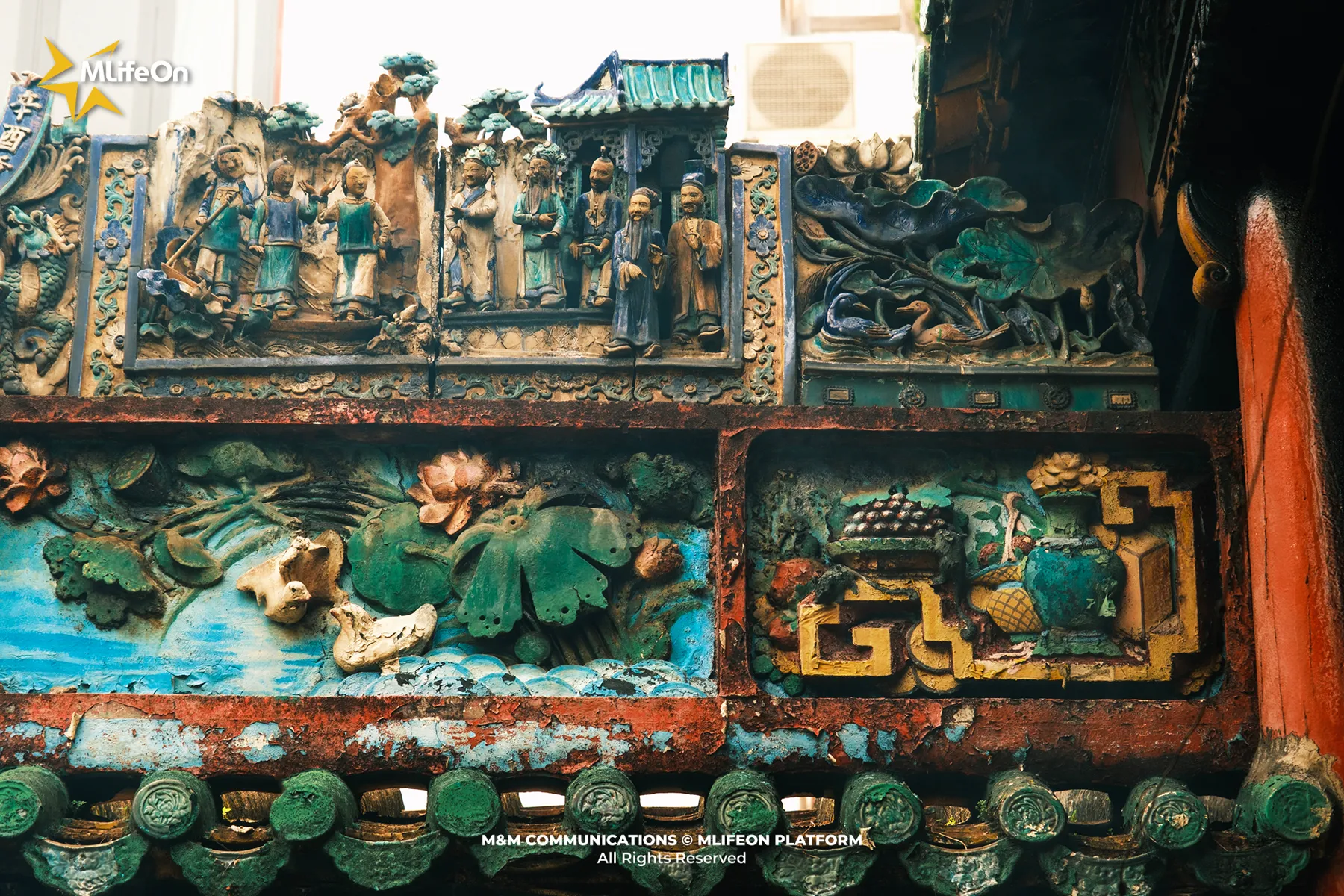
Ceramic mosaic art at Quang Trieu Assembly Hall, Ho Chi Minh City
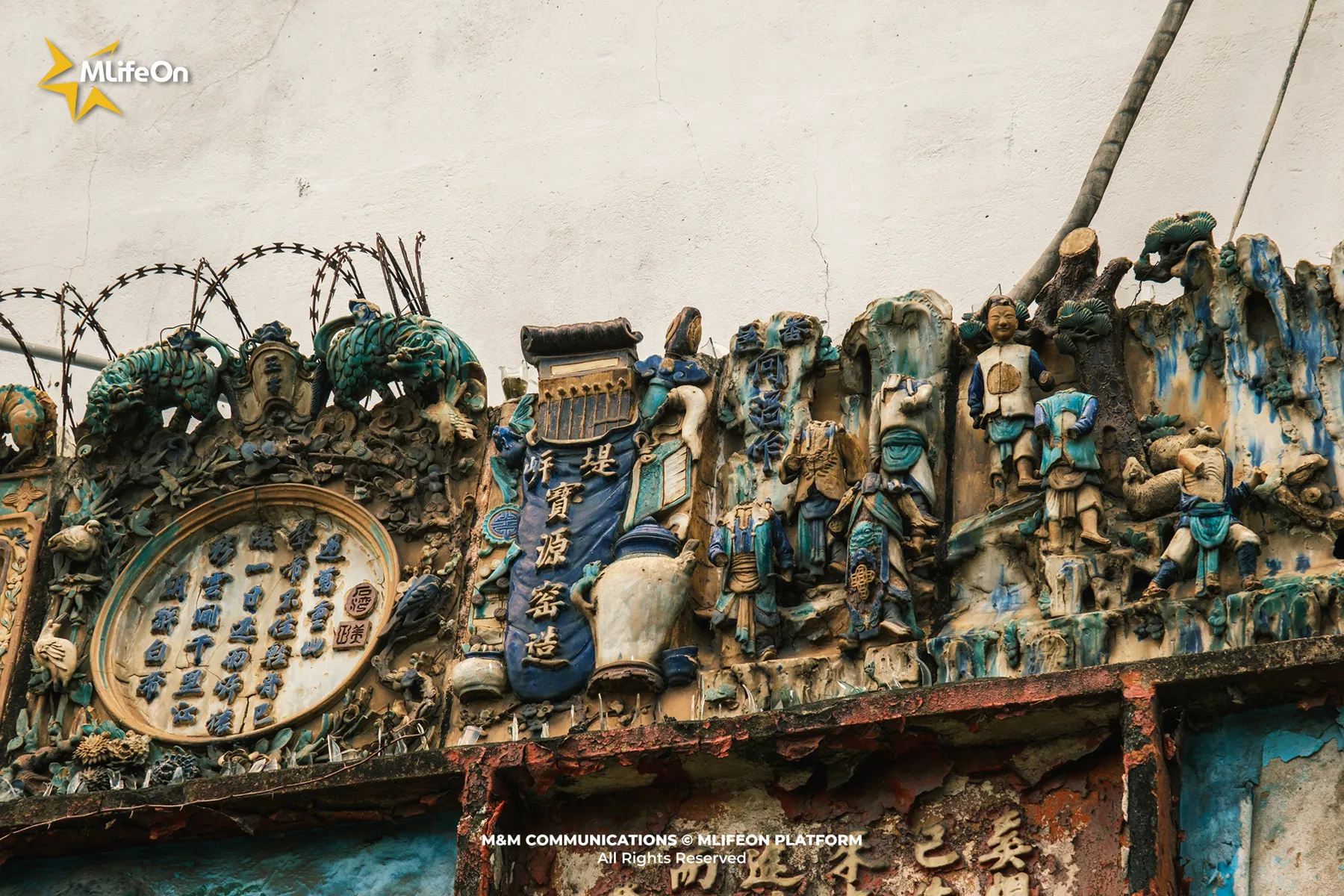
The finely cut and polished pieces of blue, white, and jade-glazed pottery are then inlaid into images of winding dragons, soaring phoenixes, flowers, birds, and even scenes of everyday life. It is this combination of vibrant colors and delicate lines in this unique art form that contributes to the distinctive appearance of Chinese guildhalls.
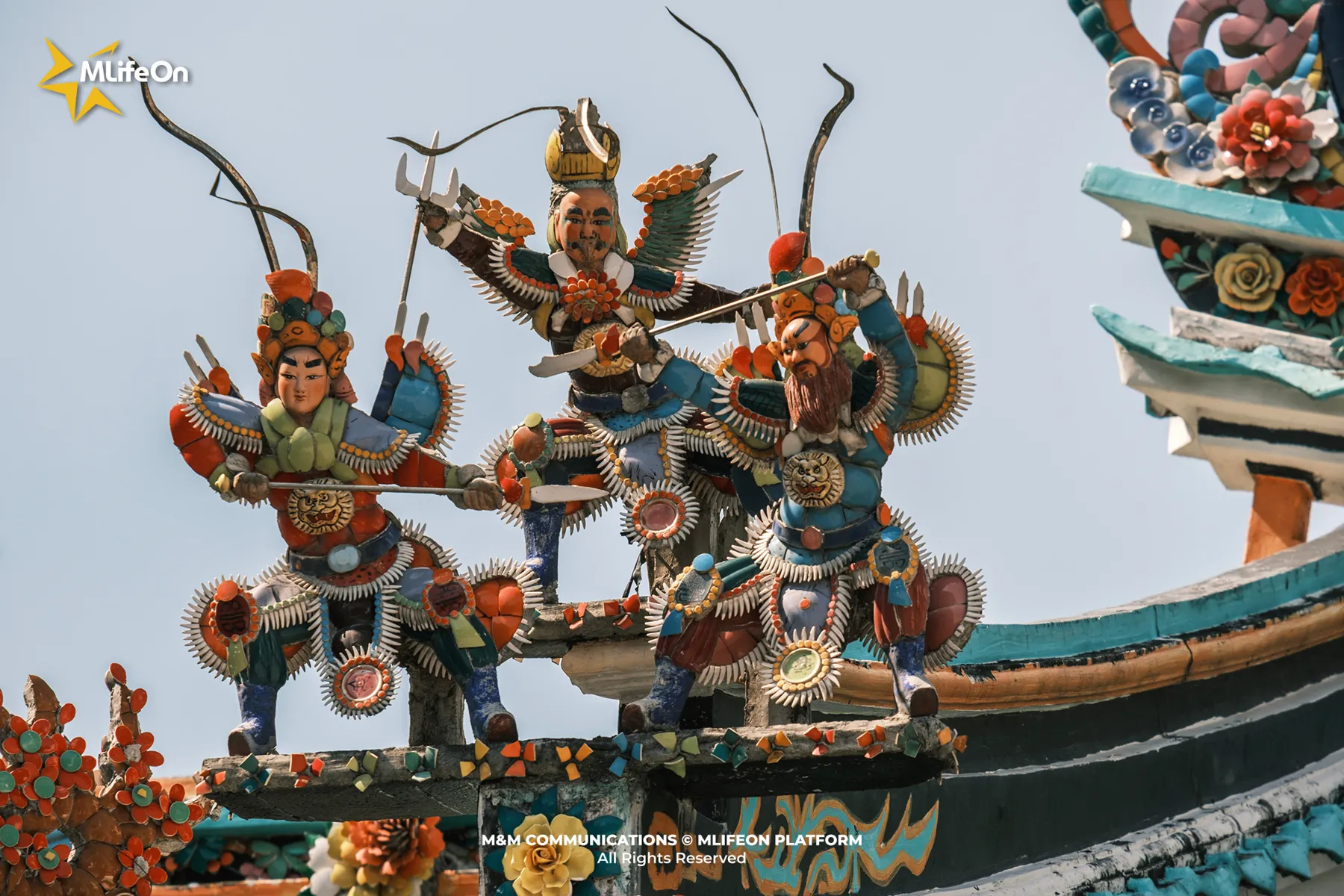
Ceramic mosaic art at Nghia An Assembly Hall, Ho Chi Minh City
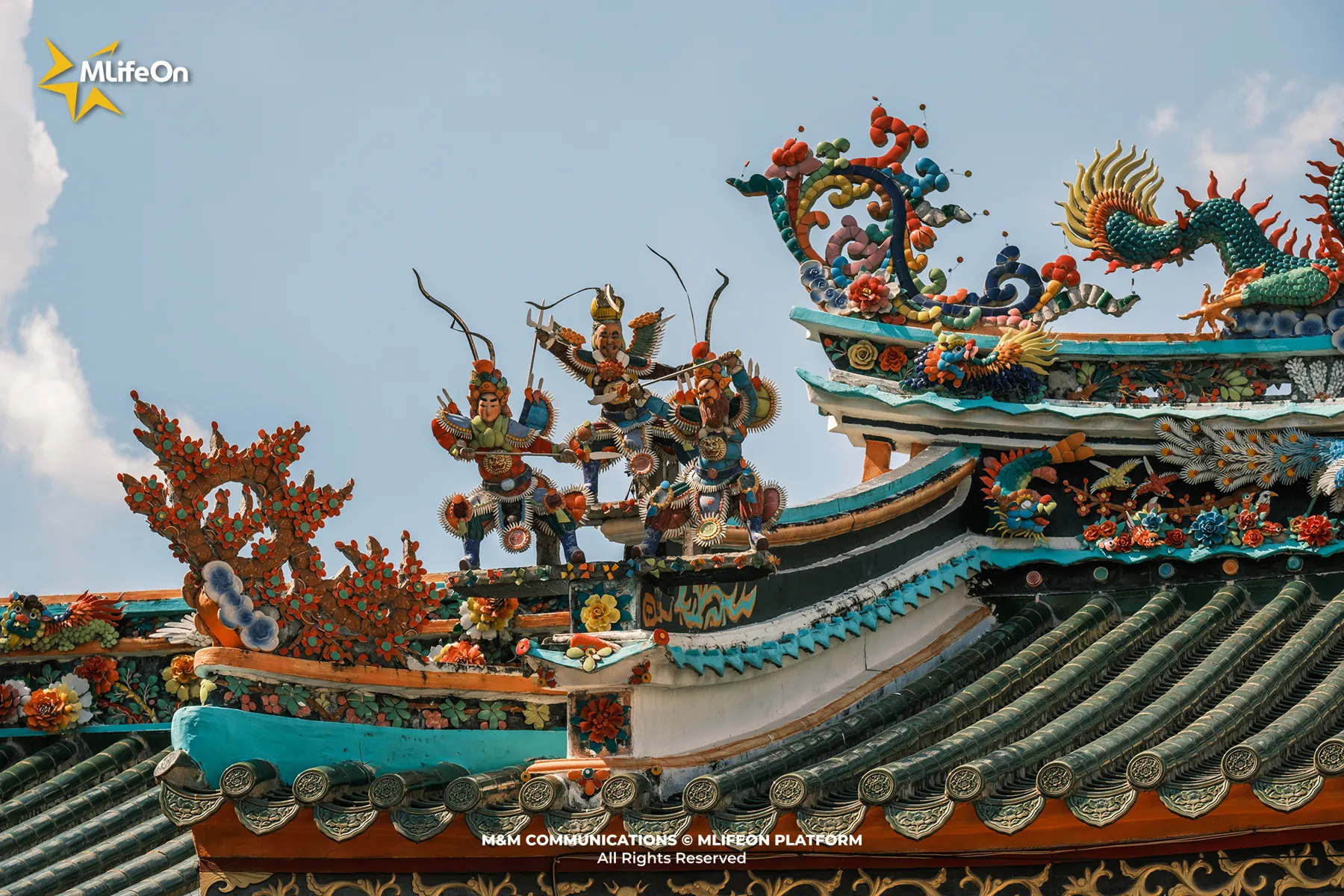
A beauty that is both dignified and radiant, artistic, and imbued with profound meaning.
Conclusion
Chinese community halls are like the "heart" of the Chinese community in Vietnam. These structures not only preserve memories and traditions but also help to unite and promote the development of the Chinese diaspora.
Standing before a community hall, one sees not just an architectural structure, but also a story about integration, about the aspirations for life and connection of the people.
If you have the opportunity, please seek out and visit a Chinese community hall. Regardless of which Chinese community built it or its architectural style, the value, meaning, and feeling these structures evoke will always remain constant.
—-----
CREDIT:
- Photography: Luan Nguyen
- Content: Giang Huynh
- Design: Trung Huynh