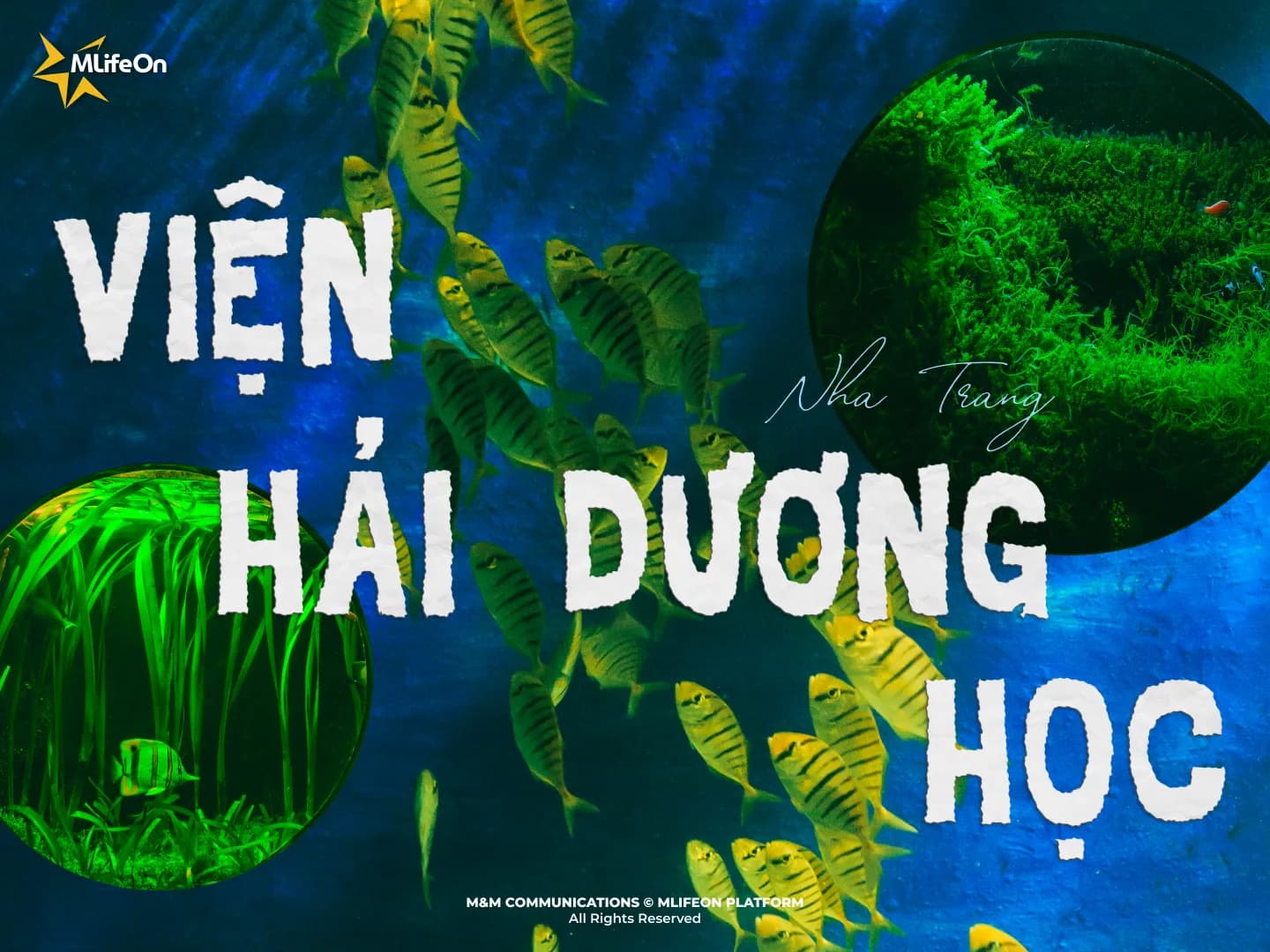
The Nha Trang Oceanographic Institute is one of the city’s most representative centers for marine research and exhibition. Join MLifeOn in exploring its geographical location, history of formation, exhibition spaces, and the unique body of knowledge preserved within this remarkable institution.
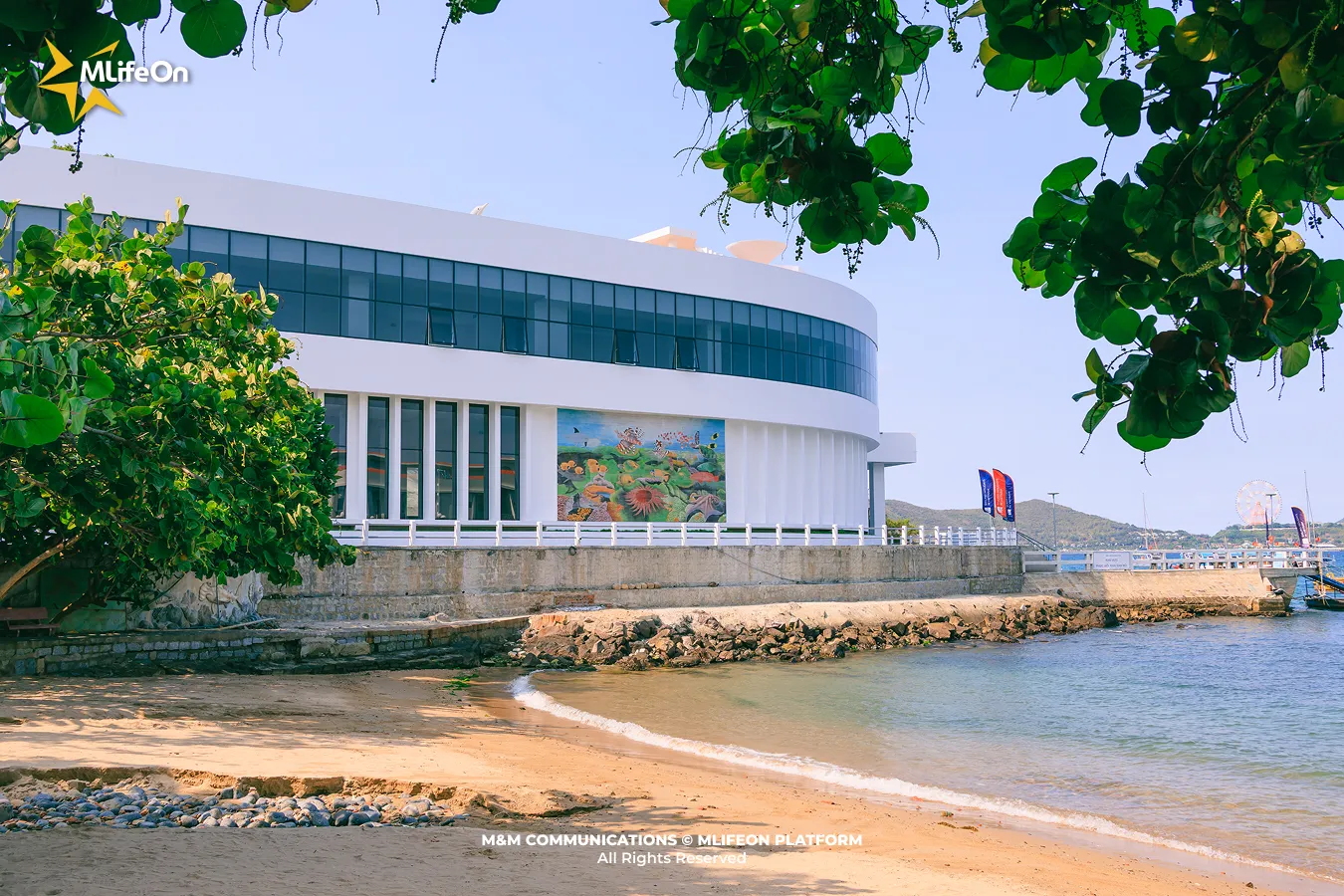
When speaking of Nha Trang, people often think of long stretches of sandy beaches, vibrant seaside resorts, or the lively rhythm of tourism throughout the year. Yet, beside Cau Da Port - where the sea gradually deepens into darker shades of blue and the wind carries the unmistakable salinity of the vast ocean - the Nha Trang Oceanographic Institute emerges quietly, standing apart from the bustling pace of the coastal city.
With no flashy signboards and no inviting calls, the institute houses tens of thousands of marine specimens, massive fish skeletons, and research spaces marked by the passage of time. Together, they tell the story of the sea through science, through history, and through humanity’s enduring perseverance in the journey to explore the ocean world.
Over a Century by the Nha Trang Coast
Few would imagine that the journey of the Nha Trang Oceanographic Institute began in 1922, when it was still known as the Indochina Fisheries Oceanographic Service. At the beginning of the 20th century, it was already one of the earliest marine research centers in Southeast Asia, at a time when oceanography was still a very new field.
By 1930, the institute was upgraded and renamed the Indochina Oceanographic Institute, marking a period of expanded research. With the support of the research vessel De Lanessan, survey expeditions extended from the Gulf of Thailand and the Gulf of Tonkin to the Spratly and Paracel Islands, laying the foundation for Vietnam’s marine archives for years to come.
From the very beginning, the sea has been closely intertwined with a history recorded day by day, through each quiet voyage.
From the Oceanographic Academy to the Marine Research Center
In 1952, the Nha Trang Oceanographic Institute was established under the name Nha Trang Oceanographic Academy, laying the foundation for marine research in Vietnam. During the period of national division, the institute focused on training personnel, conducting coastal surveys, and building a system of scientific specimens.
From 1952 to 1975, the Nha Trang Oceanographic Academy, together with the Hai Phong Marine Research Institute, served as the two pillars of Vietnamese oceanography. After the country’s reunification, the two units were merged, and by 1993, the institute officially adopted the name Nha Trang Oceanographic Institute, with its headquarters located in Nha Trang to this day.
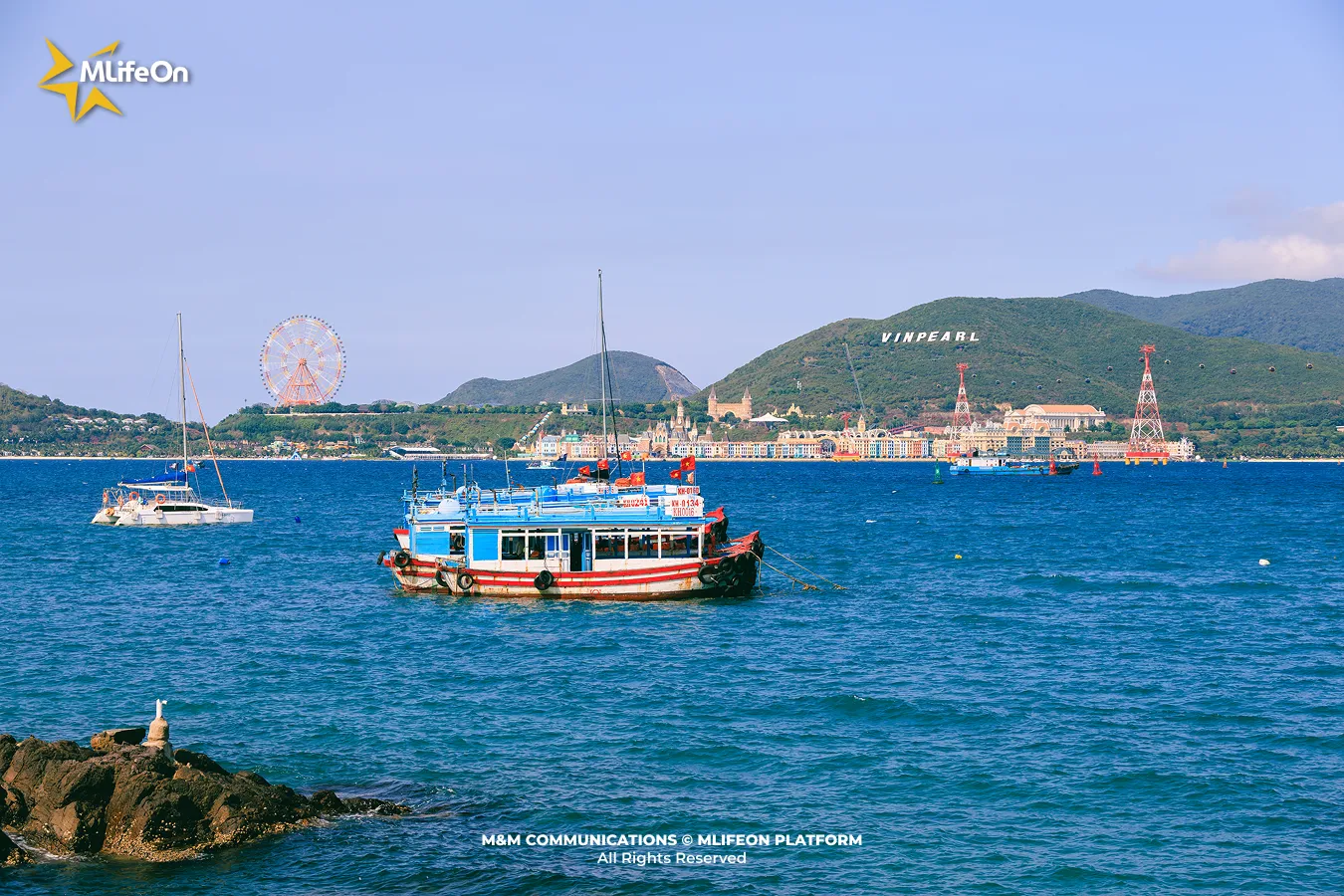
It is no coincidence that the institute was established in Nha Trang. Located on nearly 20 hectares of elevated land beside Cau Da Port, where the coastline is deep and the location is favorable for access to international waters, the institute became the starting point for thousands of survey expeditions, contributing to the formation of a comprehensive understanding of the South China Sea.
Today, as an open space welcoming the public, the Nha Trang Oceanographic Institute still preserves the spirit of a marine research center. For visitors, it offers a sense of separation and tranquility, far removed from the familiar image of a bustling Nha Trang.
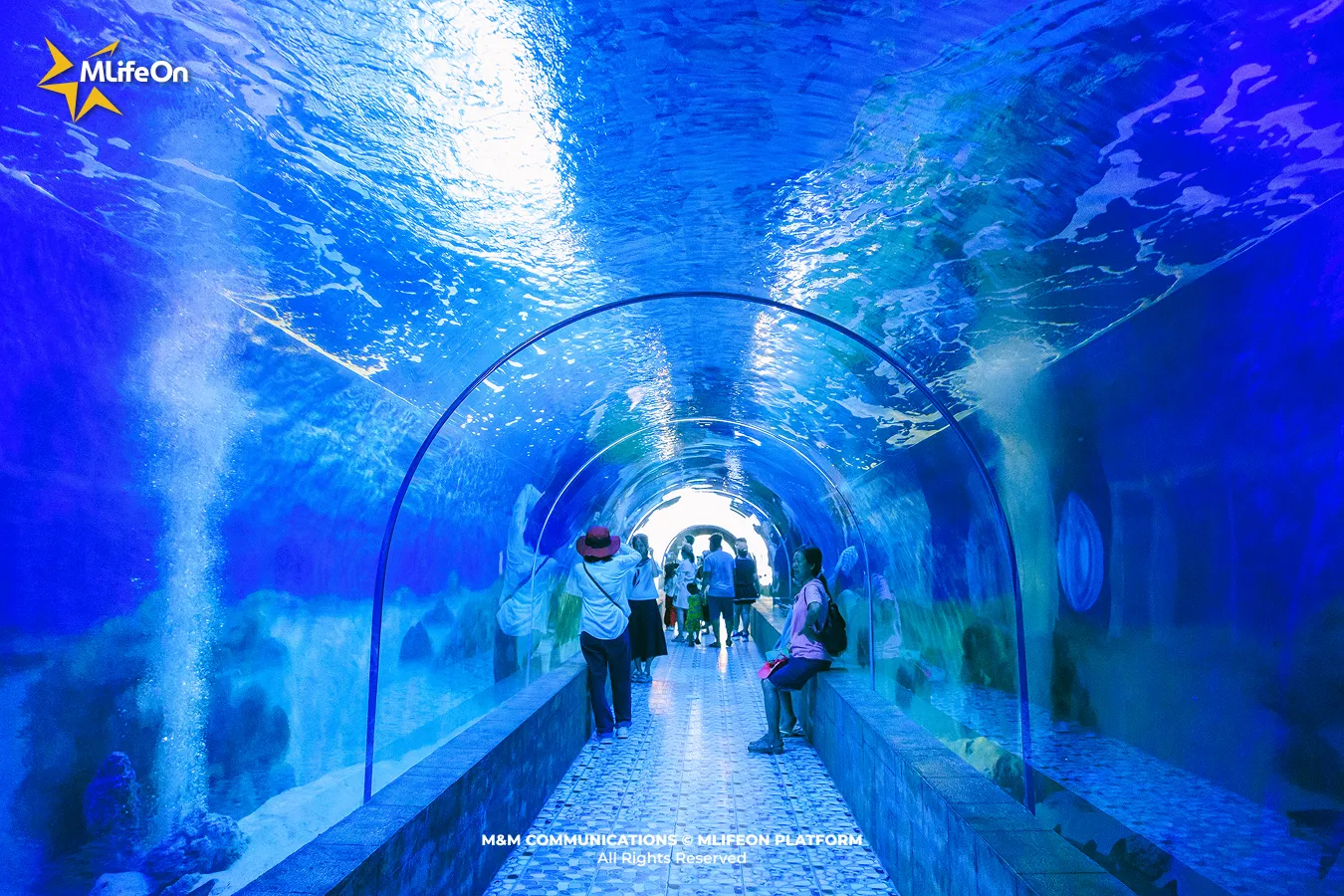
There are places designed simply for people to stand before the sea and admire the vast beauty of the waves, but there are also places built for us to linger longer, listening to the ocean through knowledge, memory, and understanding.
Marine Data Repository and Persistent Contributions
The Nha Trang Oceanographic Institute is the leading unit in developing the national marine data system, compiling results from 6,731 survey expeditions and 149,000 measurement stations on the natural conditions, resources, and environment of the South China Sea. This is a highly valuable scientific archive, accumulated over multiple generations of research.
The institute’s studies focus on ocean circulation, monsoons, seabed topography, continental shelf geology, as well as coastal erosion, sedimentation, and hazards. These findings play a crucial role in the sustainable exploitation of resources, environmental protection, and the preservation of maritime sovereignty.
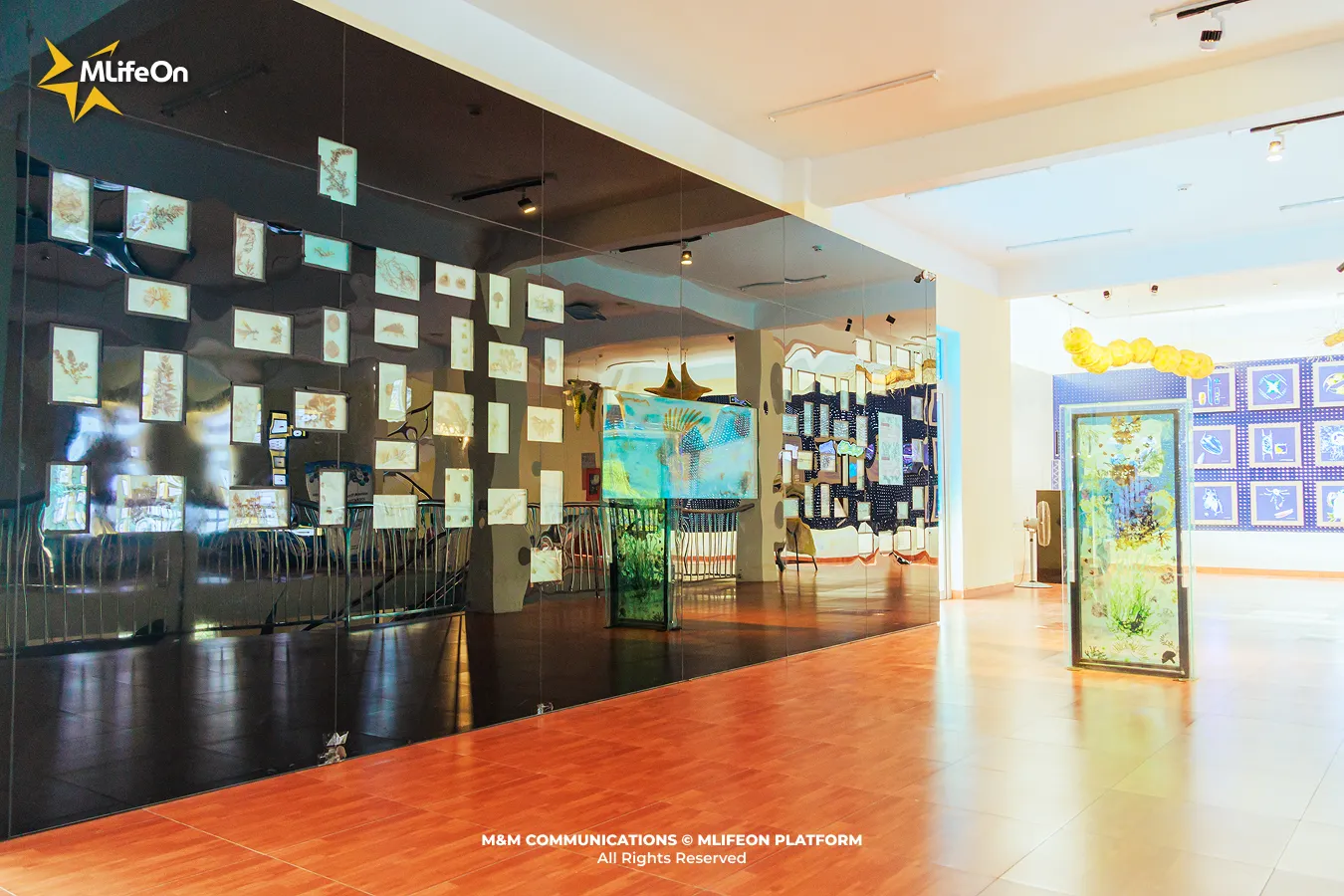
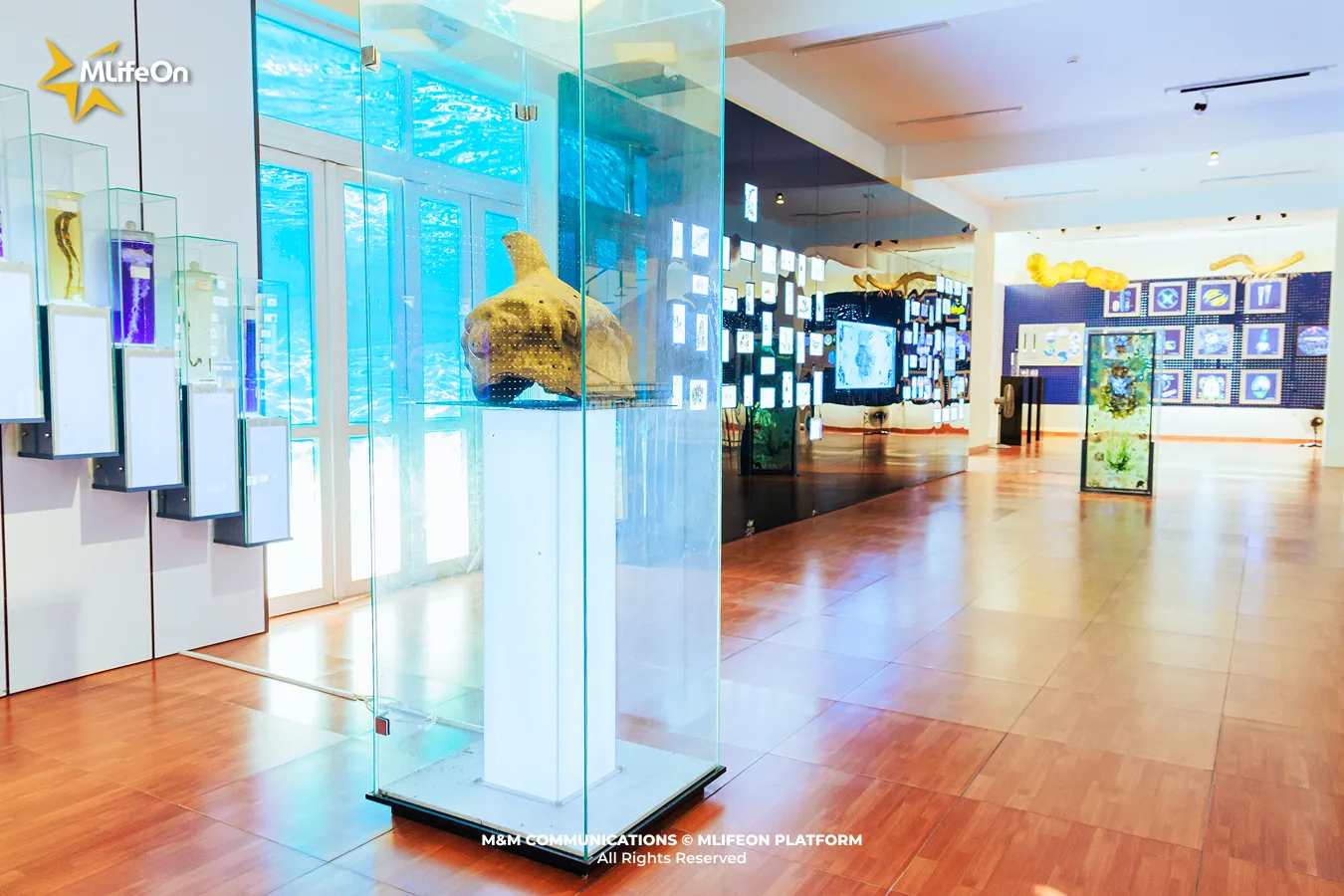
Today, the Nha Trang Oceanographic Institute offers an experiential space for visitors who wish to engage with the sea in a slower and deeper way. With 11 specialized research rooms, 2 key laboratories, and the Nha Trang Marine Museum, it has become a familiar stop for those curious about the life of the ocean beneath the blue surface.
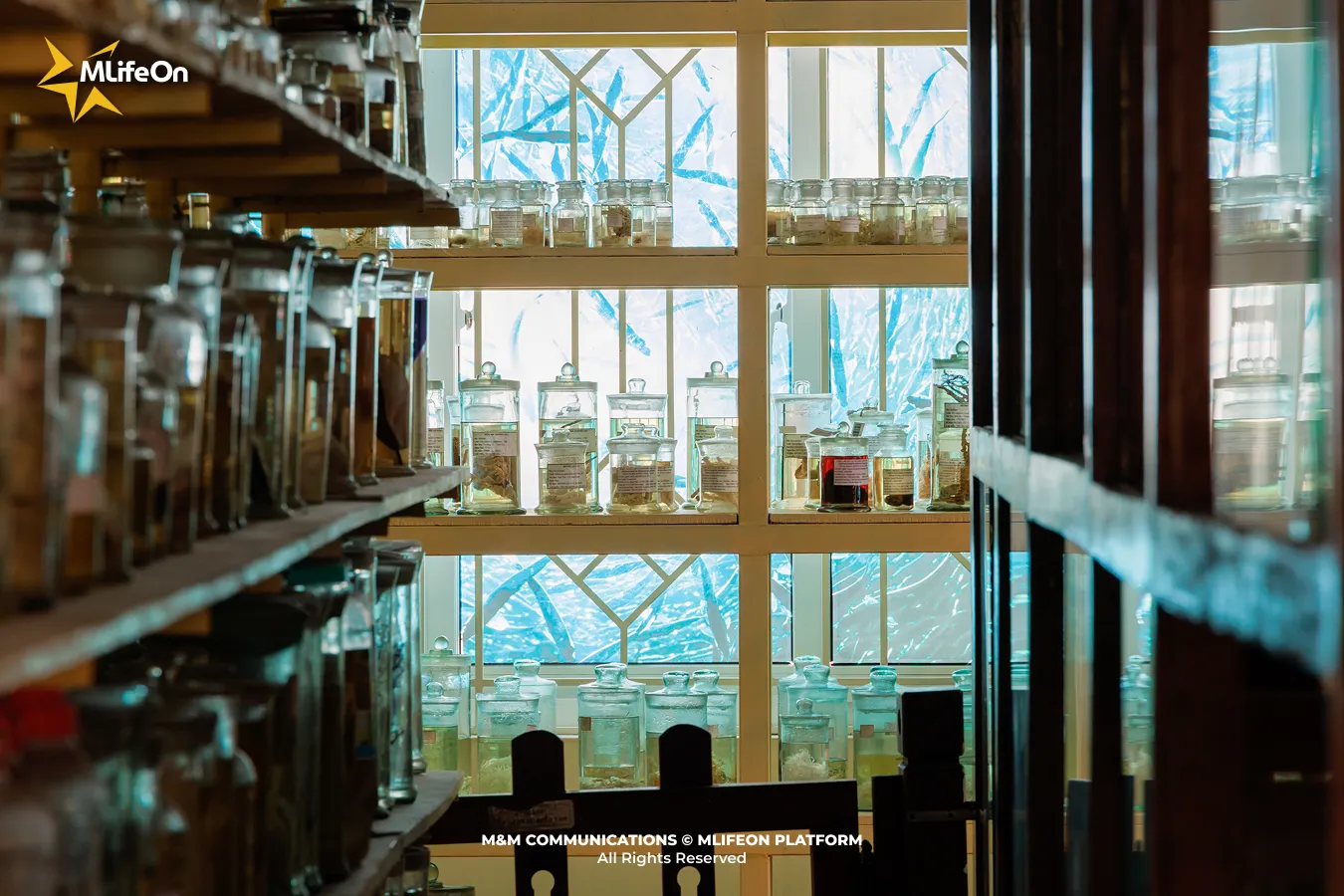
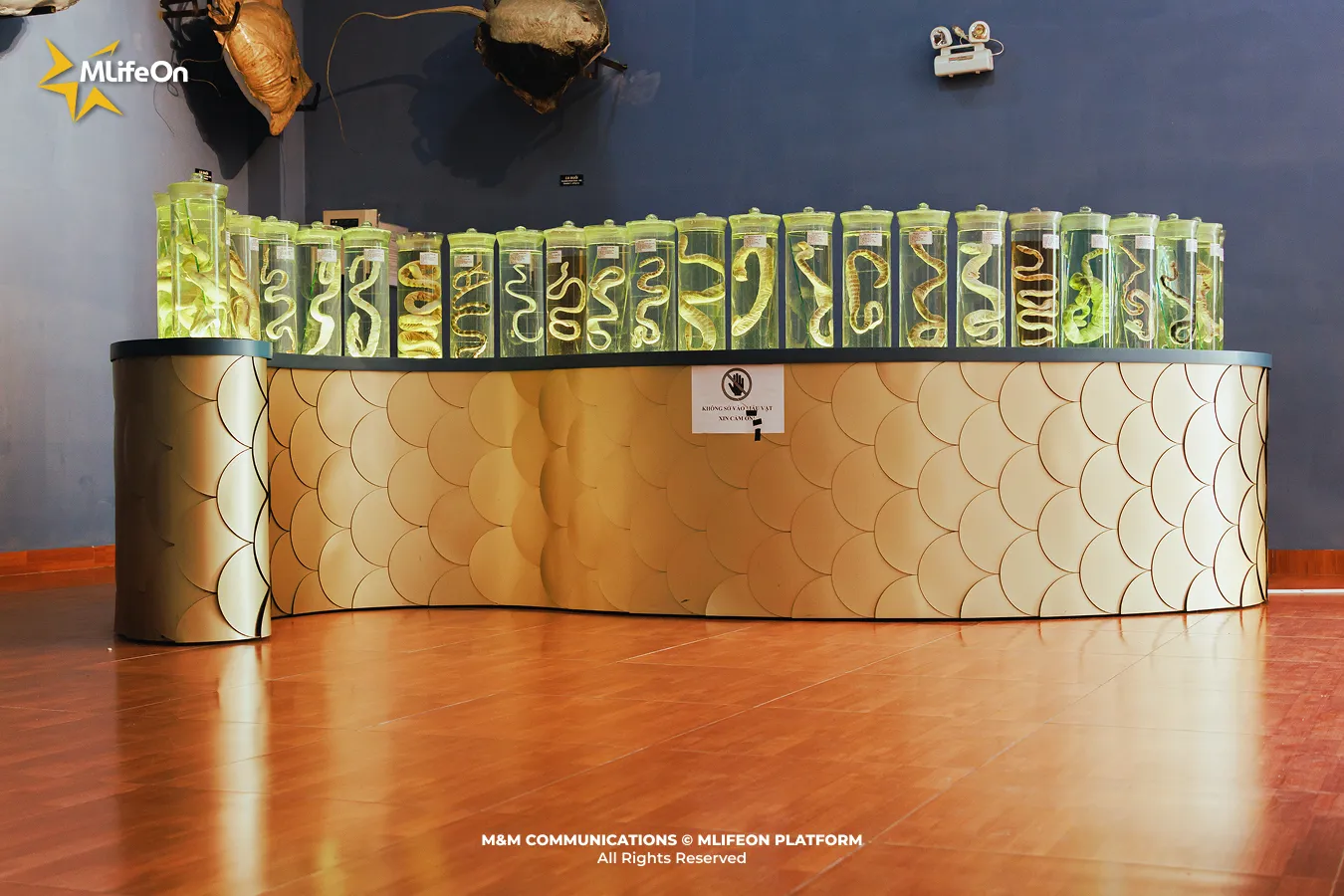
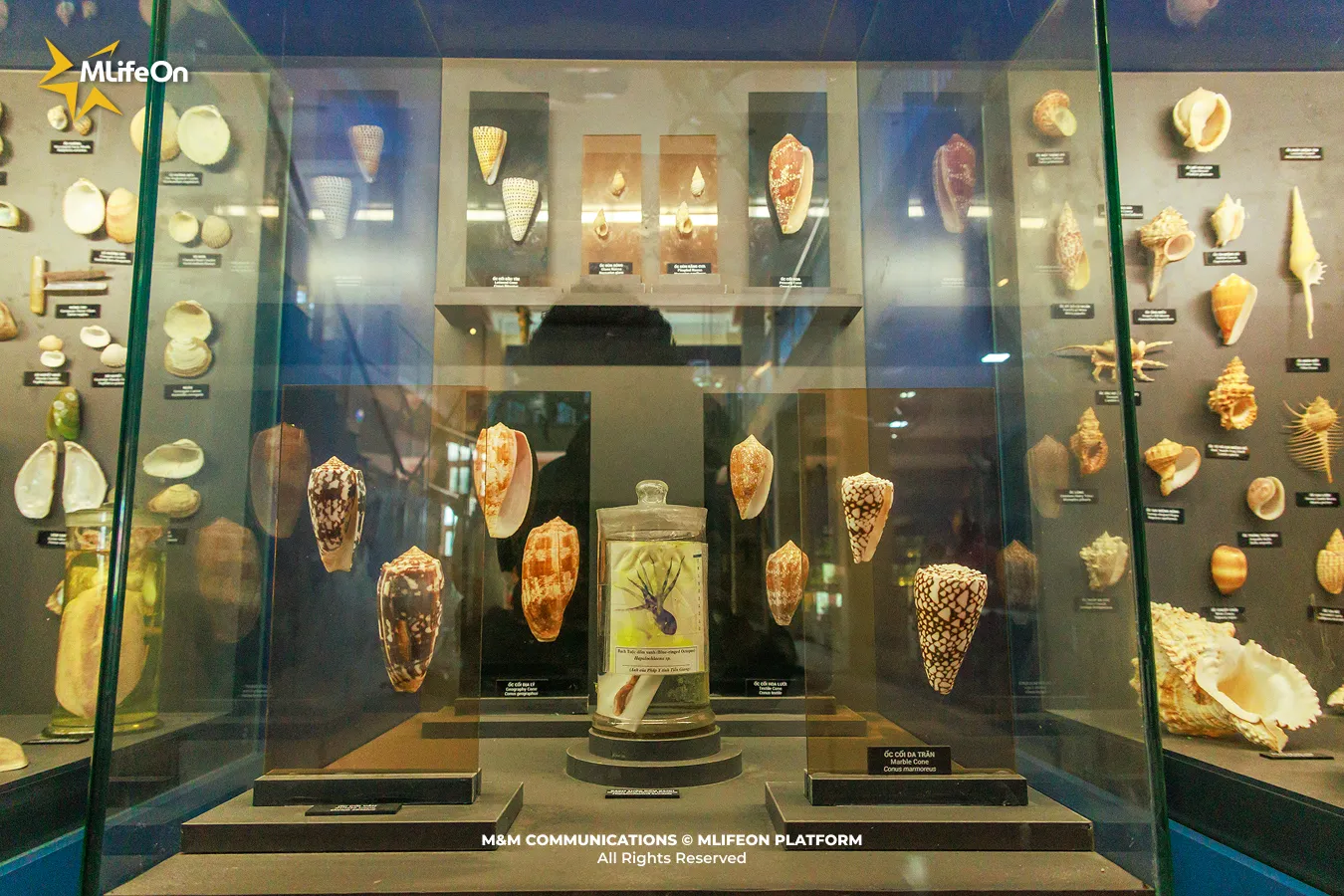
Stepping through the museum doors, the world of the sea unfolds in layers. From the massive whale skeletons that dominate the exhibition space to rare marine specimens preserved over decades, each artifact carries its own story of life beneath the ocean. The space is arranged scientifically and accessibly, allowing visitors to explore freely at their own pace.
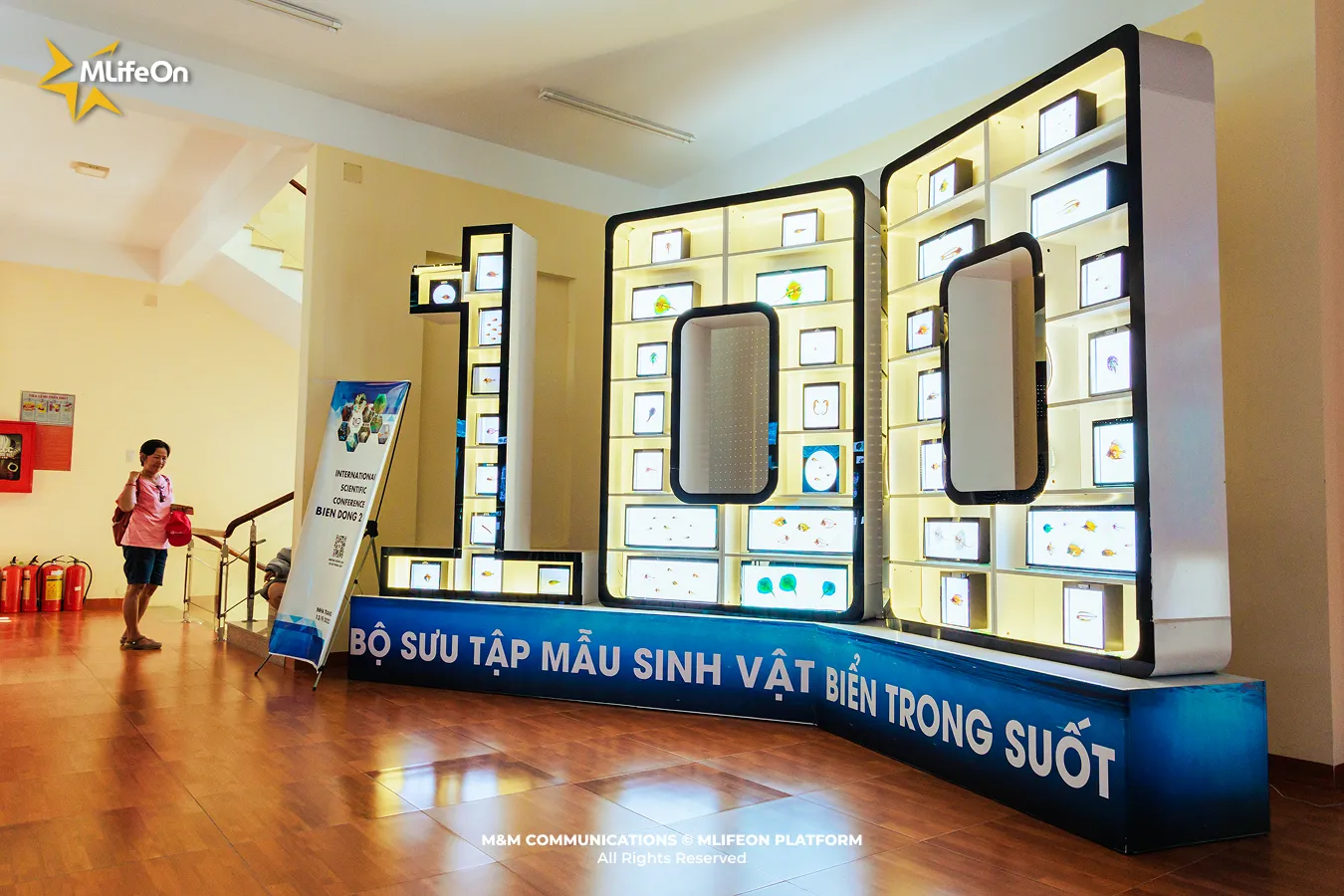
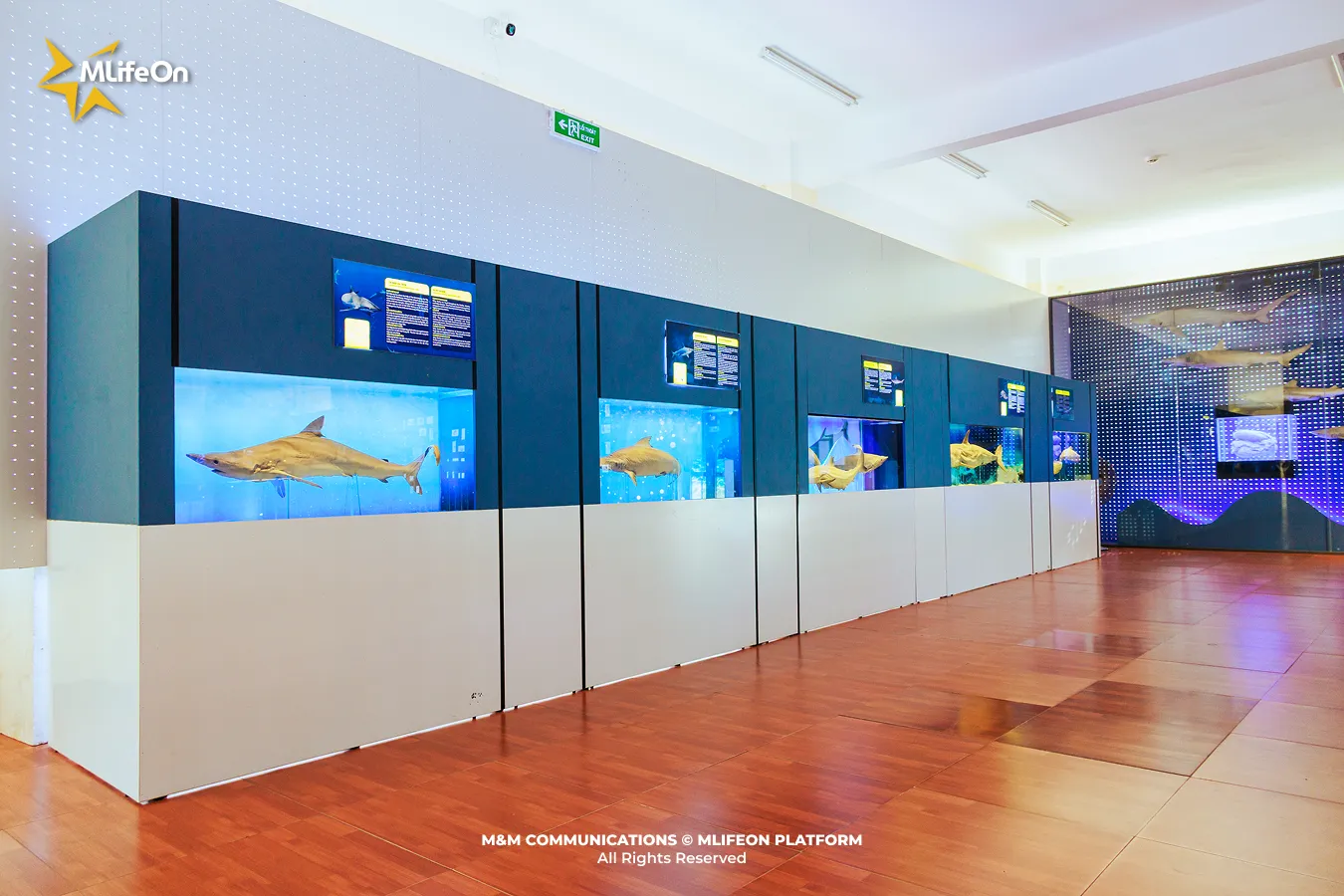
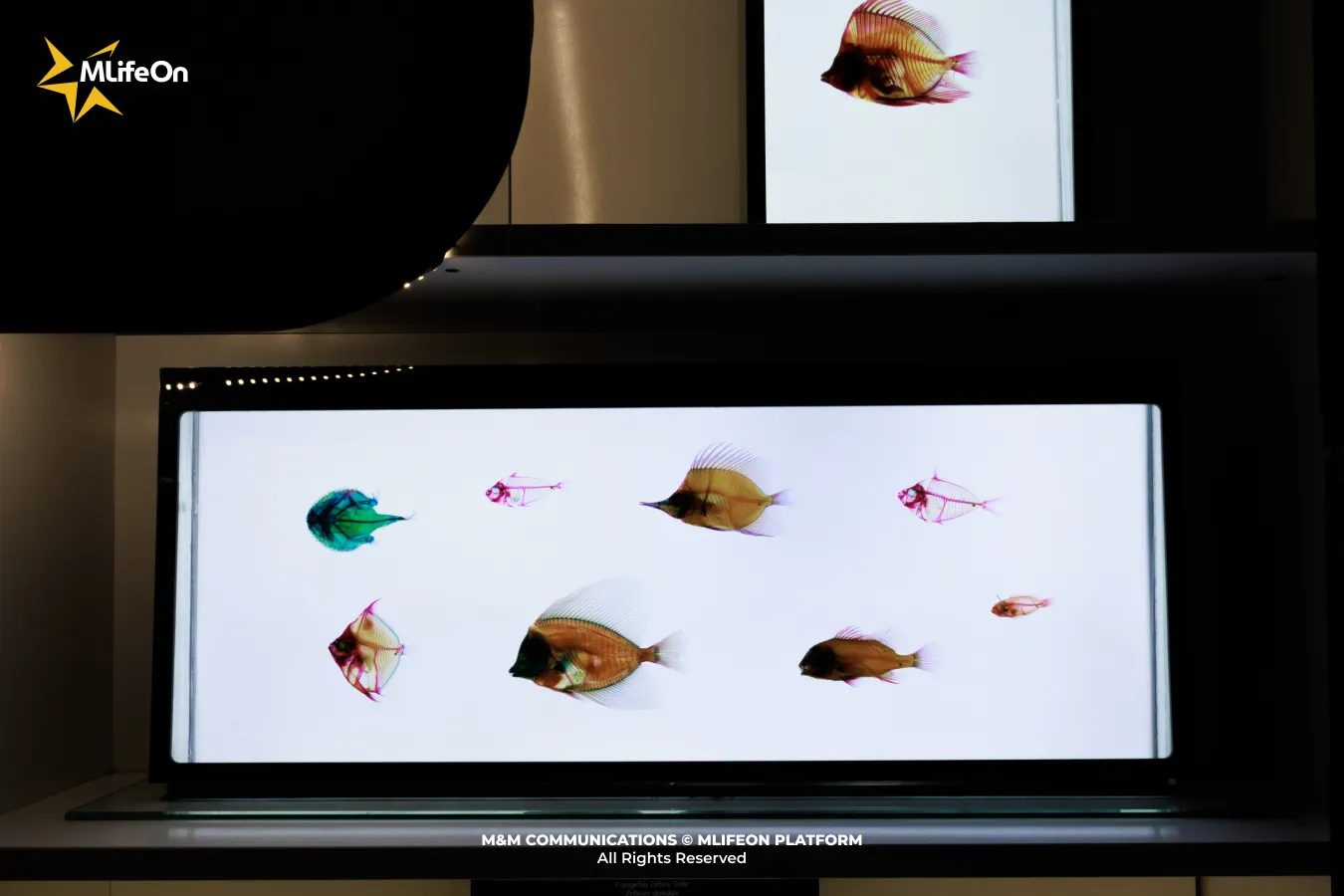
Here, there is no hurried schedule or “see-it-all” experience. People come to slow down to linger longer before a specimen, read a few simple lines of description, or quietly gaze at a miniature ocean behind clear glass. Through these subtle moments alone, the visit becomes gentle, contemplative, and opens up a deeper sense of the vast ocean beyond.
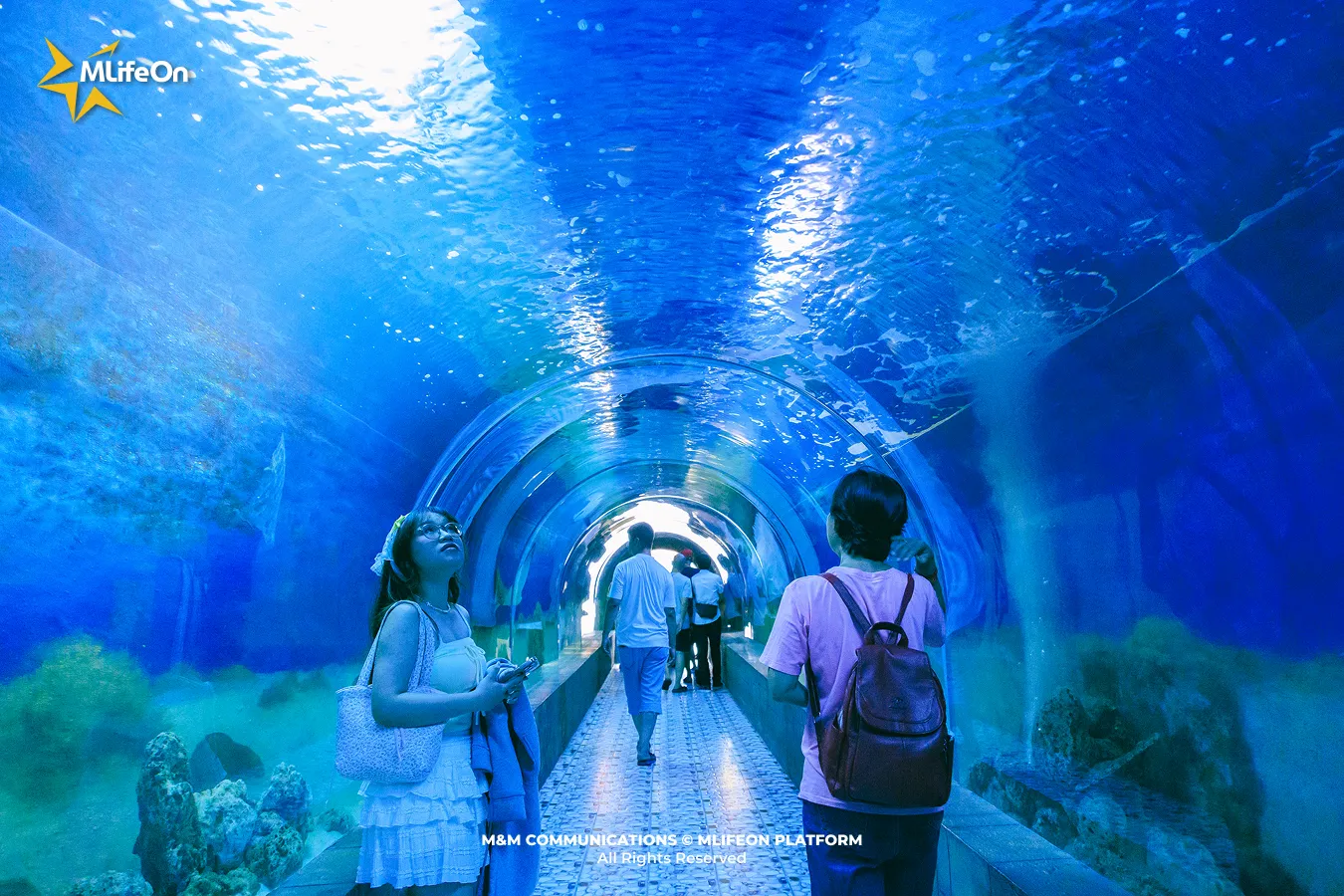
Amid a travel journey full of motion, the Nha Trang Oceanographic Institute offers a moment of pause - a place where people can stop to observe and reflect on the sea in their own unique way.
Conclusion
Amid the bustling coastal city, the Nha Trang Oceanographic Institute maintains its own rhythm: calm, profound, and rich in cultural depth. It is a stop for those who love to explore, who wish to understand the stories behind the ocean’s deep blue beauty, and who are willing to slow down to truly feel it.
The institute is not merely a tourist destination; it is a fragment of Vietnam’s marine memory where knowledge, history, and the ocean quietly intersect in the steady flow of time.
And sometimes, to love the sea more, we need to learn to listen to the stories it has patiently told across generations.
----------
CREDIT:
- Photography: Kien Trang
- Content: Nhu Quyen
- Design: Phuong Nguyen