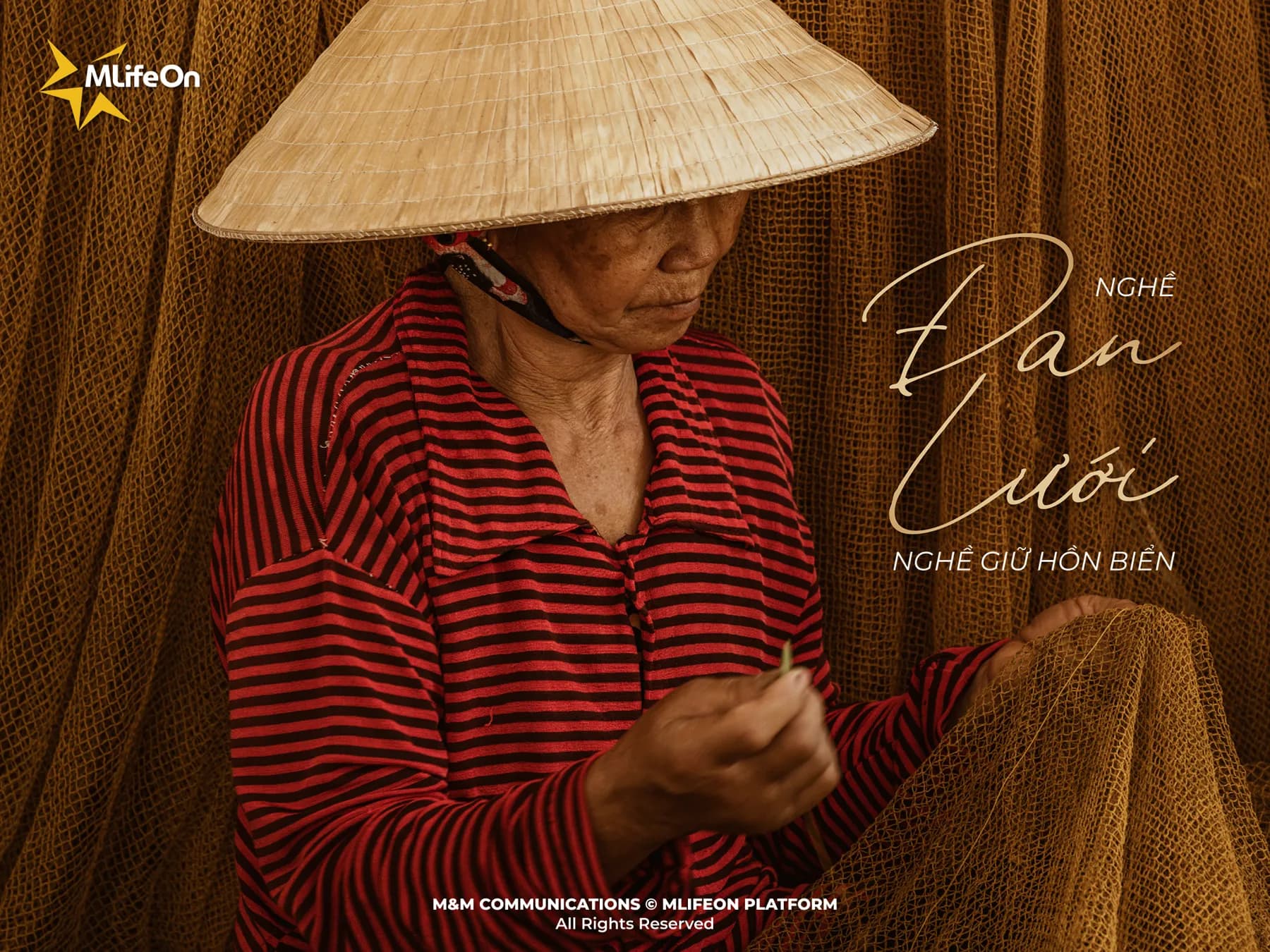
The Central Coast region of Vietnam is not only famous for the beauty of long sandy beaches, undulating rocky reefs or the blue sea, but also for the sounds and images associated with the fishermen's lives.
And among those images and sounds, net weaving has become a very unique beauty of the culture and people here - both simple and sacred.
Each weaving, each thread not only forms a net to catch fish and shrimp, but also symbolizes the bond between people and nature and the ocean for generations.
Discovering the net weaving profession
Net weaving in the Central Coast region has a long history, closely associated with the formation and development of coastal fishing villages.
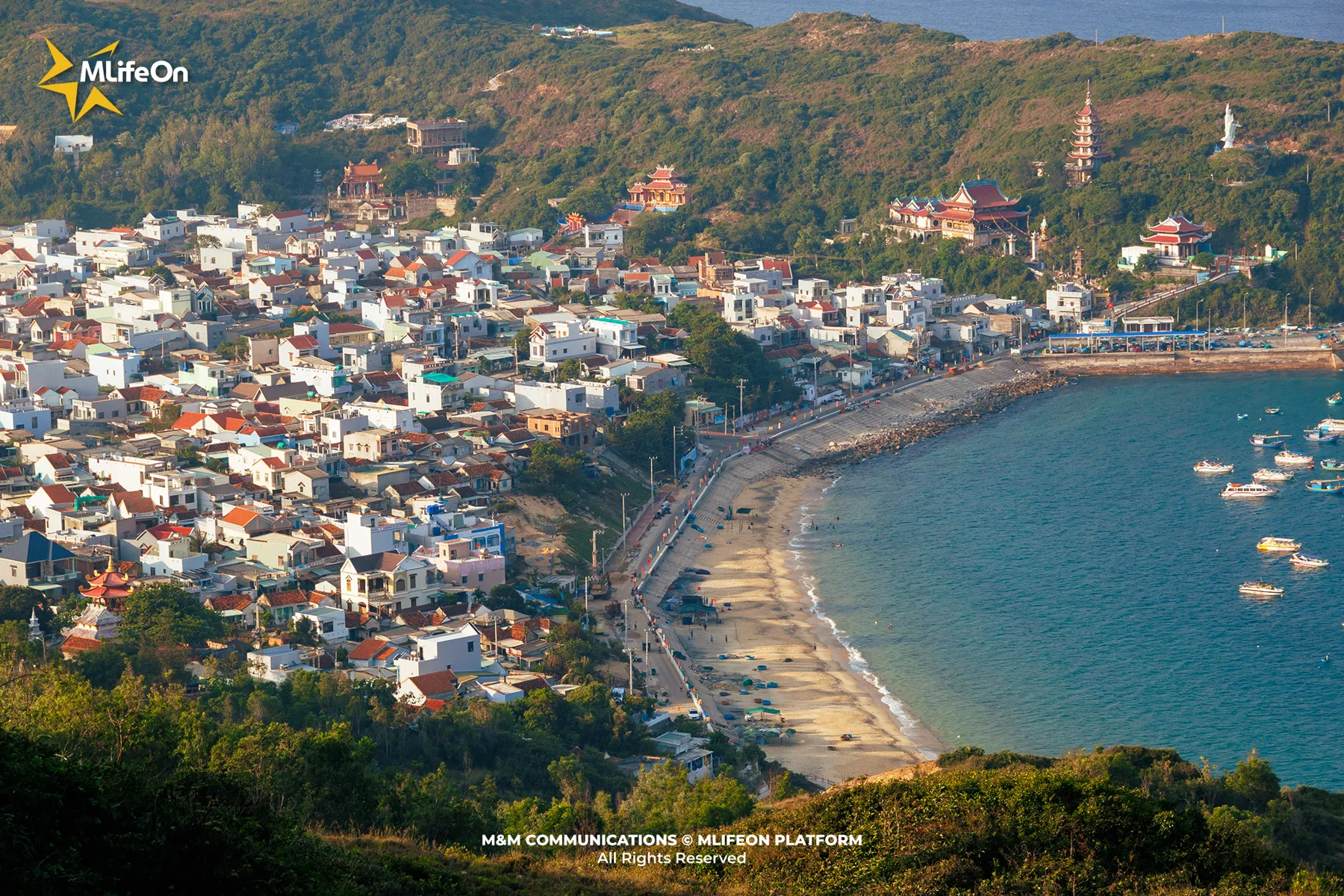
net weaving is associated with coastal fishing villages
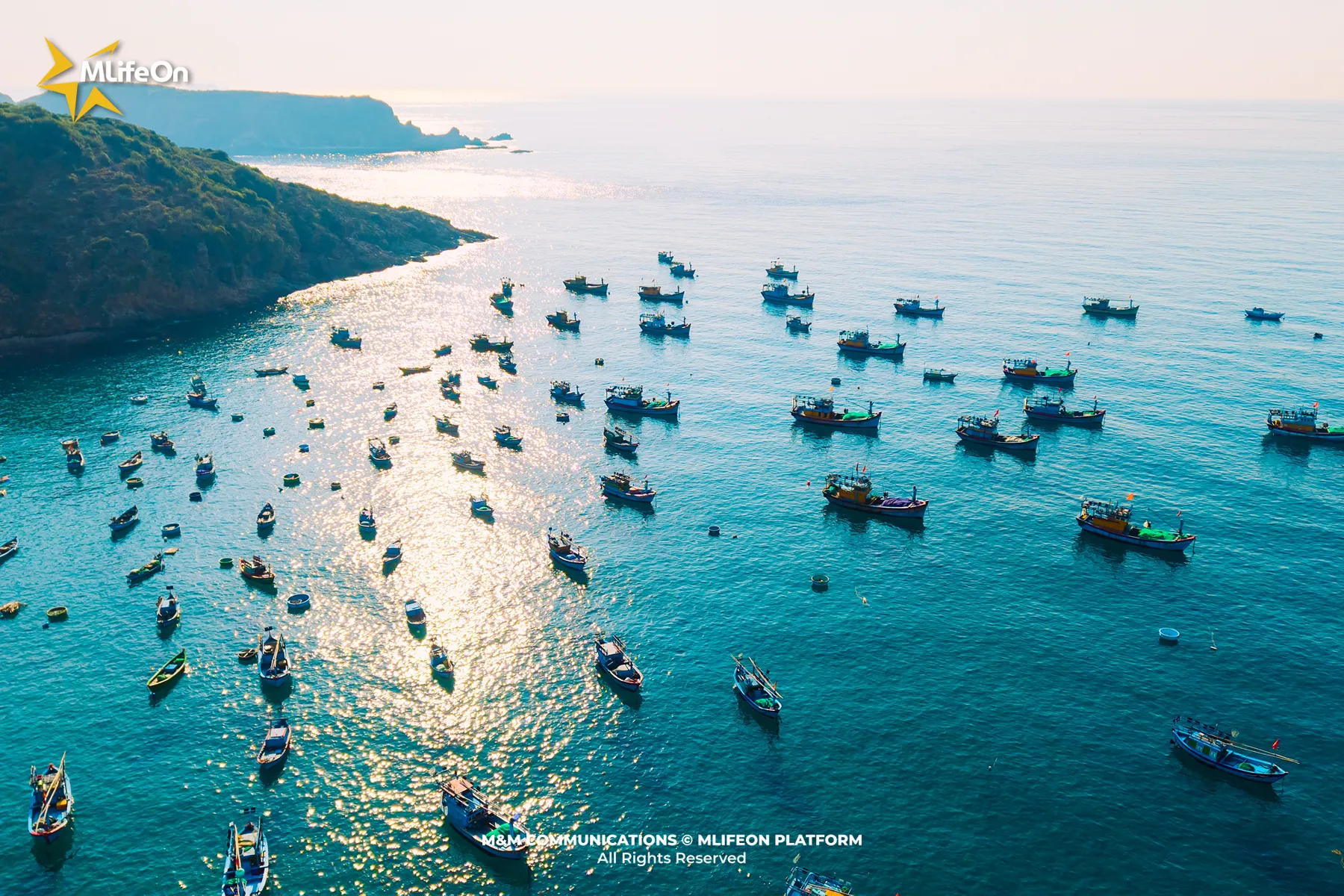
According to many sources, in the Central coastal region, the net weaving profession appeared early in Van Trinh village, Hue city and has a history of development 600 years. This is also considered to be the place with the oldest net weaving profession compared to other regions in Vietnam (In the West, the net weaving profession appeared and developed for nearly 50 years in Thom Rom village, Can Tho city, and in the North, this profession appeared in the 1970s in Vinh Lai village, Hai Phong province - the old Hai Duong area).
The net weaving profession in the Central region has existed for many generations, becoming a part of the common memory of fishing villages, as a testament to the persistence of maritime culture and the love of the people for the sea.
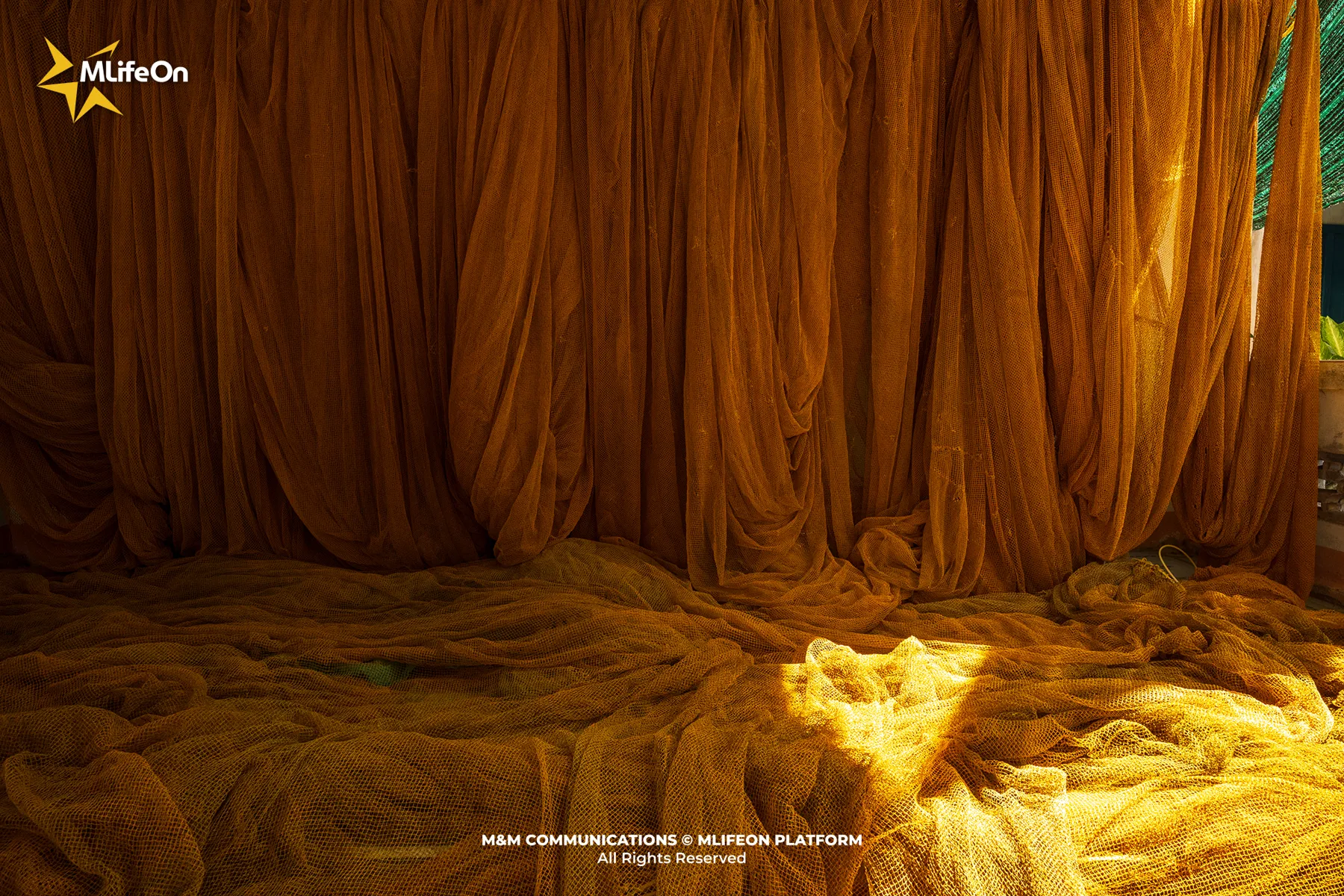
Photo of net weaving in Dak Lak province (former Phu Yen area)
Over time, the net weaving profession has also gone through many ups and downs. From the days when people relied solely on skillful hands and patience to create each mesh by hand, people have now learned to apply modern machinery to increase productivity and improve product quality.
Despite the changes, the core value of the profession remains: the close connection between people and the ocean, between labor and culture, preserved through each strong weave.
Each net is the result of thousands of weavings, requiring meticulousness and skill. People believe that only when the net is strong will the fishing trip be smooth and the hold will be full of fish and shrimp. Therefore, net weaving is not only a job, but also a belief, a way of placing hope in the sea.
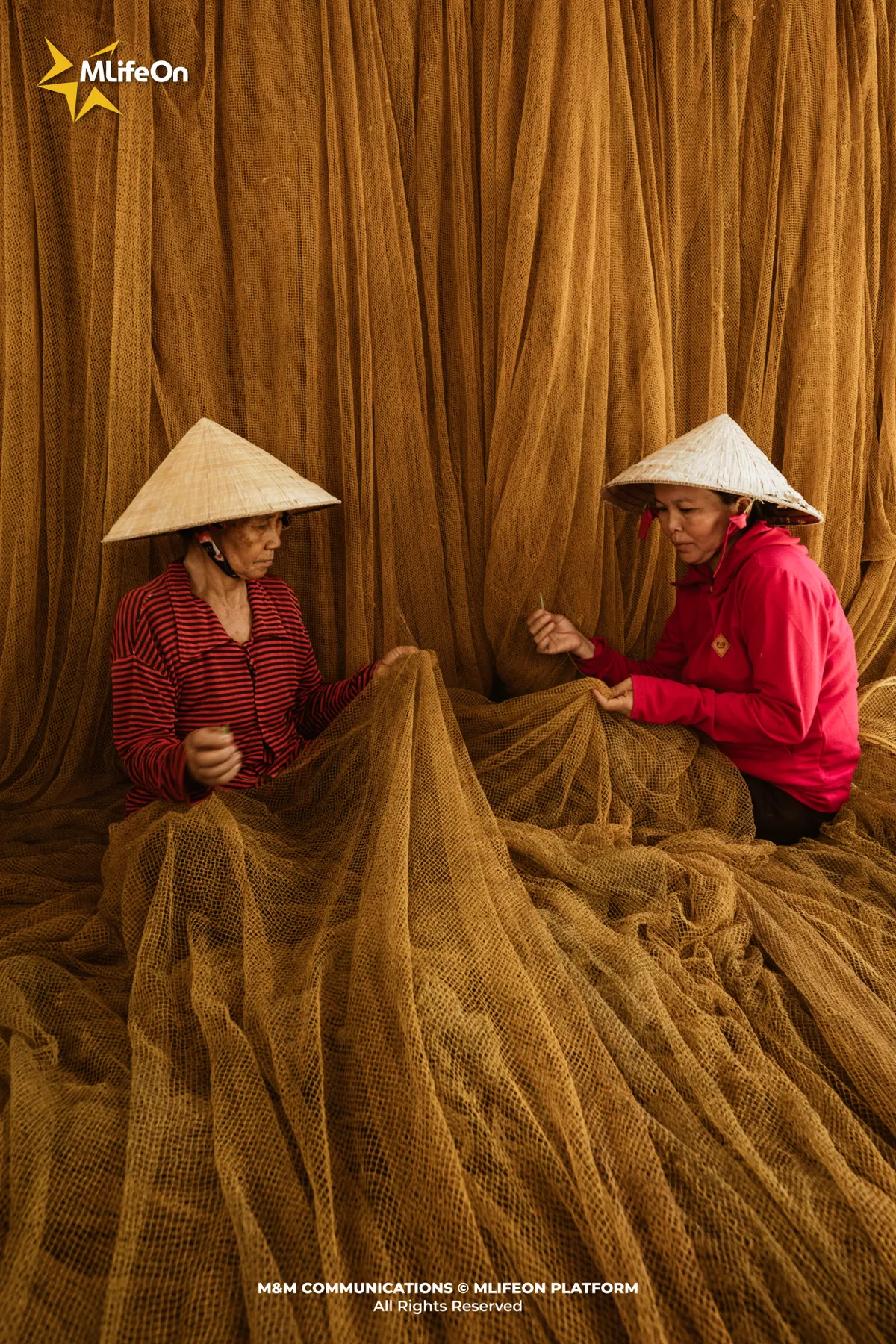
Photo of net weaving in Dak Lak province (former Phu Yen area)
Barriers and difficulties
The net weaving profession seems simple at first: all you need is net thread, sewing pins and skillful hands to create a net. But in reality, behind those regular weaves is a hard labor process, requiring patience, technique and faith in the ocean.
Patience
A large net can take weeks, even months to complete. The worker must sit for hours, patiently weaving each small mesh. The work is repetitive and monotonous, but cannot be rushed. Because just one wrong mesh can cause the whole net to become unbalanced and easily torn when going out to sea, so time is the first challenge, requiring perseverance and patience from the worker.
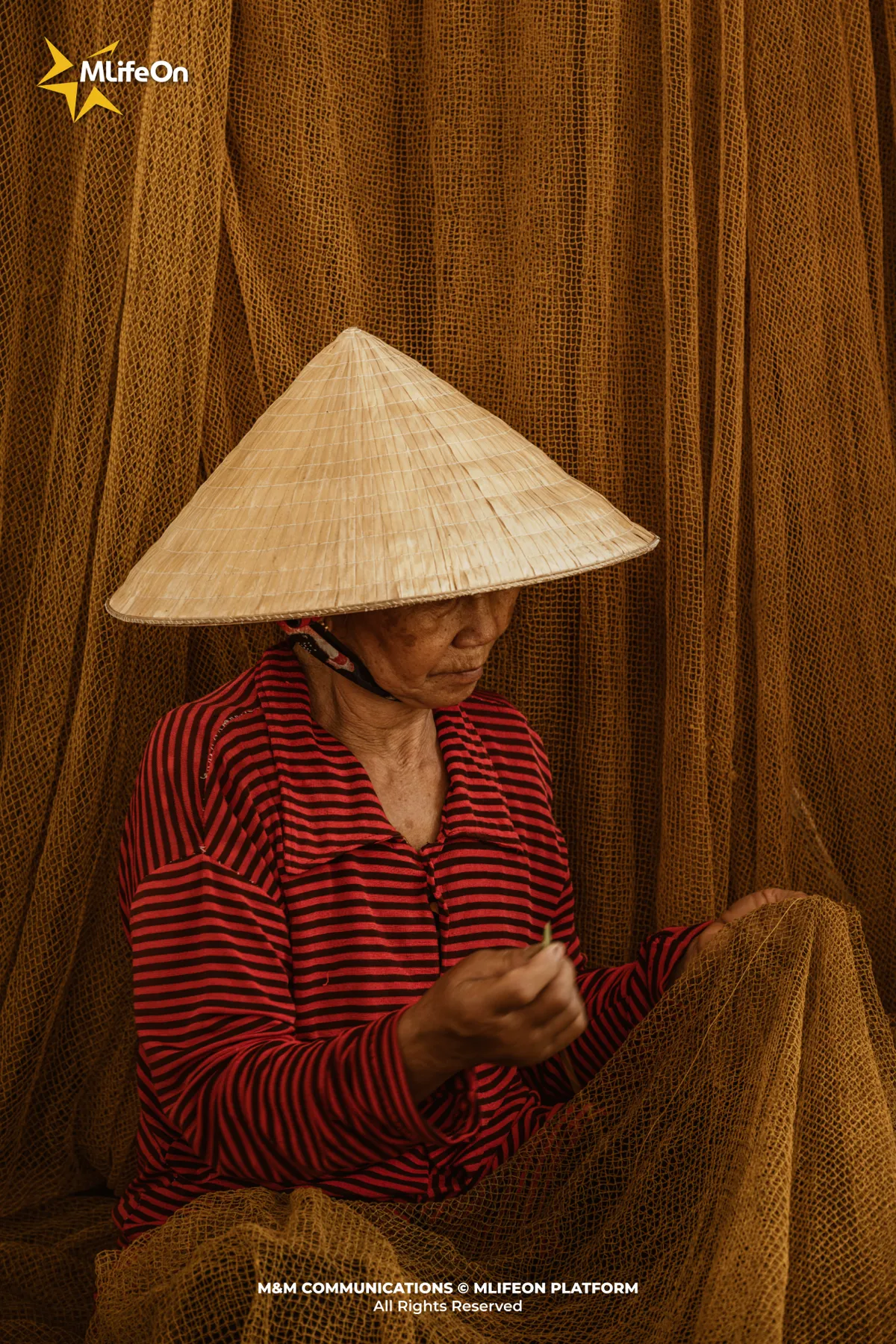
Photo of net weaving in Dak Lak province (former Phu Yen area)
Accuracy
Net weaving is not just about connecting threads together. It must be connected so that each mesh is even, the distance must be precise, and the net must be strong. And to achieve that, the worker must be precise in choosing the type of thread and the size of the weave to suit each type of fish and each sea area. Because sometimes, just one wrong weave can cause the fisherman to lose the whole trip to sea. Therefore, net weaving is a profession of absolute precision - where skillful hands must combine with sharp eyes and experience of the sea.
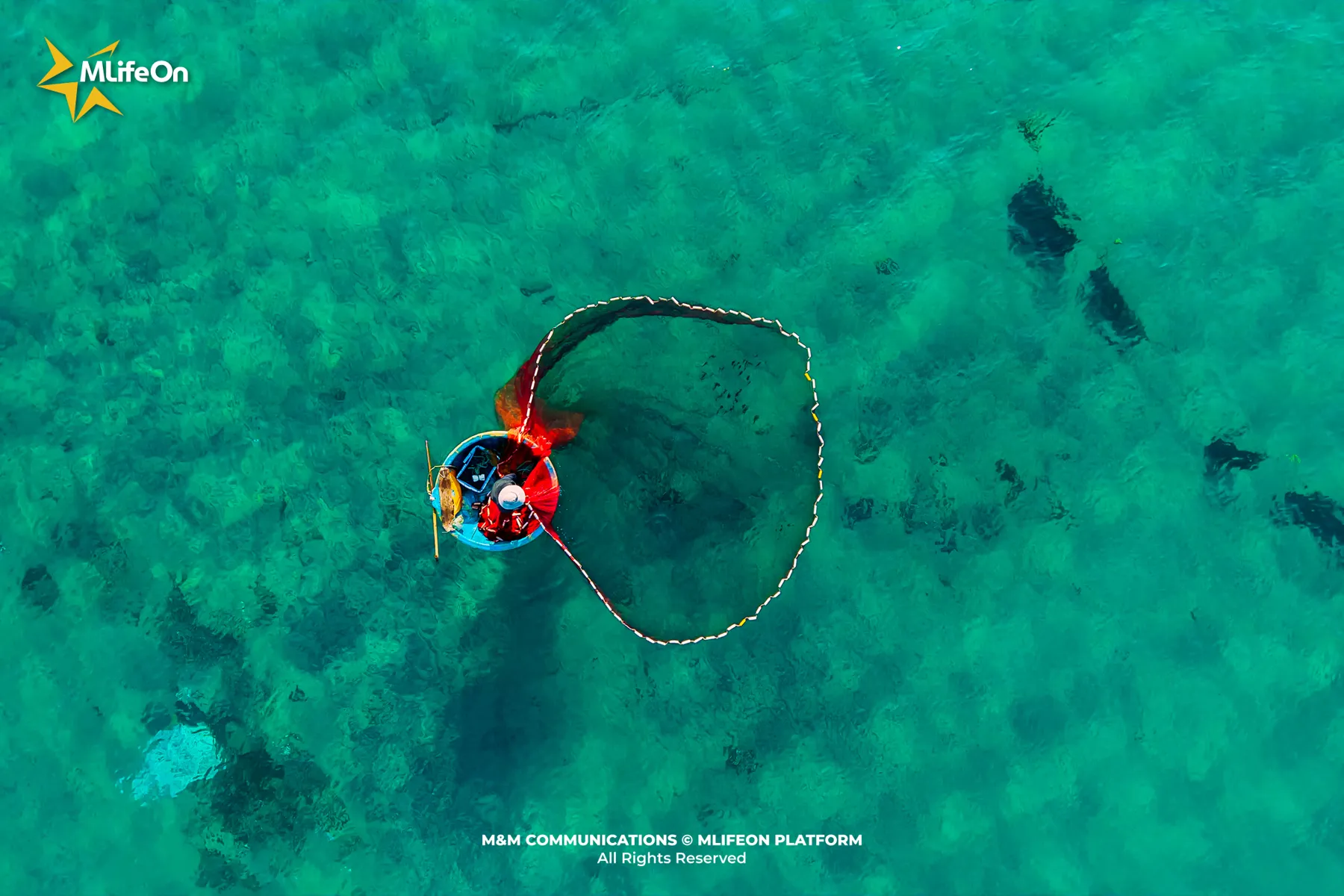
each net plays a very important role in sea trips
Unstable income
Compared to many other professions, net weaving does not bring much profit. Workers often only work to serve the needs of the fishing village where they live, or sell to familiar fishermen.
Up to now, the reason many people are still attached to this profession is sometimes not because of income, but because of love for the traditional profession and the desire to preserve a part of the memory of the fishing village.
Those who still practice the craft are mostly older people, who see it as a way to preserve tradition rather than a main source of income. Pressure from modernization has put the craft of net weaving at risk of disappearing, becoming a profession that only exists in memory.
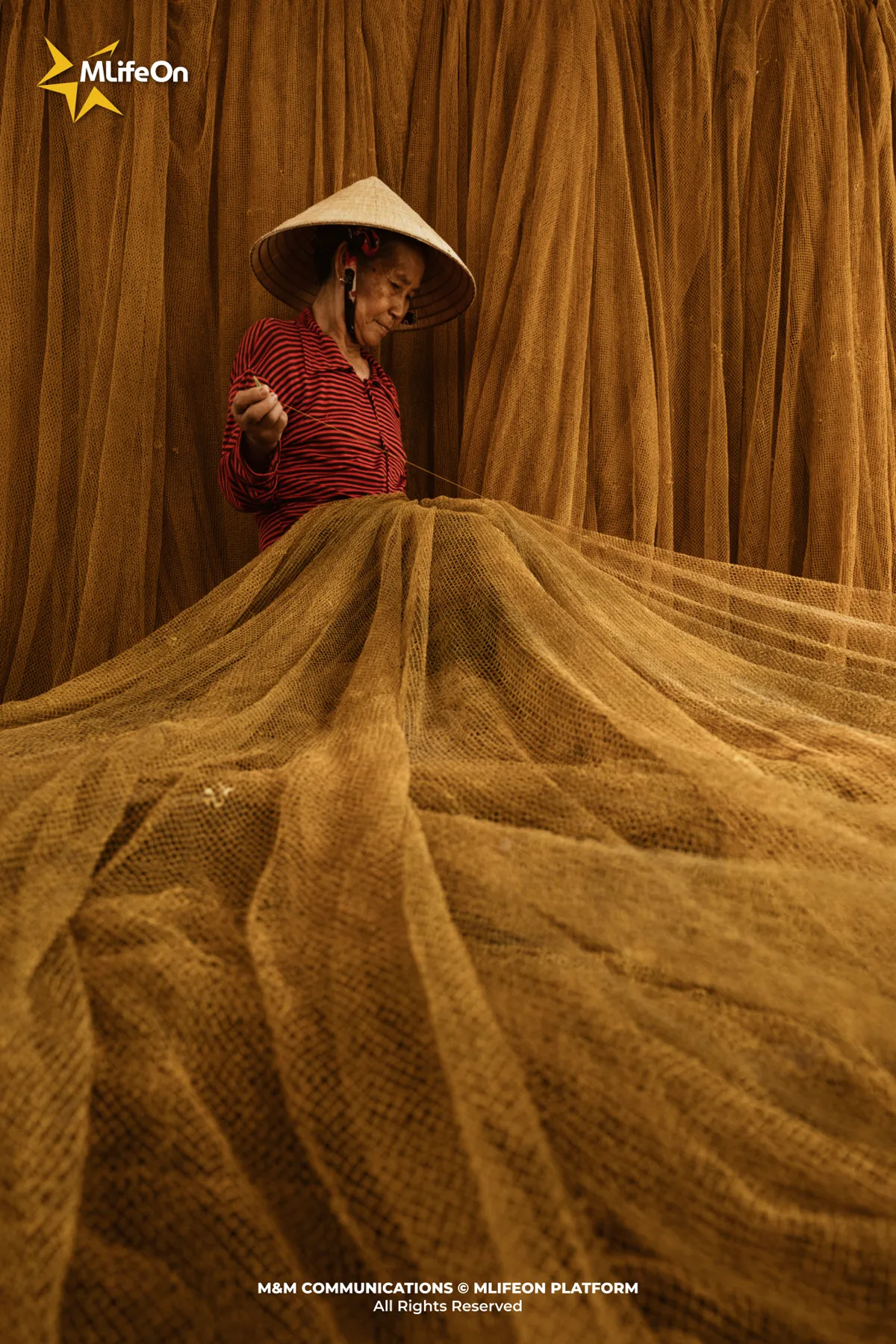
Photo of net weaving in Dak Lak province (former Phu Yen area)
Responsibility to the community
Net weavers do not directly go to sea, but their products determine the safety and effectiveness of the trip. A damaged net can cause fishermen to lose their entire trip, or even be in danger in the storm. Therefore, the responsibility of net weavers is very great. They not only make a tool, but also create trust for those who go to sea.
Each weave is a promise: that the net will be durable, that the trip will be safe, that the sea will bring a full hold of fish and shrimp.
It can be seen that the difficulties of net weaving lie not only in the requirements of patience, precision or meager income, but also in the instability of the flow of time and changes in society. However, it is these difficulties that highlight the spiritual value of the profession.
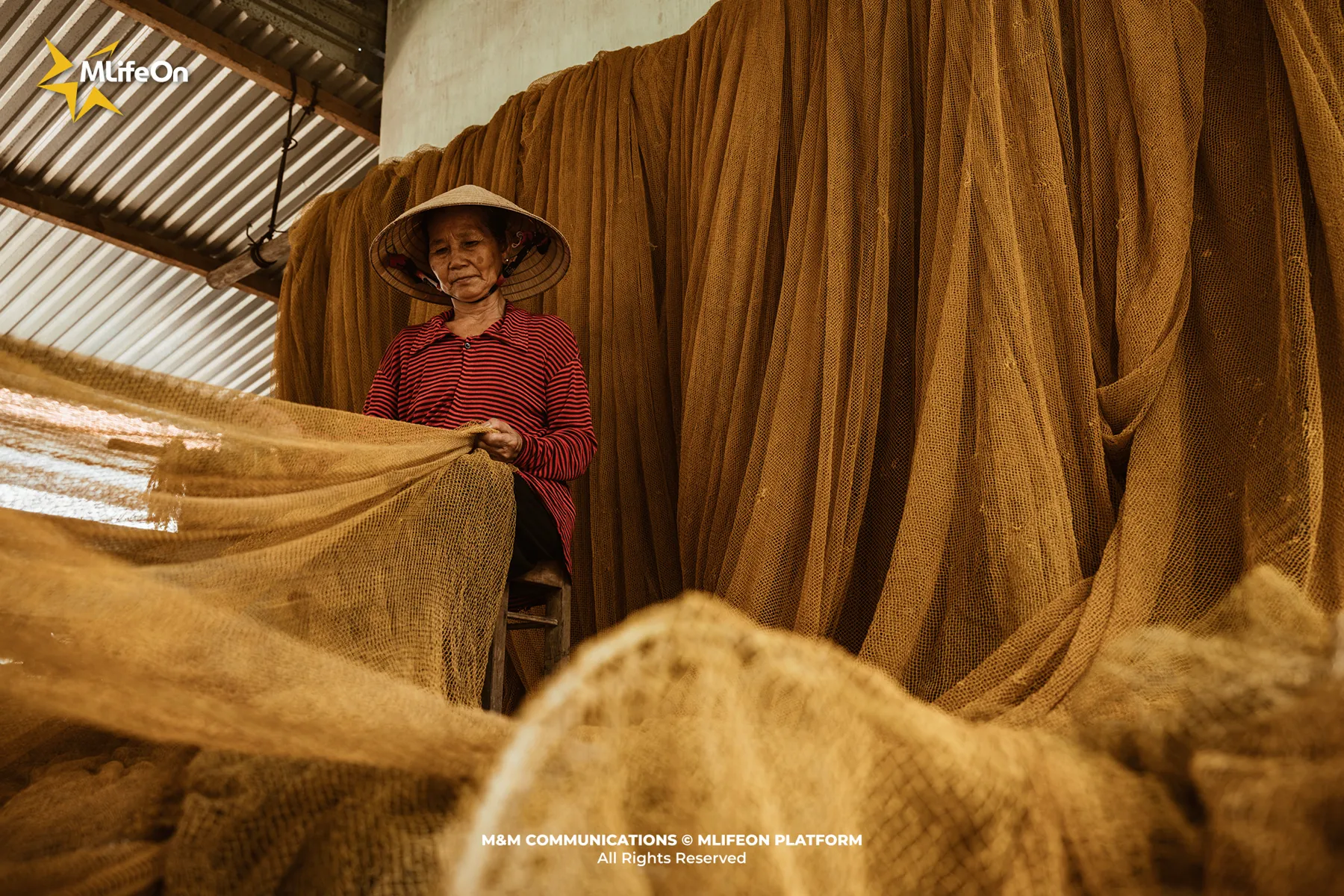
Photo of net weaving in Dak Lak province (former Phu Yen area)
Net weaving in the present
Today, the net weaving profession in the central coastal region in particular, and other regions in Vietnam in general, is no longer as popular as before. Many families have switched to buying industrial nets to save time and costs. Those who are still attached to the profession are mainly the elderly, considering it a way to preserve tradition rather than a main source of income.
However, the net weaving profession is still present in cultural life. During sea festivals, the image of net weavers is still recreated as a part of memory, reminding the younger generation of the profession of their ancestors. Some community tourism projects also include net weaving in the experience for tourists, helping the profession have more opportunities to survive.
Maintaining the craft of net weaving is not just about maintaining a job, but also about preserving a part of the soul of the sea, preserving the memories of the fishing village. In each weave, we see a long story about people, about the sea, and about the persistence of traditional culture.
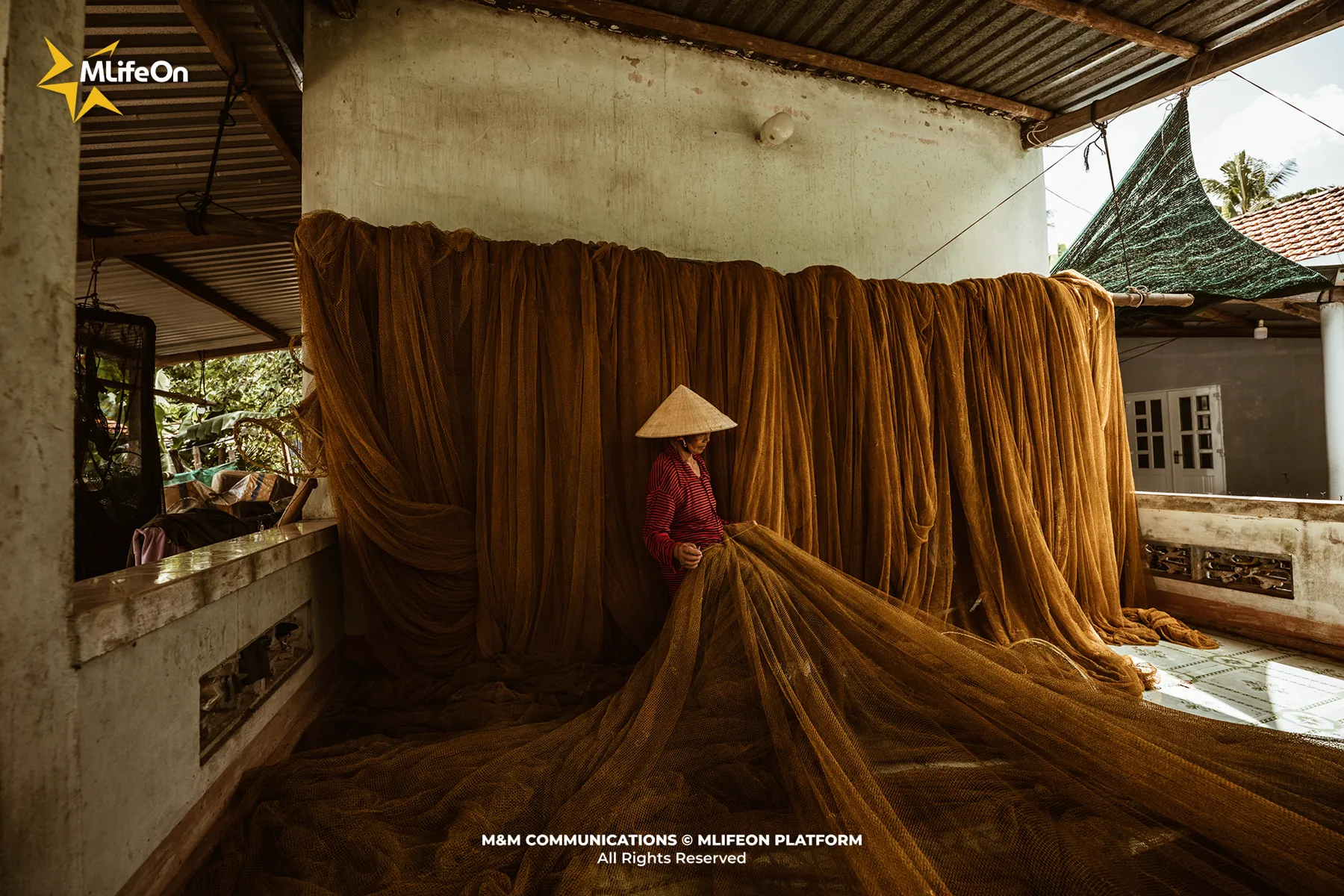
Photo of net weaving in Dak Lak province (former Phu Yen area)
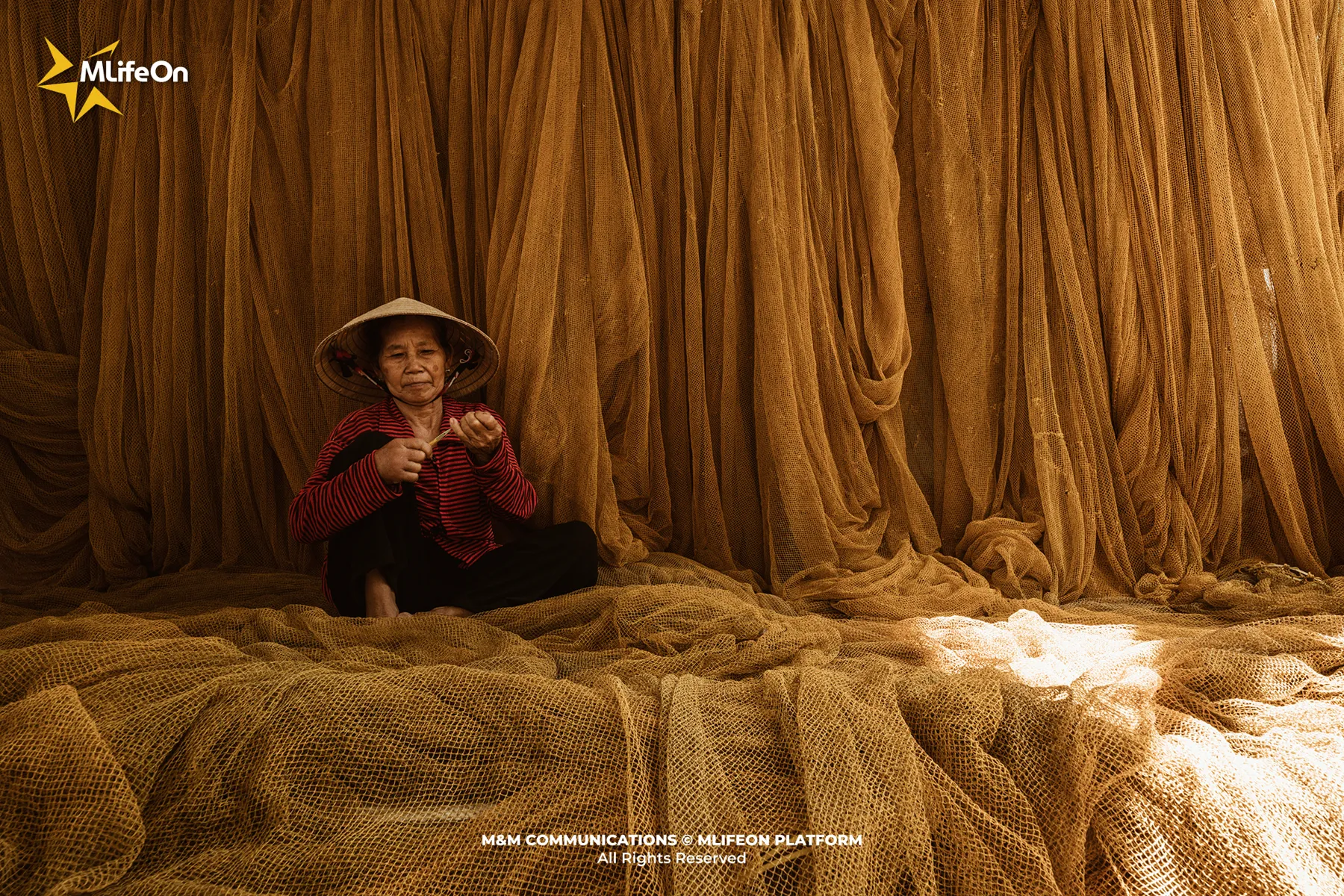
Photo of net weaving in Dak Lak province (former Phu Yen area)
Net weaving is not only a craft, but also a part of the soul of the sea. It reflects the close connection between people and the sea, between labor and culture. Although facing the risk of extinction, this profession still has great spiritual value: reminding us of patience, of the strength of the community, and of the inseparable connection between fishermen and the sea.
Conclusion
Net weaving in the Central coastal region is a testament to the connection between people and the sea, between labor and culture. Although the profession is gradually shrinking due to the development of industry, the spiritual and cultural values it brings are still immense.
—--
CREDIT:
- Photography: Luan Nguyen
- Content: Giang Huynh
- Design: Phuong Nguyen