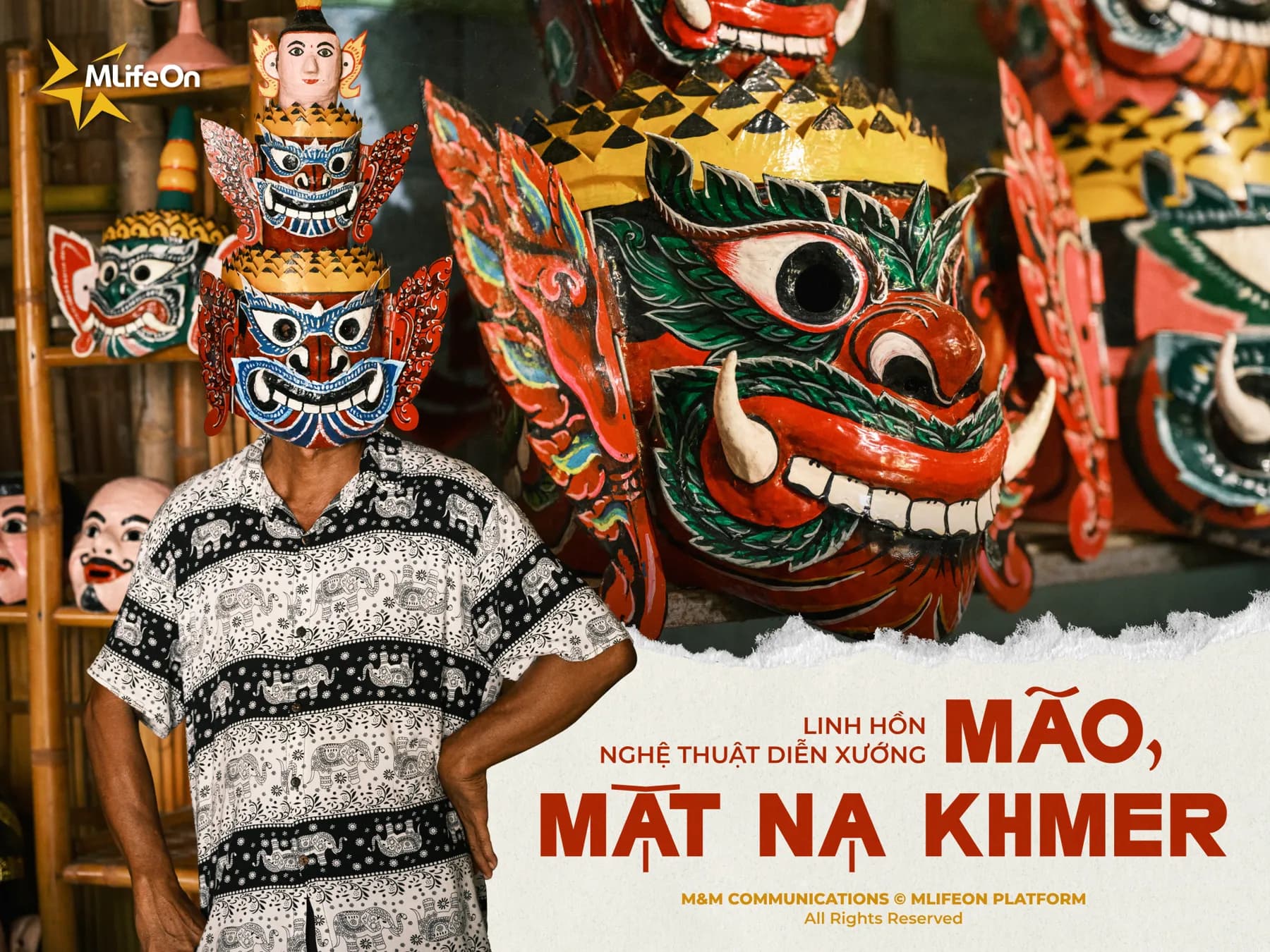
For centuries, Khmer culture has been nurtured by spiritual and artistic values deeply ingrained in community life. Folk dances, festival drums, and the vibrant colors of temples have become the soul of the Khmer people of Southern Vietnam. Within this cultural tapestry, headdresses and masks, with their mystical and sacred colors, are special elements closely associated with traditional performing arts.
Join MLifeOn in exploring Vinh Long province (formerly Tra Vinh province) to discover the uniqueness of Khmer ceremonial hats and masks in the article below.
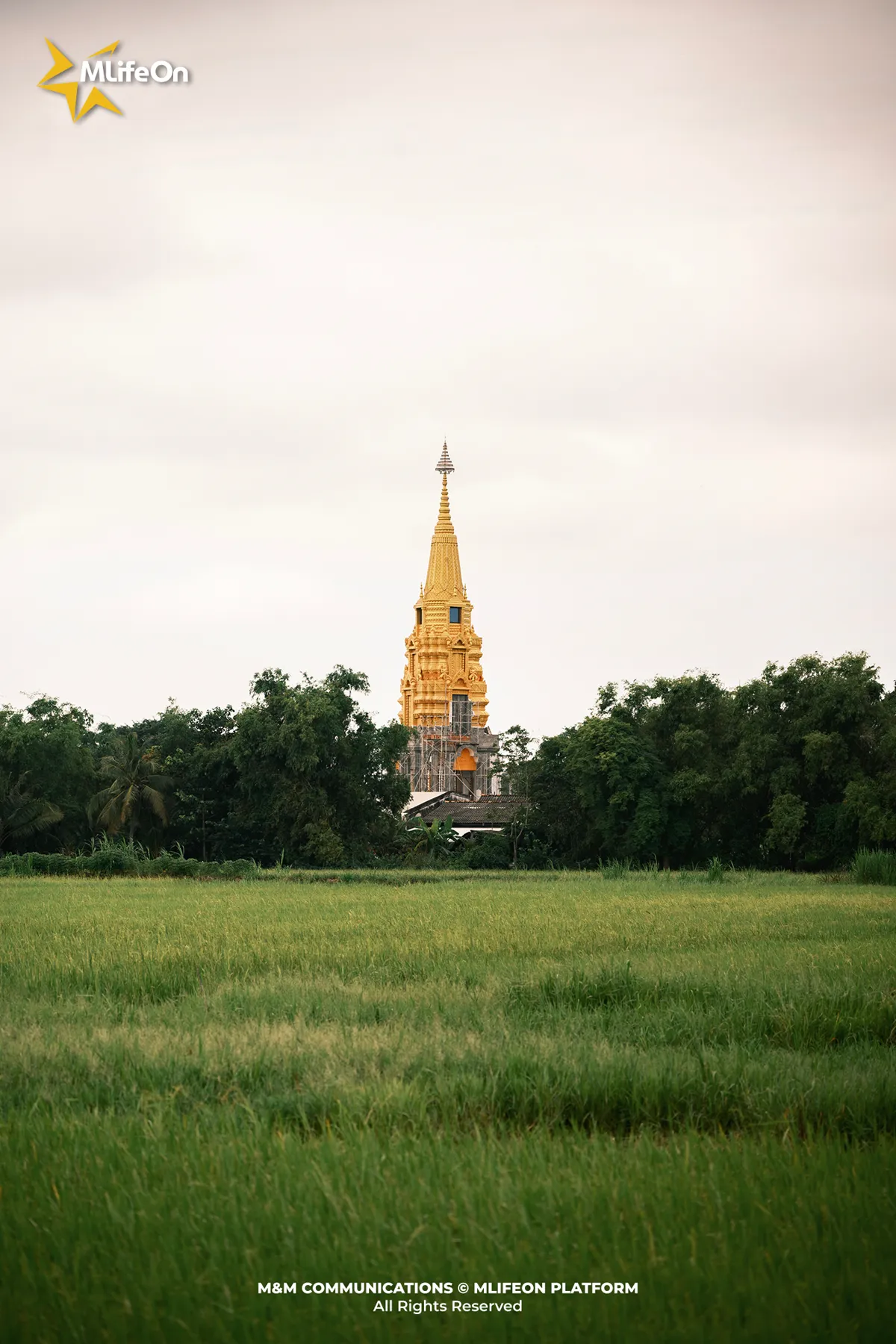
Revisiting history
Appearing over 200 years ago, Khmer ceremonial hats and masks are not merely stage props, but also cultural and spiritual symbols closely associated with the artistic life of the Khmer people in Southern Vietnam. Initially, these headdresses and masks were created to serve court dances and religious ceremonies.
In the solemn atmosphere of temples, the sounds of drums and gongs blend with the dance, and the headdresses and masks become costumes that help characters emerge from the mythical world and appear vividly before the audience. Through their shapes, lines, and colors, viewers can distinguish between good and evil characters, gods and humans, or kings and officials when looking at the Khmer ceremonial hats and masks. This contributes to the solemnity and mystique of the performances.
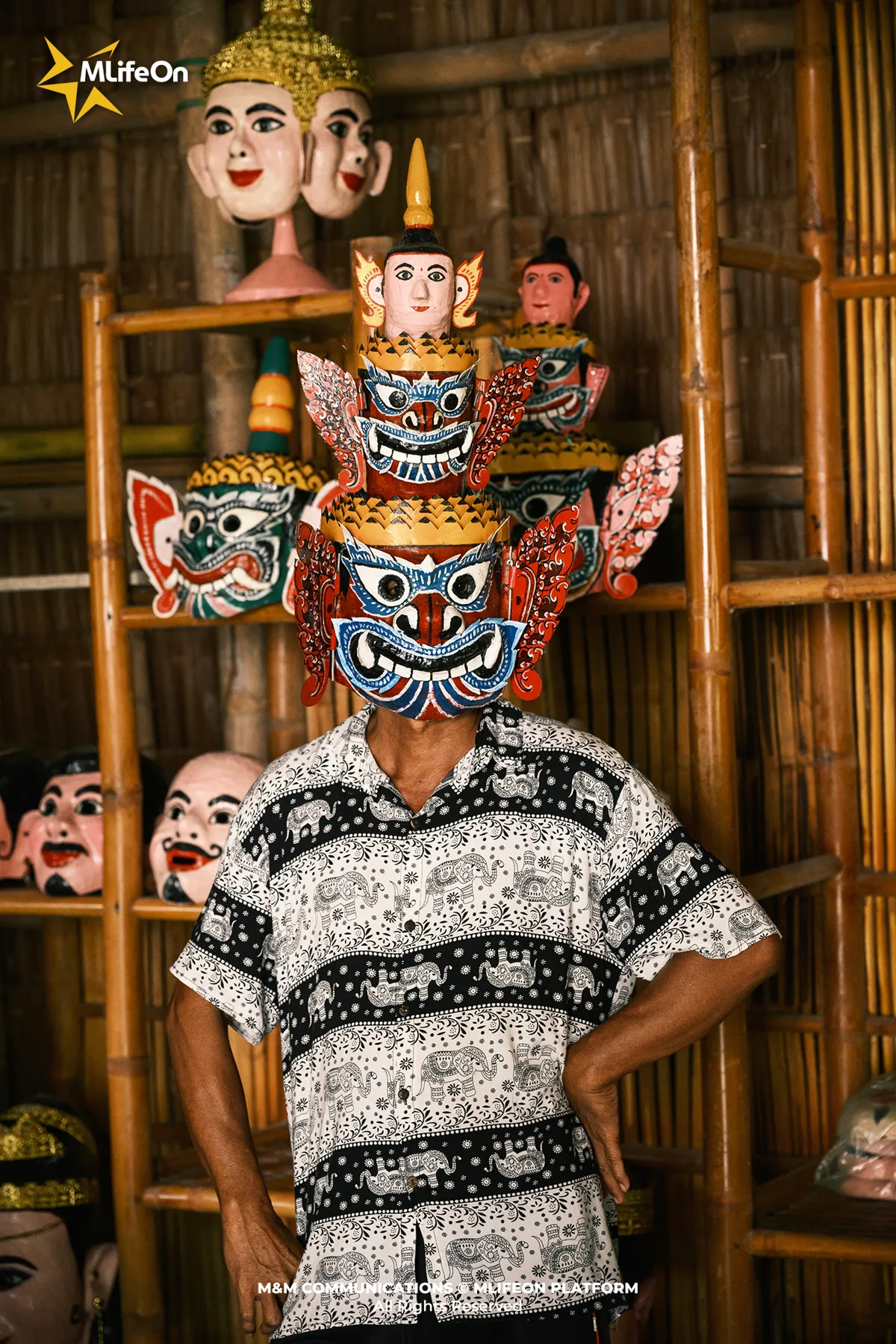
Over time, Khmer ceremonial hats and masks gradually emerged from the confines of the royal court, becoming the soul of folk performing arts. From religious dances to folk dances, they are intimately connected with two famous forms: Rom Ro Bam and La Khon Bassac. In these performances, headdresses and masks not only help the audience identify the characters but also convey moral messages, transforming the stage into a place for educating the community about goodness, loyalty, and faith in what is right.
Throughout more than two centuries of development, Khmer ceremonial hats and masks have experienced many ups and downs. There were times when they seemed on the verge of disappearing due to the changes of modern life, but thanks to the dedication of the artisans, the craft of making headdresses and masks has been maintained.
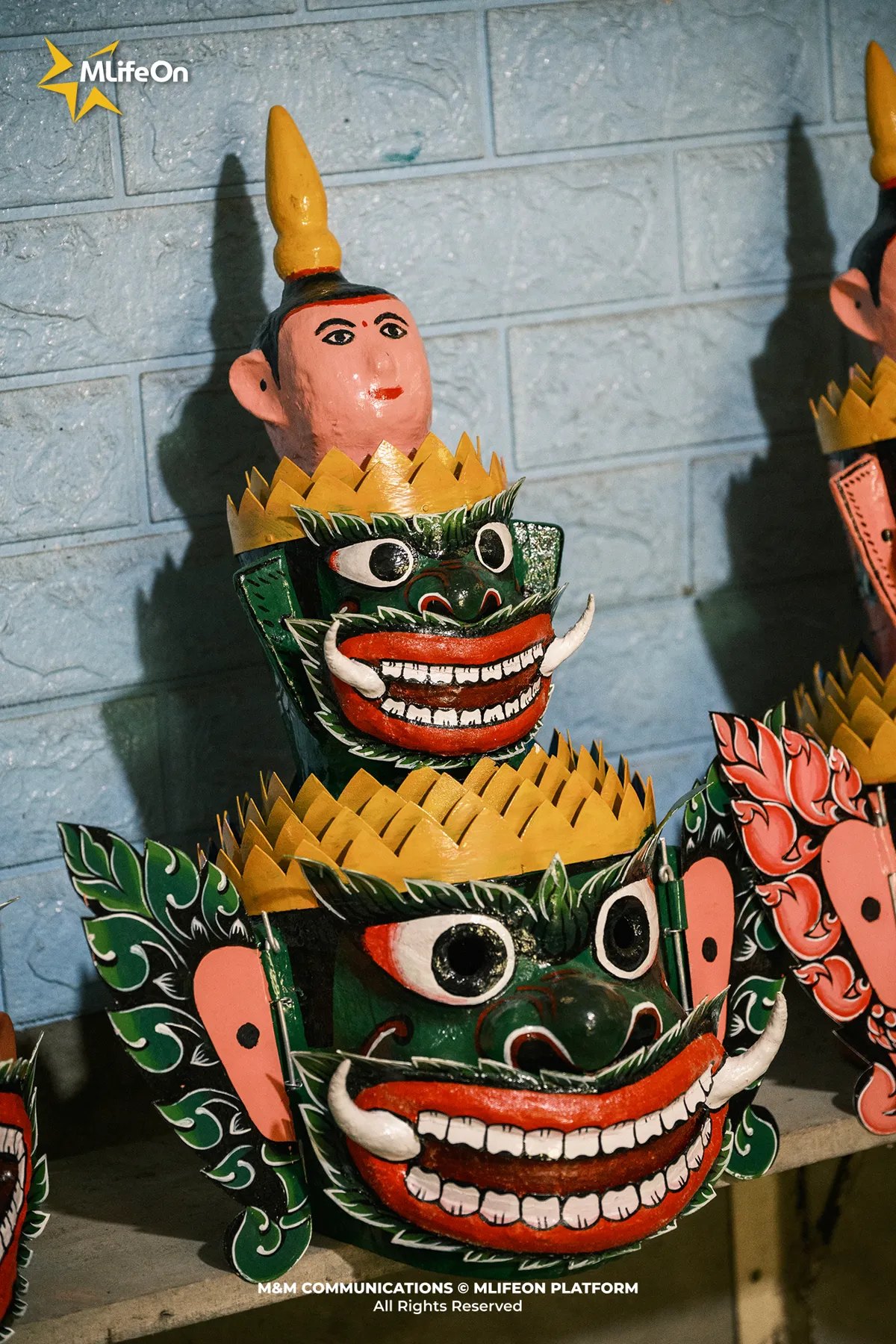
In Vinh Long province (formerly Tra Vinh area), the cultural center of the Southern Khmer people, a few families still continue to preserve the craft of making Khmer ceremonial hats and masks.
Characteristics of Khmer ceremonial hats and masks
Khmer ceremonial hats and masks are distinctive costumes, imbued with profound symbolism and adhering to strict stylistic standards. They are not merely stage props, but also the embodiment of the beliefs, art, and philosophy of life of the Khmer people in Southern Vietnam.
Khmer hat
Khmer hat
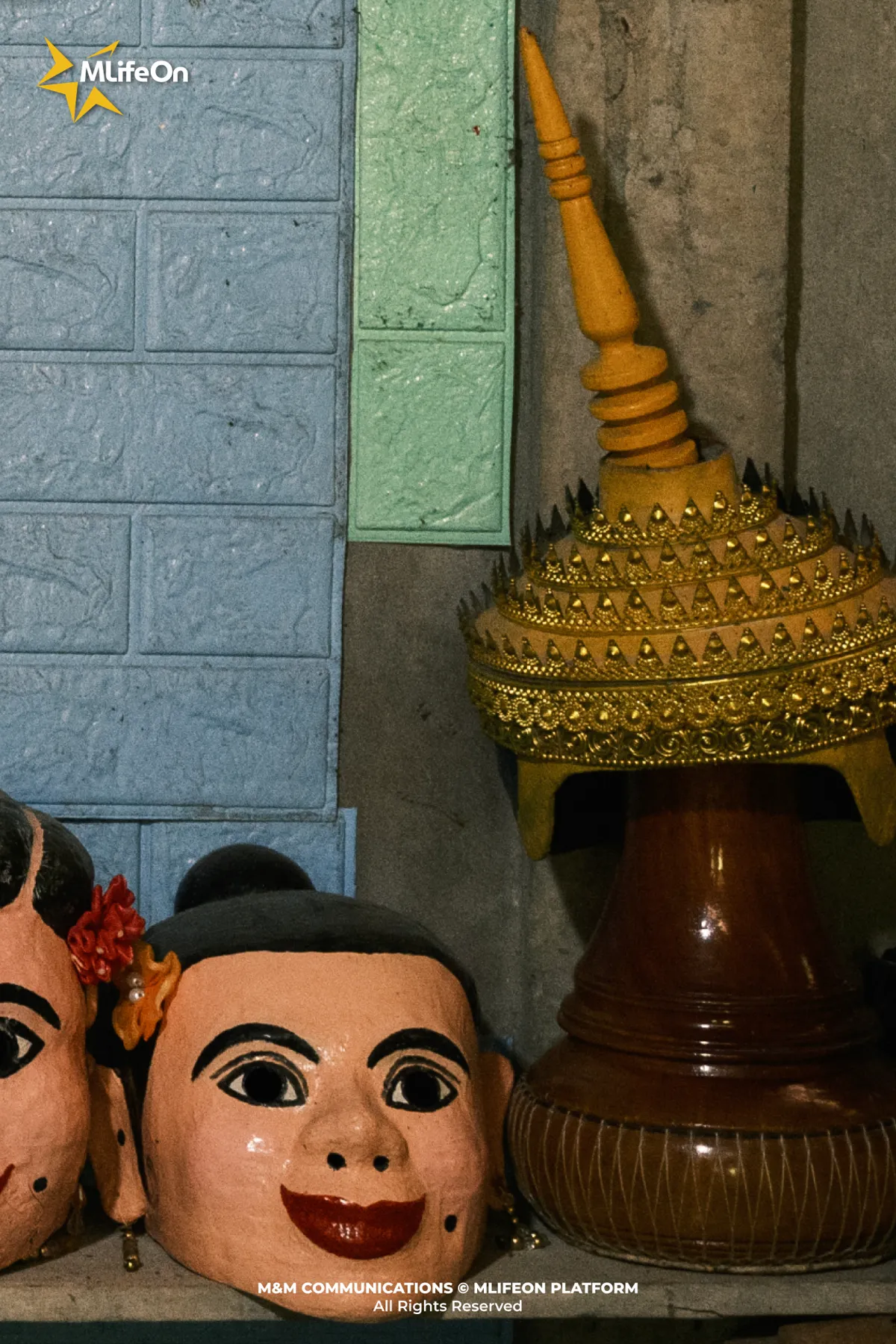
Often reserved for figures of authority or sacredness such as queens, princesses, or mythical demons, the Khmer hats are distinguished by its high, pointed crown, often adorned with flame motifs, symbolizing strength, power, and protection. In addition, floral patterns are used to evoke elegance and radiance, reflecting the noble qualities of the wearer.
Each hat, therefore, is not just a headdress, but also a symbol of status and a connection between humans and the spiritual world.
Khmer mask
Khmer mask
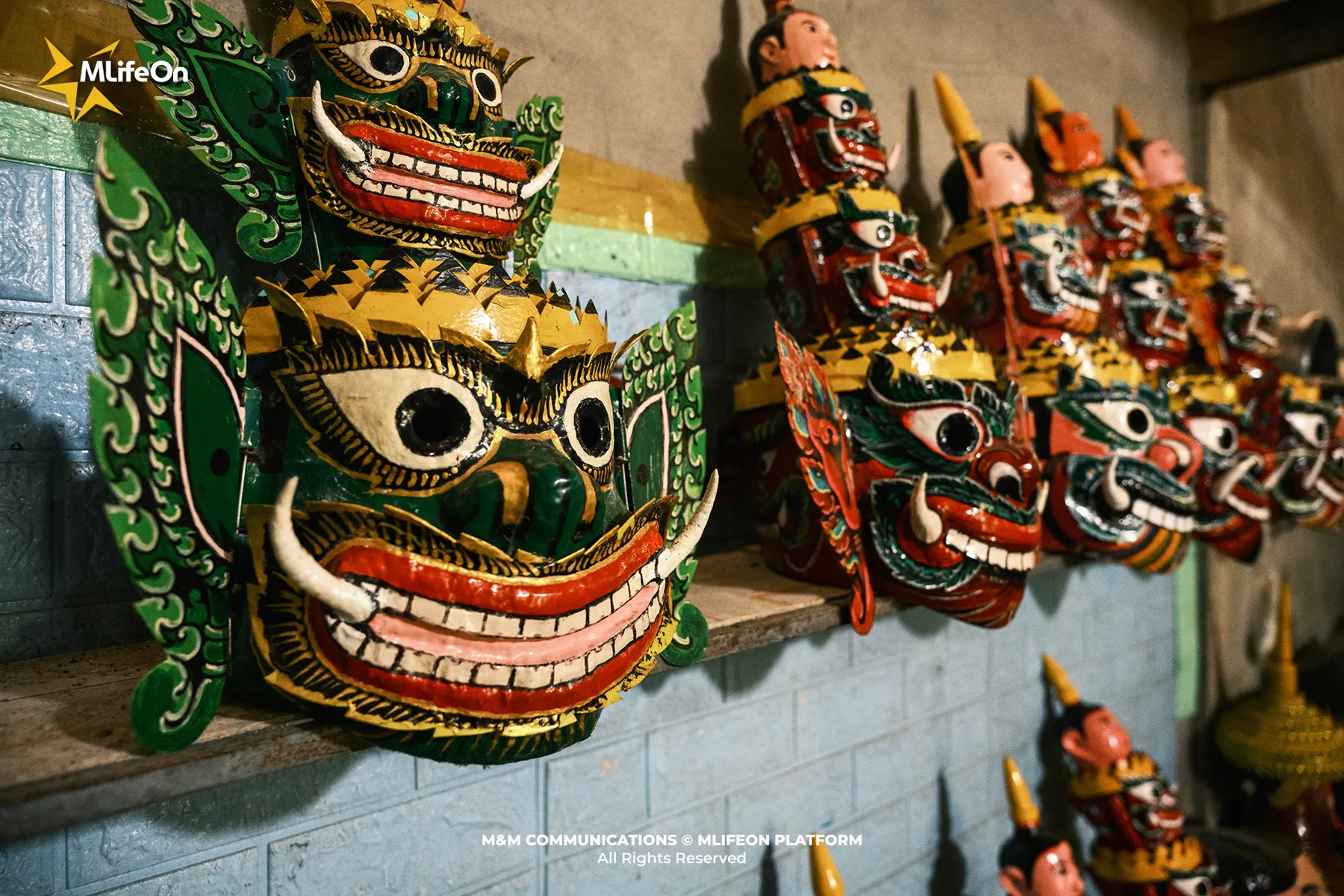
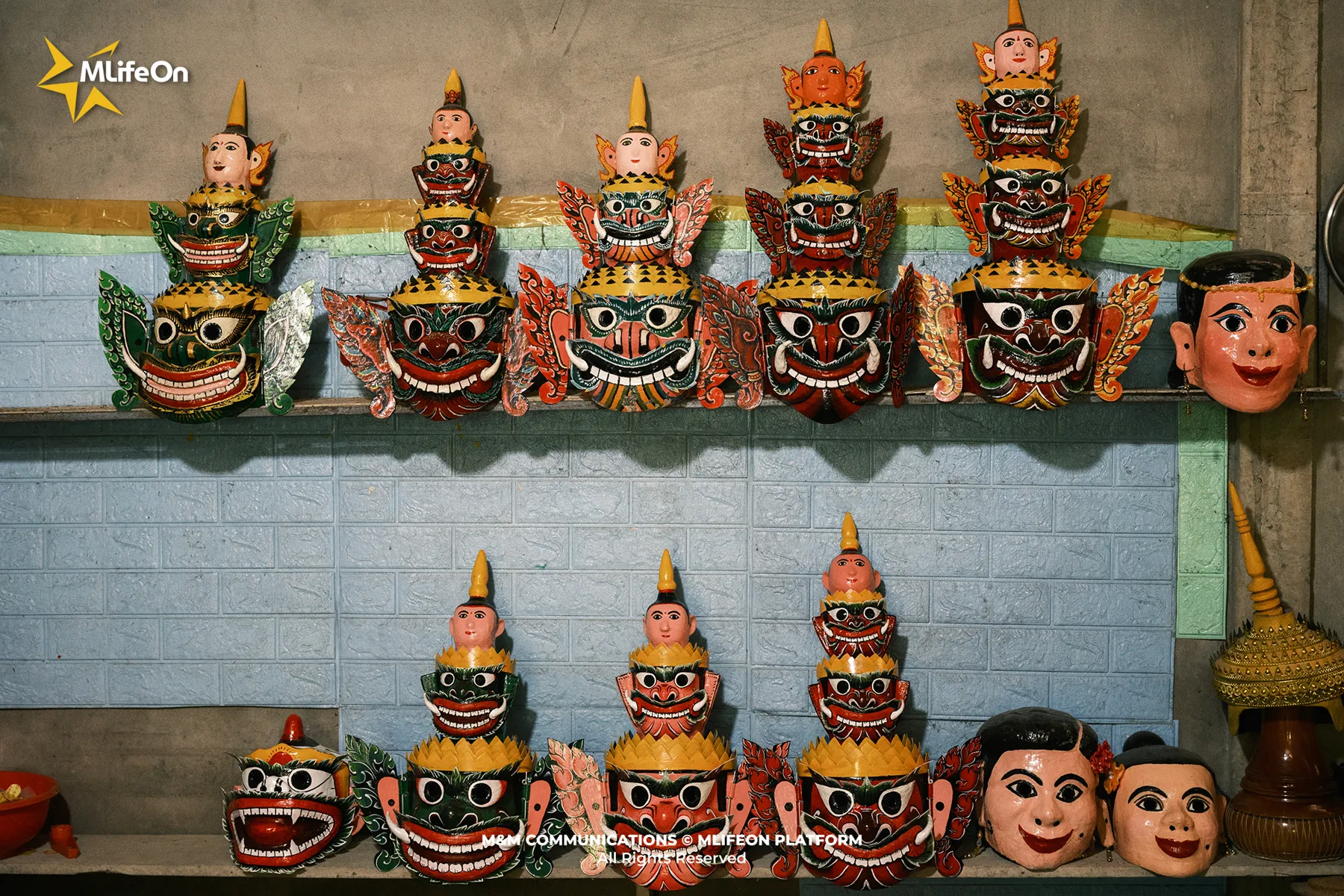
Unlike headdresses, Khmer masks encompass a more diverse world (from deities and animals to human faces). They help the audience easily identify the characters while adding a sense of mystery to the stage. A prime example is the famous Krap mask set of six, representing a full range of emotions: joy, anger, love, and sorrow. Each mask has its own unique characteristics: some stand out with their mischievous cat-like mouths, others with large, crude noses, squinting eyes full of cunning, or toothless mouths that evoke humor. These details not only distinguish the characters but also reflect their personalities, destinies, and roles in the performance.
It is noteworthy that no detail on Khmer ceremonial hats and masks is random. Every line and color is carefully chosen, carrying clear symbolic meaning. Specifically, red is often associated with strength and majesty; yellow symbolizes nobility; Blue and black are often reserved for villainous characters, suggesting ferocity. And it is this combination of colors and shapes that transforms the headdress and mask into a visual language, conveying the Khmer philosophy of life: "Good triumphs over evil, light overcomes darkness, and a benevolent heart overcomes temptation."
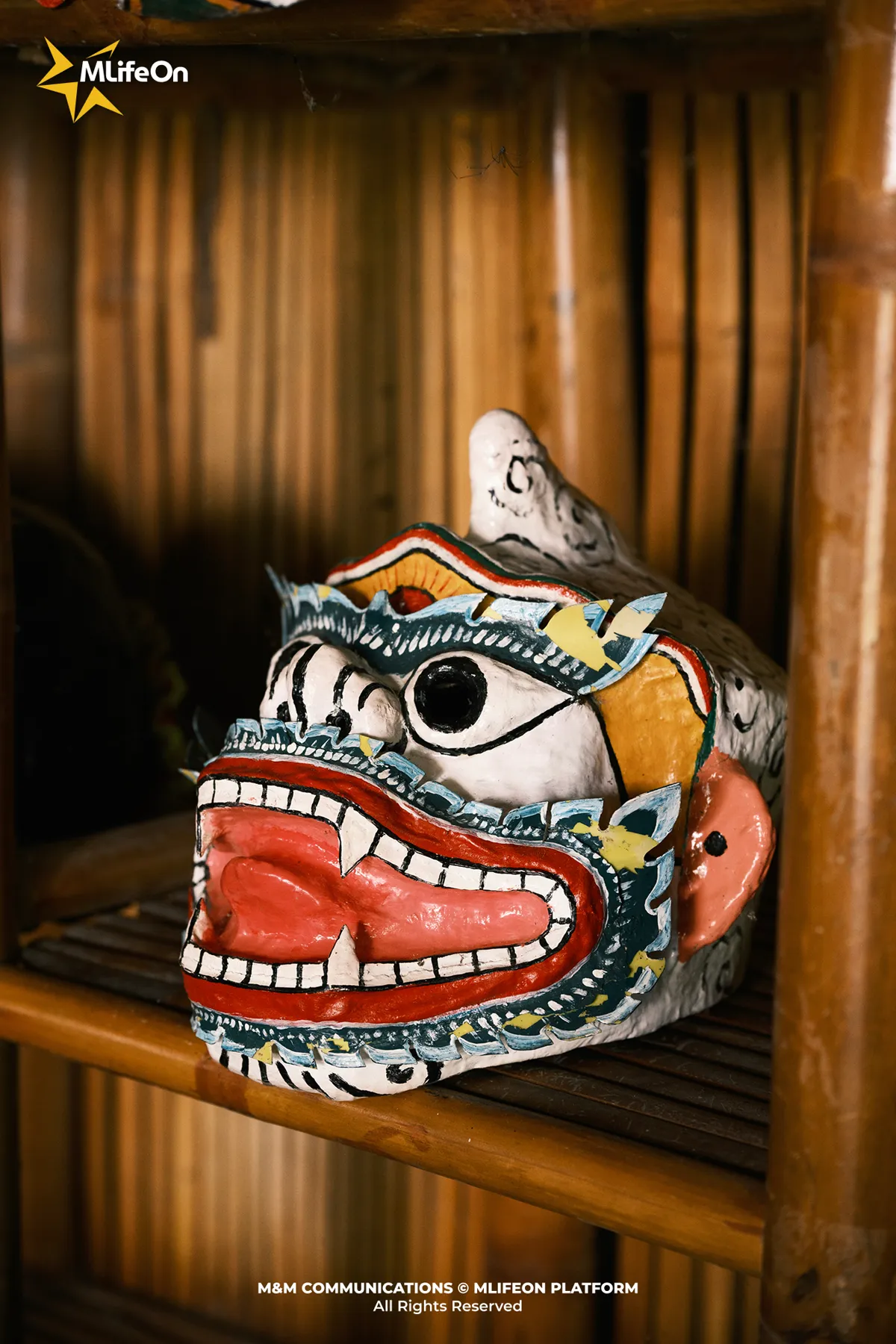
Thanks to these characteristics, Khmer ceremonial hats and masks not only create a unique beauty in performing arts, but also become cultural symbols, helping viewers feel the spiritual depth and national identity of the Khmer people through each performance and festival.
Creation process
To create complete Khmer hats or masks, the artisan must go through a laborious, meticulous, and highly creative process. Each product is not just a stage prop, but also the culmination of cultural knowledge, beliefs, and the skillful hands honed over generations.
-
Mold making: using wet clay or cement to create the head, eyes, nose, and mouth.
-
Laying fabric or paper: layers of gauze or newspaper soaked in glue are glued onto the mold, 8-12 layers to create thickness and rigidity.
-
Drying and removing the mold: after drying, the clay inside is removed, leaving only the rough frame.
-
Detail shaping: molding, carving, and sculpting to accurately capture the character's essence.
-
Decoration: drawing patterns, painting colors, and adding gold and glitter accents. This is the most delicate step, determining the solemnity and sacredness of the product.
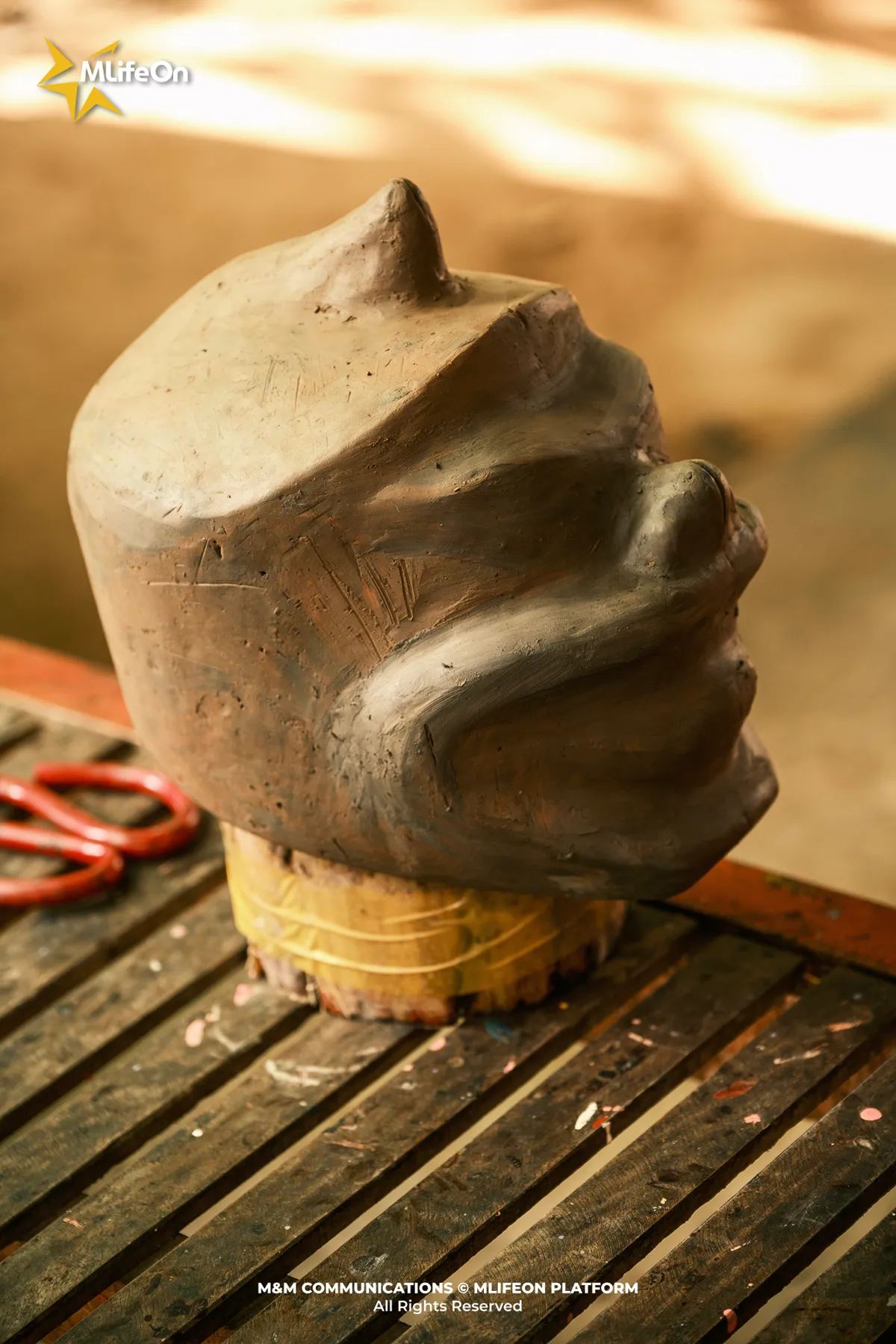
The mold is made from clay.
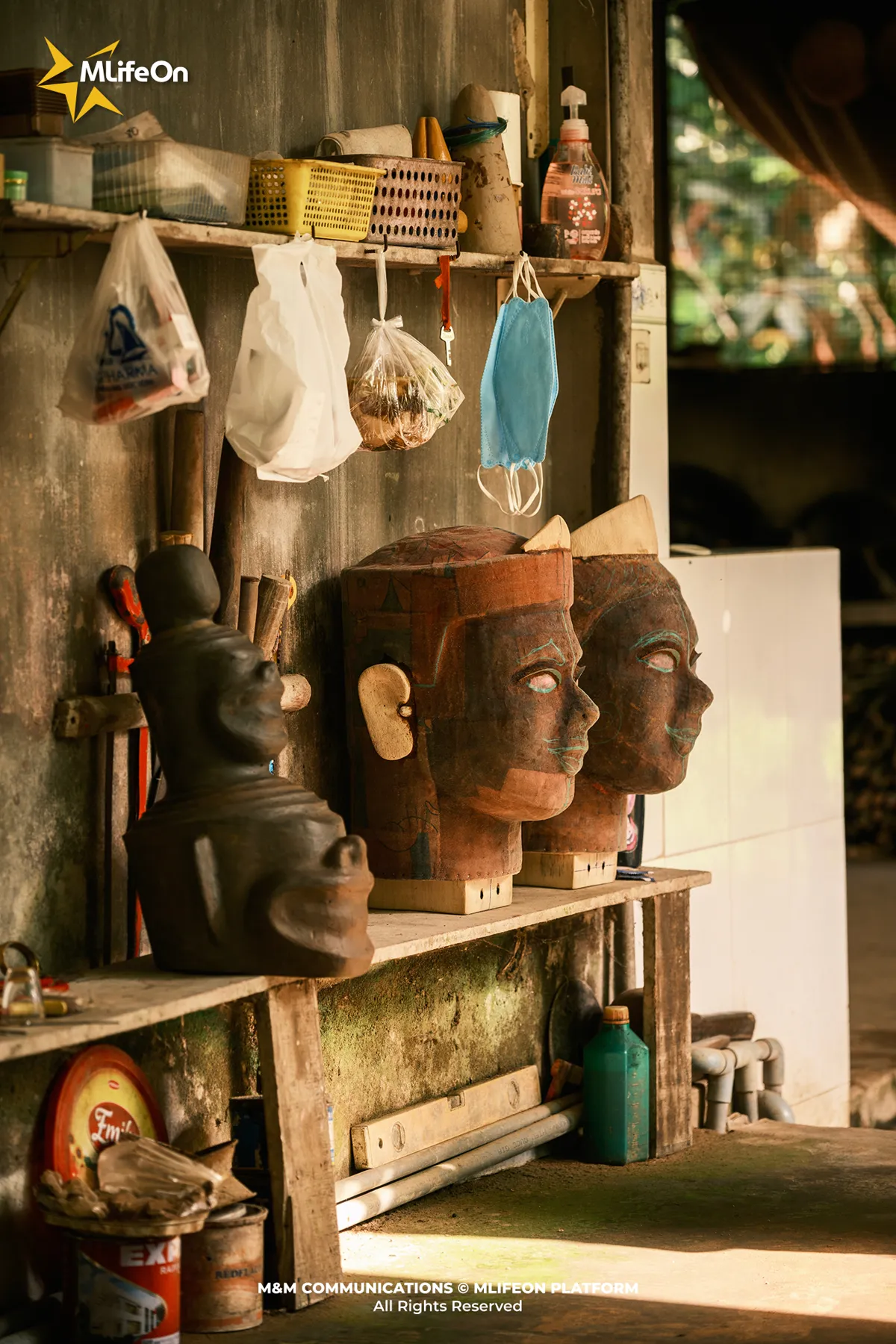
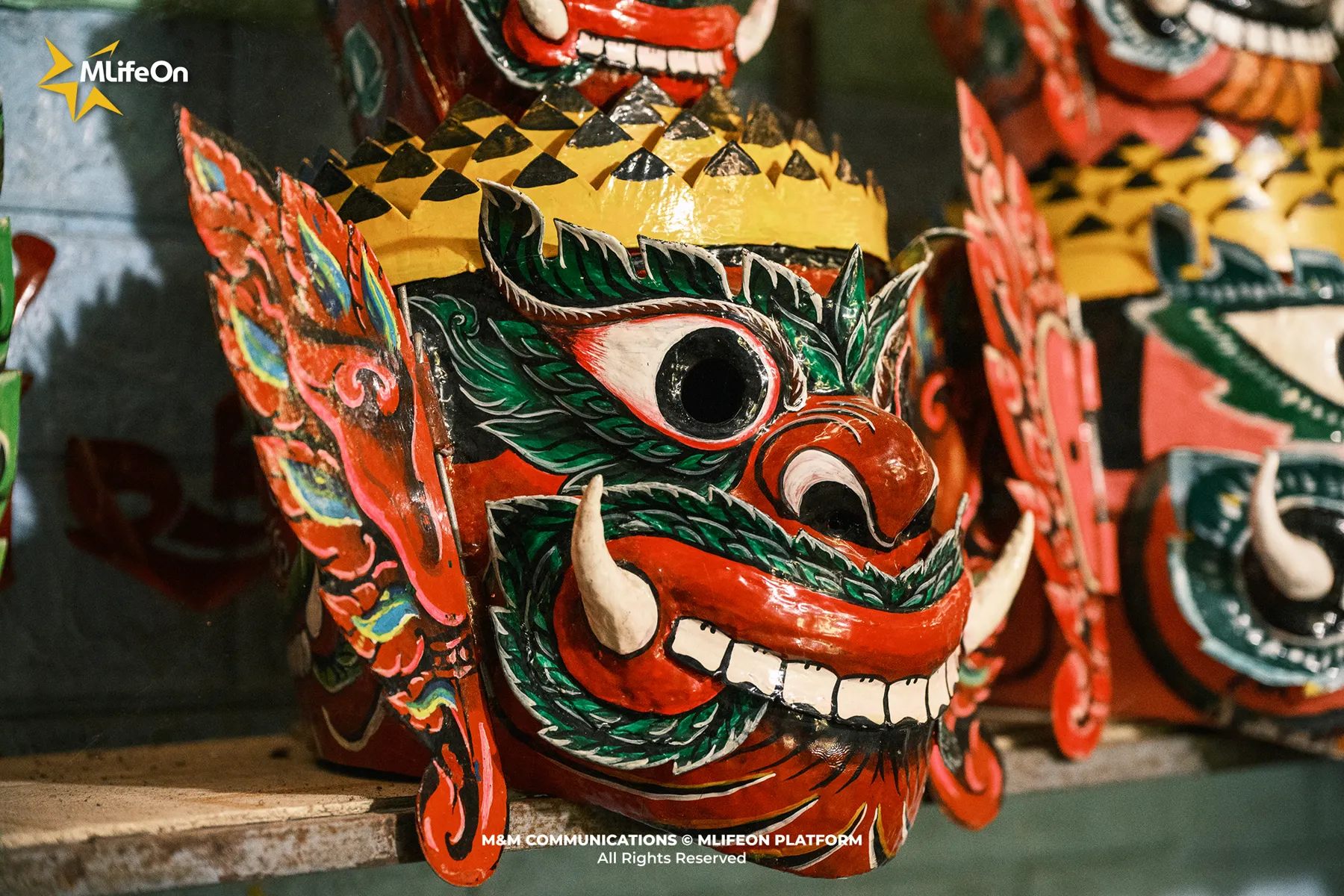
Khmer mask after completion
Sometimes it takes a whole month for an artisan to complete a single crown or mask. Each product is therefore not just an object, but a labor of love, patience, and reverence for the national culture.
Each crown, each mask, tells a story of craftsmanship, patience, and love of culture. No color is meaningless, no shape is random.
Conclusion
Khmer ceremonial hats and masks are not simply costumes. They are the soul of Khmer performing arts, a convergence of beliefs, art, and national identity. Preserving these headdresses and masks means preserving memories, maintaining faith, and ensuring that Khmer culture continues to shine in contemporary life.
—-----
CREDIT:
- Photography: Luan Nguyen
- Content: Giang Huynh
- Design: Trung Huynh