In the fertile land of An Giang, where the Khmer culture of the South blends with the rhythm of river life, there is a traditional cake that has existed for hundreds of years, attached to the life of the Khmer people as an indispensable part of their memories: Ka Tum cake. Not only a dish, Ka Tum is also a symbol of ingenuity, love of work and cultural identity.
Follow MLifeOn to An Giang to discover this special cake, as well as listen to the story of the Ka Tum cake maker.
A culinary feature of Southern Khmer
Southern Khmer cuisine is famous for its simplicity but sophistication, closely linked to community life and beliefs. In that treasure, Ka Tum cake is a special dish, both of culinary value and containing profound cultural meaning.
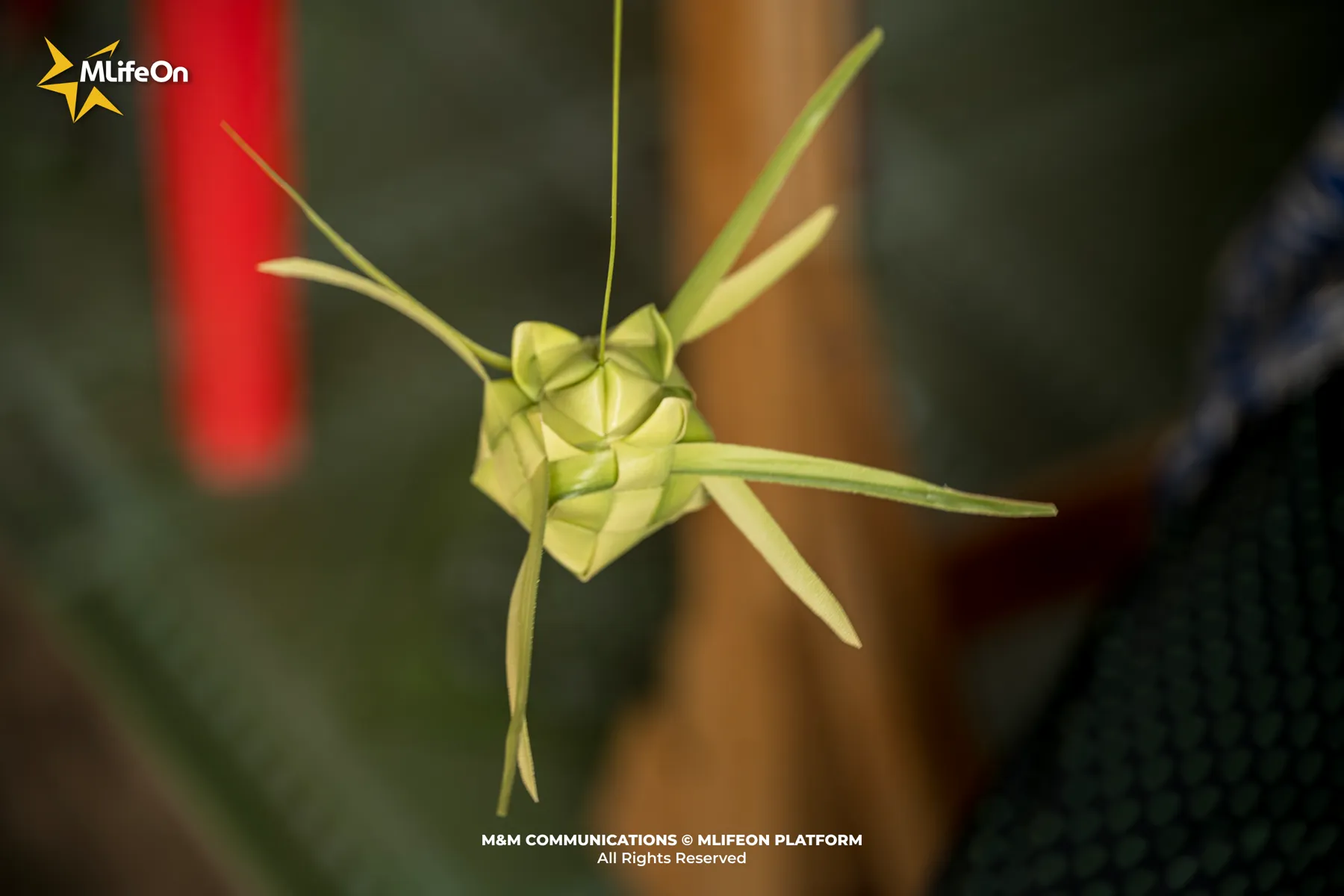
Ka Tum - a special cake of the Khmer people
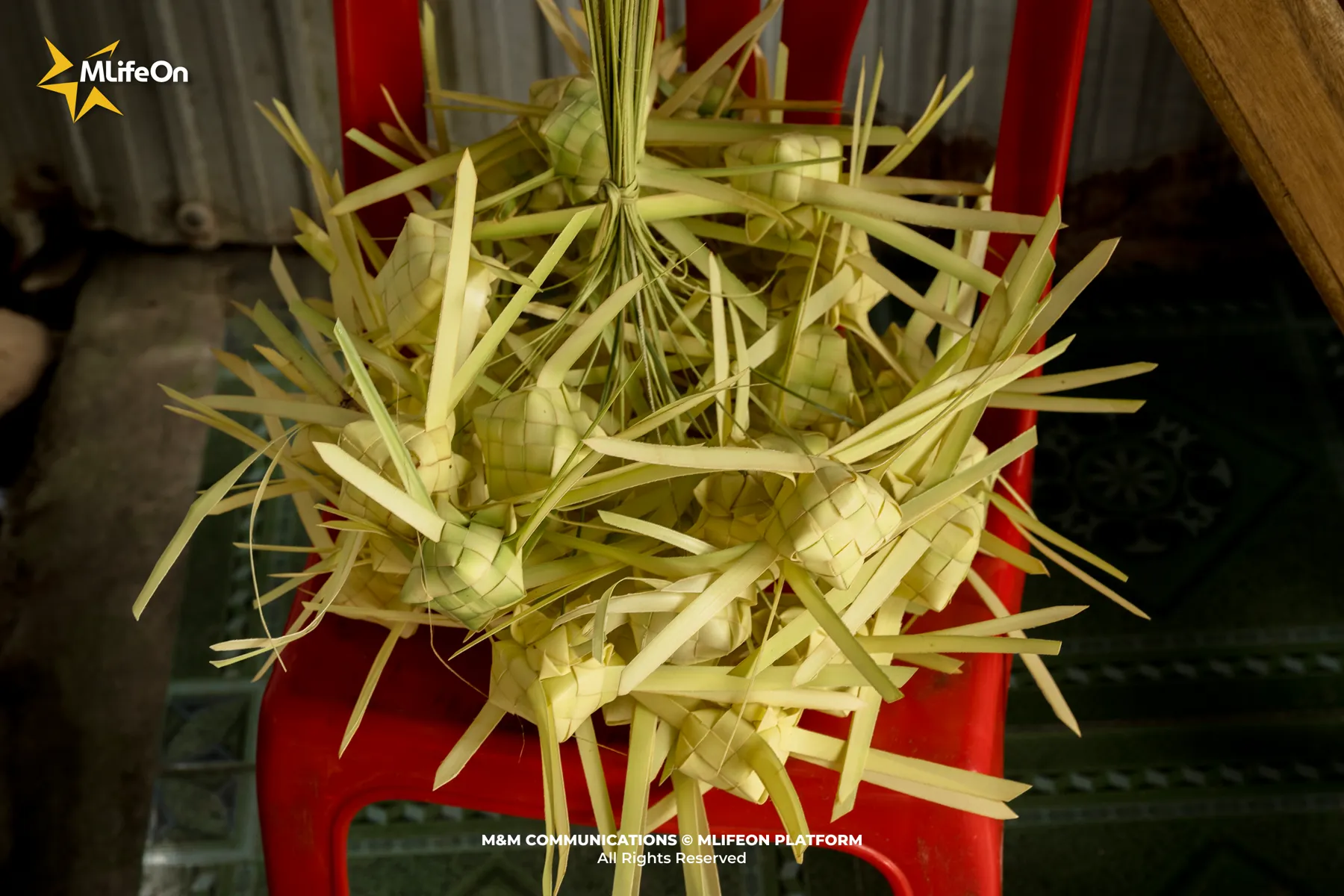
In Khmer, “Ka Tum” means “pomegranate”. Perhaps because the cake’s shape resembles a pomegranate after being wrapped, the name Ka Tum was given to the cake by the Khmer people.
The Ka Tum cake has the shape of a pomegranate, with the top of the leaves blooming like flower petals, both beautiful and reminiscent of fertility and growth. Therefore, the cake often appears on important occasions such as: the traditional Chol Chnam Thmay New Year, weddings, and pagoda festivals. In religious life, the Khmer people believe that if the tray of offerings has Ka Tum cake, the family will be fuller, happier, and life will be harmonious and peaceful.
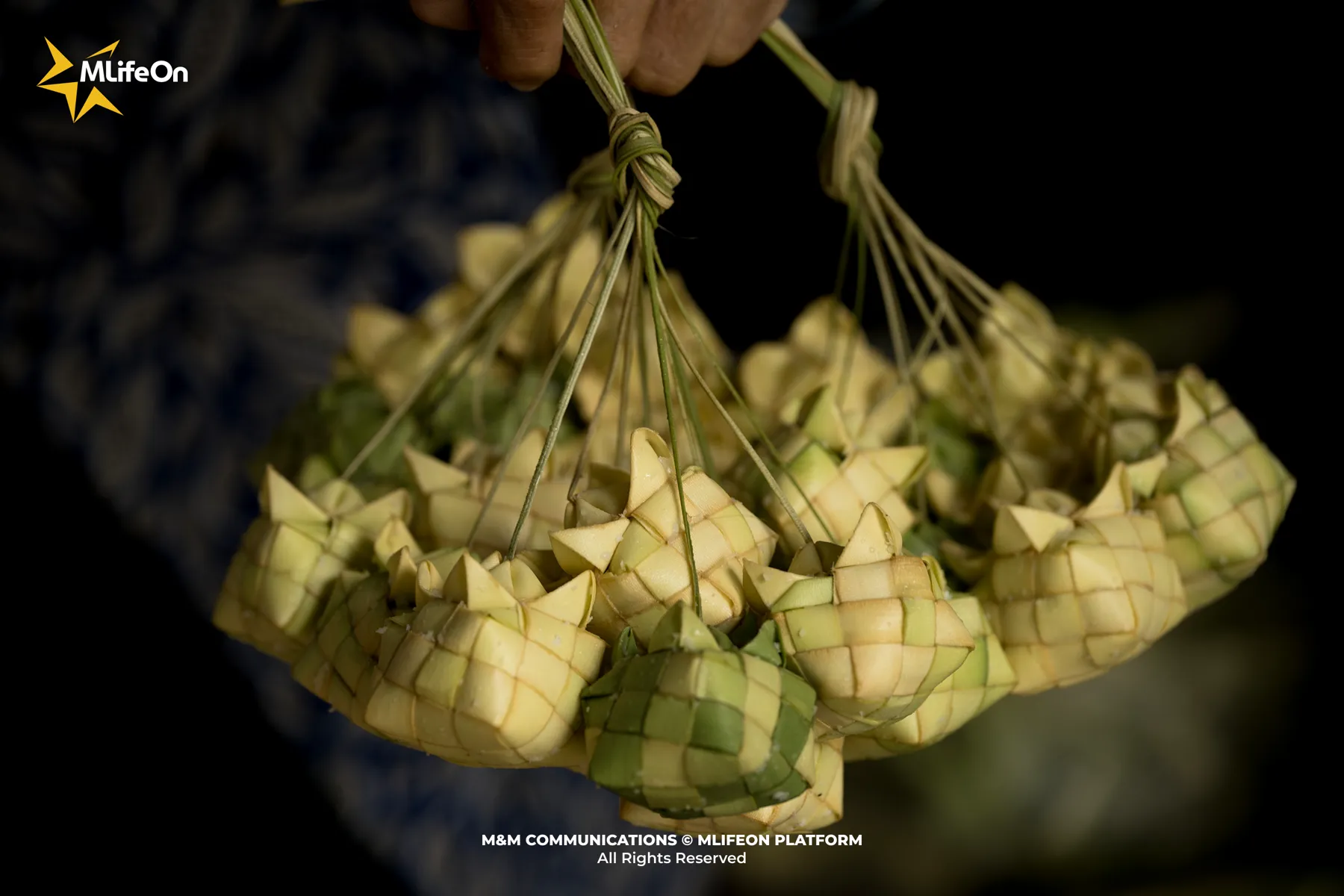
Ka Tum cakes are shaped like pomegranates.
Not only does it have a symbolic meaning, Ka Tum cake is also a testament to the ingenuity of the Khmer people. From choosing leaves, weaving them into baskets, to making the filling and wrapping them beautifully and correctly… everything requires meticulousness, patience and hard work. That is why each Ka Tum cake made is not only a dish, but also a work of art, a part of memory wrapped in each leaf.
In a conversation with artisan Neang Phuong, who has been involved in making Ka Tum cakes for more than 40 years in O Long Vy commune (now merged into Thanh My Tay commune, Chau Phu district, An Giang province), I clearly felt that each cake is not only wrapped by hands, but also by the soul, memories and pride of a community.
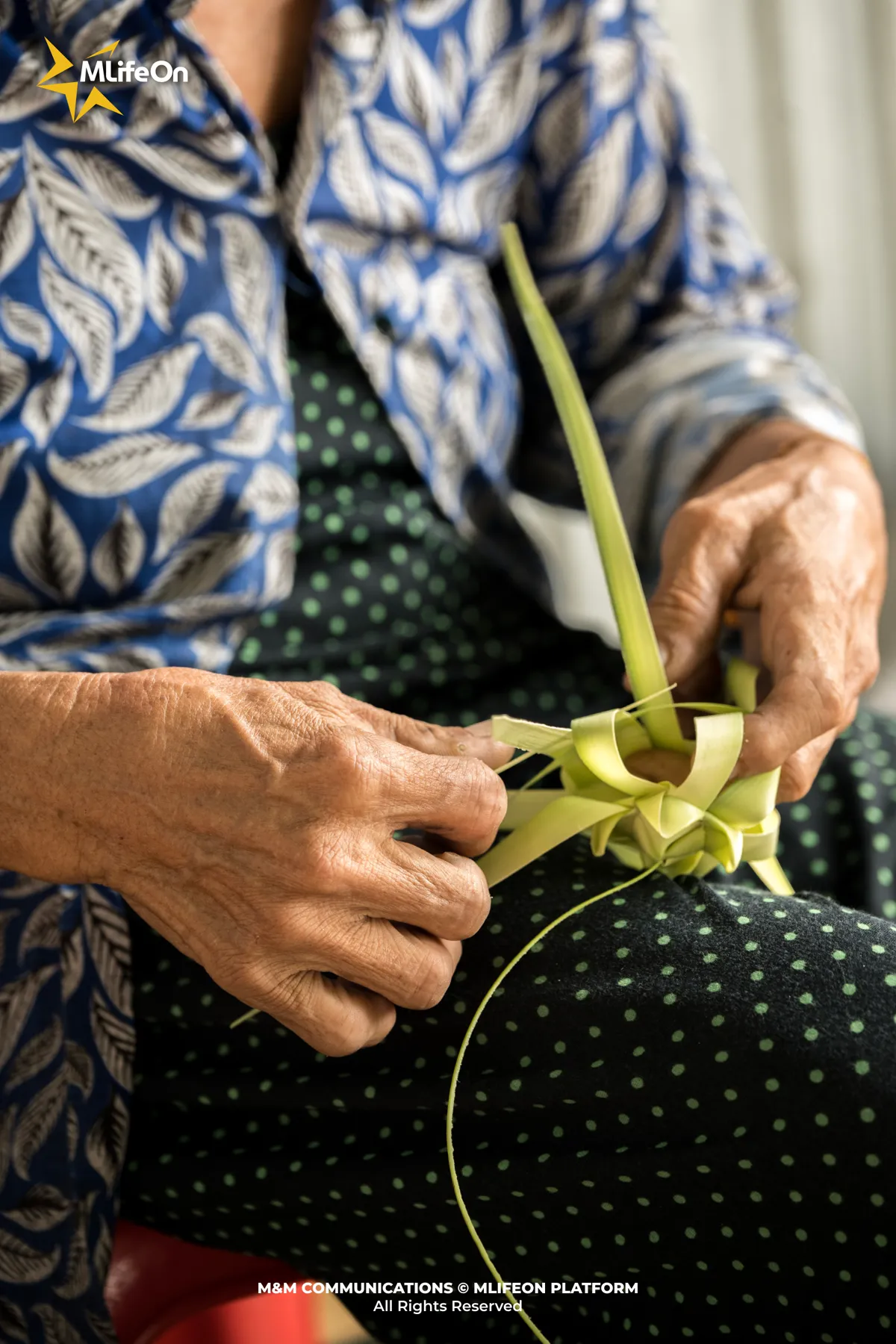
The keeper of the soul of the cake
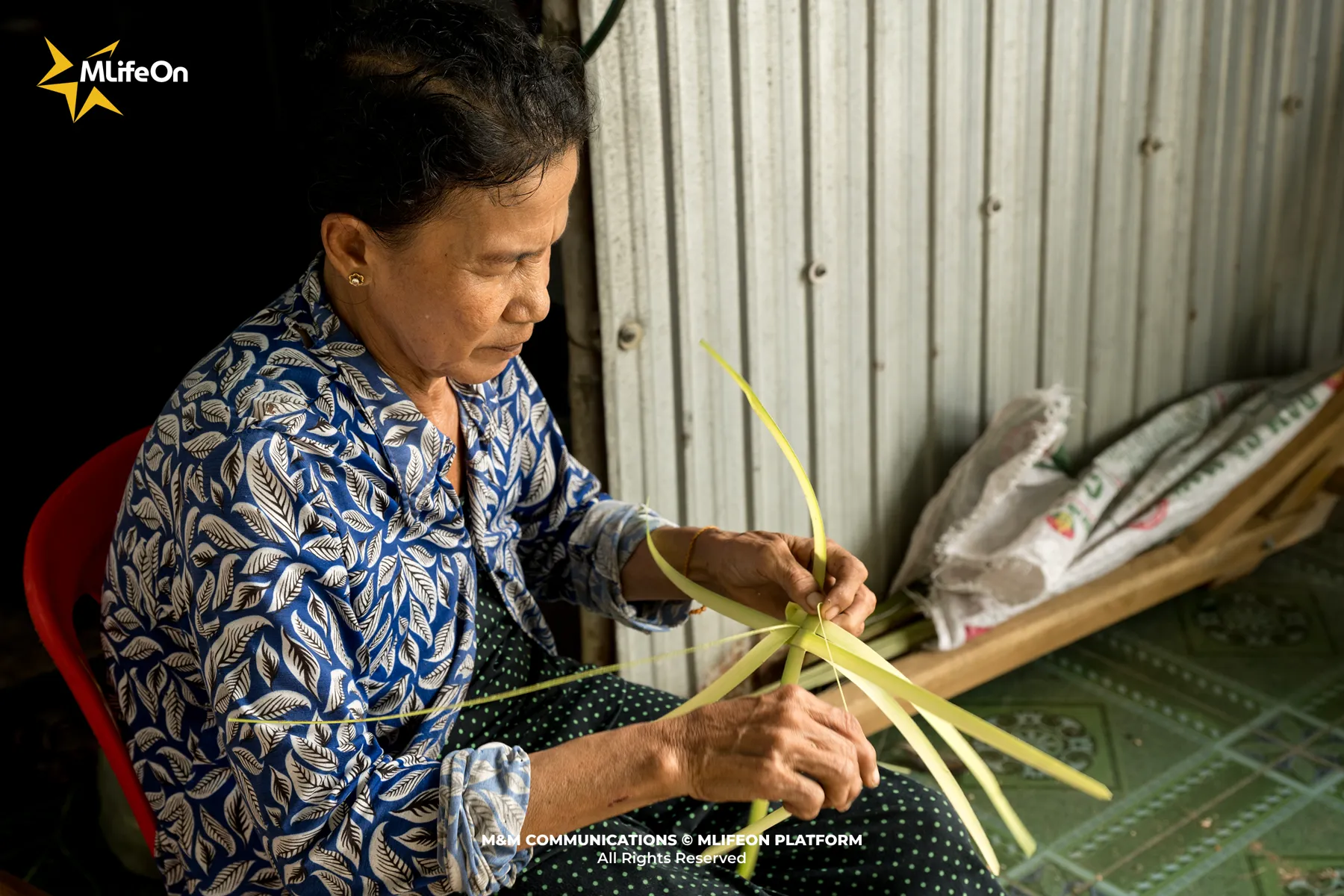
For over 40 years, Ms. Neang Phuong has been working diligently with young palm leaves, attached to the profession of wrapping Ka Tum cakes as if it were part of her flesh and blood.
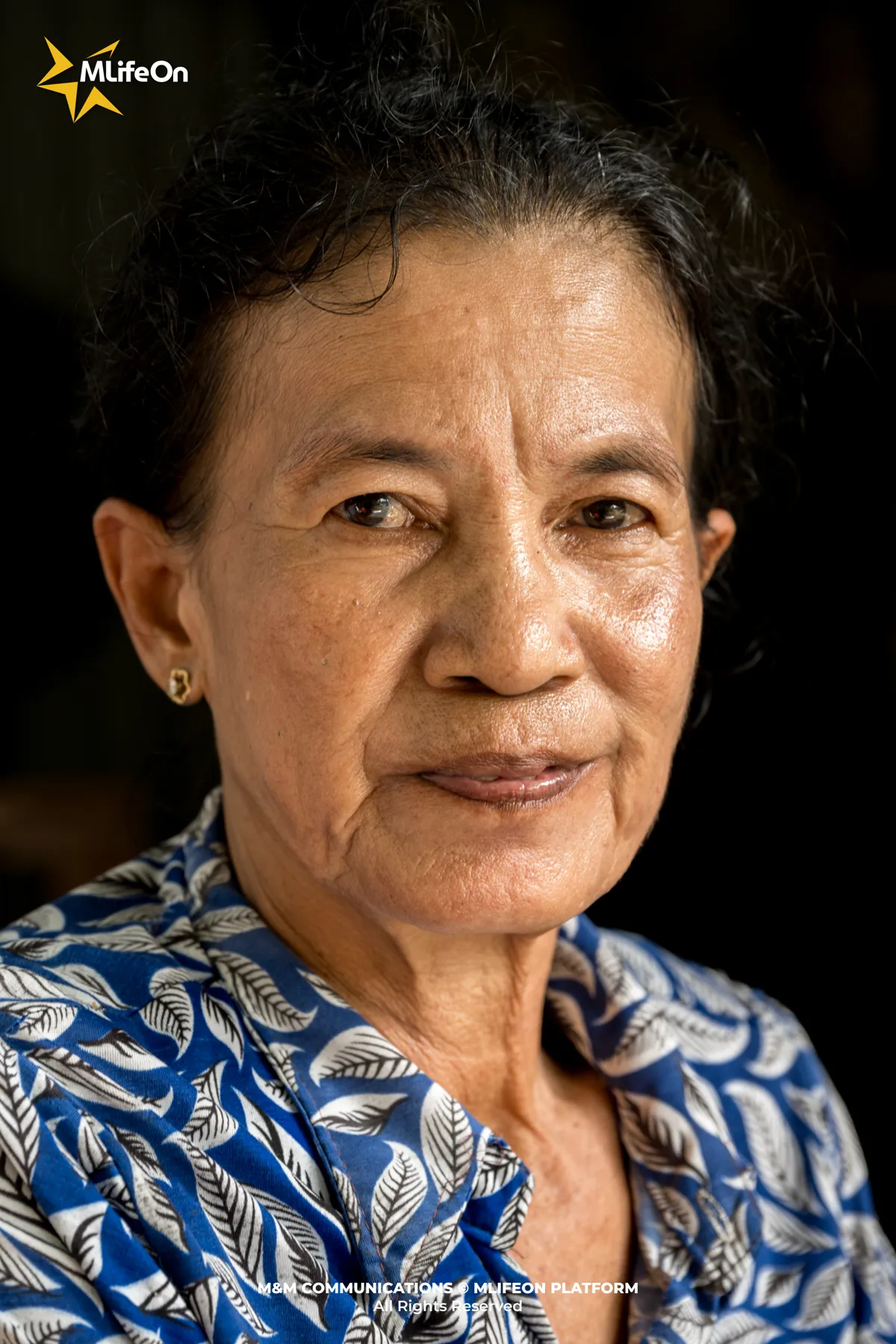
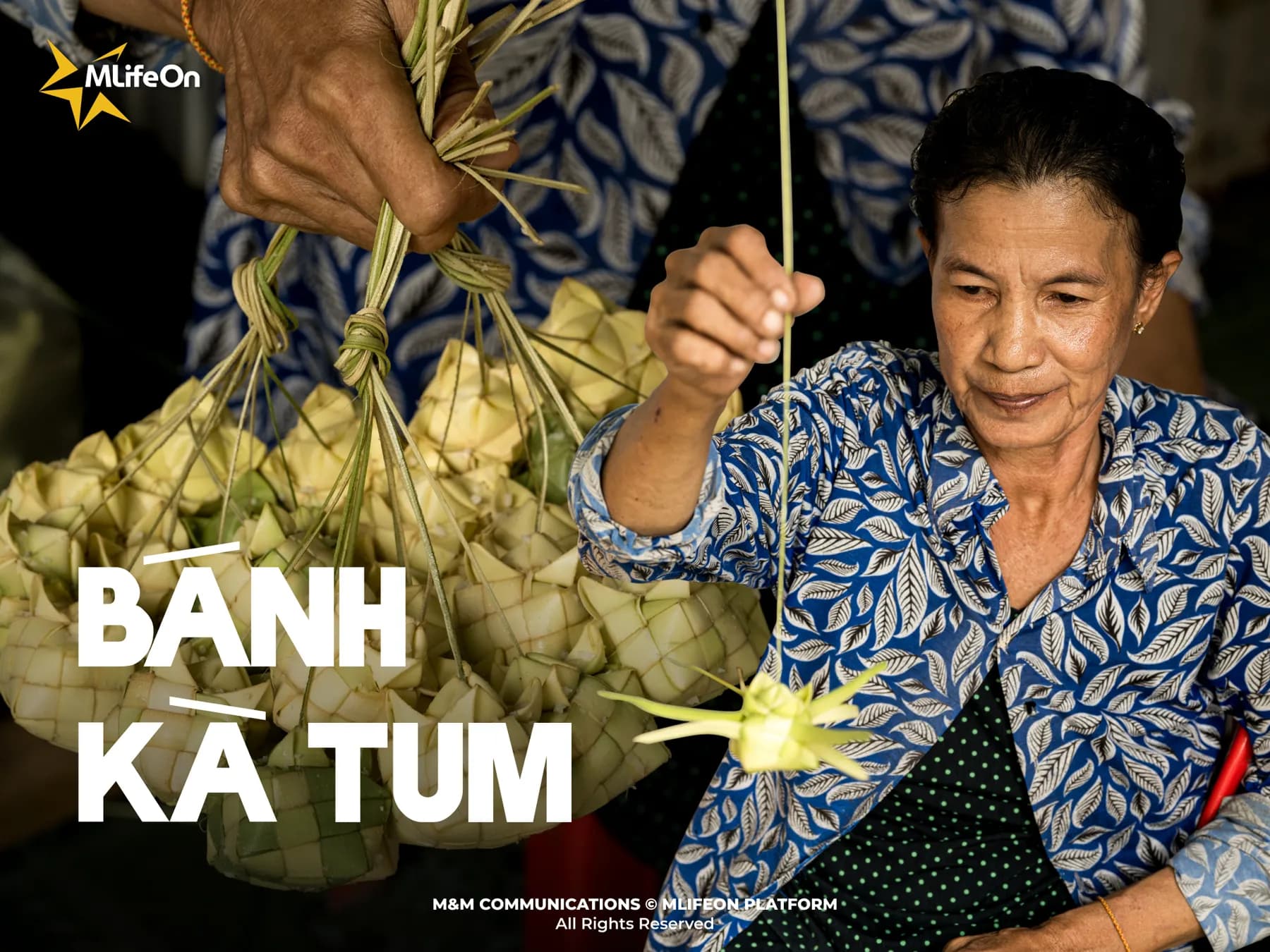
Mrs. Neang Phuong - Ka Tum cake maker in An Giang
On average, she wraps more than 100 cakes every day, and on days when there are many orders, that number increases by one and a half times, even nearly 200 cakes. She supplies cakes to customers inside and outside the province, from familiar people in the commune to tourists who come to An Giang to enjoy the traditional flavor.
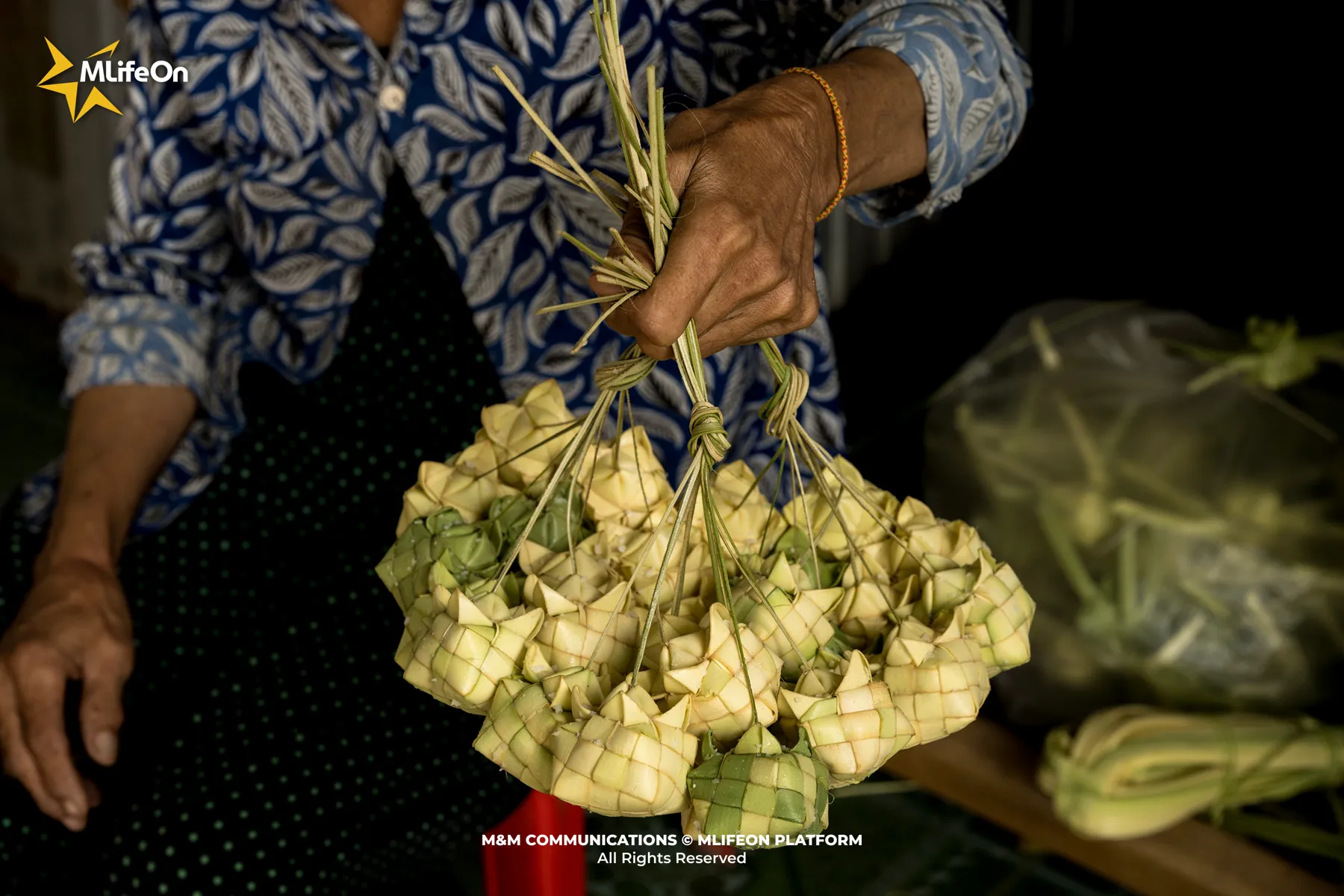
Mrs. Neang Phuong and the newly wrapped Ka Tum cakes
What is special is that Ka Tum cakes are not only made during big holidays such as Chol Chnam Thmay, weddings, pagoda festivals, but even on normal days, she still wraps cakes regularly. For her, each cake sold is not only a source of income, but also a way to preserve the profession, to remind everyone that Khmer culture still exists in every simple dish.
She shared that wrapping Ka Tum cakes “correctly” is an art. The craftsman must choose young palm leaves that are soft enough, cut them into equal pieces, then weave them into a square basket with the top part blooming like flower petals. When adding the filling, the right hand must be skillful so that the sticky rice, beans, and coconut are neatly placed inside, not exposed outside. The mouth of the basket is tied with a layer of sturdy leaves, which is both beautiful and keeps the cake from bursting when cooked. A standard cake must be tight, with no gaps in the filling, well-proportioned, the color of the leaves after cooking must be naturally light yellow, the filling inside must be soft and fragrant, the beans must be rich, the coconut must be fatty, and especially it must have the characteristic smell of palm leaves.
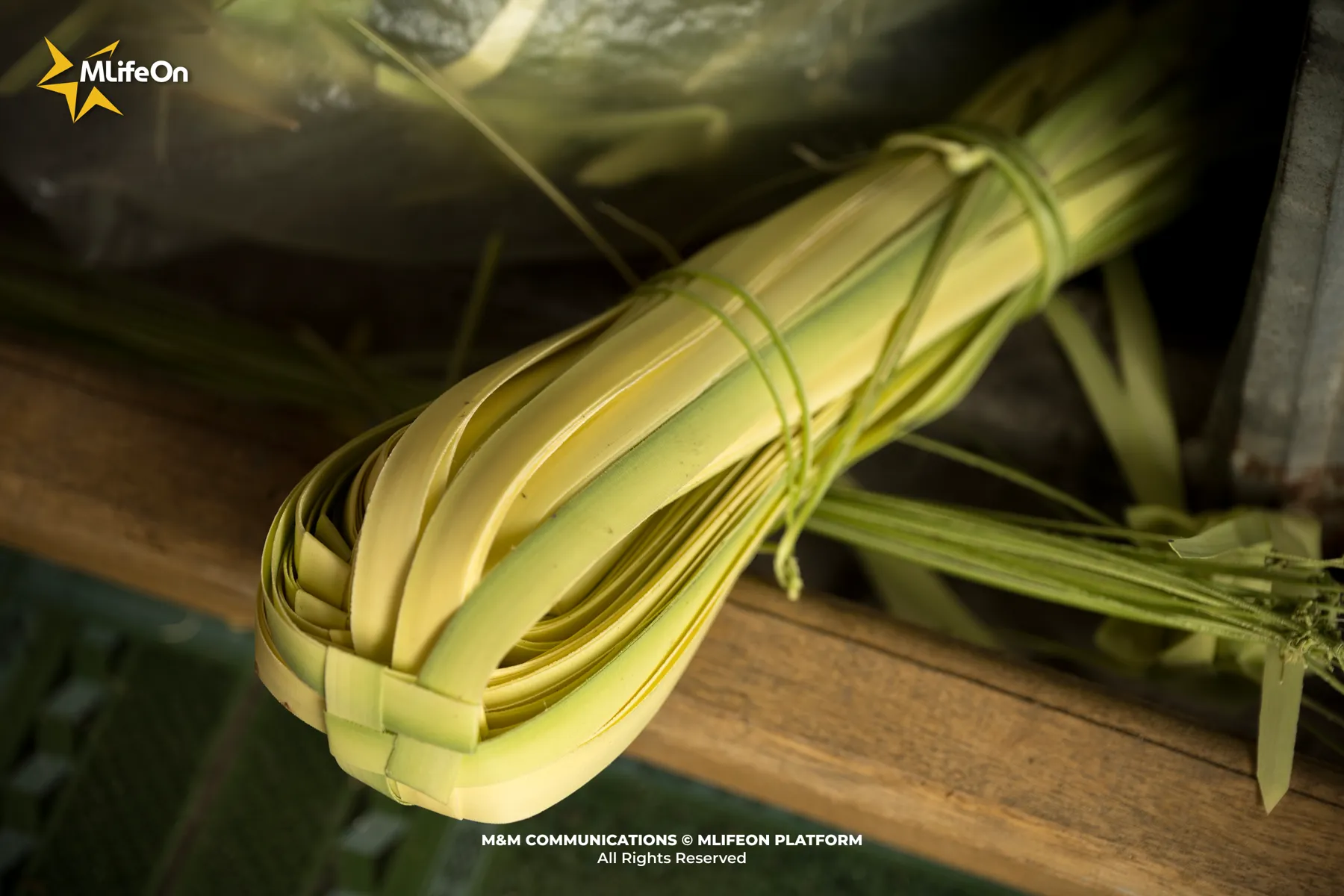
Young palm leaves after being cut into equal pieces
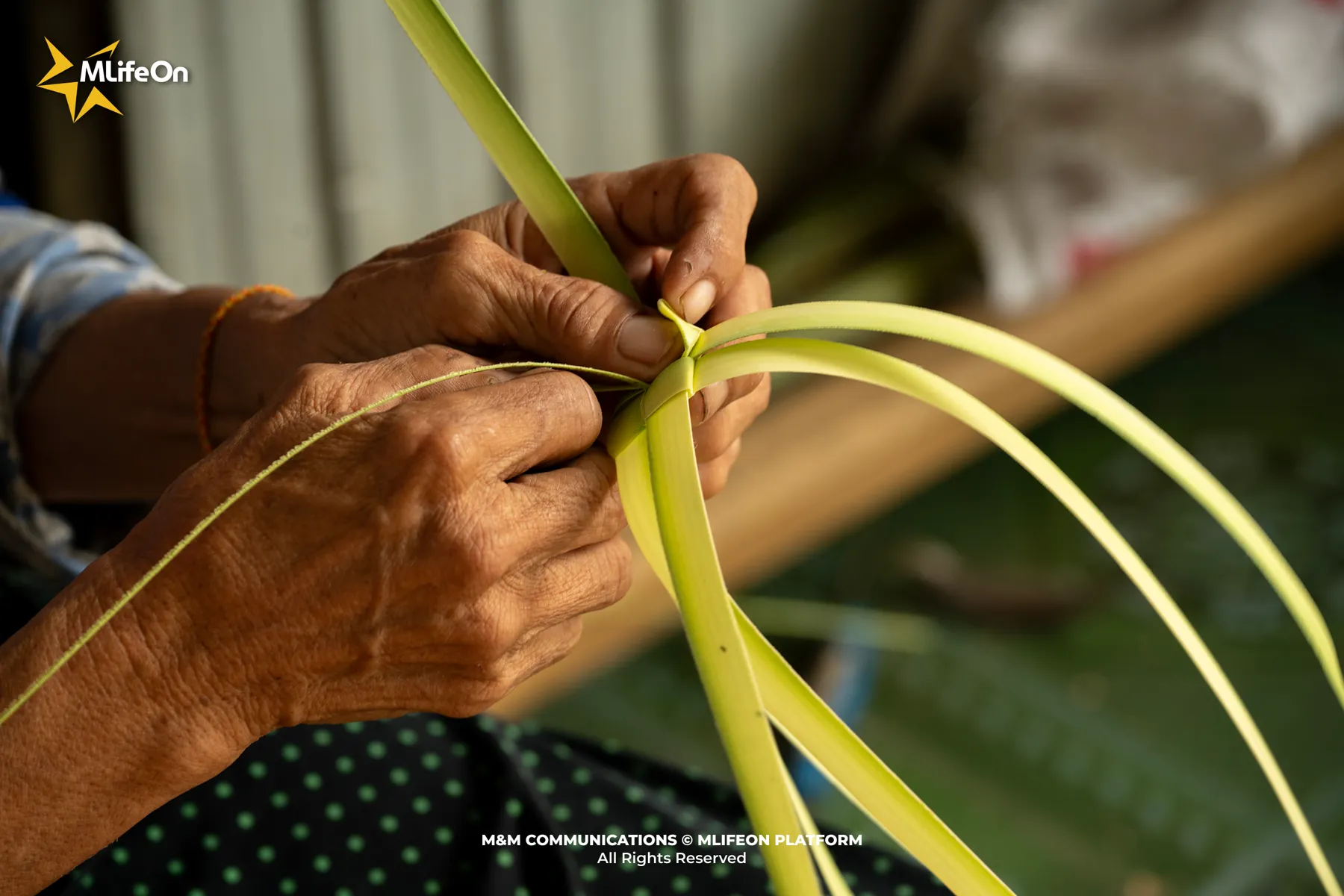
Palm leaves are woven into baskets
Her greatest joy is not only seeing customers enjoy the cakes, but also when she can pass on the craft to the women in the commune. She said: “I learned the craft from my mother, then passed it on to my children and grandchildren. Now, I still wrap cakes every day, both to make a living and to preserve the craft.”
Every time someone comes to learn, she patiently shows them each leaf, each way of wrapping the filling, each secret to keep the cakes from falling apart when cooked. She said, “Making cakes is not difficult, but you have to be persistent, you have to wrap them with all your love for the job.”
For Ms. Neang Phuong, making Ka Tum cakes is a source of pride, a way to prolong the memories of the Khmer community in the South. And it is her own hands that keep the soul of the cakes alive, so that each small cake becomes a testament to the persistence of tradition and love for the culture of her homeland.
Past cakes - present stories
In the past, Ka Tum cake was a folk dish with profound spiritual value. The cake appeared on the tray of offerings on Tet holiday, in wedding ceremonies, in pagoda festivals - as a symbol of fulfillment. Now, under the influence and needs of the times, this type of cake is no longer a cake that only appears on special occasions, but every day, people can buy this cake when visiting An Giang. Because Ka Tum has become a typical tourist product of the land of seven mountains. Visitors coming here often buy cakes to enjoy and as gifts.
Although Ka Tum cakes are still made in large quantities every day and are still of interest and attention to tourists, the cake-making profession still exists in some areas with a large Khmer population. However, the number of artisans who are dedicated to the profession is not much. Preserving the profession and preserving the soul of the cake mainly depends on the passion of people like Mrs. Neang Phuong.
So in order for Ka Tum cakes to continue to be preserved, the Ka Tum cake-making profession to continue to be maintained and developed, there needs to be support from the government and the community:
-
Product promotion: bring Ka Tum cakes to festivals and cultural events.
-
Develop community tourism: combine cake wrapping experiences for tourists.
-
Training the younger generation: pass on the profession to the younger generation to preserve identity.
Folk culture is always alive if we know how to appreciate and preserve it.
Conclusion
Preserving the craft of making Ka Tum cakes is not just preserving a cake, but preserving a part of the soul of An Giang, of the Khmer people. And it is artisans like Mrs. Neang Phuong who have kept that story alive, so that future generations can still enjoy the traditional flavor, as a reminder that traditional culture is always present in each small but meaningful cake.
If you have time, visit An Giang, find Ka Tum cakes to enjoy and listen to the stories of the artisans here. Because it will not only be a new experience but also a part of the soul of Khmer culture waiting for you to discover.
—------
CREDIT:
- Photography: Luan Nguyen
- Content: Giang Huynh
- Design: Phuong Nguyen