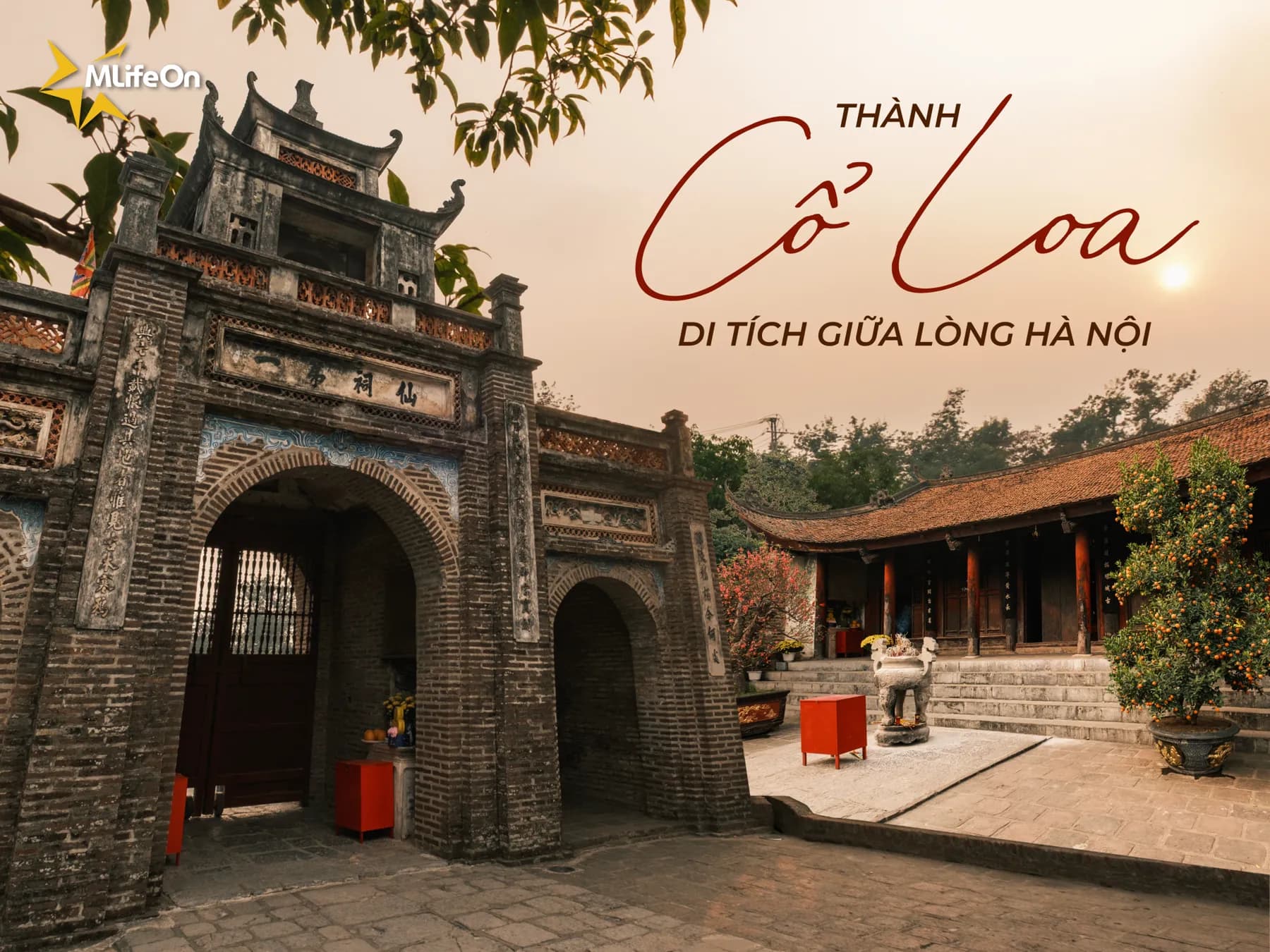
In the heart of Dong Anh district, Hanoi, lies a special historical site that evokes memories of the nation's earliest history named Co Loa Citadel. More than just a remnant of an ancient capital, it serves as a vivid testament to the formation and development of Vietnamese culture from prehistoric times to the nation-building era.
Revisiting history
Co Loa Citadel, part of the Co Loa historical site, is a structure built in the 2nd-3rd centuries BC. As one of the oldest citadels in Southeast Asia, it is not only associated with the reign of King An Duong Vuong, but also preserves traces of many periods of Vietnamese archaeological culture. From the Son Vi culture dating back 20,000-11,000 years, to the Phung Nguyen culture about 4,000 years ago, then Dong Dau, Go Mun, and finally the Dong Son culture, all have left their mark here.
Archaeological sites such as Dong Vong, Bai Men, Dinh Chien, Dinh Trang, Ma Tre (within the Co Loa historical site)... have yielded tens of thousands of artifacts: tools, musical instruments, and bronze weapons. These discoveries not only shed light on the lives of ancient inhabitants but also affirm the role of Co Loa Citadel as an important cultural and political center in Vietnamese history.
In 208 BC, after unifying Au Viet and Lac Viet, An Duong Vuong established the Au Lac state and chose this land to build his capital. Co Loa Citadel, also known as Oc Citadel or Loa Citadel, originated from that time.
This is a large-scale military and political project, demonstrating the intelligence and strength of the ancient Vietnamese people.
Scale and architecture
Stepping into this place is like entering a completely different space, where every ancient temple, pagoda, and archaeological site evokes memories of a glorious bygone era.
A vast monument
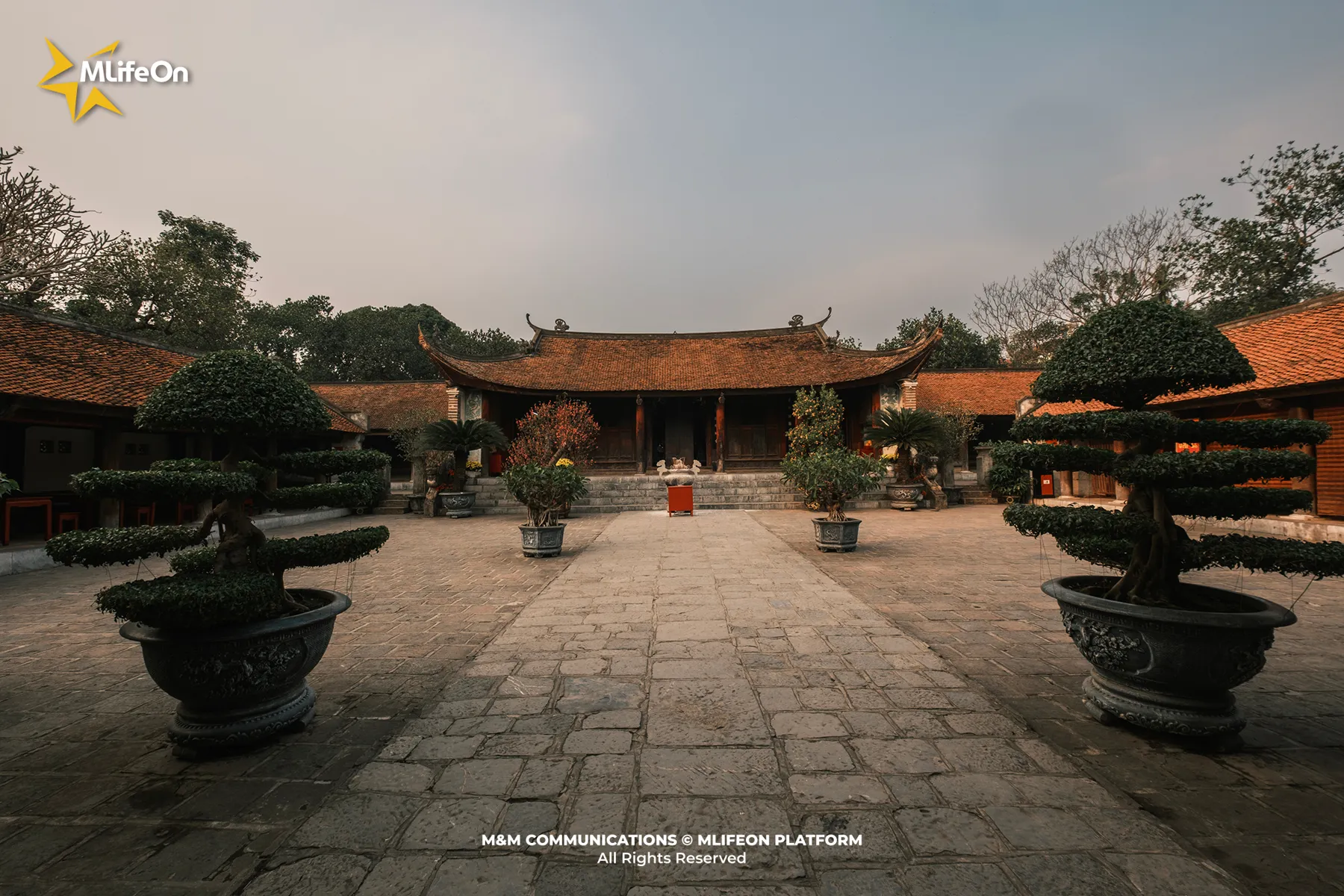
Legend has it that the ancient Co Loa citadel once had nine spiral walls. However, today, the site only has three layers of walls including the outer wall, the middle wall, and the inner wall. Furthermore, many studies have indicated that these layers of walls were likely constructed during completely different periods.
The Co Loa Citadel spans over 500 hectares. The outer wall has a circumference of approximately 8 km, surrounded by a moat and earthen walls 4-12 meters high. The middle wall is more fortified, with a circumference of 6.5 km and a similar structure. At the center is the triangular inner wall, covering approximately 2 km², which was once the residence of King An Duong Vuong and his royal family.
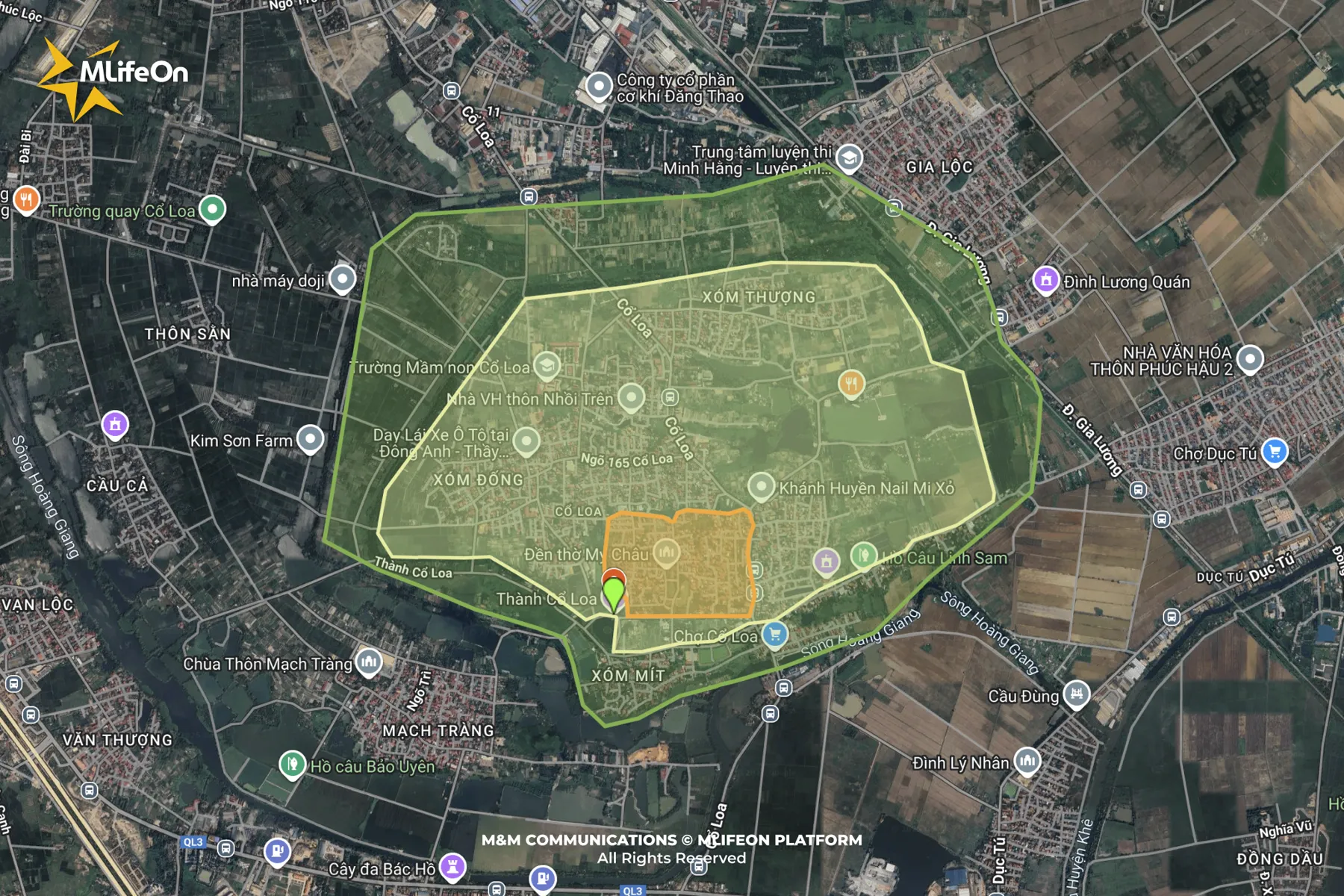
Diagram of Co Loa Ancient Citadel
Architectural highlights
A unique feature of the architecture of Co Loa Citadel is its feng shui-inspired layout: the walls curve along the natural terrain, combined with moats and mounds, creating a solid defense system that harmonizes with the landscape. The protruding mounds, known as "fire mounds," both enhance the defensive capabilities of the site and create a majestic appearance.
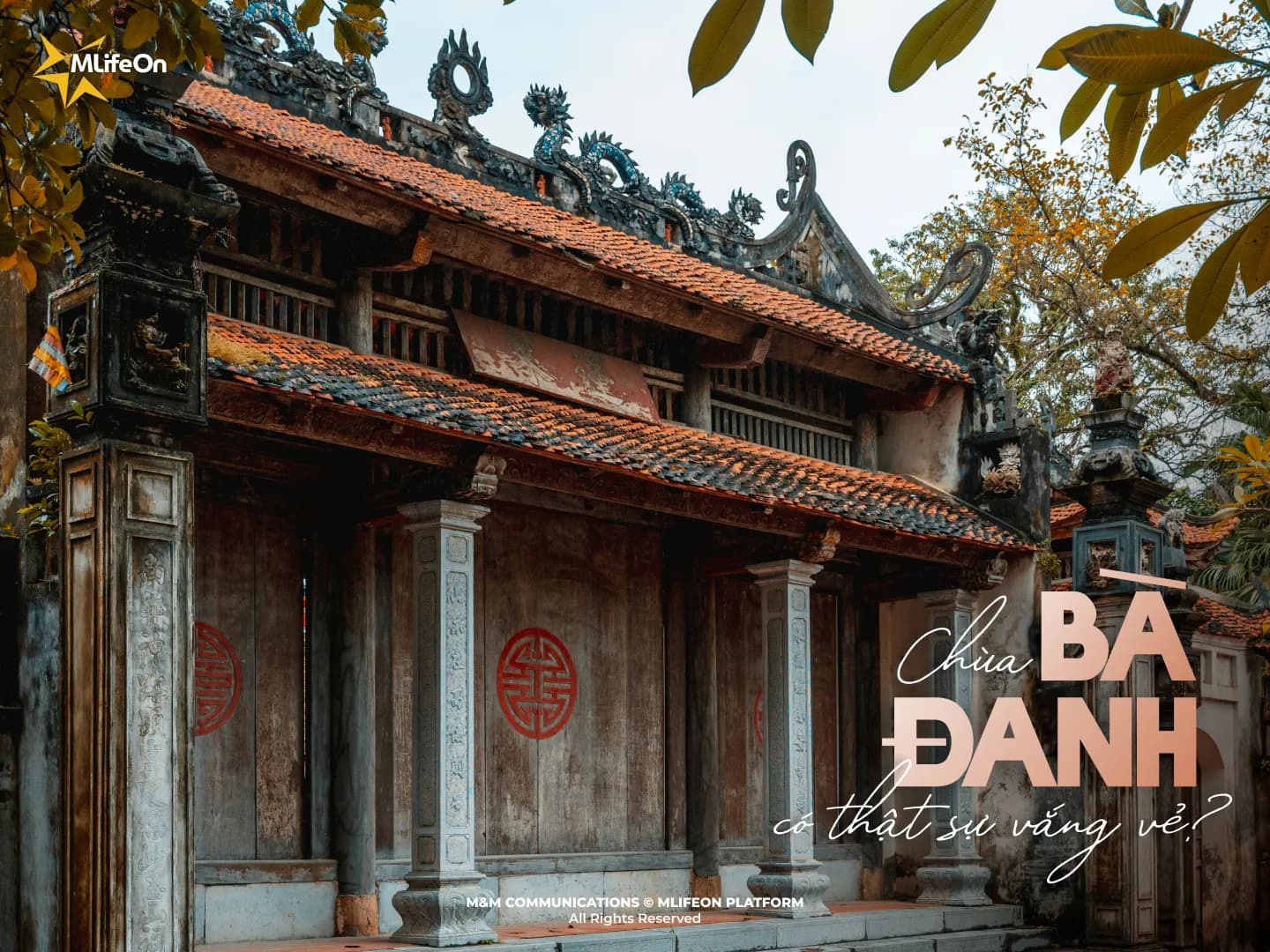
Today, many religious and architectural structures still exist in Co Loa Citadel. Each relic possesses its own unique architectural beauty and function, linked to historical legends. Among them, the most prominent and attractive to tourists is the Upper Temple - the place of worship for King An Duong Vuong.
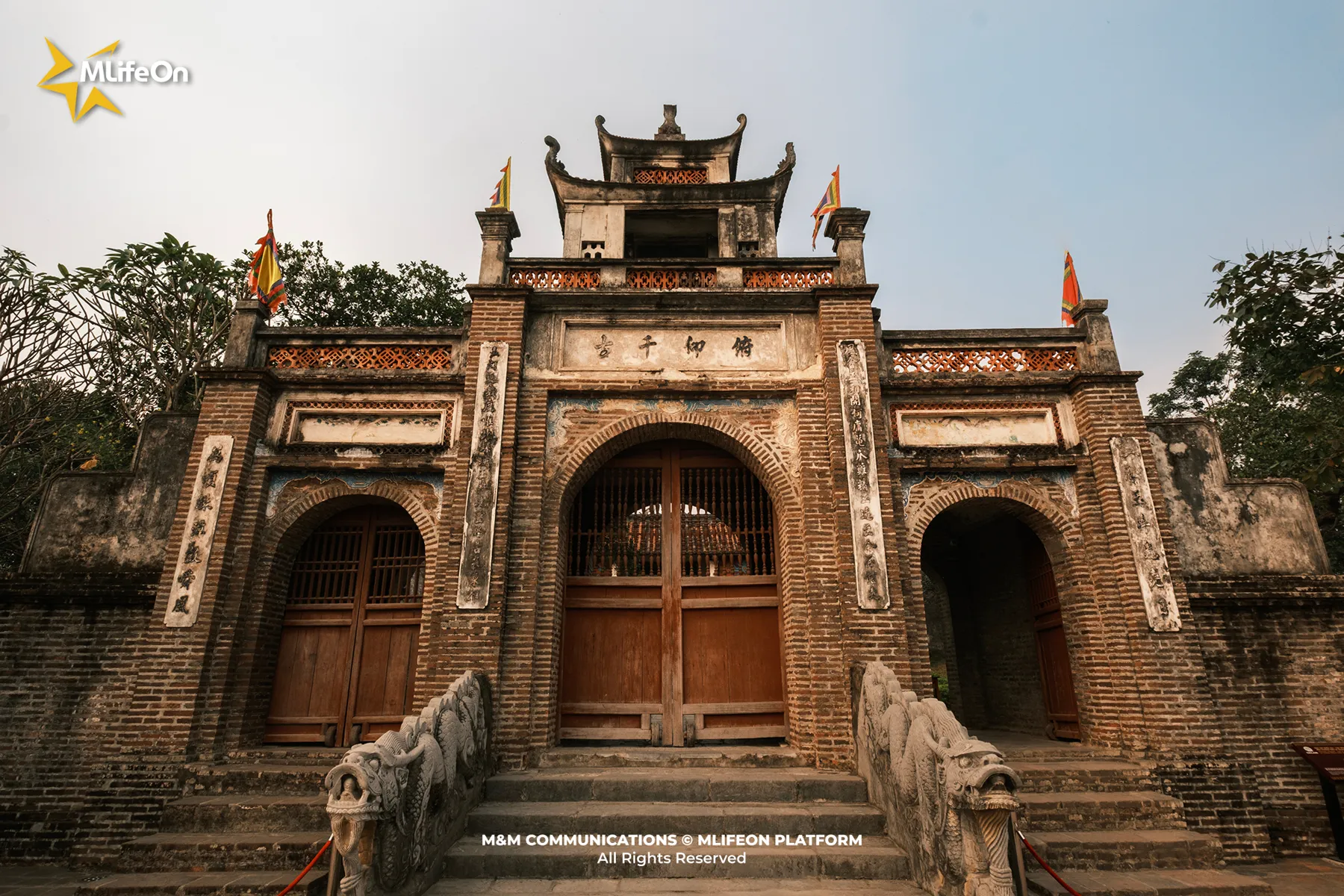
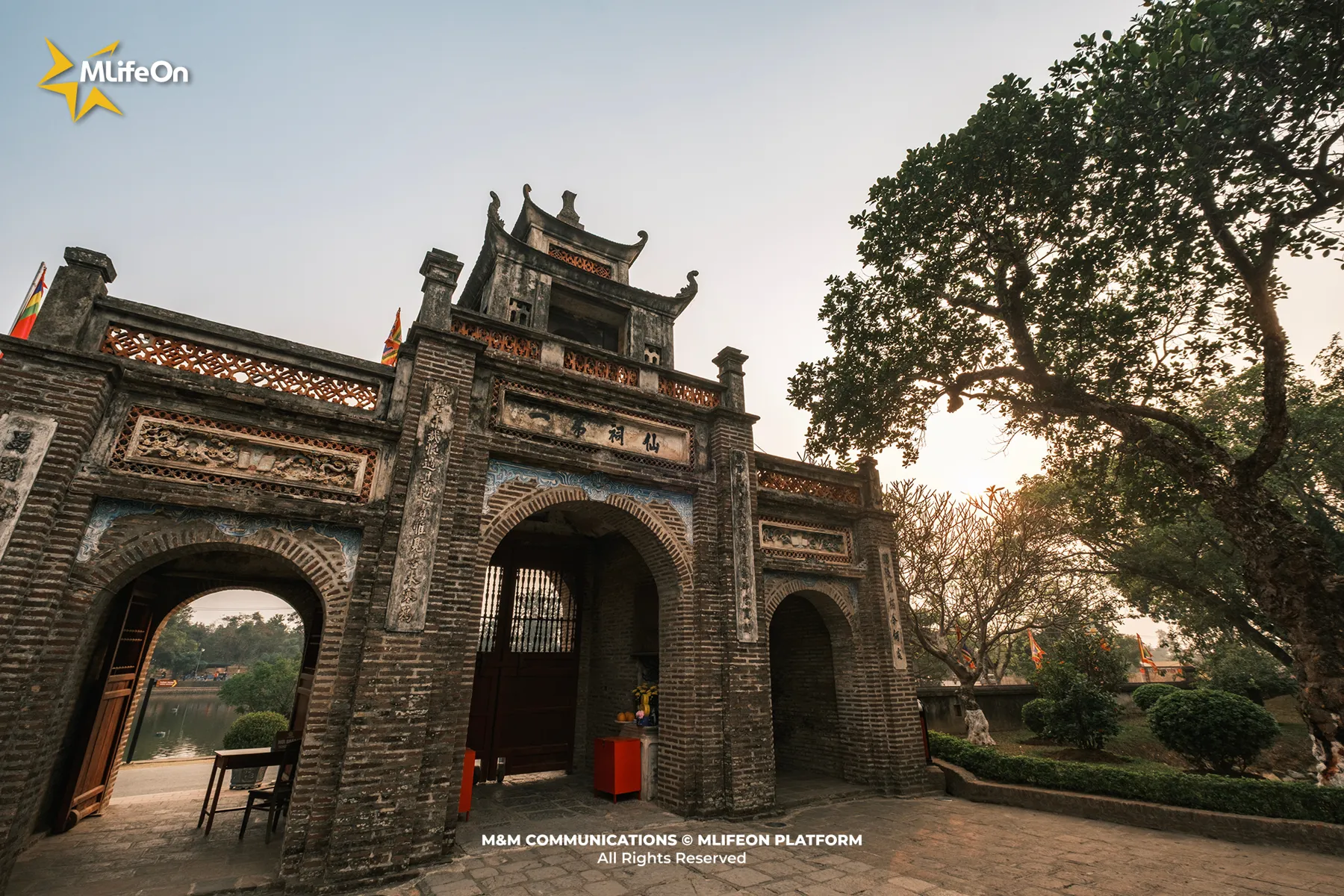
the triple-arched gate leading into the temple
The Upper Temple, situated on a plot of land nearly 19,139 m², is the religious center of Co Loa. The temple's architecture includes a three-bay, two-wing front hall, a central hall, and a rear sanctuary in the shape of a "hammer handle." Inside is a 200 kg bronze statue of King An Duong Vuong, cast in 1897.
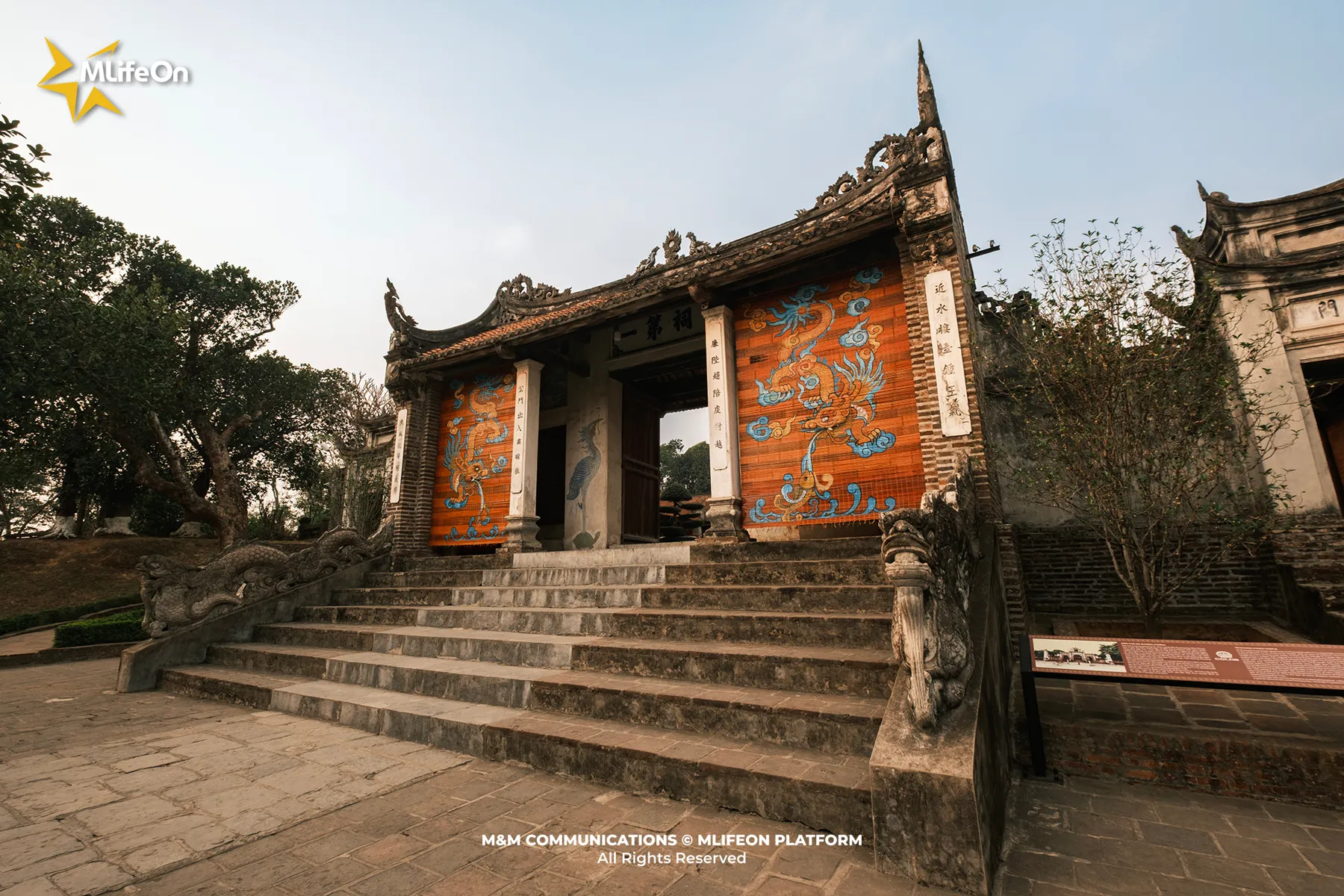
The main temple complex is situated on elevated ground.
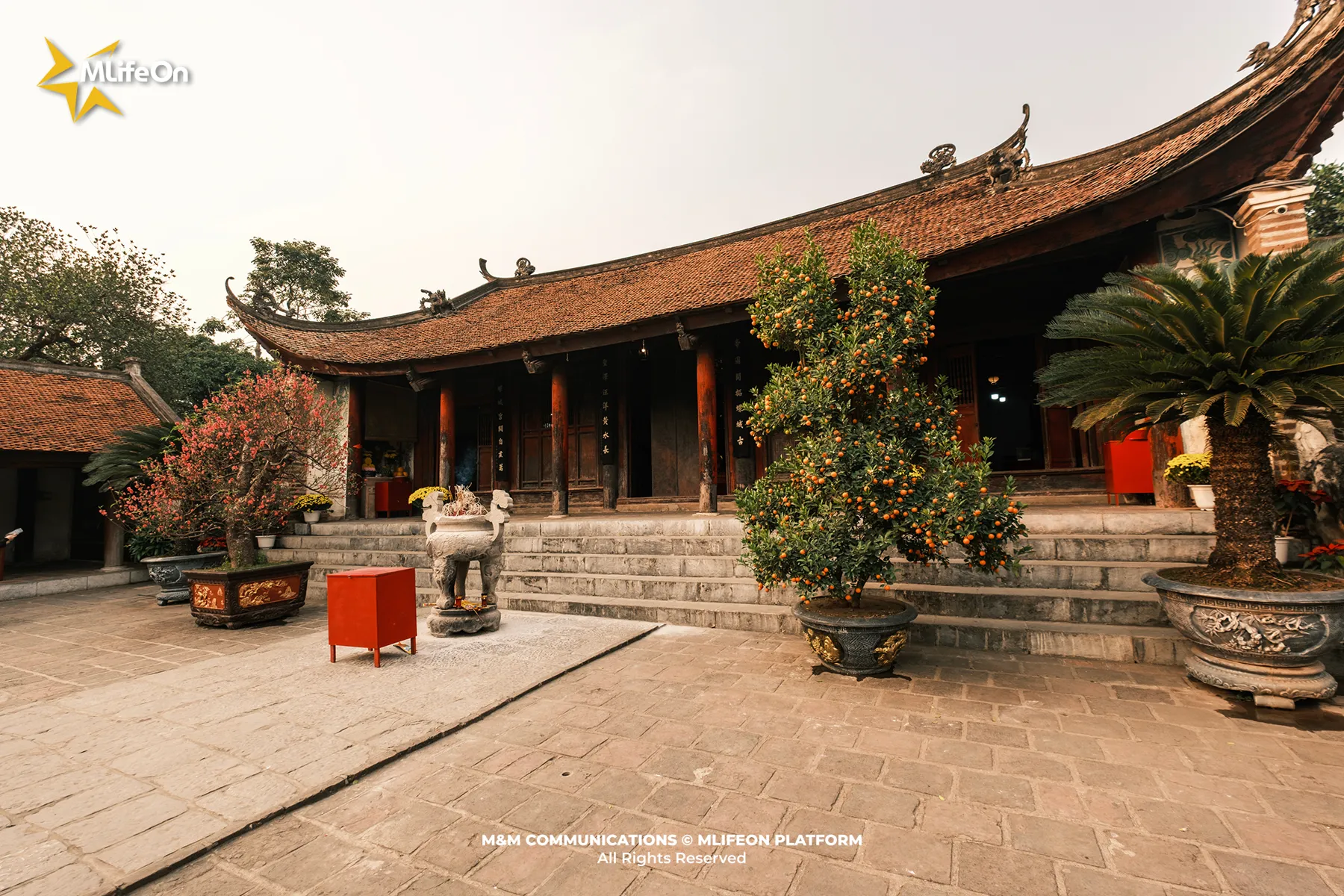
The temple was built in the style of a three-bay, two-wing traditional Vietnamese
The temple houses five stone steles and 53 precious artifacts, along with a pair of stone dragons in the late Le Dynasty style. The roof trusses are carved with "dragons playing in the clouds," and the wooden frame is painted in red and gold, showcasing traditional architectural art. This is also the site of the Co Loa Festival, held annually on the 6th day of the first lunar month to commemorate the coronation of King An Duong Vuong.
"When you die, you leave behind your children and grandchildren.
But while you're alive, you don't miss the 6th day of the first lunar month."
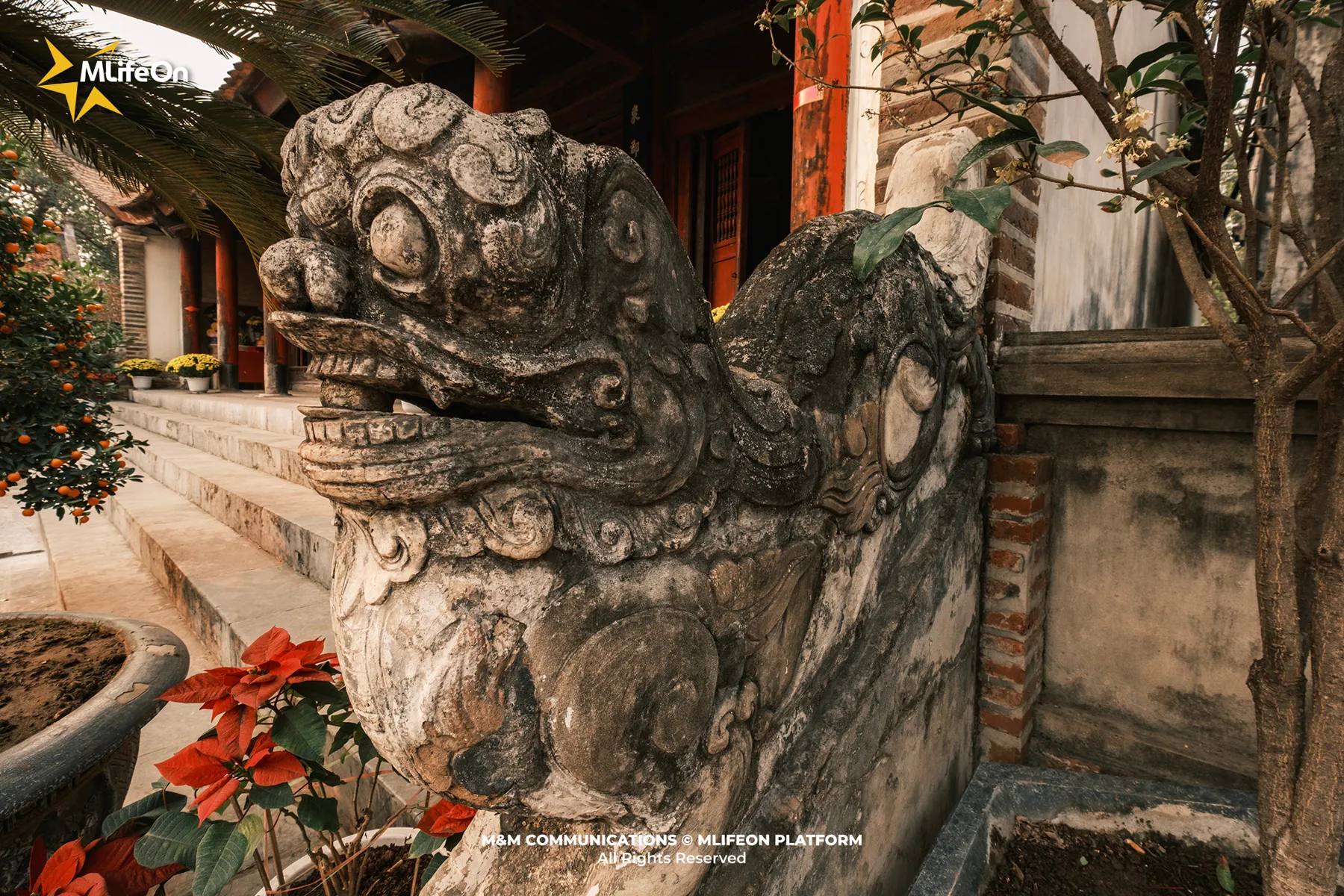
Stone dragons in the late Le Dynasty style.
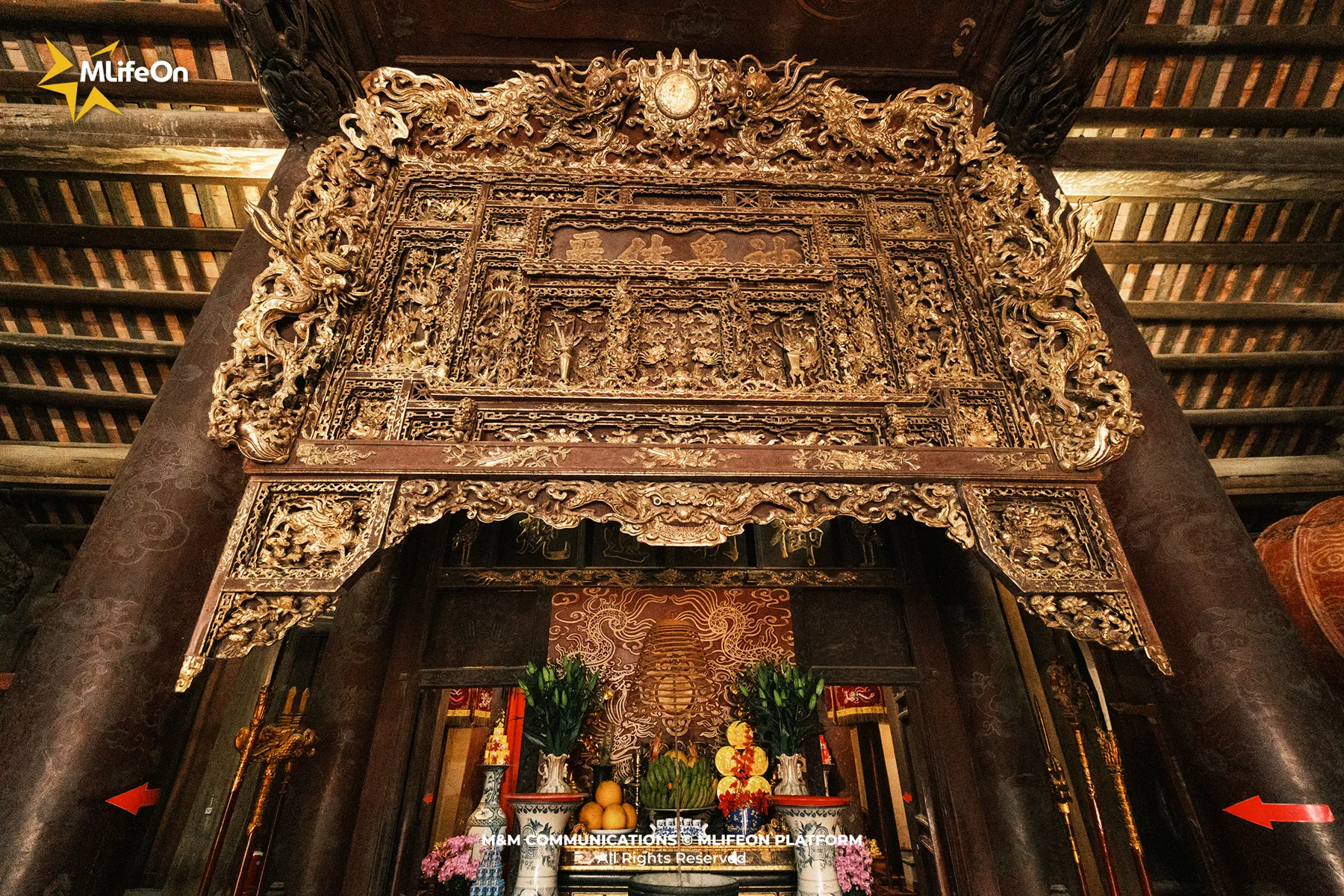
The altar area features carved and gilded wooden elements
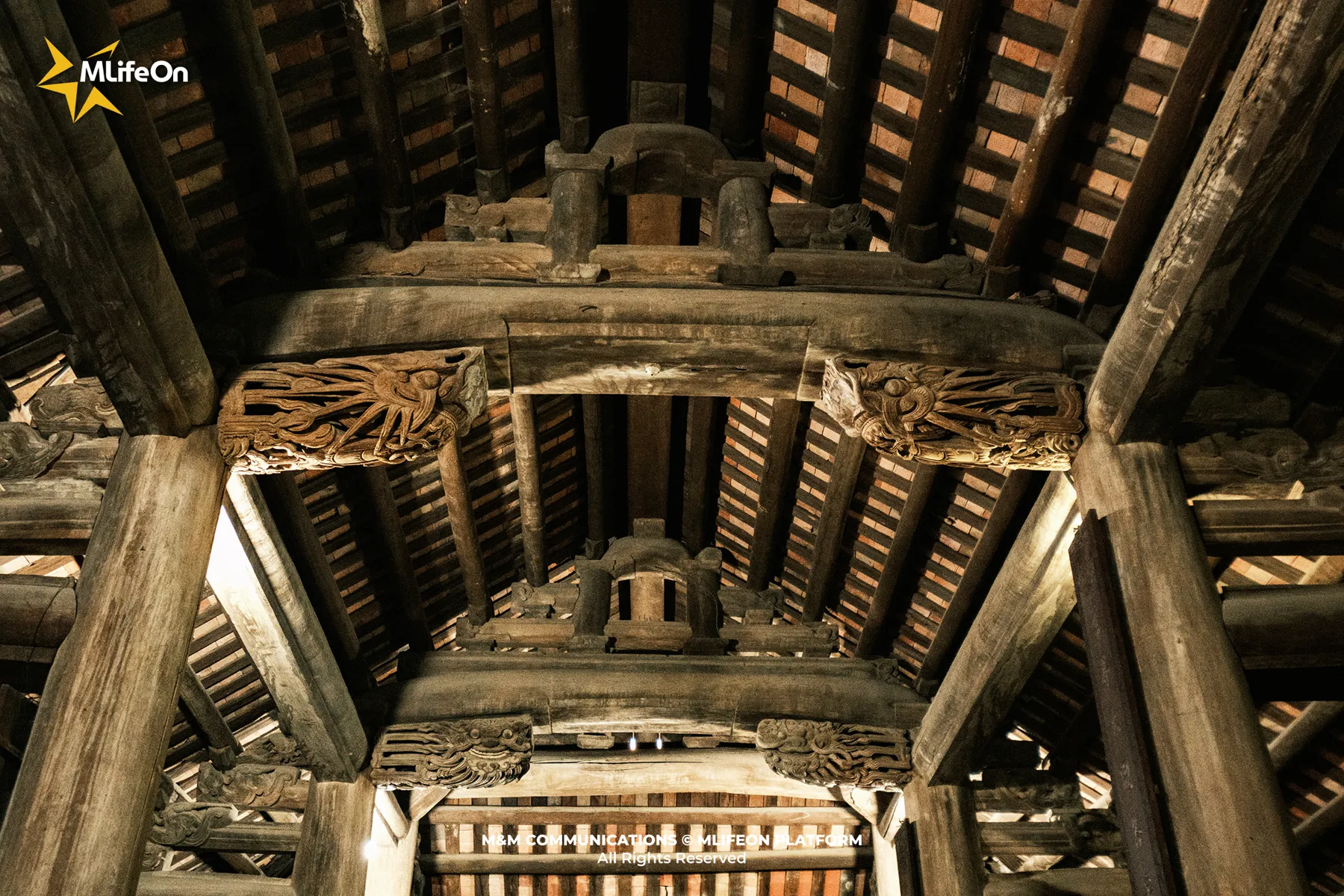
The roof trusses are carved with "dragons playing in the clouds" motifs.
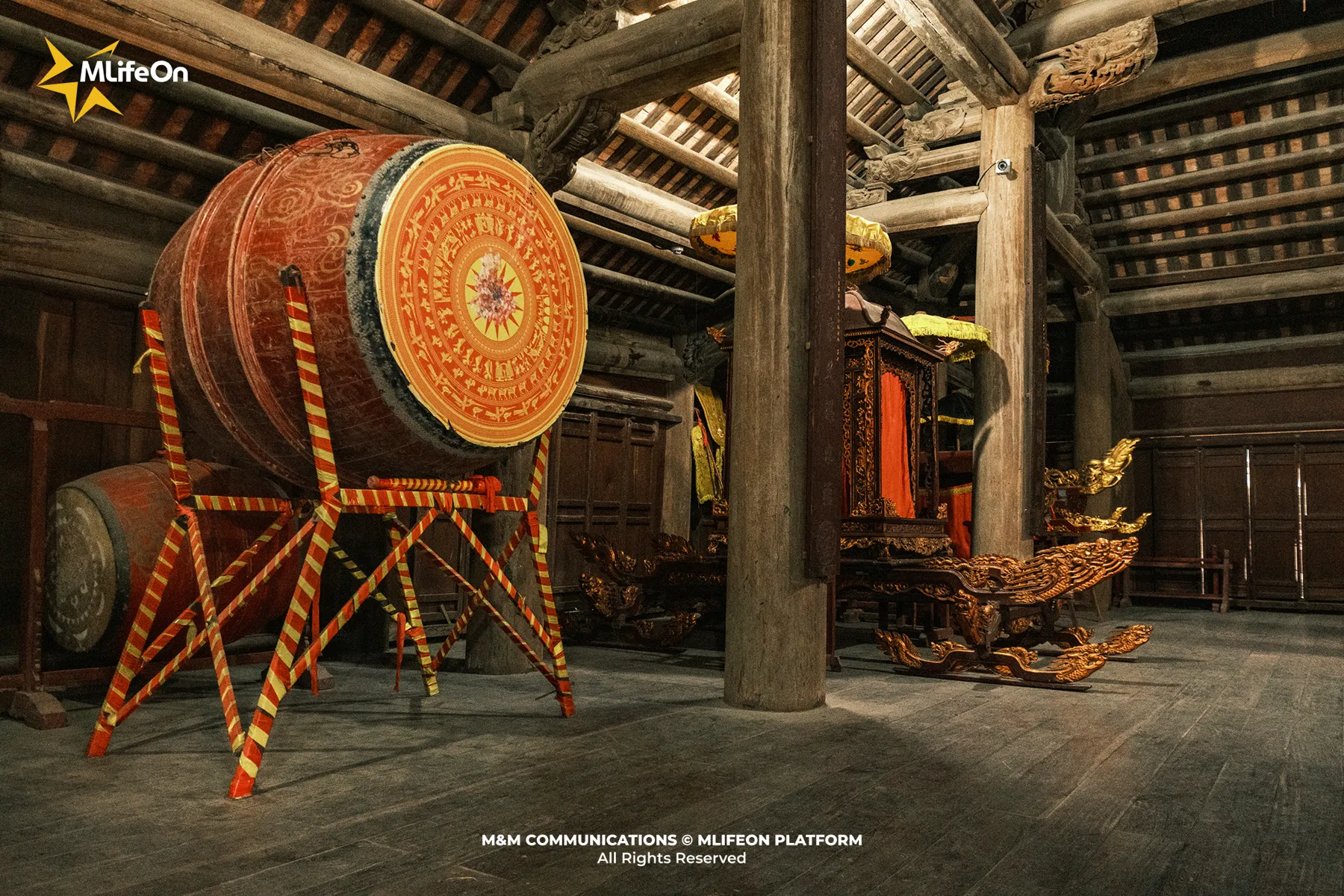
the area inside the Upper Temple
Located within the grounds of the Upper Temple to the west, on a high mound, is the stele house. The structure has four soaring curved roofs, with steps leading up and down on all four sides. On either side of the walkway stand majestic stone lions. This is where ancient steles, carved in 1606, are preserved.
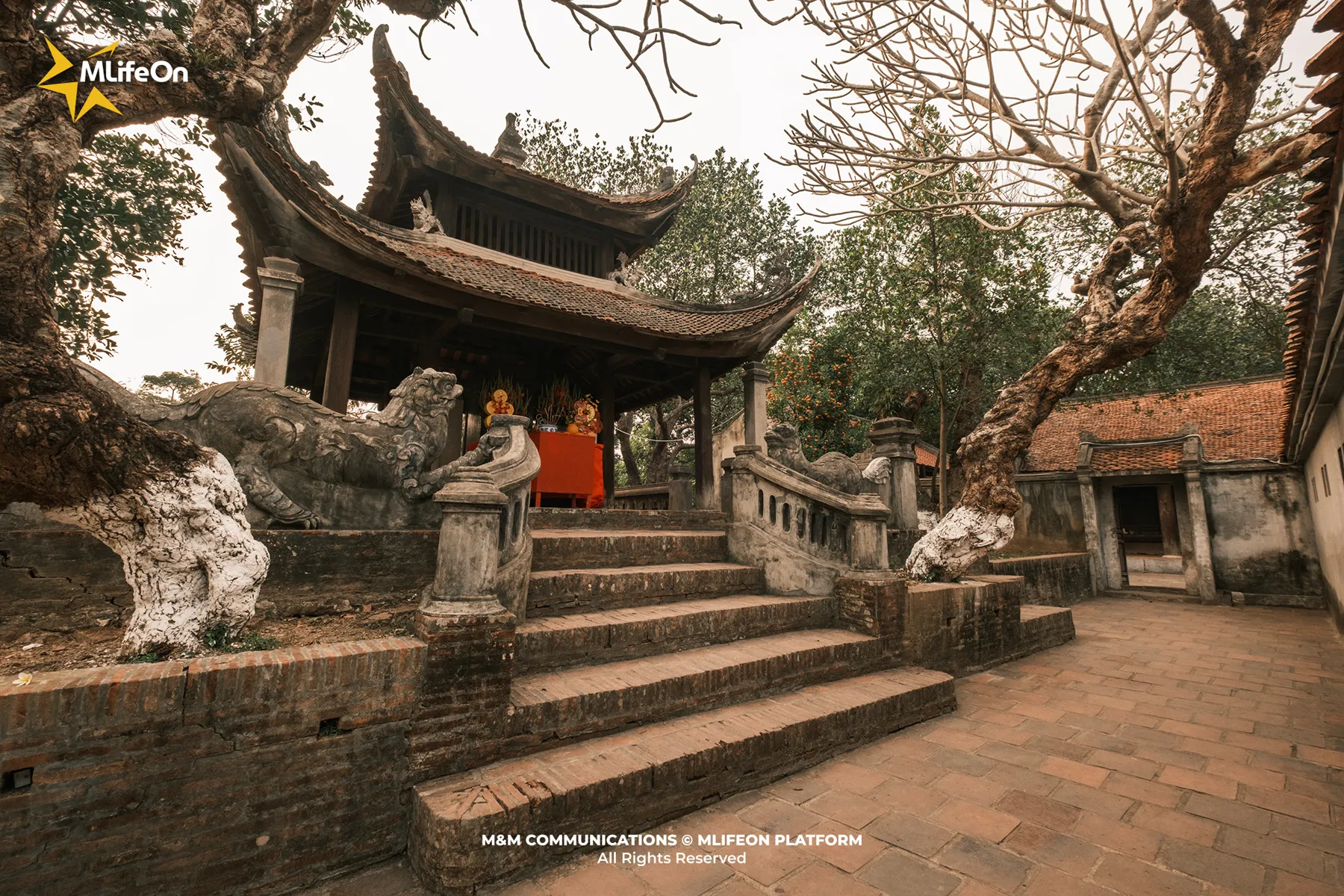
The stele area in Co Loa Citadel
In front of the temple is the Jade Well (Trong Thuy's Well), where Trong Thuy threw himself to his death after My Chau's passing. It is said that if you wash pearls with the water from this well, they will become much brighter.
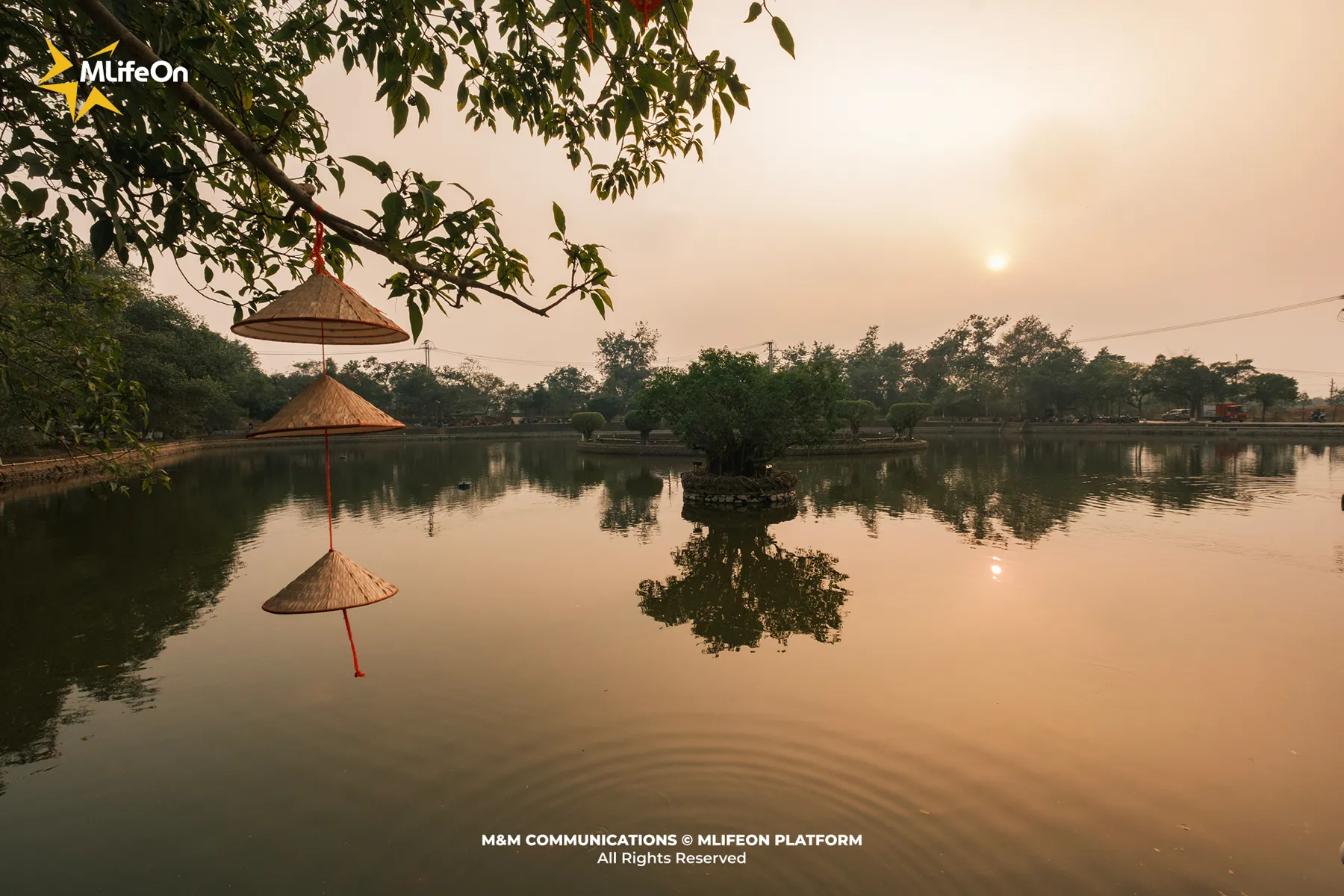
Jade Well - where Trong Thuy threw himself into the water.
From the area around Ngoc Well, visitors can explore other structures of Co Loa Citadel such as My Chau Shrine, Bao Son Pagoda, and the temple dedicated to General Cao Lo.
It can be said that Co Loa Citadel is a place where many values of history, culture, art, and archaeological science converge. Therefore, on September 27, 2012, Co Loa was officially classified by the state as a Special National Monument (including the Co Loa Citadel area).
Today, Co Loa Citadel is not only a cultural and historical heritage site, but also an ideal destination for tourists to explore the creativity, techniques, and feng shui principles in ancient architecture.
Conclusion
Co Loa Citadel is not just a historical site, but also a symbol of national memory. It preserves traces of many cultural periods, a testament to the wisdom and strength of the ancient Vietnamese people.
If you are looking for a historical destination to visit and learn about, why not stop by Co Loa Citadel? Here, you will not only admire the earthen ramparts and ancient structures, but also have the opportunity to better understand the history of nation-building and the depth of Vietnamese culture.
Co Loa Citadel is not just a historical site, but also a memory and a symbol of national pride.
—---
CREDIT:
- Photography: Luan Nguyen
- Content: Giang Huynh
- Design: Trung Huynh